

New York County NY Personal Injury Lawyer
A serious injury can leave you trying to manage medical care, missed work, insurance calls, and family responsibilities at the same time. In Manhattan, even identifying who is responsible may be difficult. A crash may involve a rideshare company or commercial vehicle. A sidewalk fall may involve an adjoining property owner, the City, a utility, or a contractor. A subway injury can trigger an entirely different claims process.
Billy Cooper Law represents injured people throughout New York County NY. The firm offers free consultations, handles personal injury cases on a contingency basis, and maintains a Manhattan location at 4746 Broadway, New York NY 10040, available by appointment only. (billycooperlaw.com)

Communities We Serve
- New York County
- Manhattan
- Upper East Side
- Upper West Side
- Washington Heights
- East Harlem
- Harlem
- Inwood
- Midtown
- Chelsea
- Greenwich Village
- Lower East Side
- Financial District
A Law Firm Prepared for Serious New York Injury Cases
If your injuries are serious, you will probably want a lawyer who has handled cases involving disputed liability, permanent medical conditions, and defendants prepared to fight.
William H. “Billy” Cooper began practicing in 1991 and has served as the firm’s lead trial counsel for more than 25 years. His firm profile reports Super Lawyers recognition from 2024 through 2026. Anieska Garcia represents clients in English and Spanish, allowing Spanish-speaking clients to speak directly with an attorney without relying on a relative to interpret sensitive medical and legal information. The firm reports more than 75 years of combined experience. (billycooperlaw.com)
The firm’s published case results include a $2.4 million New York County wrongful death settlement involving a tractor-trailer collision with a bus and a $1.5 million New York County medical malpractice settlement involving a bowel injury during a Cesarean section. These examples matter because they show experience with both accident litigation and medically complex claims arising in Manhattan. (billycooperlaw.com)
Why Personal Injury Cases Are Different in Manhattan
Manhattan compresses pedestrians, cyclists, e-bikes, delivery vehicles, taxis, buses, rideshare drivers, construction projects, subway entrances, storefronts, and residential buildings into a small area. That density creates accidents, but it also creates complicated questions about control.
Consider a trip on a broken sidewalk. New York City generally places responsibility for sidewalk maintenance on the adjoining property owner. An exception applies to qualifying one-, two-, or three-family owner-occupied properties used exclusively as residences. If the condition was in a curb, pedestrian ramp, street, or area adjoining City property, the analysis may change again. NYC DOT explains that adjoining property owners generally maintain sidewalks, while New York courts apply separate rules when the City itself is accused of allowing a street or sidewalk defect to remain. (nyc.gov)
The same problem appears in other cases. A construction site may involve an owner, general contractor, subcontractors, equipment providers, and a separate safety consultant. A subway fall may involve the New York City Transit Authority rather than the City. A collision in a work zone may require investigation of both the drivers and the contractor responsible for signs, barriers, or temporary lane markings.
The name on the building or vehicle is not always the name of the legally responsible party. Finding the right defendant early can determine whether important records are preserved and whether the correct claim is filed on time.
A Local Accident Snapshot
New York City’s streets have become safer in some respects, but serious accidents remain part of daily life. NYC DOT reported 39 traffic deaths in Manhattan during 2025, down from 44 in 2024. Citywide, 111 pedestrians were killed in traffic crashes during 2025. (nyc.gov)
Construction presents a different danger. New York City Department of Buildings data recorded 190 Manhattan construction incidents involving injury or death in 2024, resulting in 201 injuries and three fatalities. Those numbers reflect only incidents within DOB’s reporting jurisdiction, but they show why falls, falling materials, unsafe equipment, and incomplete site protections require prompt investigation. (nyc.gov)
Where Serious Injuries Happen in New York County NY
Intersections, curb lanes, and loading zones
Manhattan collisions often happen where several forms of transportation meet. A driver may be turning across a bike lane while watching oncoming traffic. A delivery truck may block sightlines near a crosswalk. A rideshare passenger may be discharged into an active travel lane. These cases may require more than a police report. Vehicle data, app records, delivery schedules, photographs, and nearby business video can help reconstruct what happened.
Sidewalks, cellar doors, and building entrances
Sidewalk injuries may involve raised flags, broken pavement, ice, construction debris, cellar doors, utility covers, defective grates, or water draining from adjoining property. Liability may depend on the exact location of the hazard and who owned, occupied, repaired, or made special use of that section of the walkway.
Photographs should show both the dangerous condition and its relationship to the building, curb, street, tree pit, subway entrance, or utility fixture. A close-up alone may not be enough to identify who controlled the area.
Subway stations and buses
Falls on stairs, platforms, escalators, and station passageways can involve cleaning records, inspection schedules, maintenance reports, employee statements, and surveillance video. Sudden-stop cases involving buses or trains can turn on vehicle records, operator testimony, and whether the movement was unusually violent rather than part of ordinary transit travel.
Construction and renovation projects
Manhattan’s construction cases are not limited to major towers. Workers may be injured during apartment renovations, façade work, demolition, sidewalk-shed installation, elevator work, or interior buildouts. Permit records, daily logs, safety plans, contracts, photographs, and equipment inspections may reveal which companies controlled the work.
Personal Injury Cases Billy Cooper Law Handles
Billy Cooper Law represents people injured in matters involving:
- Car accidents
- Motorcycle accidents
- Pedestrian accidents
- Bicycle accidents
- Uber and Lyft accidents
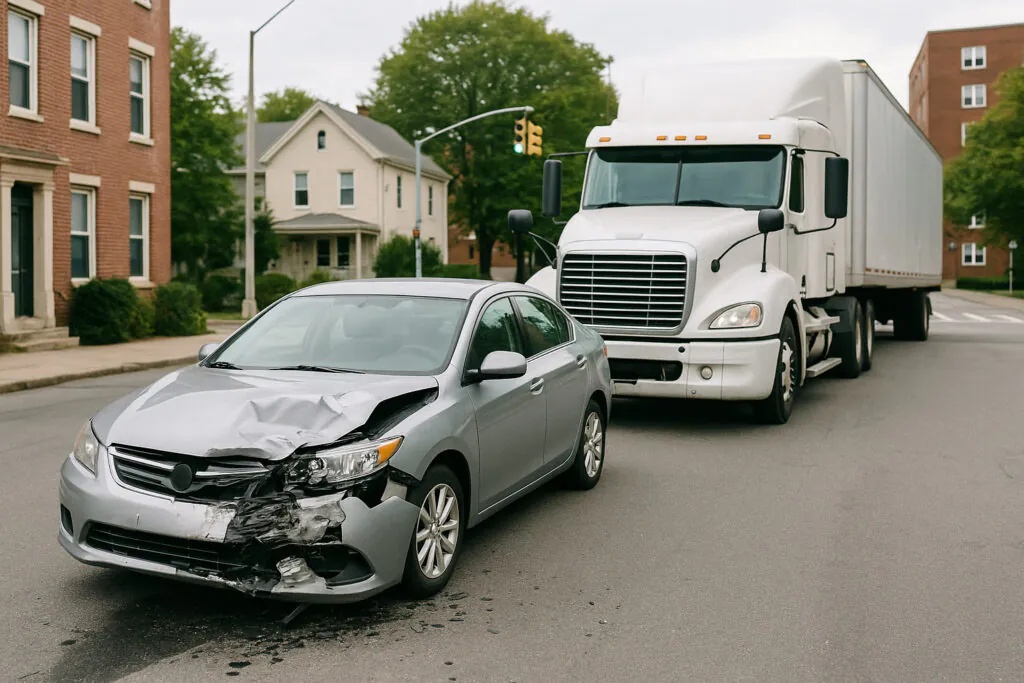
- Truck and commercial vehicle accidents
- Bus accidents
- Subway accidents
- Construction accidents
- Work accidents
- Premises liability
- Dog bites and animal attacks
- Defective products
- Medical malpractice
- Catastrophic injuries
- Wrongful death
Different cases require different evidence. A negligent driver case is not investigated like a defective sidewalk, unsafe construction site, or medical error. The first step is understanding exactly where the failure occurred and who had the power to prevent it.
What to Do After an Accident
Your health comes first. Call 911 when emergency help is needed, accept appropriate medical care, and explain every symptom to the treating providers. Head, spinal, internal, and soft-tissue injuries are not always fully apparent at the scene.
When possible:
- Report the accident. Ask the police officer, property manager, employer, store, or transit employee to create an incident report.
- Photograph the area. Include the hazard, surrounding property, signs, lighting, weather conditions, vehicles, and visible injuries.
- Collect names and contact information. Do not assume a witness’s information will appear in an official report.
- Keep damaged items. Save your shoes, bicycle, helmet, clothing, child safety seat, or defective product without repairing or discarding it.
- Follow through with treatment. Attend recommended appointments and tell your doctors how the injury affects work, sleep, mobility, and ordinary activities.
- Be careful with insurance calls. A request that sounds routine may be an effort to obtain a recorded statement before the facts or medical consequences are clear.
- Ask about deadlines early. Government and no-fault deadlines may arrive long before the ordinary statute of limitations.
Evidence That May Disappear
Manhattan can offer valuable evidence, but much of it is temporary. Businesses may overwrite surveillance footage. Construction sites change from one day to the next. Vehicles are repaired. Snow and ice melt. Witnesses return to work or leave the city.
Depending on the case, useful evidence may include:
- NYPD collision and incident reports
- 911 recordings and dispatch records
- Store, building, station, or work-site video
- Rideshare trip and driver-app records
- Commercial vehicle GPS, electronic logging, and telematics data
- Delivery schedules and dispatch communications
- Construction permits, contracts, daily logs, and safety meeting records
- Cleaning and inspection logs
- Prior complaints, repair requests, and violation histories
- Photographs showing the condition before it was changed
- Medical imaging, operative reports, and therapy records
- Wage statements, tax records, and employer documentation
- Testimony from family members about changes in daily life
A preservation letter can put a business or other potential defendant on notice not to destroy relevant records. It should be directed to the correct party before ordinary retention systems erase the evidence.
New York Deadlines and Insurance Rules
The general filing periods
Under CPLR § 214, many negligence-based personal injury lawsuits must be commenced within three years. That is not a universal deadline.
A medical malpractice action generally has a two-year-and-six-month limitation period, subject to rules involving continuous treatment, foreign objects, and certain failures to diagnose cancer. A wrongful death action generally must be commenced within two years by the decedent’s duly appointed personal representative. (nysenate.gov)
No-fault deadlines after a vehicle accident
New York no-fault insurance can provide up to $50,000 in basic economic-loss benefits for medical expenses, lost earnings, and certain necessary expenses, generally without regard to fault. Written notice ordinarily must be submitted within 30 days of the accident. Healthcare bills generally must be submitted within 45 days of treatment, and lost-earnings claims generally within 90 days. (dfs.ny.gov)
No-fault benefits do not automatically compensate you for pain and suffering. Under Insurance Law § 5104, many claims between people covered by New York’s no-fault system require proof of a legally defined serious injury before non-economic damages can be recovered. (nysenate.gov)
What If You Were Partly at Fault?
New York changed an important comparative-fault rule in 2026.
For many motor vehicle personal injury actions subject to Article 51 of the Insurance Law and commenced on or after May 29, 2026, CPLR § 1411(b) bars recovery when the injured claimant’s fault is greater than the fault of the defendant or the combined fault of the defendants. If the claimant is 50% or less at fault, compensation may still be recovered but is reduced by that percentage. (nysenate.gov)
Other personal injury cases generally remain subject to pure comparative fault under CPLR § 1411(a). In a premises, medical malpractice, product liability, or ordinary negligence case, partial fault generally reduces the recovery rather than eliminating it.
Fault allegations need to be taken seriously from the beginning. A driver may claim a pedestrian entered against the signal. A property owner may say the hazard was open and obvious. A contractor may blame the injured worker or another trade. Photographs, witness statements, video, and records often determine whether those arguments hold up.
Who May Be Responsible?
Responsibility depends on who caused the danger and who had the ability to correct it.
Possible defendants may include:
- A negligent driver or vehicle owner
- A trucking, delivery, or transportation company
- A rideshare driver and available insurance carriers
- A building owner, commercial tenant, or property manager
- A maintenance, cleaning, snow-removal, or security company
- An adjoining property owner responsible for sidewalk maintenance
- A construction owner, general contractor, subcontractor, or equipment provider
- A manufacturer or distributor of a defective product
- A doctor, hospital, or other medical provider
- A municipal or public-benefit entity
- A utility or contractor that opened or repaired the roadway
Several parties can share responsibility. A building owner may have hired a maintenance company. A truck driver may have been working for a carrier that failed to train or supervise the driver. A roadway condition may have been created by a utility contractor, even though the pavement belongs to the City.
BILLY COOPER LAW
Compensation After a Serious Injury
A personal injury claim should account for more than the bills already received. Depending on the facts, compensation may include:
- Past and future medical expenses
- Lost wages
- Reduced future earning capacity
- Rehabilitation and therapy
- Medication and medical equipment
- Home or vehicle modifications
- Replacement household services
- Pain and suffering
- Loss of mobility or independence
- Scarring and disfigurement
- Loss of enjoyment of life
- Funeral costs and legally recoverable wrongful death losses
Serious injuries often require input from treating doctors, medical experts, vocational professionals, economists, or life-care planners. The question is not simply what treatment cost last month. It is what the injury will require over the rest of your life.
Claims Involving the City or Another Public Entity
Do not assume the usual three-year deadline applies when a government body or public authority may be responsible.
Under General Municipal Law § 50-e, a Notice of Claim is generally required within 90 days for covered tort claims against a municipality. A lawsuit against the City generally must be commenced within one year and 90 days, subject to the requirements of General Municipal Law § 50-i. The City may also require testimony and a medical examination under the municipal claims process. (nysenate.gov)
The New York City Comptroller’s Office accepts claims against the City, but filing there does not necessarily preserve a claim against every public entity operating in Manhattan. The New York City Transit Authority, for example, is not interchangeable with the City. Identifying the proper entity is essential. (comptroller.nyc.gov)
Street and sidewalk claims against the City may also require proof that the City received prior written notice of the particular defect. New York courts recognize limited exceptions when the municipality affirmatively created the condition through negligence or made a qualifying special use of the location. (nycourts.gov)
If an accident involved a street defect, public building, City vehicle, subway station, public housing property, park, school, or government contractor, ask which deadlines apply before evidence and filing rights are lost.
Local Courts, Hospitals, and Investigating Agencies
Higher-value state personal injury cases venued in New York County commonly proceed in the Supreme Court, New York County Civil Term. Cases with an independent basis for federal jurisdiction may proceed in the United States District Court for the Southern District of New York.
Medical evidence may be held by facilities such as NYC Health + Hospitals/Bellevue, NYU Langone’s Tisch Hospital, The Mount Sinai Hospital, or NewYork-Presbyterian/Weill Cornell Medical Center. Emergency records are only part of the picture. Follow-up treatment, imaging, specialist evaluations, rehabilitation records, and work restrictions may better explain the injury’s lasting effect.
Depending on what happened, an investigation may also require records from:
- New York City Police Department
- New York City Department of Transportation
- New York City Department of Buildings
- New York City Comptroller
- New York City Transit Authority
- New York City Housing Authority
- A private building owner, employer, contractor, or insurer
How Billy Cooper Law Investigates a Case
A useful investigation begins with listening. The firm needs to understand how the accident happened, what you remember, who was present, where you received treatment, and how the injury is affecting your life.
From there, the legal team can:
- Identify every potentially responsible person or entity.
- Confirm the filing and insurance deadlines.
- Send preservation demands for video and electronic records.
- Obtain reports, permits, contracts, inspection records, and medical documentation.
- Interview witnesses before memories fade.
- Examine the accident location and available photographs.
- Consult appropriate medical, engineering, vocational, or financial experts.
- Calculate both present losses and future needs.
- Communicate with insurance carriers.
- Prepare the case for litigation when a fair resolution is not offered.
The goal is not simply to assemble paperwork. It is to present a clear explanation of what went wrong, why the defendant was responsible, and how the injury changed your life.
Frequently Asked Questions
How much does it cost to speak with Billy Cooper Law?
The firm offers free consultations. Personal injury cases are handled on a contingency basis, meaning there is no upfront legal fee and the firm is paid only if compensation is recovered. (billycooperlaw.com)
Should I give the insurance company a recorded statement?
You should first understand which insurer is calling and whose interests it represents. Even a polite, informal conversation can produce statements later used to dispute fault, treatment, or the severity of your injuries.
Can I recover if I was partly responsible?
Possibly. In many motor vehicle cases commenced on or after May 29, 2026, being more than 50% at fault can bar recovery. Other New York personal injury cases generally reduce compensation according to your percentage of fault rather than eliminating the claim. (nysenate.gov)
What if the accident happened on a Manhattan sidewalk?
The adjoining property owner is often responsible for maintaining the sidewalk, but exceptions and additional rules apply. The precise location matters, especially when the defect is near a curb, pedestrian ramp, subway entrance, tree pit, utility cover, or City-owned property. (nyc.gov)
How long will my case take?
Some claims can be resolved after the medical condition and available insurance are clear. Others require litigation, depositions, expert review, or trial preparation. A serious injury case should not be resolved before its long-term medical and financial consequences are reasonably understood.
What if I was injured in a subway station or on a bus?
Report the incident immediately and record the route, station, train or bus number, time, direction of travel, and employee information. Transit cases may involve short notice requirements and evidence held by a public authority rather than the City itself.
What happens during the consultation?
You can explain what happened, ask questions, and provide any photographs, reports, insurance correspondence, and medical information you have. The firm can then discuss potential defendants, immediate deadlines, and practical next steps.
Related Resources
- Personal Injury
- Motor Vehicle Accident
- Billy Cooper Law Case Results
- Meet Billy Cooper
- Meet Anieska Garcia
- Contact Billy Cooper Law
Tell Us What Happened
You do not need to identify every defendant, locate every insurance policy, or understand every filing rule before asking for help.
Billy Cooper Law offers free consultations and represents personal injury clients on a contingency basis. Its Manhattan location at 4746 Broadway, New York NY 10040 is available by appointment only. Call (914) 730-5789 or (718) 866-3311, or contact the firm online.
If a government agency, transit authority, or no-fault insurer may be involved, ask which deadlines apply now. The sooner the right parties are identified, the better the opportunity to preserve the evidence needed to explain what happened. (billycooperlaw.com)
Communities We Serve
- New York County
- Manhattan
- Upper East Side
- Upper West Side
- Washington Heights
- East Harlem
- Harlem
- Inwood
- Midtown
- Chelsea
- Greenwich Village
- Lower East Side
- Financial District
Sources
Billy Cooper Law
- Billy Cooper Law
- Personal Injury
- Billy Cooper, Esq.
- Anieska Garcia, Esq.
- Case Results
- Contact Billy Cooper Law
- Catastrophic Injury
- Motor Vehicle Accidents
- Car Accidents
- Commercial Vehicle Accidents
- Uber and Lyft Accidents
- Pedestrian Accidents
- Bicycle Accidents
- E-Bike Accidents
- Bus Accidents
- Subway Accidents
- Construction Accidents
- Premises Liability
- Sidewalk Accidents
- Work Accidents
- Medical Malpractice
- Products Liability
- Dog Bites
- Wrongful Death
New York Law and Insurance
- New York CPLR § 214
- New York CPLR § 214-a
- New York CPLR § 1411
- New York Insurance Law § 5104
- New York EPTL § 5-4.1
- New York General Municipal Law § 50-e
- New York General Municipal Law § 50-h
- New York General Municipal Law § 50-i
- New York Department of Financial Services: No-Fault Insurance FAQs
- New York Department of Financial Services: Filing Claims Under Your Own Policy
- New York Department of Financial Services: Auto Insurance Information
Manhattan Data and Local Agencies
- NYC DOT: 2025 Traffic Fatality Report
- NYC Department of Buildings: 2024 Construction Safety Report
- NYC Department of Buildings: Construction Accident Reports
- NYC DOT: Sidewalk Maintenance and Repair
- NYC Comptroller: Filing a Claim Against the City
- NYC Comptroller Claims Dashboard
- New York State Supreme Court, New York County Civil Term
- United States District Court for the Southern District of New York
NOTABLE RESULTS
Selected results in Billy Cooper Law’s broader personal injury practice:
$9,000,000 settlement · $2,005,000 settlement
Read more about these results
- $9,000,000 settlement — Tank explosion
A man suffered extensive burns and loss of his dominant hand in a tank explosion in Westchester County.
- $2,005,000 settlement — Construction-site roof fall
A worker fell from a roof after inadequate safety equipment was provided on a Rockland County job site.
These are reported gross results, before fees, expenses, and applicable liens. They are not estimates of another claim’s value. Read the firm’s published case results.
Prior results do not guarantee a similar outcome. Each case is different and must be evaluated on its own facts.
WHAT OUR CLIENTS SAY
General feedback about working with Billy Cooper Law:
“Wonderful experience. Very knowledgeable and responsive!”
— Lara C.
“He cares. He just cares.”
— Carmelo Curra
Professional Recognition

Recognition applies to the named attorneys and selection years. See the linked profiles for details.
Related Billy Cooper Law Videos and Social Posts
- Billy Cooper Law official YouTube channel — Youtube — official account.
- Billy Cooper Law official Instagram profile — Instagram — official account.
- Billy Cooper Law official Facebook profile — Facebook — official account.
- Billy Cooper Law official Linkedin profile — Linkedin — official account.
Published Articles by Billy Cooper
- When the Video Disappears: Liability, Missing Footage, and the Modern New York Injury Case — New York Law Journal · June 23, 2026.
Billy Cooper discusses video evidence that is missing, incomplete, or overwritten in New York injury litigation.
BILLY COOPER LAW
Car Accident: Communities We Serve
E-Bike Accident: Communities We Serve
Slip and Fall: Communities We Serve


Get the Answers You Need
At Billy Cooper Law, every day we renew our pledge to help injured people get the justice and compensation they deserve. We have a reputation throughout New York and nationally for standing up for our clients, and we take that responsibility seriously by approaching every case with preparation, persistence, and an unwavering commitment to results.