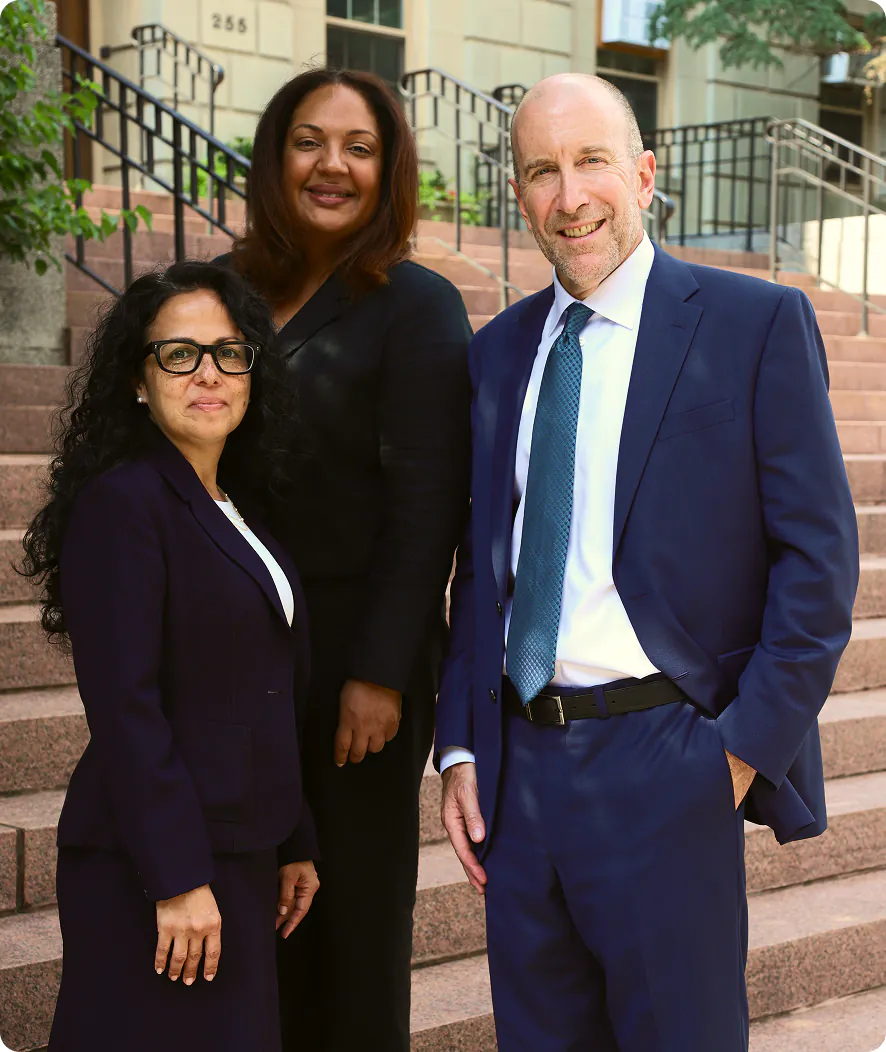

Rockland County NY Personal Injury Lawyer
Video Transcript
Every person who contacts our office speaks to an attorney directly.
Many firms, when you reach out, you get just a paralegal or just a receptionist, and while they may be very experienced, I think it gives a lot of assurance to the public that they know that when they call us, they will always get the attorney on the phone.
The most important thing I think people should know before they pick up the phone and call the office of Billy Cooper is that we take the time to listen and answer people’s questions.
One of the things that I get told most often, even if it’s a situation where we cannot take your case, is that we explain why.
We don’t just say, “No, you don’t have a case” and hang up.
We always give people an explanation.
We explain what the burden of proof is and the law that applies.
People are always most appreciative that we take the time to explain to them rather than just saying no.
A great outcome beyond the dollar amount is quite significant because after a case resolves, money only means so much.
In fact, I always have conversations with our clients indicating to them that money does a certain thing for you, but it can never make you feel completely whole.
What we try and do is we try and give our people the type of service where they know that even when the case is completed, we are here for them.
What makes our law firm different than other firms in New York is our attention to detail, and that we assist our clients with every aspect of their case.
We make phone calls to make sure that your medical bills are being paid.
We can assist you in finding medical care.
It’s beyond just a legal service. It is an all-around service that we provide.
If you have been injured in an accident or someone you know, whether it’s a family member or a friend, we ask that you reach out to us because we will speak with you and we will assist you.

Types of Injury Cases We Handle in Rockland County NY
- Car accidents
- Motorcycle accidents
- Pedestrian accidents
- Bicycle accidents
- Uber and Lyft accidents
- Truck and commercial vehicle accidents
- Bus accidents
- Subway accidents
- Construction accidents
- Work accidents
- Premises liability
- Dog bites and animal attacks
- Defective products
- Medical malpractice
- Catastrophic injuries
- Wrongful death
Related Rockland County Practice Pages
A Law Firm That Understands What a Serious Injury Takes From You
A personal injury case is not only about medical bills. It is about how the injury affects your work, your family, your independence, and your future. That is the approach Billy Cooper Law brings to each case. The firm traces its history to 1960 and brings more than 75 years of combined experience to its representation of injured New Yorkers. William H. Cooper joined the practice in 1991 and has served as lead trial counsel for decades. He has been selected to Super Lawyers for 2024 through 2026. The firm also offers bilingual representation for Spanish-speaking clients. (billycooperlaw.com) If your injuries are serious, you will probably want to know whether your lawyer has handled cases with difficult medical issues and disputed liability. The firm’s published case results include a $2.005 million construction-accident settlement and a $1.45 million medical-malpractice settlement in Rockland County. Those results do not guarantee what will happen in another case, but they show experience with substantial local claims. (billycooperlaw.com) Billy Cooper Law handles personal injury matters on a contingency basis. You do not pay an upfront legal fee, and the firm is not paid an attorney’s fee unless compensation is recovered. (billycooperlaw.com)Why Rockland County Injury Cases Require a Local Investigation
Rockland County is crossed by roads controlled by different public entities. A collision or fall may involve a state highway, the New York State Thruway, a county route, a town road, or a village street. The property beside the road may be privately owned even when the roadway is public. That distinction matters. It can determine:- Which agency maintains the road, bridge, traffic signal, drainage system, or sidewalk
- Where repair and inspection records are kept
- Whether a government notice deadline applies
- Which police department has the crash report
- Whether a prior written notice rule affects a dangerous-road or sidewalk claim
- Which entity should receive a preservation request
A Snapshot of Accidents and Infrastructure in Rockland County
A recent Rockland County health assessment, using data from the Traffic Safety Statistical Repository, reported 9,144 motor vehicle crashes in Rockland County during 2024. That figure was preliminary, but it shows how frequently local police, emergency responders, hospitals, and insurers deal with traffic-related incidents. Review the county’s report. (rocklandcountyny.gov) Bicyclists face particular risks. According to Rockland County, 84 bicycle crashes were reported in 2024, including one fatality and 83 injury incidents. Those numbers matter because bicycle cases often turn on visibility, intersection design, driver attention, lighting, and whether nearby businesses or vehicles captured the collision. (rocklandcountyny.gov) The county itself is responsible for approximately 170 miles of roadway and 72 bridges. When an injury involves a pothole, drainage problem, bridge condition, missing sign, or malfunctioning traffic device, determining whether the site is part of that county-maintained network is an early investigative step. (rocklandcountyny.gov)Where Serious Injuries Happen in Rockland County
Highways, parkways, and major intersections
High-speed crashes on I-87/I-287, the Palisades Interstate Parkway, Route 303, Route 304, and Route 9W can produce traumatic brain injuries, spinal damage, fractures, internal injuries, and wrongful death. These cases may involve more than two drivers. A commercial vehicle, road contractor, vehicle manufacturer, or public agency may share responsibility. Electronic control-module data, dash-camera recordings, toll records, dispatch logs, and commercial driving records can become important.The Route 59 commercial corridor
Route 59 passes through some of Rockland County’s busiest commercial areas, including Suffern, Spring Valley, Nanuet, and West Nyack. Traffic enters and leaves shopping centers, parking lots, side streets, and signalized intersections throughout the corridor. A crash here may require more than a police report. Nearby stores may have exterior cameras. A shopping center may control a driveway or traffic pattern. Delivery vehicles may carry dash cameras. Signal timing and turning-lane design may also matter.Parking lots, stores, and apartment properties
Falls and pedestrian injuries frequently happen away from the main roadway. Parking lots can contain broken pavement, untreated ice, poor drainage, inadequate lighting, or unsafe pedestrian routes. The responsible party may be the property owner, tenant, management company, snow-removal contractor, maintenance company, or another business. Leases and service contracts often reveal who was supposed to inspect, repair, or treat the area.Construction and work sites
Construction cases can involve homes, commercial properties, roadway projects, utility work, roofs, ladders, scaffolds, trenches, and heavy equipment. The firm’s published results include a Rockland County settlement of more than $2 million for a worker who fell from a roof after inadequate safety equipment was provided. The worker suffered injuries to the hip, pelvis, sacrum, and bladder. Learn more about the firm’s construction-accident practice. (billycooperlaw.com)Personal Injury Cases Billy Cooper Law Handles
Billy Cooper Law represents clients in Rockland County in matters involving:- Car, SUV, and multi-vehicle collisions
- Commercial truck and delivery-vehicle crashes
- Motorcycle accidents
- Pedestrian and bicycle injuries
- Uber and Lyft accidents
- Construction and work-site injuries
- Falls on unsafe property
- Dangerous sidewalks and parking lots
- Inadequate security
- Dog bites and attacks
- Defective products
- Medical malpractice and birth injuries
- Traumatic brain and spinal cord injuries
- Catastrophic injuries
- Wrongful death
What to Do After an Accident
Get appropriate medical care
Do not delay treatment because you hope the pain will go away. Some injuries become more noticeable after swelling, shock, or adrenaline subsides. Tell your medical providers how the accident happened and describe all symptoms accurately. Do not minimize pain, numbness, dizziness, headaches, memory problems, or limitations simply because another injury feels worse. Montefiore Nyack Hospital operates a 24-hour emergency department and is a verified Level III Trauma Center. Its emergency facilities include trauma bays, imaging services, pediatric emergency care, and rapid assessment areas. In a life-threatening emergency, call 911 rather than trying to decide which hospital to use on your own. (montefiorenyack.org)Report what happened
For a motor vehicle crash involving an injury or death, notify the police immediately. New York also requires a motorist to file an MV-104 crash report within 10 days when someone is injured or killed or when damage to any one person’s property exceeds $1,000. Reporting the accident to an insurer does not replace the DMV filing requirement. (dmv.ny.gov) For a work injury, tell your supervisor and make sure the accident is documented. If you fell at a business or residential property, report the condition to the owner, manager, or employee and request a copy of any incident report.Photograph the scene
If you can do so safely, photograph:- Vehicle positions and damage
- Skid marks and debris
- Traffic signs and signals
- Potholes, ice, spills, broken pavement, or defective stairs
- Lighting conditions
- Nearby cameras
- Construction equipment and safety devices
- Your visible injuries
Get witness information
Police reports do not always contain every witness. Ask for names, phone numbers, and email addresses. A short video statement recorded at the scene may help preserve what a witness remembers.Be careful when speaking with insurers
You generally must report an accident to the appropriate insurer, but you do not have to guess about fault, minimize your symptoms, or agree to a broad recorded interview before understanding your rights. An adjuster may sound helpful while asking questions designed to limit the claim. If you are uncertain, speak with a lawyer before giving a detailed recorded statement or signing medical authorizations.Evidence Worth Preserving
The strongest evidence is often temporary. Depending on what happened, a lawyer may need to preserve:- Business and residential surveillance footage
- Traffic-camera or toll-plaza recordings
- Dash-camera video
- Vehicle event data
- Cellphone records
- Electronic driver logs
- Inspection and maintenance records
- Snow and ice removal logs
- Road-repair complaints
- 911 recordings and dispatch records
- Police photographs and body-camera footage
- Construction contracts and daily reports
- Equipment involved in the accident
- The shoes or clothing you were wearing
- Medical records and diagnostic images
New York Deadlines That May Apply
The general personal injury deadline
Under CPLR § 214, many New York personal injury lawsuits must be commenced within three years. That is a general rule, not a universal deadline. The correct period depends on the defendant and the type of claim. (nysenate.gov) Medical-malpractice actions generally have a shorter two-year-and-six-month limitations period under CPLR § 214-a, subject to exceptions that should be evaluated by an attorney. A wrongful-death action generally must be commenced within two years after the death under EPTL § 5-4.1.No-fault insurance deadlines
A legal filing deadline is not the same as an insurance deadline. After many New York motor vehicle accidents, written notice of a no-fault claim must be provided within 30 days. Health-care bills generally must be submitted within 45 days of treatment, and lost-earnings claims generally must be submitted within 90 days. A late submission may be accepted in limited circumstances when there is a clear and reasonable justification, but you should not rely on an exception. (dfs.ny.gov)Government claim deadlines
If a county, town, village, school district, public authority, or another public corporation may be responsible, General Municipal Law § 50-e generally requires a Notice of Claim within 90 days. The notice must identify the nature of the claim and when, where, and how it arose. (nysenate.gov) Different rules may apply to the State of New York, the Thruway Authority, and other state entities. Dangerous-road and sidewalk claims may also involve local prior written notice requirements. Do not assume you have three years to begin investigating a government-related accident. By then, the first and most important deadline may be long gone.BILLY COOPER LAW
Questions About a Rockland County Injury Claim?
What If You Were Partly at Fault?
New York changed its comparative-fault law for motor vehicle personal injury actions in 2026. For actions subject to New York’s no-fault law and commenced on or after May 29, 2026, CPLR § 1411(b) bars recovery when the injured person’s share of fault is greater than the fault of the person—or combined fault of the people—from whom recovery is sought. If the injured person is 50% or less at fault, compensation may still be recovered but is reduced by that percentage. (nysenate.gov) For most other personal injury claims, CPLR § 1411(a) continues to apply a pure comparative-fault rule. Partial fault reduces the recovery rather than automatically eliminating it. This distinction matters. The rules affecting a car accident are no longer necessarily the same as those affecting a fall, defective product, or unsafe property claim. Do not accept an insurer’s fault assessment as the final word. Fault may depend on video, physical evidence, witness testimony, vehicle data, road design, and legal duties the adjuster has not discussed with you.Who May Be Responsible?
A personal injury claim may involve more than the person who was present at the scene. Potentially responsible parties can include:- A negligent driver
- The driver’s employer
- A trucking or delivery company
- A vehicle owner
- A rideshare company or its insurer
- A property owner or tenant
- A management or maintenance company
- A snow-removal contractor
- A general contractor, subcontractor, or project owner
- A manufacturer or distributor
- A doctor, hospital, or medical practice
- A county, town, village, public authority, or state agency
Compensation After a Serious Injury
Compensation depends on the evidence, available insurance, applicable law, and the ways the injury has changed your life. A claim may include:Medical and rehabilitation costs
This can include emergency treatment, surgery, hospital care, diagnostic testing, physical therapy, medication, home health assistance, medical equipment, and reasonably anticipated future care.Lost income
You may be able to pursue wages lost while recovering as well as diminished earning capacity when an injury affects your ability to return to the same work.Pain and loss of normal life
Serious injuries affect more than finances. Compensation may address physical pain, emotional suffering, scarring, disability, loss of mobility, and reduced ability to participate in everyday activities.Property and out-of-pocket losses
A claim may include damaged personal property, transportation expenses, household assistance, and other accident-related costs.Wrongful-death losses
New York’s wrongful-death statute focuses largely on the pecuniary injuries suffered by eligible family members, along with certain medical, nursing, funeral, and related expenses. EPTL § 5-4.3 governs the recoverable damages. (nysenate.gov) No responsible lawyer can determine the value of a case from a short online description. The medical prognosis, insurance coverage, fault evidence, future needs, and effect on your work and family all matter.When a Government Entity May Be Involved
Government involvement is common in Rockland County injury cases because roads, buses, bridges, public buildings, parks, and construction projects may be controlled by different agencies. A public entity could be involved if the accident resulted from:- A defective county or municipal road
- A missing or malfunctioning traffic signal
- A dangerous intersection
- Poor drainage or recurring ice
- Unsafe work performed by a public employee
- A government-owned vehicle
- A fall at a public building or park
- Negligent road construction or maintenance
Local Courts, Hospitals, and Agencies
Many Rockland County personal injury lawsuits are filed in the Rockland County Supreme Court. The courthouse is located at 1 South Main Street in New City and is part of New York’s Ninth Judicial District. Supreme Court hears civil matters outside the more limited authority of local courts. (nycourts.gov) Other local resources that may become relevant include:- Rockland County Supreme and County Court
- Montefiore Nyack Hospital Emergency Center
- Rockland County Highway Department
- New York DMV crash-report information
- New York Department of Financial Services no-fault guidance
- Ramapo
- Clarkstown
- Haverstraw
- New City
- Spring Valley
- Monsey
- Nanuet
- Pearl River
- Stony Point
- Suffern
How Billy Cooper Law Builds a Personal Injury Case
A careful investigation begins by listening to you. What happened? What do you remember? What has the injury stopped you from doing? Who contacted you afterward? From there, the firm may:- Identify every potentially responsible party. This includes investigating ownership, employment, contracts, insurance, and government control.
- Preserve evidence. The firm can send requests for video, records, vehicles, equipment, and electronic data before they are lost.
- Collect reports and records. That may include police reports, 911 records, medical records, road complaints, inspection logs, and construction documents.
- Work with qualified experts when necessary. Serious cases may require accident reconstruction, engineering, medical, vocational, economic, or life-care evidence.
- Document the full effect of the injury. Medical bills are only part of the story. A case should also account for future treatment, work limitations, pain, disability, and changes in daily life.
- Deal with the insurance companies. Once represented, you should not have to manage repeated adjuster calls or argue about your injuries alone.
- Prepare the case for trial. Thorough preparation gives the firm a stronger position in negotiations and allows the case to move forward if the insurer refuses to be reasonable.
Frequently Asked Questions
Do I need a Rockland County lawyer if the firm’s office is in White Plains?
A lawyer does not need an office inside Rockland County to handle a Rockland County claim. Billy Cooper Law serves clients throughout Rockland County from its White Plains office and has handled substantial cases in the county. The firm does not claim to maintain a Rockland County office.How much does a consultation cost?
Billy Cooper Law offers free consultations. Personal injury cases are handled on a contingency basis, so there is no upfront attorney’s fee and no legal fee unless compensation is recovered.Should I talk to the other driver’s insurance company?
Report the accident as required, but be cautious about recorded statements, broad medical authorizations, or early settlement offers. An adjuster may ask questions before the full extent of your injuries is known.What if the police report says I contributed to the crash?
A police report is important evidence, but it does not necessarily decide civil fault. Video, witnesses, vehicle data, and physical evidence may support a different conclusion. The DMV also states that the appearance of a crash on a driving record does not establish fault. (dmv.ny.gov)Can I bring a claim after a hit-and-run accident?
Possibly. Coverage may be available through uninsured-motorist insurance or the Motor Vehicle Accident Indemnification Corporation. These claims have notice and reporting requirements, so prompt action matters.Does no-fault insurance mean I cannot sue?
No. No-fault benefits generally provide an initial source of payment for basic economic losses after a covered vehicle accident. A claim against an at-fault driver may still be available when the injuries satisfy New York’s statutory serious-injury requirement under Insurance Law § 5102(d). (nysenate.gov)What if I fell on ice or broken pavement?
Liability may depend on who controlled the property, how long the condition existed, whether the owner created it, and whether a contractor was responsible for snow or ice removal. Claims involving municipal roads or sidewalks may also be affected by prior written notice requirements.How long will my case take?
Some cases resolve in months. Others take several years because medical treatment must develop, liability is disputed, multiple parties are involved, or a trial is necessary. A lawyer should explain what is happening rather than promise an arbitrary timeline.Related Personal Injury Resources
- New York Personal Injury Lawyer
- Motor Vehicle Accident Lawyer
- Car Accident Lawyer
- Construction Accident Lawyer
- Premises Liability Lawyer
- Medical Malpractice Lawyer
- Work Accident Lawyer
- Wrongful Death Lawyer
- Billy Cooper Law Case Results
Tell Us What Happened
You do not need to know who owns the road, whether your injury meets an insurance threshold, or which deadline applies before asking for help. Tell us what happened. We will listen, review the available information, and explain your options. If a government agency, public road, construction site, or serious motor vehicle injury may be involved, it is especially important to begin the investigation promptly. Contact Billy Cooper Law or call (914) 730-5789 for a free consultation. ¿Habla español? Puede llamar para hablar sobre su caso.Sources
Billy Cooper Law
- Billy Cooper Law
- Billy Cooper Law Personal Injury Practice
- Meet the Billy Cooper Law Team
- William H. Cooper Attorney Profile
- Billy Cooper Law Case Results
- Billy Cooper Law Practice Areas
- Billy Cooper Law Construction Accident Practice
- Billy Cooper Law Premises Liability Practice
- Billy Cooper Law Contact Information
New York Law and Insurance Rules
- New York CPLR § 214
- New York CPLR § 214-a
- New York CPLR § 1411
- 2026 Enacted New York Budget Legislation Amending CPLR § 1411
- New York General Municipal Law § 50-e
- New York Insurance Law § 5102
- New York EPTL § 5-4.1
- New York EPTL § 5-4.3
- New York Department of Financial Services No-Fault FAQs
- New York Department of Financial Services Guide to Filing Claims
- New York No-Fault Claim Form and Filing Instructions
- New York DMV Motorist Crash-Report Requirements
- New York DMV Form MV-104
Rockland County Resources
- Rockland County Highway Department
- Rockland County Route Listing
- Rockland County Highway Infrastructure Information
- Rockland County Traffic and Health Data
- Rockland County 2024 Bicycle Crash Data
- Rockland County Supreme and County Courts
- Montefiore Nyack Hospital Emergency Center
- New York DMV Motor Vehicle Crash Data
- Traffic Safety Statistical Repository
Communities We Serve
- Rockland County
- Ramapo
- Clarkstown
- Haverstraw
- New City
- Spring Valley
BILLY COOPER LAW
Ready to Discuss What Happened?
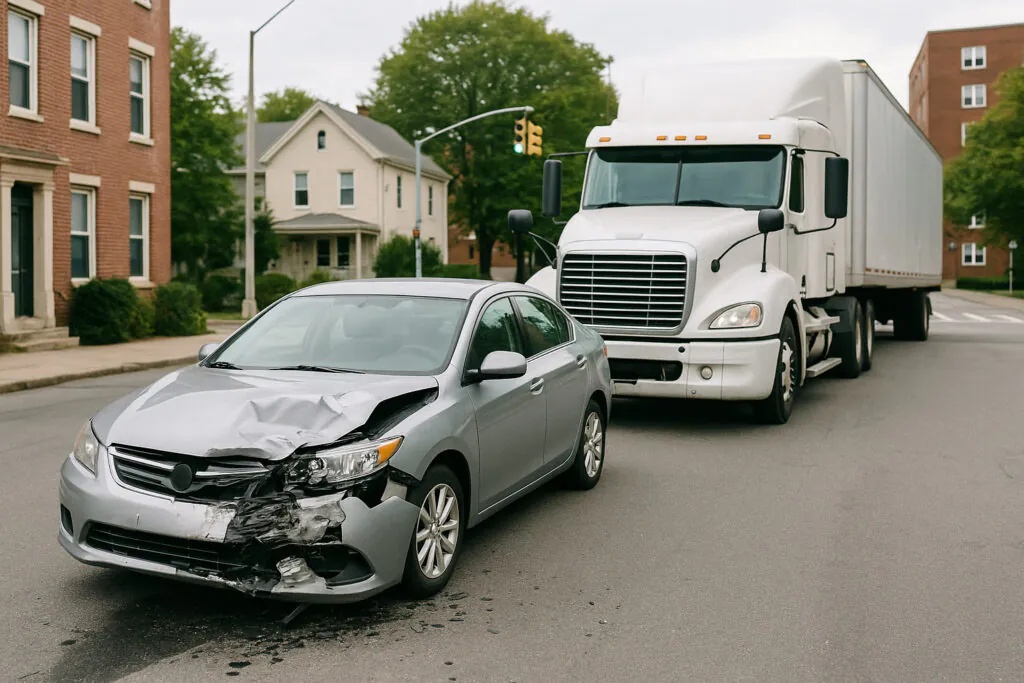


Putting Over 75 Years of Combined Experience on Your Side
Putting Over 75 Years of Combined Experience on Your Side
Putting Over 75 Years of Combined Experience on Your Side
Putting Over 75 Years of Combined Experience on Your Side
Putting Over 75 Years of Combined Experience on Your Side
Putting Over 75 Years of Combined Experience on Your Side
Putting Over 75 Years of Combined Experience on Your Side
Putting Over 75 Years of Combined Experience on Your Side
Putting Over 75 Years of Combined Experience on Your Side
Putting Over 75 Years of Combined Experience on Your Side
Get the Answers You Need
At Billy Cooper Law, every day we renew our pledge to help injured people get the justice and compensation they deserve. We have a reputation throughout New York and nationally for standing up for our clients, and we take that responsibility seriously by approaching every case with preparation, persistence, and an unwavering commitment to results.