
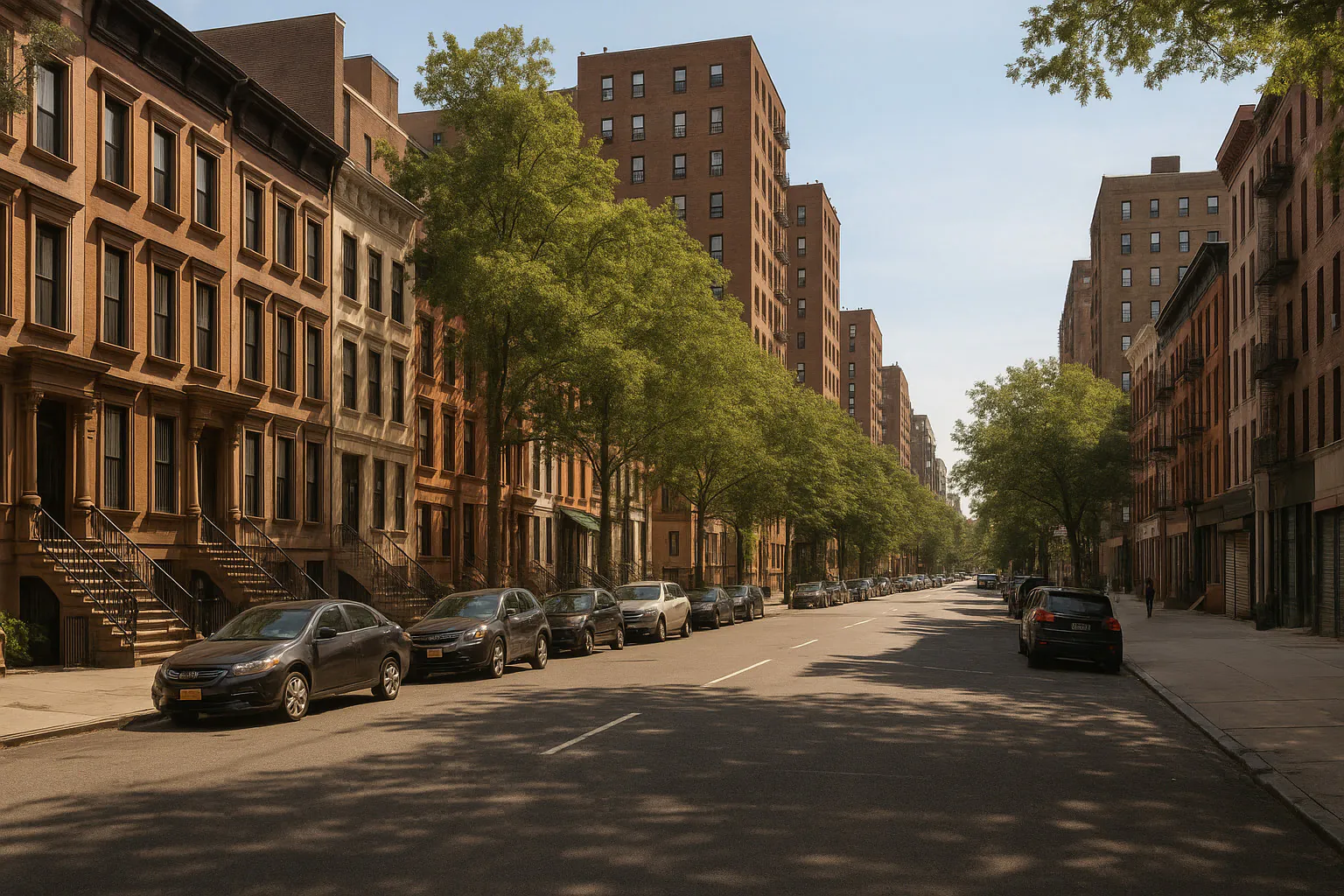
East Harlem NY Personal Injury Lawyer
A serious injury can leave you trying to manage pain, medical appointments, missed work, and insurance calls all at once. You may know that something went wrong without knowing who is legally responsible—or whether important evidence is already disappearing.
In East Harlem NY, that answer often depends on the precise location. A crash near the 125th Street transit hub raises different questions from a fall in an apartment building, an injury on a sidewalk, or an accident connected to transit or utility construction. Billy Cooper Law helps injured people identify the responsible parties, preserve evidence, and understand what comes next.

Communities We Serve
- New York County
- Manhattan
- Upper East Side
- Upper West Side
- Washington Heights
- East Harlem
- Harlem
- Inwood
- Midtown
- Chelsea
- Greenwich Village
- Lower East Side
- Financial District
A Law Firm Prepared for Serious Injury Cases
If an injury may affect your ability to work or live independently, you will probably want a lawyer who understands how to document losses that may continue for years.
William H. “Billy” Cooper began practicing law in 1991 and has served as lead trial counsel for more than 25 years. His firm profile reports Super Lawyers recognition from 2024 through 2026. Billy Cooper Law reports more than 75 years of combined experience. (billycooperlaw.com)
The firm’s published case results include a $2.4 million New York County wrongful death settlement involving a tractor-trailer collision with a bus and a $1.5 million New York County medical malpractice settlement involving a bowel injury during a Cesarean section. Those cases required very different investigations, but both involved serious harm and medically significant damages. (billycooperlaw.com)
If you would rather discuss your case in Spanish, attorney Anieska J. Garcia is fluent in English and Spanish. Clients can speak directly with an attorney instead of relying on a relative to interpret private medical and legal conversations. (billycooperlaw.com)
Consultations are free. Personal injury cases are handled on a contingency basis, so there is no upfront legal fee and the firm is paid only if compensation is recovered. (billycooperlaw.com)
Why East Harlem Injury Cases Require a Local Investigation
East Harlem is covered by more than one police command. The NYPD’s 23rd Precinct serves the neighborhood north of East 96th Street, while the 25th Precinct covers its northern portion and includes the 125th Street Metro-North station. The correct precinct can matter when requesting collision reports, identifying responding officers, or locating traffic-enforcement records. (nyc.gov)
The neighborhood also brings several forms of transportation into a relatively compact area: city streets, buses, the 4/5/6 subway lines, Metro-North service, bicycle and e-bike traffic, and major pedestrian corridors. An accident may involve a private driver, commercial vehicle operator, rideshare company, MTA entity, New York City Transit Authority, Metro-North, or a government contractor.
Transit construction adds another layer. The MTA’s July 2025 update reported that the first utility-relocation and preparation contract for Phase 2 of the Second Avenue Subway was underway in East Harlem. The planned extension includes stations at 106th Street, 116th Street, and 125th Street. When an injury occurs near project fencing, temporary walkways, utility work, or altered traffic patterns, permits, contractor agreements, maintenance logs, and traffic-control plans may become important evidence. (mta.info)
The practical lesson is simple: the address alone does not identify the defendant. A careful investigation must determine who owned, operated, maintained, or controlled the place or activity that caused the injury.
A Local Accident Snapshot
The 25th Precinct’s figures provide a useful view of traffic injuries in northern East Harlem. Through August 23, 2026, the precinct reported:
- 579 motor-vehicle collisions
- 315 people injured
- 44 pedestrian injuries
- 40 injuries to traditional bicyclists
- 32 injuries involving motorized two-wheelers
These are precinct-wide figures, not totals for every part of East Harlem. They still show why evidence from pedestrians, cyclists, e-bike riders, drivers, businesses, buses, and nearby cameras may all matter after a neighborhood crash. (nyc.gov)
Construction injuries remain another concern. The New York City Department of Buildings recorded 147 construction-related injuries in Manhattan during 2025. Its annual report also identified falls as the leading cause of construction injuries and deaths citywide. (nyc.gov)
Where Serious Injuries Happen in East Harlem NY
Around 125th Street and Lexington Avenue
The intersection of subway, Metro-North, bus, vehicle, bicycle, and pedestrian traffic can create several possible sources of evidence. A case may require surveillance from stations or nearby businesses, bus records, Metro-North reports, traffic-signal data, vehicle information, and witness accounts.
Do not assume the MTA is a single legal entity for every claim. The subway, a bus, Metro-North property, and a construction project may involve different organizations and different filing requirements.
Along First Avenue, Second Avenue, and Park Avenue
A collision or fall along one of these corridors may involve delivery vehicles, buses, cyclists, temporary construction conditions, utility work, or defective pavement. Photographs should capture more than the immediate hazard. Lane markings, signs, fencing, sight obstructions, work vehicles, and the surrounding intersection may explain why the accident happened.
Inside Apartment Buildings and Housing Developments
A building injury may result from a broken stair, defective elevator, poor lighting, leaking pipe, missing handrail, damaged flooring, falling ceiling material, or inadequate maintenance.
The responsible party may be a private owner, management company, commercial tenant, maintenance contractor, elevator company, or the New York City Housing Authority. Leases, work orders, inspection records, prior complaints, and repair histories can help show who knew about the condition and who had authority to correct it.
On Sidewalks and Near Storefronts
A broken or uneven sidewalk does not automatically make New York City responsible. City rules generally place sidewalk-maintenance duties on adjoining property owners, subject to exceptions. Utilities, tree work, contractors, cellar doors, subway structures, and recent street work can also affect liability. (nyc.gov)
An early ownership and maintenance check is often more valuable than simply taking one close-up photograph of the defect.
At Construction and Renovation Sites
Construction cases may involve owners, general contractors, subcontractors, safety managers, equipment companies, and other trades working nearby. Workers should try to preserve the names of every company at the site, photographs of the equipment or condition, witness information, daily logs, incident reports, and any ladder, scaffold, harness, hoist, or protective device involved.
A workers’ compensation claim may provide medical and wage benefits. A separate claim against an owner, contractor, equipment manufacturer, or another responsible company may allow recovery for losses workers’ compensation does not cover.
Personal Injury Cases Billy Cooper Law Handles
Billy Cooper Law represents injured people in matters involving:
- Car accidents
- Truck and commercial vehicle accidents
- Uber and Lyft accidents
- Pedestrian accidents
- Bicycle accidents
- E-bike accidents
- Bus accidents
- Subway accidents
- Premises liability
- Construction accidents
- Work accidents
- Medical malpractice
- Defective products
- Dog bites and animal attacks
- Catastrophic injuries
- Wrongful death
One event can support more than one claim. A delivery-driver collision may involve the driver, employer, vehicle owner, maintenance company, and a separate no-fault claim. A construction fall may involve workers’ compensation as well as claims against an owner or contractor.
What to Do After an Accident
Your health comes first. Call 911 or obtain medical care if you need it. Tell each provider how the injury happened and identify every part of your body that hurts, even if one injury seems more serious than the others.
When possible:
- Report the accident. Contact the police, property manager, employer, store, transit employee, or other responsible party.
- Photograph the scene. Include the hazard, surrounding area, signs, vehicles, equipment, lighting, and weather conditions.
- Get witness information. A name and telephone number may be enough to preserve an important lead.
- Save physical evidence. Keep damaged clothing, footwear, helmets, products, and equipment.
- Avoid guessing about fault. Explain what happened, but do not speculate or accept blame simply because an insurer asks.
- Be careful on social media. A photograph or casual comment may be taken out of context.
- Ask which deadlines apply. Government, transit, and no-fault claims can require action long before the ordinary lawsuit deadline.
If you could not do these things because you were taken to the hospital, that does not necessarily end your case. Other evidence may still be available.
Evidence Worth Preserving
The most useful evidence depends on how the injury occurred.
For a traffic crash, it may include:
- Police reports and body-camera footage
- Traffic, bus, building, and business surveillance
- Vehicle event-data recorder information
- Rideshare app and trip records
- Driver logs, delivery records, and commercial vehicle data
- Signal timing and roadway-work records
For a property injury, it may include:
- Photographs and measurements of the condition
- Leases and management agreements
- Inspection and maintenance records
- Earlier complaints and repair requests
- 311 records
- Elevator, escalator, or boiler service records
- Snow, ice, or cleaning logs
- Video from entrances, elevators, hallways, or nearby businesses
For a construction accident, preserve site photographs, daily reports, safety meeting records, permits, equipment, witness names, and the identities of every contractor present.
Video should be requested quickly. Many systems overwrite recordings automatically, and the fact that a camera was visible does not mean its footage will be saved.
New York Laws and Deadlines
The general personal injury deadline
Many negligence lawsuits in New York must be filed within three years under CPLR § 214. That is not a safe waiting period. Evidence can disappear long before the legal deadline arrives. (nysenate.gov)
Medical malpractice
A New York medical malpractice action generally must be commenced within two years and six months of the alleged malpractice or the end of qualifying continuous treatment. Different rules can apply to foreign objects and certain failures to diagnose cancer. CPLR § 214-a contains the statutory exceptions. (nysenate.gov)
Claims involving a public hospital may also require a notice of claim on a much shorter schedule.
Wrongful death
A wrongful death action generally must be brought by the decedent’s personal representative within two years after death under EPTL § 5-4.1. Estate proceedings may be necessary before the representative can pursue the case. (nysenate.gov)
No-fault insurance deadlines
New York no-fault insurance can cover qualifying medical expenses, lost earnings, and related economic losses after a motor-vehicle accident, regardless of who caused the crash.
Written notice generally must reach the proper no-fault insurer within 30 days. Medical bills generally must be submitted within 45 days of treatment, and lost-wage claims within 90 days. Late submissions may sometimes be excused, but they should never be assumed safe. (dfs.ny.gov)
Current Insurance Law § 5102 provides up to $50,000 in basic economic loss and defines the injuries that can qualify as “serious” for purposes of recovering pain and suffering in covered motor-vehicle cases. Insurance Law § 5104 governs when those claims may proceed. (nysenate.gov)
What If You Were Partly at Fault?
Fault rules now depend in part on the type of case.
For most personal injury claims, CPLR § 1411(a) reduces compensation by the injured person’s percentage of fault rather than automatically eliminating the claim.
New York changed the rule for personal injury actions subject to the state’s no-fault law. For actions commenced on or after May 26, 2026, CPLR § 1411(b) bars recovery if the claimant’s fault is greater than the fault of the defendant—or greater than the combined fault of all defendants from whom recovery is sought. A claimant found 50% at fault may still recover a reduced amount; a claimant found more than 50% at fault may be barred. The legislation applies to actions and proceedings commenced on or after its effective date. (nysenate.gov)
That makes a careful crash investigation especially important. Speed, signal timing, lane position, visibility, right of way, vehicle data, and witness accounts may now determine not only how much is recovered, but whether recovery is available at all.
BILLY COOPER LAW
Who May Be Responsible?
Liability begins with control. Who had the ability and duty to prevent the harm?
Depending on the facts, responsible parties may include:
- A negligent driver, cyclist, or commercial vehicle operator
- A driver’s employer or vehicle owner
- A rideshare or delivery company
- A landlord, managing agent, tenant, or maintenance contractor
- An adjoining property owner
- A construction owner, general contractor, or subcontractor
- A product manufacturer, distributor, or retailer
- A medical provider or hospital
- New York City, NYCHA, the MTA, NYCTA, Metro-North, or another public entity
- A utility or government contractor performing work at the location
More than one party may share responsibility. Identifying all of them can be especially important when the injuries are serious or one defendant has limited insurance.
Compensation After a Serious Injury
A personal injury claim should reflect what the accident has already cost you and what it may continue to cost.
Depending on the case, compensation may include:
- Emergency treatment, hospitalization, surgery, and rehabilitation
- Future medical care and therapy
- Lost wages
- Reduced future earning capacity
- Medication, medical equipment, and transportation expenses
- Home care or household assistance
- Pain and suffering
- Scarring or disfigurement
- Loss of mobility or independence
- The effect of the injury on daily and family life
A quick settlement may not account for a future operation, permanent work restrictions, chronic pain, or the need for continuing help. The medical prognosis should be understood before a serious case is valued.
Claims Against New York City, NYCHA, and Transit Authorities
Government cases move faster than ordinary injury claims.
When New York City or another covered public corporation may be responsible, General Municipal Law § 50-e generally requires service of a notice of claim within 90 days. A covered lawsuit against the City generally must then be commenced within one year and 90 days under General Municipal Law § 50-i. (nysenate.gov)
The City may also require testimony at a hearing before a lawsuit proceeds. Filing a police report, 311 complaint, NYCHA work order, or ordinary insurance form does not necessarily satisfy the notice-of-claim requirement.
Claims against the New York City Transit Authority have additional requirements under Public Authorities Law § 1212, including a 90-day notice requirement for many tort claims and shortened lawsuit deadlines. (nysenate.gov)
The New York City Comptroller’s claims portal accepts claims involving City agencies and identifies separate categories for entities such as NYCHA. Serving the wrong entity may not protect the claim against the correct one. (comptroller.nyc.gov)
If a city vehicle, subway, bus, public hospital, NYCHA building, roadway project, or government contractor may have contributed to your injury, find out which deadlines apply immediately.
Local Courts, Hospitals, and Agencies
Serious personal injury lawsuits arising in East Harlem may proceed in the New York County Supreme Court, Civil Term, whose main facility is at 60 Centre Street. (nycourts.gov)
Nearby emergency-care options include:
- NYC Health + Hospitals/Metropolitan
- The Mount Sinai Hospital Emergency Department, located at Madison Avenue and East 101st Street and open 24 hours a day (nychealthandhospitals.org)
Choose medical care based on your health needs and the advice of medical professionals. From a legal standpoint, follow-up matters. Gaps in treatment can make it harder to document whether continuing symptoms are connected to the accident.
Records and evidence may also come from:
- The NYPD’s 23rd or 25th Precinct
- NYC Department of Transportation
- NYC Department of Buildings
- New York City Comptroller
- NYCHA
- MTA, NYCTA, or Metro-North
- Property owners, contractors, utilities, and nearby businesses
How Billy Cooper Law Investigates a Case
The investigation begins with a straightforward question: Who controlled the vehicle, property, equipment, or activity that caused the injury?
From there, the firm may:
- Inspect and photograph the scene
- Determine property and roadway ownership
- Identify government agencies and private contractors
- Send video- and evidence-preservation demands
- Obtain police, transit, building, and agency records
- Review leases, permits, work orders, and maintenance agreements
- Interview witnesses
- Examine vehicle, commercial fleet, and rideshare data
- Consult medical and accident-reconstruction professionals
- Document lost income and future care needs
- Identify all potentially available insurance policies
The investigation should address both sides of the case: what caused the accident and what the injury has taken from you.
Frequently Asked Questions
Do I have a case if no police or incident report was made?
Possibly. Photographs, medical records, witnesses, surveillance, vehicle data, 911 records, and later statements may still establish what happened. Report the incident as soon as reasonably possible and avoid altering the scene or evidence.
Should I give the insurance company a recorded statement?
Be cautious. Your own no-fault insurer may require cooperation, but another party’s insurer is usually looking for information that limits its exposure. You can ask a lawyer to explain your obligations before giving a detailed statement.
Who pays my medical bills after a car or pedestrian accident?
New York no-fault coverage is usually the first source of payment for qualifying accident-related medical expenses. The correct insurer depends on whether you were driving, riding as a passenger, or struck as a pedestrian. Written notice generally must be submitted within 30 days.
Can I recover if I was partly responsible?
It depends on the type of case and when the action is commenced. Most non-automobile cases remain subject to comparative fault, which reduces compensation by your share of responsibility. Covered motor-vehicle cases commenced on or after May 26, 2026 may be barred if your fault is greater than the defendants’ combined fault.
What if the accident happened in a NYCHA building?
Notify management, request an incident or work-order number, and preserve photographs and witness information. A formal notice of claim may also be required. Do not assume that telling a superintendent or calling the Customer Contact Center completes the legal filing process.
What if an MTA bus or subway was involved?
Record the route, vehicle or train number, station, direction of travel, time, and any employee information. Transit claims can require formal notice within 90 days, and the correct defendant depends on which entity operated or controlled the location.
How long will a personal injury case take?
It depends on the medical recovery, number of defendants, quality of the evidence, insurance coverage, and whether the case can be resolved fairly without trial. A serious case should not be rushed before the long-term medical consequences are understood.
How much does it cost to speak with Billy Cooper Law?
The consultation is free. Personal injury cases are handled on a contingency basis, meaning there is no upfront legal fee and the firm is paid only if it obtains compensation for you.
Related Resources
- New York personal injury claims
- New York motor vehicle accidents
- New York construction accidents
- New York premises liability claims
- New York medical malpractice claims
- New York wrongful death claims
- Billy Cooper Law case results
- Meet Billy Cooper
- Meet Anieska Garcia
Tell Us What Happened
You do not need to know who should be sued, which insurance company is responsible, or whether a government agency was involved before asking for help.
Billy Cooper Law offers free consultations and handles personal injury cases on a contingency basis. The firm’s New York NY location at 4746 Broadway is available by appointment only; there is no Billy Cooper Law office in East Harlem.
Call (718) 866-3311 or (914) 730-5789, or contact Billy Cooper Law. The firm will listen, identify the questions that need answering, and explain your options.
If a government agency, public hospital, transit authority, or no-fault insurer may be involved, ask which deadlines apply now.
Sources
Billy Cooper Law
- Billy Cooper Law
- Personal Injury
- Practice Areas
- Case Results
- Billy Cooper, Esq.
- Anieska Garcia, Esq.
- Contact Billy Cooper Law
- New York County Personal Injury
- Motor Vehicle Accidents
- Car Accidents
- Truck and Commercial Vehicle Accidents
- Uber and Lyft Accidents
- Pedestrian Accidents
- Bicycle Accidents
- E-Bike Accidents
- Bus Accidents
- Subway Accidents
- Premises Liability
- Construction Accidents
- Work Accidents
- Medical Malpractice
- Products Liability
- Dog Bites
- Catastrophic Injuries
- Wrongful Death
New York Law and Insurance
- CPLR § 214
- CPLR § 214-a
- CPLR § 1411
- EPTL § 5-4.1
- General Municipal Law § 50-e
- General Municipal Law § 50-i
- Insurance Law § 5102
- Insurance Law § 5104
- Public Authorities Law § 1212
- New York State Department of Financial Services: No-Fault Insurance FAQs
- New York State Department of Financial Services: Filing Claims Under Your Own Policy
- New York 2026 Motor-Vehicle Insurance Legislation
East Harlem and Manhattan
- NYPD 23rd Precinct
- NYPD 25th Precinct
- NYPD 25th Precinct TrafficStat Report
- NYC Department of Buildings: 2025 Construction Safety Report
- MTA: Second Avenue Subway Phase 2 Project Update
- NYC DOT: Sidewalks
- New York City Comptroller: File a Claim
- NYCHA Contact Information
- New York County Supreme Court, Civil Term
- NYC Health + Hospitals/Metropolitan
- The Mount Sinai Hospital Emergency Department
BILLY COOPER LAW


Get the Answers You Need
At Billy Cooper Law, every day we renew our pledge to help injured people get the justice and compensation they deserve. We have a reputation throughout New York and nationally for standing up for our clients, and we take that responsibility seriously by approaching every case with preparation, persistence, and an unwavering commitment to results.