



New York Work Accident Lawyer
Video Transcript
Workers’ compensation in the state of New York is a very specific set of rules and regulations that protects people who are injured during the course of their employment. What that means is that if you are injured while you are working, whether you’re at your actual job site or elsewhere, workers’ compensation by law must pay for both your medical bills and your lost earnings.
What I do, what my office does, is we represent people where they have a claim or a cause of action in addition to the workers’ compensation claim. For example, if you are injured during the course of your employment, you may be working for FedEx or UPS, and you’re driving, and another car goes through a red light, and you’re injured. Workers’ compensation will pay for all of your medical bills under the no-fault law in the state of New York, but you will also have the potential to get a recovery, to get money damages for your injuries caused by the person other than your employer.
If you are hurt while on the job, if you are injured during the course of your employment, reach out to us. Let an attorney who understands whether or not you have a potential case make that decision for you without thinking it’s only a workers’ compensation matter. Please call us if you’re hurt on the job.
Representing Injured Workers in White Plains, Peekskill, Westchester County, the Bronx, Rockland County & NYC
A work accident can change everything in a single moment. One misstep on a construction site, one defective piece of equipment, one negligent subcontractor—and suddenly you’re facing injuries, lost wages, medical bills, and uncertainty about your future.
At Billy Cooper Law, we represent injured workers across New York, including White Plains, Peekskill, Westchester County, the Bronx, Rockland County, and New York City. We fight for workers who’ve suffered serious on-the-job injuries—including those whose claims involve third-party negligence, unsafe job sites, and vulnerable categories of workers like day laborers and undocumented employees.
If you were hurt at work, you may be entitled to far more than workers’ compensation. Our firm helps injured workers recover the full compensation they deserve.
Injured workers face an uphill battle. Workers’ compensation provides limited benefits, and employers and insurance companies have every incentive to minimize what they pay. At Billy Cooper Law, we’ve spent decades fighting for workers who deserve more than the system wants to give them.
Founding partner Marvin A. Cooper brings over 50 years of experience representing injured New Yorkers. His involvement in drafting Article 51 of the New York Insurance Law in 1973—the No Fault system—demonstrates his deep understanding of how insurance and liability law intersect. That knowledge is essential in work accident cases where multiple sources of recovery may be available.
Lead trial counsel William H. Cooper, recognized by Super Lawyers in 2024 and 2025 and honored as a CLE presenter at the New York State Bar Association, has secured over $41 million in verdicts and settlements. His willingness to take cases to trial ensures that negligent contractors, property owners, and equipment manufacturers take our clients’ claims seriously.
When your livelihood is on the line, you need attorneys who understand both the workers’ compensation system and the civil justice system—and who know how to maximize recovery through both.

Understanding Work Accident Claims In New York
Workplace injuries happen in every industry, but they’re especially common in:
- Construction and demolition
- Warehousing and distribution centers
- Manufacturing and industrial facilities
- Landscaping and outdoor labor
- Hospitality, cleaning, and property maintenance
- Delivery, trucking, and transportation
Many injured workers think their only option is workers’ compensation. But depending on how the accident occurred, you may also have a third-party claim—a separate lawsuit that can provide compensation workers’ comp does not cover, including pain and suffering and long-term damages.
At Billy Cooper Law, we evaluate every angle of your case so you recover everything the law allows.
Types of Work Accident Cases We Handle
We represent injured workers in a wide range of cases, including:
- Third-party injury claims (contractors, subcontractors, property owners, equipment manufacturers, negligent drivers)
- Construction accidents
- Scaffold and ladder falls
- Defective or dangerous equipment
- Unsafe premises or job sites
- Day laborer injuries
- Undocumented worker injuries
- Industrial accidents
- Warehouse and delivery injuries
- Motor vehicle accidents while on the job
Whether you were working with your hands, behind the wheel, or on a job site, we’re here to fight for you.
Third-Party Injury Claims
Extra compensation beyond workers’ comp
Workers’ compensation covers medical bills and a portion of lost wages—but it does not compensate you for pain and suffering, future earning losses, reduced quality of life, or full economic damages.
A third-party lawsuit can.
Third-party claims arise when someone other than your employer caused or contributed to your injury. Common examples include:
Defective Equipment
If a tool, machine, vehicle, or safety device malfunctions, the manufacturer, distributor, or seller may be liable. Examples:
- Faulty power tools
- Defective ladders or scaffolds
- Machinery with missing safety guards
- Cranes, lifts, or vehicles that fail unexpectedly
When equipment fails, you may have both a work accident claim and a product liability claim against the manufacturer.
Negligent Contractors or Subcontractors
Construction sites are filled with multiple companies working side-by-side. If another contractor creates a hazard—improper scaffolding, unprotected edges, dropped materials, poor site oversight—they may be financially responsible.
Unsafe Premises
Property owners must maintain safe conditions for workers performing tasks on their premises. When they ignore hazards like:
- Poor lighting
- Slippery surfaces
- Hidden holes
- Unsafe stairways
- Unprotected openings
—they can be held accountable under premises liability law.
Motor Vehicle Accidents
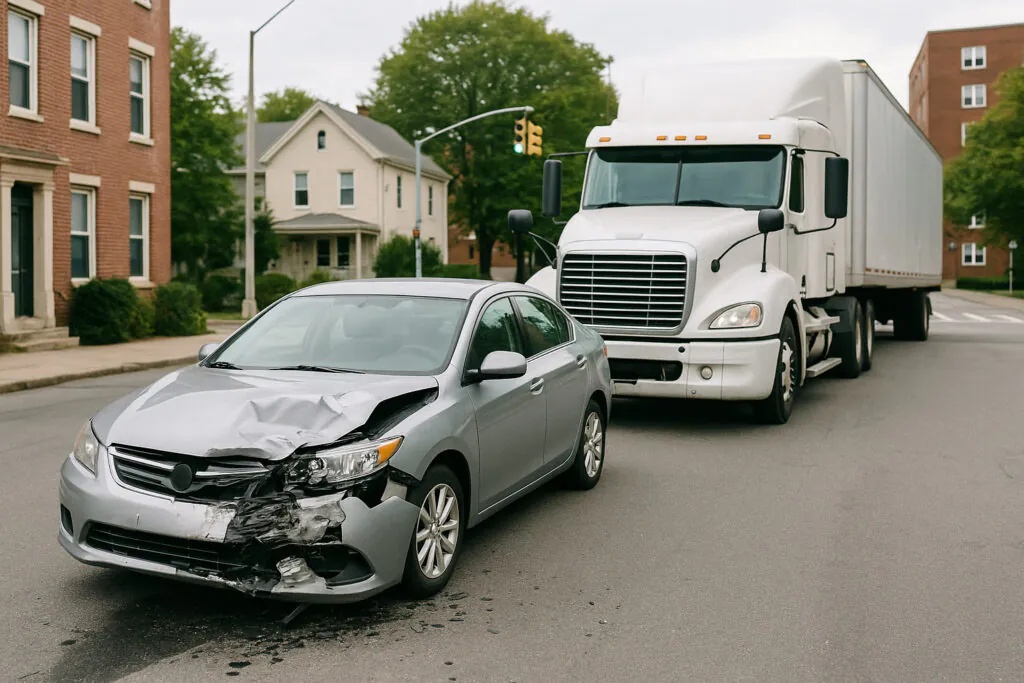
If you were injured in a work-related crash caused by another driver—while making deliveries, driving between job sites, or operating company vehicles—you can pursue a third-party claim against the negligent driver.
Why Third-Party Claims Matter
Workers’ compensation is not enough for most injured workers. Third-party lawsuits can recover damages for:
- Pain and suffering
- Full lost wages and lost future earnings
- Loss of enjoyment of life
- Future medical needs
- Punitive damages in cases of gross negligence
Our legal team investigates every accident aggressively to find all liable parties.
Our Approach To Third-Party Work Accident Claims
Thorough Investigation
We examine:
- Site conditions
- Safety protocols
- Equipment maintenance logs
- OSHA violation history
- Contracting relationships
- Witness statements
- Surveillance footage
We also determine whether multiple companies share liability.
Medical Collaboration
We work closely with your doctors to build a detailed picture of your injuries, your recovery timeline, and your long-term medical needs.
Aggressive Representation
Whether through negotiation or litigation, we push for maximum compensation—not just what workers’ comp offers, but full accountability under New York law.
Personalized Support
Work injuries are overwhelming. We guide you through every step, answer every question, and fight for your financial security.
BILLY COOPER LAW
Undocumented Worker Injuries
Your immigration status does NOT take away your rights.
Undocumented workers often face the most dangerous jobs—yet they’re the least likely to report injuries or demand justice. At Billy Cooper Law, we stand firmly with injured workers regardless of immigration status.
Your Rights As An Undocumented Worker
Under New York law and federal labor protections:
- You can receive workers’ compensation
- You can bring a third-party lawsuit
- You cannot be denied medical care
- Your employer cannot retaliate legally
- Your immigration status cannot be used against you in your injury claim
You have the same right to a safe workplace as every other worker.
Confidentiality And Safety
We maintain strict confidentiality. Your immigration status is protected throughout the legal process, and it does not determine your right to compensation.
Common Injuries Among Undocumented Workers
Undocumented workers are often exposed to:
- Scaffolding falls
- Trench collapses
- Heavy machinery accidents
- Electrical injuries
- Falls from roofs
- Toxic exposure
- Unsafe demolition sites
These injuries can result in catastrophic injuries that are life-altering—and you do not have to face the aftermath alone.
Our Approach To Undocumented Worker Cases
- Confidential consultations with no risk to your privacy
- Full investigation of unsafe working conditions
- Medical collaboration to document injuries
- Aggressive legal action to secure full compensation
- Connection to community organizations offering additional support
Your safety and recovery are our priority.
Day Laborer Injuries
Fighting for some of the most vulnerable workers in New York
Day laborers are essential to New York’s economy—yet they are often exposed to the worst conditions:
- Unsafe construction sites
- Lack of proper training
- No protective equipment
- Unregulated contractors
- Dangerous demolition or renovation jobs
- Heavy lifting with no assistance
Because many day laborers work without formal contracts, employers often deny responsibility or pressure them not to report injuries.
We don’t tolerate that.
Common Hazards For Day Laborers
- Falling debris or materials
- Roof or ladder falls
- Machinery accidents
- Electrical shocks
- Hazardous chemical exposure
- Crushed limbs or severe lacerations
Your Legal Rights As A Day Laborer
Regardless of work arrangement, day laborers enjoy legal protections:
- Right to a safe workplace
- Right to medical care
- Right to workers’ compensation (in most cases)
- Right to sue negligent third parties
- Protection against retaliation
Our Approach To Day Laborer Injury Cases
We ensure day laborers receive the same vigorous representation as any other worker:
- Full investigation into site safety and employer conduct
- Identification of all responsible contractors
- Collaboration with medical and vocational experts
- Aggressive pursuit of compensation
- Support throughout every phase of recovery
No worker should be left behind or ignored.
New York Construction Worker Protection Laws
New York has some of the strongest worker protection laws in the country. If you were injured on a construction site, specific statutes may significantly strengthen your case:
Labor Law § 240 (The Scaffold Law): This law holds property owners and general contractors strictly liable for gravity-related injuries—falls from heights, falling objects, and scaffold or ladder accidents. Under this statute, you don’t need to prove negligence; if the owner or contractor failed to provide proper safety devices and you were injured in a gravity-related accident, they’re liable.
Labor Law § 241(6): This section requires owners and contractors to provide reasonable and adequate protection for construction workers. Violations of specific Industrial Code regulations can establish liability.
Labor Law § 200: This codifies the common-law duty of property owners and general contractors to maintain safe work sites.
These laws exist because construction is inherently dangerous, and the parties who control job sites must be held accountable when they fail to protect workers. Our attorneys have extensive experience applying these statutes to secure maximum compensation for injured construction workers.
Why Choose Billy Cooper Law For Work Accident Cases?
Decades of Experience Fighting for Injured Workers
We’ve built strong cases against contractors, construction companies, manufacturers, negligent drivers, and building owners across New York.
Client-Centered Representation
You’ll work directly with attorneys who listen, communicate, and fight for the outcome your family needs.
Comprehensive Resources
We collaborate with:
- Medical specialists
- OSHA and workplace safety experts
- Engineers and accident reconstruction experts
- Economic and vocational loss professionals
We build powerful cases from day one.
Relentless Advocacy
Whether at the negotiating table or in court, we push for maximum compensation—not the lowball numbers insurance companies offer.
New York Work Accidents FAQs: Medical Care and Legal Claims
These answers address common work accidents questions under New York law. The facts and applicable rules can change the answer. This is general information, not personal legal or medical advice.
Can I sue my employer after a workplace injury in New York?
Workers’ compensation generally replaces an ordinary negligence lawsuit against an employer that has the required coverage. That does not necessarily prevent a claim against a separate responsible third party. Statutory exceptions require careful analysis rather than a blanket promise that an employer can always be sued.
Identify the employer, any staffing company, the property owner, and other businesses involved. The actual employment relationship can matter. Compensation eligibility and another party’s civil liability are separate questions and should be evaluated together.
Sources: NY Workers’ Compensation Law §11; NY Workers’ Compensation Law §29: third-party claims and recoveries.
How soon must I report a work injury and file for workers’ compensation?
The Workers’ Compensation Board generally requires notice to the employer within 30 days and a claim within two years. Different circumstances, including occupational illness or delayed awareness, can require a separate analysis. Report the injury and obtain medical care promptly rather than waiting for symptoms to become severe.
Keep proof of when and how you reported it. An employer or insurer may file its own paperwork, but you should confirm that your claim has been properly filed. A separate third-party lawsuit may have a different deadline.
Sources: NY Workers’ Compensation Board: Understanding the claims process; NY CPLR §214: personal-injury filing periods.
What is a third-party workplace injury claim?
It is a claim against someone other than the employer or another party protected by workers’ compensation exclusivity. Depending on the facts, this could involve a negligent driver, a defective-product manufacturer, or a qualifying owner or contractor at a construction site.
An outside company’s presence does not automatically make it liable. The claim needs a legal duty or applicable statutory basis, causation, and injury evidence. Any compensation benefits and potential third-party recovery should be coordinated, including liens or settlement-consent issues.
Sources: NY Workers’ Compensation Law §29: third-party claims and recoveries; NY Workers’ Compensation Law §11; NY Labor Law §240: elevation-related safety protections.
What if my employer does not have workers’ compensation insurance?
Lack of required insurance does not mean you should give up or pay every cost without asking about available remedies. New York’s system has procedures for claims involving uninsured employers, and Workers’ Compensation Law §11 addresses an employee’s options when the employer fails to secure required compensation.
Report the injury, document the employer and work relationship, and contact the Board or counsel promptly. The correct route and any choice between remedies require advice on the actual facts; do not assume an uninsured employer automatically creates a guaranteed recovery.
Sources: NY Workers’ Compensation Law §11; NY Workers’ Compensation Board: Injured Worker’s Toolkit.
Can an undocumented worker receive New York workers’ compensation?
Yes, an eligible worker can receive benefits regardless of citizenship or immigration status, according to the New York Workers’ Compensation Board. Eligibility still depends on the work-related injury or illness and the other applicable requirements.
A separate civil lawsuit can raise additional questions, including the proof and calculation of particular damages. Do not assume that every issue in a third-party action is identical to compensation eligibility. Seek confidential advice and keep employment, wage, and medical records accurate.
Sources: NY Workers’ Compensation Board: Injured Worker’s Toolkit; NY Workers’ Compensation Law §29: third-party claims and recoveries.
Should I wait for the insurer to decide before getting medical help?
Do not delay emergency care. For ongoing work-related treatment, follow the Workers’ Compensation Board’s guidance about authorized providers and the claims process, and tell the provider the injury happened at work.
Keep treatment records, claim information, and written work restrictions. If treatment is disputed or denied, ask the Board or counsel about the appropriate process rather than abandoning necessary care or assuming that a denial decides every legal issue. Medical needs and payment disputes should be addressed promptly.
Sources: NY Workers’ Compensation Board: Understanding the claims process; NY Workers’ Compensation Board: Injured Worker’s Toolkit.
What if my employer offers light duty while I am still recovering?
Ask your treating clinician whether the specific duties match your restrictions. Lifting limits, standing tolerance, driving, repetitive tasks, and work schedules can matter. “Light duty” is a label, not a medical assessment of the actual job.
A systematic review of return-to-work interventions found value in coordinated approaches for some musculoskeletal and pain-related conditions. It does not determine whether your particular offer is suitable. Keep the written offer and restrictions, because work capacity and earnings can affect benefits and damages.
Sources: Cullen et al., Journal of Occupational Rehabilitation (2018): return-to-work systematic review; NY Workers’ Compensation Board: Understanding the claims process.
What records are useful for a work-accident claim?
Keep the incident date and location, the task being performed, witness details, photographs taken safely, employer communications, and the names of other businesses involved. Save the reports and claim numbers for both the employer and insurer.
Medical records, written restrictions, payroll information, and the history of missed or reduced work can help document the injury and economic effects. Preserve originals and explain discrepancies rather than changing documents. Accurate records are useful even when you do not yet know whether a third-party claim exists.
Sources: NY Workers’ Compensation Board: Understanding the claims process; U.S. HHS: Your medical records; NY CPLR §4111: past and future injury damages.
Can I receive pain and suffering damages through workers’ compensation?
Workers’ compensation provides statutory benefits such as eligible medical care and wage-loss benefits; it is not an ordinary pain-and-suffering award. A viable third-party injury lawsuit may allow additional categories of damages, depending on proof and the applicable law.
A third-party recovery is not necessarily separate from benefits for every financial purpose. Reimbursement and settlement requirements under Workers’ Compensation Law §29 may apply. Ask how the two claims affect one another before evaluating an offer.
Sources: NY Workers’ Compensation Board: Injured Worker’s Toolkit; NY Workers’ Compensation Law §29: third-party claims and recoveries; NY CPLR §4111: past and future injury damages.
Can settling a third-party lawsuit affect my workers’ compensation benefits?
Yes. A compensation carrier can have reimbursement rights, and a third-party settlement can affect future benefits. Section 29 contains rules about third-party recoveries and consent or approval; ignoring them can create serious problems.
Before signing a release, have the compensation lien, required consent or court approval, future-benefit effects, fees, and expenses addressed. Do not rely only on the gross settlement number or assume that the liability insurer has resolved your compensation obligations.
Sources: NY Workers’ Compensation Law §29: third-party claims and recoveries; New York Rules of Professional Conduct, Rule 1.5: fees and expenses.
Contact A White Plains Work Accident Lawyer
If you or a loved one was injured on the job—whether on a construction site, in a warehouse, during a delivery, or on any work site in White Plains, Peekskill, or anywhere in the Hudson Valley or NYC—we’re ready to help.
Contact Billy Cooper Law for a free, confidential consultation.
We’ll explain your rights, investigate your case, and fight for the compensation you need to rebuild your life.
Let us handle the legal battle. You focus on healing.
BILLY COOPER LAW


Get the Answers You Need
At Billy Cooper Law, every day we renew our pledge to help injured people get the justice and compensation they deserve. We have a reputation throughout New York and nationally for standing up for our clients, and we take that responsibility seriously by approaching every case with preparation, persistence, and an unwavering commitment to results.