
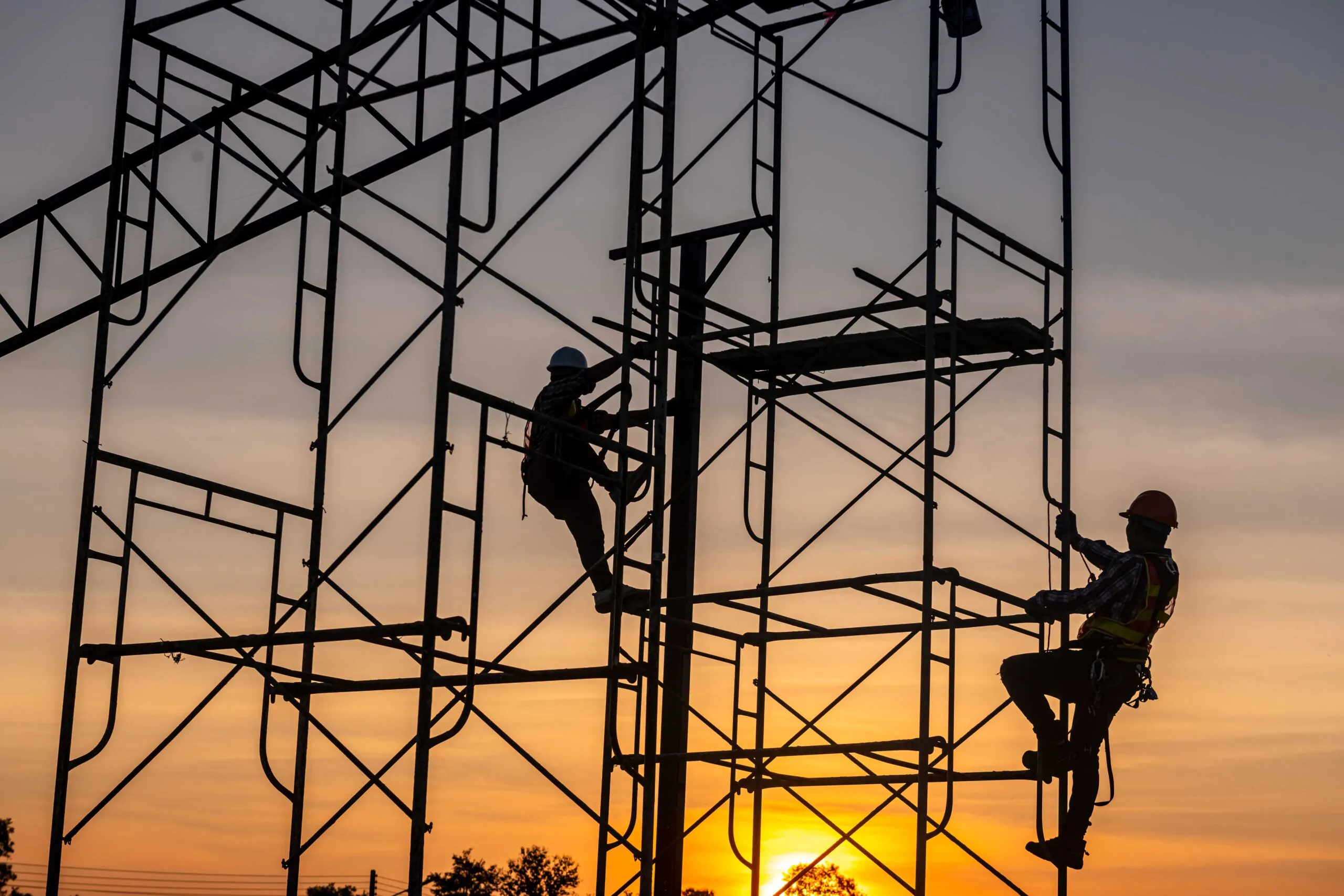
New York Scaffolding Accident Lawyer
Video Transcript
Scaffold accidents are so dangerous because by their very nature, scaffolding is put in place because you have to work at an elevated height.
And whenever a worker is at an elevated height, there are incredible risks of danger.
In fact, the Labor Law is often referred to in New York as the Scaffold Law because that’s how frequently people get injured using scaffolds.
The protection that workers have through the use of scaffold is the Labor Law, specifically Labor Law 240 and 241.
Those provisions within the Labor Law make sure that someone who is working on a scaffold is protected, because by definition, if you’re working at an elevated height, those Labor Law sections make sure that you are fully protected, whether it’s by the owner’s insurance company, the general contractor’s insurance, or one of the subcontractors, you are protected.
The liability or responsibility can be whomever created or built the scaffold if it was done improperly.
It can be one of the coworkers who isn’t properly doing the work they should be doing, and they drop a brick or something which falls on you.
It can be the owner or general contractor’s responsibility for not providing the safety equipment that you should be provided.
Any of these scenarios can result in injuries while on a scaffold, and unfortunately, the injuries from scaffolds end up being very, very significant.
There is probably nothing that has resulted in more significant and serious injuries in the course of my 35 years of representing injured people than those who have been injured on a job site through working on a scaffold.
If you or a friend or a loved one have been injured through the use of a scaffold, please call and reach out to our office.
No one will help you more than we will.
Scaffolding accidents are among the most devastating construction site incidents, often leading to life-altering injuries or even death. If you or a loved one has been injured due to a scaffold collapse, fall from a platform, or scaffolding equipment failure, you may be entitled to financial compensation.
At Billy Cooper Law, we advocate fiercely for construction workers and laborers injured by unsafe working conditions, contractor negligence, or defective scaffolding materials. We understand how complex and stressful these situations can be — and we’re here to help you get answers, support, and results.
BILLY COOPER LAW

The Danger of Scaffolding Accidents on Construction Sites
Scaffolding is widely used across the construction industry to allow workers to reach elevated workspaces. While scaffolds are essential, they also pose serious safety risks when not properly installed, maintained, or supervised. According to OSHA, thousands of workers are injured every year due to unsafe scaffolding practices, often in incidents that could have been avoided with proper safety measures.
Scaffold accidents typically occur as a result of:
- Falls from improperly secured platforms
- Collapses due to overloading or faulty materials
- Tools or materials falling from elevated scaffolds
- Electrical accidents from scaffolding near power lines
- Unsafe ladder access to scaffold platforms
These types of incidents often involve multiple layers of responsibility — from contractors and subcontractors to equipment manufacturers and site owners.
Common Causes of Scaffolding Accidents
Many scaffold-related injuries can be traced back to OSHA violations, lack of training, or poor oversight. At Billy Cooper Law, we regularly handle scaffold injury cases caused by:
Inadequate Safety Measures
Missing guardrails, unsecured planks, and unsteady foundations are common safety violations. These oversights can lead to falls from height or the sudden collapse of scaffolding structures.
Poor Scaffold Construction
Scaffolds must be erected by trained personnel and inspected regularly. If the scaffold is built improperly — using defective materials, incorrect angles, or unsafe joints — it creates a ticking time bomb on the job site.
Failure to Train Workers
Employers are legally required to ensure that workers are properly trained in using scaffolding and fall protection systems. When workers are untrained or misinformed, the likelihood of a serious injury increases significantly.
Inadequate Supervision and Inspections
Scaffolds should be inspected daily and any signs of weakness or damage addressed immediately. When job site supervisors neglect inspections or ignore known hazards, they put lives at risk.
Injuries Sustained in Scaffolding Accidents
Scaffolding accidents often result in severe, disabling injuries due to the height and weight factors involved. These injuries can have long-term effects on a worker’s ability to return to their profession or maintain a normal life. Common injuries include:
- Traumatic brain injuries (TBIs) from falls or impact with objects
- Spinal cord injuries, which may result in partial or complete paralysis
- Broken bones, including compound fractures requiring surgery
- Internal injuries and organ damage from blunt force trauma
- Amputations, particularly when heavy materials or machinery are involved
- Back and neck injuries, which may lead to chronic pain or disability
- Burns or electrocution when scaffolding makes contact with live wires
These injuries often require extensive medical treatment, including emergency care, rehabilitation, and possibly long-term disability support.
Who Is Liable for a Scaffolding Accident?
Liability in a scaffolding accident depends on who was responsible for creating or failing to address the hazard. In many cases, more than one party may be at fault. Potentially liable parties include:
Employers
Employers are responsible for maintaining safe working conditions and providing safety training. However, in most cases, employees cannot sue their employers directly due to workers’ compensation laws — but they can still file for benefits.
Contractors and Subcontractors
The general contractor and any subcontractors involved in erecting the scaffolding or supervising the job site can be held liable for negligence or violations of safety regulations.
Equipment Manufacturers
If the scaffold or its components (such as planks, couplers, or safety gear) were defective, the company that manufactured or sold the product may be responsible under product liability law.
Property Owners
In some cases, property owners who maintain control over the worksite may share responsibility if they failed to address known hazards or enforce safety protocols.
BILLY COOPER LAW
Filing a Claim After a Scaffolding Accident
Filing a scaffolding accident claim can be daunting, especially while recovering from serious injuries. At Billy Cooper Law, we simplify the process and guide you every step of the way. Here’s what to expect:
- Initial Consultation
We offer a free, confidential consultation to review the details of your accident, injuries, and potential claim. - Investigation and Evidence Gathering
Our legal team will collect photos, witness statements, OSHA reports, site inspection records, and medical documents to build your case. - Determining Liability
We’ll analyze whether your case involves workers’ comp, a third-party lawsuit, or both, and identify all liable parties. - Filing the Claim or Lawsuit
Depending on the case, we’ll file a workers’ compensation claim or initiate a personal injury lawsuit. - Negotiation and Litigation
We aggressively negotiate with insurance companies and are fully prepared to take your case to trial if necessary.
It’s critical to act quickly, as legal deadlines (statutes of limitations) may restrict your ability to file.
What Compensation Can You Recover?
Scaffold accident victims may be eligible to receive substantial financial compensation. Depending on your case, you may recover:
Medical Expenses
- Emergency treatment
- Hospital stays and surgery
- Physical therapy and rehabilitation
- Long-term care and medication
Lost Wages and Earning Capacity
- Wages lost while recovering
- Future income loss due to permanent disability
- Job retraining or vocational rehabilitation if you can’t return to construction work
Pain and Suffering
- Compensation for physical pain
- Emotional distress and mental anguish
- Reduced quality of life
Wrongful Death Compensation
If a loved one died due to a scaffolding accident, surviving family members may be able to pursue a wrongful death claim to recover funeral costs, lost income, and loss of companionship.
Why Choose Billy Cooper Law?
Billy Cooper Law is known for its dedication to injured workers and its ability to secure high-value settlements in complex construction accident cases. Here’s how we help our clients get justice:
- Construction Law Expertise: We understand the OSHA regulations, site responsibilities, and technical details that often determine the outcome of scaffolding claims.
- Aggressive Advocacy: We never back down from large contractors, manufacturers, or insurance companies. We fight for the maximum compensation our clients deserve.
- Personal Service: You’ll work directly with an attorney — not just an assistant or intake specialist. We provide responsive, compassionate service at every stage.
- No Fee Unless You Win: We work on a contingency basis, meaning you pay nothing out of pocket. If we don’t win your case, you owe us nothing.
New York Scaffolding Accidents FAQs: Medical Care and Legal Claims
These answers address common scaffolding accidents questions under New York law. The facts and applicable rules can change the answer. This is general information, not personal legal or medical advice.
When can Labor Law §240 apply to a scaffold accident?
Section 240 may apply when a covered worker performing specified work is injured because enumerated elevation protection was absent or inadequate and that violation caused the injury.
The scaffold’s involvement alone does not establish liability. The work, parties, device, elevation hazard, and cause require proof.
Sources: NY Labor Law §240: elevation-related safety protections; Cioffi v. Target Corp.: Labor Law §240 causation and sole-proximate-cause analysis.
Are OSHA scaffold rules the same as New York Labor Law?
No. OSHA sets workplace safety requirements, while New York Labor Law supplies separate state-law duties and civil causes of action.
The standards can overlap factually, but an OSHA issue does not automatically establish a Labor Law claim. Analyze each source independently.
Sources: OSHA 29 CFR 1926.451: Scaffold requirements; NY Labor Law §240: elevation-related safety protections; NY Labor Law §241: construction-site safety.
Who may be responsible for unsafe scaffolding?
Depending on the facts, an owner, general contractor, statutory agent, scaffold erector, subcontractor, rental company, maintenance provider, or manufacturer may require investigation.
Contracts, delegated authority, installation, inspections, and equipment custody help distinguish roles. The direct employer is generally handled through workers’ compensation.
Sources: NY Labor Law §240: elevation-related safety protections; NY Workers’ Compensation Law §11; Adams v. Genie Industries, NY Court of Appeals (2010).
What evidence matters when planking, supports, or a scaffold connection fails?
Preserve the scaffold type, design, load, planking, braces, ties, footings, counterweights, photographs, measurements, and components involved.
OSHA addresses scaffold capacity, foundations, platform construction, inspection, and removal of damaged parts. Do not dismantle or test evidence without a controlled process.
Sources: OSHA 29 CFR 1926.451: Scaffold requirements; U.S. HHS: Your medical records.
What if the scaffold had no guardrail or personal fall-arrest system?
Missing protection can be important under OSHA and Labor Law, depending on scaffold type, height, work, and cause of the injury.
Record the platform configuration, edge distance, anchor points, devices supplied, instructions, and whether the protection itself failed. Do not assume one system is required in every configuration.
Sources: OSHA 29 CFR 1926.451: Scaffold requirements; NY Labor Law §240: elevation-related safety protections.
Which scaffold records should be preserved?
Request daily or shift inspections, competent-person records, erection and modification records, training, safety meetings, rental documents, manufacturer instructions, and incident reports.
Also identify video, weather, loads, material movement, and everyone who changed or approved the scaffold. Some records may be overwritten quickly.
Sources: OSHA 29 CFR 1926.451: Scaffold requirements; U.S. HHS: Your medical records.
Can I receive workers’ compensation and sue over a scaffold injury?
Potentially. Workers’ compensation generally addresses benefits from the employment injury, while Labor Law or other claims may proceed against qualifying third parties.
Any third-party settlement can affect compensation liens and future benefits. Coordinate both matters under Section 29.
Sources: NY Workers’ Compensation Board: Understanding the claims process; NY Workers’ Compensation Law §29: third-party claims and recoveries.
What if I was accused of moving the scaffold or ignoring instructions?
The allegation must be tested against the actual evidence. Under Section 240, ordinary comparative negligence differs from sole proximate cause; other claims can apply comparative-fault rules.
Preserve instructions, available equipment, witness accounts, inspection records, and the scaffold’s condition. A supervisor’s report is not a final legal determination.
Sources: Cioffi v. Target Corp.: Labor Law §240 causation and sole-proximate-cause analysis; NY CPLR §1411: comparative fault; OSHA 29 CFR 1926.451: Scaffold requirements.
What medical evidence matters after a scaffold fall?
Accurate records of the fall height, impact, symptoms, imaging, diagnosis, treatment, rehabilitation, disability, and work restrictions help evaluate causation and damages.
Some head-injury symptoms can appear later. Seek urgent help for emergency warning signs and follow medical advice.
Sources: CDC: Concussion symptoms and emergency warning signs; CDC: What to do after a mild traumatic brain injury or concussion; NIH/NINDS: Spinal cord injury and rehabilitation; U.S. HHS: Your medical records.
When should a scaffold claim be reviewed, and how is value assessed?
Review should begin promptly because workers’ compensation, public-entity, wrongful-death, and lawsuit deadlines can differ and site evidence may disappear.
Value depends on liability proof, medical causation, prognosis, earnings, future needs, liens, fees, expenses, and available coverage—not an online average.
Sources: NY CPLR §214: personal-injury filing periods; NY General Municipal Law §50-e; NY CPLR §4111: past and future injury damages; NY Workers’ Compensation Law §29: third-party claims and recoveries; New York Rules of Professional Conduct, Rule 1.5: fees and expenses.
Contact Billy Cooper Law Today
If you’ve been hurt in a scaffolding accident, don’t face the legal system alone. You deserve compensation for your injuries, your lost income, and the pain you’ve endured.
Billy Cooper Law is here to guide you through every step of your case with the dedication and care you need. We’ve helped countless injured construction workers recover millions in compensation — and we’re ready to fight for you.
Contact us today to schedule your free consultation. No win, no fee — you pay nothing unless we recover for you.
BILLY COOPER LAW


Get the Answers You Need
At Billy Cooper Law, every day we renew our pledge to help injured people get the justice and compensation they deserve. We have a reputation throughout New York and nationally for standing up for our clients, and we take that responsibility seriously by approaching every case with preparation, persistence, and an unwavering commitment to results.