
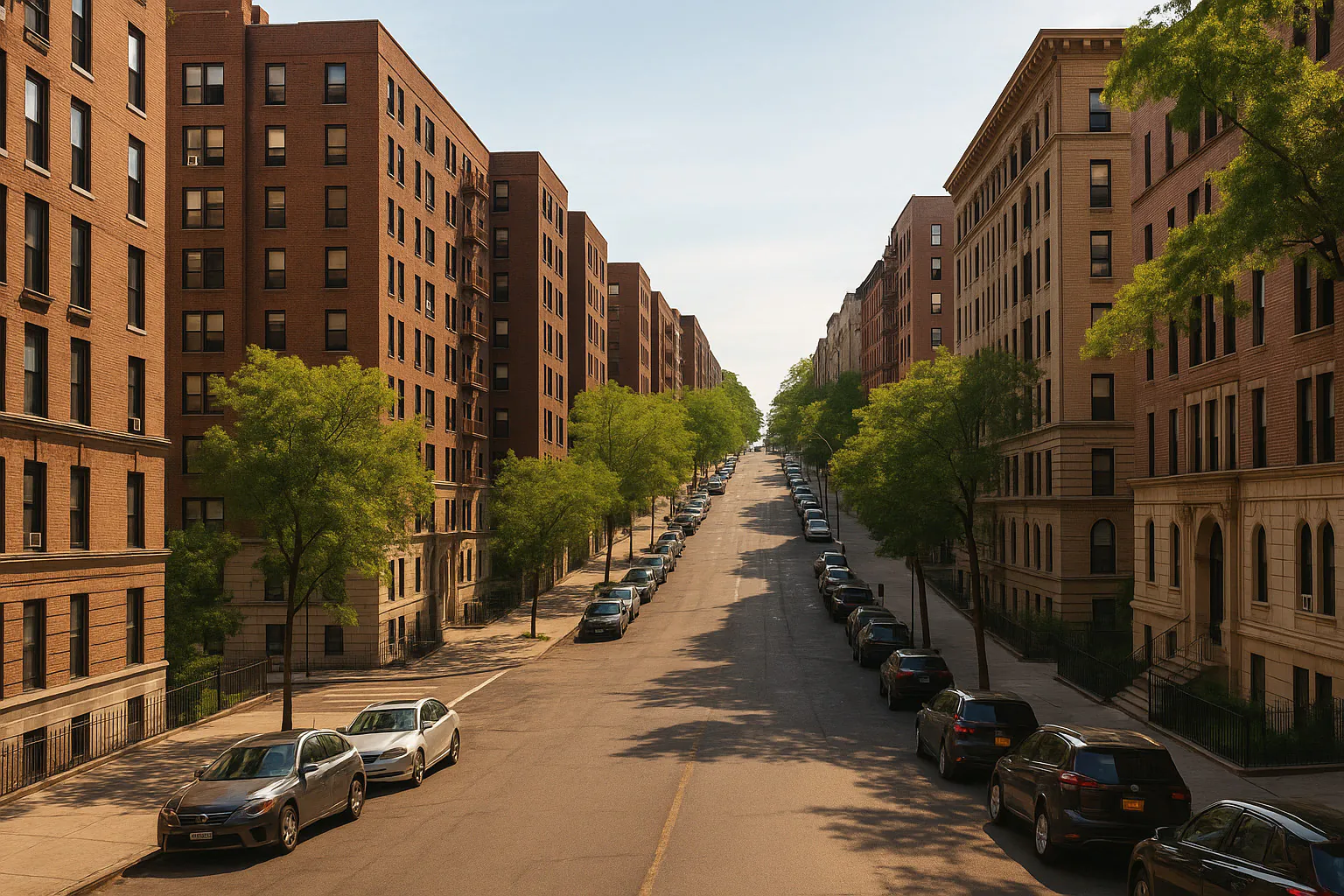
Washington Heights NY Personal Injury Lawyer
A serious injury can leave you dealing with pain, missed work, medical appointments, and insurance calls before you have had time to understand what happened. The location of the accident may also raise questions you cannot answer on your own: Who controlled the sidewalk? Which agency operated the bus? Was a roadway condition the City’s responsibility? Does a public-authority deadline apply?
Billy Cooper Law represents injured people throughout Manhattan and New York City. The firm has a nearby Manhattan location at 4746 Broadway, New York NY 10040, available by appointment. If you are unsure whether you have a claim, start by telling us what happened. We will identify the questions that need answering and explain your options.
BILLY COOPER LAW

Types of Injury Cases We Handle in Washington Heights NY
- Personal Injury
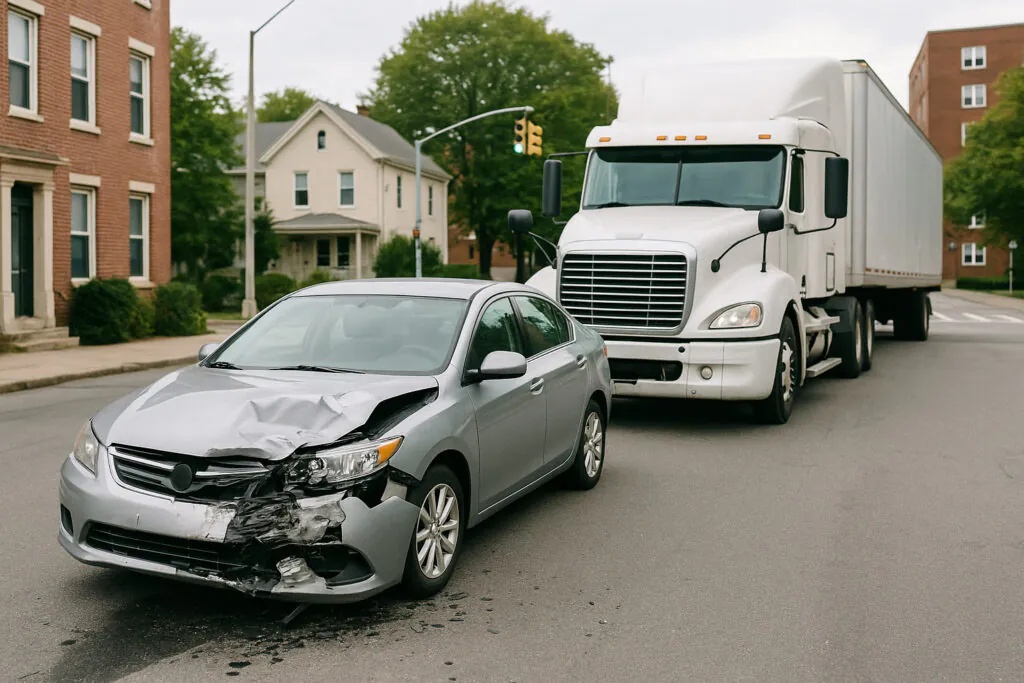
- Car Accidents
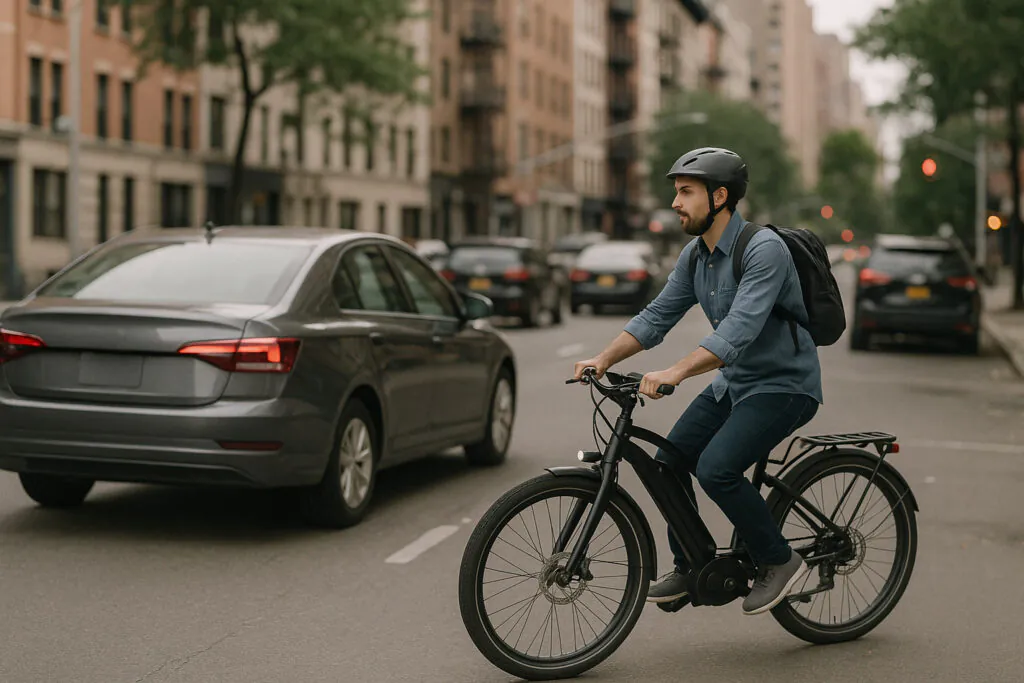
- E-Bike Accidents
- Slip and Fall
Manhattan Communities We Serve
- New York County
- Manhattan
- Upper East Side
- Upper West Side
- Washington Heights
- East Harlem
- Harlem
- Inwood
- Midtown
- Chelsea
- Greenwich Village
- Lower East Side
- Financial District
A Law Firm That Takes the Time to Understand What the Injury Has Changed
When an injury affects your ability to work, care for your family, or live independently, filing an insurance claim is only part of the job. Your lawyer must understand what the injury may mean six months from now—not just what appears in the first emergency-room record.
Billy Cooper Law brings more than 75 years of combined experience to personal injury cases. William H. Cooper began practicing in 1991, later became the firm’s lead trial counsel, and received a Super Lawyers designation from 2024 through 2026. His approach is built around preparation, direct communication, and understanding how an injury affects the whole person.
If you prefer to discuss your case in Spanish, the firm can provide bilingual representation. Personal injury cases are handled on a contingency basis, so there is no upfront legal fee and no attorney’s fee unless the firm obtains a recovery for you.
Why Washington Heights NY Injury Cases Require a Local Investigation
Washington Heights brings several transportation systems, property types, and government entities into a relatively compact area.
Broadway, Amsterdam Avenue, St. Nicholas Avenue, and West 181st Street carry buses, delivery vehicles, rideshare traffic, cyclists, and pedestrians. Near the George Washington Bridge, local streets interact with bridge ramps, the Trans-Manhattan Expressway, and the George Washington Bridge Bus Station. Around West 168th Street, hospital traffic, ambulances, subway riders, employees, patients, and visitors move through the same intersections throughout the day.
That mix affects how a case should be investigated. Depending on the exact location, evidence may be held by:
- A private driver or vehicle owner
- An employer or delivery company
- A building owner, managing agent, or commercial tenant
- New York City or one of its agencies
- The New York City Transit Authority or another MTA entity
- The Port Authority of New York and New Jersey
- A construction contractor or subcontractor
- A maintenance, security, or snow-removal company
The name on a bus, building, or work truck does not always identify the legally responsible party. Ownership, maintenance contracts, leases, permits, and operating agreements often determine where a claim belongs and which deadline applies.
A Local Accident Snapshot
Local transportation data helps explain why early investigation matters:
- In its 2016 Washington Heights transportation study, NYC DOT identified five Vision Zero priority intersections in the study’s central area and found a concentration of pedestrian injuries along Broadway and West 181st Street.
- During that study, buses on West 181st Street averaged only 3.65 mph westbound during the morning and 2.49 mph eastbound during the evening, reflecting a corridor with frequent stops, heavy boarding, congestion, and competing street uses.
- Studied curb space averaged 83% occupancy between 9 a.m. and 7 p.m.
- DOT observed at least one double-parked vehicle 13% of the time and at least one illegally parked vehicle 13% of the time along the studied Broadway blocks.
- Manhattan recorded 39 traffic deaths in 2025, down from 44 in 2024, according to NYC DOT.
These numbers do not mean every local street is unsafe. They show why sightlines, curb use, bus movements, delivery activity, and pedestrian access can become important evidence after a crash.
Where Serious Injuries Happen in Washington Heights
Broadway and West 181st Street
Broadway and West 181st Street combine commercial activity, a busway, multiple bus routes, subway access, loading activity, and traffic entering or leaving the George Washington Bridge area. A crash here may require traffic-camera footage, bus video, delivery records, signal information, and photographs showing whether parked vehicles obstructed the view.
The West 168th Street medical district
NewYork-Presbyterian/Columbia University Irving Medical Center draws patients, employees, ambulances, taxis, buses, and pedestrians throughout the day. Accidents may happen in crosswalks, parking areas, building entrances, loading zones, or while passengers enter and leave vehicles.
George Washington Bridge approaches
Crashes near West 178th Street, West 179th Street, Fort Washington Avenue, and the bridge ramps may involve private vehicles, commercial trucks, buses, roadway conditions, or more than one public authority. Determining who controlled the exact lane, ramp, platform, or sidewalk is essential.
Subway stations and bus stops
Washington Heights is served by the A, C, and 1 trains, including stations at 157th, 163rd, 168th, 175th, 181st, and 191st Streets. Falls and other injuries may involve stairs, elevators, escalators, platforms, station entrances, wet surfaces, crowding, or defective equipment.
Transit evidence can disappear quickly. Video, inspection records, operator reports, cleaning logs, and maintenance histories should be requested before they are overwritten or lost.
Apartment buildings and sidewalks
A fall in or around an apartment building may involve broken stairs, poor lighting, damaged flooring, an elevator problem, ice, water, or a defective sidewalk. Responsibility may rest with an owner, management company, tenant, contractor, or—in some cases—a government entity.
Construction and renovation sites
Construction injuries may involve a building owner, general contractor, subcontractor, employer, equipment company, or outside property owner. A worker may have both a workers’ compensation claim and a separate claim against someone other than the employer.
Personal Injury Cases Billy Cooper Law Handles
Billy Cooper Law represents clients in matters involving:
- Car, pedestrian, bicycle, motorcycle, and rideshare accidents
- Bus, truck, commercial-vehicle, train, and subway accidents
- Construction accidents
- Work accidents and third-party workplace claims
- Premises liability involving apartment buildings, stores, sidewalks, elevators, and stairs
- Medical malpractice
- Dog bites and animal attacks
- Defective products
- Catastrophic injuries
- Wrongful death
One accident may support more than one claim. For example, a delivery collision may involve the driver, the employer, the vehicle owner, and a maintenance company. A construction fall may involve workers’ compensation benefits plus a claim against an owner or contractor.
What to Do After an Accident
Your health comes first. If you may have suffered a head injury, spinal injury, fracture, internal injury, or other serious trauma, call 911 or go to an emergency department.
Then, if you can do so safely:
- Report the accident. Call the police after a traffic collision. Report a fall or building accident to the owner, manager, security desk, or supervisor.
- Identify the exact location. Record the address, intersection, station entrance, platform, bus number, vehicle number, or construction area.
- Take photographs and video. Capture the overall scene and close views of the hazard, vehicles, traffic controls, lighting, weather, and surrounding businesses.
- Collect witness information. A name and phone number may be enough for your lawyer to follow up.
- Get medical care promptly. Tell the provider how the injury happened and describe every affected body part.
- Do not give a recorded statement without understanding why it is being requested. An adjuster’s questions may be aimed at limiting the claim.
- Preserve damaged property. Keep your shoes, clothing, bicycle, helmet, child seat, product, or other physical evidence.
- Speak with a lawyer early if a government or transit entity may be involved. Short notice periods can expire while you are still receiving treatment.
Evidence That Can Strengthen Your Case
Useful evidence depends on how the injury happened, but may include:
- Police and ambulance reports
- Photographs and video from the scene
- Traffic, business, apartment, or doorbell-camera footage
- Bus, subway, station, or transit-vehicle recordings
- 911, 311, and agency records
- Vehicle event-data and telematics
- Delivery schedules and driver logs
- Building inspection files and maintenance records
- Elevator or escalator service records
- Snow and ice removal logs
- Construction permits, daily reports, and safety records
- Prior complaints about the same hazard
- Medical records and diagnostic imaging
- Wage, tax, and employment records
- Testimony from witnesses and treating providers
Do not assume footage will remain available. Many surveillance systems automatically record over older video, sometimes within days.
New York Filing Deadlines and Insurance Rules
Most negligence claims
Under CPLR § 214, many New York personal injury lawsuits must be started within three years. That is not a universal deadline. The time can be much shorter depending on the defendant and the type of claim.
Medical malpractice
A medical malpractice claim generally must be filed within two years and six months under CPLR § 214-a, subject to rules and exceptions that may require individual review.
Wrongful death
A wrongful death action generally has a two-year filing period under EPTL § 5-4.1. The claim must ordinarily be brought by the estate’s personal representative.
Claims involving New York City
When New York City or certain municipal entities may be responsible, General Municipal Law § 50-e generally requires a Notice of Claim within 90 days. General Municipal Law § 50-i also imposes conditions and a one-year-and-90-day limitations period for many municipal tort actions.
A Notice of Claim is not the lawsuit itself. It is an additional step that ordinarily must be completed first.
Transit claims
Claims against the New York City Transit Authority are governed by additional requirements under Public Authorities Law § 1212, including a 90-day notice requirement for many personal injury claims and a one-year-and-90-day limitations period.
Do not assume that every MTA-branded vehicle or facility belongs to the same legal entity. The operator and owner must be confirmed.
No-Fault insurance deadlines
New York No-Fault coverage generally pays covered medical expenses and portions of lost income without deciding who caused the crash. Basic coverage is generally limited to $50,000 per eligible person.
The New York Department of Financial Services states that written notice generally must be submitted within 30 days of the accident. Medical bills generally must be submitted within 45 days, and lost-earnings documentation within 90 days, unless an accepted justification applies.
BILLY COOPER LAW
New Rules for Fault in Motor Vehicle Cases
New York’s comparative-fault rules changed for certain motor vehicle injury actions in 2026.
For most non-automobile injury cases, CPLR § 1411(a) follows pure comparative fault. If you were partly responsible, your compensation is generally reduced by your percentage of fault rather than eliminated.
CPLR § 1411(b), effective May 26, 2026, created a different rule for personal injury actions subject to Article 51 of the Insurance Law. In those covered motor vehicle actions, a claimant whose fault is greater than the fault of the defendant—or the combined fault of the defendants from whom recovery is sought—may be barred from the tort recovery.
The amendment applies based on when an action or proceeding was commenced, so cases filed around the effective date require careful review. Basic No-Fault benefits remain separate and are generally available without regard to fault.
The 2026 reforms also changed the definition of a qualifying “serious injury.” The prior 90/180-day category no longer appears in the current version of Insurance Law § 5102(d). A person seeking pain-and-suffering damages after a covered motor vehicle accident must establish one of the remaining statutory injury categories.
Who May Be Responsible?
Liability depends on who owed a duty to act safely and how that failure caused the injury.
Possible defendants include:
- A negligent driver
- The driver’s employer
- A vehicle owner
- A rideshare, delivery, or transportation company
- A property owner or managing agent
- A commercial tenant
- A maintenance or cleaning contractor
- A snow-removal company
- A building owner or construction contractor
- A product manufacturer or seller
- A doctor, hospital, or medical practice
- New York City
- A transit or public authority
You do not need to identify every defendant before calling a lawyer. That is part of the investigation.
Compensation Available After a Serious Injury
A personal injury claim may seek compensation for:
- Past and future medical care
- Lost wages
- Reduced earning capacity
- Rehabilitation and therapy
- Home health assistance
- Mobility equipment and home modifications
- Pain and suffering
- Emotional harm
- Loss of enjoyment of life
- Scarring or disfigurement
- Loss of independence
- Funeral and burial expenses in a fatal case
- Other financial losses caused by the injury
The value of a claim depends on the available evidence, insurance coverage, degree of fault, nature of the injury, treatment received, and long-term effect on your life. A careful evaluation should account for future consequences, not just bills that have already arrived.
When a Government Agency or Public Authority May Be Involved
Tell your lawyer immediately if the accident involved:
- A City-owned vehicle
- A police, fire, sanitation, or parks vehicle
- A City street or roadway defect
- Public property
- A bus, subway, station, elevator, or escalator
- A bridge ramp or Port Authority facility
- A public school or public-housing location
- A government construction project
The first task is identifying the correct entity. An accident near the George Washington Bridge might involve New York City, the Port Authority, a transit organization, or a private contractor. Filing against the wrong entity does not necessarily preserve a claim against the right one.
For claims against New York City, the NYC Comptroller’s Office provides an electronic claim-filing system. Filing a form without first understanding the responsible entity, legal theory, and necessary details can create avoidable problems.
Local Hospitals, Police Precincts, and Courts
NewYork-Presbyterian Hospital–Columbia Presbyterian Center, located at 622 West 168th Street, is designated by New York State as a Level I Adult Trauma Center. Its proximity can be important in serious accident cases, but you should seek appropriate medical care wherever you can receive it promptly.
Washington Heights is covered by more than one NYPD precinct. The 34th Precinct serves Washington Heights and Inwood north of West 179th Street. The 33rd Precinct covers the lower portion of Washington Heights. The exact accident location determines which command may hold a collision report or related records.
Personal injury lawsuits arising in Manhattan may be heard in New York County Supreme Court, Civil Term, whose main facility is at 60 Centre Street, New York NY 10007. Court location should not be confused with where medical care is received or where a law firm maintains an office.
How Billy Cooper Law Investigates a Washington Heights Case
A local investigation begins with the exact spot where the injury occurred.
Depending on the case, the firm may:
- Inspect and photograph the accident scene.
- Determine who owned, controlled, operated, or maintained the location.
- Send preservation demands for video, vehicles, products, and electronic records.
- Obtain police, 911, 311, transit, building, and construction records.
- Review contracts, leases, permits, and maintenance agreements.
- Identify every available insurance policy.
- Interview witnesses while memories are still clear.
- Consult medical, engineering, reconstruction, vocational, or economic experts.
- Document how the injury affects your work, family, mobility, and daily life.
- Prepare the case from the beginning as though it may ultimately need to be tried.
Early work matters. Once a vehicle is repaired, a sidewalk is patched, a camera recording is erased, or a contractor leaves the project, important evidence becomes harder to recover.
Frequently Asked Questions
How much does it cost to speak with Billy Cooper Law?
The consultation is free. The firm handles personal injury matters on a contingency basis, meaning there is no upfront legal fee and no attorney’s fee unless compensation is recovered.
Does Billy Cooper Law have a location near Washington Heights?
Yes. The firm lists a Manhattan location at 4746 Broadway, New York NY 10040, available by appointment. The New York City phone number is (718) 866-3311.
What if I was partly responsible for the accident?
Do not assume partial fault ends your claim. Most non-motor-vehicle cases remain subject to pure comparative fault. Certain motor vehicle actions are now governed by the 2026 rule that may bar tort recovery if the claimant is more at fault than the defendant or combined defendants.
Who pays my medical bills after a car or pedestrian accident?
No-Fault insurance commonly pays covered accident-related medical expenses regardless of fault. A pedestrian usually applies through the insurer for the vehicle that struck them. Different procedures may apply in hit-and-run or uninsured-vehicle cases.
Who is responsible for a broken sidewalk?
It depends on the property and exact location. The adjacent property owner, a commercial tenant, a contractor, or New York City may be responsible. Ownership records, leases, repair history, prior complaints, and the type of building all matter.
What if I was injured on a bus or subway?
Report the incident, record the vehicle or station information, photograph the area, and speak with a lawyer promptly. A 90-day Notice of Claim requirement may apply, and the correct transit entity must be identified.
Should I speak with the insurance adjuster?
You should provide required notices to your own insurer, but be careful about recorded statements or broad medical authorizations. An adjuster may use your words to dispute fault, the cause of your injuries, or the seriousness of the claim.
How long will my case take?
Some cases resolve within months. Others take longer because treatment is ongoing, fault is disputed, multiple defendants are involved, or a lawsuit and trial are necessary. The goal should be a well-supported result—not a rushed settlement that overlooks future losses.
Related Resources
- New York personal injury claims
- Motor vehicle accident claims
- Construction accident claims
- Premises liability claims
- Work accident claims
- Medical malpractice claims
- Wrongful death claims
Tell Us What Happened
You do not need to know who was legally responsible before asking for help. You only need to explain what happened, where it happened, and how you have been affected.
Billy Cooper Law offers free consultations and handles personal injury cases on a contingency basis. Call (718) 866-3311 or contact Billy Cooper Law. If a government agency, transit authority, or bridge facility may be involved, do not wait to learn which deadlines apply.
Communities We Serve
- New York County
- Manhattan
- Upper East Side
- Upper West Side
- Washington Heights
- East Harlem
- Harlem
- Inwood
- Midtown
- Chelsea
- Greenwich Village
- Lower East Side
- Financial District
Sources
Billy Cooper Law
- Billy Cooper Law
- Billy Cooper Law Personal Injury Practice
- Billy Cooper Law Practice Areas
- Billy Cooper, Esq.
- Anieska Garcia, Esq.
- Billy Cooper Law Contact Information
- Billy Cooper Law Site Map
Washington Heights and Manhattan
- NYC DOT Washington Heights Neighborhood Transportation Study
- NYC DOT West 181st Street Busway Information
- NYC DOT 2025 Traffic Fatality Report
- Manhattan Community Board 12 Community Profile
- NYPD 33rd Precinct
- NYPD 34th Precinct
- NewYork-Presbyterian Hospital–Columbia Presbyterian Center
- New York County Supreme Court, Civil Term
New York Law and Insurance
- CPLR § 214 — Personal Injury Limitations Period
- CPLR § 214-a — Medical Malpractice Limitations Period
- CPLR § 1411 — Comparative Fault
- EPTL § 5-4.1 — Wrongful Death Actions
- Insurance Law § 5102 — No-Fault Definitions and Serious Injury
- Insurance Law § 5104 — Motor Vehicle Personal Injury Actions
- New York Department of Financial Services No-Fault FAQs
- General Municipal Law § 50-e — Notice of Claim
- General Municipal Law § 50-i — Municipal Tort Actions
- Public Authorities Law § 1212 — Claims Against the New York City Transit Authority
- NYC Comptroller Electronic Claim Filing
- New York 2026 Motor Vehicle Insurance Reforms
BILLY COOPER LAW
Get the Answers You Need
At Billy Cooper Law, every day we renew our pledge to help injured people get the justice and compensation they deserve. We have a reputation throughout New York and nationally for standing up for our clients, and we take that responsibility seriously by approaching every case with preparation, persistence, and an unwavering commitment to results.