

Harlem NY Personal Injury Lawyer
A serious injury can leave you dealing with pain, medical appointments, missed work, and insurance calls before you have had time to understand what happened. You may know that someone else caused the accident. You may not know who is legally responsible, where the evidence is kept, or which deadline applies.
Those questions can be especially complicated in Harlem NY. A collision near 125th Street may involve a private driver, delivery company, rideshare service, MTA bus, or dangerous roadway condition. A fall may lead to a landlord, commercial tenant, management company, contractor, public authority, or adjoining property owner. Identifying the correct parties early can make a meaningful difference.

Types of Injury Cases We Handle in Harlem NY
- Personal Injury
- Slip and Fall
- E-Bike Accidents
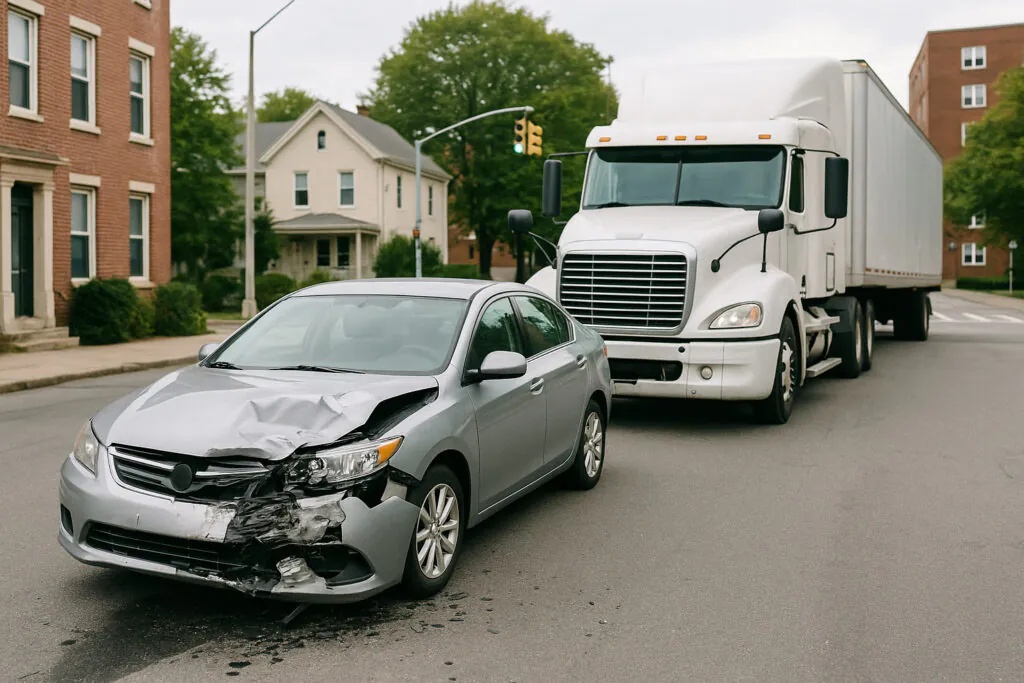
- Car Accidents
Communities We Serve in New York County
- New York County
- Manhattan
- Upper East Side
- Upper West Side
- Washington Heights
- East Harlem
- Harlem
- Inwood
- Midtown
- Chelsea
- Greenwich Village
- Lower East Side
- Financial District
A Legal Team Prepared for Serious Injury Cases
When an injury may affect your ability to work or live independently, you need a lawyer who looks beyond the bills that have already arrived. A serious case may require proof of future treatment, reduced earning capacity, permanent limitations, and the help you will need at home.
Billy Cooper Law’s history dates to a practice founded in 1960, and the firm reports more than 75 years of combined experience. William H. “Billy” Cooper has practiced in New York since 1991 and spent decades as the firm’s lead trial counsel.
The firm’s published case results include a $9 million catastrophic injury settlement, a $6 million settlement involving life-changing neurological injuries, a $2.4 million wrongful death recovery, and a $700,000 pedestrian accident settlement in New York County. Those cases required the lawyers to document far more than an initial diagnosis.
If you prefer to discuss your case in Spanish, attorney Anieska J. Garcia provides bilingual representation. Personal injury consultations are free, and cases are handled on a contingency basis. There is no upfront attorney’s fee, and no legal fee is owed unless compensation is recovered.
Billy Cooper Law does not list an office in Harlem. The firm represents Manhattan clients from its White Plains NY office and its New York NY location at 4746 Broadway, which is available by appointment.
Why Harlem Injury Cases Require a Local Investigation
Harlem brings several kinds of traffic and property control into a relatively compact area. Along 125th Street, pedestrians interact with buses, delivery vehicles, rideshare pickups, bicycles, e-bikes, turning traffic, and passengers transferring among subway and rail lines. The MTA’s Manhattan transit map shows the concentration of subway, bus, and Metro-North connections along this corridor.
That concentration affects how an accident should be investigated. Evidence may be held by a storefront, apartment building, bus operator, transit authority, police precinct, nearby construction site, or private vehicle owner. One camera may show the collision itself while another captures the seconds leading up to it.
Property cases are just as dependent on location. Harlem includes large apartment buildings, public housing, mixed-use properties, brownstones, storefronts, schools, parks, construction sites, and government-owned spaces. The address alone may not tell you who repaired a stairway, cleared the sidewalk, controlled the entrance, or hired the contractor that created a dangerous condition.
A Local Accident Snapshot
The NYPD’s 28th Precinct serves central Harlem, while the 32nd Precinct serves the northeastern portion of the neighborhood.
Through August 16, 2026, the precincts reported a combined 676 traffic collisions and 371 injuries. Those injuries included 83 pedestrians, 53 traditional bicyclists, and 48 users of motorized two-wheel vehicles. The reports also recorded three traffic deaths during that period. The figures are preliminary, but they show why fault investigations in Harlem cannot focus only on cars. Pedestrians, cyclists, e-bike riders, buses, and other vehicles regularly occupy the same limited street space. See the NYPD’s 28th Precinct TrafficStat report and 32nd Precinct TrafficStat report.
Where Serious Injuries Happen in Harlem
Busy intersections and commercial corridors
On streets such as 125th Street, Lenox Avenue, Adam Clayton Powell Jr. Boulevard, and Frederick Douglass Boulevard, a crash may involve turning traffic, double-parked vehicles, obstructed sight lines, delivery activity, or a driver entering a crowded crosswalk.
The investigation may require traffic-camera footage, signal information, vehicle damage, witness accounts, business surveillance, and records showing whether a driver was working at the time.
Buses, subways, and stations
Transit injuries can occur in collisions, sudden bus movements, platform falls, defective stairways, closing-door incidents, and accidents while boarding or leaving a vehicle.
“The MTA” is not always the correct legal defendant. New York City Transit, another public authority, a private contractor, or an outside driver may be responsible. Route numbers, vehicle numbers, station entrances, direction of travel, and the exact time should be preserved as soon as possible.
Apartment buildings and sidewalks
Falls in Harlem buildings may result from broken stairs, inadequate lighting, loose handrails, leaking pipes, defective elevators, damaged flooring, snow or ice, and unsafe entrances.
Sidewalk responsibility presents its own questions. Under New York City Administrative Code § 7-210, adjoining property owners are generally responsible for maintaining sidewalks in a reasonably safe condition, subject to exceptions that include certain owner-occupied one-, two-, and three-family residential properties. A utility, contractor, tenant, or the City may also be involved depending on what caused the defect.
Construction and workplace accidents
Renovations, façade work, scaffolding, demolition, and interior construction can expose workers and pedestrians to falling objects, elevation hazards, unsafe equipment, unprotected openings, and poorly controlled walkways.
An injured worker may have workers’ compensation benefits and a separate claim against a property owner, general contractor, subcontractor, equipment company, or another responsible party. These claims must be coordinated carefully.
Personal Injury Cases Billy Cooper Law Handles
Billy Cooper Law represents people injured in:
- Car accidents
- Motorcycle accidents
- Pedestrian accidents
- Bicycle accidents
- E-bike accidents
- Uber and Lyft accidents
- Bus accidents
- Subway accidents
- Premises liability cases
- Construction accidents
- Work accidents
- Medical malpractice
- Defective products
- Dog bites
- Wrongful death
What to Do After an Accident
Your health comes first. Call 911 or seek medical attention if you may have suffered a head injury, fracture, spinal injury, internal injury, or other serious trauma. Adrenaline can temporarily mask symptoms, so do not assume you are fine simply because you can stand or walk.
When you are able:
- Report what happened. Call the police after a collision. Notify the property owner, building manager, employer, contractor, or transit employee after an accident on premises or at work.
- Identify the exact location. Record the address, intersection, station entrance, platform, bus route, vehicle number, building floor, or construction area.
- Take photographs and video. Capture the hazard, surrounding area, traffic controls, lighting, weather, vehicle positions, damage, debris, and visible injuries.
- Get witness information. A name and telephone number may be more useful than a witness who promises to remain at the scene.
- Follow medical recommendations. Keep appointments and explain how your symptoms affect work, sleep, movement, and daily responsibilities.
- Be careful with insurance calls. Report claims when required, but do not guess about speed, distance, fault, or the extent of your injuries.
- Ask about deadlines early. This is particularly important if a City vehicle, public sidewalk, bus, subway, public hospital, school, park, or government-owned building may be involved.
Evidence Worth Preserving
Insurance companies often begin evaluating a claim immediately. Your case should be documented just as promptly.
Useful evidence may include:
- Scene photographs and video
- Police, incident, ambulance, and workplace reports
- Witness names and contact information
- Storefront, apartment, traffic, and transit surveillance
- Bus route, vehicle, and operator information
- Rideshare trip records and app screenshots
- Damaged clothing, footwear, helmets, tools, or products
- Vehicle event data and electronic records
- Building complaints, inspection records, repair logs, and work orders
- Construction permits, contracts, safety plans, and daily reports
- Medical records, bills, prescriptions, and appointment calendars
- Wage statements, tax records, and employer correspondence
- A written account of how the injury affects everyday life
Do not repair or discard an allegedly defective product. Do not throw away the shoes worn during a fall or the helmet damaged in a bicycle crash. Physical evidence can become important when the parties disagree about how an injury happened.
New York Deadlines and Insurance Rules
Different parts of the same case may have different deadlines.
Personal injury lawsuits
Under CPLR § 214, many New York personal injury actions must be commenced within three years. That general period does not apply to every case.
A medical malpractice action is generally subject to a two-year-and-six-month period, with important rules involving continuous treatment, foreign objects, and certain failures to diagnose cancer. A wrongful death action generally must be commenced within two years after death.
These are filing deadlines, not reasons to postpone an investigation. Video may be overwritten and witnesses may become difficult to locate long before a limitations period expires.
No-fault deadlines after a vehicle accident
New York’s basic no-fault coverage generally provides up to $50,000 per eligible injured person for covered medical expenses, lost earnings, and certain necessary costs, regardless of who caused the crash.
The New York Department of Financial Services states that written notice is generally due within 30 days after the accident. Medical bills are generally due within 45 days after treatment, and proof of wage loss is generally due within 90 days after the loss is incurred. Limited excuses may be available, but relying on an exception is risky.
The motor vehicle rules changed in 2026
For actions commenced on or after May 26, 2026, New York eliminated the former 90/180-day category from the statutory definition of a serious injury. The remaining categories under Insurance Law § 5102 include fractures, significant disfigurement, permanent loss of use, permanent consequential limitations, and significant limitations of a body function or system.
The same reforms changed comparative fault for personal injury actions subject to New York’s no-fault law. Under CPLR § 1411, recovery can be barred when the injured person’s share of fault is greater than the combined share of the defendants from whom recovery is sought. When recovery is not barred, compensation is reduced by the injured person’s percentage of fault.
Most other negligence cases continue to use New York’s pure comparative-fault rule, under which partial responsibility generally reduces compensation rather than eliminating the claim. The Department of Financial Services’ 2026 motor vehicle reform guidance explains the effective date and scope of these changes.
BILLY COOPER LAW
Who May Be Responsible?
Responsibility depends on how the accident occurred and who controlled the risk.
A traffic case may involve the driver, vehicle owner, employer, delivery company, rideshare service, maintenance contractor, or government entity responsible for a dangerous roadway condition.
A property case may involve an owner, landlord, commercial tenant, management company, maintenance contractor, snow-removal company, utility, or construction contractor. The legal questions often include who controlled the area, who created the hazard, and whether the responsible party knew or should have known about it.
Construction cases may involve several companies working at the same location. Workers’ compensation does not automatically prevent an injured worker from bringing a separate claim against a negligent third party.
Do not assume an insurance adjuster’s fault determination is final. Surveillance, witness statements, road design, vehicle damage, repair records, and other evidence may tell a different story.
Compensation in a Personal Injury Claim
Compensation should reflect both what the injury has already cost you and what it is likely to cost in the future.
Depending on the facts, recoverable losses may include:
- Emergency treatment, hospitalization, and surgery
- Future medical care and rehabilitation
- Lost wages
- Reduced future earning capacity
- Medication and medical equipment
- Transportation to treatment
- Home health care and household assistance
- Pain and suffering
- Loss of mobility or independence
- Scarring and disfigurement
- The effect of the injury on daily and family life
- Funeral expenses and qualifying financial losses after a wrongful death
The value of a case is not determined by a diagnosis alone. A knee injury may affect a construction worker differently from someone with a desk job. A spinal injury may require continuing care even after the person has reached a point where further improvement is unlikely. Those differences need to be documented before a claim is valued.
Claims Involving New York City or a Public Authority
Government claims require immediate attention. Under General Municipal Law § 50-e, a notice of claim is generally required within 90 days when a tort claim is brought against a covered public corporation. The NYC Comptroller’s personal injury claim guidance also instructs claimants to file within 90 days when they believe the City caused their injuries.
A lawsuit against New York City is generally subject to a one-year-and-90-day period under General Municipal Law § 50-i.
Claims against the New York City Transit Authority have separate statutory requirements. Public Authorities Law § 1212 incorporates the notice requirements of General Municipal Law § 50-e and generally requires a tort action to be commenced within one year and 90 days.
The hardest part is sometimes identifying the public entity. A fall near a station may involve New York City Transit, the City, a contractor, or an adjoining property owner. Filing with one government office may not preserve a claim against a different authority.
If a government agency may be involved, do not wait to learn which deadline applies.
Local Courts, Medical Care, and Agencies
Personal injury lawsuits arising in Harlem may be heard in the New York County Supreme Court Civil Term, whose main courthouse is at 60 Centre Street in New York NY. Venue depends on factors including where the parties reside, where the accident occurred, and which defendants are involved.
Emergency care may be provided by Mount Sinai Morningside’s Emergency Department or another hospital selected according to the patient’s condition and EMS protocols. Keep discharge instructions, referrals, imaging reports, and the names of every provider involved in follow-up care.
Local records may also come from:
- The NYPD’s 28th or 32nd Precinct
- NYC Department of Transportation
- NYC Department of Buildings
- NYC Parks
- NYC Housing Authority
- NYC Comptroller
- New York City Transit or another MTA entity
- Building owners, management companies, and private contractors
The agency that responds at the scene is not necessarily the entity legally responsible for the accident.
How Billy Cooper Law Investigates a Harlem Injury Case
A useful investigation begins with control: who owned the vehicle, employed the driver, maintained the building, repaired the sidewalk, operated the bus, or supervised the construction work?
From there, Billy Cooper Law may:
- Inspect and photograph the accident location
- Send preservation requests for surveillance and electronic evidence
- Interview witnesses
- Obtain police and incident reports
- Review insurance policies and available coverage
- Examine building ownership and management records
- Review permits, violations, complaints, and repair histories
- Identify contractors and subcontractors
- Obtain medical records and consult qualified experts
- Document lost income and future earning limitations
- Work with medical, vocational, economic, or engineering professionals when needed
- Prepare the case for litigation rather than assuming the insurer will make a reasonable offer
The goal is to build a clear account of what happened, why it happened, and how the injury changed your life.
Frequently Asked Questions
Do I have a case if there was no police or incident report?
Possibly. Other evidence may include witnesses, photographs, 911 records, medical documentation, surveillance footage, vehicle damage, and electronic records. The absence of a prompt report can make a claim harder to prove, so document the event as soon as possible.
What if I was hit while walking or riding a bicycle?
Pedestrians and cyclists struck by vehicles may qualify for no-fault benefits even though they were not inside a car. A separate claim for pain and suffering may be available if the injuries satisfy New York’s serious-injury requirement.
Who is responsible for a Harlem sidewalk fall?
It may be the adjoining property owner, the City, a utility, a tenant, or a contractor. The answer depends on the property’s use, the exact location of the defect, who created it, and whether an exception to the usual sidewalk-liability rule applies.
Can I recover if I was partly responsible?
In many cases, yes. Most non-motor-vehicle negligence claims remain subject to pure comparative fault, meaning your compensation is reduced by your share of responsibility. Different rules now apply to personal injury actions covered by New York’s no-fault law.
Should I give the insurance company a recorded statement?
Not before you understand why the statement is being requested and how it may affect the claim. An adjuster may ask questions intended to minimize your injuries or shift responsibility.
What if I was hurt on an MTA bus or in a subway station?
Preserve the route, vehicle number, station, entrance, platform, direction of travel, and exact time. Public-authority notice requirements may apply, and video should be requested promptly.
How much does it cost to speak with Billy Cooper Law?
The consultation is free. Personal injury cases are handled on a contingency basis, with no upfront attorney’s fee and no legal fee unless compensation is recovered.
Can I discuss my case in Spanish?
Yes. Attorney Anieska J. Garcia provides representation in English and Spanish.
Related Information
- New York personal injury claims
- Motor vehicle accident claims
- Premises liability claims
- Construction accident claims
- Medical malpractice claims
- Wrongful death claims
- Billy Cooper Law case results
Tell Us What Happened
You do not need to know which insurance company should pay, who owned the sidewalk, or which transit entity operated the vehicle before asking for help.
Start with what you know: where the accident happened, how you were injured, what medical care you received, and who has contacted you since. Billy Cooper Law will listen, identify the questions that need answering, and explain the next steps.
Call (718) 866-3311 or contact Billy Cooper Law to request a free consultation.
Communities We Serve
- New York County
- Manhattan
- Upper East Side
- Upper West Side
- Washington Heights
- East Harlem
- Harlem
- Inwood
- Midtown
- Chelsea
- Greenwich Village
- Lower East Side
- Financial District
Sources
Billy Cooper Law
- Billy Cooper Law official website
- Billy Cooper Law personal injury practice
- Billy Cooper Law locations
- William H. Cooper attorney profile
- Anieska J. Garcia attorney profile
- Billy Cooper Law case results
- Billy Cooper Law contact information
- Car accident practice
- Motorcycle accident practice
- Pedestrian accident practice
- Bicycle accident practice
- E-bike accident practice
- Uber and Lyft accident practice
- Bus accident practice
- Subway accident practice
- Premises liability practice
- Construction accident practice
- Work accident practice
- Medical malpractice practice
- Products liability practice
- Dog bite practice
- Wrongful death practice
Harlem and New York County
- NYPD 28th Precinct
- NYPD 28th Precinct TrafficStat report
- NYPD 32nd Precinct
- NYPD 32nd Precinct TrafficStat report
- MTA Manhattan transit map
- NYC DOT sidewalk maintenance and responsibility guidance
- New York City Administrative Code § 7-210
- New York County Supreme Court Civil Term
- Mount Sinai Morningside Emergency Department
- NYC Comptroller personal injury claim FAQs
New York Law and Insurance
- CPLR § 214 — Personal injury limitations period
- CPLR § 214-a — Medical malpractice limitations period
- CPLR § 1411 — Comparative fault
- EPTL § 5-4.1 — Wrongful death actions
- General Municipal Law § 50-e — Notice of claim
- General Municipal Law § 50-i — Municipal tort actions
- Insurance Law § 5102 — No-fault definitions and serious injury
- Public Authorities Law § 1212 — Claims against the New York City Transit Authority
- New York Department of Financial Services no-fault FAQs
- New York Department of Financial Services 2026 motor vehicle insurance reforms
BILLY COOPER LAW


Get the Answers You Need
At Billy Cooper Law, every day we renew our pledge to help injured people get the justice and compensation they deserve. We have a reputation throughout New York and nationally for standing up for our clients, and we take that responsibility seriously by approaching every case with preparation, persistence, and an unwavering commitment to results.