
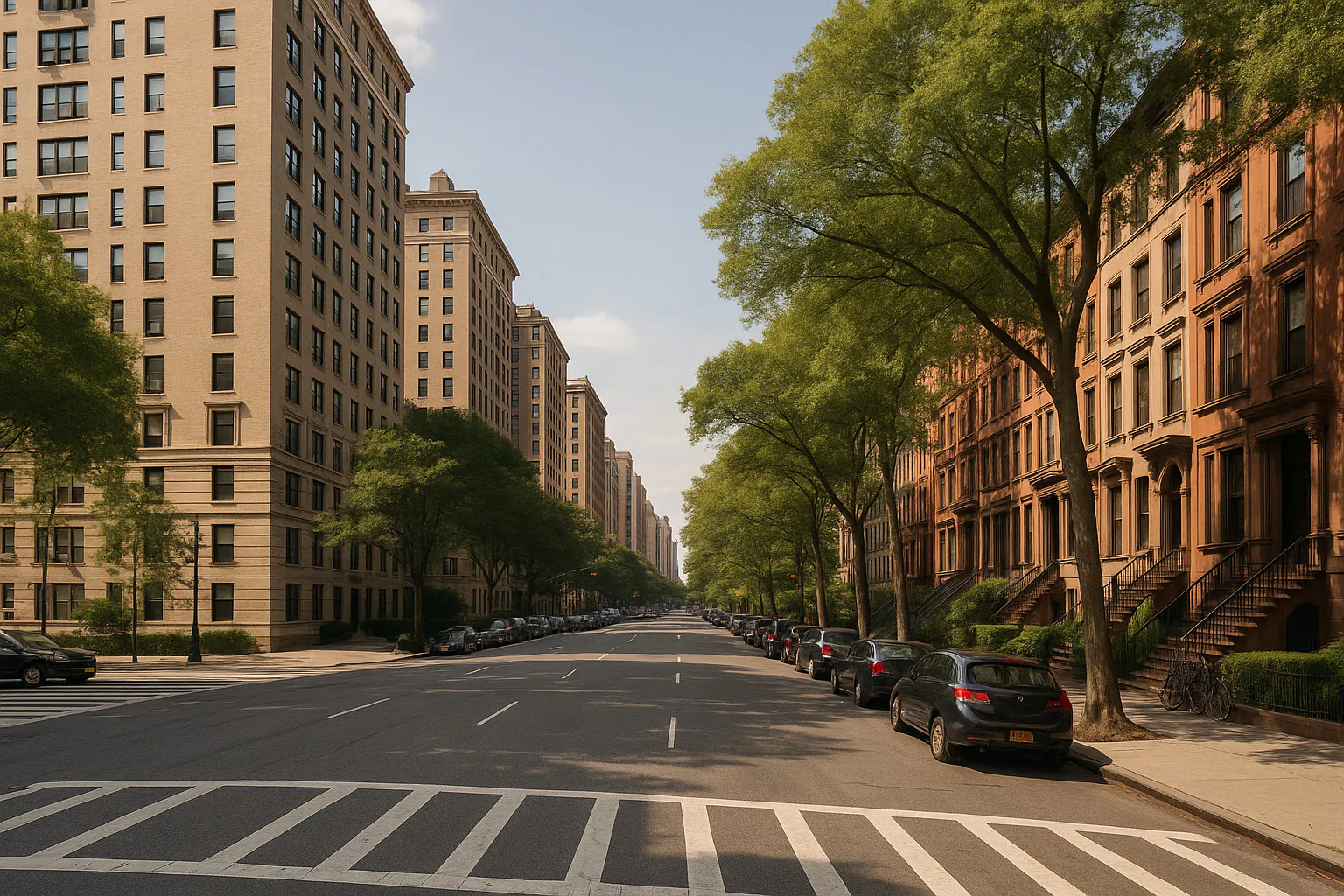
Upper West Side NY Personal Injury Lawyer
A serious injury can leave you dealing with pain, missed work, medical appointments, and insurance calls before you fully understand what happened. On the Upper West Side, even identifying the responsible party may take work. A sidewalk fall can involve a building owner, managing agent, commercial tenant, contractor, or the City. An injury near a subway station or in a park may involve a public authority with a much shorter filing deadline.
Billy Cooper Law represents injured people throughout Manhattan and New York City. The firm can investigate who controlled the place where you were hurt, preserve evidence, deal with the insurance companies, and explain your options in plain English.

Types of Injury Cases We Handle in Upper West Side NY
- Personal Injury
- Slip and Fall
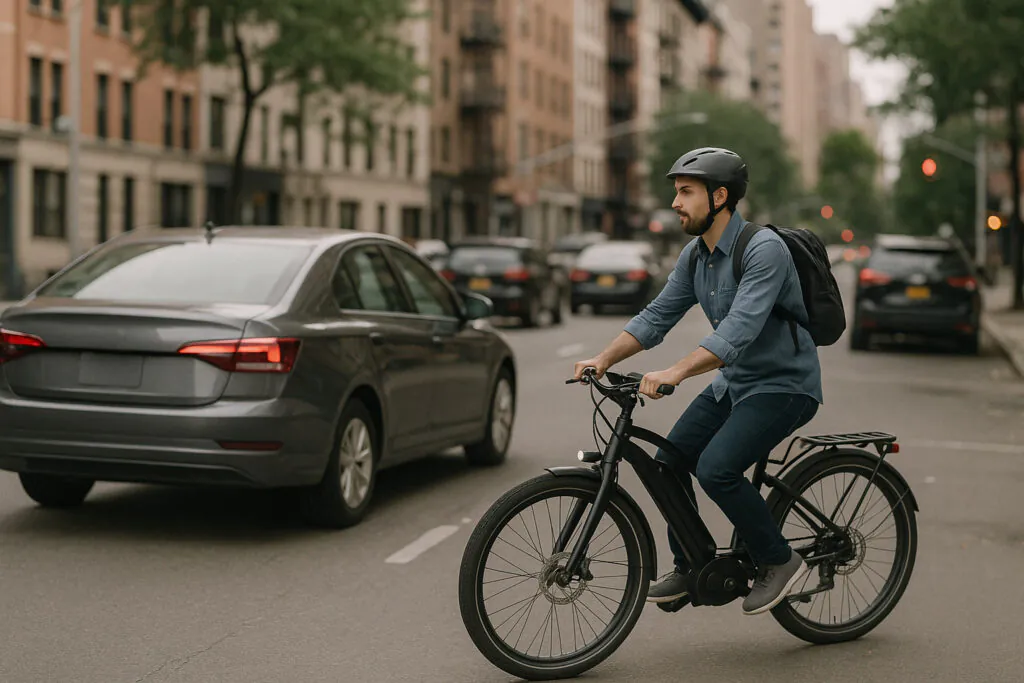
- E-Bike Accidents
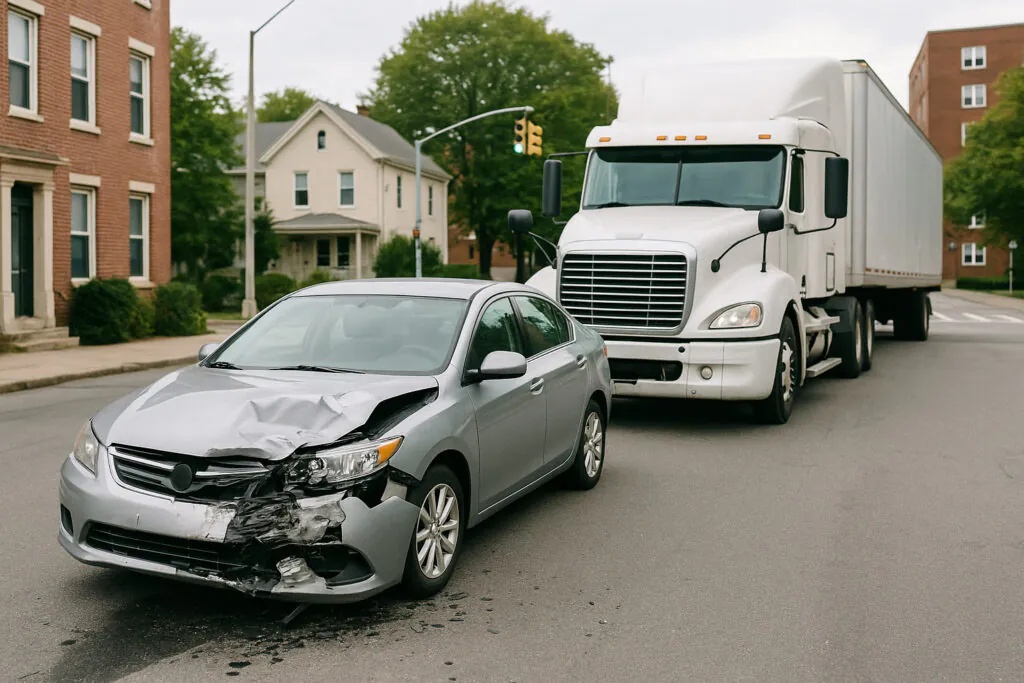
- Car Accidents
Manhattan Communities We Serve
- New York County
- Manhattan
- Upper East Side
- Upper West Side
- Washington Heights
- East Harlem
- Harlem
- Inwood
- Midtown
- Chelsea
- Greenwich Village
- Lower East Side
- Financial District
A Legal Team Prepared for Serious Injuries
When an injury may affect your ability to work, live independently, or care for your family, you want a lawyer who will look beyond the bills that have arrived so far.
Billy Cooper Law’s roots reach back to 1960, and the firm brings more than 75 years of combined experience to personal injury cases. William H. “Billy” Cooper has practiced in New York since 1991 and has received a Super Lawyers designation for 2024 through 2026. Attorney Anieska J. Garcia has been with the firm for more than 20 years and works with clients in English and Spanish. Meet the Billy Cooper Law team.
The firm’s published case results include a $2.4 million New York County wrongful death recovery involving a tractor-trailer collision, a $700,000 New York County pedestrian accident settlement, a $2.005 million construction accident settlement, and a $9 million catastrophic injury settlement. Those cases illustrate the kind of preparation serious injuries require: documenting future care, permanent limitations, reduced earning capacity, and the effect on an entire family.
Consultations are free. Personal injury cases are handled on a contingency basis, so there is no upfront attorney’s fee and no attorney’s fee unless the firm recovers compensation for you.
Why Upper West Side Injury Cases Require a Local Investigation
The Upper West Side stretches from West 59th Street to West 110th Street between Central Park and the Hudson River, according to Manhattan Community Board 7. Within that area, responsibility can change from one block—or one side of a property line—to the next.
A collision at a major intersection may involve a private driver, a rideshare operator, a delivery company, or a city vehicle. A fall outside an apartment building may lead to the owner, managing agent, commercial tenant, snow-removal company, or construction contractor. An injury in Central Park, Riverside Park, or on a subway platform raises a different set of ownership and notice questions.
That is why a useful investigation begins with control. Who owned the location? Who maintained it? Who received earlier complaints? Which entity has the video, inspection records, work orders, permits, or incident report?
Those questions should be answered before evidence disappears and before a short public-entity deadline passes.
A Local Accident Snapshot
The Upper West Side’s mix of pedestrian traffic, buses, bicycles, e-bikes, delivery vehicles, cross-town traffic, and residential loading creates frequent points of conflict.
In its fiscal year 2024 transportation statement, Community Board 7 reported 405 traffic injuries in the district between September 2020 and September 2021. That total included 97 pedestrians and 91 cyclists, and six people were killed.
The broader Manhattan numbers show that these risks are not isolated. In 2023, the borough recorded 7,850 traffic injuries, according to the NYC DOT Bicycle Crash Data Report. Manhattan experienced 39 traffic deaths in 2025, even as fatalities declined from the previous year, according to NYC DOT’s year-end traffic report.
Numbers cannot tell you why a particular crash happened. They do show why scene evidence, vehicle data, witness accounts, and video matter.
Where Serious Injuries Happen on the Upper West Side
Busy avenues and cross-town streets
Broadway, Amsterdam Avenue, Columbus Avenue, Central Park West, and West End Avenue carry different combinations of buses, bicycles, turning vehicles, delivery traffic, and pedestrians. Cross-town routes near West 72nd, 79th, 86th, and 96th Streets add vehicles moving between the Henry Hudson Parkway, Central Park transverses, subway stations, schools, stores, and residential blocks.
Community Board 7 has specifically raised safety concerns involving the West 95th Street and West 96th Street area, the Henry Hudson Parkway exits, West 66th Street, and the need for safer cross-town bicycle connections. Those concerns matter in an injury case because roadway design, signal timing, sight lines, loading activity, and prior complaints may help explain how a collision occurred.
Apartment buildings, co-ops, and commercial spaces
A building accident may happen on a broken stair, wet lobby floor, defective elevator, poorly lit hallway, unsecured cellar door, or sidewalk disturbed by construction. The responsible party may not be the person whose name appears on the front of the building.
Ownership records, management agreements, maintenance logs, elevator inspection files, cleaning schedules, contractor records, and earlier tenant complaints may reveal who knew about the hazard and who was supposed to correct it.
Sidewalks
New York City generally places responsibility for maintaining adjoining sidewalks on property owners. Under NYC Administrative Code § 7-210, an owner may be liable when a failure to maintain a reasonably safe sidewalk causes an injury. There are exceptions, including certain owner-occupied one-, two-, and three-family residential properties.
Those exceptions are less common on the Upper West Side, where many properties are apartment buildings, co-ops, condominiums, and commercial premises. Even so, a sidewalk case still requires a careful review of the exact location, adjoining property, permits, tree involvement, repair history, and whether a contractor created the defect.
Parks, playgrounds, and the waterfront
An accident in Central Park, Riverside Park, Riverside Park South, a playground, or a recreational area may involve NYC Parks, another public entity, a concessionaire, an event operator, or a contractor.
Photographs of the exact location are especially important. A description such as “near the path” or “by the playground” may not be enough to identify the responsible entity months later.
Subway stations and buses
Transit injuries may result from a collision, sudden stop, boarding incident, broken stair, platform condition, closing door, escalator problem, or inadequate maintenance. The correct defendant depends on what happened and which entity operated or controlled the equipment or location.
Do not assume that a claim is simply “against the MTA.” The MTA is an umbrella organization. A claim involving New York City Transit may be governed by Public Authorities Law § 1212, including notice and filing requirements that are much shorter than the ordinary personal injury deadline.
Personal Injury Cases Billy Cooper Law Handles
Billy Cooper Law represents people injured in matters involving:
- Car accidents
- Pedestrian accidents
- Bicycle accidents
- E-bike accidents
- Motorcycle accidents
- Uber and Lyft accidents
- Truck and commercial vehicle accidents
- Bus accidents
- Subway accidents
- Premises liability, including falls in apartment buildings, stores, restaurants, lobbies, stairways, and on sidewalks
- Construction accidents
- Work accidents
- Dog bites and animal attacks
- Defective products
- Medical malpractice
- Catastrophic injuries
- Wrongful death
One accident may support more than one claim. A delivery worker struck by a commercial vehicle may have workers’ compensation benefits and a separate claim against the driver, vehicle owner, or employer. A construction fall may involve an owner, general contractor, subcontractor, equipment company, and workers’ compensation carrier.
What to Do After an Accident
Your health comes first. Call 911 or seek emergency care if you may have suffered a head injury, fracture, spinal injury, internal injury, severe bleeding, or other significant trauma. Do not let concerns about insurance stop you from obtaining necessary treatment.
When you can do so safely:
- Report what happened. Ask for a police, building, store, construction-site, or transit incident report.
- Photograph the scene. Include the hazard, surrounding area, lighting, traffic controls, vehicles, weather conditions, and visible injuries.
- Get witness information. A name and phone number may become critical if video is unavailable.
- Identify the location precisely. Record the building address, nearest intersection, subway station entrance, park feature, or construction gate.
- Keep damaged property. Preserve your shoes, bicycle, helmet, clothing, child restraint, defective product, or other physical evidence.
- Follow medical instructions. Attend recommended appointments and explain all symptoms accurately.
- Be careful with insurance calls. Do not guess, minimize your injuries, or give a recorded statement to another party’s insurer before understanding the consequences.
If a vehicle was involved, notify the appropriate no-fault insurer promptly. New York’s no-fault notice rules generally require written notice within 30 days unless there is a clear and reasonable justification for delay.
Evidence That May Decide the Case
Many Upper West Side cases are won or lost on evidence that is not in the injured person’s possession.
Depending on what happened, important evidence may include:
- Traffic, building, lobby, storefront, or doorbell camera footage
- MTA or bus video
- Police body-camera footage and collision reports
- Vehicle event-data recorder information
- Delivery-company GPS and dispatch records
- Rideshare trip data
- Cellphone records in a distracted-driving case
- Building work orders and maintenance logs
- Elevator and escalator inspection records
- Cleaning and snow-removal schedules
- NYC 311 complaints
- NYC DOT and Department of Buildings permits
- Earlier incident reports or complaints
- Construction-site photographs, daily logs, and safety records
- Medical records, imaging, work restrictions, and wage documentation
Video is often overwritten within days or weeks. Vehicles are repaired. Sidewalks are patched. Snow and ice melt. Construction sites change constantly. A preservation letter should identify the evidence and direct the person or organization holding it not to destroy it.
New York Laws and Deadlines
The ordinary personal injury deadline
Under CPLR § 214, many New York personal injury lawsuits must be commenced within three years. That general rule does not apply to every case.
For example:
- Medical malpractice claims generally must be commenced within two years and six months, subject to important exceptions.
- Wrongful death actions generally must be commenced within two years after death.
- Claims against the City, NYC Transit, or another public entity may require notice within 90 days.
The correct deadline depends on the defendant, legal theory, date of the event, and sometimes the date the lawsuit is filed.
New rules for motor vehicle cases filed after May 26, 2026
New York changed important parts of its motor vehicle injury law in 2026. The amendments took effect on May 26, 2026 and apply to actions and proceedings commenced on or after that date.
Under the new CPLR § 1411(b) rule described by the New York State Department of Financial Services, an injured claimant in a personal injury action governed by New York’s no-fault law may be barred from recovering if the claimant’s fault is greater than the fault of the person—or combined parties—from whom recovery is sought.
In practical terms, a claimant found 50% at fault may still recover a reduced amount. A claimant found 51% at fault may recover nothing in a covered motor vehicle personal injury action. Most non-vehicle negligence cases continue to use New York’s traditional comparative-fault rule, under which partial responsibility reduces compensation rather than automatically eliminating the claim.
The 2026 amendments also removed the former “90/180-day” category from the definition of a serious injury. The current Insurance Law § 5102 recognizes categories including fractures, significant disfigurement, permanent loss of use, permanent consequential limitations, and significant limitations of a body function or system.
These changes make early fault investigation and objective medical documentation even more important in car, rideshare, pedestrian, and bicycle cases involving motor vehicles.
BILLY COOPER LAW
Who May Be Responsible?
Responsibility depends on how the injury occurred.
A traffic collision may involve:
- A driver who failed to yield, followed too closely, sped, or drove while distracted
- The vehicle owner
- An employer whose worker was driving on the job
- A delivery, trucking, or rideshare company
- A maintenance company or vehicle manufacturer
- A public entity responsible for a dangerous roadway condition
A property case may involve:
- The building owner
- A condominium or cooperative board
- A managing agent
- A commercial tenant
- A maintenance or cleaning contractor
- A snow-removal company
- A construction contractor
- The City or another public entity
A construction accident may involve separate claims against an owner, general contractor, subcontractor, equipment company, or another company at the site. Workers’ compensation may cover part of the loss, while a third-party lawsuit may seek damages that workers’ compensation does not provide.
What Compensation May Be Available?
A personal injury claim should account for both the financial losses you can calculate and the ways the injury has changed your life.
Depending on the case, compensation may include:
- Ambulance and emergency treatment
- Hospital care and surgery
- Rehabilitation and physical therapy
- Future medical treatment
- Medication and medical equipment
- Lost wages
- Reduced future earning capacity
- Household and transportation expenses
- Pain and suffering
- Emotional distress
- Loss of enjoyment of life
- Scarring or disfigurement
- Permanent disability
- Wrongful death damages when an injury is fatal
Do not assume the first settlement offer accounts for future care or permanent limitations. A complete evaluation often requires input from treating physicians, medical experts, vocational specialists, economists, or life-care planners.
Claims Against New York City and Transit Authorities
If a city vehicle, city-owned property, public park, dangerous street condition, subway, or bus may have contributed to the accident, ordinary deadlines may not protect you.
General Municipal Law § 50-e generally requires a Notice of Claim within 90 days when a tort claim is brought against a public corporation. Personal injury claims against New York City may be submitted through the NYC Comptroller’s eClaim system.
A Notice of Claim must do more than state that an accident happened. It must identify the time, place, manner of occurrence, injuries, and nature of the claim with enough detail to allow an investigation. An error in the location or responsible entity can create serious problems.
Claims against the New York City Transit Authority also have special requirements. Public Authorities Law § 1212 generally requires a timely Notice of Claim and provides a one-year-and-90-day limitations period for many tort actions against the Authority.
If a public entity may be involved, do not wait for the ordinary three-year deadline.
Local Courts, Hospitals, and Agencies
Serious Upper West Side injury cases filed in Manhattan may proceed in the New York County Supreme Court, Civil Term, whose main courthouse is at 60 Centre Street, New York NY 10007.
For emergency treatment, nearby options include:
- Mount Sinai West Emergency Department, near West 59th Street between Ninth and Tenth Avenues
- Mount Sinai Morningside Emergency Department, at 443 West 113th Street, New York NY 10025
Call 911 or go to the nearest appropriate emergency department when immediate care is needed.
Accident reports and records may also involve:
- The NYPD 20th Precinct, at 120 West 82nd Street
- The NYPD 24th Precinct, at 151 West 100th Street
- NYC Department of Transportation
- NYC Department of Parks and Recreation
- NYC Department of Buildings
- NYC Housing Preservation and Development
- Metropolitan Transportation Authority or New York City Transit
- NYC Comptroller’s Office
A lawyer can request records from the correct organization without expecting you to determine every jurisdictional issue yourself.
How Billy Cooper Law Investigates Upper West Side Cases
The investigation begins with listening. Where did the injury occur? What were you doing immediately before it happened? Who arrived afterward? What did the property owner, driver, police officer, or supervisor say?
From there, the legal team may:
- Visit and photograph the scene
- Confirm property ownership and management
- Identify public and private defendants
- Send preservation letters for video and electronic data
- Obtain police, transit, building, and government records
- Interview witnesses
- Review insurance policies and coverage limits
- Inspect vehicles, bicycles, equipment, or defective products
- Consult medical, engineering, vocational, or financial experts
- Document the injury’s effect on your work, mobility, family, and future
- Prepare the case for litigation if the insurer will not offer a fair resolution
A strong case is not built by collecting paperwork without a plan. It is built by understanding which evidence answers the questions the defense will raise.
Frequently Asked Questions
How long do I have to file an Upper West Side personal injury claim?
Many negligence cases have a three-year statute of limitations, but medical malpractice, wrongful death, municipal, and transit claims have different deadlines. A Notice of Claim may be due within 90 days if a public entity is involved.
What if I was partly responsible?
For most non-vehicle negligence cases, your compensation may be reduced by your percentage of fault. For motor vehicle personal injury actions commenced on or after May 26, 2026, recovery may be barred if your fault is greater than the combined fault of the parties you are suing.
Who is responsible for an Upper West Side sidewalk fall?
It may be the adjoining property owner, City, commercial tenant, managing agent, or contractor. The answer depends on the property type, exact accident location, applicable statutory exceptions, and whether someone created or had notice of the condition.
Does no-fault insurance cover pedestrians and cyclists?
A pedestrian or cyclist injured through the use or operation of a covered motor vehicle may qualify for no-fault benefits. Those benefits can help pay basic medical expenses and part of the person’s lost income, regardless of who caused the collision.
What if the vehicle was an Uber, Lyft, taxi, or delivery vehicle?
Commercial use can add insurance policies and responsible parties. Preserve the trip receipt, app screenshots, driver information, vehicle details, order records, and any messages sent through the platform.
Can I bring a claim if I was injured while working?
You may qualify for workers’ compensation. You may also have a separate personal injury claim if someone other than your employer caused the accident. Construction workers may have additional protections under New York law.
How much does it cost to speak with Billy Cooper Law?
The consultation is free. The firm handles personal injury cases on a contingency basis, meaning there is no upfront attorney’s fee and no attorney’s fee unless compensation is recovered.
Does Billy Cooper Law have an Upper West Side office?
The firm does not list an office on the Upper West Side. Its official locations are in White Plains and at 4746 Broadway, New York NY 10040, where meetings are available by appointment. Consultations can also begin by telephone or video conference.
What happens when I contact the firm?
You can explain what happened and ask your questions. The legal team will consider who may be responsible, which deadlines appear to apply, what evidence should be preserved, and whether the firm can help. You do not need to organize every record or know the correct legal terminology before calling.
Related Information
- New York personal injury claims
- Motor vehicle accident claims
- Premises liability claims
- Construction accident claims
- Work accident claims
- Medical malpractice claims
- Wrongful death claims
- Billy Cooper Law case results
- Meet the legal team
Tell Us What Happened
You do not need to decide today whether to file a lawsuit. You do need to know whether video should be preserved, which insurance company should receive notice, and whether a 90-day deadline may already be running.
Tell Billy Cooper Law what happened. The firm will listen, answer your questions, and explain the next practical steps.
Call (718) 866-3311 or (914) 730-5789, or request a free consultation.
Communities We Serve
- New York County
- Manhattan
- Upper East Side
- Upper West Side
- Washington Heights
- East Harlem
- Harlem
- Inwood
- Midtown
- Chelsea
- Greenwich Village
- Lower East Side
- Financial District
Sources
Billy Cooper Law
- Billy Cooper Law official website
- Personal injury practice
- Practice areas
- Meet the team
- Billy Cooper, Esq.
- Case results
- Car accidents
- Motor vehicle accidents
- Motorcycle accidents
- Bicycle accidents
- Pedestrian accidents
- E-bike accidents
- Uber and Lyft accidents
- Bus accidents
- Truck and commercial vehicle accidents
- Subway accidents
- Premises liability
- Construction accidents
- Work accidents
- Dog bites
- Products liability
- Medical malpractice
- Wrongful death
- Contact Billy Cooper Law
Upper West Side and New York City
- Manhattan Community Board 7
- Manhattan Community Board 7 fiscal year 2024 transportation statement
- NYC DOT 2023 Bicycle Crash Data Report
- NYC DOT 2025 year-end traffic fatality report
- NYC DOT sidewalk maintenance and liability information
- NYPD precinct directory
- NYPD 24th Precinct
- NYC Comptroller eClaim filing system
- NYC Comptroller personal injury claim FAQs
- New York County Supreme Court, Civil Term
- Mount Sinai West Emergency Department
- Mount Sinai Morningside Emergency Department
New York Law and Insurance
- CPLR § 214 — Personal injury limitations period
- CPLR § 214-a — Medical malpractice limitations period
- EPTL § 5-4.1 — Wrongful death actions
- General Municipal Law § 50-e — Notice of Claim
- Public Authorities Law § 1212 — Actions against the New York City Transit Authority
- Insurance Law § 5102 — No-fault definitions and serious injury
- New York State DFS 2026 Motor Vehicle Insurance Reforms
- New York State DFS no-fault notice guidance
BILLY COOPER LAW
Get the Answers You Need
At Billy Cooper Law, every day we renew our pledge to help injured people get the justice and compensation they deserve. We have a reputation throughout New York and nationally for standing up for our clients, and we take that responsibility seriously by approaching every case with preparation, persistence, and an unwavering commitment to results.