
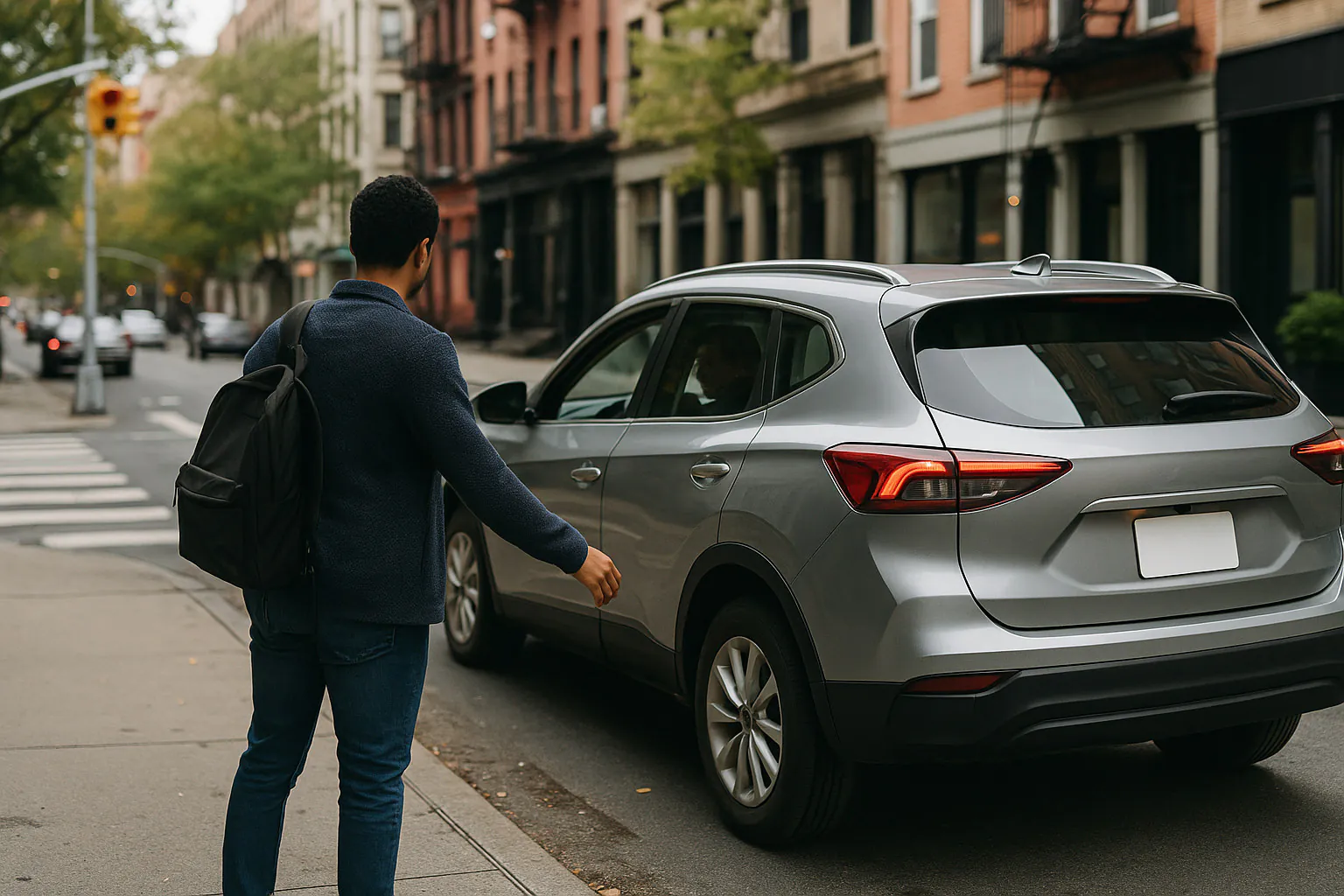
You may be able to pursue compensation after a Lyft accident, but that does not always mean Lyft itself is legally responsible. Your claim may be against the Lyft driver, the vehicle owner, another motorist, Lyft, or more than one party.
The distinction matters because Lyft’s connection to the crash can affect the available insurance and where the dispute is decided. In New York, the answers often turn on the driver’s app status, whether a ride had been accepted, and whether the trip operated under state rideshare rules or New York City’s separate for-hire vehicle system.
A lawyer handling Lyft accident claims can investigate those questions before valuable app and insurance records become harder to obtain.
BILLY COOPER LAW

When Can I Sue Lyft After an Accident?
You may have grounds to name Lyft in a claim or lawsuit if the evidence supports liability by the company itself. For example, facts showing negligent company conduct or sufficient control over the driver’s work may support a direct or vicarious liability theory.
That result is not automatic. Lyft commonly takes the position that drivers are independent contractors rather than employees. New York courts examine the actual relationship, including the platform’s control over how the work was performed. A 2026 New York trial-level rideshare decision involving Uber illustrates how that issue can depend on the evidence rather than the label used in a contract.
You can still have a valid injury claim even if Lyft is not ultimately held directly liable. The driver or vehicle owner may be responsible, and rideshare-related insurance may cover the loss.
There is also a difference between filing a lawsuit and receiving a jury trial. Lyft’s user terms contain arbitration provisions, and New York appellate courts have enforced those provisions in some accident cases. In Samuel v. Islam, the court compelled arbitration of a passenger’s claims against Lyft. The effect of an arbitration agreement depends on who accepted the terms and which claims are being brought.
Who May Be Responsible for a Lyft Crash?
A thorough investigation usually focuses on three potential sources of responsibility:
- The Lyft driver and vehicle owner: They may be liable if the driver caused the crash by speeding, following too closely, making an unsafe turn, using a phone, or otherwise failing to drive safely.
- Another driver and vehicle owner: If someone else hit the Lyft, the claim may primarily be against that driver and the applicable insurance policy.
- Lyft: The company may be included if the evidence supports direct negligence, an agency relationship, or another valid basis for corporate liability.
More than one driver can share responsibility. For motor vehicle injury cases governed by New York’s new modified comparative-fault rule, an injured person who is found more at fault than the person or people from whom recovery is sought may be barred from recovering damages. If the injured person’s share of fault does not exceed theirs, damages may still be reduced according to that person’s percentage of fault. If the claimant’s fault is not greater, compensation can still be reduced by that percentage under the state’s current motor vehicle comparative-fault rules.
Which Insurance Applies to a New York Lyft Accident?
The applicable insurance depends heavily on where the ride operated and what the driver was doing at the time of the crash.
Lyft accidents outside New York City
New York’s statewide transportation network company rules apply outside New York City. Under Vehicle and Traffic Law Section 1693:
- App off: The rideshare coverage required by Article 44-B does not apply. The claim ordinarily starts with the driver’s own automobile insurance.
- App on, waiting for a request: At least $75,000 per injured person, $150,000 per accident, and $25,000 for property damage must be available.
- Ride accepted or passenger aboard: At least $1.25 million in liability coverage and $1.25 million in supplementary uninsured or underinsured motorist coverage must be in place.
A prearranged trip begins when the driver accepts a passenger’s request and continues until the last requesting passenger exits the vehicle. That makes the app’s timestamps, trip receipt, and GPS records important evidence.
Lyft accidents in New York City
New York City uses a different system. A Lyft trip beginning in the city must use a TLC-licensed driver and for-hire vehicle affiliated with a licensed base. The statewide TNC insurance structure should not simply be assumed to apply.
For most TLC-licensed livery and black-car vehicles carrying one to seven passengers, the city currently requires minimum liability limits of $100,000 per person and $300,000 per occurrence, along with property damage and personal injury protection coverage. The NYC Taxi and Limousine Commission’s current insurance requirements provide the controlling minimums.
Because the state and city systems differ, the pickup location and licensing records should be verified before anyone evaluates the available coverage.
What Compensation May Be Available?
New York no-fault insurance usually provides the first layer of benefits for medical costs and part of an injured person’s lost income, without requiring proof that someone else caused the crash. A passenger generally files with the insurer covering the vehicle he or she occupied. A pedestrian usually files with the insurer of the vehicle that struck them.
A separate liability claim may seek losses that no-fault does not fully cover, including:
- Medical expenses beyond available no-fault benefits
- Past and future lost earnings
- Reduced earning ability
- Property damage
- Pain and suffering
- The effects of permanent impairment or disability
Under New York’s current serious-injury law, a covered person ordinarily must establish a qualifying serious injury to recover pain-and-suffering damages from another covered person. The listed categories include fractures, significant disfigurement, and significant or permanent limitations of bodily functions or systems. The right to pursue those damages is governed by Insurance Law Section 5104.
Whether an injury meets that standard depends on medical evidence and how the condition has affected the person—not simply the diagnosis written on the first emergency-room record.
What Should I Save After a Lyft Accident?
Rideshare cases involve digital evidence that does not exist in an ordinary car crash. If possible, save or photograph:
- The Lyft trip receipt and route
- Screenshots showing the ride was active
- The driver’s name, photograph, license plate, and vehicle information
- Messages exchanged through the Lyft app
- Photos and videos of the scene, vehicles, and visible injuries
- Witness names and contact information
- The police report or report number
- Medical records, bills, wage records, and related receipts
Report the collision through the Lyft app, but keep your own copy of everything submitted. An in-app report does not necessarily satisfy separate insurance notice requirements.
Avoid guessing about fault in a recorded statement. You can provide identifying information and cooperate with legitimate requests without adopting an insurer’s version of how the crash happened.
BILLY COOPER LAW
Three Time Limits to Keep in Mind
- 10-day DMV report: If you were a driver, New York generally requires an MV-104 crash report within 10 days when someone was injured or killed, or one person’s property damage exceeded $1,000.
- 30-day no-fault notice: Written notice normally must reach the proper no-fault insurer within 30 days, unless there is clear and reasonable justification for delay. The New York Department of Financial Services explains this requirement.
- Three-year lawsuit period: Most New York personal injury actions must be commenced within three years under CPLR Section 214, although shorter rules can apply in particular cases.
These are general rules, not a calculation of the deadline in an individual case.
Why Contact Billy Cooper Law After a Lyft Accident?
Billy Cooper Law handles New York personal injury matters, including claims involving Lyft passengers, drivers, pedestrians, and cyclists. In a rideshare case, the firm can investigate the collision, identify the driver’s app status, collect trip and insurance records, communicate with insurers, and determine which parties and policies should be pursued.
The firm offers a free initial case evaluation and handles Lyft accident cases on a contingency-fee basis, according to its website. If you need a clear explanation of your options after a crash, contact Billy Cooper Law to discuss what happened and what the next step may be.
Published Writings by Billy Cooper
- When the Video Disappears: Missing Footage in Injury Cases — Billy Cooper, New York Law Journal, June 24, 2026. Billy explains why accident footage may be missing or overwritten and how preserving recordings can matter in an injury investigation.
NOTABLE RESULTS
Selected relevant results reported by Billy Cooper Law:
$850,000 settlement · $2,400,000 settlement
Read more about these results
- $850,000 settlement — Automobile collision
A Bronx automobile collision caused lower-extremity reflex sympathetic dystrophy and a knee injury.
- $2,400,000 settlement — Fatal tractor-trailer collision
A mediated wrongful-death settlement followed a tractor-trailer crossing the median and striking a bus head-on in New York County.
These are reported gross results, before fees, expenses, and applicable liens. They are not estimates of another claim’s value. Read the firm’s published case results.
Prior results do not guarantee a similar outcome. Each case is different and must be evaluated on its own facts.
WHAT OUR CLIENTS SAY
General feedback about working with Billy Cooper Law:
“Working with Mr. Cooper was a great experience. He is knowledgeable, understanding and great at what he does. I highly recommend Mr.Cooper.”
— M. M., Google review
“Billy handled a personal legal matter for me and his professionalism and legal knowledge was undoubtedly top notch and outstanding. However that which truly sets William apart is his experience, understanding of the situation and attentiveness which allowed this matter to be brought to a successful resolution quickly. I give Billy my highest recommendation. Thank you Billy.”
— J. R., Google review
Professional Recognition

Recognition applies to the named attorneys and selection years. See the linked profiles for details.
Related Billy Cooper Law Videos and Social Posts
- Rideshare Insurance: The Three-Stage Coverage Trap — LinkedIn.
- New York No-Fault Insurance — Facebook.
- Billy Cooper Law official YouTube channel — official profile.
- Billy Cooper Law official Instagram profile — official profile.
- Uber Accident Claims in New York — Facebook.
Frequently Asked Questions
Does reporting the accident through the Lyft app start my no-fault claim?
Do not assume it does. New York generally requires separate written notice to the proper no-fault insurer within 30 days of the accident, subject to a limited exception for a clearly justified delay. Save the Lyft report, but confirm that the insurer also received the required notice.
What if another driver caused the crash while I was riding in a Lyft?
You may have a claim against the other driver and vehicle owner. If the at-fault vehicle was uninsured or did not have enough coverage, supplementary uninsured or underinsured motorist coverage may also matter; outside New York City, New York requires $1.25 million in such coverage during a prearranged TNC trip.
Can a pedestrian or cyclist bring a claim after being hit by a Lyft driver?
Yes. A pedestrian or cyclist may pursue the driver, vehicle owner, and any other legally responsible party. The applicable liability coverage depends on whether the driver was offline, waiting for a request, or completing an active trip, and whether the crash involved the statewide TNC system or New York City’s TLC system.
Can Lyft require arbitration if someone else ordered the ride?
Possibly. In Samuel v. Islam, a New York appellate court compelled arbitration where a friend had ordered the ride but the injured passenger had previously accepted Lyft’s terms through his own account. The result depends on the agreements and claims involved, so someone else ordering the car does not automatically remove the arbitration issue.
Sources
- Billy Cooper Law — Lyft Accidents
- New York Vehicle and Traffic Law Section 1693
- NYC Taxi and Limousine Commission — For-Hire Vehicle Insurance Requirements
- New York Department of Financial Services — No-Fault Insurance FAQs
- New York Insurance Law Section 5102
- New York Insurance Law Section 5104
- New York CPLR Section 214
- New York DMV — MV-104 Report of Motor Vehicle Crash
- New York DFS — 2026 Motor Vehicle Insurance Reforms
- Samuel v. Islam, 2024 NY Slip Op 06675
Related Practice Resources
Related Reading and Practice Resources
- Personal Injury
- Rideshare App Status and Coverage
- Bicycle Crash Claims
- Pedestrian Crash Claims
- World Cup Travel and Rideshare Safety
- Who Pays After a Rideshare Crash
- Recoverable Injury Damages
- Comparative Negligence
- Driverless Cars and Responsibility
- Fatal Citi Bike and E-Bike Crashes
- When an E-Bike Hits Your Car
BILLY COOPER LAW

Get the Answers You Need
At Billy Cooper Law, every day we renew our pledge to help injured people get the justice and compensation they deserve. We have a reputation throughout New York and nationally for standing up for our clients, and we take that responsibility seriously by approaching every case with preparation, persistence, and an unwavering commitment to results.