
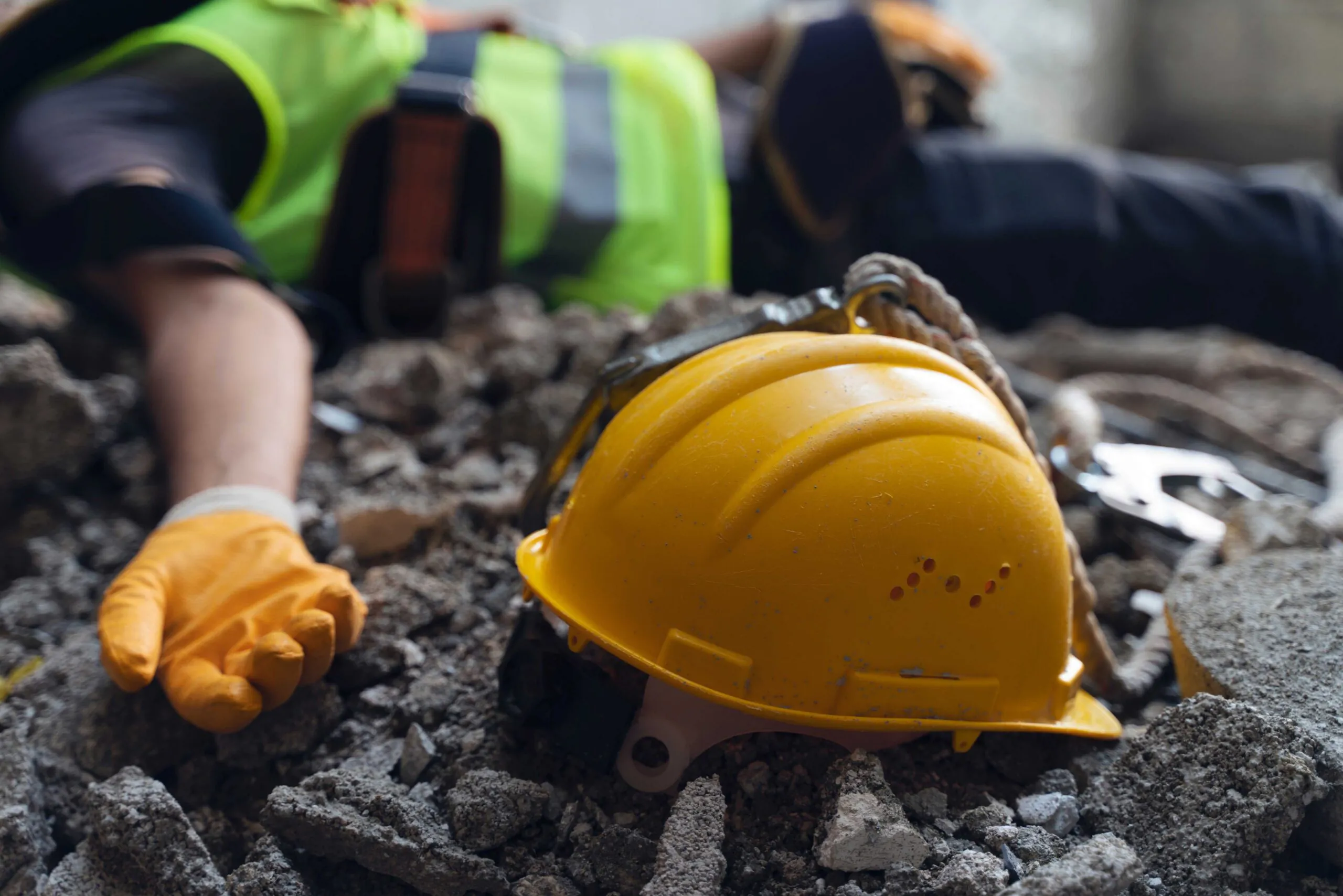


New York Construction Accident Lawyer
Video Transcript
Construction accident cases are very unique in the state of New York.
In New York, we have something that is called the Labor Law, and the Labor Law is designed to protect the interests of workers on construction sites.
As we all know, when you’re on a construction site, there is danger everywhere. People are working at elevated heights.
There are numerous contractors and subcontractors.
There is a lot going on, whether it’s for an individual house, a commercial property, or a large building.
When a worker is injured on a job site, you absolutely must notify your supervisor, notify the general contractor, notify your coworkers, make sure everything is documented.
Oftentimes, OSHA will come in and do an independent review of the job site as well.
But when you are hurt on a job site, don’t assume that someone will make note of it.
Construction accidents are something that our office has focused on for more than 60 years.
Reach out to our office. You will always speak directly with me about what happened, and we will protect your rights.
If you’ve been injured in a construction accident in White Plains or anywhere in Westchester County, your case may be worth far more than workers’ compensation alone.
New York law gives construction workers some of the strongest protections in the country. Under Labor Law § 240(1), contractors and property owners can be held strictly liable for gravity-related injuries like falls from scaffolds, ladders, or roofs. Labor Law § 241(6) imposes liability for violations of specific safety regulations, while Labor Law § 200 applies to unsafe job site conditions and general negligence.
Workers’ compensation provides limited benefits regardless of fault, but it does not cover pain and suffering. That is why identifying a third-party claim is critical in construction accident cases.
Billy Cooper Law has represented injured workers for over 75 years of combined experience, securing results including $2 million for a construction fall and $9 million for catastrophic injuries. Led by trial attorney William H. Cooper (Super Lawyers 2024–2025), the firm builds cases designed for maximum recovery—not minimum payouts.
Under CPLR § 214, most construction accident claims must be filed within three years, while claims involving municipalities may require a Notice of Claim within 90 days under GML § 50-e. Timing matters. Evidence disappears quickly on active job sites.
Call (914) 730-5789 for a free consultation.

You May Have a Construction Accident Case If
Not every workplace injury leads to a lawsuit. But construction accidents often involve violations of New York’s strict safety laws. You may have a claim beyond workers’ compensation if any of the following apply:
- You fell from a scaffold, ladder, roof, or other elevated surface
- A falling object struck you while working on a construction site
- Defective machinery or equipment caused your injury
- You were injured in a trench collapse or excavation accident
- Proper safety equipment—such as harnesses, guardrails, or helmets—was not provided
- You were electrocuted due to exposed wiring or unsafe site conditions
- You were injured as a pedestrian or bystander near a construction project
- A loved one was killed in a construction accident
These cases often turn on whether safety rules were followed—or ignored. If corners were cut, there is likely a path to significant compensation.
- Fall Accidents
- Falling Objects Accidents
- Fatal Accidents
- Forklift Accidents
- Labor Law
- Ladders Accidents
- Scaffolding Accidents
What Should You Do After a Construction Accident in White Plains?
The minutes and hours after a construction accident matter more than most people realize. What you do early on can shape both your medical recovery and your legal case.
First, get medical attention immediately. For serious injuries, Westchester Medical Center in Valhalla is the region’s only Level I Adult Trauma Center, treating 6,974 adult trauma patients in 2024. For less severe injuries, White Plains Hospital is often the first stop. If a child is injured, Maria Fareri Children’s Hospital—also Level I Pediatric Trauma—treated 2,527 pediatric trauma patients in 2024.
Second, report the incident to your supervisor or site manager. This creates an official record, which is critical for both workers’ compensation and any third-party claim.
Third, document everything you can. Photos of the scene, equipment, scaffolding, ladders, or safety failures can become decisive evidence later.
Fourth, avoid giving recorded statements to insurance companies or site investigators before speaking with a lawyer.
Finally, contact a construction accident lawyer as soon as possible. Evidence disappears quickly on job sites, especially in active development areas like downtown White Plains or the Yonkers waterfront.
Why Choose Billy Cooper Law for Your Construction Accident Case?
Construction accident cases are not ordinary injury claims. They sit at the intersection of workers’ compensation, third-party liability, and highly technical safety regulations.
Billy Cooper Law brings over 75 years of combined experience representing injured workers across Westchester County and New York City. Founding partner Marvin A. Cooper helped draft New York’s No-Fault Insurance Law in 1973, shaping how injury claims are handled statewide. Today, William H. Cooper leads the firm with over $41 million in verdicts and settlements.
The firm has secured $2 million for a construction accident involving a fall from height that resulted in multiple fractures, where required safety protections were not properly provided. It has also recovered $9 million for catastrophic injuries involving amputation, $6 million in a triplegia case, and $2.4 million in a wrongful death matter.
Every case is handled on a contingency fee basis. You pay nothing unless a recovery is made.
What Types of Construction Accident Cases Does Billy Cooper Law Handle?
Construction sites across White Plains and Westchester County present a wide range of hazards.
Falls from heights remain the most common and most devastating accidents. Scaffolding accidents often involve improper assembly or missing guardrails. Electrocution cases arise from exposed wiring or unsafe systems. Machinery failures can involve defective equipment or missing safeguards. Struck-by incidents occur when materials fall or equipment moves unpredictably. Trench collapses and excavation failures are among the most dangerous conditions on any job site.
Construction remains one of the most dangerous industries in the United States. Falls, struck-by incidents, electrocutions, and caught-in accidents—often called OSHA’s “Fatal Four”—account for the majority of construction deaths. Fall protection violations remain the most frequently cited OSHA safety issue each year.
In dense construction environments like Westchester County and the Bronx, overlapping contractors and tight job sites increase these risks.
How Do New York Labor Laws Protect Construction Workers?
New York provides some of the strongest legal protections for construction workers in the country.
Labor Law § 240(1), known as the Scaffold Law, imposes strict liability when workers are injured in elevation-related accidents. If proper safety devices were not provided, liability is often automatic.
Labor Law § 241(6) requires compliance with detailed safety rules under the Industrial Code. Violations can form the basis of a lawsuit.
Labor Law § 200 applies to general site safety and negligence.
These laws shift the burden away from the worker and toward those responsible for job site safety.
Where Do Construction Accidents Happen Most Often in Westchester County?
Construction is booming across Westchester County, and with it comes increased risk.
High-activity zones include downtown White Plains, Mamaroneck Avenue, and the Galleria redevelopment corridor. Along I-287, construction crews work near high-speed traffic. The Bronx River Parkway presents additional risks due to narrow lanes and limited shoulders.
Other major corridors include I-95, I-87, the Taconic State Parkway, and the Sprain Brook Parkway.
BILLY COOPER LAW
What Compensation Can You Recover After a Construction Accident?
Construction accident claims often involve multiple layers of recovery.
Workers’ compensation covers medical care and partial wage replacement, but it is limited.
Many injured workers assume workers’ compensation is their only option. It is not. Third-party claims against contractors, property owners, or manufacturers are often where full financial recovery happens. Workers’ compensation is the floor. A lawsuit is where the real value of the case is established.
Recoverable damages may include:
- Full lost wages and future earning capacity
- Medical expenses and long-term care
- Pain and suffering
In wrongful death cases, families may recover under EPTL § 5-4.1 and § 5-4.3.
Under CPLR § 1411, New York follows pure comparative negligence, meaning compensation may be reduced but not eliminated if you were partially at fault.
How Does the Construction Injury Claims Process Work in New York?
The process typically begins with a consultation and investigation. Workers’ compensation claims are filed quickly, while third-party claims are developed in parallel.
If settlement negotiations fail, a lawsuit may be filed in Westchester County Supreme Court.
Most cases resolve through settlement, but strong trial preparation is what drives meaningful outcomes.
Frequently Asked Questions
These answers address common construction accidents questions under New York law. The facts and applicable rules can change the answer. This is general information, not personal legal or medical advice.
Can I bring a lawsuit while receiving workers’ compensation for a construction injury?
Sometimes. Workers’ compensation and a third-party injury lawsuit are different claims. Workers’ compensation generally provides the remedy against an insured employer, while a separate claim may exist against another legally responsible party, such as a qualifying property owner, contractor, or equipment manufacturer.
The identity and role of each party matter. Receiving benefits does not automatically establish a third-party claim, and a third-party recovery can affect compensation benefits or reimbursement obligations. Coordinate both claims before agreeing to a settlement.
Sources: NY Workers’ Compensation Law §11; NY Workers’ Compensation Law §29: third-party claims and recoveries.
Does falling from a ladder automatically establish a Labor Law §240(1) claim?
No. Section 240(1) protects workers engaged in specified activities against qualifying elevation-related risks, but an accident alone does not prove every element. The work, the defendant’s role, the protective equipment required, and the connection between a safety failure and the injury must be examined.
Preserve information about the ladder, scaffold, harness, anchor points, task, and instructions. Statutory exceptions and defenses can matter, including the exception for certain one- and two-family homeowners. Avoid assuming that every fall, or every injury on a construction site, falls under this section.
Sources: NY Labor Law §240: elevation-related safety protections; NY Labor Law §241: construction-site safety.
What is the difference between Labor Law §§200, 240, and 241(6)?
They address different duties. Section 200 concerns workplace safety and common-law negligence principles. Section 240 addresses specified elevation-related risks. Section 241(6) concerns construction, excavation, and demolition safety and can support claims involving applicable, sufficiently specific Industrial Code requirements.
The same incident may require analysis under more than one provision, but they are not interchangeable. The nature of the work, who controlled it, the condition involved, and the relevant regulation affect the claim. An OSHA concern should not be treated as automatically proving a §241(6) violation.
Sources: NY Labor Law §200: workplace safety duty; NY Labor Law §240: elevation-related safety protections; NY Labor Law §241: construction-site safety.
Should I get checked after a falling object hits my hard hat?
A hard hat does not rule out a head or neck injury. Seek medical advice about symptoms or a significant impact. Call 911 or obtain emergency care for a worsening headache, repeated vomiting, seizures, weakness, serious confusion, or difficulty waking.
NIOSH researchers, writing in the American Journal of Industrial Medicine, documented fatal traumatic brain injuries in construction and identified falls as a major mechanism. That population study does not diagnose your injury. Describe the actual impact, equipment, and symptoms to the treating professional.
Sources: CDC: Concussion symptoms and emergency warning signs; Konda et al., American Journal of Industrial Medicine (2016): fatal construction TBIs.
What evidence should I preserve after a construction-site accident?
Keep photographs taken safely, witness names, incident-report details, the jobsite address, employer and contractor identities, and messages about the task. Identify the equipment and any safety device involved. Tell counsel promptly about cameras or records that may not be retained for long.
Keep medical instructions, work-status notes, wage information, and compensation paperwork as well. Do not move dangerous equipment, recreate the accident, or enter a restricted site to collect evidence. The goal is to preserve an accurate record without creating another risk.
Sources: NY Workers’ Compensation Board: Understanding the claims process; U.S. HHS: Your medical records; NY Labor Law §240: elevation-related safety protections.
How quickly do I need to report or file a construction injury claim?
For a workers’ compensation claim, the Board generally requires notice to the employer within 30 days and filing within two years, with qualifications for particular circumstances. A third-party negligence lawsuit often has a three-year period. Public-entity claims may require earlier notices.
These are separate obligations. An employer’s incident report does not necessarily file your compensation claim, and a compensation claim does not necessarily start a lawsuit against another party. Have each applicable deadline checked promptly, particularly on a public project.
Sources: NY Workers’ Compensation Board: Understanding the claims process; NY CPLR §214: personal-injury filing periods; NY General Municipal Law §50-e.
What if the contractor says the construction accident was my fault?
That assertion is not the final answer. Workers’ compensation eligibility and fault in a third-party lawsuit are different issues. In an ordinary negligence claim, comparative fault may reduce damages. A qualifying Labor Law §240(1) claim has a different framework, including questions about whether a statutory violation caused the injury.
Tell the lawyer exactly what equipment was available, what instructions were given, and what happened. Do not assume that partial fault automatically defeats every claim or that a safety statute guarantees recovery.
Sources: NY Workers’ Compensation Board: Injured Worker’s Toolkit; NY CPLR §1411: comparative fault; NY Labor Law §240: elevation-related safety protections.
Can I have a claim if I am called an independent contractor?
The label in a contract or on a tax form does not resolve every legal question. Workers’ compensation coverage depends on the actual relationship and governing rules. A construction-site claim may separately depend on the kind of work and the role of the owner or contractor.
Bring contracts, payment records, work instructions, and information about who supplied tools and controlled the work. The compensation and third-party analyses should be performed separately rather than assuming that one label eliminates all protection.
Sources: NY Workers’ Compensation Board: Injured Worker’s Toolkit; NY Labor Law §240: elevation-related safety protections; NY Labor Law §241: construction-site safety.
What can a construction injury lawsuit recover that workers’ compensation may not?
A supported third-party claim may include recoverable medical costs, earnings losses, impaired future earning ability, and pain and suffering. Workers’ compensation provides statutory benefits and does not function as an award for every category of tort damages.
A third-party recovery can involve a compensation lien or other adjustments; it is not automatically an additional payment with no effect on benefits. Ask for an explanation of the potential net recovery and any consent requirements before settling either claim.
Sources: NY CPLR §4111: past and future injury damages; NY Workers’ Compensation Law §29: third-party claims and recoveries; NY Workers’ Compensation Board: Injured Worker’s Toolkit.
Should I return to construction work if I still have restrictions?
Discuss the actual job demands with your treating clinician. Lifting, climbing, balance, machinery operation, and work at heights may require different restrictions. A general statement that you can “work” does not necessarily mean every construction task is appropriate.
Research on return-to-work interventions supports considering coordinated healthcare and workplace measures for some musculoskeletal and pain-related conditions. It is not a personal clearance to return. Keep written restrictions and communicate them accurately while any benefits or third-party claim is evaluated.
Sources: Cullen et al., Journal of Occupational Rehabilitation (2018): return-to-work systematic review; NY Workers’ Compensation Board: Understanding the claims process.
Speak With a White Plains Construction Accident Lawyer Today
Construction accidents change lives fast. The legal process should not add to the burden.
Billy Cooper Law represents injured workers across White Plains, Westchester County, and the surrounding region. We understand the law, the job sites, and the stakes.
Call (914) 730-5789 today for a free consultation. You pay nothing unless we win.
BILLY COOPER LAW
Liability beyond the employer
Responsibility Often Goes Beyond Workers’ Comp
Multiple parties may be liable
(Сontractors, owners, equipment manufacturers)
Third-party claims
Can provide additional compensation
Safety violations
Often play a key role
Property owner
General contractor
Equipment manufacturers
Other third parties
Subcontractors
Construction
Is One of the Most Dangerous Jobs in America
1 in 5
workplace deaths
Occur in construction
~1,000
worker deaths/year
On construction sites
100,000+
injured annually
Across U.S. job sites
Frequently Asked Question Videos

Construction Law FAQ: What is Labor Law 240? | Billy Cooper Law
Construction Law FAQ: What is Labor Law 240? | Billy Cooper Law
Video Transcript

Construction Law FAQ: Can You Sue While Receiving Workers’ Compensation? | Billy Cooper Law
Construction Law FAQ: Can You Sue While Receiving Workers’ Compensation? | Billy Cooper Law
Video Transcript

Construction Law FAQ: Who Can Be Held Liable? | Billy Cooper Law
Construction Law FAQ: Who Can Be Held Liable? | Billy Cooper Law
Video Transcript
So there are many, many different entities who can be responsible. Construction accidents are something that our office has focused on for more than 60 years. Reach out to our office. You will always speak directly with me about what happened and we will protect your rights.

Construction Law FAQ: What if You Weren't Wearing Safety Equipment? | Billy Cooper Law
Construction Law FAQ: What if You Weren't Wearing Safety Equipment? | Billy Cooper Law
Video Transcript
Oftentimes if you are not wearing safety equipment when you are on the job site, it is because safety equipment was not properly provided to you. Whether it’s the owner or the general contractor or even your own employer, there is a responsibility to provide safety equipment. It’s usually not done. So if in fact you are injured without safety equipment, oftentimes you still have legal rights and you can get a recovery.Construction accidents are something that our office has focused on for more than 60 years. Reach out to our office. You will always speak directly with me about what happened and we will protect your rights.

Construction Law FAQ: How long do you have to file a claim? | Billy Cooper Law
Construction Law FAQ: How long do you have to file a claim? | Billy Cooper Law
Video Transcript

Construction Law FAQ: What damages can you recover? | Billy Cooper Law
Construction Law FAQ: What damages can you recover? | Billy Cooper Law
Video Transcript
When someone is hurt on a construction site, the injuries are oftentimes quite significant. You are entitled to recover for your pain and suffering, for the actual injuries. You are entitled to recover for your time out of work. And if you have a permanent injury, you’re entitled to recover for what the future holds for your pain and suffering.Having an experienced attorney reaching out and speaking with our office will allow you to get the maximum possible recovery for your injuries on a construction site.

Construction Law FAQ: Do most cases settle? | Billy Cooper Law
Construction Law FAQ: Do most cases settle? | Billy Cooper Law
Video Transcript
Construction site cases often settle, but some will go to trial. Any attorney who tries to promise you that a case will settle before trial is not being honest. An experienced attorney can do all of the work to maximize your recovery up to the time of trial and then know that if we do need to go to trial, no one will represent you better at the time of trial.
We know how to relate to juries. We know how to maximize recovery. So, we will do the best for you.

Construction FAQ: What evidence matters most? | Billy Cooper Law
Construction FAQ: What evidence matters most? | Billy Cooper Law
Video Transcript
Evidence on a construction site can be somewhat different than evidence in other cases because there are so many contractors and subcontractors and moving parts. So please, if you’re injured on a job site, document everything. Take photographs. Take photographs of the location, of the equipment being used, of any safety equipment, of the other workers involved.Make sure you document who the general contractor is, the actual name of the company, who the owner is. We’ve represented many people through the years who have not had any of that information and while we will find it out for you, it can take significant time and resources and if you’re able to document this, it will help you tremendously.
Construction accidents are something that our office has focused on for more than 60 years. Reach out to our office. You will always speak directly with me about what happened and we will protect your rights.

Construction FAQ: How long does a case take? | Billy Cooper Law
Construction FAQ: How long does a case take? | Billy Cooper Law
Video Transcript
Construction site accident cases can take several months or multiple years. There is really no specific answer as to how long they take. It depends upon the insurance that is in place, the evidence that is available, how badly someone’s injured, the time it takes for that person to heal, and the willingness of an insurance company on behalf of the owners or general contractor or subcontractors to work towards a settlement.Construction accidents are something that our office has focused on for more than 60 years. Reach out to our office. You will always speak directly with me about what happened and we will protect your rights.


Get the Answers You Need
At Billy Cooper Law, every day we renew our pledge to help injured people get the justice and compensation they deserve. We have a reputation throughout New York and nationally for standing up for our clients, and we take that responsibility seriously by approaching every case with preparation, persistence, and an unwavering commitment to results.