
Bushwick NY Personal Injury Lawyer
Video Transcript
Every person who contacts our office speaks to an attorney directly.
Many firms, when you reach out, you get just a paralegal or just a receptionist, and while they may be very experienced, I think it gives a lot of assurance to the public that they know that when they call us, they will always get the attorney on the phone.
The most important thing I think people should know before they pick up the phone and call the office of Billy Cooper is that we take the time to listen and answer people’s questions.
One of the things that I get told most often, even if it’s a situation where we cannot take your case, is that we explain why.
We don’t just say, “No, you don’t have a case” and hang up.
We always give people an explanation.
We explain what the burden of proof is and the law that applies.
People are always most appreciative that we take the time to explain to them rather than just saying no.
A great outcome beyond the dollar amount is quite significant because after a case resolves, money only means so much.
In fact, I always have conversations with our clients indicating to them that money does a certain thing for you, but it can never make you feel completely whole.
What we try and do is we try and give our people the type of service where they know that even when the case is completed, we are here for them.
What makes our law firm different than other firms in New York is our attention to detail, and that we assist our clients with every aspect of their case.
We make phone calls to make sure that your medical bills are being paid.
We can assist you in finding medical care.
It’s beyond just a legal service. It is an all-around service that we provide.
If you have been injured in an accident or someone you know, whether it’s a family member or a friend, we ask that you reach out to us because we will speak with you and we will assist you.

Types of Injury Cases We Handle in Bushwick NY
Why Injured New Yorkers Turn to Billy Cooper Law
The history of Billy Cooper Law dates to 1960, when Marvin A. Cooper founded the practice. The firm now brings together more than 75 years of combined legal experience. William H. Cooper began practicing in 1991 and serves as the firm’s partner and trial counsel. Attorney Anieska J. Garcia has worked with the firm for more than 20 years and is fluent in English and Spanish. (Meet the Billy Cooper Law team) Those credentials matter most when they help solve a client’s immediate problem. If your injuries may affect your work or independence for years, you want a lawyer who knows how to document long-term losses. If the insurance company disputes what happened, you need a firm prepared to investigate rather than accept the insurer’s version. If you would rather discuss your case in Spanish, you should be able to speak directly with someone who understands you. (Learn more about Anieska Garcia) The firm has handled serious cases resulting in recoveries that include a $9 million catastrophic injury settlement and a $2.005 million construction accident settlement. Every case is different, and past results do not guarantee a similar outcome. They do show that the firm has worked on cases involving life-changing injuries and contested liability. (Review representative case results) Billy Cooper Law offers free consultations and handles personal injury matters on a contingency basis. The firm states that clients pay no upfront legal fee and owe no attorney’s fee unless compensation is recovered. (Read about the firm’s personal injury practice)Why Bushwick Injury Cases Require a Local Investigation
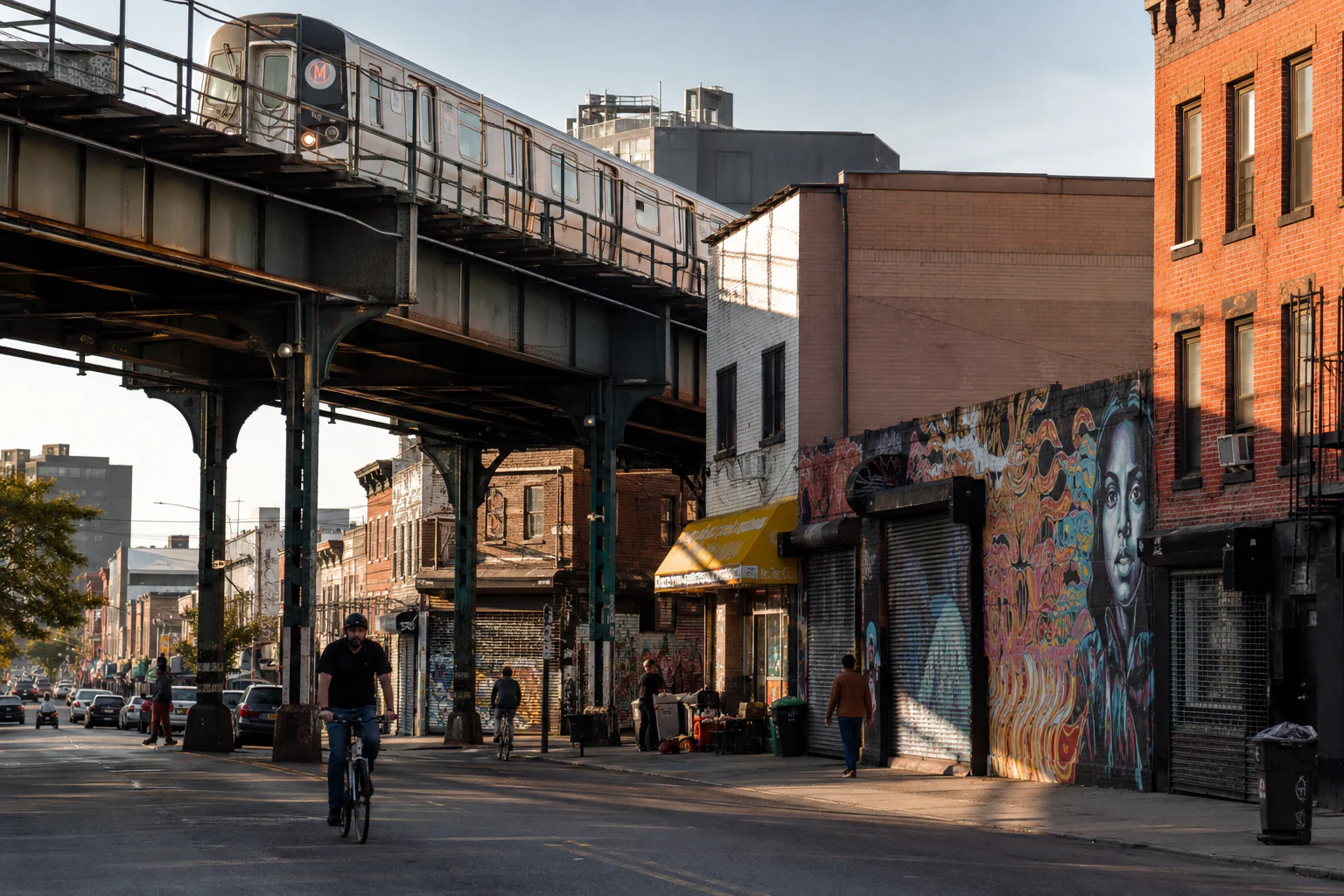
Bushwick is crossed by busy commercial streets, residential blocks, truck routes, bus lines, bicycle routes, and elevated and underground subway service. The neighborhood’s street activity creates frequent points of conflict among drivers, pedestrians, cyclists, delivery workers, and people entering or leaving transit stations. Broadway and parts of Myrtle Avenue run beneath elevated tracks, where columns, turning traffic, commercial loading, limited sightlines, and changing light conditions can affect how a collision happened. Knickerbocker Avenue combines storefront activity, bus traffic, deliveries, cyclists, and heavy pedestrian use. At Myrtle and Wyckoff Avenues, the City created a pedestrian plaza and redesigned traffic movements after identifying the area as a Vision Zero priority location. (NYC DOT’s Myrtle-Wyckoff safety project) Bushwick Community Board 4 has continued to identify Broadway, Bushwick Avenue, Knickerbocker Avenue, Myrtle Avenue, and Wyckoff Avenue as corridors with high volumes of mixed pedestrian, bicycle, scooter, and vehicle traffic. (Brooklyn Community Board 4 district needs statement) Local construction can add another layer. New York City announced a major sewer, catch-basin, water-main, and infrastructure program beginning with Knickerbocker Avenue. An accident near utility or street work may require an investigation into permits, contractors, traffic-control plans, temporary paving, steel plates, barricades, and inspection records—not just the condition visible after the accident. (New York City’s Bushwick infrastructure announcement)A Snapshot of Traffic Injuries in Bushwick
The NYPD’s 83rd Precinct serves the part of Brooklyn comprising Bushwick. Preliminary TrafficStat data for January 1 through August 2, 2026 recorded:- 753 total collisions
- 283 injury collisions
- 360 people injured
- 76 pedestrians injured
- 35 traditional bicyclists injured
- 53 users of motorized two-wheelers injured
Where Serious Injuries Happen in Bushwick
The location often tells you which evidence and defendants to look for.Intersections and commercial corridors
A pedestrian or cyclist struck near Broadway, Myrtle Avenue, Knickerbocker Avenue, Wyckoff Avenue, or Bushwick Avenue may have been exposed to turning vehicles, blocked sightlines, double parking, commercial loading, or a driver failing to yield. An investigation may need to examine traffic-signal timing, lane markings, curb regulations, nearby construction, delivery activity, and video from several businesses—not merely the police report.Subway stations, bus stops, and elevated structures
The L, M, J, and Z lines serve or border Bushwick, with stations including Myrtle-Wyckoff Avenues, Knickerbocker Avenue, Central Avenue, Jefferson Street, DeKalb Avenue, Halsey Street, and Bushwick Avenue-Aberdeen Street. (Official MTA subway map) Falls and other injuries around transit property may involve stairs, platforms, escalators, station entrances, bus operations, lighting, water accumulation, or crowd movement. The correct defendant may be a transit authority, contractor, property owner, or another entity. Evidence can include station video, bus video, maintenance records, operator reports, dispatch information, and prior complaints.Apartment buildings and sidewalks
Bushwick has many multi-unit residential and mixed-use properties. A fall may result from a broken sidewalk flag, cellar door, defective stair, loose handrail, poor lighting, leaking pipe, snow, ice, or debris. In New York City, the owner of property abutting a sidewalk is generally responsible for maintaining it in a reasonably safe condition. An important exception applies to certain owner-occupied one-, two-, or three-family properties used exclusively for residential purposes. Ownership, occupancy, leases, maintenance contracts, and the exact location of the defect all matter. (NYC DOT sidewalk maintenance guidance)Work sites and street construction
A worker may have both a workers’ compensation claim and a separate personal injury claim against a property owner, general contractor, equipment company, or another third party. Construction cases require early preservation of site photographs, safety plans, incident reports, contracts, daily logs, permits, surveillance recordings, equipment, and witness information. The condition that caused an injury may be repaired or removed within hours.Personal Injury Cases the Firm Handles
Billy Cooper Law represents clients in matters involving:- Car and other motor vehicle accidents
- Pedestrian collisions
- Bicycle accidents
- E-bike accidents
- Truck, bus, taxi, Uber, and Lyft accidents
- Construction accidents
- Unsafe buildings and other premises liability claims
- Defective sidewalk cases
- Medical malpractice and birth injuries
- Defective products
- Dog bites
- Wrongful death
What to Do After an Accident in Bushwick
Get medical care
Call 911 if you may have a head injury, fracture, internal injury, spinal injury, significant bleeding, or any other emergency. Do not assume that pain will disappear simply because you can stand or walk. Prompt treatment protects your health and creates a medical record connecting your symptoms to the accident. Continue with recommended follow-up care and explain every affected part of your body to your providers.Report what happened
For a traffic collision, call the police and request the report number. Drivers involved in a New York crash causing an injury, death, or more than $1,000 in damage to one person’s property generally must file an MV-104 report with the DMV within 10 days. (New York DMV crash-report requirements) For a fall or building accident, notify the property owner, manager, superintendent, employer, or business. Ask for a copy of any incident report, but do not sign a statement you do not understand.Document the location
Take photographs and video before vehicles are moved or a dangerous condition is repaired, if you can do so safely. Include wide views showing where the accident occurred and close views showing the hazard or damage. For a sidewalk or roadway defect, record the nearest address, intersection, storefront, subway entrance, utility cover, traffic signal, and other fixed landmarks. A precise location can be essential when several entities maintain different parts of the same area.Identify witnesses and cameras
Get witness names, phone numbers, and email addresses. Look for cameras on storefronts, apartment buildings, buses, stations, traffic facilities, construction sites, and nearby homes. Do not assume the footage will still exist months later. Many systems overwrite recordings automatically.Be careful with insurance calls
Report the accident when required, but avoid guessing about fault, minimizing your injuries, or giving a recorded statement to another party’s insurer before understanding your rights. An adjuster may sound helpful while gathering statements that can later be used to dispute liability or medical causation.Evidence Worth Preserving
Depending on the accident, useful evidence may include:- Photographs and video of the scene
- Torn or bloodstained clothing
- Shoes worn during a trip or fall
- Damaged bicycle helmets and equipment
- Vehicle damage, dashcam files, and event-data-recorder information
- Police, EMS, fire department, and incident reports
- Witness contact information
- Storefront, building, station, or bus surveillance
- Rideshare and delivery-app trip records
- Phone location data and relevant messages
- Medical records, prescriptions, and appointment instructions
- Pay stubs, tax records, and employer absence records
- Construction permits, daily logs, safety plans, and contracts
- 311 complaints, inspection records, and prior repair requests
- Receipts for medical equipment, transportation, and household assistance
New York Laws and Deadlines That May Affect Your Case
The general personal injury deadline
Most New York negligence actions seeking damages for personal injury must be started within three years. That general period appears in CPLR § 214. Three years is not a safe deadline to use for every case. Other claims have shorter periods:- Medical malpractice claims generally have a two-year-and-six-month limitation period, subject to important exceptions under CPLR § 214-a.
- Wrongful death actions generally must be commenced within two years of death under EPTL § 5-4.1.
- Claims against New York City and many other public entities may require action within 90 days.
New York no-fault insurance
After many motor vehicle accidents, no-fault insurance provides an initial source of payment for medical expenses and certain lost earnings without waiting for a decision about who caused the crash. New York defines basic economic loss as up to $50,000 per person, subject to statutory limitations. (New York Insurance Law § 5102) Written notice of a no-fault claim generally must reach the proper insurer within 30 days of the accident, unless there is a clear and reasonable justification for delay. Drivers and passengers usually file through the insurer covering the occupied vehicle. Pedestrians generally file through the insurer for the vehicle that struck them. (New York Department of Financial Services no-fault guidance) “No-fault” does not mean no one can be held responsible. A person with a qualifying serious injury may be able to pursue damages beyond basic no-fault benefits. Under the current version of the law, qualifying categories include fractures, significant disfigurement, permanent loss of use, permanent consequential limitations, and significant limitations of bodily functions or systems. (New York Insurance Law § 5104) New York amended these rules in May 2026. Advice based on the former statutory language may no longer reflect the law governing a newly filed case.What If You Were Partly at Fault?
Fault is not always all or nothing. For premises liability, construction, and most other negligence claims, New York generally reduces compensation by the injured person’s share of responsibility rather than eliminating the claim entirely. New York created an important exception for certain motor vehicle injury actions in May 2026. Under the current CPLR § 1411, a claimant in an action subject to New York’s no-fault law may be barred from recovery if the claimant’s fault is greater than the fault of the person sued—or greater than the combined fault of the people from whom recovery is sought. In a straightforward two-party case, that can operate as a 50% rule. Multi-party accidents require closer analysis. The law applies to covered actions and proceedings commenced on or after May 26, 2026, so the filing date may be significant. This makes early evidence especially important. A driver, property owner, or insurer may try to shift blame by arguing that you were distracted, crossed improperly, ignored a warning, wore unsafe footwear, or failed to notice an obvious condition. Photographs, video, witnesses, and physical evidence can answer those arguments.BILLY COOPER LAW
Questions About a Bushwick Injury Claim?
Who May Be Responsible?
Potential defendants in a Bushwick injury case may include:- A negligent driver
- The vehicle’s owner
- A driver’s employer
- A delivery, trucking, or rideshare company
- A commercial property owner or tenant
- A residential landlord or managing agent
- A maintenance, cleaning, snow-removal, or security contractor
- A construction-site owner or general contractor
- A subcontractor or equipment supplier
- A product manufacturer or distributor
- New York City or one of its agencies
- A transit or public-housing authority
- A hospital or public healthcare entity
Compensation Available in a Personal Injury Claim
Compensation depends on the evidence, applicable insurance, severity of the injury, and effect on your life. Recoverable damages may include:- Past and future medical expenses
- Lost wages
- Reduced future earning capacity
- Rehabilitation and therapy
- Home health care
- Medical equipment
- Household assistance
- Pain and suffering
- Loss of mobility or independence
- Scarring and disfigurement
- Loss of enjoyment of life
- Funeral expenses and financial losses resulting from a wrongful death
Government and Public-Authority Claims
An injury involving a City street, public hospital, sanitation truck, school, public building, subway, bus, or housing complex may trigger special procedures. Under General Municipal Law § 50-e, many claims against public corporations require a Notice of Claim within 90 days. Claims against New York City generally must be filed with the Comptroller before suit. After the required waiting period, City negligence actions generally must be commenced within one year and 90 days under General Municipal Law § 50-i. Reporting an incident to 311, the police, a hospital employee, or a transit worker is not the same as serving a legally sufficient Notice of Claim. The correct filing office also depends on the defendant. A claim involving New York City may follow a different process from a claim against a transit authority, NYCHA, or another public entity. Filing with the wrong agency does not necessarily protect the claim. Road and sidewalk cases may present an additional issue: the City can require proof that it received prior written notice of a dangerous defect unless a recognized exception applies. That makes records of complaints, permits, repair work, utility cuts, and City-created conditions especially important.Local Courts, Hospitals, and Agencies
The following institutions commonly become relevant after a Bushwick accident:- NYPD 83rd Precinct: 480 Knickerbocker Avenue, Brooklyn, NY 11237. The precinct serves Bushwick and may hold or help identify collision and incident records. (NYPD 83rd Precinct)
- NYC Health + Hospitals/Woodhull: 760 Broadway, Brooklyn, NY 11206. Woodhull serves Bushwick and North Brooklyn and operates a 911-receiving emergency department. (Woodhull Hospital information)
- Kings County Supreme Court, Civil Term: 360 Adams Street, Brooklyn, NY 11201. Significant Brooklyn personal injury lawsuits are commonly litigated in this court. (New York Courts directory)
- New York City Comptroller: Notices of Claim against the City can be filed through the Comptroller’s claims system. (NYC Comptroller claims guidance)
- NYC Department of Transportation: DOT records may matter in cases involving road design, traffic controls, sidewalks, work zones, permits, and maintenance.
- NYC Department of Buildings: DOB permits, violations, inspections, and ownership records may be important after construction or building accidents.
- MTA and New York City Transit: Transit records may be relevant to subway, station, and bus injuries.
- Bedford-Stuyvesant
- Bushwick
- Crown Heights
- Flatbush
- Williamsburg
- Borough Park
- Bensonhurst
- Sunset Park
- Bay Ridge
- East New York
How Billy Cooper Law Investigates a Bushwick Injury
A useful investigation begins with the basic facts: when the accident occurred, exactly where it happened, who was present, and how the injuries developed. Depending on the case, the firm may:- Visit and photograph the scene.
- Identify nearby cameras and send preservation requests.
- Obtain police, EMS, medical, and incident records.
- Interview witnesses.
- Determine who owned and controlled the property or vehicle.
- Review deeds, leases, contracts, permits, and inspection records.
- Identify applicable insurance policies.
- Investigate prior complaints or similar incidents.
- Preserve vehicles, equipment, footwear, or construction materials.
- Consult medical and technical experts.
- Handle communications with insurers and defense attorneys.
- Document how the injury affects work, family life, mobility, and future care.
Frequently Asked Questions
Do I have a personal injury case?
You may have a claim if another person, business, property owner, contractor, healthcare provider, or public entity failed to use reasonable care and caused your injury. A lawyer must evaluate the facts, available evidence, damages, and applicable deadlines.How soon should I contact a lawyer?
As soon as practical after receiving necessary medical care. Video can be erased, defects repaired, vehicles sold, and witnesses lost. Claims involving government entities may require a Notice of Claim within 90 days.Should I speak with the insurance adjuster?
You may need to report an accident to your own insurer, but you do not have to speculate about fault or give an immediate recorded statement to another party’s insurance company. Ask what information is required and consider speaking with counsel first.Can I recover if I was partly responsible?
Possibly. In most non-vehicle injury cases, your compensation may be reduced by your percentage of responsibility. Certain motor vehicle cases filed on or after May 26, 2026 are subject to a stricter rule that can bar recovery when the claimant’s fault exceeds the fault of the defendant or defendants from whom recovery is sought.Does no-fault insurance cover pain and suffering?
No-fault primarily addresses basic economic losses such as medical expenses and certain lost earnings. Pain-and-suffering damages generally require a qualifying serious injury and a viable liability claim.Who is responsible for a broken Bushwick sidewalk?
Often, the owner of the abutting property. However, exceptions apply to qualifying owner-occupied one-, two-, and three-family residential properties. Liability can also depend on whether the defect involved a curb, tree well, utility cover, cellar door, or work performed by another entity.What if I was injured on a subway or bus?
Transit cases may involve short notice periods, multiple public entities, and evidence controlled by the transit operator. Report the incident, obtain identifying information for the train, bus, station, or employee, and seek legal advice promptly.Can I bring a claim while receiving workers’ compensation?
Sometimes. Workers’ compensation generally covers work-related medical care and part of lost wages. If someone other than your employer or co-worker contributed to the accident, you may also have a third-party personal injury claim.How much does it cost to speak with Billy Cooper Law?
The firm offers free consultations. Personal injury matters are handled on a contingency basis, meaning no upfront attorney’s fee is required and the firm is paid only if it obtains compensation for you.Is assistance available in Spanish?
Yes. Attorney Anieska J. Garcia is bilingual in English and Spanish.What happens during the first consultation?
The firm will ask where and when the accident occurred, how it happened, what medical care you received, whether reports or photographs exist, and whether insurers have contacted you. You can ask questions and learn whether the firm may be able to help. A consultation does not obligate you to hire the firm.Related Information
- New York Personal Injury Claims
- Motor Vehicle Accidents
- Car Accident Claims
- Pedestrian Accidents
- Bicycle Accidents
- E-Bike Accidents
- Construction Accidents
- Premises Liability
- Sidewalk Accidents
- Wrongful Death Claims
- Billy Cooper Law Case Results
Tell Us What Happened
You do not have to identify every defendant, understand every insurance policy, or decide which government agency controlled the location before asking for help. Tell Billy Cooper Law where the accident happened, what you remember, and how you have been affected. The firm can explain the next steps and determine which evidence and deadlines deserve immediate attention. Billy Cooper Law represents clients throughout Kings County and New York City. Its listed offices are at 245 Main Street, Suite 510, White Plains, New York, and 4746 Broadway, New York, New York, by appointment only. Call (718) 866-3311 or contact Billy Cooper Law for a free consultation.Sources
Billy Cooper Law
- Billy Cooper Law official website
- Meet the Team
- William H. Cooper attorney profile
- Anieska J. Garcia attorney profile
- Personal Injury practice
- Motor Vehicle Accident practice
- Construction Accident practice
- Premises Liability practice
- Case Results
- Contact Billy Cooper Law
Bushwick and New York City Resources
- NYPD 83rd Precinct
- NYPD 83rd Precinct TrafficStat report
- Brooklyn Community Board 4 district needs statement
- NYC DOT Myrtle-Wyckoff pedestrian safety project
- New York City Bushwick infrastructure announcement
- NYC DOT sidewalk maintenance and liability guidance
- Official MTA subway map
- NYC Health + Hospitals/Woodhull
- Woodhull Emergency Department
- Kings County Supreme Court information
- NYC Comptroller guide to filing a claim
New York Laws and Insurance Rules
- CPLR § 214 — Personal injury limitations period
- CPLR § 214-a — Medical malpractice limitations period
- CPLR § 1411 — Comparative fault
- EPTL § 5-4.1 — Wrongful death actions
- General Municipal Law § 50-e — Notice of Claim
- General Municipal Law § 50-i — Municipal tort actions
- Insurance Law § 5102 — No-fault definitions and serious injury
- Insurance Law § 5104 — Motor vehicle personal injury actions
- New York Department of Financial Services no-fault FAQs
- New York DMV motorist crash-report requirements
Communities We Serve
- Kings County (Brooklyn)
- Bedford-Stuyvesant
- Bushwick
- Crown Heights
- Flatbush
- Williamsburg
- Borough Park
- Bensonhurst
- Sunset Park
- Bay Ridge
- East New York
BILLY COOPER LAW
Ready to Discuss What Happened?
Related Personal Injury Lawyer | Bushwick NY Pages


Putting Over 75 Years of Combined Experience on Your Side
Putting Over 75 Years of Combined Experience on Your Side
Putting Over 75 Years of Combined Experience on Your Side
Putting Over 75 Years of Combined Experience on Your Side
Putting Over 75 Years of Combined Experience on Your Side
Putting Over 75 Years of Combined Experience on Your Side
Putting Over 75 Years of Combined Experience on Your Side
Putting Over 75 Years of Combined Experience on Your Side
Putting Over 75 Years of Combined Experience on Your Side
Putting Over 75 Years of Combined Experience on Your Side
Get the Answers You Need
At Billy Cooper Law, every day we renew our pledge to help injured people get the justice and compensation they deserve. We have a reputation throughout New York and nationally for standing up for our clients, and we take that responsibility seriously by approaching every case with preparation, persistence, and an unwavering commitment to results.