
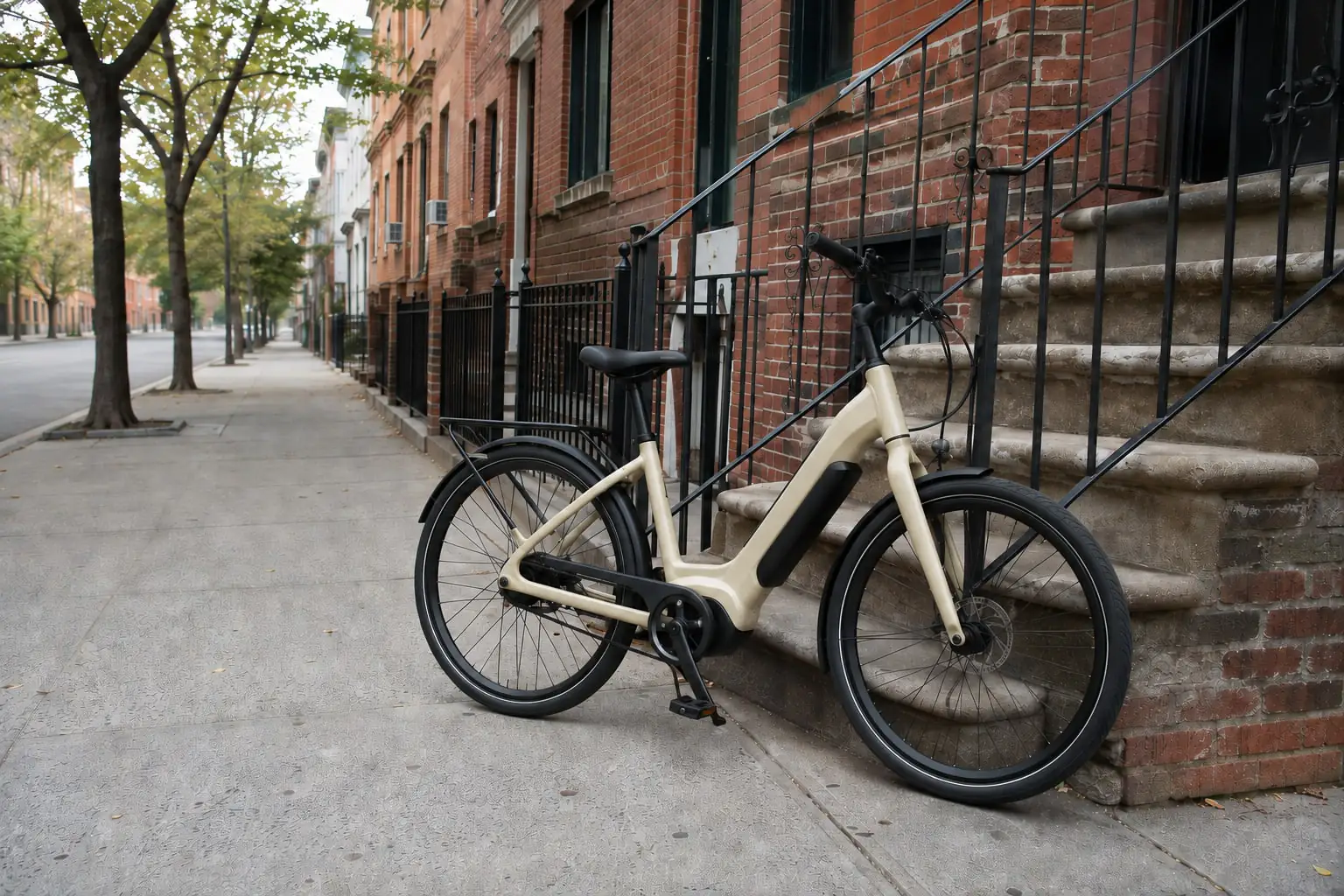
Bushwick NY E-Bike Accident Lawyer
An e-bike crash can leave you hurt, unable to work, and unsure which insurance company should pay. The answer may depend on whether a car was involved, how the bike was classified, whether you were making a delivery, and who controlled the street or work zone where the collision occurred.
Billy Cooper Law represents injured e-bike riders in Bushwick and throughout Brooklyn. The firm can investigate the crash, preserve evidence, identify available insurance, and explain the deadlines that apply before important options are lost.
Types of Injury Cases We Handle in Bushwick NY
E-Bike Accident Lawyers Serving Kings County (Brooklyn)
- Kings County (Brooklyn)
- Bedford-Stuyvesant
- Bushwick
- Crown Heights
- Flatbush
- Williamsburg
- Borough Park
- Bensonhurst
- Sunset Park
- Bay Ridge
- East New York
BILLY COOPER LAW

A Legal Team That Takes the Time to Understand What Happened
E-bike cases are not ordinary bicycle cases with a motor added. The legal team must understand the device, the traffic movements, the insurance rules, and the medical consequences of a rider being thrown onto pavement or struck by a much heavier vehicle.
William H. Cooper has practiced in New York since 1991 and serves as the firm’s partner and trial counsel. He has received a Super Lawyers designation for 2024 through 2026. Billy Cooper Law traces its history to a practice founded in 1960 and reports more than 75 years of combined experience. The firm also states that people who call have an opportunity to speak directly with an attorney rather than being passed from one staff member to another. (Meet the Billy Cooper Law team; William H. Cooper’s attorney profile)
The consultation is free. E-bike injury cases are handled on a contingency basis, which means there is no upfront attorney’s fee and no attorney’s fee unless compensation is recovered. (Billy Cooper Law personal injury practice)
Why E-Bike Cases in Bushwick Require a Local Investigation
Bushwick Community Board 4 identifies Broadway, Bushwick Avenue, Knickerbocker Avenue, Myrtle Avenue, and Wyckoff Avenue as busy corridors carrying substantial pedestrian, bicycle, scooter, and vehicle traffic. The board has continued to request safety improvements, resurfacing, and traffic-calming measures along these routes. (Brooklyn Community Board 4 district needs statement)
That mix matters after an e-bike collision. A turning driver may say the rider appeared unexpectedly. The rider may remember being forced from a bike lane by a stopped delivery truck. A witness may have seen a vehicle door open, but the storefront camera capturing it may be erased within days.
The Myrtle-Wyckoff area presents its own investigative questions. NYC DOT redesigned the six-legged intersection around Myrtle Avenue, Wyckoff Avenue, and Palmetto Street by creating a pedestrian plaza, changing traffic directions, widening crossings, adjusting signal timing, and rerouting some bus movements. (NYC DOT Myrtle-Wyckoff safety project) A collision there should be analyzed using the street configuration that existed on the accident date—not an older map, photograph, or assumption about where traffic was permitted to move.
A Bushwick E-Bike Accident Snapshot
The NYPD’s 83rd Precinct TrafficStat report, which covers Bushwick, recorded seven e-bike rider injuries through August 30, 2026. During the same period, the precinct recorded 50 traditional bicycle injuries, 59 injuries involving motorized two-wheelers, 333 injury collisions, and 427 total traffic injuries.
The motorized two-wheeler category includes e-bikes as well as mopeds, motorcycles, stand-up scooters, and other devices. These numbers do not show who was at fault in any particular crash. They do show why the exact vehicle, block, traffic movement, and available evidence matter.
How E-Bike Accidents Happen in Bushwick
Billy Cooper Law’s e-bike accident practice includes claims arising from:
- Drivers turning across an e-bike rider’s path
- Vehicles entering or leaving driveways and parking spaces
- Drivers or passengers opening doors into a rider’s path
- Sideswipe and rear-end collisions
- Cars, trucks, buses, taxis, and rideshare vehicles blocking or crossing bike lanes
- Hit-and-run and uninsured-driver crashes
- Potholes, uneven pavement, metal plates, debris, and unsafe work zones
- Defective brakes, tires, frames, throttles, batteries, or other components
- Fatal e-bike collisions that may support a wrongful death claim
Some crashes involve more than one cause. A rider may swerve around a blocked lane and then be struck by a driver who was looking in the other direction. A construction barrier may hide the rider from turning traffic. A defective brake may worsen a situation initially created by an illegally parked vehicle.
The investigation should account for every contributing factor rather than accepting the simplest explanation.
What to Do After a Bushwick E-Bike Accident
Get medical care
Call 911 if you may have suffered a head injury, fracture, spinal injury, internal injury, significant bleeding, or any other emergency. Adrenaline can hide symptoms, and being able to stand does not mean you are unhurt.
Tell medical providers every part of your body that was affected. Follow through with referrals, imaging, therapy, and specialist appointments. Gaps in treatment can affect both your recovery and the insurance company’s view of your claim.
NYC Health + Hospitals/Woodhull serves the Bushwick area, and its emergency department is a 911 receiving hospital. Go where emergency personnel direct you or where your medical needs can be treated appropriately. (Woodhull Emergency Department)
Report the crash
Call the police when anyone is injured. Record the report number, the responding officers’ names, and the vehicle’s plate and insurance information.
New York DMV requires a motorist crash report when an e-bike or e-scooter is involved and a person is injured or killed. Its reporting page provides instructions for filing an MV-104 online or by mail. (New York DMV motorist crash-report requirements)
The NYPD 83rd Precinct serves Bushwick. Police collision reports may also be requested through the NYPD collision-report system. A police report is useful evidence, but it does not finally decide legal fault.
Document the location
If you can do so safely, take photographs and video showing:
- The entire intersection or block
- The position of the e-bike and other vehicles
- Traffic lights, signs, lane markings, and bike-lane boundaries
- Vehicle damage and debris
- Skid marks or tire tracks
- Potholes, plates, barriers, or construction equipment
- Parked vehicles that may have blocked visibility
- Your helmet, clothing, and visible injuries
- The nearest address, storefront, subway entrance, or other fixed landmark
A close-up of a pothole is not enough if no one can later determine where it was. Include wider photographs that establish its position in the roadway.
Find witnesses and cameras
Ask witnesses for their names, telephone numbers, and email addresses. Do not assume the police obtained everyone’s information.
Bushwick crash footage may come from apartment buildings, storefronts, buses, delivery vehicles, doorbell cameras, construction sites, or dashcams. Video is often overwritten automatically. A prompt preservation request can make the difference between having objective proof and being left with two conflicting accounts.
Be careful with insurance calls
You may have to notify an insurer promptly, particularly when no-fault benefits are available. That does not mean you should guess about speed, distances, signals, or fault.
Avoid signing broad medical authorizations or giving a recorded statement to another party’s insurer before you understand what is being requested. An adjuster may later compare a rushed early statement with your medical records, deposition testimony, or video from the scene.
Preserve the E-Bike and Its Electronic Evidence
Do not throw away, sell, repair, or modify the e-bike before it has been documented. The bike itself may show impact marks, wheel deformation, brake condition, tire damage, steering alignment, or component failure.
Preserve, when available:
- The e-bike, battery, charger, and keys
- The helmet and clothing worn during the crash
- Photographs showing the bike’s condition before and after the accident
- Purchase, rental, maintenance, and repair records
- The manufacturer’s label showing motor wattage and assisted-speed limits
- App records, GPS history, route information, and delivery instructions
- Text messages and call logs related to the trip
- Police, EMS, and medical records
- Pay statements and proof of missed work
- Receipts for transportation, medication, replacement equipment, and household assistance
If you were making a delivery, take screenshots of the order, pickup and drop-off points, route, time stamps, messages, and account activity. Access to that information may become more difficult after the app closes the order or restricts the account.
BILLY COOPER LAW
Was It Legally an E-Bike?
What a rider, police officer, or insurance adjuster calls an “e-bike” may not satisfy New York’s legal definition.
Under New York Vehicle and Traffic Law § 102-c, a bicycle with electric assist generally must be no more than 36 inches wide, have an electric motor under 750 watts, have operable pedals, and fall within one of three statutory classes. Depending on the class, motor assistance must stop at 20 or 25 miles per hour.
New York City now limits e-bikes to 15 miles per hour on city streets, even if the device is technically capable of providing assistance at a higher speed. Riders are also generally subject to the traffic rules that apply to bicyclists. (NYC DOT e-bike rules and classifications)
Device classification can affect the case. A compliant e-bike is expressly excluded from New York’s definition of a motor vehicle. (Vehicle and Traffic Law § 125) An overpowered or modified device may instead raise questions about whether it was an illegal motorized vehicle or moped. That can change the applicable insurance, licensing, registration, and no-fault analysis.
Preserving the bike’s label, motor, battery, controller, pedals, and software settings may therefore be important even when no one claims that a mechanical defect caused the crash.
How No-Fault Insurance May Apply
A legal e-bike does not carry ordinary automobile no-fault insurance. However, a rider struck by an insured car, truck, or other covered motor vehicle may still qualify for benefits through that vehicle’s policy.
That is because Insurance Law § 5103 generally requires motor-vehicle policies to provide first-party benefits to injured people other than occupants of another motor vehicle or motorcycle. Since a compliant e-bike is not a motor vehicle under state law, its rider may fall within that protected group when the injuries arise from the use or operation of an insured vehicle.
Basic no-fault coverage can provide up to $50,000 for qualifying economic losses, including medical treatment and part of lost earnings. (Insurance Law § 5102)
The deadlines begin quickly. The New York Department of Financial Services states that:
- Written notice of a no-fault claim is generally due within 30 days.
- Medical bills are generally due within 45 days.
- Lost-earnings claims are generally due within 90 days.
Exceptions may exist when there is a clear and reasonable justification for delay, but it is safer to identify the correct insurer immediately. (New York Department of Financial Services no-fault FAQs)
No-fault usually does not apply when the crash did not arise from the use or operation of a covered motor vehicle—for example, a single-bike accident caused only by a component failure or roadway defect. Health insurance, disability benefits, workers’ compensation, or another source may then become more important.
Fault Is Not Always Obvious
A driver may be responsible for failing to yield, turning without checking for a rider, speeding, opening a door into traffic, following too closely, or driving while distracted.
Other potentially responsible parties may include:
- The vehicle owner
- A driver’s employer
- A delivery, trucking, taxi, or rideshare company
- A contractor controlling a work zone
- A public entity responsible for a vehicle or roadway
- An e-bike manufacturer, seller, rental company, or repair shop
The rider’s conduct will also be examined. Insurers may focus on speed, lighting, lane position, signals, sidewalk riding, helmet use, or modifications to the bike. A traffic violation does not automatically prove that the rider caused the crash or the injuries, but it can become part of the fault analysis.
Under the current CPLR § 1411, a claim subject to New York’s no-fault law may be barred if the injured person’s fault is greater than the fault of the defendant—or the combined fault of the defendants—from whom compensation is sought. Claims outside the no-fault system generally remain subject to pure comparative fault, meaning compensation is reduced by the injured person’s percentage of responsibility rather than automatically eliminated.
This distinction makes it important to determine whether a covered motor vehicle was involved and whether the device legally qualified as an e-bike.
Injuries and Compensation
E-bike riders have little protection from a moving vehicle, pavement, a curb, or a fixed object. Common injuries include fractures, torn ligaments, spinal injuries, traumatic brain injuries, facial injuries, road rash, nerve damage, and internal trauma.
Compensation may address:
- Medical bills not paid by no-fault or health insurance
- Past and future lost income
- Reduced earning capacity
- Rehabilitation and future medical care
- Pain and suffering
- Scarring and disfigurement
- Loss of mobility or independence
- Damage to the e-bike, helmet, phone, and other property
- Household assistance and transportation expenses
When a motor vehicle is involved, recovering pain-and-suffering damages generally requires an injury meeting the current statutory serious-injury standard. The listed categories include fractures, significant disfigurement, permanent loss of use, permanent consequential limitations, and significant limitations of bodily functions or systems. (Insurance Law § 5104)
The value of a case depends on what the injury has actually changed. For a delivery worker, a shoulder or knee injury may prevent long shifts on a bike. For someone with a concussion, screens, noise, concentration, and ordinary commuting may become difficult. Those consequences need to be documented, not assumed.
Deadlines for E-Bike Injury Claims
Most New York negligence lawsuits seeking compensation for personal injuries must be started within three years. (CPLR § 214)
That does not mean you should wait. No-fault notice can be due within 30 days. Video may disappear within days. Vehicles and e-bikes can be repaired or sold. Witnesses become harder to locate.
Government cases can have much shorter deadlines. If the crash involved a City vehicle, a road defect, traffic-control equipment, or a City-managed work zone, a Notice of Claim may have to be served within 90 days under General Municipal Law § 50-e. A lawsuit covered by General Municipal Law § 50-i generally must be started within one year and 90 days.
The correct defendant must be identified before the notice is prepared. Filing a claim with the New York City Comptroller does not necessarily protect a claim against a separate public authority, transit entity, or contractor. The Comptroller’s claim guide explains the procedure for claims against New York City.
If a government vehicle, bus, roadway, signal, barrier, or construction project may have contributed, ask about the applicable deadline promptly.
How Billy Cooper Law Investigates a Bushwick E-Bike Crash
An investigation may include:
- Visiting and photographing the crash location.
- Identifying storefront, building, bus, construction, and traffic cameras.
- Sending preservation requests before video is overwritten.
- Obtaining police, EMS, DMV, and medical records.
- Locating and interviewing witnesses.
- Examining the e-bike and documenting its legal classification.
- Reviewing delivery-app, GPS, telephone, and electronic trip data.
- Identifying the driver, vehicle owner, employer, contractor, and insurers.
- Requesting government records concerning street work, permits, signals, or road conditions.
- Consulting accident-reconstruction, engineering, medical, vocational, or financial experts when needed.
- Coordinating no-fault, health insurance, disability, and workers’ compensation issues.
- Documenting how the injury affects work, family responsibilities, mobility, and future care.
If litigation is necessary and venue is proper in Brooklyn, a substantial injury lawsuit may be filed in the Kings County Supreme Court, Civil Term at 360 Adams Street.
Related Information
This page is limited to electric-bike crashes. For other neighborhood injury claims, visit the firm’s Bushwick personal injury lawyer page.
Tell Us What Happened
You do not need to know whether your device was a Class 1, Class 2, or Class 3 e-bike. You do not need to identify the correct insurance company or government agency before calling.
Tell Billy Cooper Law where the crash occurred, what struck you, what happened to the bike, and how the injuries have affected your work and daily life. The firm will explain the evidence, insurance issues, and deadlines that may apply.
Call 718-866-3311 or 914-730-5789, or request a free consultation with Billy Cooper Law. There is no upfront attorney’s fee, and no attorney’s fee is owed unless compensation is recovered.
BILLY COOPER LAW
Bushwick NY E-Bike Accident FAQs: Medical Care, Insurance, and Claims
These answers provide general New York information, not advice for a particular case; the crash facts, the law in effect on the crash date, local rules, available insurance, and supporting evidence can change the analysis.
What should I do immediately after an e-bike accident in Bushwick NY?
Call 911 if anyone may be injured, traffic creates an immediate danger, or emergency help is needed. Do not move a person with a possible head or neck injury unless leaving them in place creates a greater danger. If you can do so safely, exchange names, contact details, vehicle and insurance information, identify witnesses, and photograph the vehicles, e-bike, road conditions, traffic controls, and visible injuries.
Preserve the e-bike, helmet, damaged clothing, purchase and repair records, electronic ride data, photographs, and messages without altering or discarding them. Report the crash promptly to the appropriate insurer. New York’s current MV-104 instructions require a police report and a DMV report when an e-bike or e-scooter crash causes injury; the form also says reportable crashes must be filed with DMV within 10 days. Which form and duties apply can depend on who and what were involved.
Sources: New York DMV Report of Motor Vehicle Crash instructions; MedlinePlus head-injury first aid guidance.
Should I get medical care if I felt fine right after the e-bike crash?
Yes—seek prompt medical guidance after a significant impact, especially if your head, neck, back, chest, or abdomen was struck. Call 911 or go to an emergency department for danger signs such as a worsening headache, repeated vomiting, seizure, weakness or numbness, slurred speech, unequal pupils, increasing confusion, loss of consciousness, or difficulty waking. This information cannot determine whether you have an injury.
Feeling normal at the scene does not rule out a concussion or another injury. The CDC explains that some mild traumatic-brain-injury symptoms appear immediately while others emerge hours or days later, and MedlinePlus likewise notes that symptoms can develop slowly. Tell the clinician how the crash happened and report all symptoms accurately. Follow the clinician’s instructions, attend recommended follow-up, and keep discharge papers, test results, prescriptions, bills, and a dated record of symptoms and activity limits.
Sources: CDC symptoms of mild TBI and concussion; MedlinePlus traumatic brain injury overview.
Does my bicycle qualify as an e-bike under New York law?
It qualifies only if it meets New York’s statutory definition. Vehicle and Traffic Law § 102-c currently requires, among other things, operable pedals, a motor of less than 750 watts, a width of no more than 36 inches, federal bicycle-equipment compliance, and one of three assistance profiles: Class 1 pedal assist to 20 mph, Class 2 motor assistance to 20 mph, or Class 3 motor assistance to 25 mph solely in a city of at least one million people.
Do not rely only on a seller’s description. Check the permanent manufacturer label for class, maximum motor-assisted speed, and wattage, and preserve photographs of that label after a crash. Modifications to speed, power, pedals, or control systems may change how the device is classified and which traffic or insurance rules apply. New York also permits local governments to regulate where and how compliant e-bikes may operate, so the statewide definition is only the starting point for a Bushwick NY analysis.
Sources: New York Vehicle and Traffic Law § 102-c; New York Vehicle and Traffic Law § 1242.
Where may I legally ride an e-bike in Bushwick NY?
New York generally allows a compliant e-bike on highways with a posted speed limit of 30 mph or less and in designated bicycle lanes, subject to local restrictions. State law generally prohibits operating an e-bike on a sidewalk unless a local law authorizes it, requires riders to yield to pedestrians and ride single file on a roadway, and prohibits Class 3 e-bikes outside a city with a population of one million or more.
The exact rule in Bushwick NY may be narrower because cities, towns, villages, counties, parks, and state agencies can regulate or prohibit e-bike use in certain places. Look for posted restrictions and confirm the current local code for the specific street, path, park, greenway, or public property involved. A traffic violation can matter as evidence, but it does not by itself answer every question about civil fault; the conduct of the motorist, rider, and any other responsible actor must be evaluated separately.
Sources: New York Vehicle and Traffic Law § 1242; New York State DOT bicycle and e-bike FAQs.
Who may be responsible when a motor vehicle hits an e-bike rider?
Responsibility depends on whose conduct caused the collision. New York Vehicle and Traffic Law § 1146 requires drivers to exercise due care to avoid colliding with bicyclists. A driver may be responsible for conduct such as failing to yield, turning or opening a door without adequate observation, following too closely, speeding, distraction, or another proven breach of a traffic or ordinary-care duty. A police citation can be relevant, but it is not the entire civil-liability analysis.
The e-bike rider’s conduct is also examined because riders generally receive the roadway rights and duties that apply to vehicle drivers, subject to bicycle-specific rules. The motor vehicle’s owner may also be responsible for a permissive driver’s negligent operation under Vehicle and Traffic Law § 388. Employment relationships, roadway control, or a defective product can raise additional fact-specific questions, but those theories require evidence; they should not be assumed from the crash alone.
Sources: New York Vehicle and Traffic Law § 1146; New York Vehicle and Traffic Law § 1231; New York Vehicle and Traffic Law § 388.
Can no-fault insurance pay an e-bike rider’s medical bills and lost earnings?
Often, yes, when the rider’s injury arises from the use or operation of a covered motor vehicle in New York. The Appellate Division has explained that New York’s no-fault system applies to a cyclist struck by or in contact with a motor vehicle. Statutory basic economic loss can include necessary medical care, a portion of lost earnings, and specified reasonable expenses, subject to limits, exclusions, offsets, proof requirements, and the facts connecting the injury to the vehicle.
Act quickly even though the coverage is called “no-fault.” The Department of Financial Services says written notice generally must reach the proper no-fault insurer within 30 days unless the injured person provides clear and reasonable justification for delay; medical bills generally have a 45-day submission period and wage claims a 90-day period. No-fault benefits do not determine fault or automatically pay pain and suffering, and a separate liability claim may be subject to New York’s serious-injury requirement.
Sources: New York DFS no-fault consumer FAQs; New York Insurance Law § 5102; Rojas v. Romanoff, New York Official Reports.
What can I do if the driver who hit my e-bike fled or had no insurance?
Report a hit-and-run to police immediately and pursue available insurance without delay. New York DFS instructs an injured person to look first to an applicable automobile policy in the household when the striking vehicle is unidentified or uninsured. If no such coverage is available, the Motor Vehicle Accident Indemnification Corporation may provide no-fault benefits or a path to a bodily-injury claim for a person who satisfies Article 52’s residency, insurance, reporting, cooperation, and eligibility requirements.
The deadlines can be much shorter than the ordinary lawsuit deadline. Insurance Law § 5208 generally requires a hit-and-run involving an unascertainable driver to be reported to police or another specified official within 24 hours and a notice of claim to MVAIC within 90 days, while an identified uninsured-motorist claim generally has a 180-day filing period. The statute contains limited exceptions, but relying on one is risky. Preserve witness details, video locations, debris, delivery or ride-app data, and every insurance or police communication.
Sources: New York Insurance Law § 5208; New York DFS auto-insurance consumer guide; MVAIC official eligibility requirements.
Can I still recover if I may have been partly at fault for the e-bike accident?
Possibly. Current CPLR § 1411 uses different consequences depending on the kind of claim. In a personal-injury action subject to New York’s no-fault law, recovery is barred if the claimant’s culpable conduct is greater than the fault of the person sued or greater than the combined fault of all people sued. When that bar does not apply, fault attributed to the rider can still reduce recoverable damages. Claims outside that subsection generally remain subject to proportional reduction rather than an automatic bar.
That makes the crash date, the applicability of Insurance Law Article 51, and a careful allocation of fault important. Evidence may include sight lines, signal timing, vehicle and e-bike data, surveillance video, witness accounts, lighting, road design, and compliance with traffic rules. A rider should not accept an insurer’s fault percentage as a final legal determination. The current statute should be checked against the law governing the particular accident before any conclusion is reached.
Sources: New York CPLR § 1411; New York Insurance Law § 5104.
How long do I have to bring an e-bike accident claim in New York?
For many New York negligence claims seeking damages for personal injury, CPLR § 214 sets a three-year limitations period, but that is not a safe universal deadline. A claim against a city, county, public authority, school district, or another public entity may require a notice of claim, often within 90 days under General Municipal Law § 50-e. Wrongful-death, workers’ compensation, hit-and-run, contractual, and out-of-state claims can follow different rules.
Insurance deadlines arrive sooner and are separate from the time to sue. New York DFS states that no-fault written notice generally must be submitted within 30 days, with different deadlines for medical bills and wage-loss proof. The proper defendant and public owner may not be obvious from the scene, and video or electronic records can disappear quickly. Identify every potentially responsible party and applicable coverage promptly rather than calculating from the general three-year period alone.
Sources: New York CPLR § 214; New York General Municipal Law § 50-e; New York DFS no-fault filing deadlines.
Can I seek workers’ compensation if I crashed while making deliveries by e-bike?
You may be eligible if the crash arose out of and occurred in the course of covered employment. New York workers’ compensation can provide medical care and wage-related benefits without requiring proof that the employer caused the crash. Whether an app-based courier is an employee is fact-specific; a 1099 label alone does not settle the issue, and the Workers’ Compensation Board considers supervision, direction, control, and other features of the working relationship.
Notify the employer in writing as soon as possible and generally within 30 days, and file Form C-3 with the Board promptly; the Board states that the claim generally must be filed within two years of the accident. If a motorist or another third party caused the crash, a separate claim may coexist with workers’ compensation, but Workers’ Compensation Law § 29 can create reimbursement, lien, consent, and timing issues. Preserve delivery-app logs, assignment details, pay records, communications, and the route in progress.
Sources: New York Workers’ Compensation Board claim instructions; New York Workers’ Compensation Board coverage criteria; New York Workers’ Compensation Law § 29.
Sources
Billy Cooper Law
- Billy Cooper Law E-Bike Accident Practice
- Billy Cooper Law Personal Injury Practice
- Meet the Billy Cooper Law Team
- William H. Cooper Attorney Profile
- Billy Cooper Law Contact Information
- Billy Cooper Law Wrongful Death Practice
Bushwick and Brooklyn Resources
- NYPD 83rd Precinct
- NYPD 83rd Precinct TrafficStat Report
- Brooklyn Community Board 4 District Needs Statement
- NYC DOT Myrtle-Wyckoff Safety Project
- NYC DOT E-Bike Rules and Classifications
- NYPD Motor Vehicle Accident Reports
- Woodhull Emergency Department
- Kings County Supreme Court, Civil Term
- New York City Comptroller Guide to Filing a Claim
New York Law and Insurance
- Vehicle and Traffic Law § 102-c — Bicycle With Electric Assist
- Vehicle and Traffic Law § 125 — Motor-Vehicle Definition
- New York DMV Motorist Crash-Report Requirements
- Insurance Law § 5102 — No-Fault Definitions and Serious Injury
- Insurance Law § 5103 — Entitlement to First-Party Benefits
- Insurance Law § 5104 — Motor-Vehicle Personal Injury Actions
- New York Department of Financial Services No-Fault FAQs
- CPLR § 214 — Personal Injury Limitation Period
- CPLR § 1411 — Comparative Fault
- General Municipal Law § 50-e — Notice of Claim
- General Municipal Law § 50-i — Municipal Tort Actions
Get the Answers You Need
At Billy Cooper Law, every day we renew our pledge to help injured people get the justice and compensation they deserve. We have a reputation throughout New York and nationally for standing up for our clients, and we take that responsibility seriously by approaching every case with preparation, persistence, and an unwavering commitment to results.