


New York Car Accident Lawyer
If you’ve been injured in a car accident in White Plains, you may be entitled to compensation beyond your no-fault PIP benefits. New York requires injuries to meet the “serious injury” threshold under Insurance Law § 5102(d) before you can sue for pain and suffering. Billy Cooper Law has represented auto accident victims across Westchester County for over 75 years of combined experience, securing an $850,000 settlement for RSD injuries from a Bronx County collision. Led by trial attorney William H. Cooper — Super Lawyers 2024–2025 with $41 million+ in verdicts and settlements — and bilingual attorney Anieska J. Garcia, the firm fights for maximum compensation on a contingency basis. Call (914) 730-5789 for a free consultation.Video Transcript
BILLY COOPER LAW

What Should You Do After a Car Accident in White Plains?
The first thing to do is get medical attention. That sounds obvious, but after a crash, people often try to power through the adrenaline and “wait and see.” That can be a mistake medically and legally. If the injuries are serious, Westchester Medical Center in Valhalla is the region’s only Level I Adult Trauma Center, and it completed its 2025 ACS reverification after treating 6,974 adult trauma patients in 2024. If a child is injured, Maria Fareri Children’s Hospital, on the same campus, is the Level I Pediatric Trauma Center and treated 2,527 injured children in 2024. For less severe injuries, White Plains Hospital is often the practical local option. After medical care, protect the facts. Call 911. Make sure a report is generated. Take photos of the vehicles, roadway, debris, skid marks, traffic signals, and visible injuries. Exchange insurance information, but do not argue about fault. If witnesses stopped, get their names and phone numbers. Then do something many people overlook: do not give a recorded statement to the other driver’s insurance company before speaking with a lawyer. Adjusters often sound polite and routine, but they are building a defense file from the first conversation. Finally, report the crash to your own insurer promptly. In New York, no-fault claims have separate deadlines from lawsuits, and the timing matters. The sooner the legal and medical record is stabilized, the stronger the case tends to be.Types of Injury Cases We Handle in White Plains NY
How Does New York’s No-Fault Insurance System Affect Your Car Accident Claim?
New York is a no-fault state, which means your own insurance company generally pays the first layer of medical and wage-loss benefits after a crash, regardless of who caused it. That system is rooted in Article 51 of the Insurance Law, the same law that Marvin A. Cooper helped draft in 1973. In most standard cases, basic Personal Injury Protection (PIP) provides up to $50,000 in combined medical expenses and limited lost wages. That helps people get treatment started quickly without waiting for a fault fight to finish. But no-fault does not mean no lawsuit. It means there is an extra gate before you can recover non-economic damages like pain and suffering. Under Insurance Law § 5102(d), you can step outside the no-fault system and sue the at-fault driver if you suffered a “serious injury.” Under Insurance Law § 5104, that threshold determines whether you may recover for pain and suffering and related non-economic loss. That threshold is one of the most important issues in a New York car accident case. A person can be genuinely hurt, miss work, undergo treatment, and still face a legal fight over whether the injuries qualify. The serious injury categories under Insurance Law § 5102(d) include:- Death
- Dismemberment
- Significant disfigurement
- A fracture
- Loss of a fetus
- Permanent loss of use of a body organ, member, function or system
- Permanent consequential limitation of use of a body organ or member
- Significant limitation of use of a body function or system
What Injuries Commonly Meet the Serious Injury Threshold in New York?
Some injuries obviously meet the threshold. Others require real medical support and careful presentation. A bone fracture is the most straightforward example. If the crash caused a fractured wrist, ankle, rib, vertebra, or other bone, that usually satisfies the threshold on its face under Insurance Law § 5102(d). Other cases are more nuanced. A torn meniscus, herniated disc, shoulder tear, or nerve injury may support a claim, but only if the medical evidence establishes a significant limitation or a permanent consequential limitation. Since the 90/180-day category was repealed in 2026, those injuries no longer have a fallback route to the threshold. That is why good documentation matters so much. MRI findings, orthopedic reports, surgical recommendations, range-of-motion testing, neurologic evaluation, pain management records, and day-to-day activity limits all shape whether the case gets taken seriously. Billy Cooper Law’s $850,000 motor vehicle recovery involved RSD / reflex sympathetic dystrophy and a posterior horn medial meniscus tear. That result is a useful reminder that serious car accident cases do not always involve dramatic open fractures or visible catastrophic trauma. Sometimes the legal value comes from how persistent, disabling, and medically supported the injury becomes over time.Where Do Car Accidents Happen Most Often in White Plains?
White Plains has several corridors where serious crashes happen over and over again. The I-287 / Cross Westchester Expressway interchange is one of the most obvious. It combines heavy commuter flow, aggressive lane changes, speed variation, merging traffic, and commercial vehicle presence. When crashes happen there, they are often multi-vehicle events with complicated liability. The Bronx River Parkway is another major risk area, and it deserves special attention because it is different from a modern highway. It was designed in the 1920s, long before current safety standards. It has narrow lanes, no shoulders, sharp curves, and limited sight lines. That combination makes it unusually dangerous, especially in poor weather, at night, or when traffic shifts suddenly. It is one of the most distinctive local hazard points in Westchester County, and competitors almost never explain why. Other recurring danger zones include:- Post Road (Route 22), especially its commercial stretches
- Mamaroneck Avenue
- Main Street / Lexington Avenue
- Westchester Avenue near the Galleria Mall area
- Roads surrounding the Metro-North White Plains station
- Corridors near the Westchester County Center
What Compensation Can You Recover After a Car Accident in White Plains?
If your case qualifies to move beyond no-fault, compensation may include both economic and non-economic losses. Economic damages can include:- Medical expenses above no-fault limits
- Future treatment
- Lost wages beyond no-fault benefits
- Reduced earning capacity
- Rehabilitation and therapy
- Related out-of-pocket losses
- Pain and suffering
- Emotional distress
- Loss of enjoyment of life
- Permanent limitation
- Loss of normal daily functioning
How Do You Prove Fault in a White Plains Car Accident Case?
A crash report is useful, but it is rarely enough on its own. A strong liability case may involve:- Police reports
- Witness statements
- Scene photographs
- Vehicle damage analysis
- Traffic and surveillance footage
- Event data recorder or black-box information when available
- Cell phone evidence in distracted driving cases
- Expert accident reconstruction
Why Hire Billy Cooper Law for Your White Plains Car Accident Case?
This is where experience and specificity matter. Billy Cooper Law is not just “an injury firm that also handles car accidents.” The firm’s foundation is directly connected to New York’s motor vehicle system. Marvin A. Cooper helped draft the no-fault framework that still governs car accident claims today. That history is not trivia. It reflects a deep understanding of how the system works from the inside out. The current practice is led by William H. Cooper, a Super Lawyers honoree for 2024 and 2025 with more than $41 million in verdicts and settlements, and supported by Anieska J. Garcia, a bilingual attorney who helps make the process fully accessible for English- and Spanish-speaking clients alike. The results also matter:- $850,000 — motor vehicle accident involving RSD and a meniscus tear
- $2.4 million — wrongful death case involving a bus driver killed by a tractor trailer crossing a median
- $9 million — catastrophic injury result involving a severe burn and hand amputation in Westchester County
BILLY COOPER LAW
How Does the Car Accident Claims Process Work in New York?
Most people assume the claims process is linear. It usually is not. First comes treatment and no-fault. Medical records begin accumulating. Wage-loss documentation may begin. Then the larger injury picture starts to emerge. At the same time, the liability side of the case is being developed. Evidence is collected, witnesses are located, crash reports are analyzed, and the legal team starts evaluating whether the injury threshold is met. If the insurance carrier does not offer fair value, litigation follows. Most White Plains car accident lawsuits proceed in Westchester County Supreme Court, 111 Dr. Martin Luther King Jr. Blvd, White Plains, NY 10601. The timeline varies widely. Some cases resolve in months. Others take years. What matters is not speed for its own sake, but whether the resolution matches the actual harm. Under CPLR § 214, most personal injury lawsuits must be filed within three years of the accident. But that is not the only deadline in play. No-fault applications generally need to be submitted quickly, and if the crash involved a municipal defendant — for example, a city vehicle or certain public entities — GML § 50-e may require a Notice of Claim within 90 days. The law gives more than one clock, and people get hurt when they assume there is only one.How Do Insurance Companies Try to Reduce White Plains Car Accident Claims?
In the real world, insurers almost never say, “We agree your case is worth full value.” Instead, they usually try to do one or more of the following:- Dispute whether the injury is “serious” under Insurance Law § 5102(d)
- Claim the medical treatment was excessive
- Argue the condition was preexisting
- Shift partial fault under CPLR § 1411
- Minimize future limitations
- Make an early settlement offer before the medical picture is complete
- Use recorded statements to box the claimant in
What If the Other Driver Was Uninsured or Underinsured?
This is more common than people think. If the other driver had little or no coverage, your own UM/UIM protection may become critical. These claims can feel strange because you are technically pursuing benefits through your own carrier, but the legal dynamic is often adversarial anyway. An underinsured case is not a dead-end case. It is a coverage-analysis case. The key questions become:- What coverage did the other driver carry?
- What coverage do you carry?
- Is there a vehicle owner under VTL § 388?
- Are there other liable entities?
- Do commercial policies or umbrella coverage exist?
What If You Were a Pedestrian or Cyclist Hit by a Vehicle in White Plains?
Pedestrian and cyclist cases are often strong because the injured person usually had less control over the event than the driver did. If you were hit while walking or riding, you may still be entitled to no-fault benefits even though you were not inside a car. And if your injuries satisfy the serious injury standard, you may pursue broader damages beyond that. These cases often happen near:- Downtown intersections
- The Metro-North area
- Mamaroneck Avenue
- Main Street
- Commercial corridors around Westchester Avenue and the Galleria area
Related Practice Areas
Billy Cooper Law represents injury victims across Westchester County in a wide range of practice areas. Learn more about how we can help:- White Plains personal injury attorney
- motor vehicle accident lawyer in Westchester County
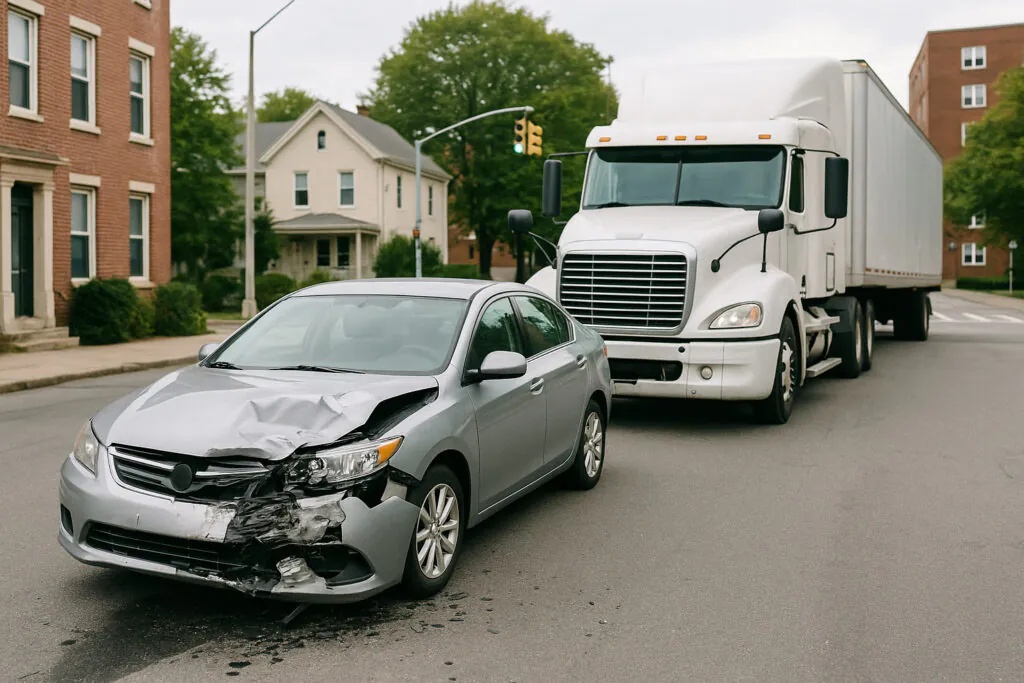
- commercial truck accident cases
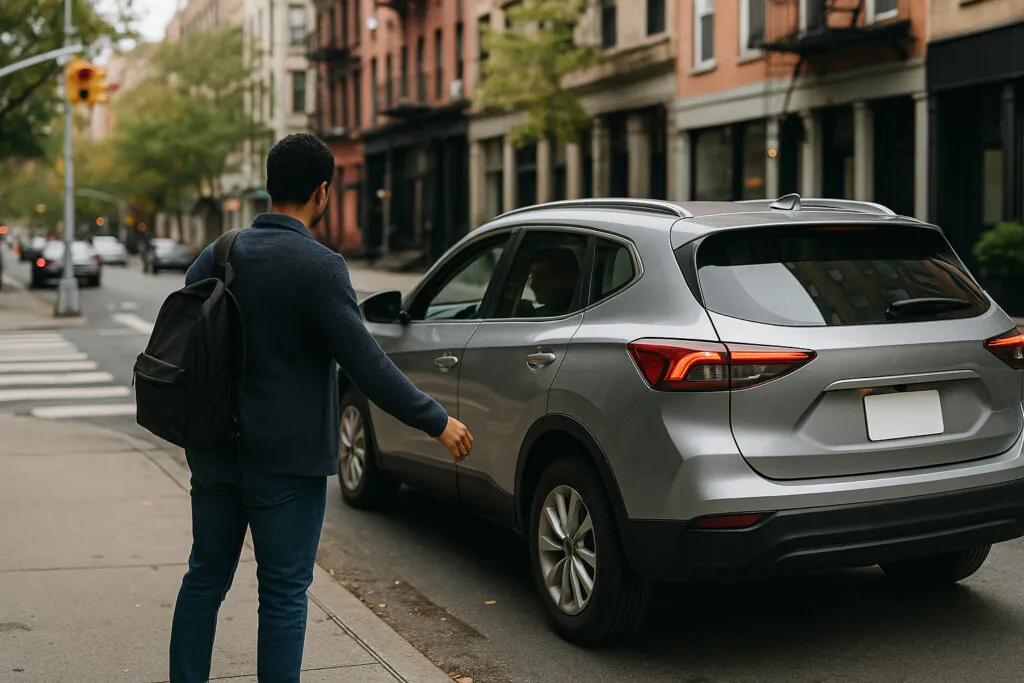
- rideshare accident claims involving Uber or Lyft
- wrongful death claims from fatal car accidents
Frequently Asked Questions
These answers address common car accidents questions under New York law. The facts and applicable rules can change the answer. This is general information, not personal legal or medical advice.
What should I do after a New York car crash?
Get to a safe place, call for emergency help when needed, report the crash as required, exchange identifying and insurance information, and photograph vehicles and the scene if it is safe.
Seek medical advice for symptoms and preserve witness contacts, report information, and original media. Do not admit facts you do not know or delay care to collect evidence.
Sources: New York DMV: Order and access crash reports; U.S. HHS: Your medical records; CDC: Transportation safety and injury prevention.
Which insurance pays medical bills after a New York car accident?
For an eligible driver or passenger, the vehicle’s no-fault insurer is generally first for covered medical expenses and certain economic losses. Basic benefits are generally up to $50,000 per person in combined covered losses.
Written notice is generally required within 30 days, with a specified justification exception. Health insurance and liability coverage may also matter, but each has separate rules.
Sources: NY DFS: Consumer questions about no-fault insurance; NY Insurance Law §5102: no-fault and serious-injury definitions.
Can crash symptoms begin after I leave the scene?
Yes. Headache, dizziness, neck pain, nausea, or concentration problems can appear later. Seek medical advice for new symptoms and emergency care for concussion warning signs.
Research on whiplash shows recovery is influenced by multiple factors; it cannot predict one person’s course. Document onset, treatment, and functional changes accurately.
Sources: CDC: Concussion symptoms and emergency warning signs; Sarrami et al., Journal of Orthopaedics and Traumatology: whiplash prognosis meta-review; U.S. HHS: Your medical records.
When can I seek pain-and-suffering damages after a car crash?
A claim subject to New York’s no-fault law generally requires a statutory serious injury for non-economic loss. Current categories include fractures, significant disfigurement, and specified permanent or significant limitations.
The statutory text changed in 2026. A diagnosis or time away from work alone does not automatically establish the threshold or causation.
Sources: NY Insurance Law §5102: no-fault and serious-injury definitions; NY Insurance Law §5104: limits on covered motor-vehicle claims; Enacted 2026 budget, Part EE: applicability of motor-vehicle changes.
What happens if I was partly responsible for the collision?
For Article 51 personal-injury actions, current CPLR §1411(b) bars recovery when the claimant’s fault is greater than the opposing parties’ combined fault; otherwise fault can reduce damages.
The change applies to actions commenced on or after May 26, 2026. Insurer percentages are not final legal findings, and not every vehicle-related claim uses the same rule.
Sources: NY CPLR §1411: comparative fault; Enacted 2026 budget, Part EE: applicability of motor-vehicle changes.
What if the at-fault driver was uninsured or fled?
Potential coverage may come from an applicable uninsured-motorist policy or MVAIC, depending on household insurance and eligibility. Preserve police-report details, plate or vehicle information, witnesses, and video.
MVAIC publishes prompt police-report and notice requirements that differ for identified and unidentified vehicles. Obtain advice immediately.
Sources: MVAIC: Eligibility and reporting deadlines; New York DMV: Order and access crash reports.
What evidence matters when a commercial vehicle caused the crash?
Preserve company and vehicle identification, photographs, witness information, police-report details, and medical records. Potential records can include onboard video, dispatch data, electronic logs, and maintenance information.
Not every vehicle has the same required records. Prompt preservation should be directed to the correct company without attempting unauthorized access.
Sources: U.S. HHS: Your medical records; NY CPLR §4111: past and future injury damages.
What if a city or public-agency vehicle was involved?
Special notice and lawsuit rules may apply. Many municipal tort claims require a notice of claim within 90 days and a covered lawsuit within one year and 90 days.
An insurance report is not necessarily legal notice. Identify the actual owner, operator, and agency promptly because different public entities follow different statutes.
Sources: NY General Municipal Law §50-e; NY General Municipal Law §50-i.
Is the car-accident lawsuit deadline always three years?
No. Three years is a common negligence period, but no-fault notice, municipal claims, wrongful death, and other circumstances use different requirements.
Settlement discussions do not necessarily pause a deadline. Track the incident, notice, and filing dates for each claim separately.
Sources: NY CPLR §214: personal-injury filing periods; NY DFS: Consumer questions about no-fault insurance; NY General Municipal Law §50-e.
How should I evaluate an insurer’s car-accident settlement offer?
Compare the offer with liability evidence and documented past and future losses, including treatment, earnings effects, and pain and suffering where recoverable. No-fault benefits are not a complete liability valuation.
Review the release, liens, consent requirements, fees, expenses, and unresolved prognosis. No result or online average can guarantee the appropriate amount.
Sources: NY CPLR §4111: past and future injury damages; New York Rules of Professional Conduct, Rule 1.5: fees and expenses; NY DFS: Consumer questions about no-fault insurance.
Car Accident Lawyers by Location
We handle car accident cases throughout the greater Westchester and Bronx area. Find a car accident lawyer near you:Speak With a White Plains Car Accident Lawyer Today
A serious car accident can leave you dealing with treatment, bills, missed work, insurance pressure, and a lot of uncertainty all at once. You do not have to figure all of that out by yourself. Billy Cooper Law represents drivers, passengers, pedestrians, and cyclists injured in White Plains and throughout Westchester County. The firm understands New York no-fault law, the serious injury threshold, the local roadways where major collisions happen, and how to build a case that insurers cannot casually dismiss. Call (914) 730-5789 for a free consultation. You pay nothing unless the firm recovers for you. ¿Habla español? Llame al (914) 730-5789 para una consulta gratuita.BILLY COOPER LAW
Related Community Pages
Westchester County
Bronx County
Rockland County
Kings County (Brooklyn)
Queens County
New York County

Get the Answers You Need
At Billy Cooper Law, every day we renew our pledge to help injured people get the justice and compensation they deserve. We have a reputation throughout New York and nationally for standing up for our clients, and we take that responsibility seriously by approaching every case with preparation, persistence, and an unwavering commitment to results.