
Greenburgh NY Car Accident Lawyer
A car crash in Greenburgh can leave you facing medical appointments, missed work, vehicle repairs, and calls from insurance adjusters before you have had time to understand what happened.
Where the collision occurred matters. Greenburgh includes six incorporated villages as well as a large unincorporated area. The Greenburgh Police Department serves the unincorporated portion, while crashes inside the villages may involve a different police department, road authority, and source of evidence. Identifying the correct jurisdiction is often one of the first steps in protecting a claim. (greenburghny.com)

Types of Injury Cases We Handle in Greenburgh NY
- Personal Injury
- Uber and Lyft Accidents
- Car Accidents
- Slip and Fall
- E-Bike Accidents
Car Accident Lawyers Serving Westchester County
- Westchester County
- Yonkers
- Greenburgh
- New Rochelle
- Mount Vernon
Why Injured People Turn to Billy Cooper Law
If your injuries are serious, you will probably want a lawyer who understands both the immediate insurance claim and the possibility that the case may need to be tried.
Billy Cooper Law’s roots in Westchester County date to 1960. Marvin A. Cooper helped draft the no-fault legislation that continues to shape New York motor vehicle claims. Today, William H. Cooper leads the practice with support from attorney Anieska J. Garcia and the firm’s legal team. The firm reports more than 75 years of combined experience and more than $41 million in verdicts and settlements, including an $850,000 motor vehicle recovery and a $2.4 million wrongful death recovery arising from a commercial vehicle collision. (billycooperlaw.com)
Those credentials matter because a serious crash claim is rarely limited to submitting bills. The lawyer may need to prove how the collision occurred, document a permanent injury, identify additional insurance, and prepare the case for trial if the insurer refuses to make a reasonable offer.
Billy Cooper Law offers free consultations and handles injury cases on a contingency basis. There is no upfront attorney’s fee, and no attorney’s fee is due unless the firm obtains compensation for you. The firm’s verified Westchester office is in White Plains NY—not Greenburgh NY—and serves clients throughout the surrounding area. (billycooperlaw.com)
Why Greenburgh Car Accident Cases Are Different
Greenburgh is not one simple jurisdiction. The town contains Ardsley, Dobbs Ferry, Elmsford, Hastings-on-Hudson, Irvington, and Tarrytown, together with unincorporated communities such as Hartsdale, Fairview, and Greenville. The Greenburgh Police Department’s patrol responsibility covers approximately 17 square miles and 142 miles of roadway in the unincorporated area. (greenburghny.com)
That structure can affect:
- Which police department prepared the crash report
- Whether the road is controlled by the town, a village, Westchester County, New York State, or another public authority
- Where traffic-control, maintenance, and construction records are kept
- Whether a short government-claim deadline applies
- Which court has jurisdiction over a later lawsuit
A collision described only as happening “in Greenburgh” may not provide enough information. The exact intersection, direction of travel, nearest address, and side of a municipal boundary can all matter.
A Local Crash Snapshot
The Institute for Traffic Safety Management and Research’s January 2026 report for the Greenburgh Town Police Department recorded 766 police-reported crashes in 2024, including 188 personal injury crashes and three fatal crashes.
From 2020 through 2024, the department averaged 701 reported crashes, 179 personal injury crashes, and two fatal crashes per year. These figures concern crashes reported by the Greenburgh Town Police Department, which primarily serves unincorporated Greenburgh; crashes handled by village or other law-enforcement agencies may appear in separate records. (itsmr.org)
The numbers show why early investigation matters. Even when fault initially seems clear, insurers may dispute whether the collision caused a particular injury, whether treatment was necessary, or whether another driver bears all the responsibility.
Where Serious Collisions Happen in Greenburgh
Greenburgh contains an unusual mix of interstate highways, parkways, commercial corridors, shopping-center entrances, residential streets, and commuter routes.
The town’s comprehensive plan identifies five major highways and parkways—I-87, I-287, the Bronx River Parkway, the Sprain Brook Parkway, and the Saw Mill River Parkway. It also identifies three major commercial corridors: Central Park Avenue, also known as Route 100; White Plains–Tarrytown Road, or Route 119; and Saw Mill River Road, or Route 9A. (police.greenburghny.com)
Different roads produce different types of cases:
- I-87 and I-287: High speeds, merging traffic, changing lanes, congestion, and commercial vehicles can lead to multi-vehicle crashes with several insurance policies in play.
- Saw Mill River and Sprain Brook parkways: A case may require close analysis of lane position, ramp design, sight distance, weather, and the sequence of impacts.
- Central Park Avenue: Frequent driveways, turning vehicles, stores, restaurants, bus stops, and pedestrian activity can create conflicts that do not occur on limited-access highways.
- Route 119: This corridor passes through multiple municipal areas and intersects with ramps serving I-87, I-287, the Saw Mill River Parkway, Route 9A, and Central Avenue. Identifying the responsible road authority can be as important as identifying the negligent driver. (greenburghny.com)
- Neighborhood streets: These crashes may involve stop-sign violations, limited visibility, delivery vehicles, cyclists, pedestrians, or drivers entering from private driveways.
The location also determines where evidence might be found. A commercial-corridor crash may have been recorded by nearby businesses. A highway collision may require vehicle data, dashcam footage, toll or fleet records, and documents held by a state or public authority.
Car Accident Cases Billy Cooper Law Handles
Billy Cooper Law represents people injured in many kinds of vehicle-related incidents, including:
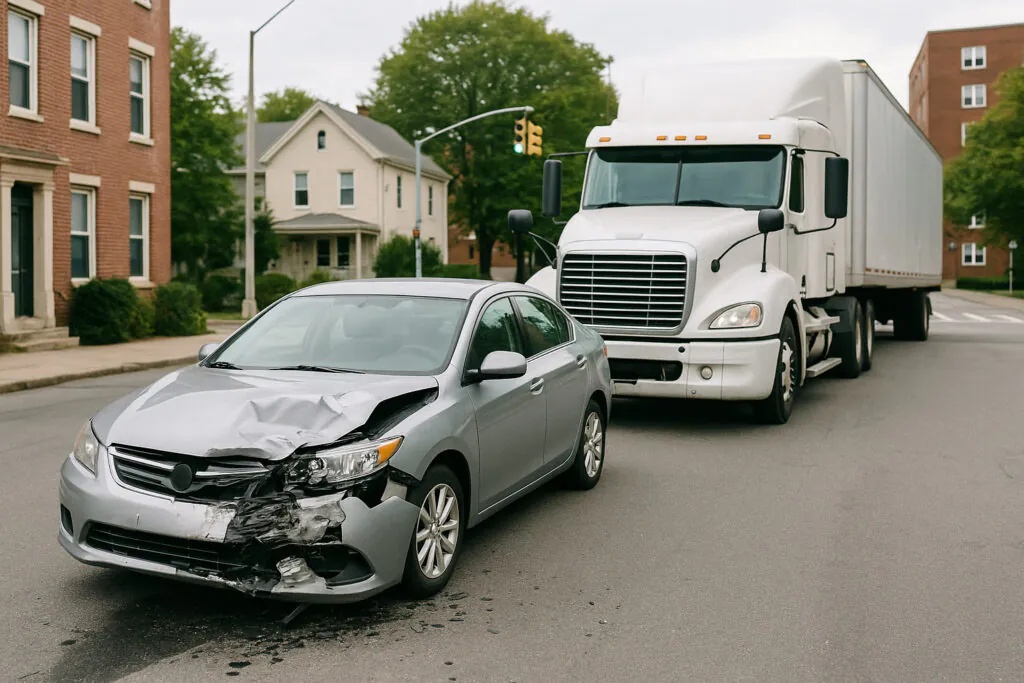
- Car accidents, including rear-end, intersection, sideswipe, highway, parking-lot, and multi-vehicle crashes
- Uber and Lyft accidents
- Commercial vehicle and truck accidents
- Drunk driving accidents
- Motorcycle accidents
- Pedestrian accidents
- Bicycle accidents
- Bus accidents
- Wrongful death claims arising from fatal collisions
The legal strategy should fit the crash. A rear-end collision between two privately owned cars presents different insurance and evidence issues than a rideshare crash, a tractor-trailer collision, or a wreck involving a municipal vehicle.
What to Do After a Greenburgh Car Accident
Start with your safety and medical needs. Call 911, move out of active traffic if you can do so safely, and accept appropriate medical evaluation. Some neck, back, shoulder, and head injuries become more noticeable after the initial shock wears off.
If circumstances allow:
- Photograph the scene. Include vehicle positions, damage, debris, skid marks, traffic signals, signs, lane markings, and nearby businesses.
- Record the exact location. Note the nearest address, intersection, highway exit, direction of travel, and municipality if known.
- Exchange information. Obtain the other driver’s name, license, registration, insurance, and plate number.
- Identify witnesses. A name and telephone number can be crucial if the drivers later give conflicting accounts.
- Preserve available video. Save dashcam recordings immediately so they are not overwritten.
- Get medical care. Tell the provider that the condition followed a motor vehicle accident.
- Notify the appropriate insurer. New York’s no-fault deadline can arrive quickly.
- Avoid guessing about fault. Give truthful information, but do not speculate about speed, distance, or injuries when you are uncertain.
- Be cautious with recorded statements and broad medical authorizations. You can ask questions before signing or agreeing to anything.
If anyone was injured or the crash caused more than $1,000 in property damage, New York may require the driver to submit an MV-104 accident report to the Department of Motor Vehicles. Reporting the crash to an insurance company does not necessarily satisfy that obligation. (dfs.ny.gov)
Evidence Worth Preserving
Insurance companies begin evaluating fault and injuries almost immediately. Useful evidence may include:
- Police and DMV crash reports
- 911 calls and dispatch records
- Photographs and video from the scene
- Nearby business or residential surveillance
- Dashcam and rideshare-app data
- Event data recorder information from the vehicles
- Vehicle inspection and repair records
- Cellphone records when distraction is disputed
- Driver logs and company records in a commercial vehicle case
- Traffic-signal timing, roadway design, and maintenance records
- Witness statements
- Emergency, hospital, specialist, and rehabilitation records
- Wage statements, tax documents, and employer records
- A record of how the injuries affect sleep, mobility, work, and daily activities
Do not repair, sell, or dispose of a badly damaged vehicle before asking whether it should be inspected. In a serious case, the vehicle itself may contain evidence that photographs cannot capture.
The Greenburgh Police Department states that its accident reports may take five to ten business days to become available. A crash inside one of Greenburgh’s incorporated villages may require a request to that village’s police department instead. (police.greenburghny.com)
How New York No-Fault Insurance Works
New York’s no-fault system generally provides initial benefits without waiting for a decision about who caused the crash. Basic Personal Injury Protection can provide up to $50,000 per eligible person for accident-related medical care, lost earnings, and certain necessary expenses.
Basic benefits may include 80% of lost earnings, subject to a maximum of $2,000 per month for up to three years, along with limited reimbursement for other reasonable and necessary expenses. No-fault does not pay for vehicle repairs. (dfs.ny.gov)
A written no-fault claim generally must be submitted within 30 calendar days of the accident, unless the injured person can provide a clear and reasonable justification for a late filing. Medical bills and wage-loss documentation have separate submission requirements. (dfs.ny.gov)
If another driver caused the collision, you may also have a claim against that driver’s liability insurance for economic losses beyond no-fault and, when the legal serious-injury requirement is met, pain and suffering.
Hit-and-run and uninsured-driver cases may involve mandatory uninsured motorist coverage. Supplementary uninsured/underinsured motorist coverage may provide additional protection when the responsible driver has no insurance or inadequate limits. Policy language and notice requirements should be reviewed promptly. (dfs.ny.gov)
Deadlines and New York’s 2026 Motor Vehicle Law Changes
Most New York personal injury actions must be commenced within three years, but waiting that long to investigate can allow important evidence to disappear. CPLR § 214 establishes the general three-year period for personal injury claims. (nysenate.gov)
Other deadlines can be far shorter:
- No-fault notice: Generally 30 days after the accident
- Municipal notice of claim: Often 90 days when a public corporation may be responsible
- Insurance and policy notices: Potentially much sooner than the lawsuit deadline
- Wrongful death and certain public-entity claims: Governed by different time limits
New York also made important changes to motor vehicle injury law effective May 26, 2026, applying to actions and proceedings commenced on or after that date:
- The state removed the former “90/180-day” category from the statutory definition of serious injury.
- A motor vehicle claimant is now barred from recovery when the claimant’s fault is greater than the fault of the defendant or the defendants combined.
- A claimant who is 50% or less at fault may still recover, but the award is reduced by that percentage.
- In limited cases, non-economic damages may be capped at $100,000 for an at-fault claimant who was operating an uninsured vehicle, was convicted of driving while impaired, or was convicted of using the vehicle in the commission of a felony. The cap does not apply to an action involving death.
The current serious-injury definition includes conditions such as death, dismemberment, significant disfigurement, a fracture, loss of a fetus, permanent loss of use, permanent consequential limitation, and significant limitation of a body function or system. Older online discussions of New York’s serious-injury and comparative-fault rules may no longer be accurate. (dfs.ny.gov)
BILLY COOPER LAW
Who May Be Responsible for the Crash?
The obvious answer is not always the complete answer. Depending on what happened, potentially responsible parties may include:
- A driver who followed too closely, failed to yield, ran a signal, drove distracted, or made an unsafe lane change
- The owner of the vehicle
- An employer whose employee caused a crash while working
- A delivery, trucking, bus, or rideshare company
- A contractor responsible for unsafe roadwork or traffic control
- A repair facility or manufacturer when a mechanical or product defect contributed
- A municipality or public authority responsible for a dangerous roadway condition
- Multiple drivers in a chain-reaction collision
A careful investigation should also address any claim that you were partly at fault. Under the motor vehicle rules effective May 26, 2026, being more than 50% responsible can bar recovery. That makes photographs, witnesses, video, vehicle data, and scene analysis especially important. (nysenate.gov)
Compensation After a Serious Car Accident
The compensation available depends on the injuries, insurance coverage, fault evidence, and long-term effect on your life. A claim may include:
- Medical expenses not paid by no-fault
- Future treatment, surgery, rehabilitation, and medication
- Lost wages
- Reduced future earning capacity
- Transportation and household assistance
- Costs associated with permanent disability
- Pain and suffering when the serious-injury threshold is met
- Loss of enjoyment of life
- Property damage and related expenses
- Economic losses suffered by a family after a fatal collision
Serious injuries may require a life-care planner, vocational expert, economist, accident reconstruction specialist, or medical expert. The goal is not simply to list bills. It is to show what the crash has already taken from you and what it is likely to cost in the future.
Billy Cooper Law also represents people suffering catastrophic injuries, including traumatic brain injuries and spinal cord injuries.
When a Government Agency May Be Involved
Government involvement is particularly important in Greenburgh because so many roads and services overlap.
A claim may involve a public entity if the crash was caused by:
- A town, village, county, state, or authority-owned vehicle
- Unsafe public road construction
- A defective traffic signal or missing sign
- A dangerous roadway condition
- Negligent snow, ice, or debris response
- A collision involving certain public transportation vehicles
Claims against towns, villages, counties, school districts, and other public corporations often require a notice of claim within 90 days under General Municipal Law § 50-e. A police report, insurance notice, or complaint to a highway department is not necessarily a valid notice of claim. (nysenate.gov)
Claims involving New York State or the New York State Thruway Authority may follow different Court of Claims procedures. Before sending a claim, it is important to determine who owned the vehicle, maintained the road, controlled the traffic device, or supervised the work.
If a government agency might be involved, do not wait to learn which deadline applies.
Local Courts, Hospitals, and Agencies
A traffic charge arising from a collision may proceed in Greenburgh Town Court or the appropriate village court. A substantial civil injury lawsuit arising in Westchester County is generally filed in the Supreme Court of the State of New York, Westchester County, at 111 Dr. Martin Luther King Jr. Boulevard in White Plains NY. (ww2.nycourts.gov)
For life-threatening injuries, call 911. Westchester Medical Center in Valhalla NY operates the Hudson Valley’s American College of Surgeons-verified Level I adult trauma center, with pediatric Level I trauma services at Maria Fareri Children’s Hospital. (westchestermedicalcenter.org)
Records relevant to a Greenburgh crash may be held by:
- Greenburgh Police or the appropriate village police department
- New York State Department of Motor Vehicles
- New York State Department of Transportation
- New York State Thruway Authority
- Westchester County
- A local public works or highway department
- A commercial carrier, rideshare company, or vehicle owner
Determining where to request evidence is part of the investigation. Sending a request to the wrong agency can waste time while video, vehicle data, or temporary roadwork records are lost.
How Billy Cooper Law Investigates a Greenburgh Crash
The work should begin with the facts, not the insurer’s assumptions.
Depending on the case, Billy Cooper Law may:
- Confirm the exact municipal and roadway jurisdiction
- Obtain police, DMV, 911, and emergency-response records
- Visit and photograph the scene
- Look for surveillance and identify witnesses
- Preserve and inspect the vehicles
- Seek event data recorder or dashcam information
- Analyze traffic signals, signs, lane markings, ramps, and sight lines
- Investigate the driver’s employment and vehicle ownership
- Review trucking, delivery, or rideshare records
- Identify liability, no-fault, uninsured, underinsured, and excess coverage
- Organize medical evidence showing the progression of the injuries
- Document lost income and the effect on daily life
- Work with appropriate medical and technical experts
- Prepare the case for litigation when the insurance company will not negotiate fairly
Early preparation gives the lawyer more options. It also makes it harder for an insurer to reduce a serious collision to a few photographs and a short crash-report description.
Frequently Asked Questions
Do I have a case if the other driver rear-ended me?
A rear-end collision often supports an inference that the following driver failed to maintain a safe distance, but the facts still matter. The insurer may dispute the sequence of impacts, claim that your brake lights were not working, or argue that your injuries were unrelated. Preserve photographs, witness information, medical records, and vehicle data.
Can I recover if I was partly at fault?
For motor vehicle injury actions commenced on or after May 26, 2026, you generally cannot recover if your fault is greater than the fault of the person or people you are suing. If you are 50% or less at fault, compensation may still be available, reduced by your percentage of responsibility. (dfs.ny.gov)
What if I did not feel badly hurt at the scene?
Some injuries become clearer after the initial adrenaline subsides. Seek medical attention if you develop pain, dizziness, weakness, numbness, confusion, or other symptoms. Delayed treatment can affect your health and give the insurer an opportunity to dispute whether the crash caused the condition.
Will no-fault pay all my medical expenses?
Not necessarily. Basic no-fault generally provides up to $50,000 per eligible person for combined medical expenses, wage loss, and certain necessary costs. Optional additional PIP may provide more. Serious injuries and losses beyond no-fault may support a separate claim against the responsible party. (dfs.ny.gov)
What happens if the driver left the scene or had no insurance?
Your own uninsured motorist coverage may apply. Underinsured motorist coverage may help if the responsible driver has insurance but not enough to cover the claim. People without access to an applicable household policy may need to examine possible Motor Vehicle Accident Indemnification Corporation coverage. These claims have strict notice requirements.
How long will my car accident case take?
Some cases resolve within months. Others take longer because treatment is ongoing, fault is disputed, several insurers are involved, or a lawsuit and trial preparation become necessary. Resolving a claim too early can be risky when the long-term medical outcome is not yet known.
Does Billy Cooper Law have an office in Greenburgh NY?
No. Billy Cooper Law’s verified Westchester office is located at 245 Main Street, Suite 510, White Plains NY 10601. The firm serves clients in Greenburgh and throughout Westchester County from that office. (billycooperlaw.com)
How much does it cost to speak with Billy Cooper Law?
The firm offers free consultations. Personal injury matters are handled on a contingency basis, so there is no upfront attorney’s fee and no attorney’s fee unless compensation is recovered. (billycooperlaw.com)
Related Billy Cooper Law Resources
- New York Car Accident Lawyer
- New York Motor Vehicle Accident Lawyer
- New York Uber and Lyft Accident Lawyer
- New York Truck and Commercial Vehicle Accident Lawyer
- New York Catastrophic Injury Lawyer
- New York Wrongful Death Lawyer
Talk With a Greenburgh NY Car Accident Lawyer
Tell us what happened. We will ask about the location, the vehicles involved, your medical care, and the insurance information available. Then we can explain the next practical steps.
If the crash involved a public vehicle, a state or county road, a commercial carrier, or a hit-and-run driver, mention that immediately. Those facts may change the evidence that needs to be preserved and the deadlines that apply.
Contact Billy Cooper Law or call (914) 730-5789 for a free consultation. The firm’s Westchester office is at 245 Main Street, Suite 510, White Plains NY 10601. You pay no upfront attorney’s fee, and no attorney’s fee is due unless the firm recovers compensation for you.
Sources
Billy Cooper Law
- Billy Cooper Law Official Website
- Billy Cooper Law Car Accident Practice
- Billy Cooper Law Motor Vehicle Accident Practice
- Billy Cooper Law Team
- Marvin A. Cooper Firm History
- Billy Cooper Law Contact Information
Greenburgh and Westchester County
- Town of Greenburgh Villages
- Greenburgh Police Department Jurisdiction
- Greenburgh Police Patrol Area
- Greenburgh Police Accident Reports
- Unincorporated Greenburgh Comprehensive Plan
- Route 119 Complete Street Design Plan
- Greenburgh Town Police Crash and Traffic Data
- New York State Ninth Judicial District Court Guide
- Westchester Medical Center Trauma Services
New York Law and Insurance
- New York Department of Financial Services Auto Insurance Guide
- New York Department of Financial Services No-Fault FAQs
- New York Department of Financial Services 2026 Motor Vehicle Insurance Reforms
- New York Insurance Law § 5102
- New York Insurance Law § 5104
- New York CPLR § 1411
- New York CPLR § 214
- New York General Municipal Law § 50-e
Get the Answers You Need
At Billy Cooper Law, every day we renew our pledge to help injured people get the justice and compensation they deserve. We have a reputation throughout New York and nationally for standing up for our clients, and we take that responsibility seriously by approaching every case with preparation, persistence, and an unwavering commitment to results.