

Kingsbridge NY Car Accident Lawyer
A crash can leave you trying to manage pain, missed work, vehicle repairs, medical appointments, and insurance calls at the same time. You may not yet know who caused the collision or which insurance company should be paying your bills.
Billy Cooper Law represents people injured in car accidents in Kingsbridge and throughout the Bronx. Tell us what happened. We can identify the evidence and deadlines that matter, deal with the insurers, and explain your options in plain English.
BILLY COOPER LAW

Types of Injury Cases We Handle in Kingsbridge NY
- Personal Injury
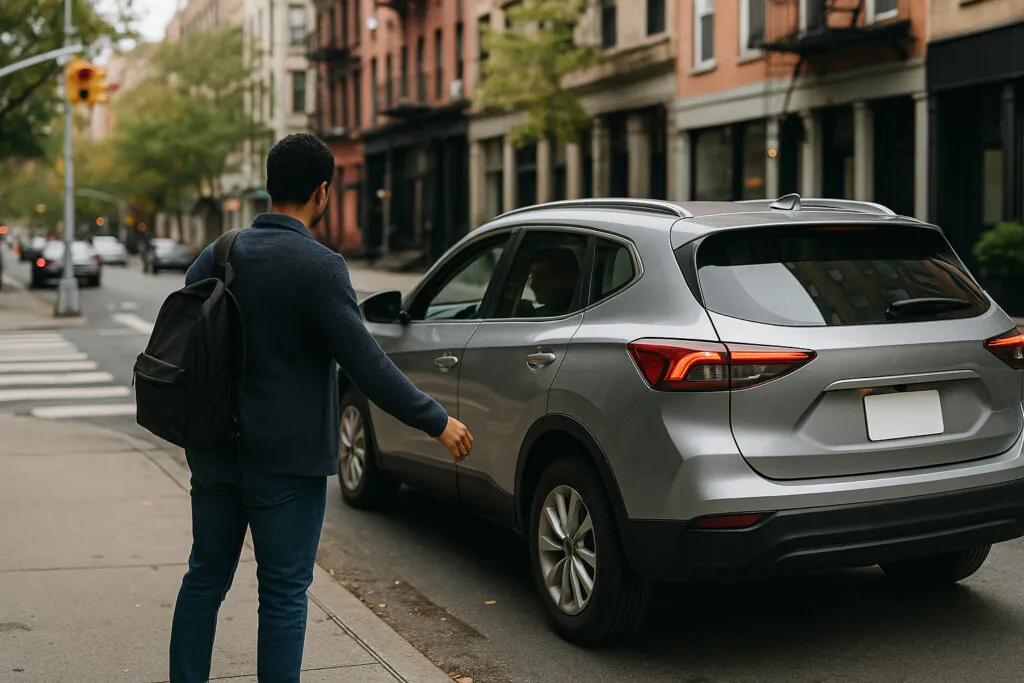
- Uber and Lyft Accidents
- Slip and Fall
- E-Bike Accidents
- Car Accidents
Car Accident Lawyers Serving Bronx County
- Bronx County
- Co-op City
- Kingsbridge
- Soundview
- Riverdale
- Fordham
A Law Firm Prepared for Serious Car Accident Cases
If your injuries may require surgery, extended rehabilitation, or time away from work, you will want a lawyer who understands both the medical and insurance sides of the claim.
Billy Cooper Law brings more than 75 years of combined experience to personal injury cases. The firm’s published case results include an $850,000 settlement in a Bronx County automobile collision involving reflex sympathetic dystrophy and a meniscus tear. (billycooperlaw.com)
The initial consultation is free, and car accident cases are handled on a contingency-fee basis. You do not pay an attorney’s fee unless the firm recovers compensation for you. Spanish-speaking clients can work with bilingual attorney Anieska Garcia. When you contact the firm, you can speak directly with an attorney who will listen to what happened and answer your questions. (billycooperlaw.com)
Why Kingsbridge Car Accidents Require a Local Investigation
The physical layout around Broadway and West 230th Street can affect how a collision happened and where evidence may be found. In a published safety report, the New York City Department of Transportation described long pedestrian crossings, conflicts between turning vehicles and pedestrians, and visibility complications created by the columns supporting the elevated 1 train. DOT installed pedestrian islands, new markings, and an all-pedestrian signal phase in response. Review the NYC DOT report on Broadway and West 230th Street. (nyc.gov)
After a crash in that area, photographs should show more than the damaged cars. Lane markings, train columns, traffic islands, signals, crosswalks, curb lines, debris, and each driver’s direction of travel may help explain what happened.
The commercial blocks around Broadway and West 231st Street may also have useful private video from stores, residential buildings, buses, dashcams, or parked vehicles. That evidence can be overwritten quickly.
Do not assume a visible City traffic camera recorded the collision. NYC DOT states that its traffic cameras provide live images but do not record footage. See NYC DOT’s traffic-camera guidance. (nyc.gov)
A Recent Kingsbridge-Area Crash Snapshot
The NYPD’s 50th Precinct serves Kingsbridge as well as Riverdale, Fieldston, Marble Hill, and Spuyten Duyvil. Its statistics are therefore broader than Kingsbridge alone, but they show the volume of traffic injuries in the surrounding northwest Bronx. View the 50th Precinct service area. (nyc.gov)
According to the precinct’s TrafficStat report covering January 1 through August 30, 2026:
- 633 collisions were reported.
- 265 collisions resulted in injuries.
- 404 people were injured.
- 311 motor-vehicle occupants were injured.
- Those injuries included 175 people in cars and 127 people in SUVs.
The same report showed that total injuries were 9.19% higher than during the comparable 2025 period. These figures are preliminary, but they reinforce why prompt medical documentation and an independent investigation matter. Read the NYPD 50th Precinct TrafficStat report. (nyc.gov)
Car Accident Cases Billy Cooper Law Handles
Car accident claims can involve much more than two private drivers and two insurance policies. Billy Cooper Law handles cases involving:
- Rear-end and chain-reaction crashes
- Intersection and turning collisions
- Unsafe lane changes and sideswipes
- Distracted, speeding, or fatigued drivers
- Hit-and-run and uninsured-driver crashes
- Uber and Lyft accidents
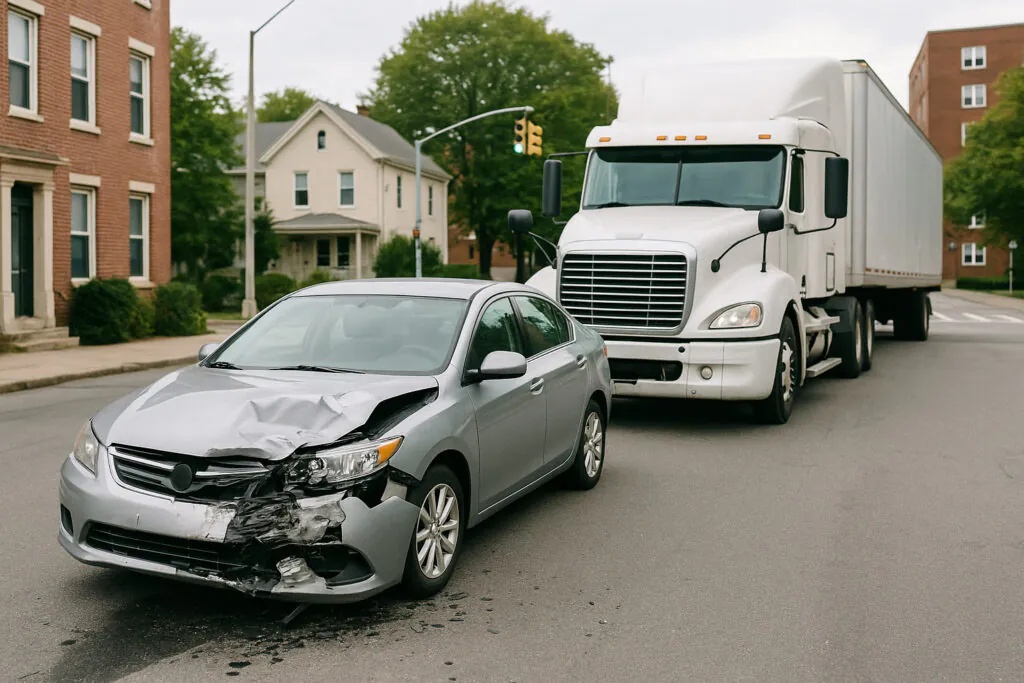
- Truck and commercial vehicle collisions
- Drunk driving accidents
- Collisions causing catastrophic injuries
- Fatal crashes and wrongful death claims
The firm’s broader New York car accident practice includes claims involving drivers, passengers, vehicle owners, employers, rideshare companies, commercial operators, and government entities.
What to Do After a Kingsbridge Car Accident
Your health comes first. If you have not already received appropriate medical care, do not delay simply because symptoms seemed manageable at the scene. Adrenaline can mask pain, and some orthopedic, neurologic, and internal injuries become clearer over time.
When possible:
- Call 911. Request police and medical assistance when anyone may be injured.
- Photograph the scene. Include every vehicle, license plate, traffic signal, lane marking, train column, intersection sign, debris field, skid mark, and visible injury.
- Exchange information. Obtain the driver’s name, contact information, license, registration, and insurance details.
- Get witness names and phone numbers. A short independent account may become important if the drivers disagree.
- Identify nearby cameras. Look at storefronts, apartment entrances, buses, parked vehicles, and doorbell systems.
- Preserve your own evidence. Save dashcam files, photographs, tow records, repair estimates, medical paperwork, and insurance correspondence.
- Avoid guessing about fault. Give accurate information to police and medical providers, but do not estimate speed or distance if you do not know.
- Be careful with recorded statements. An insurance adjuster may ask questions before you understand your injuries or have reviewed the evidence.
New York also requires a driver to submit an MV-104 report to the Department of Motor Vehicles within 10 days when a crash causes injury, death, or more than $1,000 in damage to any one person’s property. A police report does not necessarily satisfy the driver’s separate reporting duty. Review New York’s MV-104 accident report instructions. (it.dmv.ny.gov)
Evidence That May Need to Be Preserved
A police report is useful, but it rarely proves the entire case. Depending on how the collision happened, important evidence may include:
- 911 calls and NYPD records
- Photographs and measurements from the crash scene
- Witness statements
- Storefront, residential, bus, or dashcam video
- Vehicle event-data recorder information
- Vehicle inspection and maintenance records
- Cellphone evidence in a distracted-driving case
- Rideshare trip records, GPS data, and app status
- Delivery or commercial-driver logs
- Tow-yard photographs and repair records
- Medical imaging and treatment records
- Employment, attendance, and wage documentation
Video should be requested promptly from the person or organization that controls it. Waiting for an insurance company to investigate can allow valuable evidence to be deleted.
How New York No-Fault Insurance Works
“No-fault” does not mean that nobody caused the crash. It means that certain economic benefits are generally available without first proving who was responsible.
Basic no-fault coverage can provide up to $50,000 per person for covered medical expenses, lost earnings, and certain other necessary expenses. It can pay 80% of lost earnings, subject to a maximum of $2,000 per month for up to three years, along with up to $25 per day for certain necessary expenses for up to one year. Read the New York Department of Financial Services auto-insurance guidance. (dfs.ny.gov)
Drivers and passengers usually apply through the insurer covering the vehicle they occupied. Written notice generally must be provided within 30 days of the accident unless there is a clear and reasonable justification for delay. Medical bills generally must be submitted within 45 days after treatment, and lost-earnings claims generally must be submitted within 90 days. Review the Department of Financial Services no-fault FAQs. (dfs.ny.gov)
No-fault does not pay for damage to your car. Property-damage claims are handled separately.
When You Can Seek Compensation Beyond No-Fault
New York generally requires a qualifying “serious injury” before an injured person can recover pain-and-suffering damages in a covered motor vehicle case.
The current statutory categories include:
- Death
- Dismemberment
- Significant disfigurement
- A fracture
- Loss of a fetus
- Permanent loss of use of a body organ, member, function, or system
- Permanent consequential limitation of a body organ or member
- Significant limitation of a body function or system
Insurance Law § 5102 defines these categories, while Insurance Law § 5104 governs when claims may be brought beyond no-fault. (nysenate.gov)
New York changed this law on May 26, 2026. The former category based on being substantially unable to perform usual activities for at least 90 of the first 180 days after the accident was removed. The change applies to actions and proceedings commenced on or after May 26, 2026. Read the Department of Financial Services explanation of the 2026 motor vehicle reforms. (dfs.ny.gov)
Medical evidence has therefore become even more important. MRI findings, range-of-motion measurements, surgical records, specialist opinions, treatment consistency, and documentation of lasting restrictions may determine whether an injury meets the threshold.
What If You Were Partly at Fault?
New York also changed its comparative-fault rule for motor vehicle injury cases on May 26, 2026.
For covered motor vehicle actions commenced on or after that date, an injured person is barred from recovering if their share of fault is greater than the fault of the person—or the combined fault of the people—they are suing. If the injured person is 50% at fault or less, compensation may still be available but will be reduced by that percentage. See CPLR § 1411. (nysenate.gov)
This makes an early fault investigation especially important. An insurer may claim that you stopped suddenly, changed lanes, ignored a signal, failed to yield, or could have avoided the collision. Scene photographs, video, witness accounts, and vehicle data may be needed to answer those arguments.
Who May Be Responsible?
The driver who struck you may not be the only responsible party.
Depending on the evidence, a claim may involve:
- A negligent driver
- The vehicle’s registered owner
- An employer whose employee was driving for work
- A delivery or commercial transportation company
- A rideshare driver and applicable insurance carrier
- A maintenance company that failed to keep a commercial vehicle safe
- The City of New York if a City vehicle or actionable roadway condition contributed to the crash
- A manufacturer in a collision involving a defective vehicle or component
Under Vehicle and Traffic Law § 388, a vehicle owner may be responsible for negligence committed by someone who was driving the vehicle with the owner’s express or implied permission. That can matter when the driver and registered owner are different people. (nysenate.gov)
Compensation After a Serious Car Accident
The value of a claim depends on the evidence, the available insurance, the seriousness of the injury, and how the crash has affected your life.
Recoverable losses may include:
- Medical expenses not covered by no-fault
- Future medical treatment
- Lost wages beyond available no-fault benefits
- Reduced future earning capacity
- Physical therapy and rehabilitation
- Transportation and household assistance
- Pain and suffering
- Emotional distress
- Permanent disability or disfigurement
- Loss of enjoyment of life
- Vehicle and personal-property damage
- Wrongful death losses when a collision is fatal
A claim should not be valued from the first emergency room bill alone. The full medical picture may take time to develop, particularly when surgery, nerve damage, chronic pain, or permanent work restrictions are possible.
Deadlines That May Apply
Most New York negligence lawsuits for personal injuries must be commenced within three years under CPLR § 214. That is not permission to wait. Video, vehicle data, witnesses, and physical roadway evidence can disappear long before the three-year period expires. (nysenate.gov)
Shorter deadlines may include:
- 10 days to submit a required MV-104 report
- 30 days to provide written no-fault notice in most cases
- 45 days to submit medical bills for no-fault payment
- 90 days to submit lost-earnings documentation
- 90 days to serve a notice of claim in many cases involving the City or another public entity
The deadline that controls depends on who was involved and what type of claim is being pursued.
Claims Involving a City Vehicle or Roadway
If a sanitation truck, police vehicle, fire vehicle, other City-owned vehicle, traffic signal, or roadway condition may have contributed to the collision, the ordinary three-year deadline may not be the first deadline that matters.
General Municipal Law § 50-e generally requires a notice of claim within 90 days for covered tort claims against a public corporation. A lawsuit against the City is generally subject to a one-year-and-90-day limitations period under General Municipal Law § 50-i. (nysenate.gov)
The New York City Comptroller explains that a notice of claim must be submitted before an action against the City and provides the City’s filing system. Calling 311, reporting the crash to police, or notifying an insurer is not necessarily the same as properly serving a notice of claim. Review the Comptroller’s claim-filing information. (comptroller.nyc.gov)
If a government vehicle or roadway issue may be involved, ask about these deadlines immediately.
Local Police, Medical, and Court Resources
The NYPD 50th Precinct serves Kingsbridge and is located at 3450 Kingsbridge Avenue. Police reports, body-worn camera records, 911 materials, and witness information may become part of a civil investigation, depending on the circumstances. (nyc.gov)
People injured in northwest Bronx crashes may receive treatment at different hospitals depending on EMS routing and the seriousness of the injury. North Central Bronx Hospital’s Emergency Department treats adult and pediatric emergencies. NYC Health + Hospitals/Jacobi is a designated Level I adult trauma center. Wherever you receive care, keep the facility name, discharge papers, referrals, and follow-up instructions. (nychealthandhospitals.org)
Substantial Bronx motor vehicle lawsuits are often handled in Bronx County Supreme Court, Civil Term, which hears civil cases over $50,000 and identifies motor vehicle claims among its principal case types. (nycourts.gov)
BILLY COOPER LAW
How Billy Cooper Law Investigates a Kingsbridge Crash
A careful investigation begins with the location, the vehicles, the people involved, and the insurance available. Billy Cooper Law can:
- Obtain police, medical, insurance, and employment records
- Inspect and photograph the crash location
- Identify vehicle owners, employers, and commercial operators
- Locate witnesses
- Send demands to preserve available video and electronic data
- Review vehicle damage and event-data information
- Investigate distracted or impaired driving
- Examine rideshare, delivery, or commercial-driver records
- Identify liability, no-fault, and uninsured or underinsured coverage
- Work with medical or accident-reconstruction experts when needed
- Handle communications with insurance carriers
- File notices of claim and lawsuits within applicable deadlines
- Prepare the case for negotiation, mediation, or trial
The purpose is not to make your situation feel more complicated. It is to take these responsibilities off your shoulders while you focus on treatment and recovery.
Related Information
Car accidents are only one category of injury claim that can arise in the neighborhood. For information about other types of cases, visit the firm’s Kingsbridge personal injury lawyer page.
Tell Us What Happened
You do not need to know which insurance policy applies or identify every responsible party before speaking with a lawyer. That is part of the investigation.
Contact Billy Cooper Law for a free consultation or call (718) 866-3311. Ask your questions. The firm will listen, explain your options, and help you understand what should happen next. (billycooperlaw.com)
Kingsbridge NY Car Accident FAQs: Safety, Insurance, and New York Claims
These answers provide general information about New York car crashes, not advice about a particular claim. The result can change with the collision facts, available evidence, insurance policies, and the date an action is started.
What should I do immediately after a car accident in Kingsbridge NY?
First, get to a safe place if you can, call 911 when anyone may be injured, and follow emergency responders’ instructions. New York requires involved drivers to stop and exchange identifying, license, vehicle, and insurance information after property damage; an injury crash must also be reported to police. Do not move an injured person unless an immediate danger makes movement necessary.
If it is safe, record vehicle positions, damage, road and weather conditions, traffic controls, and witness contact information before the scene changes. Save the other driver’s insurance details and your medical discharge papers. These steps do not decide fault, but they preserve information that police, insurers, doctors, and counsel may later need to evaluate what happened and which deadlines apply.
Sources: New York Vehicle and Traffic Law § 600; New York State Driver’s Manual—crash duties.
Do I have to file a New York DMV crash report after a Kingsbridge NY collision?
You must file an MV-104 with the New York DMV within 10 days when a New York crash causes a death, any personal injury, or more than $1,000 in damage to any one person’s property. This motorist report is separate from a police officer’s report and from notifying an insurance company. The filing duty can therefore remain even when officers came to the scene.
Complete the form accurately with the information reasonably available; do not guess about injuries, speeds, or fault. If the driver is physically unable to report, Vehicle and Traffic Law § 605 identifies when another participant or the vehicle owner must report. Missing the deadline can be a misdemeanor and can lead to suspension of a license or registration until the report is filed.
Sources: New York Vehicle and Traffic Law § 605; New York DMV Form MV-104 and instructions.
How do New York no-fault benefits work after a car crash?
New York no-fault coverage generally pays eligible basic economic loss arising from the use or operation of a covered motor vehicle without first deciding who caused the crash. Basic economic loss includes qualifying medical expenses, part of lost earnings, and certain necessary expenses, up to the statutory limit and subject to policy terms, offsets, exclusions, and proof requirements. It is different from a liability claim for pain and suffering.
Notice is time-sensitive. New York’s prescribed no-fault rules generally require written notice within 30 days, health-service bills within 45 days of treatment, and lost-earnings proof within 90 days; late submissions require a reasonable justification under the regulation. Identify the correct no-fault insurer promptly and keep copies of the NF-2, bills, wage records, authorizations, and delivery confirmations.
Sources: New York Insurance Law § 5102; New York DFS no-fault consumer FAQs; 11 NYCRR Part 65—Insurance Regulation 68.
What counts as a serious injury in a New York car accident case?
For a covered person to recover pain-and-suffering damages from another covered person, New York generally requires a “serious injury” under Insurance Law § 5102(d). The current categories include death, dismemberment, significant disfigurement, fracture, loss of a fetus, permanent loss of use, permanent consequential limitation, or significant limitation of a body function or system. A diagnosis alone does not automatically establish the legal threshold.
The Legislature removed the former 90-out-of-180-days category for actions and proceedings commenced on or after May 26, 2026. Medical records should therefore document the condition, objective findings when appropriate, treatment course, functional limitations, causation, and relevant prior conditions. Whether the threshold is met depends on admissible evidence and the category asserted, not simply the severity label used in a chart.
Sources: New York Insurance Law § 5102(d); New York Insurance Law § 5104; New York DFS Circular Letter No. 3 (2026).
How long do I have to bring a car accident claim in New York?
New York generally gives three years to commence an action for personal injury, but that is not a universal deadline for every crash-related claim. A wrongful-death claim, a no-fault submission, a claim under an insurance policy, a claim involving a public entity, or a claim for a minor can follow different rules. The applicable date should be checked from the specific facts and defendant.
If a city, county, town, village, school district, or another covered public corporation may be responsible, General Municipal Law § 50-e commonly requires a notice of claim within 90 days. Section 50-i can require suit within one year and 90 days for covered municipal tort claims. Because identifying a public vehicle or road-maintenance defendant takes time, preserving the crash report and investigating ownership early can matter.
Sources: New York CPLR § 214; New York General Municipal Law § 50-e; New York General Municipal Law § 50-i.
Can I recover if I was partly at fault for a New York car accident?
Possibly, but New York changed the rule for motor-vehicle personal-injury actions subject to Insurance Law Article 51. For actions and proceedings commenced on or after May 26, 2026, CPLR § 1411(b) bars recovery when the claimant’s fault is greater than the fault of the person sued or the combined fault of all persons sued. When recovery is not barred, the claimant’s percentage of fault reduces the damages.
The statute uses a greater-than test, so a finding of exactly 50 percent claimant fault is not itself the bar described in subsection (b), although it can reduce recoverable damages by 50 percent. Fault percentages depend on evidence such as right-of-way rules, signals, speed, visibility, witness accounts, photographs, and electronic records. Earlier-commenced actions may require a different analysis.
Sources: New York CPLR § 1411; New York DFS explanation of the 2026 motor-vehicle reforms.
Can the vehicle owner be liable when someone else caused the crash?
Yes, a vehicle owner can be responsible under New York Vehicle and Traffic Law § 388 when a person using or operating the vehicle with the owner’s express or implied permission negligently causes injury or property damage. That rule can make ownership and permission important even when the titled owner was not in the car. It does not eliminate the need to prove negligent operation and causation.
Registration records, the police report, insurance disclosures, lease documents, and testimony about permission may help identify the owner and available coverage. The statute contains definitions and exceptions, and leased, rented, employer-owned, government, and out-of-state vehicles can raise additional issues. A careful review should separate the driver, titled owner, policyholder, employer, and any other entity instead of assuming they are the same party.
Sources: New York Vehicle and Traffic Law § 388; New York Insurance Law § 3420(e).
What if the at-fault driver was uninsured or left the scene?
An uninsured-motorist claim may be available when an uninsured or unidentified hit-and-run vehicle causes bodily injury, but coverage depends on who qualifies as an insured and compliance with the policy and statutory procedures. New York liability policies include required uninsured-motorist protection, while supplementary uninsured/underinsured motorist coverage may provide additional protection if it was selected and the applicable conditions are satisfied.
Report a hit-and-run promptly to police and all potentially applicable insurers, and preserve proof of physical contact, witness information, video, vehicle damage, and efforts to identify the other driver. Do not assume that the absence of the driver ends the inquiry: household policies, the occupied vehicle’s policy, supplementary coverage, and the Motor Vehicle Accident Indemnification Corporation may require separate review and different notices.
Sources: New York Insurance Law § 3420(f); New York DFS Automobile Insurance Consumer Guide; New York Vehicle and Traffic Law § 600.
Should I get medical care if car-crash symptoms appear later?
Yes—new or worsening symptoms after a crash should be assessed by a qualified health professional, and emergency warning signs require immediate care. CDC explains that some mild traumatic brain injury symptoms can appear hours or days after an injury. A worsening headache, repeated vomiting, seizure, weakness, slurred speech, increasing confusion, unequal pupils, or inability to wake warrants emergency evaluation rather than waiting on an insurance decision.
Tell the clinician when and how the collision occurred, describe symptoms accurately, and follow individualized medical instructions. Keep records of visits, restrictions, referrals, and symptom changes because contemporaneous records can help clinicians and can clarify the timeline later. Medical literature reports associations between early pain or disability measures and persistent whiplash problems, but those population findings do not diagnose an individual or predict a particular recovery.
Sources: CDC mild TBI and concussion symptoms; PubMed systematic meta-review of whiplash prognostic factors.
How is the value of a New York car accident claim determined?
There is no official settlement calculator or guaranteed value. A claim is evaluated from supported losses and legal limits: fault, the serious-injury threshold, medical expenses, lost earnings, future care, other economic loss, pain and suffering when legally available, insurance limits, liens, and the strength of causation evidence. New York defines “basic economic loss” and “non-economic loss,” but those definitions do not assign one price to an injury.
Useful proof can include medical records and bills, wage verification, tax or employment records, photographs, repair documents, and evidence of functional limitations. Insurers and factfinders may dispute whether treatment was necessary, whether a condition was caused or aggravated by the crash, and whether claimed losses are documented. Any estimate should therefore be tied to the actual records and available coverage, not an average advertised online.
Sources: New York Insurance Law § 5102 definitions; New York Insurance Law § 5104 limits on personal-injury actions.
Sources
Billy Cooper Law
- Billy Cooper Law
- New York Car Accident Lawyer
- Kingsbridge Personal Injury Lawyer
- Billy Cooper Law Case Results
- Anieska Garcia
- Contact Billy Cooper Law
Kingsbridge and Bronx Resources
- NYPD 50th Precinct
- NYPD 50th Precinct TrafficStat Report
- NYC DOT Report—Broadway and West 230th Street
- NYC DOT Real-Time Traffic Cameras
- North Central Bronx Emergency Department
- NYC Health + Hospitals/Jacobi
- Bronx County Supreme Court, Civil Term
- New York City Comptroller—File a Claim
New York Law and Insurance Guidance
- New York Department of Financial Services—Auto Insurance Information
- New York Department of Financial Services—No-Fault FAQs
- New York Department of Financial Services—2026 Motor Vehicle Insurance Reforms
- Insurance Law § 5102
- Insurance Law § 5104
- CPLR § 1411
- CPLR § 214
- Vehicle and Traffic Law § 388
- General Municipal Law § 50-e
- General Municipal Law § 50-i
- New York DMV MV-104 Accident Report
BILLY COOPER LAW

Get the Answers You Need
At Billy Cooper Law, every day we renew our pledge to help injured people get the justice and compensation they deserve. We have a reputation throughout New York and nationally for standing up for our clients, and we take that responsibility seriously by approaching every case with preparation, persistence, and an unwavering commitment to results.