Flushing–Willets Point NY Car Accident Lawyer
A car crash in Flushing–Willets Point NY can leave you trying to arrange treatment, replace a damaged vehicle, and manage insurance calls while you are still in pain. The location can also create questions that are not obvious at first. Did a storefront camera capture the collision? Did an event, construction project, bus lane, or temporary traffic pattern affect how it happened? Was the other driver working or carrying a rideshare passenger?
Those questions matter because useful evidence can disappear quickly. Billy Cooper Law helps injured drivers, passengers, pedestrians, and cyclists identify who may be responsible, preserve evidence, and work through New York’s no-fault insurance system.
BILLY COOPER LAW

Types of Injury Cases We Handle in Flushing–Willets Point NY
- Personal Injury
- Slip and Fall
- E-Bike Accidents
- Car Accidents
Car Accident Lawyers Serving Queens County
- Queens County
- Murray Hill–Broadway Flushing
- Jamaica
- Ridgewood
- Flushing–Willets Point
- Corona
- South Ozone Park
- Forest Hills
- Jackson Heights
- Elmhurst
- Queens Village
What Billy Cooper Law Brings to a Car Accident Case
A serious crash requires more than sending medical records to an adjuster. Your lawyer may need to obtain video, inspect the vehicles, analyze electronic data, identify additional insurance, and document how the injuries have affected your ability to work and live independently.
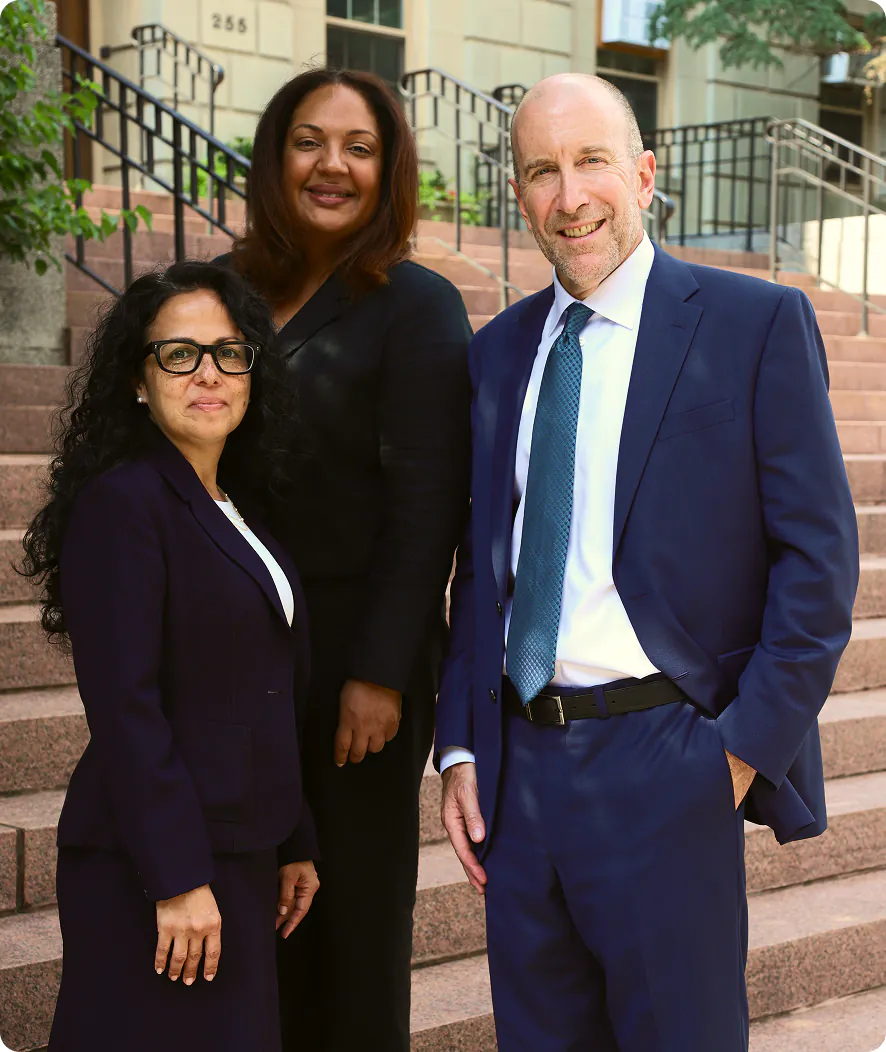
William H. Cooper joined the firm in 1991 and serves as its lead trial counsel. He has received a Super Lawyers designation from 2024 through 2026. The firm reports more than 75 years of combined experience, and its published case results include an $850,000 automobile-collision settlement involving reflex sympathetic dystrophy and a meniscus tear.
If you would rather discuss your case in Spanish, Anieska J. Garcia is fluent in English and Spanish. The firm offers free consultations and handles car accident cases on a contingency basis, meaning there is no upfront attorney’s fee and no attorney’s fee unless compensation is recovered.
Why Car Accident Cases Are Different Here
Downtown Flushing and Willets Point present different driving environments, and each creates its own evidence issues.
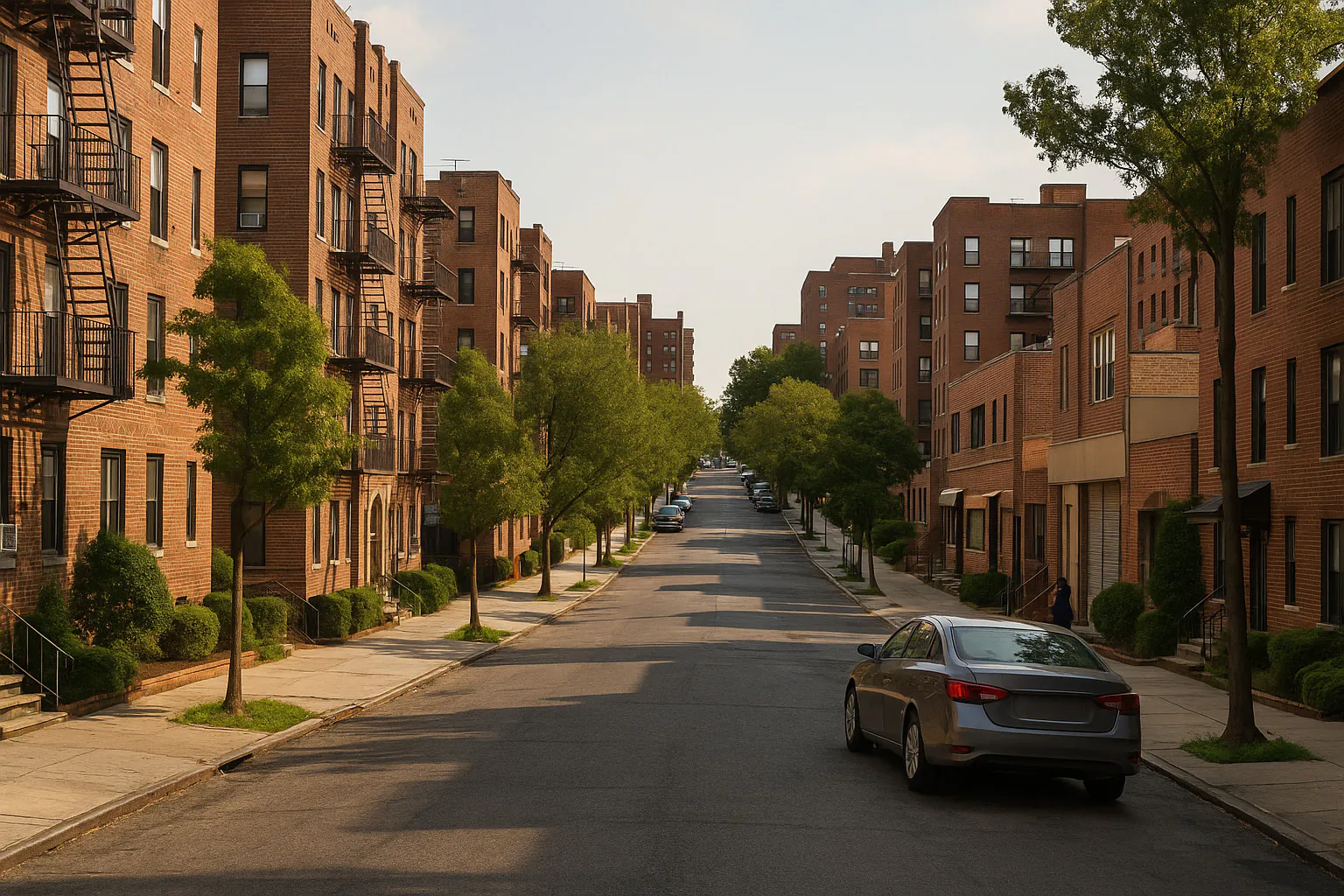
Around Main Street, Roosevelt Avenue, Northern Boulevard, and nearby commercial blocks, drivers share limited space with buses, trucks, rideshare vehicles, pedestrians, cyclists, and delivery workers. The Main Street busway established by NYC DOT uses turn restrictions and bus-and-truck priority to organize traffic through the area. When a crash occurs there, the investigation may need to account for permitted turns, bus-lane rules, loading activity, signal timing, and whether a driver entered a restricted movement.
Willets Point changes considerably on event days. The Mets–Willets Point transit hub carries subway and Long Island Rail Road passengers to the Citi Field area, while parking traffic, rideshare pickups, pedestrians, and temporary traffic controls can change normal driving patterns. MTA information about Mets–Willets Point service confirms the station’s direct connection to Citi Field.
The area is also undergoing major redevelopment. In May 2026, NYCEDC announced that residents had begun moving into the first new housing at Willets Point while construction started on another residential building. Construction staging, new access points, temporary barriers, and changing street conditions can make permits, contractor records, traffic-control plans, and dated photographs important after a collision.
A Recent Look at Traffic Injuries Around the Area
No police precinct follows the exact boundaries of Flushing–Willets Point NY. The 109th Precinct serves Downtown Flushing, while the neighboring 110th Precinct covers Corona and Elmhurst. Their statistics include areas outside the neighborhood, but they provide useful context for the amount of traffic activity handled by nearby police commands.
Through August 30, 2026, the NYPD 109th Precinct TrafficStat report and NYPD 110th Precinct TrafficStat report together reported:
- 2,536 motor-vehicle collisions
- 1,060 injury-producing collisions
- 1,396 people injured
- 847 injuries to motor-vehicle occupants
- 301 pedestrian injuries
- 6 traffic deaths
These are not neighborhood-specific totals. They do show why a collision near Downtown Flushing, Citi Field, or Willets Point should be treated as more than a routine insurance matter—particularly when fault is disputed or the injuries may be permanent.
Where Car Crashes Happen in Flushing–Willets Point NY
Downtown intersections and commercial blocks
Heavy pedestrian activity, turning buses, delivery stops, double parking, and vehicles searching for curb space can create overlapping conflicts. A driver may have only a few seconds to react when a vehicle changes lanes, stops for a passenger, or turns across a crosswalk.
Storefront cameras are often important here. So are bus cameras, residential security systems, dashcams, delivery records, and witness accounts from nearby workers.
Main Street bus and loading areas
Bus-priority rules can affect which vehicles may proceed through an intersection and which must turn. A driver unfamiliar with the pattern may stop abruptly, make a prohibited movement, or merge without enough space.
An investigation should document the signs and lane markings as they existed on the crash date. Street configurations can change, and photographs taken weeks later may not show the same conditions.
Citi Field approaches and event traffic
Crashes near Citi Field may involve parking-lot exits, pedestrian queues, rideshare pickups, shuttle activity, temporary cones, or traffic-control personnel. The event schedule can help establish why traffic was heavier or differently routed than it would have been on an ordinary day.
Parking operators, security contractors, rideshare companies, nearby businesses, and public agencies may hold separate records. Identifying them quickly can make the difference between obtaining useful evidence and learning that it was overwritten.
Willets Point construction and redevelopment areas
Temporary pavement, lane shifts, fencing, narrowed access points, construction vehicles, and newly opened streets can contribute to a crash. Responsibility may extend beyond the drivers if a contractor created an unsafe traffic pattern or failed to maintain required signs and barriers.
Car Accident Cases the Firm Handles
Billy Cooper Law represents people injured in:
- Rear-end, intersection, side-impact, and multi-vehicle car crashes
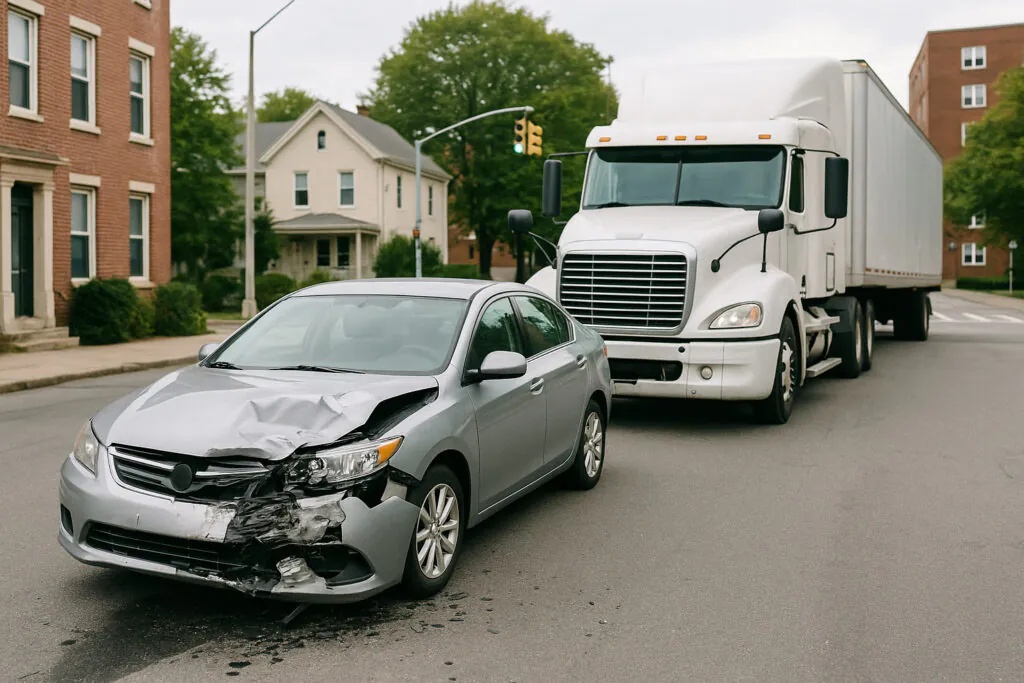
- Truck and commercial-vehicle collisions
- Uber and Lyft accidents
- Drunk-driving crashes
- Hit-and-run and uninsured-driver collisions
- Crashes caused by distracted, speeding, or fatigued drivers
- Accidents involving city vehicles, buses, or roadwork
- Fatal car accidents and wrongful death claims
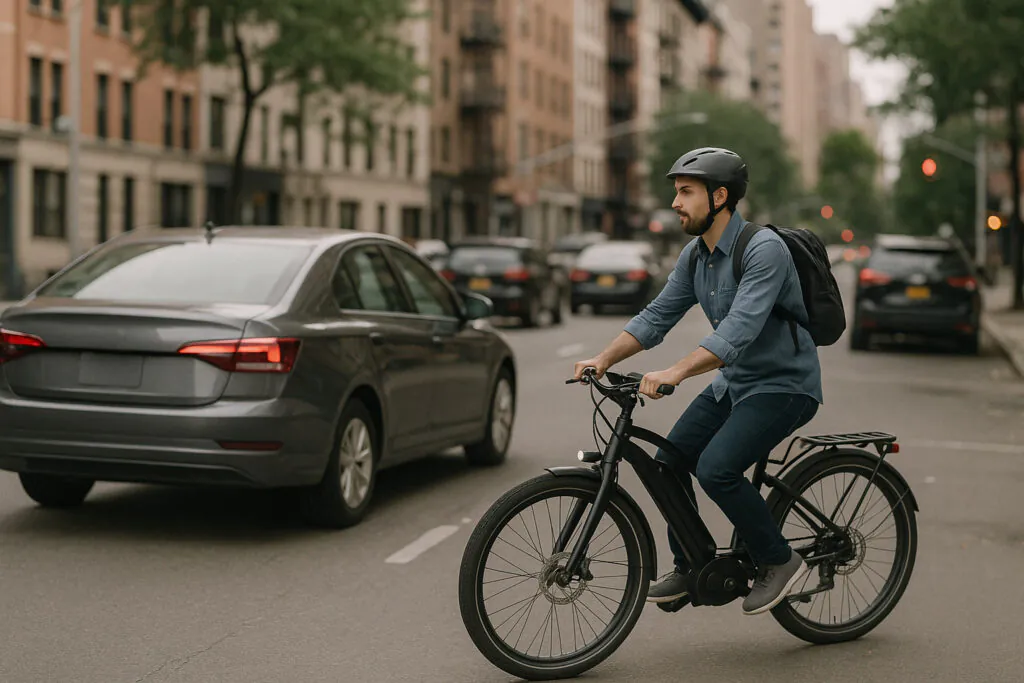
The firm also represents passengers, pedestrians, and cyclists injured by negligent drivers. You do not need to have been behind the wheel to have a car accident claim.
What to Do After a Car Accident
Your health comes first. Call 911 and request medical assistance if anyone may be injured. Even if you can leave the scene on your own, symptoms involving the head, neck, back, or internal organs may not be fully apparent until later.
If you can act safely:
- Report the collision. Ask the NYPD to respond and make sure you know how to obtain the report number.
- Photograph the full scene. Include vehicle positions, damage, debris, lane markings, traffic lights, signs, bus lanes, construction barriers, and surrounding businesses.
- Exchange information. Obtain the other driver’s license, registration, insurance information, and license plate number.
- Get witness details. A name, telephone number, and short description of what the witness saw can be valuable later.
- Seek appropriate medical care. Tell the provider how the crash happened and describe every symptom you are experiencing.
- Notify the proper insurer. No-fault deadlines begin running immediately, even when someone else caused the crash.
- Keep damaged property. Do not dispose of a child seat, damaged electronic device, or other potentially important item before it has been photographed and evaluated.
New York drivers may also have to submit an MV-104 report. The New York DMV’s MV-104 instructions require a report within 10 days when a New York crash causes an injury, a death, or more than $1,000 in damage to any one person’s property.
Evidence Worth Preserving
A police report is useful, but it rarely proves the entire case. Depending on where and how the collision occurred, important evidence may include:
- Photographs and video from the scene
- Storefront, residential, parking, and stadium-area surveillance
- Vehicle dashcam footage
- Witness statements
- 911 calls and police records
- Event-data-recorder information from the vehicles
- Cellphone records in a distracted-driving case
- Rideshare trip and driver-status records
- Delivery schedules and commercial-driver records
- Vehicle inspection and repair records
- Construction permits and traffic-control plans
- Event schedules and parking records
- Medical imaging and treatment records
- Wage statements and proof of missed work
Do not assume that a visible traffic camera recorded the crash. NYC DOT states that its traffic cameras provide live images but do not record footage. Private businesses, buses, residences, and vehicles may therefore be the better sources of video.
Surveillance systems are often overwritten. A preservation request should identify the date, time, location, and camera angle as precisely as possible.
How New York No-Fault Insurance Works
New York’s no-fault system generally pays an initial layer of medical costs, lost earnings, and certain necessary expenses without first deciding who caused the collision.
Under New York Insurance Law § 5102, basic economic-loss coverage is generally limited to $50,000 per person. Lost earnings are also subject to statutory limits and offsets.
The New York Department of Financial Services’ no-fault guidance identifies several important filing periods:
- Written notice of the no-fault claim generally must be submitted within 30 days.
- Medical bills generally must be submitted within 45 days.
- Lost-earnings claims generally must be submitted within 90 days.
A late filing may sometimes be accepted when there is a clear and reasonable justification, but you should not assume an insurer will excuse a missed deadline.
Drivers and passengers generally seek no-fault benefits through the insurer covering the vehicle they occupied. A pedestrian usually applies through the insurer for the vehicle that struck them. Household coverage or the Motor Vehicle Accident Indemnification Corporation may become relevant when the vehicle was uninsured or cannot be identified.
When You Can Pursue Pain and Suffering
No-fault benefits do not automatically compensate you for pain, loss of mobility, emotional distress, or the disruption of your normal life.
Under Insurance Law § 5104, a covered person generally must have a “serious injury” before recovering compensation for pain and suffering from another covered person. The current definition in Insurance Law § 5102(d) includes injuries resulting in:
- Death
- Dismemberment
- Significant disfigurement
- A fracture
- Loss of a fetus
- Permanent loss of use of a body organ, member, function, or system
- Permanent consequential limitation of a body organ or member
- Significant limitation of a body function or system
Medical documentation is critical. MRI and CT findings, surgical records, neurological evaluations, range-of-motion testing, treatment recommendations, and evidence of continuing limitations may all affect whether an injury satisfies the legal standard.
New York changed this law effective May 26, 2026. As explained in the Department of Financial Services’ 2026 motor-vehicle reform guidance, the former category based on being substantially unable to perform customary daily activities for at least 90 of the first 180 days was removed. The amendments apply to actions and proceedings commenced on or after May 26, 2026.
What If You Were Partly at Fault?
The answer changed for many New York motor-vehicle cases in 2026.
Under the current CPLR § 1411(b), a claimant in a personal injury action subject to Insurance Law Article 51 cannot recover if the claimant’s share of fault is greater than the combined fault of the people or entities from whom compensation is sought.
If you are found 50% at fault or less, you may still recover, but your damages are reduced by your percentage of responsibility. If your fault is greater than the combined fault of the defendants, recovery may be barred.
This rule applies to actions commenced on or after May 26, 2026, even if the collision occurred earlier. That makes the early investigation of signals, lane positions, turning movements, video, and witness testimony especially important.
Who May Be Responsible for the Crash?
The other driver is not always the only party whose conduct or insurance must be considered.
Depending on the facts, a claim may involve:
- A negligent driver
- The registered owner of the vehicle
- An employer whose worker was driving on the job
- A trucking, delivery, or commercial-vehicle company
- A rideshare driver and applicable rideshare insurance
- A repair company that performed unsafe work
- A contractor responsible for a dangerous construction zone
- New York City or another public entity
- More than one driver in a chain-reaction crash
New York Vehicle and Traffic Law § 388 generally makes a vehicle owner responsible for injuries caused by someone driving the vehicle with the owner’s express or implied permission. This can be important when the driver did not own the car or carried limited insurance.
Compensation After a Serious Car Accident
The available compensation depends on the injuries, insurance coverage, fault, and whether the serious-injury requirement is met.
A claim may seek compensation for:
- Medical expenses not covered by no-fault
- Future medical care
- Lost income beyond available no-fault benefits
- Reduced future earning ability
- Rehabilitation and physical therapy
- Medication and medical equipment
- Transportation and necessary household assistance
- Pain and suffering
- Scarring or disfigurement
- Loss of mobility
- Loss of enjoyment of life
- Long-term personal or nursing care
A complete insurance investigation may include the policies covering the driver, vehicle owner, employer, commercial carrier, rideshare trip, and your own uninsured or supplementary underinsured motorist coverage.
An early settlement offer may arrive before your doctors know whether you will need surgery or have a permanent limitation. Once a claim is settled and released, you generally cannot reopen it because your condition later became worse.
Deadlines for Filing a Car Accident Lawsuit
Under CPLR § 214, many New York personal injury lawsuits must be filed within three years. That is not the only deadline that may apply.
No-fault notice may be due within 30 days. A government notice of claim may be due within 90 days. A particular insurance policy may impose additional notice requirements. Evidence may disappear long before any lawsuit deadline arrives.
The safest approach is to determine every potentially responsible party and insurance policy early rather than assuming that one three-year period controls the entire matter.
Claims Involving New York City or a Public Authority
A government claim may arise when a collision involves a city-owned vehicle, a dangerous work zone, defective traffic control, or another condition connected to a public entity.
Under General Municipal Law § 50-e, a notice of claim against New York City generally must be served within 90 days. A lawsuit governed by General Municipal Law § 50-i generally must be started within one year and 90 days.
The New York City Comptroller’s eClaim guidance also states that personal injury and property damage claims against the City generally must be filed within 90 days.
The correct defendant matters. A claim filed only with New York City may not protect a separate claim against the New York City Transit Authority, the MTA, or the Long Island Rail Road. Claims involving the Transit Authority may be governed by Public Authorities Law § 1212, while certain MTA and LIRR claims may involve Public Authorities Law § 1276.
If a government vehicle, bus, traffic signal, roadway project, or public contractor may have contributed to your collision, do not wait for an insurer to tell you which entity was responsible.
Local Courts, Medical Care, and Crash Records
Substantial civil lawsuits arising in Queens may be heard in Queens County Supreme Court, Civil Term. Its Jamaica courthouse is located at 88-11 Sutphin Boulevard in Jamaica NY 11435. The proper venue depends on the parties and circumstances of the claim.
NewYork-Presbyterian Queens, located at 56-45 Main Street in Flushing NY 11355, operates 24 hours a day. Your priority after a crash should be obtaining the level of care your condition requires, whether that means emergency treatment or prompt follow-up with an appropriate physician.
Police reports can be requested through the NYPD Motor Vehicle Collision Reports service. During the first 30 days, reports may be available through the precinct where the crash occurred or through the online retrieval portal. Older reports generally must be requested from the New York DMV.
The 109th Precinct serves Downtown Flushing. Because precinct boundaries do not match neighborhood labels perfectly, use the NYPD’s precinct locator to identify the command for the exact crash address.
BILLY COOPER LAW
How Billy Cooper Law Investigates a Flushing–Willets Point NY Crash
The investigation begins with what happened at the scene, but it does not end there. Depending on the case, Billy Cooper Law may:
- Inspect and photograph the collision location
- Obtain police and DMV reports
- Contact witnesses
- Send surveillance-preservation requests
- Identify the vehicle owner and the driver’s employer
- Request rideshare or delivery records
- Examine event-data-recorder and vehicle information
- Review construction permits and traffic-control plans
- Analyze event schedules and parking operations
- Identify municipal or public-authority involvement
- Review every potentially available insurance policy
- Work with medical providers and appropriate experts
- Document lost income and future care needs
- Prepare the claim for trial if the insurer will not resolve it fairly
The goal is not simply to show that a collision occurred. It is to explain why it happened, who is legally responsible, and what the injuries have taken from you.
Related Guidance
For information about injuries involving unsafe property, construction, transit, or other causes in this part of Queens, visit the firm’s Flushing–Willets Point NY personal injury lawyer page.
You can also learn more about New York car accident claims and the firm’s broader motor-vehicle accident practice.
Tell Us What Happened
If you were injured in a Flushing–Willets Point NY car accident, Billy Cooper Law can review the collision, identify the insurance and deadlines that may apply, and explain your options in plain English.
Call 718-866-3311 or contact Billy Cooper Law online for a free consultation. Spanish-language assistance is available. There is no upfront attorney’s fee, and the firm is not paid an attorney’s fee unless compensation is recovered.
Flushing–Willets Point NY Car Accident FAQs: Safety, Insurance, and New York Claims
These answers provide general information about New York car crashes, not advice about a particular claim. The result can change with the collision facts, available evidence, insurance policies, and the date an action is started.
What should I do immediately after a car accident in Flushing–Willets Point NY?
First, get to a safe place if you can, call 911 when anyone may be injured, and follow emergency responders’ instructions. New York requires involved drivers to stop and exchange identifying, license, vehicle, and insurance information after property damage; an injury crash must also be reported to police. Do not move an injured person unless an immediate danger makes movement necessary.
If it is safe, record vehicle positions, damage, road and weather conditions, traffic controls, and witness contact information before the scene changes. Save the other driver’s insurance details and your medical discharge papers. These steps do not decide fault, but they preserve information that police, insurers, doctors, and counsel may later need to evaluate what happened and which deadlines apply.
Sources: New York Vehicle and Traffic Law § 600; New York State Driver’s Manual—crash duties.
Do I have to file a New York DMV crash report after a Flushing–Willets Point NY collision?
You must file an MV-104 with the New York DMV within 10 days when a New York crash causes a death, any personal injury, or more than $1,000 in damage to any one person’s property. This motorist report is separate from a police officer’s report and from notifying an insurance company. The filing duty can therefore remain even when officers came to the scene.
Complete the form accurately with the information reasonably available; do not guess about injuries, speeds, or fault. If the driver is physically unable to report, Vehicle and Traffic Law § 605 identifies when another participant or the vehicle owner must report. Missing the deadline can be a misdemeanor and can lead to suspension of a license or registration until the report is filed.
Sources: New York Vehicle and Traffic Law § 605; New York DMV Form MV-104 and instructions.
How do New York no-fault benefits work after a car crash?
New York no-fault coverage generally pays eligible basic economic loss arising from the use or operation of a covered motor vehicle without first deciding who caused the crash. Basic economic loss includes qualifying medical expenses, part of lost earnings, and certain necessary expenses, up to the statutory limit and subject to policy terms, offsets, exclusions, and proof requirements. It is different from a liability claim for pain and suffering.
Notice is time-sensitive. New York’s prescribed no-fault rules generally require written notice within 30 days, health-service bills within 45 days of treatment, and lost-earnings proof within 90 days; late submissions require a reasonable justification under the regulation. Identify the correct no-fault insurer promptly and keep copies of the NF-2, bills, wage records, authorizations, and delivery confirmations.
Sources: New York Insurance Law § 5102; New York DFS no-fault consumer FAQs; 11 NYCRR Part 65—Insurance Regulation 68.
What counts as a serious injury in a New York car accident case?
For a covered person to recover pain-and-suffering damages from another covered person, New York generally requires a “serious injury” under Insurance Law § 5102(d). The current categories include death, dismemberment, significant disfigurement, fracture, loss of a fetus, permanent loss of use, permanent consequential limitation, or significant limitation of a body function or system. A diagnosis alone does not automatically establish the legal threshold.
The Legislature removed the former 90-out-of-180-days category for actions and proceedings commenced on or after May 26, 2026. Medical records should therefore document the condition, objective findings when appropriate, treatment course, functional limitations, causation, and relevant prior conditions. Whether the threshold is met depends on admissible evidence and the category asserted, not simply the severity label used in a chart.
Sources: New York Insurance Law § 5102(d); New York Insurance Law § 5104; New York DFS Circular Letter No. 3 (2026).
How long do I have to bring a car accident claim in New York?
New York generally gives three years to commence an action for personal injury, but that is not a universal deadline for every crash-related claim. A wrongful-death claim, a no-fault submission, a claim under an insurance policy, a claim involving a public entity, or a claim for a minor can follow different rules. The applicable date should be checked from the specific facts and defendant.
If a city, county, town, village, school district, or another covered public corporation may be responsible, General Municipal Law § 50-e commonly requires a notice of claim within 90 days. Section 50-i can require suit within one year and 90 days for covered municipal tort claims. Because identifying a public vehicle or road-maintenance defendant takes time, preserving the crash report and investigating ownership early can matter.
Sources: New York CPLR § 214; New York General Municipal Law § 50-e; New York General Municipal Law § 50-i.
Can I recover if I was partly at fault for a New York car accident?
Possibly, but New York changed the rule for motor-vehicle personal-injury actions subject to Insurance Law Article 51. For actions and proceedings commenced on or after May 26, 2026, CPLR § 1411(b) bars recovery when the claimant’s fault is greater than the fault of the person sued or the combined fault of all persons sued. When recovery is not barred, the claimant’s percentage of fault reduces the damages.
The statute uses a greater-than test, so a finding of exactly 50 percent claimant fault is not itself the bar described in subsection (b), although it can reduce recoverable damages by 50 percent. Fault percentages depend on evidence such as right-of-way rules, signals, speed, visibility, witness accounts, photographs, and electronic records. Earlier-commenced actions may require a different analysis.
Sources: New York CPLR § 1411; New York DFS explanation of the 2026 motor-vehicle reforms.
Can the vehicle owner be liable when someone else caused the crash?
Yes, a vehicle owner can be responsible under New York Vehicle and Traffic Law § 388 when a person using or operating the vehicle with the owner’s express or implied permission negligently causes injury or property damage. That rule can make ownership and permission important even when the titled owner was not in the car. It does not eliminate the need to prove negligent operation and causation.
Registration records, the police report, insurance disclosures, lease documents, and testimony about permission may help identify the owner and available coverage. The statute contains definitions and exceptions, and leased, rented, employer-owned, government, and out-of-state vehicles can raise additional issues. A careful review should separate the driver, titled owner, policyholder, employer, and any other entity instead of assuming they are the same party.
Sources: New York Vehicle and Traffic Law § 388; New York Insurance Law § 3420(e).
What if the at-fault driver was uninsured or left the scene?
An uninsured-motorist claim may be available when an uninsured or unidentified hit-and-run vehicle causes bodily injury, but coverage depends on who qualifies as an insured and compliance with the policy and statutory procedures. New York liability policies include required uninsured-motorist protection, while supplementary uninsured/underinsured motorist coverage may provide additional protection if it was selected and the applicable conditions are satisfied.
Report a hit-and-run promptly to police and all potentially applicable insurers, and preserve proof of physical contact, witness information, video, vehicle damage, and efforts to identify the other driver. Do not assume that the absence of the driver ends the inquiry: household policies, the occupied vehicle’s policy, supplementary coverage, and the Motor Vehicle Accident Indemnification Corporation may require separate review and different notices.
Sources: New York Insurance Law § 3420(f); New York DFS Automobile Insurance Consumer Guide; New York Vehicle and Traffic Law § 600.
Should I get medical care if car-crash symptoms appear later?
Yes—new or worsening symptoms after a crash should be assessed by a qualified health professional, and emergency warning signs require immediate care. CDC explains that some mild traumatic brain injury symptoms can appear hours or days after an injury. A worsening headache, repeated vomiting, seizure, weakness, slurred speech, increasing confusion, unequal pupils, or inability to wake warrants emergency evaluation rather than waiting on an insurance decision.
Tell the clinician when and how the collision occurred, describe symptoms accurately, and follow individualized medical instructions. Keep records of visits, restrictions, referrals, and symptom changes because contemporaneous records can help clinicians and can clarify the timeline later. Medical literature reports associations between early pain or disability measures and persistent whiplash problems, but those population findings do not diagnose an individual or predict a particular recovery.
Sources: CDC mild TBI and concussion symptoms; PubMed systematic meta-review of whiplash prognostic factors.
How is the value of a New York car accident claim determined?
There is no official settlement calculator or guaranteed value. A claim is evaluated from supported losses and legal limits: fault, the serious-injury threshold, medical expenses, lost earnings, future care, other economic loss, pain and suffering when legally available, insurance limits, liens, and the strength of causation evidence. New York defines “basic economic loss” and “non-economic loss,” but those definitions do not assign one price to an injury.
Useful proof can include medical records and bills, wage verification, tax or employment records, photographs, repair documents, and evidence of functional limitations. Insurers and factfinders may dispute whether treatment was necessary, whether a condition was caused or aggravated by the crash, and whether claimed losses are documented. Any estimate should therefore be tied to the actual records and available coverage, not an average advertised online.
Sources: New York Insurance Law § 5102 definitions; New York Insurance Law § 5104 limits on personal-injury actions.
Sources
Billy Cooper Law
- Billy Cooper Law
- New York car accident practice
- Motor-vehicle accident practice
- William H. Cooper attorney profile
- Anieska J. Garcia attorney profile
- Billy Cooper Law case results
- Billy Cooper Law contact information
- Flushing–Willets Point NY personal injury lawyer
- Truck and commercial-vehicle accidents
- Uber and Lyft accidents
- Drunk-driving accidents
- Wrongful death claims
Local Traffic, Transportation, and Development
- NYPD 109th Precinct
- NYPD 110th Precinct
- NYPD 109th Precinct TrafficStat report
- NYPD 110th Precinct TrafficStat report
- NYC DOT Main Street busway information
- NYC DOT traffic-camera information
- MTA Mets–Willets Point service information
- NYCEDC Willets Point development update
Insurance and New York Law
- New York Department of Financial Services no-fault FAQs
- New York Department of Financial Services auto-insurance information
- New York Department of Financial Services 2026 motor-vehicle reforms
- Insurance Law § 5102
- Insurance Law § 5104
- CPLR § 1411
- CPLR § 214
- Vehicle and Traffic Law § 388
- General Municipal Law § 50-e
- General Municipal Law § 50-i
- Public Authorities Law § 1212
- Public Authorities Law § 1276
- New York City Comptroller eClaim filing guidance
Reports, Courts, and Medical Care
- New York DMV MV-104 crash-report form and instructions
- NYPD motor-vehicle collision reports
- NYPD precinct locator
- Queens County Supreme Court, Civil Term
- NewYork-Presbyterian Queens
BILLY COOPER LAW
Get the Answers You Need
At Billy Cooper Law, every day we renew our pledge to help injured people get the justice and compensation they deserve. We have a reputation throughout New York and nationally for standing up for our clients, and we take that responsibility seriously by approaching every case with preparation, persistence, and an unwavering commitment to results.