

Flushing–Willets Point NY Personal Injury Lawyer
An injury in Flushing–Willets Point NY can raise questions that are not obvious at first. Was the accident on a city street, private property, an MTA platform, parkland, or an active construction site? Which company or public agency controlled the location? Is there surveillance footage, and how long will it be kept? Those questions matter. They can determine where evidence is found, who may be responsible, and whether a deadline measured in days—not years—applies.Other cities we serve in Queens County, NY:
- Queens County
- Murray Hill–Broadway Flushing
- Jamaica
- Ridgewood
- Corona
- South Ozone Park
- Forest Hills
- Jackson Heights
- Elmhurst
- Queens Village
BILLY COOPER LAW
Injured in Flushing–Willets Point?

Types of Injury Cases We Handle in Flushing–Willets Point NY
- Personal Injury
- Slip and Fall
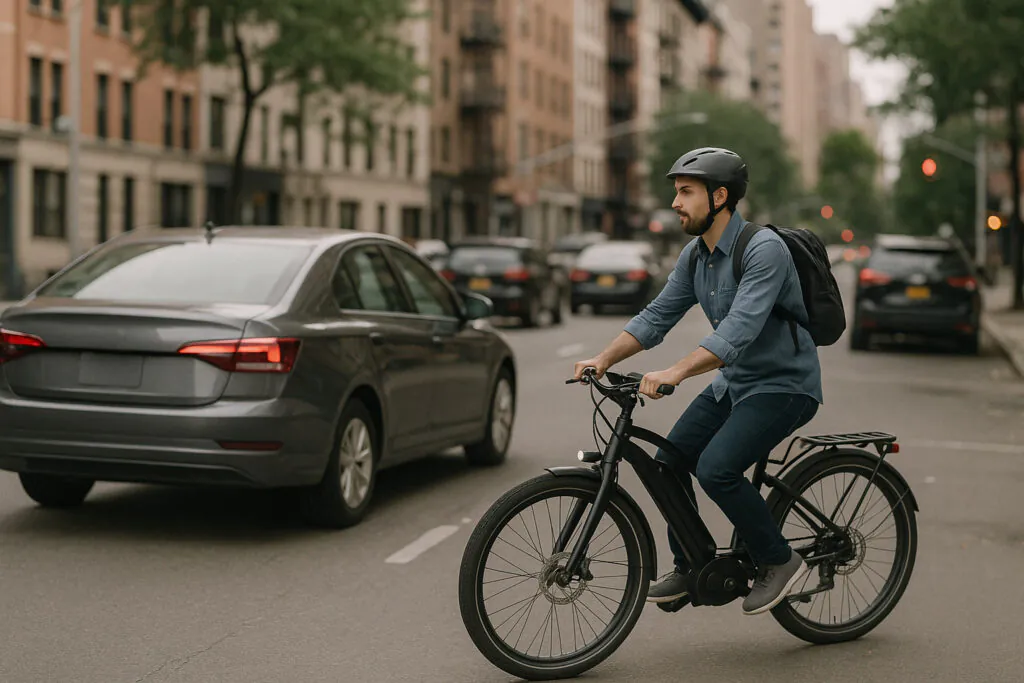
- E-Bike Accidents
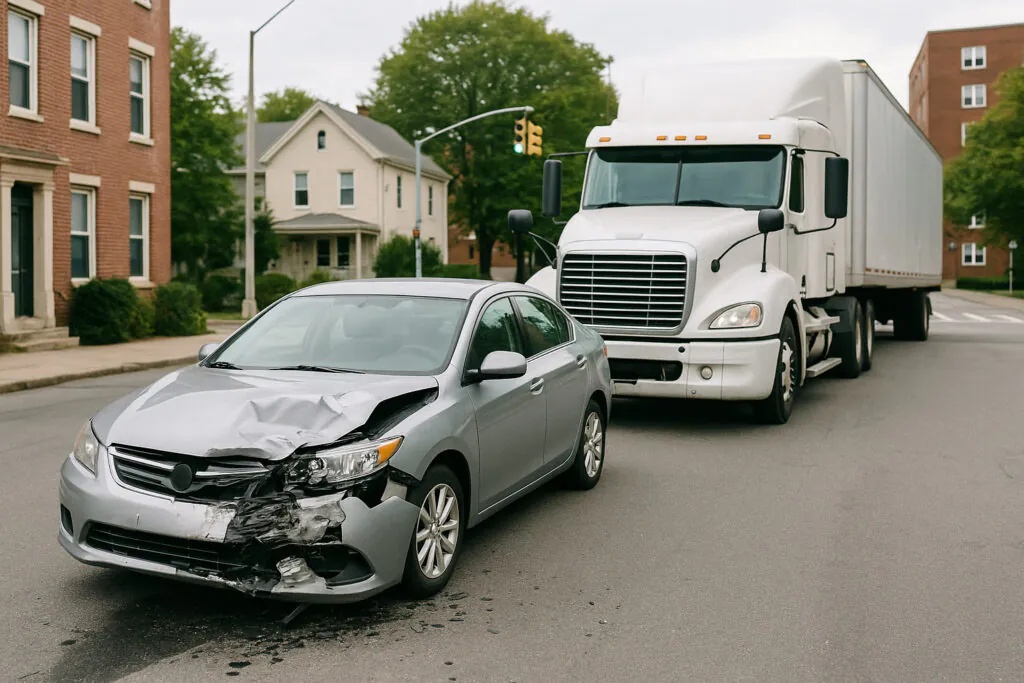
- Car Accidents
Why Injured People Turn to Billy Cooper Law
A serious case requires more than sending medical records to an adjuster. Your lawyer may need to trace property ownership, obtain video, identify contractors, work through New York’s no-fault system, and prepare the case for trial if the insurer refuses to resolve it fairly. Billy Cooper Law’s history dates to 1960, and its legal team brings more than 75 years of combined experience. William H. Cooper has practiced since 1991 and serves as the firm’s lead trial counsel. Anieska J. Garcia has worked with the firm for more than 20 years and provides representation in English and Spanish. (billycooperlaw.com) If your injuries are substantial, it helps to know that the lawyers evaluating your case have handled substantial losses before. The firm’s published case results include a $1.6 million pedestrian settlement, a settlement exceeding $2 million for a construction worker injured in a roof fall, and an $850,000 motor-vehicle settlement. The firm offers free consultations and handles personal injury matters on a contingency basis. You do not pay an upfront legal fee, and the firm is not paid a legal fee unless compensation is recovered. (billycooperlaw.com)Why Personal Injury Cases Are Different Here
Flushing and Willets Point meet at a complicated mix of crowded commercial streets, major transit facilities, event traffic, park entrances, highways, parking areas, and changing construction zones. Downtown Flushing has constant interaction among pedestrians, buses, delivery vehicles, rideshare drivers, cyclists, e-bikes, and private cars. The Main Street Busway gives priority to buses and commercial trucks along a 0.6-mile corridor between Sanford Avenue and Northern Boulevard while still allowing limited local access. That arrangement can affect where vehicles enter, turn, load, and stop—and where useful camera footage may exist. (nyc.gov) Willets Point presents a different set of issues. Around Citi Field, the Mets–Willets Point transit hub, and Flushing Meadows Corona Park, accident conditions can change quickly on game days and during large events. Traffic control personnel, temporary barriers, parking operators, security contractors, transit agencies, and property owners may all possess relevant evidence. The area is also undergoing significant redevelopment. In May 2026, the city announced that residents had begun moving into the first 880 affordable homes at Willets Point while construction started on 220 senior apartments. Future phases include additional housing, public space, a school, a hotel, retail space, and a soccer stadium. Active construction and newly opened streets can make contractor records, traffic-control plans, permits, and photographs especially important. (edc.nyc)A Local Accident Snapshot
No single police precinct follows the exact boundaries of Flushing–Willets Point NY. Downtown Flushing is primarily covered by the 109th Precinct, while Willets Point and Flushing Meadows Corona Park are within the 110th Precinct. Across the full territories of those two precincts, preliminary NYPD data through August 16, 2026 reported:- 2,410 motor-vehicle collisions
- 1,316 people injured
- 283 pedestrian injuries
- 103 traditional bicycle injuries
- 128 injuries involving motorized two-wheelers
- 6 traffic deaths
Where Injuries Happen in Flushing–Willets Point NY
The location often tells you what evidence to look for and who may be responsible.Downtown Flushing crossings and loading areas
Around Main Street, Roosevelt Avenue, Northern Boulevard, and the surrounding commercial blocks, pedestrians may encounter turning buses, delivery trucks, double-parked vehicles, rideshare pickups, and drivers searching for parking. Storefront cameras, bus cameras, building security systems, and nearby dashcams may capture what happened.Citi Field and the Willets Point event district
Collisions and falls near stadium approaches can involve private parking areas, pedestrian queues, temporary traffic patterns, shuttle vehicles, security contractors, or poorly placed barriers. Event schedules and traffic-control plans may help explain why conditions were different from an ordinary day.Subway, bus, and LIRR facilities
Injuries may occur on platforms, stairs, escalators, station entrances, buses, or trains. The responsible entity may depend on the exact location and the cause of the accident. A fall on a city sidewalk outside a station is not necessarily handled the same way as an injury inside a subway facility.Construction and redevelopment sites
A worker may be injured by a fall, falling object, unsafe ladder, defective scaffold, vehicle movement, or unguarded opening. Pedestrians and drivers can also be hurt by construction debris, narrowed walkways, temporary pavement, fencing, or poorly designed detours.Sidewalks, stores, restaurants, and apartment buildings
Broken pavement, cellar doors, snow and ice, leaking refrigeration units, inadequate lighting, loose mats, damaged stairs, and unsafe entrances can lead to serious falls. Liability may turn on who owned, occupied, maintained, or created the condition.Personal Injury Cases Billy Cooper Law Handles
The firm represents clients in matters involving:- Car accidents, including intersection, rear-end, and multi-vehicle crashes
- Truck and commercial-vehicle accidents
- Motorcycle accidents
- Bicycle accidents and e-bike accidents
- Pedestrian accidents
- Uber and Lyft accidents
- Bus accidents, subway accidents, and train accidents
- Premises liability and sidewalk accidents
- Construction accidents and work injuries
- Medical malpractice and birth injuries
- Defective-product injuries
- Dog bites
- Catastrophic injuries, including brain injuries and spinal cord injuries
- Wrongful death
What to Do After an Accident
Your health comes first. Call 911 or seek medical care if you may be seriously injured. Symptoms of a concussion, internal injury, or spinal injury are not always obvious at the scene. If you can do so safely:- Report the accident. Contact the NYPD for a street collision. Notify the property manager, store, employer, contractor, or transit employee when the accident occurs at a controlled location.
- Photograph the entire scene. Include the hazard, surrounding area, traffic controls, signs, vehicles, construction fencing, and anything that may identify the location.
- Get witness information. A name and telephone number may be more useful than a brief conversation you cannot document later.
- Preserve physical evidence. Keep damaged clothing, shoes, helmets, bicycles, child seats, and other affected property.
- Obtain medical treatment and follow up. Gaps in treatment can make it harder to connect an injury to the accident.
- Be careful with insurance calls. You can provide necessary identifying information without agreeing to a recorded statement or accepting blame.
- Ask about deadlines promptly. This is especially important when a city agency, transit authority, public hospital, or government-owned property may be involved.
Evidence Worth Preserving
The strongest evidence is often available only briefly. Depending on the accident, an investigation may seek:- Storefront, residential, parking-lot, stadium, and construction-site video
- MTA, bus, train, platform, or station records
- Police reports, 911 recordings, and body-worn camera footage
- Vehicle dashcam, event-data-recorder, and telematics information
- Rideshare trip records and driver-app data
- Delivery logs and commercial-driver records
- Building inspection, cleaning, repair, and maintenance records
- Snow and ice removal logs
- Construction contracts, permits, safety plans, and daily reports
- Prior complaints about the same condition
- Witness statements
- Photographs showing how the area changed after the accident
- Medical imaging, treatment records, and proof of missed work
New York Laws and Deadlines
The general personal injury deadline
Many New York negligence lawsuits must be filed within three years under CPLR § 214. That is not a reason to wait. Evidence can disappear long before the statute of limitations expires. Different claims have different deadlines. Medical malpractice actions are generally subject to a two-year-and-six-month period under CPLR § 214-a, subject to rules such as continuous treatment. A wrongful death action generally must be filed within two years of death under EPTL § 5-4.1.New York’s no-fault insurance system
Basic no-fault coverage generally provides up to $50,000 per person for covered medical expenses, lost earnings, and certain other economic losses, regardless of who caused the crash. A separate liability claim may be available when the legal requirements for pursuing damages outside no-fault are met. (dfs.ny.gov)Important 2026 changes to motor-vehicle cases
New York changed parts of its motor-vehicle injury law effective May 26, 2026. The changes apply to actions and proceedings commenced on or after that date. For personal injury actions subject to Article 51 of the Insurance Law, the new CPLR § 1411(b) bars recovery if the injured claimant’s share of fault is greater than the combined fault of the parties from whom compensation is sought. A claimant who is 50% at fault or less may still recover, but the damages are reduced by that percentage. The 2026 reforms also removed the former “90 out of 180 days” category from the statutory serious-injury definition. Medical documentation has therefore become even more important when an injured person seeks compensation for pain and suffering after a motor-vehicle collision. (dfs.ny.gov) Most negligence claims outside the Article 51 motor-vehicle framework remain subject to New York’s pure comparative-fault rule. In those cases, partial responsibility generally reduces the recovery rather than automatically eliminating the claim.Who May Be Responsible?
Personal injury cases frequently involve more than one responsible party. A vehicle case may involve a driver, vehicle owner, employer, delivery company, commercial carrier, rideshare platform, repair company, or contractor responsible for a dangerous work zone. A property case may involve the owner, tenant, managing agent, cleaning company, maintenance contractor, snow-removal company, or a business that created the hazard. Under New York City Administrative Code § 7-210, owners of many properties are responsible for maintaining adjoining sidewalks, although exceptions apply, including for certain owner-occupied residential properties with no more than three families. Where the City may be responsible for a street or sidewalk defect, New York City’s prior-written-notice rule can become a major issue. The New York City Comptroller’s claims guidance explains that the City generally must have legally sufficient notice of the dangerous condition unless another recognized basis for liability applies. (comptroller.nyc.gov) Do not assume the logo on a sign identifies the correct defendant. A public location may be operated, maintained, or repaired by a separate authority or private contractor.BILLY COOPER LAW
Questions About a Flushing–Willets Point Injury Claim?
What Compensation May Be Available?
A personal injury claim should account for how the accident has affected your life—not just the first emergency-room bill. Depending on the case, compensation may include:- Past and future medical expenses
- Lost wages
- Reduced future earning ability
- Rehabilitation and therapy
- Medication and medical equipment
- Home health assistance
- Transportation to treatment
- Pain and suffering
- Emotional distress
- Scarring or disfigurement
- Loss of mobility or independence
- Loss of enjoyment of life
- The cost of long-term care
Claims Against the City, Transit Authorities, and Other Public Entities
Government cases move on a much faster schedule. A personal injury notice of claim against New York City generally must be served within 90 days under General Municipal Law § 50-e. A lawsuit covered by General Municipal Law § 50-i generally must be started within one year and 90 days. The correct public entity must also receive the correct notice. Filing with the City does not necessarily protect a claim against the New York City Transit Authority, an MTA or LIRR entity governed by Public Authorities Law § 1276, or the State of New York. This distinction matters around Flushing–Willets Point NY, where city streets, subway facilities, LIRR property, parkland, public redevelopment projects, and state-controlled road infrastructure may be close together. If you are unsure who controlled the accident location, do not wait for an insurance company to identify the correct agency for you.Local Courts, Hospitals, and Agencies
Many substantial personal injury lawsuits arising in Queens are heard in the Queens County Supreme Court, Civil Term, located at 88-11 Sutphin Boulevard in Jamaica NY 11435. The proper court and venue depend on the parties, the amount in dispute, and the circumstances of the claim. (nycourts.gov) Nearby emergency facilities include:- NewYork-Presbyterian Queens, 56-45 Main Street, Flushing NY 11355
- NYC Health + Hospitals/Elmhurst, 79-01 Broadway, Elmhurst NY 11373
- The NYPD’s 109th or 110th Precinct
- New York City Department of Transportation
- New York City Comptroller
- MTA, New York City Transit Authority, or LIRR
- New York City Department of Parks and Recreation
- New York City Economic Development Corporation
- Property owners, stadium or parking operators, and construction contractors
How Billy Cooper Law Investigates a Flushing–Willets Point NY Case
The investigation begins with a simple question: Who controlled the place, vehicle, or activity that caused the injury? From there, the firm may:- Inspect and photograph the scene
- Determine property and roadway ownership
- Identify contractors and subcontractors
- Request police, transit, and agency records
- Send video-preservation demands
- Interview witnesses
- Review construction permits and safety documents
- Examine vehicle and rideshare data
- Consult medical specialists and accident experts
- Document lost income and future care needs
- Identify every potentially available insurance policy
Frequently Asked Questions
Do I have a case if there was no police report?
Possibly. A police report can be useful, but photographs, witnesses, medical records, video, incident reports, and other evidence may still establish what happened. Speak with a lawyer before assuming the lack of a report ends the case.Can I recover if I was partly at fault?
It depends on the type of claim. In many non-motor-vehicle negligence cases, your recovery may be reduced by your percentage of fault. For motor-vehicle personal injury actions subject to Article 51 and commenced on or after May 26, 2026, recovery can be barred if your share of fault is greater than the combined fault of the parties you are suing.What if an e-bike or scooter rider hit me?
The case may depend on whether the rider was making a commercial delivery, who owned the device, whether an employer or delivery platform was involved, and what insurance is available. Photographs of the rider, device, delivery bag, app screen, and license plate or identification number can be helpful.What if I was injured at Citi Field or near an event?
Report the accident immediately and document the precise location. Stadium operators, parking companies, security contractors, vendors, transit agencies, and traffic-control personnel may have different responsibilities. Event-day video and staffing records should be requested quickly.Is every sidewalk accident a claim against New York City?
No. In many cases, the adjoining property owner is responsible for sidewalk maintenance. The City, a transit authority, a utility, or a contractor may be involved in other situations. Ownership and maintenance records must be checked.Will my case be filed in Queens?
Many cases arising in Queens are filed in Queens County, but venue depends on factors including where the parties reside, where the accident happened, and which defendants are involved.How much does it cost to speak with Billy Cooper Law?
The firm offers free consultations. Personal injury cases are handled on a contingency basis, so there is no upfront legal fee and no legal fee unless the firm obtains compensation for you.Does the firm have a Flushing office?
Billy Cooper Law represents clients throughout Queens but does not list a Flushing office. The firm’s primary office is in White Plains NY, and its New York NY location is available by appointment. You can begin by telephone or through the firm’s online contact form.Can I discuss my case in Spanish?
Yes. Attorney Anieska J. Garcia is fluent in English and Spanish.Related Flushing–Willets Point NY Personal Injury Pages
- Flushing–Willets Point NY Car Accident Lawyer
- Flushing–Willets Point NY E-Bike Accident Lawyer
- Flushing–Willets Point NY Slip and Fall Lawyer
Related Personal Injury Resources
- New York personal injury claims
- New York motor-vehicle accident claims
- New York pedestrian accident claims
- New York subway accident claims
- New York construction accident claims
- New York premises liability claims
Tell Us What Happened
If you were injured in Flushing–Willets Point NY, Billy Cooper Law can review the accident, identify the parties that may be responsible, and explain what should happen next. If a city agency, transit authority, public hospital, or government-controlled property may be involved, ask about the applicable notice requirements promptly. Call 718-866-3311 or contact Billy Cooper Law online for a free consultation. Spanish-language assistance is available. You pay no upfront legal fee, and there is no legal fee unless compensation is recovered.Communities We Serve
- Queens County
- Murray Hill–Broadway Flushing
- Jamaica
- Ridgewood
- Flushing–Willets Point
- Corona
- South Ozone Park
- Forest Hills
- Jackson Heights
- Elmhurst
- Queens Village
Sources
Billy Cooper Law
- Billy Cooper Law
- Billy Cooper Law legal team
- William H. Cooper attorney profile
- Anieska J. Garcia attorney profile
- Billy Cooper Law case results
- Billy Cooper Law contact information
- Personal injury
- Catastrophic injuries
- Traumatic brain injuries
- Spinal cord injuries
- Motor-vehicle accidents
- Car accidents
- Motorcycle accidents
- Bicycle accidents
- Pedestrian accidents
- E-bike accidents
- Uber and Lyft accidents
- Bus accidents
- Truck and commercial-vehicle accidents
- Train accidents
- Subway accidents
- Construction accidents
- Work injuries
- Premises liability
- Sidewalk accidents
- Medical malpractice
- Product liability
- Dog bites
- Wrongful death
Local Transportation, Development, and Accident Data
- NYPD 109th Precinct TrafficStat report
- NYPD 110th Precinct TrafficStat report
- NYPD Queens intersection collision reports
- NYPD 109th Precinct
- Queens Community Board 7 neighborhoods
- NYC DOT Main Street Busway
- NYCEDC May 2026 Willets Point development update
- NYCEDC Willets Point development summary
- MTA Mets–Willets Point transit information
New York Law and Insurance
- CPLR § 214—general limitations periods
- CPLR § 214-a—medical malpractice
- CPLR § 1411—comparative fault
- EPTL § 5-4.1—wrongful death actions
- General Municipal Law § 50-e—notice of claim
- General Municipal Law § 50-i—municipal tort actions
- Public Authorities Law § 1212—New York City Transit Authority claims
- Public Authorities Law § 1276—MTA-related claims
- Court of Claims Act § 10—claims against New York State
- New York City Comptroller claim-filing guidance
- New York Department of Financial Services 2026 motor-vehicle insurance reforms
- New York Department of Financial Services no-fault FAQs
- New York Department of Financial Services auto insurance information
Courts and Medical Facilities
BILLY COOPER LAW
Ready to Discuss What Happened?
Putting Over 75 Years of Combined Experience on Your Side
Putting Over 75 Years of Combined Experience on Your Side
Putting Over 75 Years of Combined Experience on Your Side
Putting Over 75 Years of Combined Experience on Your Side
Putting Over 75 Years of Combined Experience on Your Side
Putting Over 75 Years of Combined Experience on Your Side
Putting Over 75 Years of Combined Experience on Your Side
Putting Over 75 Years of Combined Experience on Your Side
Putting Over 75 Years of Combined Experience on Your Side
Putting Over 75 Years of Combined Experience on Your Side
Get the Answers You Need
At Billy Cooper Law, every day we renew our pledge to help injured people get the justice and compensation they deserve. We have a reputation throughout New York and nationally for standing up for our clients, and we take that responsibility seriously by approaching every case with preparation, persistence, and an unwavering commitment to results.