

Queens Village NY Personal Injury Lawyer
A serious injury can leave you trying to solve several problems at once. You may be in pain, unable to work, and unsure who will pay your medical bills. Meanwhile, an insurance company may already be asking for a statement. You do not need to have every answer before speaking with a lawyer. You need to protect your health, preserve what evidence you can, and understand which deadlines apply.Other cities we serve in Queens County, NY:
- Queens County
- Murray Hill–Broadway Flushing
- Jamaica
- Ridgewood
- Flushing–Willets Point
- Corona
- South Ozone Park
- Forest Hills
- Jackson Heights
- Elmhurst

A Legal Team Prepared for Serious Injury Cases
When an injury may affect your ability to work or live independently, you want a lawyer who knows how to present more than the immediate medical bills. Billy Cooper Law’s history dates to 1960, and the firm reports more than 75 years of combined experience. William H. “Billy” Cooper has practiced in New York since 1991 and has been recognized by Super Lawyers for 2024 through 2026. Attorney Anieska J. Garcia has been with the firm for more than 20 years and provides representation in English and Spanish. The firm’s published case results include a $9 million catastrophic injury settlement, a $6 million settlement involving life-changing neurological injuries, a $2.4 million wrongful death recovery, and a $2 million construction accident settlement. Those cases required the lawyers to document permanent disability, future care, lost earning capacity, and the effect of an injury on an entire family. The firm also brings an unusual perspective to motor vehicle cases: Marvin A. Cooper helped draft New York’s no-fault insurance law. That history matters when a claim involves overlapping no-fault benefits, liability insurance, uninsured or underinsured motorist coverage, and New York’s serious-injury threshold.Why Personal Injury Cases Are Different in Queens Village NY
Queens Village combines residential blocks, major commercial corridors, truck traffic, buses, and Long Island Rail Road service in a relatively compact area. An NYC Department of Transportation study of the Queens Village area identified Jamaica Avenue, Hillside Avenue, Springfield Boulevard, Francis Lewis Boulevard, Braddock Avenue, and Hempstead Avenue as through truck routes. The study also noted heavy truck activity along several commercial corridors. That mix creates more than traffic. It affects how an injury case must be investigated. A collision near a commercial intersection may have been recorded by a storefront or bus camera. A fall outside a business may involve the property owner, a commercial tenant, a snow-removal contractor, or the City. An accident near the Queens Village Long Island Rail Road station may require determining whether the location was controlled by the MTA, the Long Island Rail Road, the City, or another entity. Even sidewalk cases can turn on details that are particularly important in a neighborhood with many one-, two-, and three-family homes. The building’s ownership, occupancy, and use may determine whether the adjoining owner or the City had the legal duty to maintain the sidewalk.A Snapshot of Traffic Injuries in Queens
The numbers show why early investigation matters. According to NYC DOT’s 2024 crash report, Queens recorded:- 15,832 traffic injuries and 73 traffic deaths
- 2,437 injured pedestrians and 32 pedestrian deaths
- 817 injured traditional bicyclists and two bicycle deaths
- 1,613 injured motorized two-wheeler riders and 17 deaths
- 10,965 injured motor vehicle occupants and 22 occupant deaths
Where Serious Injuries Happen in Queens Village NY
Accidents do not happen only on highways. Many serious Queens Village cases begin in ordinary places:- At intersections where drivers, pedestrians, buses, and turning trucks compete for space
- Along Jamaica Avenue, Hillside Avenue, Springfield Boulevard, and Hempstead Avenue
- Near the Queens Village LIRR station and bus stops, where people enter traffic or cross several lanes
- On residential sidewalks damaged by tree roots, weather, construction, or poor repairs
- In stores, parking areas, apartment buildings, and commercial properties
- At construction sites, warehouses, delivery locations, and other workplaces
- On the Cross Island Parkway and connecting ramps, where speed and merging can make collisions more severe
Personal Injury Cases Billy Cooper Law Handles
Billy Cooper Law represents clients in matters involving:- Car accidents
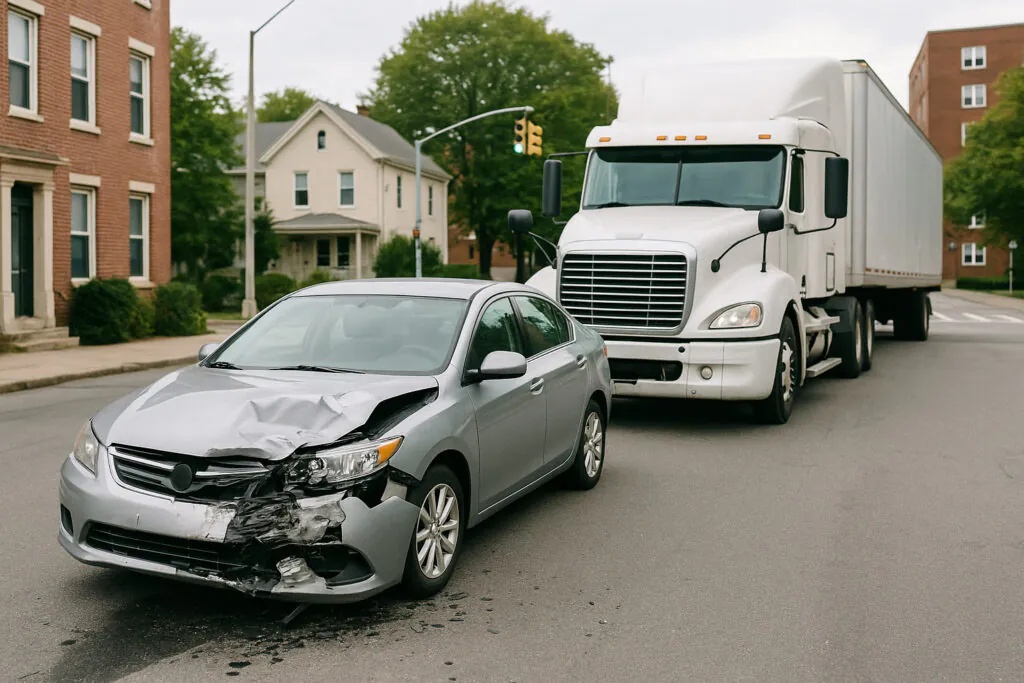
- Commercial truck and delivery vehicle accidents
- Motorcycle accidents
- Uber and Lyft accidents
- Pedestrian accidents
- Bicycle accidents
- Premises liability and slip-and-fall accidents
- Construction accidents
- Work injuries involving third-party negligence
- Medical malpractice
- Defective products
- Dog bites and attacks
- Catastrophic injuries
- Wrongful death
What to Do After an Accident
Your health comes first. Get medical attention and describe all your symptoms, including pain or limitations that appeared after the initial shock wore off. Gaps in treatment can make recovery harder and give an insurer an opening to argue that the injury was minor or unrelated. When possible:- Report the accident. Call the police after a traffic collision. Notify a manager, property owner, employer, or site supervisor after a fall or workplace injury.
- Photograph the scene. Include the wider area, not only the immediate hazard. Photograph vehicles, debris, traffic controls, lighting, stairs, flooring, ice, broken pavement, or anything else that may have contributed.
- Get witness information. A name and phone number may be enough to preserve an independent account.
- Keep damaged items. Do not discard shoes, clothing, helmets, tools, child restraints, or defective products.
- Save every document. Keep medical papers, prescriptions, receipts, wage records, insurance letters, and transportation expenses.
- Avoid giving a recorded statement too quickly. An adjuster may ask questions before you understand the diagnosis or the legal significance of what happened.
- Ask about deadlines immediately if a public entity may be involved. Waiting to identify the correct government agency or transit authority can put the claim at risk.
Evidence That May Disappear Quickly
Good injury cases are built from evidence, not assumptions. Depending on what happened, important evidence may include:- Storefront, home, building, bus, station, or vehicle video
- Police, EMS, incident, and accident reports
- 911 calls and dispatch records
- Vehicle event data and telematics
- Driver logs and commercial vehicle inspection records
- Property inspection, cleaning, and repair logs
- Snow and ice removal records
- Construction contracts, permits, and safety documents
- Employee schedules and training records
- Prior complaints about a recurring hazard
- Medical images, operative reports, and treatment records
- Pay stubs, tax returns, and employer statements documenting lost income
New York Deadlines and Insurance Rules
There is no single deadline for every personal injury case. Under CPLR § 214, many negligence lawsuits must be started within three years. Important exceptions include:- Medical malpractice claims, which generally have a two-year-and-six-month deadline, subject to specific exceptions
- Wrongful death actions, which generally must be commenced within two years of death
- Claims against New York City and other public entities, which may require action much sooner
- Claims involving children, late-discovered injuries, continuous medical treatment, or other special circumstances
New Rules for Motor Vehicle Cases Filed on or After May 26, 2026
New York changed several important motor vehicle injury rules effective May 26, 2026. For actions subject to New York’s no-fault law and commenced on or after that date, CPLR § 1411(b) uses a modified comparative-fault rule. If the injured person’s share of fault is greater than the combined fault of the parties being sued, recovery is barred. If the injured person is 50% or less at fault, compensation may still be recovered but is reduced by that percentage. The reforms also changed New York’s serious-injury definition by removing the former “90/180-day” category. Other qualifying categories—including fractures, significant disfigurement, permanent loss of use, permanent consequential limitations, and significant limitations—remain. The filing date and medical proof now require especially careful review. The changes are summarized in the New York Department of Financial Services’ July 1, 2026 circular letter. Most non-motor-vehicle negligence cases remain subject to New York’s pure comparative-negligence rule, under which partial fault generally reduces compensation rather than eliminating the claim.Who May Be Responsible?
Responsibility depends on who controlled the risk and had a reasonable opportunity to prevent the injury. Potential defendants may include:- A negligent driver and the vehicle’s owner
- A trucking, delivery, rideshare, or bus company
- An employer whose worker caused a collision while working
- A property owner, commercial tenant, or management company
- A maintenance, cleaning, snow-removal, or construction contractor
- A general contractor, subcontractor, or site owner
- A manufacturer or distributor of a defective product
- A doctor, hospital, or other medical provider
- New York City, a public authority, or another government entity
BILLY COOPER LAW
Questions About a Queens Village Injury Claim?
Compensation After a Serious Injury
A personal injury claim should reflect what the accident has taken from you—not simply the first set of bills. Depending on the case, recoverable damages may include:- Emergency care, hospitalization, surgery, and rehabilitation
- Future treatment and long-term assistance
- Lost wages and employment benefits
- Reduced future earning capacity
- Pain and suffering
- Emotional and psychological harm
- Scarring or disfigurement
- Loss of mobility, independence, or enjoyment of life
- Household services you can no longer perform
- Funeral expenses and legally recognized financial losses after a wrongful death
Queens Village Sidewalk and Property Claims
New York City generally requires property owners to maintain adjoining sidewalks. But legal responsibility for an injury does not always follow that maintenance rule. Under NYC Administrative Code § 7-210, liability is generally shifted to the adjoining property owner, with an important exception for one-, two-, and three-family residential property that is owner-occupied and used exclusively for residential purposes. NYC DOT explains property owners’ sidewalk maintenance responsibilities, while New York courts continue to apply the residential exception in individual cases, including Allen v. Pink Plaza Management Inc.. In practice, a sidewalk investigation may require determining:- The exact point where the fall occurred
- Whether it was on the sidewalk, curb, tree well, driveway, or private walkway
- Who owned and occupied the adjoining property
- Whether the property was used only as a residence
- Whether a contractor or utility created the defect
- Whether a nearby business made special use of the area
- Whether the City received legally sufficient prior notice
- Whether anyone made a repair that worsened the condition
Claims Involving New York City or a Public Authority
If a dangerous street, city vehicle, public hospital, bus, station, or government-managed property contributed to the injury, special rules may apply. General Municipal Law § 50-e generally requires a notice of claim within 90 days when the law requires notice before suing a public corporation. For claims against New York City, the NYC Comptroller’s Office explains that a notice of claim usually must be filed within 90 days and that a lawsuit generally must be commenced within one year and 90 days. Transit cases require particular care. “The MTA” is not always the complete answer. A claim may involve New York City Transit, the Long Island Rail Road, a bus operator, a contractor, or another entity with its own procedural rules. If government involvement is possible, do not wait until the usual three-year deadline to investigate.Local Courts, Hospitals, and Agencies
Personal injury lawsuits involving serious damages may proceed in the Queens County Supreme Court, Civil Term at 88-11 Sutphin Boulevard in Jamaica NY 11435. The NYPD 105th Precinct, located at 92-08 222nd Street in Queens Village NY 11428, serves Queens Village and several surrounding eastern Queens communities. Police reports, body-worn camera footage, 911 records, and related materials may become important in a traffic or premises investigation. People injured in Queens may receive care at facilities including:- NYC Health + Hospitals/Queens at 82-68 164th Street in Jamaica NY 11432
- Jamaica Hospital Medical Center at 8900 Van Wyck Expressway in Jamaica NY 11418, a New York State-designated and American College of Surgeons-verified Level I trauma center
How Billy Cooper Law Investigates a Queens Village NY Injury Case
The investigation begins with listening. The lawyers need to understand what happened, how the injury has changed your daily life, and what concerns are keeping you up at night. From there, the firm may:- Identify each person, company, property owner, insurer, or agency involved
- Obtain reports, photographs, medical records, and available video
- Send evidence-preservation notices
- Interview witnesses
- Examine the accident location
- Review vehicle, property, employment, or construction records
- Consult medical, engineering, vocational, or financial experts when needed
- Handle communication with insurers and defense attorneys
- Document future care, lost earning capacity, and permanent limitations
- Prepare the claim as if it may need to be presented in court
Frequently Asked Questions
Do I need to hire a lawyer immediately?
You should at least learn your options quickly. Evidence can disappear within days, while no-fault and government notice deadlines can expire long before the ordinary statute of limitations.What if I was partly responsible for the accident?
It depends on the case. In most non-motor-vehicle negligence claims, your compensation may be reduced by your share of fault. In motor vehicle actions subject to the no-fault law and commenced on or after May 26, 2026, recovery may be barred if your fault is greater than the combined fault of the parties you are suing.Will no-fault insurance pay all my losses after a car accident?
Usually not. No-fault insurance provides an initial layer of medical and wage-loss benefits, subject to limits and filing requirements. A separate liability claim may be available when the injuries meet New York’s serious-injury standard.Who is responsible for a sidewalk fall in Queens Village NY?
Possibilities include the adjoining owner, the City, a tenant, a contractor, or a utility. The answer may depend on the property’s size and use, the exact location of the defect, and who created or controlled the condition.What if I was injured on an MTA bus or at the Queens Village LIRR station?
Report the incident and preserve the route, vehicle, train, time, direction of travel, and exact location. Different transit entities may have different notice requirements, so early identification of the correct defendant is important.Should I give the insurance company a recorded statement?
Not before you understand why the statement is being requested and how it may affect the claim. Adjusters may ask questions designed to limit the insurer’s responsibility or shift fault.How much does it cost to speak with Billy Cooper Law?
The initial consultation is free. The firm handles personal injury cases on a contingency basis, so there is no legal fee unless compensation is recovered.Can I speak with the firm in Spanish?
Yes. Attorney Anieska J. Garcia provides representation in English and Spanish.How long will my personal injury case take?
Some claims resolve within months. Others take longer because the medical condition is still developing, responsibility is disputed, multiple parties are involved, or litigation is necessary. A case should not be settled before its long-term consequences are reasonably understood.Related Information
- New York personal injury claims
- New York motor vehicle accidents
- New York premises liability claims
- New York catastrophic injury claims
- New York wrongful death claims
- Billy Cooper Law case results
- Meet the Billy Cooper Law team
Tell Us What Happened
You do not need to decide today whether to file a lawsuit. You do need to know what evidence should be preserved, which insurance policies may apply, and whether a short deadline is already running. Call Billy Cooper Law at (718) 866-3311 or (914) 730-5789, or request a free consultation. The firm will listen, review what happened, and explain the next practical steps.Communities We Serve
- Queens County
- Murray Hill–Broadway Flushing
- Jamaica
- Ridgewood
- Flushing–Willets Point
- Corona
- South Ozone Park
- Forest Hills
- Jackson Heights
- Elmhurst
- Queens Village
Sources
Billy Cooper Law
- Billy Cooper Law
- Personal Injury
- Practice Areas
- Meet the Team
- Billy Cooper, Esq.
- Case Results
- Contact Billy Cooper Law
Queens Village and Queens Transportation
- NYC DOT Queens Village Transportation Study
- NYC DOT 2024 Bicycle and Traffic Crash Data Report
- Queens Community Board 13 District Profile
- MTA Long Island Rail Road Hempstead Branch
- NYPD 105th Precinct
New York Law and Insurance
- New York CPLR § 214
- New York CPLR § 214-a
- New York EPTL § 5-4.1
- New York General Municipal Law § 50-e
- New York Department of Financial Services 2026 Motor Vehicle Insurance Reforms
- New York Department of Financial Services No-Fault Insurance FAQs
- NYC Comptroller Personal Injury Claim FAQs
- NYC DOT Sidewalk Maintenance and Repair
- Allen v. Pink Plaza Management Inc.
Local Courts and Hospitals
- Queens County Supreme Court, Civil Term
- NYC Health + Hospitals/Queens
- Jamaica Hospital Medical Center Level I Trauma Center
BILLY COOPER LAW
Ready to Discuss What Happened?


Putting Over 75 Years of Combined Experience on Your Side
Putting Over 75 Years of Combined Experience on Your Side
Putting Over 75 Years of Combined Experience on Your Side
Putting Over 75 Years of Combined Experience on Your Side
Putting Over 75 Years of Combined Experience on Your Side
Putting Over 75 Years of Combined Experience on Your Side
Putting Over 75 Years of Combined Experience on Your Side
Putting Over 75 Years of Combined Experience on Your Side
Putting Over 75 Years of Combined Experience on Your Side
Putting Over 75 Years of Combined Experience on Your Side
Get the Answers You Need
At Billy Cooper Law, every day we renew our pledge to help injured people get the justice and compensation they deserve. We have a reputation throughout New York and nationally for standing up for our clients, and we take that responsibility seriously by approaching every case with preparation, persistence, and an unwavering commitment to results.