
Long Island City NY Personal Injury Lawyer
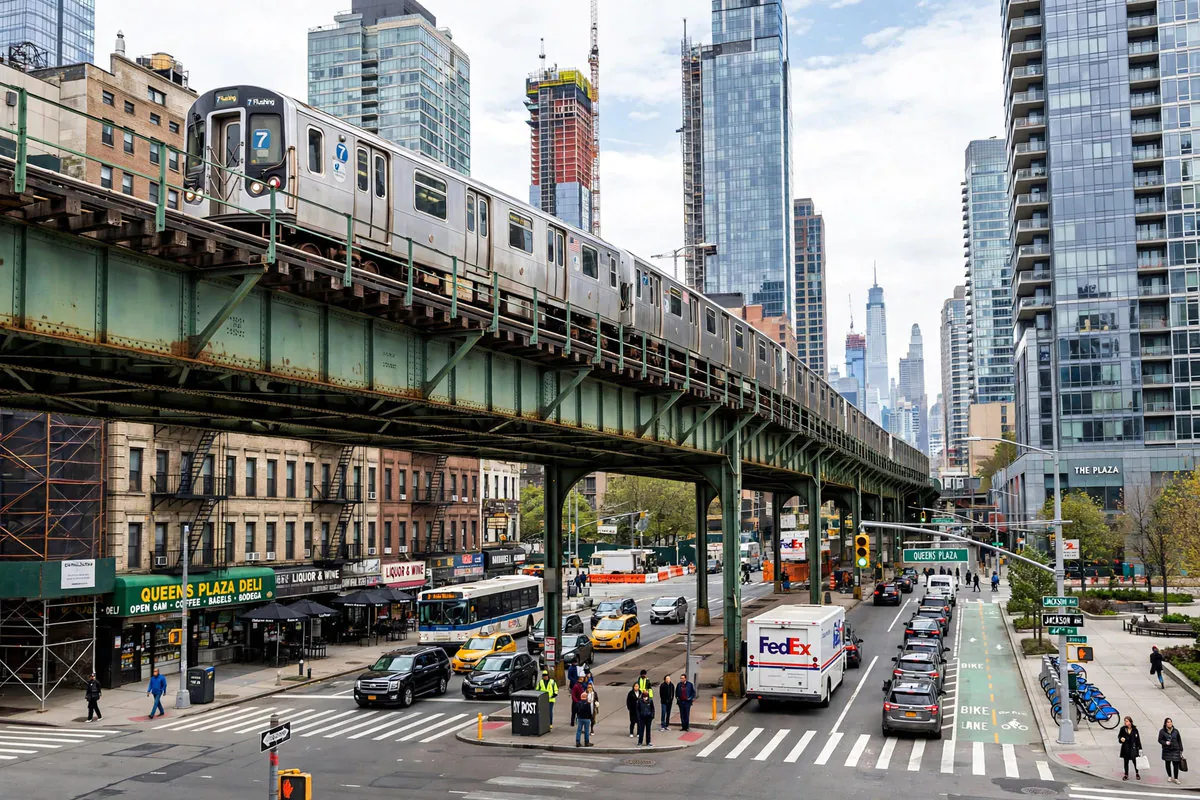
Long Island City has been rebuilt in a generation: glass towers over Queens Plaza and Court Square, converted warehouses in Dutch Kills, and construction cranes as a permanent feature — all stacked on top of the Queensboro Bridge approaches, the Queens Boulevard and Northern Boulevard corridors, and some of the most complex elevated-subway geometry in the city. Its injury docket follows the construction: worker falls and falling objects, crashes in work-zone traffic, delivery and rideshare collisions, and falls in brand-new towers and old industrial buildings alike.
Billy Cooper Law represents people injured in Long Island City and across Queens. This page explains how an LIC claim works and how the firm builds it. The county-wide picture is on our Queens County personal injury page.
A Queens Firm for a Serious Long Island City Injury
Queens civil claims are heard in Queens County Supreme Court in Jamaica — with the historic Long Island City Courthouse on Court Square handling civil matters a few blocks from where many of these accidents occur. Billy Cooper Law builds its Queens cases for those courtrooms: complete medical records, every responsible party identified, and evidence captured while the site still looks like the site.
Nowhere is evidence more perishable than a neighborhood under construction. Scaffolds are reconfigured, tower cameras rotate, a work zone that produced a crash is restriped by Friday. The firm’s first days on an LIC case are spent on preservation — written demands to the contractors, buildings and camera holders whose records will decide the claim.
Clients get the full practice under one roof, a free consultation, and no fee unless there is a recovery.
Why Long Island City Cases Get Complicated
An LIC injury typically involves layered defendants. A construction fall can implicate the site owner, the general contractor, subcontractors and an equipment company — under Labor Law provisions that are unusually protective of workers. A crash near Queens Plaza can involve a private driver, a delivery fleet, and work-zone traffic control that a contractor was paid to maintain. A tower fall can split responsibility among owner, managing agent and service contractors.
The public layer is present too: MTA stations and buses, City streets and sidewalks, and the bridge approaches — each on the ninety-day notice-of-claim track when it is involved.
Coordinating those defendants, their insurers and the several clocks — no-fault at thirty days, notice of claim at ninety, suit at three years (or one year ninety against public bodies) — is the architecture of the case, and it is built at intake.
BILLY COOPER LAW

Types of Injury Cases We Handle in Long Island City NY
One Long Island City practice page already exists; the firm’s main practice pages cover the rest:
- E-Bike Accidents in Long Island City
- Car Accidents
- Personal Injury
- Uber and Lyft Accidents
- E-Bike Accidents — New York
A Useful Local Snapshot
Long Island City occupies the western Queens waterfront across from Midtown Manhattan — Hunters Point along the East River, the Court Square and Queens Plaza towers, Dutch Kills’ industrial blocks, and the Sunnyside Yards rail complex at its back. The Queensboro (59th Street) Bridge, the Midtown Tunnel approaches, Queens Boulevard and Northern Boulevard pour traffic through it; the 7, N/W, E/M/R and G lines knot together at its stations.
Emergency care most often begins at Elmhurst Hospital Center — the region’s Level I trauma center — or at Mount Sinai Queens in Astoria. The population mixes long-term residents, a large artist and industrial workforce, and tens of thousands of new tower residents, and the injury pattern reflects all three.
Where Serious Injuries Happen in Long Island City
LIC’s claims concentrate where construction, commuting and industry overlap:
- Queens Plaza and the bridge approaches — merging bridge traffic, elevated subway structures, buses, cyclists and pedestrians in a compressed space.
- Construction sites across Court Square, Hunters Point and Dutch Kills — falls from height, falling objects, crane and equipment incidents, and sidewalk-shed hazards.
- Queens Boulevard and Northern Boulevard — wide, fast corridors with turning and crossing conflicts.
- Delivery and warehouse blocks — box trucks and vans maneuvering among workers and cyclists in industrial streets.
- Towers and converted industrial buildings — elevator incidents, stair and lobby falls, and garage and loading-dock injuries.
- Station areas (Court Square, Queensboro Plaza, Hunters Point Avenue) — stair and platform falls and crowd-related injuries on public-entity clocks.
Real Injury Cases Often Begin in Ordinary Places
The firm handles Long Island City claims across the range: construction accidents, including Labor Law §§ 200, 240 and 241 claims; car, truck, delivery and rideshare collisions; pedestrians and cyclists struck on the boulevards and around Queens Plaza; e-bike crashes (a dedicated LIC e-bike page is linked above); slip, trip and fall injuries in towers, stations, stores and on sidewalks; and wrongful death cases.
Construction is the signature LIC case, and New York’s Labor Law is its framework — including § 240’s strong protection for workers injured by falls or falling objects, which can reach owners and general contractors regardless of who employed the worker. The second signature is the work-zone and corridor crash, where contractor traffic control and camera evidence decide fault.
What To Do After an Injury in Long Island City
After an injury in Long Island City, the steps that protect you and the claim:
- Get medical care. Call 911 for emergencies; Elmhurst Hospital Center is the area’s Level I trauma center. Tell providers the visit follows an accident or a work incident.
- Report it. NYPD for a crash (the 108th Precinct covers LIC); your employer and the site safety structure for a construction injury — and keep the names of the owner and contractors posted at the site; building or station management for a fall, with the incident number.
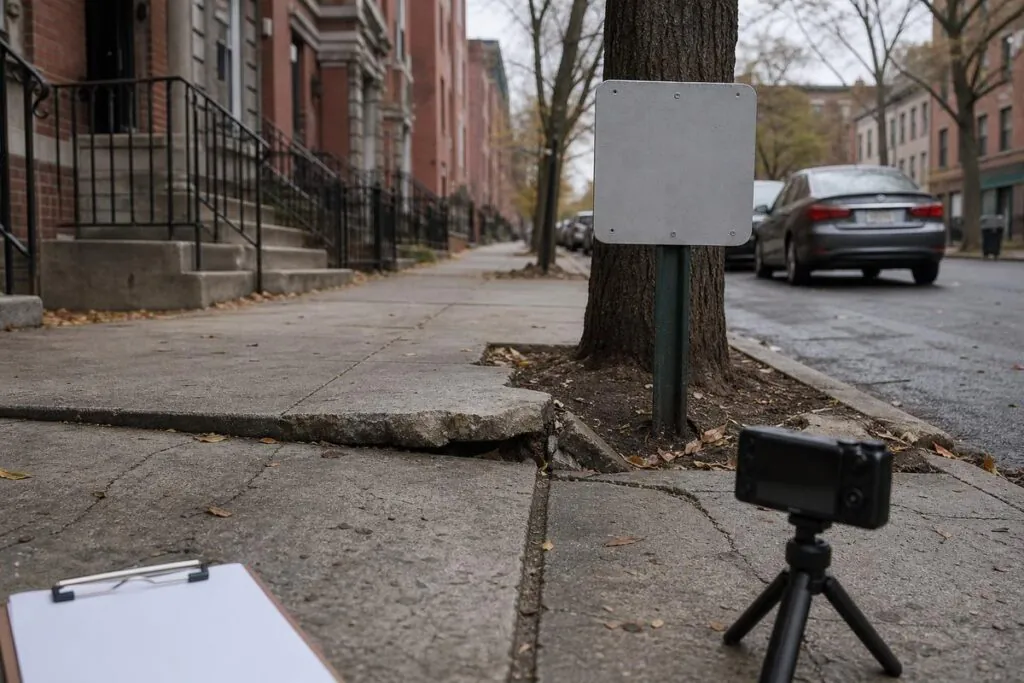
- Photograph the scene. The condition, the site, vehicle positions and markings, and your injuries — construction scenes change daily.
- Collect names. Drivers, witnesses, foremen, the property representative. Note company and DOT markings on commercial vehicles.
- Keep your file together. Medical records, bills, pay records and any insurer correspondence, in one place.
- Do not give a recorded statement to another insurer, and do not sign an early settlement, before your injuries and deadlines are understood.
How Evidence Proves a Long Island City Injury Claim
In LIC, the evidence race is against the construction schedule. Site configurations, scaffold setups and crane positions are documented by the contractors themselves — daily logs, safety plans, toolbox-talk records — but obtaining them requires asking while the job is live and the entities still exist at that address. Tower and street cameras overwrite on short cycles.
The firm sends preservation demands in the first days and builds the parallel record: NYPD and agency reports, DOB and OSHA-facing documentation where relevant, maintenance and inspection records for premises cases, and the complete medical file. For corridor crashes, traffic-camera and work-zone records are requested before restriping erases the configuration that caused the collision.
BILLY COOPER LAW
Deadlines That Control a Long Island City Personal Injury Claim
The general New York negligence deadline is three years from injury (CPLR 214), but LIC cases are usually governed by shorter clocks. No-fault applications in vehicle cases are generally due within thirty days. Public-entity involvement — City streets and sidewalks, MTA stations and buses — generally triggers a ninety-day notice of claim and a one-year-and-ninety-day suit window.
Fault follows CPLR 1411’s pure comparative rule, with § 1411(b) barring motor-vehicle actions commenced on or after May 26, 2026 where the claimant’s fault exceeds the defendants’ combined fault; pain-and-suffering claims against motorists must meet Insurance Law § 5102(d)’s serious-injury threshold. Labor Law claims carry their own framework and, for workers, run alongside the compensation system.
All dates run from the accident. The deadline map is drawn at intake — in a construction case, before the site changes; in every case, before the shortest clock closes.
How Fault Is Divided Under New York Law
Responsibility in an LIC case can rest with a driver, an owner, a general contractor or subcontractor, a property manager, an equipment company, or a public agency — frequently several at once. The investigation follows control: who owned the risk, who was contractually charged with managing it, and what the records show each party did.
Partial fault on your part does not ordinarily end the claim. Comparative fault reduces a recovery rather than barring it (subject to the § 1411(b) vehicle-case bar), and in Labor Law § 240 cases the worker’s own conduct is examined through a specific statutory lens. Early insurer characterizations of fault are positions, not findings; the documented record is what ultimately sets the allocation.
What Compensation Covers After a Serious Injury
An LIC claim seeks medical expenses past and future, lost earnings and diminished earning capacity, and pain, suffering and loss of enjoyment of life. For construction and industrial workers, the capacity questions — height work, lifting, climbing, the ability to return to the trade at all — are often the largest component, proved with vocational and medical evidence.
No honest number exists before the medical picture settles and the coverage is mapped across every defendant. The firm’s early work protects that value: preservation, complete records, and no premature release.
When a Government Agency Is Involved
Public entities touch LIC cases constantly: City streets, sidewalks and signals; MTA stations, buses and the bridge approaches’ agencies; public projects under construction. An injury involving any of them takes the notice-of-claim path — ninety days, the correct body, the prescribed form — and the shortened suit window.
The entities are not interchangeable: the City is not the MTA, and neither is the bridge authority. If a public vehicle, property or project appears anywhere in your account, it belongs in the first conversation so the notice reaches the right body in time.
Which Courts Hear Long Island City Personal Injury Cases?
Serious Queens civil claims are heard in Queens County Supreme Court at 88-11 Sutphin Boulevard in Jamaica; the Long Island City Courthouse on Court Square — a neighborhood landmark — hosts Queens civil matters closer to home. Federal cases may land in the Eastern District in Brooklyn.
Treatment records usually begin at Elmhurst Hospital Center or Mount Sinai Queens. Police records come from the NYPD’s 108th Precinct for LIC. Agency records — DOB filings for construction addresses, MTA files for transit incidents — complete a record that is as much documentary as testimonial.
How Billy Cooper Law Builds a Long Island City Injury Case
An LIC case at Billy Cooper Law starts with the deadline map and a preservation run aimed at the construction reality: demands to owners, contractors and camera holders, agency and DOB records requested, the medical file assembled, and every insurance layer — no-fault, liability, commercial and excess — identified across all defendants.
From that file, the case is negotiated on documents. If the offers do not match the record, suit follows in Queens County Supreme Court. Clients are kept informed in plain language at each step — what has been gathered, what it means, and what happens next.
Insurance and the Working Claimant in Long Island City
Long Island City claimants often carry complicated employment pictures: union construction trades with benefit funds and annuity records, service workers paid across multiple employers, gig and delivery riders, and salaried tech and media staff with equity components. Each picture documents lost earnings differently — a union worker’s loss may sit in fund contributions and overtime patterns as much as in base pay — and each is documented at intake, while payroll departments and fund administrators can still produce clean records.
The insurance side is equally layered. A crash involving a working driver can reach the employer’s commercial policy; a construction injury can involve the site owner’s and contractors’ liability programs and the Labor Law; a rideshare or delivery crash adds platform coverage phases. The claim is mapped against every layer before any single carrier is negotiated with, because a settlement with one defendant, carelessly worded, can release others. Sequencing is part of the legal work, and it happens before demands go out — not after.
Depositions and the Court Calendar in Queens County
A filed Long Island City case proceeds in Supreme Court, Queens County, through a calendar that is formal and, to clients, slow in appearance: pleadings, a preliminary conference, written discovery, depositions of the parties, defense medical examinations, and compliance conferences before a trial part is reached. Most of the firm’s work in that period is invisible to the client — records, motions, expert retention — but two events require the client’s best preparation: the deposition, where testimony is given under oath, and the defense medical examination, where a carrier-retained doctor evaluates the injuries. Both are prepared for deliberately, with the medical record as the reference text.
Long Island City NY Personal Injury FAQs: Construction Injuries, Deadlines, and Claims
Below are answers to common questions about personal injury claims in Long Island City, Queens. This information is general and not legal advice — contact our office for guidance about your specific situation.
How long do I have to file a personal injury claim in Long Island City?
Against a private party, generally three years from the date of injury under CPLR 214.
Public-entity claims — the City, the MTA, a public project — generally require a notice of claim within ninety days and suit within one year and ninety days. Vehicle cases also carry a thirty-day no-fault application deadline.
Sources: CPLR 214 (N.Y. Senate) · General Municipal Law § 50-e (N.Y. Senate)
What does it cost to hire Billy Cooper Law?
The consultation is free, and personal injury cases are handled on a contingency fee — no legal fee unless the firm recovers for you.
The fee and expense terms are explained in writing before you sign anything.
Sources: CPLR 214 (N.Y. Senate) · Insurance Law § 5102 (N.Y. Senate)
I was hurt on a construction site in LIC. What law protects me?
New York’s Labor Law is unusually protective of construction workers. Section 240 (the Scaffold Law) can hold owners and general contractors responsible for gravity-related injuries — falls and falling objects — where required safety devices were absent or inadequate, and §§ 200 and 241(6) add further duties.
These claims run alongside workers’ compensation, not instead of it, and they reach parties beyond your own employer. Site records — contracts, safety plans, daily logs — are central, and they are gathered while the job is live.
Sources: Labor Law § 240 (N.Y. Senate) · Labor Law § 241 (N.Y. Senate)
Who pays my medical bills after a crash in Long Island City?
No-fault insurance pays first in vehicle cases: the policy on your vehicle, or the striking vehicle’s policy if you were walking or riding, covers necessary treatment and a share of lost earnings regardless of fault.
The application is generally due within thirty days. If you were working when the crash happened, workers’ compensation may also be engaged; the systems are coordinated at intake so neither is missed.
Sources: Insurance Law § 5103 (N.Y. Senate) · Insurance Law § 5102 (N.Y. Senate)
Can I recover if I was partly at fault?
Usually, yes. CPLR 1411’s pure comparative fault reduces your recovery by your percentage of fault instead of barring it.
The exception is CPLR 1411(b): motor-vehicle actions commenced on or after May 26, 2026 are barred where the claimant’s fault exceeds the defendants’ combined fault. Percentages are set by evidence — footage, measurements, records — assembled early.
Sources: CPLR 1411 (N.Y. Senate) · CPLR 214 (N.Y. Senate)
What is the serious-injury threshold?
Insurance Law § 5102(d) conditions pain-and-suffering claims against motorists on defined serious injuries — among them fractures, significant disfigurement, loss or permanent or significant limitation of use of a body member, organ, function or system, and injuries preventing substantially all usual activities for 90 of the first 180 days.
Qualification is proved in the medical record — imaging, measured findings, documented restrictions — built through consistent treatment.
Sources: Insurance Law § 5102 (N.Y. Senate) · Insurance Law § 5104 (N.Y. Senate)
Where will my Long Island City case be heard?
Serious civil claims are heard in Queens County Supreme Court in Jamaica; Queens civil matters are also heard at the Long Island City Courthouse on Court Square.
Most cases settle once the file is documented, but each is prepared for the courtroom from the start.
Sources: CPLR 503 (N.Y. Senate) · CPLR 214 (N.Y. Senate)
A delivery truck hit me in Dutch Kills. Is the company liable?
Often, yes. A driver working a route is generally acting within the scope of employment, making the employer responsible for the driver’s negligence — and the company’s own practices (schedules, maintenance, training) can be independently at issue.
Commercial involvement means commercial evidence: telematics, route and scanner data, maintenance files. Those are demanded in writing in the first days, before they rotate away.
Sources: Vehicle and Traffic Law § 388 (N.Y. Senate) · CPLR 214 (N.Y. Senate)
I fell in a new residential tower. Who is responsible?
Tower premises cases allocate responsibility among the owner, the managing agent and service contractors — elevator companies, cleaning and snow vendors — according to who controlled the condition. Leases and service contracts, plus maintenance and complaint records, make the allocation.
Report the fall, photograph the condition, and keep your footwear. Building camera footage overwrites quickly, so a preservation demand should go out immediately.
Sources: CPLR 214 (N.Y. Senate) · CPLR 1411 (N.Y. Senate)
What should I bring to my first consultation?
The date and exact location, any police, incident or employer report numbers, insurance information, photographs, witness names, medical paperwork and proof of missed work or wages.
An incomplete file is no reason to wait — in LIC, the evidence with the shortest life (site records, camera footage) is usually the evidence that matters most.
Sources: CPLR 214 (N.Y. Senate) · CPLR 1411 (N.Y. Senate) · General Municipal Law § 50-e (N.Y. Senate)
Tell Us What Happened
If you were injured in Long Island City, tell us where it happened, what treatment you have had, and what any insurer has said. We will map your deadlines and explain the next steps in plain language. Request a free consultation online or call (914) 730-5789.
Personal Injury Lawyers Serving Queens County
- Queens County
- Corona
- Elmhurst
- Flushing–Willets Point
- Forest Hills
- Jackson Heights
- Jamaica
- Murray Hill–Broadway Flushing
- Queens Village
- Ridgewood
- South Ozone Park
- Long Island City
- Richmond Hill
Sources
Firm Information
- Billy Cooper Law: Meet the Team
- Billy Cooper Law: Billy Cooper, Esq.
- Billy Cooper Law: Case Results
- Billy Cooper Law: Office Locations
- Billy Cooper Law: Personal Injury
- Billy Cooper Law: Contact
Long Island City Sources
- U.S. Census Bureau QuickFacts: Queens County, New York
- NY Courts — Queens County Courts (11th Judicial District)
- City of New York
NOTABLE RESULTS
Selected results in Billy Cooper Law’s broader personal injury practice:
$9,000,000 settlement · $2,005,000 settlement
Read more about these results
- $9,000,000 settlement — Tank explosion
A man suffered extensive burns and loss of his dominant hand in a tank explosion in Westchester County.
- $2,005,000 settlement — Construction-site roof fall
A worker fell from a roof after inadequate safety equipment was provided on a Rockland County job site.
These are reported gross results, before fees, expenses, and applicable liens. They are not estimates of another claim’s value. Read the firm’s published case results.
Prior results do not guarantee a similar outcome. Each case is different and must be evaluated on its own facts.
WHAT OUR CLIENTS SAY
General feedback about working with Billy Cooper Law:
“I had a great experience with Marvin A Cooper attorney at law. From the beginning, the staff was courteous, professional, and very responsive. My attorney Billy Cooper took the time to explain every step of the process and made sure I understood my options. What stood out most was how they genuinely cared about my situation—they weren’t just handling a case, they were helping me through a difficult time.They were always available to answer my questions and kept me updated regularly. Thanks to their hard work and attention to detail, my case was resolved better than I had hoped. I wouldn’t hesitate to recommend Marvin A Cooper to friends or family who need legal help.”
— B. M., Google review
“Hopefully this review can display how much I greatly appreciate Billy’s services. He handled my case with great care and skill, when I met Billy I was at a point in my life were my case was at a standstill and I felt hopeless. I dealt with another lawyer prior to Billy, and for nine long years it was an grueling experience. However once I met Billy everything changed. We met in August of 2023 and by November 2023 my case was settled! This alone is a testament to who Billy is, he’s extremely dedicated as well as hardworking. Everything Billy ensured me came to fruition and I was treated with generosity and compassion. Thanks again for everything Bill! I received an outcome I didn’t think was possible and it wouldn’t have happened without you!”
— K. P., Google review
Professional Recognition

Recognition applies to the named attorneys and selection years. See the linked profiles for details.
Related Billy Cooper Law Videos and Social Posts
- Billy Cooper Law official YouTube channel — Youtube — official account.
- Billy Cooper Law official Instagram profile — Instagram — official account.
- Billy Cooper Law official Linkedin profile — Linkedin — official account.
- Protecting an Injury Claim on Social Media — Facebook.
- Types of Personal Injury Cases the Firm Handles — Facebook.
Published Articles by Billy Cooper
- When the Video Disappears: Liability, Missing Footage, and the Modern New York Injury Case — New York Law Journal · June 23, 2026.
Billy Cooper discusses video evidence that is missing, incomplete, or overwritten in New York injury litigation.
Related Locations and Practice Resources
BILLY COOPER LAW
County Resources
Related Resources


Get the Answers You Need
At Billy Cooper Law, every day we renew our pledge to help injured people get the justice and compensation they deserve. We have a reputation throughout New York and nationally for standing up for our clients, and we take that responsibility seriously by approaching every case with preparation, persistence, and an unwavering commitment to results.