
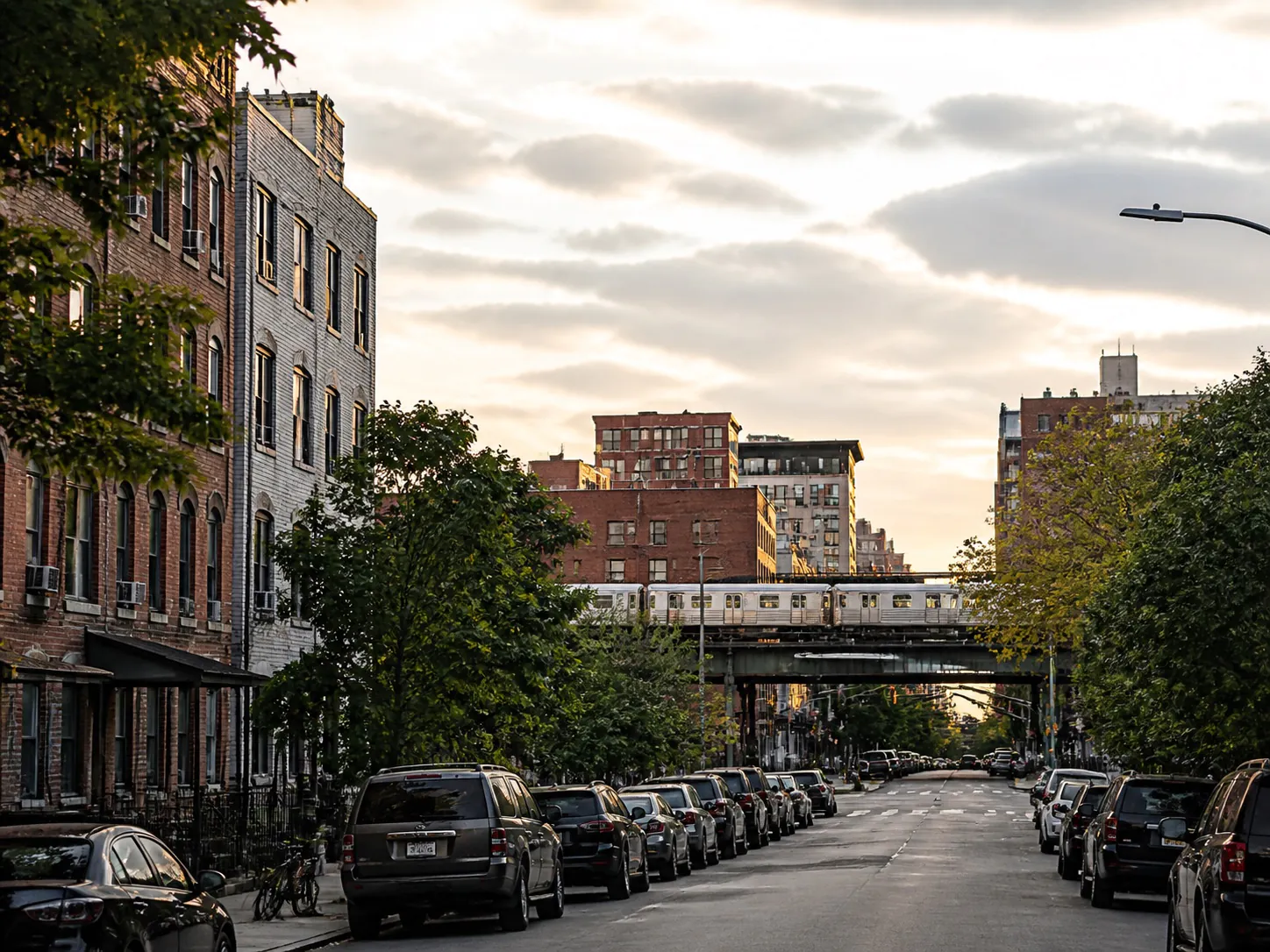
Corona NY Personal Injury Lawyers
An injury can disrupt your health, your work, and your family’s finances all at once. You may be trying to arrange medical care while an insurance company asks for a statement, your employer wants to know when you will return, and bills keep arriving. You do not need to have every answer before speaking with a lawyer. You do need to act carefully. Evidence can disappear, insurance deadlines may arrive within weeks, and claims involving New York City or a transit authority can require formal notice within 90 days.Other cities we serve in Queens County, NY:
- Queens County
- Murray Hill–Broadway Flushing
- Jamaica
- Ridgewood
- Flushing–Willets Point
- South Ozone Park
- Forest Hills
- Jackson Heights
- Elmhurst
- Queens Village

Types of Injury Cases We Handle in Corona NY
- Personal Injury
- E-Bike Accidents
- Car Accidents
- Slip and Fall
Why Injured People Turn to Billy Cooper Law
If your injury is serious, you will probably want a lawyer who has handled cases involving permanent disability, major medical treatment, disputed liability, and defendants prepared to fight. Billy Cooper Law reports more than 75 years of combined experience. Partner William H. Cooper began practicing in 1991 and serves as the firm’s lead trial counsel. The firm’s reported results include recoveries in catastrophic injury, wrongful death, construction accident, and motor vehicle cases. Just as important, an injury case requires communication. You should understand what the insurance company is doing, why certain medical records matter, and what decisions must be made. Anieska Garcia is fluent in English and Spanish, allowing clients to discuss their injuries and concerns directly without relying on relatives to interpret sensitive conversations. The firm offers free consultations and handles personal injury cases on a contingency basis. There are no upfront legal fees, and no legal fee is owed unless compensation is recovered.Why Corona NY Injury Cases Require a Local Investigation
Corona combines busy commercial blocks, elevated subway service, buses, trucks, cyclists, delivery riders, apartment buildings, public spaces, and major roadways in a relatively compact area. That mixture affects both how accidents happen and where evidence may be found. Along Roosevelt Avenue, for example, pedestrians move between stores, bus stops, taxi stands, and stations on the elevated 7 line. Corona Plaza sits near the 103rd Street station, where public space, transit, commercial activity, and vehicle traffic meet. After an accident there, relevant evidence might be held by nearby businesses, NYC DOT, a plaza operator, the MTA, a bus operator, or a rideshare company. Junction Boulevard, 108th Street, Northern Boulevard, and other through streets carry commercial and delivery traffic in addition to local vehicles. A truck case may require driver logs, dispatch records, telematics, inspection documents, and information showing whether the driver followed New York City’s truck-route rules. Near Flushing Meadows Corona Park, an injury may raise questions about park maintenance, roadway design, event operations, contractors, or government responsibility. A crash on a local street may involve a different agency and filing process than one on a state-controlled highway. The location alone does not determine fault. It tells an experienced investigator where to start looking.A Local Accident Snapshot
The NYPD’s 110th Precinct covers Corona and Elmhurst, including major commercial areas along Roosevelt Avenue, Broadway, and Queens Boulevard. From January 1 through August 16, 2026, the precinct’s TrafficStat report recorded:- 987 reported collisions
- 409 collisions involving injuries
- 536 total injuries
- 110 pedestrian injuries
- 4 traffic deaths
Where Serious Injuries Happen in Corona
Many Corona accidents occur where several forms of movement overlap.Roosevelt Avenue and the 7 train corridor
Stations at 90th Street–Elmhurst Avenue, Junction Boulevard, 103rd Street–Corona Plaza, and 111th Street create steady pedestrian activity. A person may be struck while crossing, injured while boarding a bus, hurt on station stairs, or caught in a collision involving a taxi, rideshare vehicle, bicycle, or delivery rider. Transit-related cases require precise information. The station, entrance, direction of travel, train or bus route, time, and exact location can determine which organization has records and which deadlines apply.Junction Boulevard and other commercial routes
Commercial corridors bring together delivery trucks, double-parked vehicles, buses, turning drivers, cyclists, and pedestrians. When visibility is blocked or a driver makes a hurried turn, a seemingly routine trip can end in a serious collision. Businesses near the scene may have useful surveillance footage. That footage is often overwritten quickly, making early preservation requests important.Apartment buildings, stores, and sidewalks
Corona has a dense mix of multifamily housing, storefronts, restaurants, and other commercial properties. Falls may result from broken stairs, poor lighting, defective handrails, wet floors, uneven pavement, uncleared snow, or deteriorated sidewalks. Responsibility may rest with an owner, tenant, managing agent, maintenance contractor, or another party that created or failed to correct the condition. NYC DOT notes that property owners may be responsible for injuries caused by sidewalk defects, although the answer depends on the property and the facts.Flushing Meadows Corona Park and nearby streets
Accidents near the park may involve drivers, cyclists, pedestrians, event vendors, contractors, or public agencies. The site should be examined before barriers, temporary equipment, debris, weather conditions, or traffic patterns change.Personal Injury Cases Billy Cooper Law Handles
The firm represents people injured in:- Car accidents, truck and commercial vehicle crashes, and motorcycle accidents
- Pedestrian accidents, bicycle accidents, and e-bike accidents
- Uber and Lyft accidents
- Bus accidents and subway accidents
- Sidewalk accidents, residential building accidents, and commercial property accidents
- Construction accidents and work injuries
- Medical malpractice and birth injuries
- Defective product injuries and dog bites
- Catastrophic injuries and wrongful death
What to Do After an Accident
Your health comes first. Call 911 or obtain medical care if you may be seriously injured. Do not assume that pain, dizziness, numbness, or restricted movement will disappear on its own. When you are able:- Report the accident. Call the police after a collision. Report falls and other property accidents to the owner, manager, employer, or responsible agency.
- Document the location. Photograph the overall scene and the condition that caused the injury. Include street signs, storefronts, traffic signals, stairs, floor surfaces, vehicles, and anything blocking your view.
- Identify witnesses. Ask for names and contact information. Do not assume the police or property manager obtained them.
- Preserve physical evidence. Keep damaged clothing, footwear, helmets, bicycle components, and other relevant items.
- Follow medical instructions. Attend appointments and tell your providers about all symptoms, including problems with sleep, concentration, balance, or daily activities.
- Be careful with insurance calls. You may need to report the event, but you do not have to speculate about fault or minimize injuries you do not yet understand.
- Ask about deadlines early. A 90-day government deadline or 30-day no-fault deadline can arrive long before you know the full extent of your injuries.
Evidence That May Decide the Case
A strong claim is built from evidence, not assumptions. Depending on what happened, useful evidence may include:- Police, ambulance, incident, and workplace reports
- Photographs and video of the scene
- Business, building, traffic, or transit surveillance
- Witness statements
- 911 calls and dispatch records
- Vehicle event-data recorder information
- Driver phone, rideshare, delivery, and GPS records
- Truck inspection, maintenance, and dispatch documents
- Building leases and maintenance contracts
- NYC permits, inspection records, sidewalk violations, and prior complaints
- Bus route, run, operator, or vehicle information
- OMNY, MetroCard, taxi, and rideshare records
- Medical imaging, operative reports, and rehabilitation records
- Wage statements, tax records, and employer documentation
New York Deadlines and Insurance Rules
Different claims have different time limits. The safest course is to investigate them immediately rather than assume the ordinary deadline applies.Personal injury lawsuits
Most negligence-based personal injury actions must be started within three years under CPLR § 214. Important exceptions include:- Medical malpractice claims, which generally have a two-year-and-six-month period, subject to specific exceptions
- Wrongful death actions, which generally must be started within two years of death
- Claims involving cities, public authorities, public hospitals, schools, transit agencies, or state-controlled property
No-fault claims after a vehicle accident
New York no-fault insurance generally covers initial medical expenses and part of an injured person’s lost earnings without requiring proof that another driver caused the crash. Basic economic loss is generally limited to $50,000 under Insurance Law § 5102. The injured person usually must provide written notice to the appropriate no-fault insurer within 30 days. Medical bills generally must be submitted within 45 days, and lost-earnings claims within 90 days, unless an accepted justification for delay applies. The New York State Department of Financial Services explains these filing requirements. No-fault benefits are separate from a liability claim against the person who caused the crash. In many vehicle cases, compensation for pain and suffering also requires proof of a legally defined “serious injury.”Work-related injuries
If you were hurt while working, notify your employer in writing as soon as possible. The New York State Workers’ Compensation Board generally requires notice to the employer within 30 days and filing of Form C-3 within two years. Workers’ compensation may not be the only source of recovery. A worker injured by a negligent driver, property owner, contractor, equipment company, or other third party may also have a personal injury claim.What If You Were Partly at Fault?
Fault is not always all-or-nothing. For most New York personal injury cases, your compensation may be reduced by your percentage of responsibility. A person found 20% at fault, for example, may generally recover 80% of the proven damages. New York changed the rule for many motor vehicle personal injury cases on May 29, 2026. Under the current version of CPLR § 1411, a claimant in a case subject to New York’s no-fault law may be barred from recovery if the claimant’s responsibility is greater than that of the defendant or the combined responsibility of all defendants. That makes evidence of traffic signals, vehicle position, speed, sight lines, witness accounts, and video even more important. The applicable rule may also depend on when the crash occurred. Do not decide that you have no case because you received a ticket, apologized at the scene, crossed outside a marked crosswalk, or cannot remember every detail. Those facts may matter, but they do not settle the legal question by themselves.BILLY COOPER LAW
Questions About a Corona Injury Claim?
Who May Be Responsible?
The answer depends on who controlled the source of danger. Potentially responsible parties may include:- A careless driver and the vehicle’s owner
- A driver’s employer
- A trucking, delivery, taxi, or rideshare company
- A property owner, commercial tenant, or managing agent
- A snow-removal, cleaning, security, or maintenance contractor
- A general contractor, subcontractor, project owner, or equipment company
- A product manufacturer, distributor, or seller
- A medical provider or hospital
- New York City, New York State, a public authority, or a transit organization
Compensation After a Serious Injury
A personal injury claim may seek compensation for:- Past and future medical expenses
- Lost wages and reduced earning ability
- Rehabilitation and long-term care
- Pain and suffering
- Disability, scarring, and loss of mobility
- Home care and necessary household assistance
- Property damage
- Losses resulting from a wrongful death
Claims Involving New York City or Transit Agencies
Government claims require special attention because the ordinary three-year period may not protect you. Under General Municipal Law § 50-e, a notice of claim is generally required within 90 days when a New York public corporation is involved. Actions against New York City generally must be commenced within one year and 90 days under General Municipal Law § 50-i. The New York City Comptroller handles notices involving alleged wrongdoing by the City. The City may also require an examination under oath before a lawsuit proceeds. Claims involving the New York City Transit Authority are governed by separate statutory requirements, including Public Authorities Law § 1212. An accident involving a subway station, bus, police vehicle, sanitation truck, defective roadway, park, school, or public hospital should therefore be reviewed immediately. These cases also raise a practical question: Which public entity was actually responsible? Filing only with New York City may not protect a claim involving a state highway or separate public authority.Local Courts, Hospital, and Agencies
A serious injury in Corona may involve several local institutions:- NYC Health + Hospitals/Elmhurst is an American College of Surgeons-verified Level I Trauma Center.
- The NYPD 110th Precinct, located at 94-41 43rd Avenue in Elmhurst NY, covers Corona and Elmhurst.
- Many substantial personal injury lawsuits filed in Queens County are handled by the Queens County Supreme Court Civil Term at 88-11 Sutphin Boulevard in Jamaica NY.
- The Queens County Civil Court at 89-17 Sutphin Boulevard in Jamaica NY hears claims within its $50,000 monetary jurisdiction.
- The New York City Comptroller, NYC DOT, NYPD, NYC Parks, and transit organizations may hold records relevant to government-related cases.
How Billy Cooper Law Investigates an Injury Case
The investigation begins with your account of what happened. From there, the goal is to confirm the facts before evidence disappears. Depending on the case, that work may include:- Inspecting and photographing the scene
- Identifying property ownership and maintenance responsibility
- Interviewing witnesses
- Requesting surveillance footage
- Obtaining police, transit, inspection, and government records
- Preserving vehicle, phone, rideshare, and delivery data
- Reviewing medical records and imaging
- Examining contracts among owners, tenants, contractors, and vendors
- Consulting accident-reconstruction, medical, engineering, or vocational experts
- Documenting the effect of the injury on your work and daily life
Frequently Asked Questions
How much does it cost to speak with Billy Cooper Law?
The initial consultation is free. The firm handles personal injury cases on a contingency basis, so there is no upfront legal fee and no legal fee unless compensation is recovered.Should I give the insurance company a recorded statement?
You should be cautious. A statement may later be used to challenge how the accident happened or how seriously you were hurt. Ask what the insurer needs and speak with a lawyer before giving a detailed recorded account.What if I did not take photographs?
A claim may still be investigated through witnesses, police reports, surveillance, inspection records, 911 calls, vehicle data, or photographs taken by someone else. The sooner the investigation begins, the better the chance of finding that evidence.Can I recover if the driver left the scene?
Possibly. Uninsured-motorist coverage, no-fault benefits, witness information, business cameras, license-plate readers, and police records may provide options. Hit-and-run claims have strict insurance notice requirements.Who pays my medical bills after a car accident?
New York no-fault insurance usually provides the first layer of medical coverage for eligible people injured through the use or operation of a motor vehicle. The correct insurer depends on whether you were a driver, passenger, pedestrian, or another type of road user.Can I bring a claim for a sidewalk fall?
Possibly. The key questions include what caused the fall, who had a duty to maintain the location, whether that party knew or should have known about the condition, and whether the defect can be documented.What happens if I was injured while making deliveries?
You may have a workers’ compensation claim, a claim against a negligent driver or property owner, or both. App-based delivery cases may also require records from the delivery platform, restaurant, customer location, and involved vehicles.How long will my case take?
Some claims resolve after medical treatment and investigation. Others require a lawsuit, depositions, expert review, or trial preparation. The timeline depends on the injuries, available insurance, disputes over fault, and whether your long-term medical condition is clear.Does Billy Cooper Law have an office in Corona NY?
The firm does not list a Corona office. It represents clients throughout Queens and New York City from its White Plains office and its New York NY location, which is available by appointment.Related Corona NY Personal Injury Pages
Related Personal Injury Resources
- New York personal injury claims
- Motor vehicle accident claims
- Premises liability claims
- Construction accident claims
- Catastrophic injury claims
- Billy Cooper Law case results
Tell Us What Happened
You do not have to determine who owned the sidewalk, controlled the construction site, operated the bus, or insured the vehicle before asking for help. Tell Billy Cooper Law what happened, where it happened, and what injuries you are dealing with. The firm can explain which evidence and deadlines matter. Call (718) 866-3311 or contact Billy Cooper Law online for a free consultation. The New York NY meeting location is available by appointment. Spanish-language assistance is available.Communities We Serve
- Queens County
- Murray Hill–Broadway Flushing
- Jamaica
- Ridgewood
- Flushing–Willets Point
- Corona
- South Ozone Park
- Forest Hills
- Jackson Heights
- Elmhurst
- Queens Village
Sources
Billy Cooper Law
- Billy Cooper Law
- Meet the Billy Cooper Law team
- William H. Cooper
- Anieska Garcia
- Personal injury practice
- Motor vehicle accidents
- Premises liability
- Work accidents
- Wrongful death
- Case results
- Contact information and office locations
Corona and Queens Resources
- NYPD 110th Precinct
- NYPD 110th Precinct TrafficStat report
- Queens Community Board 4
- Corona Plaza capital project
- New York City truck routing rules
- NYC DOT sidewalk information
- NYC Health + Hospitals/Elmhurst Level I Trauma Center
- Queens County courts
- Queens County Civil Court
New York Laws and Claims Procedures
- CPLR § 214 — general personal injury limitation period
- CPLR § 214-a — medical malpractice limitation period
- CPLR § 1411 — comparative fault
- EPTL § 5-4.1 — wrongful death actions
- Insurance Law § 5102 — no-fault benefits and serious injury
- General Municipal Law § 50-e — notices of claim
- General Municipal Law § 50-i — actions against municipalities
- New York City personal injury claim procedures
- New York City roadway and prior-written-notice requirements
- New York City Transit Authority claims statute
- New York no-fault insurance requirements
- New York workers’ compensation claim requirements
BILLY COOPER LAW
Ready to Discuss What Happened?
Putting Over 75 Years of Combined Experience on Your Side
Putting Over 75 Years of Combined Experience on Your Side
Putting Over 75 Years of Combined Experience on Your Side
Putting Over 75 Years of Combined Experience on Your Side
Putting Over 75 Years of Combined Experience on Your Side
Putting Over 75 Years of Combined Experience on Your Side
Putting Over 75 Years of Combined Experience on Your Side
Putting Over 75 Years of Combined Experience on Your Side
Putting Over 75 Years of Combined Experience on Your Side
Putting Over 75 Years of Combined Experience on Your Side
Get the Answers You Need
At Billy Cooper Law, every day we renew our pledge to help injured people get the justice and compensation they deserve. We have a reputation throughout New York and nationally for standing up for our clients, and we take that responsibility seriously by approaching every case with preparation, persistence, and an unwavering commitment to results.