
Chelsea NY E-Bike Accident Lawyer
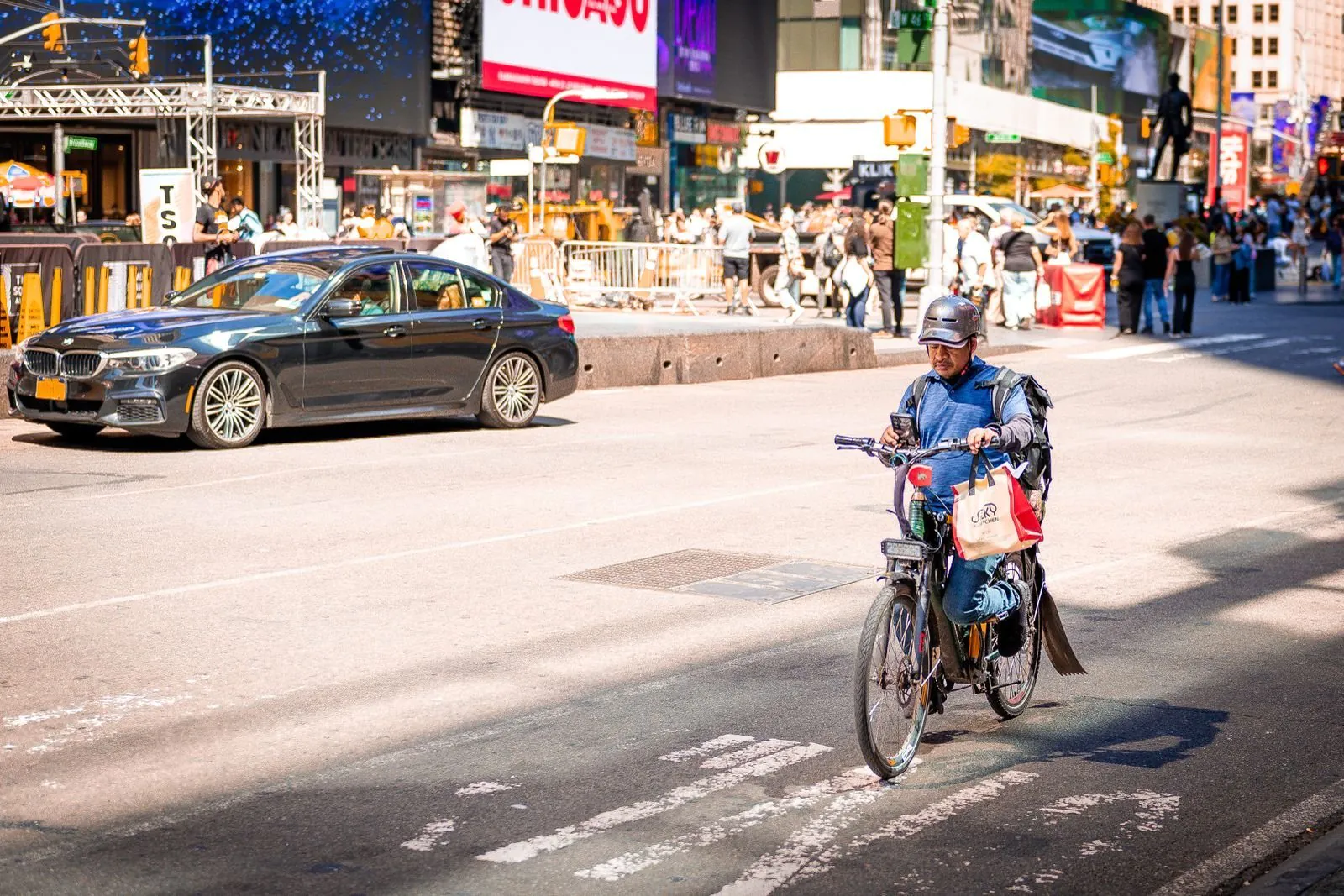
West of Seventh Avenue, Manhattan belongs to the bicycle more than almost anywhere else in America. The Hudson River Greenway carries a river of riders past Chelsea Piers; Eighth and Ninth Avenues run protected lanes through the gallery district and the restaurant rows; and up in Hell’s Kitchen, Tenth and Eleventh Avenues mix residential riding with tunnel traffic and theater crowds. E-bikes thread through all of it — commuters, Citi Bike riders, and the couriers who keep the west side fed. A crash in Chelsea or Hell’s Kitchen raises legal questions that deserve better than an insurer’s first answer. Billy Cooper Law represents injured riders on Manhattan’s west side. Call (914) 730-5789 for a free consultation.
Two early decisions shape everything after: treating the bicycle as evidence rather than transportation — no repairs, no replacement battery — and mapping the cameras before their footage cycles away. The avenues here are lined with doorman buildings, garages, and storefronts whose lenses catch collisions constantly; the footage simply does not wait.
A West Side Crash Is a Different Animal
Chelsea’s riding environment has no real parallel. The Greenway is the busiest bicycle facility in the country, and it deposits riders at cross streets where West Side Highway traffic turns across their path at speed. Inland, the avenue lanes are genuinely protected for long stretches — which breeds its own hazard, as drivers turning across a protected lane look for cars in the roadway and forget the stream of riders behind the parked row. Add the Lincoln Tunnel feeds and Port Authority bus traffic in Hell’s Kitchen, and the west side produces collisions at every speed the city offers.
The rider population intensifies both the volume and the variety. This is Manhattan’s delivery heartland: app couriers stage outside restaurants on Eighth and Ninth, riding heavy throttle bikes on deadline. It is also a neighborhood of residents who ride for everything — and of visitors on rental bikes meeting avenue traffic for the first time. Crashes sort accordingly, from greenway crossing impacts to courier collisions in the theater district crush.
Each version carries the same legal skeleton: no-fault benefits keyed to the striking vehicle, a serious-injury gate on broader damages, possible workers’ compensation for the working rider, and municipal deadlines when a city vehicle or street condition joins the story. The cases reward whoever assembles that skeleton first.
Chelsea and Hell’s Kitchen: The Numbers Behind the Risk
NYPD collision data reported through NYC Open Data for 2023-2025 counts 94 e-bike-involved collisions in Chelsea, 41 cyclists injured, and 3,682 total collisions of all kinds in the neighborhood’s ZIP codes (10001, 10011, and 10018).
Those ZIP codes take in Hell’s Kitchen as well as Chelsea proper, and the totals reflect how much of the west side’s daily life runs on two wheels. Counts alone cannot assign blame in your case — the video, the report, and the physical evidence do that — but they frame the reality that west side insurers handle these claims daily and defend them accordingly.

Where West Side Riders Get Hurt
The pattern repeats at a handful of recognizable settings.
The Eighth and Ninth Avenue Lanes
The protected lanes work — until a turn bay, a garage entrance, or a double-parked truck interrupts them. Left-turning and right-hooking drivers who never checked the lane, and doors opening from the parking row beside it, account for a steady share of Chelsea claims from 14th Street to 34th.
Greenway Crossings at the Highway
Where greenway riders cross the West Side Highway’s turning traffic — near the piers, the sports facilities, and the midtown ferry and tunnel streets — closing speeds are the highest in the neighborhood and the injuries match. Signal phase and sight distance are usually the whole case.
Hell’s Kitchen: Tenth, Eleventh, and the Tunnel Feeds
Above 42nd Street the avenues widen and the traffic turns vehicular: Lincoln Tunnel queues, Port Authority buses, theater-district surges at curtain times. Riders here are squeezed between bus lanes and turning queues, and collisions cluster around the tunnel approaches and the wide crosstown streets, 42nd through 57th.
The Crosstown Streets and the Loading Curbs
On 23rd, 30th, and the side streets between, the hazards are curbside: delivery vans swinging out, gallery and freight loading, garage exits with blind sidewalks. Dooring and pull-out crashes fill this category, typically at moderate speed and with disproportionate wrist, shoulder, and head injuries from the fall itself.
Cases This Office Handles Across Chelsea and Hell’s Kitchen
The standard west side file is a rider struck by a vehicle — turning across the lane, merging off the highway, backing from a garage. We also take riders injured as passengers, pedestrians hit by a rider where the negligent party rode the bicycle, and families bringing wrongful-death claims after the neighborhood’s high-speed crossings claim a life.
Occupational claims run deep here. The courier injured mid-delivery often holds compensation and liability claims in parallel, and the employer’s identity — platform, restaurant, or fleet — changes how both are built. Citi Bike crashes bring the system’s records and maintenance into evidence. And when the machine itself failed — a snapped stem, dead brakes, a battery that caught fire in a Hell’s Kitchen walk-up — the defendant list turns to manufacturers and sellers.
The Scooter Cases, Taken Just as Seriously
Residents cross these neighborhoods on standing e-scooters and seated scooter-style devices in large numbers, and their collisions mirror the bicycle docket: turned in front of, doored, thrown by pavement failures. This office represents scooter riders on the same footing. One who is struck by a motor vehicle generally reaches no-fault benefits through that vehicle’s policy, and the liability analysis follows the cyclist’s — while the device’s classification, lawful scooter or something the law reads as a moped, gets established from its specifications at the outset.
The Hours After: What a Chelsea Rider Should Do
West side injuries commonly route to Mount Sinai West on Tenth Avenue or across town to Bellevue Hospital Center, both experienced with bicycle trauma. Be seen the same day — a rider who “feels fine” at the curb can be describing the first hour of a concussion — and keep the follow-up appointments that turn an emergency visit into a medical record. Then:
- Make sure police respond and a report is made. It binds the driver, the vehicle, and the insurance carrier into the claim’s first document.
- Photograph the whole geometry. Vehicles, bicycle, the lane and its markings, signals, and each corner’s sight lines.
- Secure the driver’s information. Plate, license, insurance card, and company or fleet markings where present.
- Harvest witnesses while they are still on the block. Doormen, garage attendants, and pedestrians see these crashes constantly — their names and numbers are gold.
- Set the bicycle aside untouched. Label, battery, brakes, and tires are proof of class and condition.
- Save the delivery record. Working riders should screenshot the order, route, and earnings screen before anything resets.
- Consolidate the paper. One file for bills, records, letters, and receipts, starting immediately.
- Refuse the early recorded statement. Speed and signal answers given in pain become the defense’s favorite exhibits.
Hospitalized riders will miss steps; that is expected. Video canvassing, records requests, and witness follow-up can still reconstruct the event if the work begins promptly.
Evidence on the West Side: Rich, and on a Timer
Few neighborhoods watch themselves like this one. Doorman buildings log their curbs around the clock, garages record their ramps, restaurants and galleries run storefront systems, and city buses carry multi-angle cameras. The catch is retention measured in days. Listing every lens that faced your crash site — and demanding preservation in writing — is the first week’s essential errand.
A well-built west side file gathers:
- The bicycle as it finished the crash, with battery, controller, lighting, and class label
- The helmet and clothing, kept unwashed and unrepaired
- The collision report together with EMS and hospital documentation
- Building, garage, storefront, and bus footage obtained through preservation demands
- Platform order, route, and payment records for riders who were working
- DOT, 311, and permit histories describing the street and any work on it
- Treatment records and imaging following the injuries through recovery
- Pay records establishing wages lost and capacity diminished
Know the Machine’s Class Before the Insurer Explains It to You
New York recognizes three e-bike classes, and insurers litigate the borders. Class 1 assists the pedaling rider to 20 mph; Class 2 can drive the bike by throttle to 20 mph; Class 3 assists to 25 mph and may operate only in a city of at least a million people, which Manhattan plainly is. Machines that outrun those definitions — or that owners have modified to do so — risk treatment as mopeds, with licensing and roadway consequences that defense counsel will put at the center of the case.
Vehicle and Traffic Law § 1231 extends drivers’ rights and duties to riders: lawful lane use, signal obedience, yielding as required. Vehicle and Traffic Law § 1238 supplies the helmet and equipment rules — compulsory helmets for Class 3 — and the reassurance that a helmet violation alone neither defeats an action nor trims the damages. E-bikes do not belong on sidewalks in this city, full stop; violations hand the other side arguments it has not earned.
Batteries deserve their own sentence in a neighborhood of prewar walk-ups: when a defective lithium-ion battery or charger starts the fire that injures someone, a product claim against the maker or seller arises alongside any other case. The battery, charger, and purchase records are that claim’s evidence — preserve them.
The Filing Clocks, From Thirty Days to Three Years
Against the driver, the ordinary personal-injury deadline is three years from the collision under CPLR § 214; a fatal crash gives the family two years under EPTL § 5-4.1. Inside that frame sit the deadlines that actually bite. No-fault notice runs about 30 days. And wherever the City enters the case — an MTA bus in Hell’s Kitchen, a sanitation truck, a failed street surface — General Municipal Law § 50-e demands a notice of claim within 90 days, with suit inside one year and 90 days under General Municipal Law § 50-i.
Read together, the rules argue for speed. The claim that gets reviewed in week one can satisfy every clock on the list; the claim reviewed in month four may already have lost its municipal limb and its camera footage in the same afternoon.
First Dollars: No-Fault Benefits Through the Striking Vehicle
When a motor vehicle injures a person riding an e-bike, the vehicle’s insurance carries the first load. No-fault benefits for basic economic loss — necessary medical care plus a portion of lost earnings, combined up to the $50,000 statutory ceiling — are payable without any showing of fault, under Insurance Law § 5102. The rider need not own a car or a policy; the coverage arrives with the striking vehicle, provided the application reaches its carrier within roughly 30 days.
Everything beyond basic loss — pain and suffering, complete wage loss, future care — travels through the liability claim contemplated by Insurance Law § 5104, and requires a serious injury as the statute defines it. Where the driver is uninsured or fled, household uninsured-motorist coverage or the state indemnification corporation may supply the missing layer, each with abbreviated reporting duties. Working riders can draw compensation benefits concurrently, coordinated with the rest.
When the Defense Blames the Rider
West side defenses are practically standardized: the rider ran the phase, left the greenway crossing against the light, rode dark and unlit. New York’s comparative fault rule, CPLR § 1411, answers in arithmetic — the rider’s share reduces the recovery by that share and no further. Partial fault is a discount, not a dismissal.
And the shares are contestable. This neighborhood’s camera density means the insurer’s reconstruction is rarely the only one available; signal records, building footage, and the damage pattern on the bicycle and vehicle test every allocation. Accepting the first percentage offered is the one unforced error a rider should refuse to make.
Defendants Beyond the Driver’s Seat
A complete Chelsea or Hell’s Kitchen investigation examines:
- The driver — for the turn across the lane, the highway merge, the door, the missed yield
- The vehicle’s owner, liable for a permissive driver’s negligence
- The driver’s employer, where the trip was work — car services, fleets, restaurants, platforms
- The City or its contractors, for the street condition, plate, or work zone that contributed
- The manufacturer or seller of a bicycle, battery, brake, or charger that failed
- A garage, business, or property operator whose exit, loading, or obstruction forced the collision
Multiple defendants mean multiple policies, and serious injuries deserve the full roster — coverage assembled to the measure of the harm is often the difference between a symbolic settlement and a sufficient one.
When a City Agency Is Part of the Story
Public actors saturate west side traffic: MTA buses on every avenue, city trucks on their routes, NYPD and FDNY vehicles, and pavement the City itself maintains. Any of them converts part of the case into a municipal claim, with the 90-day notice of General Municipal Law § 50-e as the threshold act.
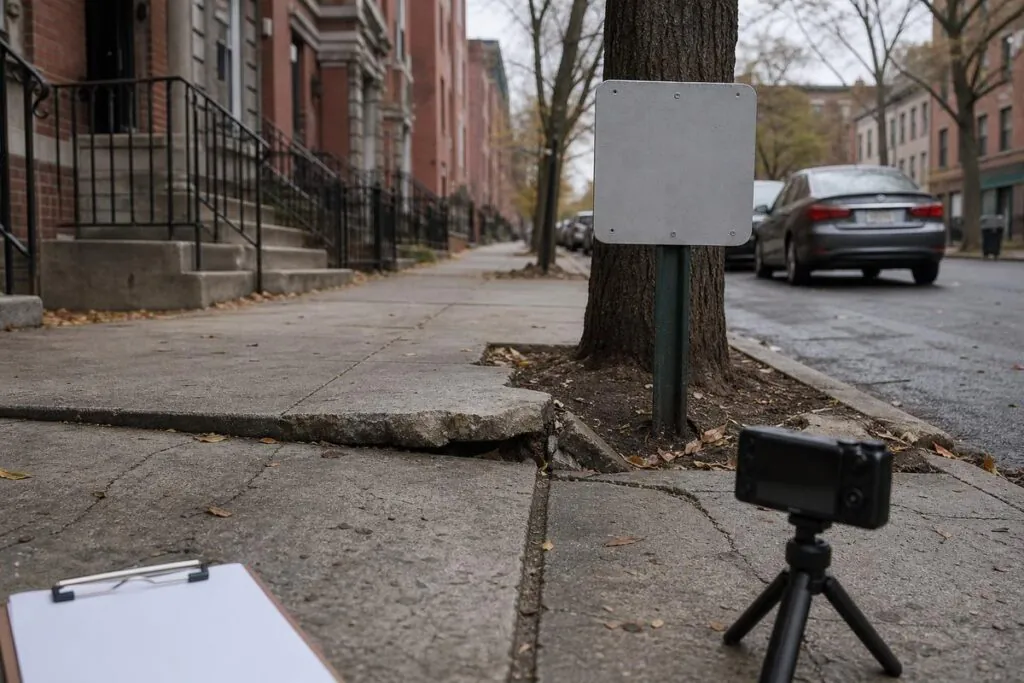
Pavement claims need pavement proof: prior written notice of the condition where the law requires it, the block’s 311 and repair history, and measurement photographs taken before a crew arrives to fix the evidence. If the street dropped you, the street should be documented the same week.
BILLY COOPER LAW
What Full Compensation Covers
A matured claim pursues considerably more than the first hospital bill:
- Medical spending past the no-fault ceiling, and the cost of care still to come
- Wages lost already, plus earning capacity the injuries permanently narrow
- Pain and suffering, once the serious-injury standard is met
- Scarring, disfigurement, and enduring losses of motion or strength
- Household assistance and the other out-of-pocket costs the crash imposed
- The bicycle, its equipment, and personal property destroyed in the impact
The proof is cumulative and documentary: surgeons’ findings, employers’ records, and a treatment history without silent gaps. A stagehand who cannot climb, a courier who cannot ride — their losses become numbers through records, not rhetoric.
Doctors, Records, and the Centre Street Courthouse
Mount Sinai West, at Tenth Avenue and 59th Street, is the west side’s own hospital and a common first stop after a serious crash; Bellevue Hospital Center across town receives many Manhattan trauma patients as well. Continuity does the legal work: attend the orthopedist, the neurologist, the therapy course, and report symptoms as they evolve, so the chart tells one unbroken story.
The administrative map is equally local. The precinct keeps the collision report; the ambulance service its run records; DOT and 311 archives describe the avenue; and the buildings along it hold the footage. Assembling those strands, before retention windows close, is the quiet machinery of a west side case.
Suits arising from Chelsea and Hell’s Kitchen crashes are ordinarily heard in Supreme Court, New York County, at 60 Centre Street. Venue follows the parties and the crash site and is confirmed individually.
How Billy Cooper Law Investigates a West Side Claim
Every file opens with the same discipline — questions, answered while answers still exist:
- At which corner, phase, and second did the rider and vehicle converge?
- What do the signal records and the greenway crossing controls show?
- Was the driver turning, parking, loading, backing, or opening a door?
- Did a work zone, plate, or blocked lane displace either party?
- What is the bicycle’s class, and can its label and hardware prove it?
- Was the rider on a job — and whose compensation carrier stands behind the work?
- Which buildings, garages, and buses filmed the block, and who holds each recording?
- Has the no-fault application gone to the right carrier inside 30 days?
- Does a 90-day municipal deadline govern any part of this claim?
The firm then runs the file: preservation letters, records demands, inspection of the bicycle and the location, and direct negotiation with insurers while the client heals. Consultations are free, injury fees are contingent, and the bilingual team serves Spanish-speaking riders and their families.
Related E-Bike and Injury Resources
- New York e-bike accident cases
- Chelsea injury claims
- Harlem
- E-bike cases in Washington Heights
- Motor vehicle accidents
BILLY COOPER LAW
NOTABLE RESULTS
Selected results in Billy Cooper Law’s broader personal injury practice:
$850,000 settlement · $1,600,000 settlement
Read more about these results
- $850,000 settlement — Automobile collision
A Bronx automobile collision caused lower-extremity reflex sympathetic dystrophy and a knee injury.
- $1,600,000 settlement — Pedestrian struck by a vehicle
A vehicle jumped a curb and struck a pedestrian in the Bronx, causing serious injuries and multiple surgeries.
These are reported gross results, before fees, expenses, and applicable liens. They are not estimates of another claim’s value. Read the firm’s published case results.
Prior results do not guarantee a similar outcome. Each case is different and must be evaluated on its own facts.
WHAT OUR CLIENTS SAY
General feedback about working with Billy Cooper Law:
“I am an attorney practicing in the personal injury field for 31 years which is about how long I have known Billy Cooper. I have recommended several clients to Billy over the years and every client has given me very positive feedback about Billy and his staff. Billy is trustworthy, hardworking, smart, fights hard and moves his clients’ personal injury cases to resolution as quickly as possible. Billy also is a very skilled trial attorney which maximizes the recovery he obtains for clients. Billy stands out in a large field of personal injury attorneys and I would recommend him without hesitation to anyone seeking a top notch personal injury attorney.”
— K. F., Google review
“Mr. Cooper came to my home to discuss my personal injury case. Without any commitment to his services on my part, he took the time to explain a great deal about my particular situation, did so with great clarity, and was presented a measured and understandable answers to all my questions. I really appreciate his time and would very much recommend his services.”
— B. H., Google review
Professional Recognition

Recognition applies to the named attorneys and selection years. See the linked profiles for details.
Related Billy Cooper Law Videos and Social Posts
- Bicycle and E-Bike Safety — Facebook.
- What to Do After an E-Bike or E-Scooter Accident — Facebook.
- Sharing the Road With E-Bikes and E-Scooters — Facebook.
Chelsea NY E-Bike Accident FAQs: Hit-and-Runs, Doors, and Defective Batteries
General New York information for Chelsea and Hell’s Kitchen riders follows. It does not decide any individual case — coverage, classification, and evidence vary — and the shortest deadlines reward the earliest review.
A driver hit me in Hell’s Kitchen and drove off. What can I do?
Report it to the police immediately and write down everything the scene offers: partial plate, make and color, direction of flight, debris, and the addresses of buildings and garages whose cameras face the street. Recovery may run through uninsured-motorist coverage attached to a household auto policy; where no policy applies, the Motor Vehicle Accident Indemnification Corporation may pay benefits to an eligible claimant.
Hit-and-run claims run on the shortest fuses in this field — prompt police reporting and timely notice to MVAIC are eligibility conditions. Treat the first days as the claim itself: every camera canvass and coverage search happens then, or effectively not at all.
Sources: Insurance Law § 5102; Supreme Court, New York County
Who pays in a dooring crash on Ninth Avenue?
Ordinarily the insurance of the vehicle whose door opened. Traffic law requires an occupant to look for approaching traffic — riders expressly included — before opening a door into a travel lane, and the occupant who opened it, together with the vehicle’s owner, can be liable for the injuries that follow. The same vehicle’s policy also supplies the rider’s no-fault benefits, since a motor vehicle caused the harm.
Dooring evidence evaporates with the parked car. Photograph the door ajar, the vehicle and its plate, and your bicycle’s position, and collect witnesses before the occupants leave; by the time a claim is filed, the account of whose door it was tends to blur conveniently.
Sources: Vehicle and Traffic Law § 1231; NYC DOT bicycling information
My employer supplied the e-bike I crashed on. Can I sue the employer?
Generally not. Workers’ compensation is the exclusive remedy against an employer for an on-the-job injury — it pays medical care and partial wage benefits regardless of fault, and in return bars a negligence suit against the employer, even where the employer’s bike, schedule, or maintenance played a role.
The lawsuits live elsewhere: against the driver who struck you, the manufacturer of a defective machine or battery, or the contractor whose street work caused the fall. Those third-party claims proceed alongside compensation benefits, with the carrier’s lien resolved within the case — and the employer’s own records often help prove them.
Sources: Workers’ Compensation Board — injured worker information; Workers’ Compensation Law § 29
Can I claim for the wrecked bicycle and my other damaged property?
Yes — through the liability claim against the party at fault. The bicycle, its accessories, and ruined gear and electronics are recoverable property losses, valued from purchase records, comparable listings, and photographs. Keeping the damaged machine serves double duty: it proves both its classification and its value.
Note the limit: no-fault benefits exclude property entirely, so the bike is compensated only if fault and coverage support the liability case. Document prices and condition promptly; months later, reconstructing what a modified courier bike was worth becomes an argument instead of a receipt.
Sources: CPLR § 1411; Supreme Court, New York County
Why does the class of my e-bike matter to the claim?
Because class is legality. A machine within Class 1, 2, or 3 — assistance to 20 mph, throttle to 20 mph, or assistance to 25 mph in a city of a million-plus — is a lawful e-bike with a rider entitled to the road. A machine beyond those limits, including one modified for speed or power, may be reclassified as a moped, importing registration, licensing, and roadway rules that change the case’s entire frame.
Insurers pull this thread early and hard. Counter it with evidence: the manufacturer’s class label photographed in place, purchase documentation, and the unmodified bicycle itself, preserved after the crash rather than repaired into ambiguity.
Sources: Vehicle and Traffic Law § 1231; NYC DOT bicycling information
I was riding on the sidewalk when the crash happened. Do I still have a case?
Possibly — a diminished one, not a dead one. E-bikes are barred from New York City sidewalks, so entering traffic from one hands the defense a real fault argument, particularly about what the driver could anticipate. Expect the sidewalk fact to feature in every negotiation.
But comparative fault apportions; it does not automatically eliminate. The driver’s own duties — at the driveway, curb cut, or intersection where the collision occurred — remain fully examinable, and the allocation turns on sight lines, speeds, and signals. Cases are weakened by sidewalk riding, and decided by everything else.
Sources: NYC DOT bicycling information; CPLR § 1411
Can a battery fire support a claim even if no car was involved?
Yes. A lithium-ion battery or charger that is defectively designed or made, and that ignites or fails in a way that injures someone, supports a product-liability claim against its manufacturer, importer, or seller — no driver required. Tenants, neighbors, and family members injured by a fire a battery started can hold claims of this kind.
Everything depends on the remains. Keep the battery, the charger, and the bicycle; keep receipts and the listing from which the battery was bought; and resist insurers, landlords, and clean-out crews who want the debris discarded. Once the device is gone, proving the defect becomes dramatically harder.
Sources: NYC DOT bicycling information; Supreme Court, New York County
The driver at fault carried no insurance. What then?
Look first to uninsured-motorist coverage — frequently available through an auto policy held by the rider or a household family member, even though the crash involved a bicycle. Where no coverage exists anywhere, the Motor Vehicle Accident Indemnification Corporation may provide benefits to eligible New York residents injured by uninsured drivers.
Both routes are deadline-sensitive, with prompt reporting and notice treated as conditions of eligibility. Search the household’s policies thoroughly and early; riders are regularly surprised to learn a parent’s or spouse’s policy was protecting them all along.
Sources: Insurance Law § 5102; Insurance Law § 5104
I was a passenger on the back of an e-bike that crashed. Can I bring a claim?
Yes. A passenger thrown or injured when a motor vehicle strikes the bike claims no-fault benefits through that vehicle’s policy for basic economic loss, and may pursue the driver for broader damages when the injuries satisfy the serious-injury standard — the same structure as the rider’s own claim.
A passenger can also, where the facts support it, claim against the person operating the bicycle: overloading, stunt riding, or a reckless swerve that contributed to the crash is the operator’s responsibility. Passengers often saw the collision most clearly, so their account should be recorded early and separately.
Sources: Insurance Law § 5102; CPLR § 1411
Do these rules protect someone riding an electric scooter rather than an e-bike?
In large measure, yes. A scooter rider struck by a motor vehicle generally claims no-fault benefits through that vehicle’s policy on the same basis as a cyclist, and pursues the driver for further damages under the same serious-injury framework. The road duties — signals, yielding, riding with traffic — are comparable, and comparative fault apportions blame the same way.
The divergence is classification. Scooter-style machines that outrun the statutory categories, or that lack the pedals the e-bike definitions assume, may be treated as mopeds or other vehicles, with different licensing and insurance consequences. Preserve the device and its specifications so its category is a fact, not a dispute.
Sources: Vehicle and Traffic Law § 1231; Insurance Law § 5102
Sources
- Vehicle and Traffic Law § 1231 — riders’ rights and duties in traffic
- Vehicle and Traffic Law § 1238 — helmets and equipment; effect on recovery
- Insurance Law § 5102 — no-fault benefits and serious injury defined
- Insurance Law § 5104 — personal-injury actions under no-fault
- CPLR § 214 — three-year limit for personal-injury actions
- CPLR § 1411 — comparative fault diminishes but does not bar
- General Municipal Law § 50-e — notice of claim within 90 days
- General Municipal Law § 50-i — actions against municipalities: the outer deadline
- NYC DOT — bicycling rules, lanes, and safety guidance
- Workers’ Compensation Board — information for injured workers
E-Bike Accident Lawyers Serving New York County
- New York County
- Manhattan
- Upper East Side
- Upper West Side
- Washington Heights
- East Harlem
- Harlem
- Inwood
- Midtown
- Chelsea
- Greenwich Village
- Lower East Side
- Financial District

Get the Answers You Need
At Billy Cooper Law, every day we renew our pledge to help injured people get the justice and compensation they deserve. We have a reputation throughout New York and nationally for standing up for our clients, and we take that responsibility seriously by approaching every case with preparation, persistence, and an unwavering commitment to results.