
East Harlem NY E-Bike Accident Lawyer
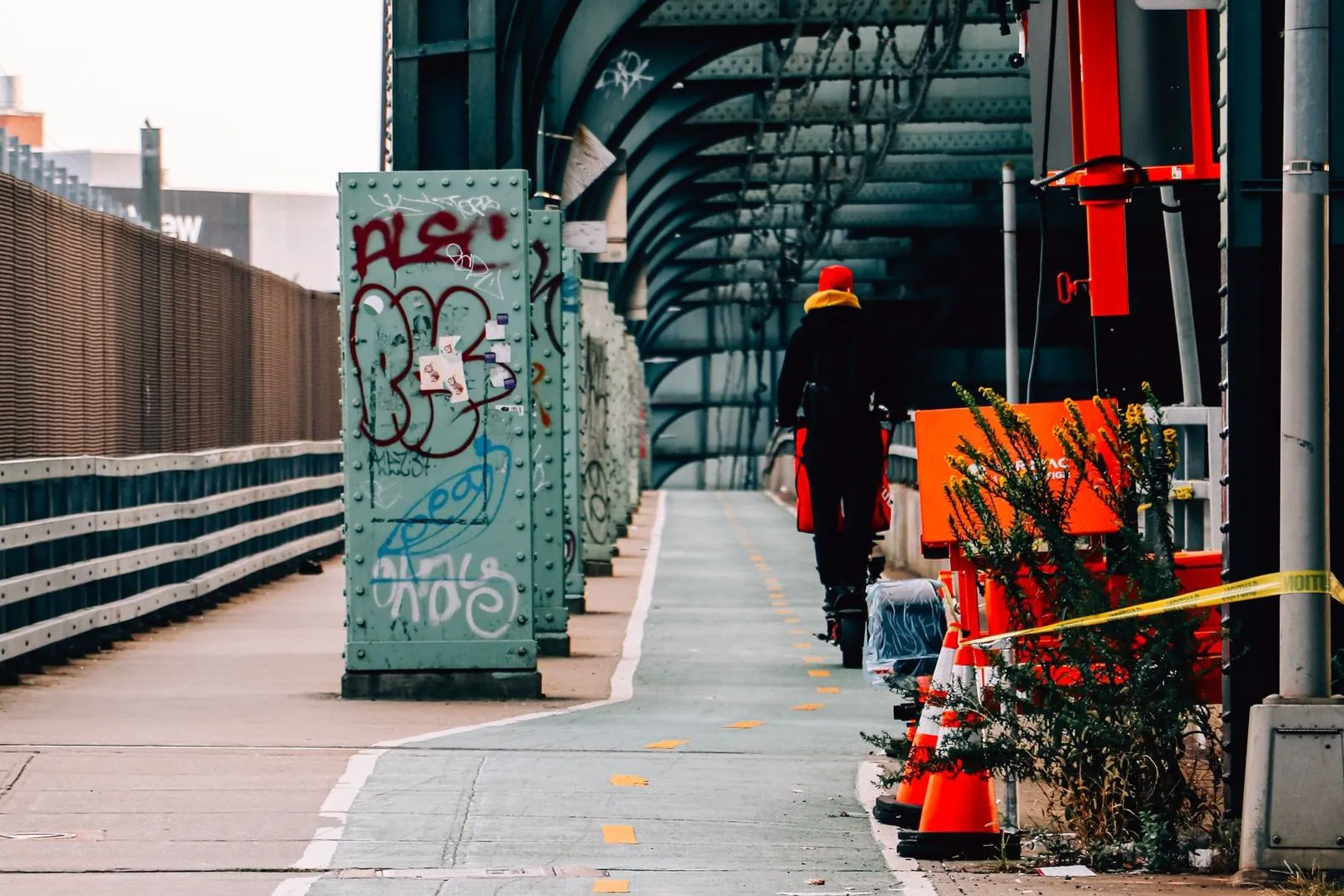
East Harlem moves on two wheels out of necessity as much as choice. From the housing campuses along First Avenue to the bodegas and botánicas of Third Avenue, residents ride to the 6 train, to jobs on the Upper East Side, and across the Harlem River bridges into the Bronx — and a growing share of that riding happens on e-bikes, at e-bike speeds, in traffic built for neither. A collision on Second Avenue or 125th Street can leave a rider with surgical injuries, a stack of bills, and an insurance company questioning everything from the bicycle’s class to the rider’s right to be in the street. Billy Cooper Law represents injured East Harlem riders. For a free consultation, call (914) 730-5789.
El Barrio also rides for work. Couriers based here serve half of Manhattan, and their crashes happen mid-route, under time pressure, on machines their employers sometimes supplied. Whether you were commuting, delivering, or riding home from a shift, the opening steps are identical: get treated, keep the bike untouched, and capture the records — app data, camera locations, the report number — before they scatter.
What Makes an East Harlem E-Bike Collision Its Own Kind of Case
Start with the avenues. First, Second, and Third Avenues run as wide, fast one-way rivers of traffic, broken by the cross-town surge of 125th Street and the bridge feeds at their northern ends. Riders share those avenues with M15 and crosstown buses, Access-A-Ride vans, double-parked delivery trucks, and drivers racing the light cycles toward the Harlem River crossings. Few Manhattan neighborhoods compress so many conflict points into so few blocks.
Then consider who is riding and why. East Harlem’s e-bike traffic mixes residents on personal machines, Citi Bike riders docking around the neighborhood, and one of the city’s densest courier populations. The crashes reflect that mix: right hooks at avenue corners, doors opening along Third Avenue’s commercial blocks, and bridge-approach collisions where Bronx-bound and Manhattan-bound streams braid together.
Legally, a case here can touch the no-fault system, the serious-injury threshold, workers’ compensation for a working rider, and City deadlines when a bus or a broken street surface is involved. Handling those threads together — and early — is the difference between a claim that develops and one that dissolves.
The Collision Picture in East Harlem, 2023–2025
According to NYPD collision data reported through NYC Open Data for 2023-2025, East Harlem recorded 102 e-bike-involved collisions, 65 cyclists injured, and 3,697 total collisions of every kind within the neighborhood’s ZIP codes (10029 and 10035).
Sixty-five injured cyclists in three years is a heavy toll for a neighborhood this compact, and it hints at the riding volume the avenues carry. Statistics cannot say who caused your crash — only the scene evidence can — but they explain why East Harlem claims are fought hard: frequent collisions mean practiced insurers, and practiced insurers concede nothing that the file does not force them to concede.

Where East Harlem Riders Are Struck Most Often
The neighborhood’s injury map follows its traffic engineering. These are the settings that recur in East Harlem claims.
The Great Avenues: First, Second, and Third
Long blocks, timed lights, and turning traffic define the risk. A driver swinging left across Second Avenue, or right-hooking a rider to reach a side street, has often been watching for cars and simply never registered the bicycle closing at twenty miles per hour. Bus stops add their own pattern, with riders passing stopped buses into the paths of pulling-out traffic.
125th Street, Corner to Corner
The crosstown corridor stacks buses, shoppers, double-parked vehicles, and the 2/3 and 4/5/6 station flows into a single contested roadway. Riders crossing or traveling 125th meet doors, jaywalking-driven swerves, and vehicles darting for parking — low-speed surroundings, but unforgiving ones for a person on two wheels.
Bridge Approaches and the Harlem River Crossings
The Third Avenue, Willis Avenue, Madison Avenue, and RFK bridge feeds funnel Bronx and Manhattan traffic through a handful of ramps and merges. Riders commuting between the boroughs meet their fastest, least patient traffic here, and crashes on the approaches tend to be the neighborhood’s most violent.
Park Avenue’s Viaduct Shadow and the Side Streets
Along Park Avenue the Metro-North viaduct narrows the light and the roadway at once, while the east-west side streets — 96th through 116th — produce the classic pattern of drivers edging out from stop signs, sight lines cut by parked cars, meeting riders they noticed a second too late.
E-Bike Claims This Office Handles for East Harlem
The core of the practice is the rider-versus-vehicle collision: the avenue turn, the bridge merge, the door on Third Avenue. Around that core sit the neighborhood’s variations — riders hit by vehicles backing from driveways and loading bays, passengers thrown from a companion’s bike, pedestrians struck by riders where the claim runs the other direction, and wrongful-death actions for families when the worst happens on the Harlem River Drive service roads or the avenues.
Occupation shapes many East Harlem files. A courier injured delivering into the Upper East Side may hold a compensation claim through the work and a liability claim against the driver simultaneously. A rider on a Citi Bike has a claim colored by the system’s own records and equipment maintenance. A rider whose throttle, fork, or battery failed mid-ride may be looking at the company that made or sold the machine instead of — or alongside — a driver.
Standing Scooters and Seated Scooters, Handled the Same Serious Way
Electric scooters thread East Harlem’s avenues alongside the e-bikes, and Revel-style seated scooters and personal standing scooters alike end up in collisions with turning cars and broken pavement. We take those cases too. A scooter rider struck by a motor vehicle generally reaches no-fault benefits through that vehicle’s policy just as a cyclist does; where the device itself or a rental fleet’s maintenance caused the harm, the claim follows the machine. Bring us the device class and the facts, and we will map which rules govern.
After the Ambulance: A Rider’s Checklist for East Harlem
Metropolitan Hospital on Second Avenue receives many of the neighborhood’s crash victims, and Mount Sinai sits just south of the 96th Street line. Go where the ambulance goes, or get evaluated the same day regardless; then keep every follow-up, because the treatment chart becomes the spine of the case. Describe the impact honestly and completely — a knee that “felt okay” at the scene and swells by morning belongs in the record from the first visit that mentions it.
- Insist on a police response. The report ties the driver, the vehicle, and the insurance carrier together in one document.
- Photograph in a circle. The vehicles, your bike, each corner of the intersection, the signal heads, and the lane paint.
- Collect the driver’s details. Plate, license, insurance card, and any employer or fleet identification on the vehicle.
- Write down witnesses before they board a bus. Names and mobile numbers outlast good intentions.
- Quarantine the bicycle. No repairs and no replacement parts; its label, brakes, lights, and battery are evidence.
- Freeze the work record. Couriers should screenshot assignments, route maps, and earnings before platform access shifts.
- File everything together. Bills, discharge summaries, prescriptions, and insurer mail in a single place.
- Postpone the recorded statement. An adjuster’s early interview about speed and signals is a trap for the injured and the honest alike.
Missed some steps because you were being treated? That is normal, and much can still be recovered — camera footage, vehicle data, and records requests — provided the effort starts while recovery is still possible.
Evidence Priorities in the First Two Weeks
East Harlem is camera-rich and retention-poor. NYCHA developments, avenue storefronts, MTA buses, and traffic cameras all record the neighborhood, and nearly all of them overwrite quickly. Naming the custodians and demanding preservation in the first days is the single highest-value act in most of these cases.
A complete file typically assembles:
- The bicycle, exactly as it came to rest, battery and class label included
- Helmet, clothing, and any gear damaged in the impact
- Collision report, EMS records, and hospital documentation
- Preservation responses from building, store, and bus camera holders
- Platform trip data and pay records for riders who were working
- DOT and 311 histories documenting the street’s condition and prior complaints
- Imaging, specialist notes, and therapy records tracing the injuries
- Employment records proving wages lost and shifts missed
Files built this way settle cases; files built from memory alone invite the insurer to write its own version of the crash.
Three Years, Two Years, Ninety Days: The Clocks That Govern Your Claim
Three numbers organize every East Harlem claim. The ordinary negligence deadline is three years from the crash, under CPLR § 214. A fatal crash compresses the family’s deadline to two years from the death, under EPTL § 5-4.1. And any piece of the case aimed at the City — an MTA bus, a sanitation truck, a cratered avenue — runs on the municipal schedule: a notice of claim within 90 days under General Municipal Law § 50-e, with suit to follow within one year and 90 days under General Municipal Law § 50-i.
Layered over those are the insurance clocks, which tick fastest of all. The no-fault application belongs at the striking vehicle’s insurer within roughly 30 days. Compensation claims have their own notice duties to the employer. A rider who calendars only the three-year date will miss the deadlines that actually decide the case.
The Traffic Rules That Frame an East Harlem Claim
State law divides e-bikes by capability. Class 1 machines assist pedaling up to 20 mph; Class 2 machines add throttle power to the same ceiling; Class 3 machines assist to 25 mph and belong only in cities of at least a million residents — New York City qualifies everywhere, East Harlem included. Step outside the classes with a faster or more powerful machine and the law may call it a moped, changing the rules about where it can be ridden and what its operator needs.
Vehicle and Traffic Law § 1231 gives riders the rights of drivers and saddles them with the duties: ride with traffic, obey the signals, yield where the law demands. Vehicle and Traffic Law § 1238 covers helmets and equipment — required for Class 3 operation — and adds a protection riders should know: violating its helmet provisions does not by itself destroy a claim or cut the damages. Sidewalk riding, by contrast, is prohibited for e-bikes in the city and hands the defense an argument it would not otherwise have.
One more rule echoes through East Harlem’s walk-ups: the battery. Fires traced to defective lithium-ion cells or chargers turn a traffic file into a product case against the maker or seller. Preserve the battery and charger, however damaged, and the receipts that came with them.
No-Fault in Practice: Who Pays First When a Car Hits a Rider
New York assigns a struck rider’s first bills to the car. When a motor vehicle injures an e-bike rider, that vehicle’s policy provides first-party no-fault benefits for basic economic loss — necessary medical treatment and a share of lost earnings, up to the $50,000 statutory ceiling — and it does so without regard to fault. The statute behind the system is Insurance Law § 5102; the claim for everything beyond basic loss sits in Insurance Law § 5104.
Two limits define the strategy. No-fault never compensates pain, suffering, or a ruined season of work beyond its wage formula; those require the liability claim and a serious injury. And no-fault’s front door — the application — has a short fuse of about 30 days. Riders who were working may draw compensation benefits in parallel, and coordinating the two systems so neither undermines the other is part of the early legal work.
BILLY COOPER LAW
If the Insurer Says the Crash Was Partly Your Fault
It usually does. The script is familiar: the rider came out of nowhere, ran the light, rode dark. New York law answers with pure comparative fault under CPLR § 1411 — an injured rider’s award is trimmed by the rider’s share of responsibility, and nothing more. Shared fault shrinks a claim; it does not erase it.
And shares are proven, not pronounced. On avenues with timed lights, signal records exist. On blocks with cameras, footage exists. The insurer’s first allocation is a negotiating position built on an incomplete file, and complete files move it.
The Full Cast of Possible Defendants
An East Harlem investigation looks past the driver to everyone whose choices built the crash:
- The motorist — for the turn, the drift, the door, the failure to yield
- The vehicle’s owner, answerable for a permissive operator’s negligence
- An employer whose driver was mid-shift, from car services to delivery fleets
- A platform, restaurant, or fleet operator whose schedules or equipment set the crash in motion
- The City or its contractors, for roadway defects, steel plates, and work zones
- A manufacturer or retailer whose bicycle, battery, or component failed
Every name on that list potentially carries its own policy. In a serious-injury case, the number of policies in reach can matter as much as the facts themselves.
What Recovery Looks Like Beyond the First Bills
A developed claim reaches well past the emergency room:
- Treatment costs beyond the no-fault ceiling, including future procedures and therapy
- Wages already lost, and future earning power the injuries diminish
- Pain and suffering, available once the serious-injury threshold is established
- Disfigurement, scarring, and lasting losses of strength or motion
- Help at home and other crash-driven expenses paid out of pocket
- The destroyed bicycle, phone, and personal gear
Valuation is documentation wearing a suit. The courier who can no longer ride a route, the home-health aide who cannot lift a patient — their losses are proven through employers, doctors, and records, assembled deliberately rather than asserted.
Suits Against the City and Its Agencies
Public defendants thread through East Harlem life: MTA buses on every avenue, sanitation and NYPD vehicles, NYCHA-adjacent roadways, and City-maintained pavement whose defects drop riders without warning. Each public defendant imports the municipal deadline structure — the 90-day notice under General Municipal Law § 50-e is the gate, and it closes fast.
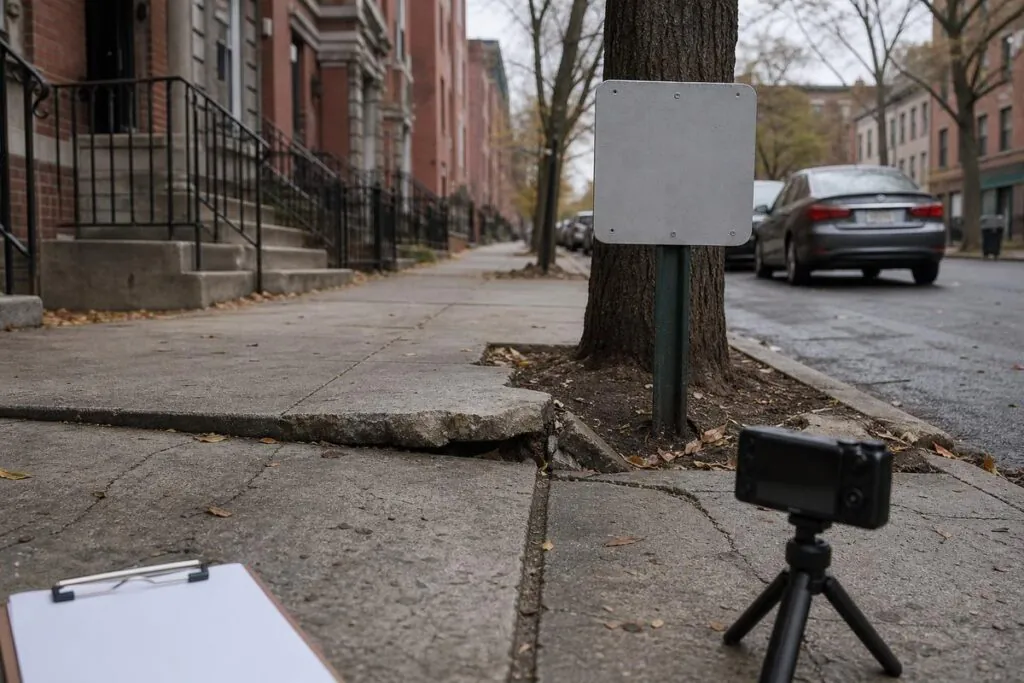
Defect cases also demand defect proof: prior written notice of the condition where the law requires it, 311 and repair histories, and photographs with scale taken before a crew repaves the evidence. If the street itself hurt you, treat the street as a witness that is about to leave town.
Care, Paperwork, and the Downtown Courthouse
Metropolitan Hospital, at Second Avenue and 97th Street, anchors emergency care for the neighborhood, with Mount Sinai’s campus immediately south and Harlem Hospital serving the western edge. The practical advice never changes: complete the treatment plan, surface new symptoms at follow-up visits, and keep the paper. Gaps in care become gaps in the case.
The paper trail extends beyond medicine. The precinct holds the collision report; the responding ambulance service holds its run records; DOT and 311 archives describe the avenue. Pulling each strand together, while the camera footage still exists somewhere, is the administrative heart of the investigation.
East Harlem lawsuits are ordinarily filed in Supreme Court, New York County, at 60 Centre Street in Manhattan — the courthouse downtown where the county’s civil cases are heard. Final venue rests on the parties and the crash location, confirmed in each case.
How Billy Cooper Law Works an East Harlem File
The file opens with questions, each assigned an owner and a deadline:
- Which camera systems saw the block, and how long before each overwrites?
- What do the signal-timing records say about who held the light?
- Was the driver turning, loading, parking, or opening a door?
- Did a bus, a plate, or a work zone displace the rider’s line?
- What class is the machine, and does its label confirm it?
- Was the rider working — and if so, whose compensation carrier is involved?
- Which insurer must receive the no-fault application this week?
- Does any defendant answer to the 90-day municipal clock?
The firm then executes: preservation letters, records demands, scene and bicycle inspection, and direct handling of the insurers, while the client focuses on treatment. Fees for injury work are contingent, consultations are free, and Spanish-speaking clients work with bilingual staff from the first call.
Related E-Bike and Injury Resources
- New York e-bike accident cases
- East Harlem injury claims
- Harlem
- E-bike cases in Washington Heights
- Motor vehicle accidents
BILLY COOPER LAW
NOTABLE RESULTS
Selected results in Billy Cooper Law’s broader personal injury practice:
$850,000 settlement · $1,600,000 settlement
Read more about these results
- $850,000 settlement — Automobile collision
A Bronx automobile collision caused lower-extremity reflex sympathetic dystrophy and a knee injury.
- $1,600,000 settlement — Pedestrian struck by a vehicle
A vehicle jumped a curb and struck a pedestrian in the Bronx, causing serious injuries and multiple surgeries.
These are reported gross results, before fees, expenses, and applicable liens. They are not estimates of another claim’s value. Read the firm’s published case results.
Prior results do not guarantee a similar outcome. Each case is different and must be evaluated on its own facts.
WHAT OUR CLIENTS SAY
General feedback about working with Billy Cooper Law:
“Bill Cooper is a wonderful, respectful and hard working lawyer. He went above and beyond diligently compiling, reviewing and promoting my wife’s suite. He focused on all aspects of her case, ensured that all possibilities were clearly understood and brought her case to a very successful resolution. In fact, the resolution was beyond our expectations. I would highly recommend, him without any reservation. GF”
— G. F., Google review
“I had a great experience with Marvin A Cooper attorney at law. From the beginning, the staff was courteous, professional, and very responsive. My attorney Billy Cooper took the time to explain every step of the process and made sure I understood my options. What stood out most was how they genuinely cared about my situation—they weren’t just handling a case, they were helping me through a difficult time.They were always available to answer my questions and kept me updated regularly. Thanks to their hard work and attention to detail, my case was resolved better than I had hoped. I wouldn’t hesitate to recommend Marvin A Cooper to friends or family who need legal help.”
— B. M., Google review
Professional Recognition

Recognition applies to the named attorneys and selection years. See the linked profiles for details.
Related Billy Cooper Law Videos and Social Posts
- Bicycle and E-Bike Safety — Facebook.
- What to Do After an E-Bike or E-Scooter Accident — Facebook.
- Sharing the Road With E-Bikes and E-Scooters — Facebook.
East Harlem NY E-Bike Accident FAQs: Deadlines, Fault, and Getting Paid
General information about New York claims follows, written for East Harlem riders. It is not legal advice for a particular collision; coverage and evidence are case-specific, and deadlines reward early review.
What is the deadline to sue a driver over an e-bike crash in East Harlem?
Three years from the date of the collision, in the ordinary case. That is the period the CPLR allows for personal-injury actions, and an East Harlem rider’s suit against a private driver is measured from the crash itself, not from the end of treatment or the resolution of the insurance claim.
Shorter clocks hide inside the case. A claim against the City generally needs a notice within 90 days; a wrongful-death claim runs two years; the no-fault application is due in about 30 days. A rider who plans around the three-year date alone will likely discover that the deadlines which mattered were the early ones.
Sources: CPLR § 214; General Municipal Law § 50-e
How soon must a notice of claim reach the City after a crash involving a bus or a street defect?
Generally within 90 days of the incident. The notice is a formal document identifying the claimant, the time and place, and the nature of the claim, and it is a precondition to suing the City or its agencies — an MTA bus collision or a fall caused by broken pavement both fall in this territory.
After the notice, the clock continues: suit must be filed within one year and 90 days. Courts can sometimes excuse a late notice, but only on a showing that includes a reasonable excuse and the City’s actual knowledge of the facts — a gamble no rider should plan to need.
Sources: General Municipal Law § 50-e; General Municipal Law § 50-i
Can an East Harlem rider recover anything if the crash was partly the rider’s fault?
Yes — New York reduces rather than bars. Under the state’s pure comparative fault rule, the rider’s compensation is cut by the rider’s percentage of responsibility. A rider found a quarter responsible recovers three quarters of the damages from the other side; the claim does not fail for being shared.
That structure makes the percentage itself worth fighting over. Adjusters open with allocations built on their driver’s account. Signal records, bus and building video, and the physical evidence from the avenue frequently support a very different split, which is why fault should be investigated rather than conceded in an early phone call.
Sources: CPLR § 1411; Insurance Law § 5104
The driver who hit me left the scene. What options exist?
Act immediately: call the police from the scene if you can, and preserve every fragment — a partial plate, the vehicle’s color and body style, the direction it fled, debris it left behind, and the locations of cameras on the block. Hit-and-run riders may claim through uninsured-motorist coverage on a household auto policy; where no policy exists anywhere in the picture, the Motor Vehicle Accident Indemnification Corporation may provide benefits to an eligible claimant.
These routes are deadline-driven in a way ordinary claims are not. Prompt police reporting and timely notice to MVAIC are conditions of eligibility, measured in days and weeks rather than years. A fleeing driver is a reason to call a lawyer faster, not a reason to give up.
Sources: Insurance Law § 5102; Supreme Court, New York County
Who is responsible in a dooring crash on Third Avenue?
Usually the person who opened the door — and the claim is typically paid by that vehicle’s insurance. Traffic law obliges an occupant to check for traffic, bicycles included, before opening a door into a lane of travel. The vehicle’s owner can share responsibility, and a passenger who swung the door is not excused because someone else was driving.
Because a motor vehicle caused the injury, the rider’s no-fault benefits also come through that vehicle’s policy. Evidence at the scene is unusually perishable in dooring cases: photograph the open door, the vehicle, and its plate, and identify witnesses before the occupants drive away or the account changes.
Sources: Vehicle and Traffic Law § 1231; NYC DOT bicycling information
Can I sue my own employer after a crash that happened on the job?
Almost never directly — and that is by design. Workers’ compensation is the exclusive remedy against an employer for a workplace injury: it pays medical care and partial wage benefits without fault, and in exchange the employee generally cannot sue the employer for negligence. The protection runs even where the employer’s own scheduling or equipment contributed to the crash.
The lawsuit instead targets third parties: the driver who struck you, the maker of a defective bicycle or battery, the contractor that made the street dangerous. Those claims proceed alongside compensation, with the compensation carrier’s lien handled inside the case. Riders employed by restaurants or fleets should also preserve the employment records that prove the work relationship.
Sources: Workers’ Compensation Board — injured worker information; Workers’ Compensation Law § 29
Will riding without a helmet weaken my East Harlem claim?
Less than insurers suggest. Helmet obligations under state law depend on the bicycle’s class, and the statute itself states that failing to follow its helmet provisions does not, on its own, bar a personal-injury claim or reduce the amount recoverable. The case does not rise or fall on the helmet.
What the defense can attempt is narrower: arguing that a helmet would have prevented a specific head injury. That argument is met with the medical record and, where needed, expert testimony. Wear the helmet regardless — its legal effect is limited, but its physical effect is not.
Sources: Vehicle and Traffic Law § 1238; Supreme Court, New York County
Does it matter legally whether my bike is Class 1, Class 2, or Class 3?
It can matter a great deal. The class determines the machine’s legal ceiling — pedal assistance to 20 mph, throttle assistance to 20 mph, or assistance to 25 mph for Class 3, which is lawful only in a city of a million-plus residents. A device beyond those envelopes may be reclassified as a moped, dragging in registration, licensing, and roadway rules that change the claim’s posture.
Insurers investigate classification early, including aftermarket modifications that raise speed or power. Photograph the manufacturer’s label, keep the purchase paperwork, and do not modify or repair the bicycle after a crash; the label and the hardware are how classification gets proven instead of debated.
Sources: Vehicle and Traffic Law § 1231; NYC DOT bicycling information
Why should I make sure a police report gets filed?
Because the report is the claim’s foundation document. It records the drivers, vehicles, insurers, location, and time; insurers use it to open the file; and the no-fault application — due in roughly 30 days — needs the striking vehicle’s carrier identified, which the report usually accomplishes. Crashes without reports force every later step to be reconstructed.
File it, then verify it. Officers reconstruct scenes they did not witness, and errors about direction, signals, or vehicle identity are common and correctable if caught early. Photographs, video, and witness statements gathered in the first days are the tools that fix the record.
Sources: Vehicle and Traffic Law § 1231; Supreme Court, New York County
How do claims work when the crash happened on a Citi Bike?
The claim against the driver works the same way: no-fault benefits through the striking vehicle’s policy, and a liability claim for further damages if the injuries qualify as serious. What changes is the evidence and one extra potential defendant. The bike-share system logs the trip — dock, time, and bicycle — and if a maintenance failure on the shared bike contributed, the operator may bear responsibility of its own.
Preserve the trip details immediately: the app’s trip history, the bike number if visible, and the dock location. System data and inspection records are obtainable, but requests move faster with exact trip identifiers in hand, and the bicycle itself returns to circulation within hours.
Sources: NYC DOT bicycling information; Insurance Law § 5102
Sources
- Vehicle and Traffic Law § 1231 — the rights and duties riders share with drivers
- Vehicle and Traffic Law § 1238 — helmet rules and equipment standards
- Insurance Law § 5102 — basic economic loss and the serious-injury definition
- Insurance Law § 5104 — causes of action within the no-fault system
- CPLR § 214 — three years to bring a personal-injury suit
- CPLR § 1411 — comparative fault apportions rather than bars recovery
- General Municipal Law § 50-e — the 90-day notice of claim
- General Municipal Law § 50-i — one year and 90 days to sue a municipality
- NYC DOT — city bicycling rules and rider information
- Workers’ Compensation Board — resources for injured workers
E-Bike Accident Lawyers Serving New York County
- New York County
- Manhattan
- Upper East Side
- Upper West Side
- Washington Heights
- East Harlem
- Harlem
- Inwood
- Midtown
- Chelsea
- Greenwich Village
- Lower East Side
- Financial District

Get the Answers You Need
At Billy Cooper Law, every day we renew our pledge to help injured people get the justice and compensation they deserve. We have a reputation throughout New York and nationally for standing up for our clients, and we take that responsibility seriously by approaching every case with preparation, persistence, and an unwavering commitment to results.