
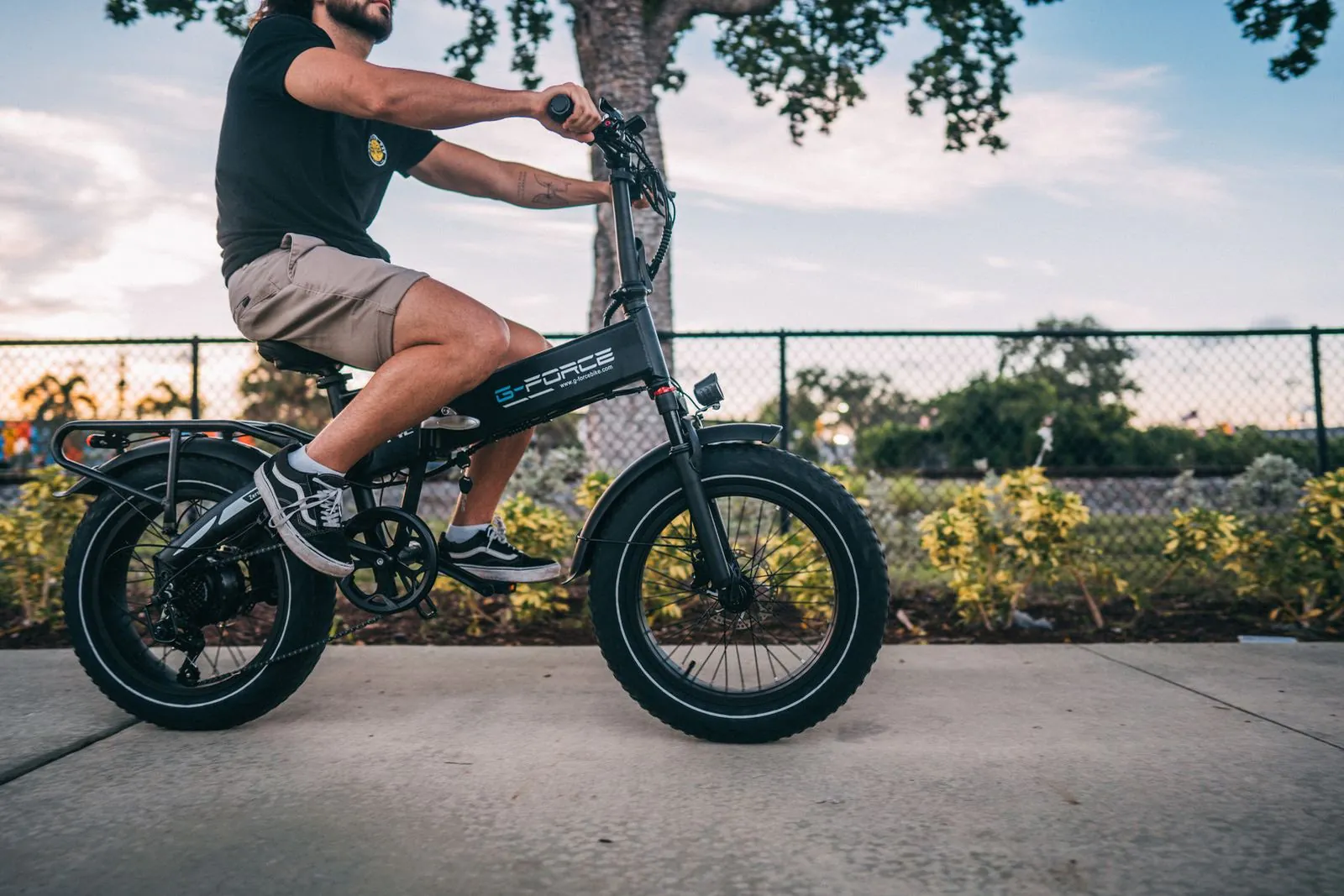
Midtown NY E-Bike Accident Lawyer
Midtown runs on deadlines, and an e-bike crash here tends to happen at the intersection of two of them: a courier racing a delivery estimate and a driver racing a light. The result is a rider down on the avenue with a crowd stepping around, a doorman already on the phone, and traffic resuming before anyone has written down a plate number. In the days after, the confusion compounds — hospital bills, an app asking when you can log back in, an adjuster asking for a recorded statement.
Billy Cooper Law represents riders injured across Manhattan, and Midtown is some of our most familiar ground. If you were knocked down here, call (914) 730-5789 for a free consultation before the footage cycles away and the claim hardens into the insurer’s version of the morning. You can also contact the firm online if a call is not possible yet.
An E-Bike Crash in Midtown Is Not an Ordinary Bicycle Accident
Start with the mix. Midtown packs office towers, hotels, theaters, two great rail terminals, and the densest restaurant grid in the country into a band of Manhattan where every curb is contested. Delivery riders on e-bikes are the circulatory system of that economy, threading between crosstown buses, taxis hunting fares, trucks double-parked at loading docks, and pedestrians who step into bike lanes while looking the wrong way down a one-way street.
Then consider the machine in that setting. An e-bike holds twenty miles per hour effortlessly, avenue after avenue, which means a Midtown rider spends far more time at traffic speed — and far less time being treated as slow — than a conventional cyclist. Drivers glance, categorize the shape as ‘bicycle,’ and pull across a gap that the rider’s actual speed has already closed. Misjudged closing speed is the quiet engine behind a striking share of these collisions.
The injuries follow the physics: riders thrown over handlebars at avenue speed, sideswipes that pin a leg between frame and fender, doors opened into protected lanes at the exact height of a handlebar.
What the Collision Records Show About Midtown
Figures drawn from NYPD collision data reported through NYC Open Data for 2023-2025 put the scale in print. Across the Midtown ZIP codes 10016, 10017, 10019, 10022, and 10036, the period studied logged 6,782 total collisions. Of those, 185 involved an e-bike, and 87 cyclists were injured.
No neighborhood in this series combines that volume of crashes with that density of riders. The numbers do not assign blame in any single case — no spreadsheet can — but they do explain why Midtown claims so often turn on the same evidence: the avenue cameras, the delivery app’s own telemetry, and a police report written on a very busy corner. What follows is the working guide to using all three.

The Midtown Corners and Corridors That Hurt Riders
The Avenue Bike Lanes
Protected lanes on the avenues work until they don’t: a truck nose intrudes at a loading zone, a taxi veers in for a pickup, a turning driver fixates on pedestrians and crosses the lane without a second look. The left-turn conflicts at the big crosstown streets — 34th, 42nd, 57th — are where lane protection ends and exposure peaks.
Penn Station, Grand Central, and the Terminal Crush
Around the terminals the curb becomes a scrum of buses, for-hire cars, hotel shuttles, and travelers dragging suitcases across the lane to reach a taxi. Riders get doored by passengers exiting on the street side and cut off by vehicles lunging for a gap in the queue. Rush hour compresses every bad habit into the same fifteen minutes.
Times Square, the Theater District, and the Hotel Rows
West of Sixth Avenue the obstacle course turns theatrical: pedicabs, tour groups spilling off sidewalks, marquee traffic crawling at walking pace, then suddenly surging. Both environments punish any rider — and deserve a driver — who stops scanning.
Rider Cases This Firm Handles in Midtown
Couriers dominate the Midtown files, as you would expect: food and parcel riders struck mid-shift, messenger work between office towers, grocery runs out of the west-side kitchens. But the docket also holds commuters riding to the terminals, hotel and restaurant staff cycling home after late shifts, and residents on folding e-bikes and Citi Bikes doing ordinary errands in an unforgiving traffic system.
Patterns repeat across those files. Left-cross and right-hook turns at avenue corners. Doors in the lane. Rear-end taps that become arguments about who stopped suddenly. Single-bike losses on spilled construction material, unmarked plates, and the drainage grates that run parallel to travel. Each pattern has its own evidence signature, and the earlier we see the file, the more of that signature survives.
Scooter Crashes Belong in This Conversation
Midtown’s sidewalks and lanes are full of standing scooters and seated mopeds, and their crash mechanics deserve mention. A scooter’s deck places the rider upright with weight high; a sudden stop or a plate edge converts that stance into a face-first fall. Rental units add maintenance defendants to the usual list — a bald tire or dead brake on a shared machine is a claim against whoever put it on the street. Treat a scooter wreck the way this page treats a bicycle wreck: document first, repair never, and report on the deadlines the next sections lay out.
After the Crash: A Midtown Sequence That Works
On an avenue with traffic stacking up behind you, the first task is simply to be seen and safe: move to the curb if you can, call 911, and let paramedics evaluate you even if the embarrassment of the scene makes you want to wave them off. Concussions and internal injuries hide behind adrenaline, and the evaluation also fixes the time and place of injury in an official record before any dispute begins.
Exchange information with the driver, and gather more than the minimum: plate, insurer, employer if the vehicle works for one, names of the doorman, vendor, or fellow rider who stopped. Photograph the lane, the light, the vehicle’s position, the bike, and your injuries. Back home, write the account once, fully, while it is fresh — then let a lawyer handle communications with insurers.
Evidence on the Avenues, and How Fast It Vanishes
Midtown is wired for sight. Traffic cameras, building security systems, hotel driveway feeds, storefront video, bus cameras — a single corner can sit inside five lenses. Nearly all of them overwrite. The practical rule: every day between the crash and a preservation request measurably shrinks the case.
The second archive rides with you. Delivery and courier apps record route, pace, and timing to the second; bike computers and phones do much the same. Preserve the e-bike unrepaired, the helmet uncracked-or-cracked exactly as it landed, the bag, the gloves, the jacket. In a case where the other side will claim you darted from behind a truck, the physical record is not supporting evidence — it is the argument.
Partly at Fault on an Avenue? The Claim Survives
Perhaps you were filtering between lanes when the light changed, or riding without a working light at dusk, or carrying one bag too many to brake cleanly. Midtown insurers build files around admissions like these, but New York’s rule — pure comparative fault under CPLR 1411 — apportions responsibility instead of awarding the whole case to whoever made the last mistake. Your share reduces the money; it does not confiscate the claim.
Percentages, though, are negotiated or litigated, and they move with proof. Camera footage that shows the driver’s turn signal never came on, or the app trace showing your speed was lawful, rebalances the split in ways no affidavit can.
No-Fault and the Other Insurance in a Midtown Case
A person on an e-bike struck by a motor vehicle in New York steps into the no-fault system through the striking vehicle’s policy, much as a pedestrian does. That coverage pays medical costs and part of lost earnings promptly and without a fault trial, up to the statute’s $50,000 benchmark for basic economic loss per person. The application is time-sensitive and must name the right carrier, which for a working rider can take real untangling — taxi fleets, delivery vans, and personal cars all insure differently.
Know the boundary, too: no-fault is first aid for finances, not compensation. It will not value a ruined knee, a scarred face, or months of night shifts handed to someone else. Those losses live in the liability claim against the at-fault parties, gated by the serious-injury rules discussed next, and pursued in parallel rather than after the benefits run dry. A file opened correctly runs both tracks from the same calendar.
BILLY COOPER LAW
Deadlines and the Serious-Injury Gate
The headline period is three years to sue a negligent driver, courtesy of CPLR 214. It is real, and it is also the least urgent deadline in most files. Where a municipal actor contributed — a city vehicle, a transit bus, a defect in a city street — General Municipal Law 50-e demands a notice of claim within ninety days, and General Municipal Law 50-i then allows one year and ninety days to sue. No-fault applications and hit-and-run notices run faster still.
Serious injury is the second gate, and it is definitional rather than impressionistic. Insurance Law 5102 catalogues the qualifying categories; Insurance Law 5104 restricts pain-and-suffering recovery against motorists to riders who fit one. Fractures fit. So can a medically documented loss of function or a disability that consumes ninety of the first one hundred eighty days. The treatment record, written by your doctors, is what the gate reads — one more argument for prompt, consistent care.
The Rules of the Road an Insurer Will Quote Back at You
Classes, Again — Because Adjusters Raise Them
The class printed on your frame — 1, 2, or 3 — sets the legal top speed of the motor’s help: twenty miles per hour for the first two, twenty-five for class 3, the only class New York City admits at that speed. A stock, labeled bike in any class counts as a bicycle. A machine derestricted to motorcycle speeds can forfeit that treatment, and with it, some of the assumptions the rest of this page makes.
Duties That Travel With the Rights
Vehicle and Traffic Law 1231 gives a rider a driver’s rights in traffic and a driver’s obligations: signals obeyed, direction of travel respected, turns signaled, no sidewalk riding in the city. The DOT republishes the operating rules for riders at its bicycling hub. In litigation each duty becomes a measuring stick for comparative fault, which is why the statute shows up in depositions.
Helmets and the Battery in the Hallway
Vehicle and Traffic Law 1238 imposes helmet duties on defined groups, including class 3 riders and working cyclists, and sets equipment standards besides. The battery question rides along: Midtown’s couriers charge packs in hallways and restaurants all over the district, and a pack damaged in a wreck should be treated as a hazard and as evidence — retired from service, stored safely, and never discarded before the claim is assessed.
Who Can Be Held Responsible in Midtown
The driver is the start of the list: the cab that lunged, the SUV that turned, the van that drifted into the lane while its driver consulted a manifest. Owners share exposure for vehicles they permit others to drive. Employers join the case when the vehicle was working — a delivery van, a service truck, a car making a pickup for a hotel — because the enterprise that profited from the trip answers for how it was driven.
Beyond the roadway: a passenger whose door did the damage; a contractor whose barriers stole the lane and whose warnings never appeared; the city, where a known surface defect or a municipal vehicle is in the story; a manufacturer, where the bike or its battery failed in a way no rider could prevent. Each name on that list carries its own insurer and its own deadline rules, and a claim built in the first month can still reach all of them.
Compensation: Counting a Courier’s Real Losses
For a working rider, the wage side of a case is often the story. No-fault replaces a fraction; the liability claim can pursue the balance of lost earnings, the future shifts a damaged shoulder will never cover, and the seniority or route standing lost during recovery. Add treatment costs beyond the no-fault layer, future procedures a treating surgeon projects, the destroyed machine and equipment, and compensation for pain and functional loss where the threshold is met.
None of those categories prices itself. Pay records from the platforms and employers, a physician’s projection of future care, and a treatment history without unexplained gaps are what convert sympathy into settlement value. We do not recommend signing a release while the medical picture is still developing — a settlement is a door that locks behind you.
When City Government Is Woven Into the Crash
A Midtown file can implicate the public sector in ways that change its timetable entirely: an MTA bus in the turn, a city agency vehicle at the curb, a trench in a city street that a contractor opened and the city permitted. The ninety-day notice machinery described above then governs, and the defendant’s records — permits, inspections, vehicle cameras, complaint histories for the same stretch of pavement — become obtainable evidence.
These cases are winnable and regularly won. What they do not forgive is a slow start. Treat any hint of a government role as a reason to make that call this week.
Treatment at Bellevue, Litigation at 60 Centre Street
Bellevue Hospital Center is Midtown’s trauma anchor for the east side, and riders from avenue crashes arrive there daily; west-side crashes route to other Manhattan hospitals just as capable. Wherever you land, the guidance is the same: report the mechanism honestly — ‘struck by a car while riding’ — list symptoms completely, and keep follow-up appointments so the chart tells one continuous story.
Suits from Midtown crashes are filed in New York County Supreme Court, whose civil courthouse at 60 Centre Street appears in the state court directory. Most files settle before a trial date, but they settle at values set by how trial-ready they look. That readiness is built in the evidence and treatment months, long before any courtroom is involved.
How We Investigate a Midtown E-Bike File
Our opening move is a records offensive: preservation letters to the buildings, garages, and agencies whose cameras cover the corner; the collision report and any supplemental reports; platform data for working riders, obtained before account records age out; signal timing for the intersection. The bike and helmet are photographed and stored. Witnesses — doormen and vendors remember avenue crashes with remarkable fidelity — are interviewed while the memory is days old, not months.
From there the file runs on two rails, benefits and liability, with the client informed at each junction: applications filed, footage received, offers made and our candid assessment of them. If a fair number requires a lawsuit, we file it with the deadline to spare.
Keep Reading: Manhattan Riders and the Wider Picture
Our hub page on e-bike accident representation lays out the statewide rules in one place; the bicycle accident page covers the conventional-bike cases that share most of the same law, and the motor vehicle section handles the car and truck side. Midtown’s own neighborhood page is the Midtown personal injury page.
- Chelsea — e-bike cases on the west side
- E-bike claims in East Harlem
BILLY COOPER LAW
NOTABLE RESULTS
Selected results in Billy Cooper Law’s broader personal injury practice:
$850,000 settlement · $1,600,000 settlement
Read more about these results
- $850,000 settlement — Automobile collision
A Bronx automobile collision caused lower-extremity reflex sympathetic dystrophy and a knee injury.
- $1,600,000 settlement — Pedestrian struck by a vehicle
A vehicle jumped a curb and struck a pedestrian in the Bronx, causing serious injuries and multiple surgeries.
These are reported gross results, before fees, expenses, and applicable liens. They are not estimates of another claim’s value. Read the firm’s published case results.
Prior results do not guarantee a similar outcome. Each case is different and must be evaluated on its own facts.
WHAT OUR CLIENTS SAY
General feedback about working with Billy Cooper Law:
“I am extremely pleased with the level of professionalism and dedication that Billy Cooper and his entire team show. Billy is very supportive and represents clients with such commitment. If you are seeking out an attorney he and his team are it!! Thank you again for all of your support.”
— C. G., Google review
“I am extremely grateful for the exceptional legal services provided by Mr. Cooper. His professionalism and intelligence were evident from our very first interaction. From the moment I contacted Mr. Cooper after my accident, he has been consistently available and supportive, addressing my concerns and health-related issues with genuine care.Throughout the entire process, Mr. Cooper and his team ensured that I experienced no stress, and they handled my case with utmost efficiency. Thanks to their diligence, my case proceeded smoothly, and I received the compensation I deserved. I highly recommend Mr. Cooper to anyone in need of expert legal assistance.”
— Z. A., Google review
Professional Recognition

Recognition applies to the named attorneys and selection years. See the linked profiles for details.
Related Billy Cooper Law Videos and Social Posts
- Bicycle and E-Bike Safety — Facebook.
- What to Do After an E-Bike or E-Scooter Accident — Facebook.
- Sharing the Road With E-Bikes and E-Scooters — Facebook.
Midtown NY E-Bike Accident FAQs: Couriers, Taxis, and Vanishing Drivers
Midtown riders work inside the densest delivery market in the country, and their questions reflect it. The following are general answers under New York law, not advice about a specific file.
Can no-fault coverage really apply to somebody riding an e-bike?
Yes. When a motor vehicle hits a rider, New York’s no-fault statute treats the person on the bicycle much like a pedestrian: the striking vehicle’s insurer owes first-party benefits for necessary medical care and a portion of lost earnings, regardless of who caused the impact. That is the system’s design — treatment paid quickly, blame argued separately.
Benefits are not automatic, though. An application must reach the right carrier within the statutory window, and bills must be submitted on the carrier’s schedule with the documentation it demands. Riders who delay often discover that the argument was never about entitlement; it was about paperwork they no longer have time to perfect.
Sources: Insurance Law 5102; Insurance Law 5104
The hospital bill just arrived. Who is actually supposed to pay it?
Sequence matters more than the envelope suggests. Where a vehicle struck you, its no-fault coverage is the primary payer for collision-related treatment up to the statutory amount, and providers bill that carrier directly once the claim is opened and the assignment paperwork is signed. Sending the bill to your health insurer first — or worse, paying it from a card — creates a tangle that takes months to unwind.
Tell every provider from the ambulance onward that the injuries came from a motor vehicle collision, and get the claim number recorded in each chart. If bills still land in your mailbox, do not ignore them; forward them to whoever is managing the claim. Collection notices generated by an unopened no-fault file are common and fixable, but only while the file can still be perfected.
Sources: Insurance Law 5102, benefits structure; Supreme Court, New York County
I was between app deliveries when a cab hit me. What claims do I have?
Potentially three, and they interlock. The cab’s no-fault coverage pays first-party benefits because a vehicle struck you. A liability claim against the cab driver and owner pursues everything beyond that, provided your injury clears the serious-injury gate. And because you were working, a workers’ compensation claim may lie for the same injury — a route the Workers’ Compensation Board describes for injured workers — though app riders first face a fight over employee status that other delivery workers do not.
Evidence of the shift is unusually rich in app work: logged-in status, the order in progress, the route trace, the earnings history that proves what the lost weeks were worth. Screenshot and export that data now. Platforms retain it for their own purposes, on their own schedules, and disputes about whether you were ‘on a delivery’ at the moment of impact are decided by exactly these records.
Sources: Workers’ Compensation Board — injured worker information; Insurance Law 5102
Can I sue my own employer over a crash that happened while I was working?
Usually not directly. Workers’ compensation is structured as a trade: benefits without proof of fault, in exchange for immunity for the employer from an ordinary negligence suit by its own employee. A rider hurt on shift therefore claims compensation from the employer’s carrier even where a supervisor’s decisions — a broken bike kept in service, an impossible schedule — helped set the crash up.
The immunity has edges worth examining. Claims against third parties remain open: the driver, the vehicle owner, the maker of a defective machine. And some arrangements fall outside the compensation system altogether, including certain independent-contractor classifications that platforms assert and boards sometimes reject. The answer for a given rider depends on the actual working relationship, which is a facts-first inquiry a lawyer should run before anyone concedes the point.
Sources: Workers’ Compensation Board resources; CPLR 214
A passenger opened a taxi door into the bike lane. Who pays for that?
A dooring claim can be brought against the person who opened the door — the traffic law requires waiting until opening is safe — and the vehicle’s insurance is typically in the frame as well, with taxi coverage carrying its own regulatory minimums. The fact that the hand on the door belonged to a passenger rather than the driver does not end the analysis; it starts the apportionment.
Dooring evidence is perishable in a specific way: the vehicle’s position relative to the lane, the door’s swing, and the passenger’s account all get contested quickly. Photographs before the cab leaves, the medallion or plate number, and the names of anyone on the sidewalk carry unusual weight. Note whether the lane was a protected one; the geometry often refutes the claim that the rider ‘appeared from nowhere.’
Sources: Vehicle and Traffic Law 1231; NYC DOT cycling pages
The car that hit me near Times Square never stopped. What can be done?
More than most riders fear. New York maintains the Motor Vehicle Accident Indemnification Corporation — MVAIC — to compensate victims of unidentified drivers, and a struck rider can pursue benefits and, for serious injuries, a pain-and-suffering claim through it. Your own automobile policy, if you carry one, may supply uninsured-motorist coverage that responds as well.
The catch is speed. Hit-and-run eligibility depends on prompt reporting — to police within roughly a day, and notice to MVAIC on a short statutory fuse — and on showing the collision genuinely involved an unidentified vehicle. The theater district’s camera density works in your favor here: footage often identifies the car outright, converting an unidentified-driver claim back into an ordinary one against a real insurer.
Sources: Insurance Law 5102; NYC DOT: bicyclists
The driver who hit me had let his insurance lapse. Am I simply out of luck?
Not necessarily. An uninsured driver shifts the claim to backup systems: MVAIC exists for exactly this configuration, and uninsured-motorist endorsements on a policy in your household may respond as well. No-fault benefits, notably, can also flow through MVAIC for a qualified rider, so treatment need not wait for the coverage detective work to finish.
What changes is the proof burden and the clock. Eligibility must be established — residence, the absence of other coverage, timely notice — and the fund litigates qualification hard. Identifying every alternative coverage source early is the real work of these files.
Sources: Insurance Law 5102; Insurance Law 5104
A city truck knocked me down. How fast do I have to move?
Faster than feels reasonable. A claim against the city begins with a notice of claim served within ninety days of the incident, describing the event, the place, and the injuries; the suit that follows must be started within a year and ninety days. These are conditions built into the right to sue at all, not courtesies, and courts excuse lateness only in narrow circumstances.
Practical urgency matches the legal kind. Municipal vehicles carry cameras and event data, work crews rotate, and a street condition that contributed may be repaired on the next paving cycle. An early filing also triggers the agency’s own investigation while memories are current — an investigation whose records become part of your evidence.
Sources: General Municipal Law 50-e; General Municipal Law 50-i
My coworker was riding on the back and broke her ankle. Does she have her own case?
She does. A passenger injured through a driver’s negligence holds an independent claim against that driver, with no-fault benefits available through the striking vehicle’s policy. Her damages — her bills, her lost shifts, her pain — are valued on her own facts, and her case is not a footnote to yours even though the two will usually be resolved together.
Passengers should give their own statements and keep their own paperwork from the start, because a shared file quietly managed by one rider’s priorities can underserve the other. If any part of the fault argument points at the operator’s riding, the passenger may need separate advice entirely; that possibility is worth naming at the first meeting rather than discovering it at deposition.
Sources: Insurance Law 5102; CPLR 1411
My own e-bike was destroyed, and it was my work tool. Can I claim its value?
Yes — as part of the liability claim against whoever caused the crash. Property damage sits outside no-fault, which is confined to medical and wage benefits, so the bike’s value is recovered from the at-fault side: typically its fair market value at the moment before impact, proven with the purchase record, the machine’s age and specification, and comparable listings. A courier’s upgraded battery, cargo racks, phone mount, and thermal bags are claimable as destroyed equipment when documented.
Two disciplines protect the number. Photograph the wreck from every side before it moves to a shop, and keep the machine — and the battery, stored safely away from living areas — until the claim closes. Riders who scrap the bike in week one spend month three arguing about what it was worth, against an insurer holding all the skepticism and none of the burden.
Sources: Insurance Law 5102; CPLR 214
Sources
- VAT 1231 — a rider’s rights and duties in traffic
- VAT 1238 — helmet and equipment rules
- Insurance Law 5102 — no-fault and serious injury
- Insurance Law 5104 — suing for non-economic loss
- CPLR 214 — three-year period for injury suits
- CPLR 1411 — pure comparative fault
- General Municipal Law 50-e — the 90-day notice
- General Municipal Law 50-i — suing a municipality
- Department of Transportation bicycling resources
- Supreme Court, New York County
- Workers’ Compensation Board — worker guidance
E-Bike Accident Lawyers Serving New York County
- New York County
- Manhattan
- Upper East Side
- Upper West Side
- Washington Heights
- East Harlem
- Harlem
- Inwood
- Midtown
- Chelsea
- Greenwich Village
- Lower East Side
- Financial District

Get the Answers You Need
At Billy Cooper Law, every day we renew our pledge to help injured people get the justice and compensation they deserve. We have a reputation throughout New York and nationally for standing up for our clients, and we take that responsibility seriously by approaching every case with preparation, persistence, and an unwavering commitment to results.