
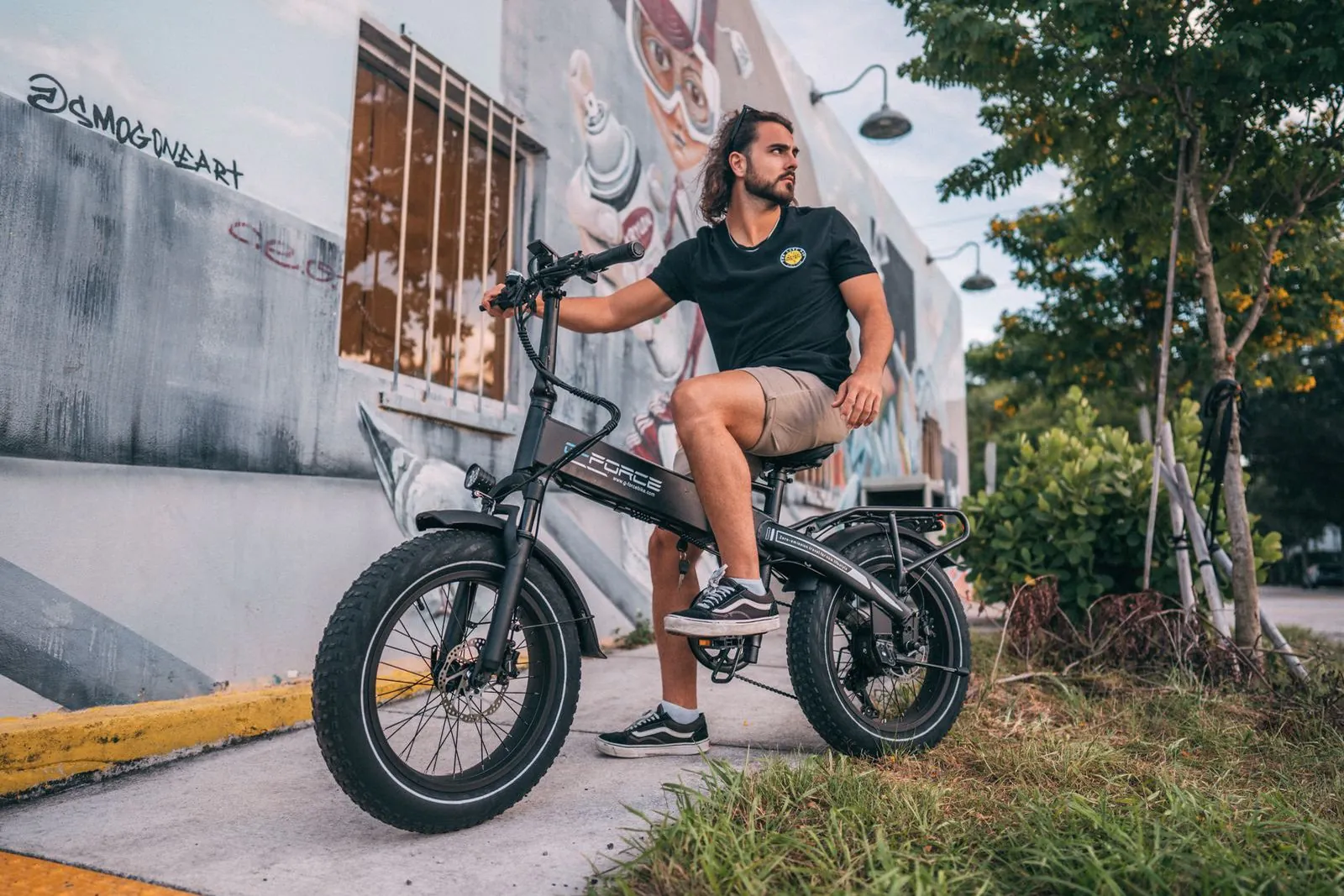
East New York NY E-Bike Accident Lawyer
East New York is spread wide, and its riders cover real distance: down Atlantic Avenue toward the city line, along Linden Boulevard past the truck yards, up Pennsylvania Avenue to Broadway Junction. When a crash happens out here it often happens at speed, on a broad arterial, far from the camera density that downtown riders take for granted — and the driver may be long gone toward the Belt Parkway before a shaken rider finishes standing up.
If that sounds like your morning, you are exactly who this page is for. Billy Cooper Law handles e-bike injury claims across Brooklyn, and the consultation is free. Call (914) 730-5789 and describe where it happened; we will explain which deadlines your facts trigger and what to gather before it disappears. You may also contact the firm online at any hour.
Why East New York Riding Produces Severe Crashes
Geography is the first factor. This corner of Brooklyn — East New York proper, Cypress Hills, and the blocks stretching toward Starrett City and the Gateway area — runs on long arterials built for vehicles, with wide lanes, fast signal spacing, and side streets that feed traffic onto boulevards at speed. A rider covering three miles to a shift spends that distance exposed to turning trucks and cars changing lanes for the parkway, with far fewer protected lanes than riders enjoy further west.
The second factor is the work. Delivery riders here serve a sprawling residential map, which means longer trips per order and more time in the highest-risk environment a cyclist faces: multi-lane traffic moving at arterial pace. Add heavy vehicles serving the industrial blocks along Flatlands and the freight movement near the boulevards, and the margin for a driver’s inattention narrows to almost nothing.
Severity follows. Higher closing speeds produce harder impacts, and harder impacts produce the fractures, head injuries, and joint damage that dominate our files from this part of Brooklyn.
East New York in the Collision Data
The scale shows up plainly in NYPD collision data reported through NYC Open Data for 2023-2025. The East New York ZIP codes 11207, 11208, and 11239 together recorded 8,366 total collisions during the period studied — the largest total in this Brooklyn series. Within that figure, 166 collisions involved an e-bike, and 48 cyclists were injured.
Those numbers describe streets where motor traffic dominates and riders are the exception drivers fail to expect. They also hint at why claims here lean so heavily on fundamentals: a thorough scene investigation, the rider’s own records, and medical documentation built carefully from the first visit, because the corner-camera cavalry that rescues downtown cases may not exist at a Linden Boulevard intersection.
BILLY COOPER LAW

Where Riders Are Injured in East New York
Atlantic Avenue’s Long Run
Atlantic is a river of traffic across the whole neighborhood: multiple lanes, trucks staging for the industrial blocks, drivers accelerating between widely spaced lights. Riders get hit by vehicles sweeping across lanes toward side streets and by turns taken at speeds that leave no time to react.
Linden Boulevard and Flatlands Avenue
Linden carries fast through-traffic between Flatbush and the Belt, and its width encourages the lane drift and late merges that sideswipe cyclists. Around Flatlands, warehouse and yard traffic crosses the rider’s path at driveways and unmarked curb cuts, with trucks swinging wide enough to swallow a bike lane and the rider in it.
Pennsylvania Avenue, New Lots, and Broadway Junction
Pennsylvania and New Lots funnel the neighborhood toward the transit hub, mixing buses, dollar vans, and drivers circling for station access. At Broadway Junction itself, elevated structures shadow the street, sightlines chop into segments, and a rider weaves through merging streams of vehicles whose drivers are watching signs, not mirrors.
The East New York Rider Cases We Accept
Our files from this area include delivery riders injured on Linden Boulevard runs, residents commuting to the Broadway Junction trains, parents on cargo bikes struck on residential cross streets, and riders on the long haul toward Canarsie or back from shifts in Brownsville. Some were hit by identified drivers; a sobering share were hit-and-run cases where the first legal task was building a claim that did not depend on finding the car.
We also accept the crashes with no car in the story at all: a wheel caught in a broken trench plate on Atlantic, a fall on gravel a contractor left across the lane, a fork failure on a machine that should have held.
And the Scooter Riders of the Neighborhood
E-scooters are everywhere in East New York now, privately owned machines ridden for work and errands alike. On these arterials the scooter’s weaknesses sharpen: small wheels against broken pavement at speed, a standing rider with a high center of gravity, brakes that fade on long descents into underpasses. A scooter crash is evaluated under the same broad framework as an e-bike crash — no-fault where a vehicle made contact, fault claims against the responsible party, municipal notice where the street failed — and we review those files with the same care.
Securing the Proof on Streets With Few Cameras
Begin with what the scene itself offers. Photograph the roadway before you leave if you are able — lane markings, the defect or debris field, the resting places of bike and vehicle, the view each driver actually had. On wide boulevards the physical distances are the story: how far a turning driver could see, how much warning a scarred trench gave. Measurements and photographs taken the same day preserve an argument that a later site visit can only approximate.
Then work the human and digital records. The corner stores and auto shops along these avenues keep cameras pointed at their lots and the street; bodegas near the junction have saved more than one case. Ask early, because retention is short. Keep the bicycle unrepaired and complete — a crushed fork, a torn brake line, a battery case split open are physical witnesses — and hold onto the helmet and clothing as they came off you.
What an Injured Rider Should Do Next
Medical care first, at Brookdale or wherever the ambulance takes you, and keep going to the follow-ups even when the shift you are missing makes that feel impossible. In this borough the treatment record is not paperwork around the case; for claims against motorists it is the case, because the serious-injury categories are proved from charts, imaging, and documented restrictions.
Report the crash, obtain the report number, and notify the insurers the situation requires — including your own carrier if you have one, since household auto coverage sometimes hides benefits riders do not know they bought. Then decline to educate the other driver’s adjuster about your speed, your route, or your medical history until counsel has reviewed the file. Early friendliness from an insurer is a data-collection exercise.
New York E-Bike Law as It Applies Out Here
Classification and Lawful Machines
The state’s three classes turn on assistance style and assisted speed: pedal-assist to 20 mph (class 1), throttle to 20 mph (class 2), and pedal-assist to 25 mph (class 3, recognized in the city). A labeled machine within its class is a bicycle legally. Homebuilt conversions and derestricted imports occupy murkier ground, and the classification fight is worth having with your lawyer before the insurer starts it.
Riding Rules That Matter in a Claim
Vehicle and Traffic Law 1231 puts a rider in the position of a driver: same rights to the road, same duties at lights and signs, travel with traffic, no riding on city sidewalks. The city’s DOT summarizes rider rules at its bicycling pages. Compliance does not have to be perfect for a claim to succeed — comparative fault sees to that — but each deviation becomes a talking point the defense will invoice against you.
Helmets, Equipment, and Home Charging
Vehicle and Traffic Law 1238 carries the equipment code and the helmet mandates that apply to class 3 riders and working cyclists, among others. The battery deserves a final word for a neighborhood of apartment buildings: charge on a hard surface away from the door you would escape through, never overnight beside a bed, and retire a pack that has taken a crash impact — a damaged battery is both a fire risk and, potentially, a piece of evidence.
Insurance and No-Fault for East New York Riders
Contact with a motor vehicle triggers New York’s no-fault machinery for the rider. The policy on the vehicle that struck you is the expected payer of first-party benefits — treatment bills and a measure of lost wages — up to the $50,000 basic-economic-loss figure the statute sets, and it pays them without waiting for a fault verdict. The application must be filed promptly and with the correct carrier; on arterials where the vehicle fled, the claim reroutes through MVAIC and its own strict notice demands.
Layering is where riders lose money quietly. A delivery rider may also hold a workers’ compensation claim; a household auto policy may add uninsured-motorist protection; the liability claim against the driver sits beyond no-fault entirely, capped by that driver’s limits. Getting that order right is legal work, and it belongs at the start of the file.
If the Other Side Says You Caused It
Expect the accusation; wide-street crashes generate them automatically. You were between lanes, you were hard to see, you should have been somewhere else. New York’s answer is proportional, not absolute: CPLR 1411 divides fault into percentages and reduces recovery by your share alone. A rider found a quarter responsible keeps three quarters of the claim.
The percentages are earned with specifics. The driver’s sightline down Pennsylvania Avenue, the measured distance from the corner to the impact point, a shop camera that happened to cover the block — small facts push the split. Vague confidence does not. This is why the evidence section of this page reads like a checklist: comparative fault is where that checklist gets spent.
The Deadlines Governing an East New York Claim
Against a private driver, CPLR 214 allows three years to bring the injury suit. Against the city — say the crash traces to a municipal vehicle or to a street defect the city owned — General Municipal Law 50-e requires a notice of claim within ninety days, and General Municipal Law 50-i then confines the suit to one year and ninety days. Riders routinely carry both scenarios in one file: a driver who hit them and a broken street that put them in the driver’s path.
Overlay the benefit clocks — no-fault applications within weeks, prompt police and MVAIC notice in hit-and-run cases — and the true schedule of an East New York claim emerges: measured in days at the front, months in the middle, and a statutory wall at the end.
BILLY COOPER LAW
Who May Be Responsible Beyond the Driver
The driver and the vehicle’s owner head the list, with the owner exposed under New York law for permissive use. Employers enter where the vehicle was working — a delivery fleet van, a contractor’s pickup. Commercial landlords and contractors enter where a loading operation, a scaffold shed, or an open trench consumed the lane. The city or a utility enters on the condition of the street itself. And occasionally the bicycle’s own maker enters, when a stem, fork, or brake failed under ordinary use.
There is a hardheaded reason for casting the net carefully: limits. Arterial-speed injuries generate surgical bills that a minimum-limits policy cannot touch. Identifying every accountable party is how a claim ends up sized to the injury instead of to the first insurance card somebody photographed at the scene.
Compensation in a Serious East New York Case
The recoverable ledger runs from the concrete to the human. Medical charges beyond the no-fault layer and the future care a specialist projects. Earnings already lost on a delivery route and the reduced capacity that persists after the cast comes off. The bicycle, battery, phone, and gear destroyed in the impact. And — where the injury qualifies as serious under Insurance Law 5102, as Insurance Law 5104 requires for suits against motorists — damages for pain, limitation, and disfigurement.
Serious cases deserve unhurried valuation. A knee that needs a second operation, a back that ends a warehouse career, a head injury whose symptoms unfold over months — none of these can be priced in week two. We would rather document a recovery fully and negotiate once, from strength, than chase a fast check that forecloses the losses still arriving.
Government’s Role in Some East New York Crashes
Buses turn across these boulevards all day; city trucks service the industrial blocks; the streets themselves are a patchwork of utility cuts and aging asphalt the city owns. When any of that contributes to a wreck, the claim takes the municipal shape: early notice, an agency-grade investigation, and records — paving histories, complaint logs, vehicle video — that exist nowhere else in the case.
The notice rule is the trap and the opportunity in one. Missed, it usually ends the public side of the claim regardless of merit. Riders who suspect the street or a city vehicle played any part should treat the suspicion itself as the deadline’s starting gun.
Brookdale for Treatment, 360 Adams for Litigation
Brookdale Hospital is the neighborhood’s hospital, and its emergency department writes the first chapter of many East New York files. Arrive honest and complete about how the crash happened and everything that hurts; return for the imaging and therapy referrals; and keep the discharge papers with the claim folder, because chart gaps become cross-examination themes.
Civil suits from this part of Brooklyn are heard in Kings County Supreme Court at 360 Adams Street, whose civil term maintains public information through the Supreme Court, Kings County Civil Term pages. Cases there reward preparation, and preparation — footage pulled, notices served, treatment documented — is the part of litigation that happens long before anyone sees a courtroom.
How an East New York Case Gets Investigated Here
Our investigation in this neighborhood is deliberately old-fashioned, because the technology is thinner on the ground: we go to the corner. Photographs and measurements at the site, the sightline from the driver’s seat reconstructed, the trench or plate documented before the paving crew erases it, the shop owners along the block asked about their cameras while the footage still exists. The police report and the rider’s own app records anchor the timeline.
Then the file splits into its tracks — no-fault opened, compensation coordinated where the rider was working, the liability claim built against every party the evidence supports — and the client hears the status of each track in plain terms.
Related Reading for Riders in This Part of Brooklyn
The firm’s e-bike accident hub states the rules citywide, our bicycle accident page covers pedal-only riders whose law overlaps almost entirely, and the motor vehicle overview addresses the car and truck claims these crashes grow out of. The neighborhood’s parent page is the East New York injury page.
- Bushwick — e-bike claims just northwest of here
- E-bike crashes in Crown Heights
- Downtown Brooklyn
- Flatbush
- Williamsburg
BILLY COOPER LAW
NOTABLE RESULTS
Selected results in Billy Cooper Law’s broader personal injury practice:
$850,000 settlement · $1,600,000 settlement
Read more about these results
- $850,000 settlement — Automobile collision
A Bronx automobile collision caused lower-extremity reflex sympathetic dystrophy and a knee injury.
- $1,600,000 settlement — Pedestrian struck by a vehicle
A vehicle jumped a curb and struck a pedestrian in the Bronx, causing serious injuries and multiple surgeries.
These are reported gross results, before fees, expenses, and applicable liens. They are not estimates of another claim’s value. Read the firm’s published case results.
Prior results do not guarantee a similar outcome. Each case is different and must be evaluated on its own facts.
WHAT OUR CLIENTS SAY
General feedback about working with Billy Cooper Law:
“I am extremely grateful for the exceptional legal services provided by Mr. Cooper. His professionalism and intelligence were evident from our very first interaction. From the moment I contacted Mr. Cooper after my accident, he has been consistently available and supportive, addressing my concerns and health-related issues with genuine care.Throughout the entire process, Mr. Cooper and his team ensured that I experienced no stress, and they handled my case with utmost efficiency. Thanks to their diligence, my case proceeded smoothly, and I received the compensation I deserved. I highly recommend Mr. Cooper to anyone in need of expert legal assistance.”
— Z. A., Google review
“You wont find an attorney who is smart, and empathetic at the same time as William Cooper. I have spoken to many personal injury attorneys who would go no further than a phone call. Mr. Cooper took the extra step and made inquiries for me just to try and help me with an issue that’s been unresolved. He is patient, clear and concise in conversation and does not rush, he waits until you have a full understanding of all aspects of the situation. Don’t waste your time searching for the right personal injury attorney, look no further than William Cooper. He is a rare find!”
— T. P., Google review
Professional Recognition

Recognition applies to the named attorneys and selection years. See the linked profiles for details.
Related Billy Cooper Law Videos and Social Posts
- Bicycle and E-Bike Safety — Facebook.
- What to Do After an E-Bike or E-Scooter Accident — Facebook.
- Sharing the Road With E-Bikes and E-Scooters — Facebook.
East New York NY E-Bike Accident FAQs: Arterial Crashes, Work Claims, and Coverage Gaps
Below are the questions riders from East New York and Cypress Hills bring us first. The answers state New York law in general terms; your own claim turns on its facts.
Does no-fault insurance cover someone hit while riding an e-bike in East New York?
Yes — a rider struck by a motor vehicle is treated, for first-party benefits, much like a pedestrian. The striking vehicle’s no-fault coverage pays necessary medical expenses and a portion of lost earnings without any fight over who caused the crash. That design exists precisely so treatment is funded while the fault argument happens elsewhere.
The entitlement comes with machinery: a written application within the statutory period, bills submitted as the carrier requires, and examinations the insurer schedules to test continuing need. Riders who open the claim promptly and keep copies of everything rarely lose benefits they were owed; riders who assume the hospital ‘handled it’ sometimes discover a lapsed application at the worst moment.
Sources: Insurance Law 5102; Insurance Law 5104
Brookdale sent me a bill for the emergency visit. Whose insurance should get it?
Send it into the no-fault claim on the vehicle that hit you. Once that claim is open and an assignment of benefits is signed, providers generally bill the carrier directly, and the emergency department’s charges for collision-related care are exactly the kind of expense the system exists to absorb first.
If the bill reached your kitchen table, something upstream misfired — the claim was never opened, the intake chart failed to note a motor vehicle collision, or the bill went out before the carrier details arrived. Forward the bill to the lawyer or representative managing the claim rather than paying it or ignoring it; both reactions create cleanup work, and the cleanup gets harder as collection deadlines pass.
Sources: Insurance Law 5102 — first-party benefits; Kings County Civil Term
What makes an injury serious enough to sue the driver for pain and suffering?
The definition is statutory and specific. The law’s catalogue includes death and dismemberment at the extreme end, and for living riders: a fracture, significant disfigurement, loss of a body member or function, a permanent consequential limitation, a significant limitation of use, or an injury that blocks substantially all usual activities for ninety of the one hundred eighty days following the crash. If the harm fits no category, recovery against a motorist stops at economic loss.
Because the categories are legal rather than colloquial, plenty of genuinely painful injuries need careful documentation to qualify — measured range-of-motion deficits, imaging findings, physician-stated restrictions. The medical file has to be built with the statute open beside it, which is a strong argument for aligning treatment and legal advice early rather than sequentially.
Sources: Insurance Law 5102(d); Insurance Law 5104
I was hit on Linden Boulevard and the car kept going. What are my rights?
Hit-and-run victims are not left empty-handed in New York. Benefits and injury compensation can be pursued through MVAIC, the state corporation created for people injured by unidentified or uninsured motorists, and any auto policy in your household may carry uninsured-motorist coverage that answers as well. Between those routes, treatment and a fault-based recovery usually remain available in some measure.
The conditions are unforgiving about time: report the collision to police within about twenty-four hours, notify MVAIC promptly within its statutory window, and be ready to show the crash truly happened as described — which is where boulevard cameras, debris, and your own injuries corroborate the account. Wide-street hit-and-runs are a specialty problem here, and the response has to start immediately.
Sources: Insurance Law 5102; NYC DOT rider pages
If I crash while delivering for a restaurant, can I sue the restaurant?
As an employee, almost never directly — workers’ compensation replaces that lawsuit, paying medical care and partial wages without fault, while barring a negligence suit against the employer itself. What remains fully available is the claim against the driver who hit you, which for a serious injury is typically where the substantial recovery lives. The compensation carrier may assert a lien against part of that recovery, a detail settlements must account for.
Classification complicates the picture for app-based and informally hired riders, who may be told they are independent contractors outside the compensation system. The Workers’ Compensation Board publishes guidance for injured workers, and boards deciding these disputes look at the reality of control over the work, not the label in an agreement. Getting classified correctly changes which doors are open, so it is a first-order question in a working rider’s file.
Sources: Workers’ Compensation Board — worker information; CPLR 214
I had just come off the sidewalk when the car hit me. Does that ruin my claim?
It complicates the claim; it does not ruin it. Riding on a city sidewalk contravenes the rules a rider operates under, and the defense will argue the transition into the street contributed to the collision. But New York apportions fault rather than awarding winner-take-all: your percentage reduces the recovery, and the driver’s own conduct — speed, attention, the view available — is weighed on the other side of the scale.
The geometry of the particular corner matters enormously in these cases. A rider who rolled off a driveway cut into a driver’s blind zone presents differently from one who entered a crosswalk area in plain view with time to be seen. Photographs and measurements of exactly where the transition happened are therefore worth more than any argument about sidewalks in the abstract.
Sources: CPLR 1411; Vehicle and Traffic Law 1231
The insurer keeps asking what class my e-bike is. Why does it matter?
Because class determines the legal box your machine lives in. Class 1 and 2 machines assist to twenty miles per hour; class 3 to twenty-five, within New York City’s rules. A stock, labeled bike in any of those classes is a bicycle, entitled to the road and analyzed under bicycle law. A machine modified to exceed its class can be recast as something else — unregistered, uninsured, and unlawful — and the insurer asks the question hoping your bike hands them that argument.
Answer it with documents instead of adjectives. The manufacturer’s label photographed on the frame, the purchase receipt, the model specification sheet all establish factory status. If the bike was modified, tell your lawyer before the insurer finds out some other way; a known weakness can be planned around, while a discovered one arrives gift-wrapped for the defense.
Sources: Vehicle and Traffic Law 1238; Vehicle and Traffic Law 1231
I was riding a Citi Bike near Broadway Junction when I was hit. How is that claim different?
The core of it is not different at all: the driver’s responsibility is unchanged by who owned your bicycle, and no-fault benefits still flow from the striking vehicle’s policy. A bike-share rider stands in the same legal shoes as a rider on a personal machine, from the three-year filing window to the serious-injury threshold.
The margins differ. The share system generates trip records — undock time, route timing, dock return — that corroborate where you were and when, and the operator’s maintenance history for that specific bicycle becomes relevant if a brake or steering fault played any part. Those are third-party records held on third-party schedules, so a request for them belongs in the file’s first week, not its first year.
Sources: Insurance Law 5102; NYC DOT: bicyclists
The battery on my bike started smoking after the crash. Should I keep it?
Keep it, and respect it. A battery that smokes, swells, hisses, or runs hot after an impact is a damaged lithium pack, and damaged packs can ignite hours or days later. Move it away from living space if that can be done safely, do not charge it, do not open it, and if it actively burns, get people clear and call the fire department rather than protecting property.
Legally, that battery may be the centerpiece of a product claim — against the cell maker, the pack assembler, or the seller — or simply corroboration of the collision’s force. Either way it must survive to be examined. Let your lawyer arrange safe storage and tell any insurer demanding the wreck that the pack is preserved and available for joint inspection; destruction of evidence harms whoever does it, including when the ‘it was just a battery’ instinct does it innocently.
Sources: CPLR 214; NYC DOT guidance
My son was hurt on his e-scooter. Do the same rules cover him?
In the respects that drive compensation, largely yes. A scooter rider struck by a vehicle is positioned much like a cyclist for no-fault benefits, carries the same three-year window against the driver, faces the same serious-injury gate for pain-and-suffering claims, and shares fault only proportionally under comparative rules. The claim belongs to the injured person — for a minor, brought through a parent or guardian with court supervision of any settlement.
The deltas are practical rather than conceptual: where the scooter may lawfully be operated, how its speed and size figure in fault arguments, and the machine’s own fragility against East New York pavement in road-defect cases. Bring the scooter, its purchase or rental records, and any app data to the consultation; scooter telematics, where they exist, are often the cleanest timeline in the whole file.
Sources: Vehicle and Traffic Law 1231; Insurance Law 5102
Sources
- VAT 1231 — rights and duties of riders
- VAT 1238 — equipment and helmet provisions
- Insurance Law 5102 — benefits and the injury threshold
- Insurance Law 5104 — non-economic loss claims
- CPLR 214 — limitation period, injury actions
- CPLR 1411 — how shared fault is handled
- General Municipal Law 50-e — notice of claim rules
- General Municipal Law 50-i — actions against municipalities
- DOT information for bicyclists
- Kings County Supreme Court, Civil Term
- Workers’ Compensation Board — injured worker pages

Get the Answers You Need
At Billy Cooper Law, every day we renew our pledge to help injured people get the justice and compensation they deserve. We have a reputation throughout New York and nationally for standing up for our clients, and we take that responsibility seriously by approaching every case with preparation, persistence, and an unwavering commitment to results.