Sunset Park NY E-Bike Accident Lawyer
A crash on an e-bike in Sunset Park rarely stays simple for long. One moment you are riding the avenues with traffic; the next you are on the pavement with a bent wheel, a split lip, and a driver already explaining to bystanders that you came out of nowhere. Then the paperwork questions arrive: whose policy covers the ambulance, what happens to the shifts you are missing, and whether the bike that earns your living can be replaced.
Billy Cooper Law helps injured riders sort out those questions before they become expensive mistakes. The first conversation is free, and it can happen while the details are still fresh. Reach us at (914) 730-5789 and tell us where it happened and what you remember — we will take it from there.
What Makes an E-Bike Crash in Sunset Park Different
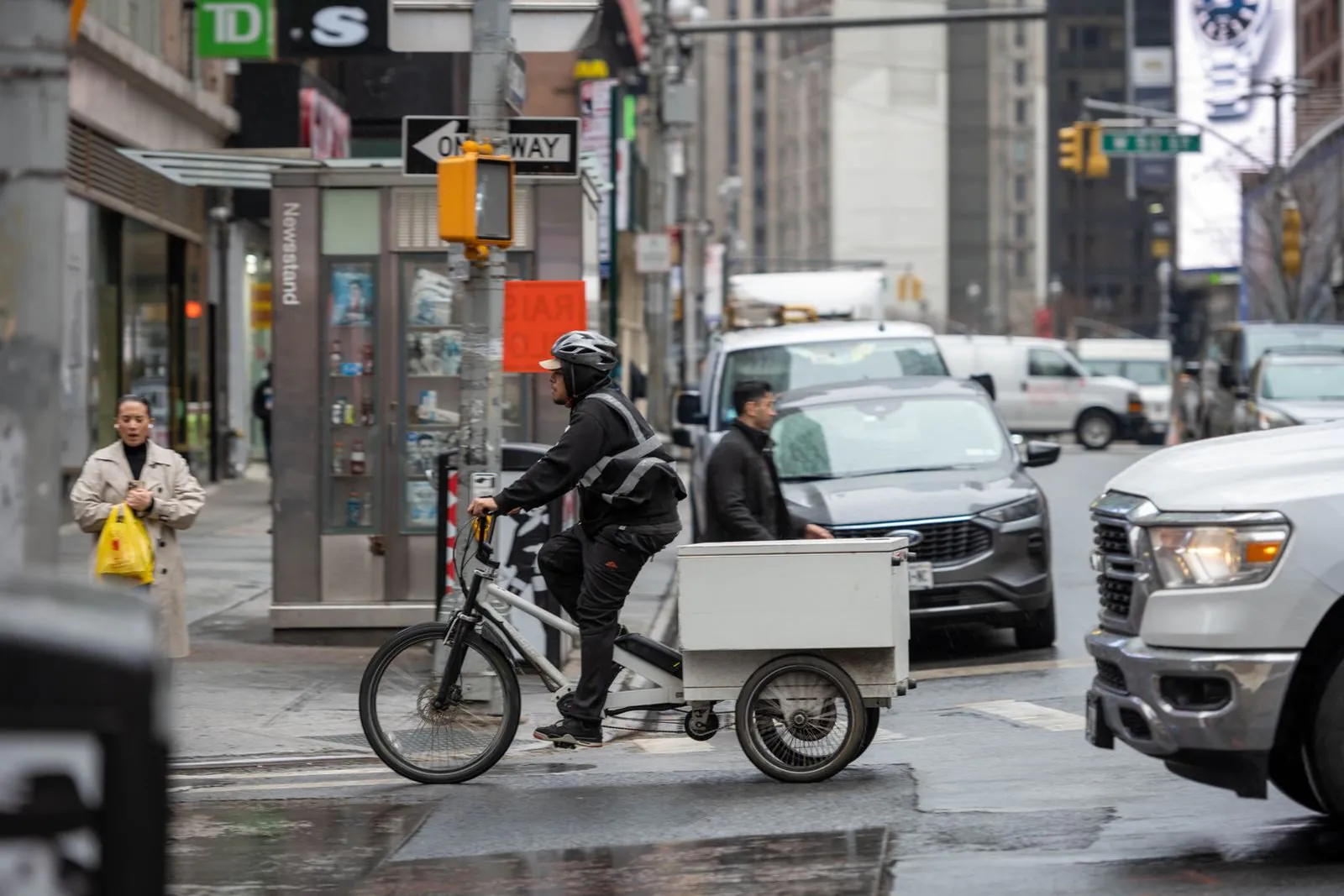
Sunset Park moves goods. Kitchens along Eighth Avenue send out a steady stream of delivery riders, the waterfront around Industry City draws trucks and vans all day, and the streets below the Brooklyn-Queens Expressway carry drivers who are often just passing through on their way somewhere else. An e-bike rider sits low, quiet, and exposed in the middle of all that motion, and drivers scanning for other cars routinely fail to register a bicycle until it is too late.
The machine itself changes the physics. A pedal-assist bike is heavier than a conventional bicycle and keeps its speed up hills and across long avenue blocks, so impacts happen at higher energy and stops take more distance. Riders here also log far more miles than a casual cyclist — commuting, delivering, crossing to Bay Ridge or up toward Park Slope — and every extra mile is another roll of the dice at intersections where turning drivers hold most of the advantages.
Finally, many Sunset Park riders work on their bikes. A broken wrist is not only a medical problem; it is rent money gone. That income pressure pushes people back onto the road before they have healed and tempts them to accept whatever an insurance adjuster offers first.
Sunset Park Riding, by the Numbers
According to NYPD collision data reported through NYC Open Data for 2023-2025, the Sunset Park ZIP codes 11220 and 11232 saw 3,538 total collisions during the period studied. Within that total, 223 collisions involved an e-bike, and 93 cyclists were injured.
Read those figures as a measure of exposure rather than a verdict on any individual wreck. They describe a neighborhood where riders and heavy vehicles mix on the same pavement thousands of times a day, mostly without incident — and where the unlucky fraction still adds up to a steady flow of emergency-room visits.

Streets and Corners Where Sunset Park Riders Get Hurt
The Long Avenue Runs
Third, Fourth, and Fifth Avenues form the neighborhood’s spine, and each mixes curbside parking, bus stops, double-parked delivery vans, and drivers swinging wide into side streets. Riders get squeezed where a parked truck hides them from turning traffic, and doors open into their path along the retail stretches where shoppers come and go all day.
Industry City and the Working Waterfront
Warehouses and workshops near the water generate freight movement that residential streets never see: box trucks backing toward loading docks, forklifts crossing sidewalks, and vans idling in the bike lane while a delivery is signed for. A rider threading through that activity has to watch for vehicles moving in directions traffic never normally takes.
The Residential Grid and the Expressway Shadow
East of Fifth Avenue the grid calms down, but the cross streets funnel cars toward the expressway entrances, and drivers roll stop signs while watching for gaps in faster traffic. Limited sightlines at parked-up corners make these quiet blocks a common setting for the classic right-hook and left-cross collisions.
Injury Claims We Take From Sunset Park Riders
Some of our clients were commuting to a shift; others were mid-delivery with a warming bag on their back; still others were riding a Citi Bike home from the 36th Street station or taking a child to school on a cargo model. The fact patterns differ, but the injuries repeat: fractures of the wrist, collarbone, and ankle, torn shoulders, head injuries even where a helmet did its job, deep road rash that scars, and backs that never quite feel right again.
Claims we handle include riders struck by turning or merging drivers, people doored by passengers stepping out of rideshares, riders knocked down by hit-and-run vehicles, and crashes traced to pavement defects, steel plates, or unmarked utility work. Where a delivery rider was hurt on the job, we also look at how the employment relationship affects the routes to recovery.
Scooter Riders Get Hurt on These Streets Too
Standing e-scooters and seated mopeds share the same lanes and the same dangers, with a few twists of their own. Small wheels catch on plate edges and potholes that a bicycle would roll over, rental scooters get left and ridden in traffic without lights or helmets, and riders standing upright are pitched forward hard in a sudden stop. If your Sunset Park crash involved a scooter rather than a pedal-assist bike, the insurance and fault analysis on this page still maps the way forward in most respects, and we are glad to walk through the differences.
Proof That Disappears Fast After a Wreck
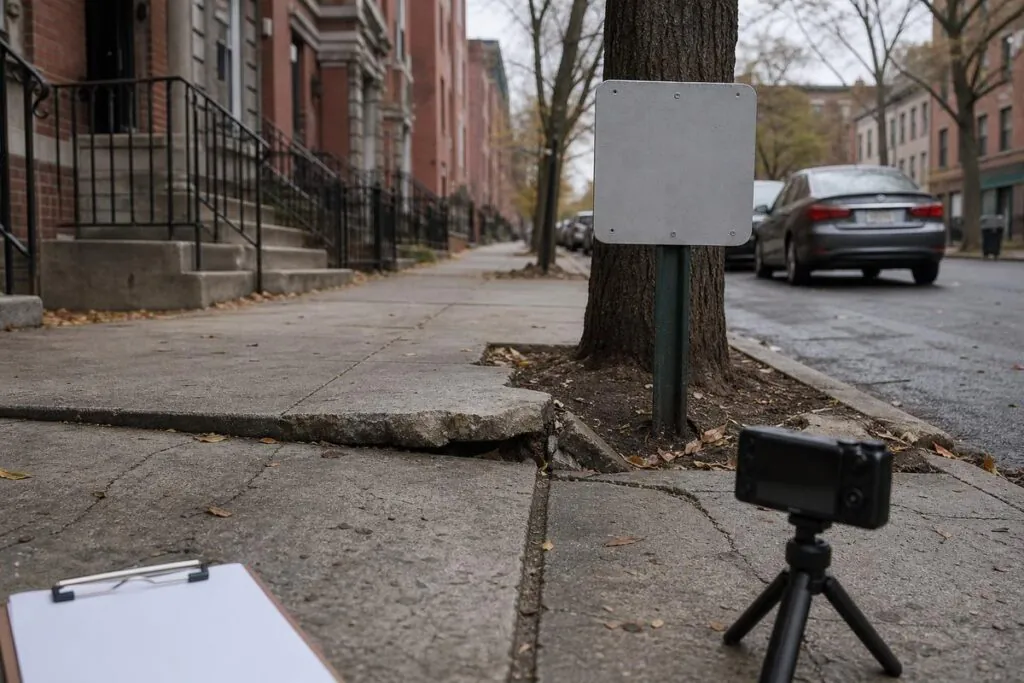
Evidence in a riding case has a short shelf life. The delivery app that logged your route can overwrite its records, the storefront camera that caught the impact may keep footage for only a few days, and the city repairs the pothole that threw you once someone complains about it. Photographs of the scene, the bike, the other vehicle, and your injuries — taken before anything is moved or cleaned — often become the backbone of the claim.
Keep the damaged bike exactly as it came home. Do not straighten the wheel, swap the fork, or send it out for repair until the claim is documented, because the machine’s condition is itself testimony about speed and angle of impact. Write down names of anyone who stopped, and note which buildings near the corner have cameras facing the street; a prompt request can secure video before it loops away.
Your First Moves After a Crash in Sunset Park
Get yourself checked, even if adrenaline is telling you that you are fine. Bleeding inside the skull and hairline fractures do not always announce themselves at the scene, and a same-day medical record does double duty: it protects your health and anchors your injuries to the date of the collision. If the driver stays, trade names, plate numbers, and insurance details, and ask responding officers how to obtain the report.
Once you are home, resist the urge to negotiate by phone with the other driver’s insurer. Adjusters record those calls, and an early guess about your speed or injuries can follow the case for years. Report the crash as your own coverage and any employer rules require, then talk with a lawyer before signing anything or accepting money earmarked as a final settlement.
Clocks That Start Running the Day of the Crash
New York generally allows three years from the date of an injury crash to file suit against the private driver who caused it, under CPLR 214. That sounds generous until treatment, work, and family life consume the months — and until you learn that shorter clocks were quietly running underneath the long one the whole time.
Claims against the City of New York or another public body work differently. A formal notice of claim usually has to be served within ninety days, under General Municipal Law 50-e, and the lawsuit window that follows is far shorter than three years. No-fault benefit applications carry their own prompt deadlines as well. A case review early on is mostly about building a calendar: which clocks apply to your facts, and which one expires first.
Who Pays the First Bills: No-Fault for a Struck Rider
When a motor vehicle strikes a person riding an e-bike, New York treats the rider much like a pedestrian for first-party benefits. The insurance on the striking vehicle is normally the source of no-fault coverage, which pays reasonable medical expenses and a share of lost wages without regard to who caused the crash. The statute frames basic economic loss with a ceiling of $50,000 per person, and claims have to be opened correctly and on time for the money to flow.
No-fault is a floor, not a ceiling. It does not pay for pain, for the weeks your hand spent in a cast, or for a scar you will carry permanently. Recovering beyond basic economic loss means a claim against whoever was at fault — and, as the next sections explain, a showing that your injuries clear the state’s serious-injury threshold. Sorting out which pot of money pays for what, and in which order, is a large part of what we do in the first weeks of a case.
BILLY COOPER LAW
New York’s E-Bike Rules, in Plain Terms
Three Classes, One Legal Family
State law sorts electric bicycles into three classes based on how the motor helps and how fast it pushes. Class 1 assists only while you pedal, up to 20 miles per hour. Class 2 adds a throttle, also capped at 20. Class 3 — the version New York City permits — can assist to 25. All three remain bicycles in the eyes of the law when they carry a proper label and stay within their limits, which matters because bicycle status is what unlocks the rights described next.
Where You May Ride, and What You Owe Other Road Users
Under Vehicle and Traffic Law 1231, a person on a bicycle — e-bikes included — holds the rights and carries the duties of a vehicle driver. Riders may use most city streets and bike lanes, must ride with traffic, and may not ride on sidewalks in New York City. The city’s transportation department publishes rider guidance at its bicycling pages, including where e-bikes fit within local rules.
Helmets, Lights, and Batteries
Vehicle and Traffic Law 1238 sets equipment and helmet rules, including helmet requirements for class 3 riders and for working cyclists. Separately, the lithium batteries that power these machines deserve respect at home: charge them away from exits, and treat a battery that has been crashed or swollen as finished. A battery fire after a collision can turn a property loss into a product question, which is one more reason to preserve the bike unrepaired.
Shared Blame Does Not End a Claim
Maybe you were rolling a little fast for the block, or your light had died, or you swung around a double-parked van at the moment a driver turned. Insurers will gather facts like those and present them as a full defense. New York law disagrees with the framing: CPLR 1411 applies pure comparative fault, so a rider’s share of blame reduces a recovery by that share instead of erasing it.
The practical fight is over percentages. Every point of fault shifted onto the rider trims the payout, which is why scene evidence and early witness accounts matter so much. A driver who says you ‘came from nowhere’ may be describing a corner his own parked truck blocked — and photographs taken that day can prove it months later when memories have been coached.
Who Might Owe You for a Sunset Park Crash
The obvious candidate is the driver whose turn, merge, or distraction put you on the ground — and that driver’s liability policy is the usual source of payment. But a careful case looks wider. A passenger who opened a door into your lane can bear responsibility. An employer can answer for an employee driving on the job. The city or a utility can be implicated where a broken street surface, a badly seated plate, or a missing warning caused the fall, and a bike or battery maker can face a product claim where a component failed the way it should never fail.
Identifying every responsible party is not greed; it is arithmetic. One driver’s policy limit may not cover a surgery and a season of lost delivery income.
What a Sunset Park E-Bike Claim Can Cover
Beyond the basic bills no-fault absorbs, a successful claim can reach the losses that actually reshape a life: operations and therapy still ahead of you, income already lost and earning power diminished, the cost of replacing a destroyed bike and work gear, and compensation for pain, limitation, and visible scarring. A rider who cannot grip a handlebar or climb stairs comfortably has lost things no receipt can document, and valuing those losses honestly is central to the case.
Two cautions belong in every conversation about money. First, claims against motorists for non-economic loss require a serious injury as Insurance Law 5102 defines it, a gate that Insurance Law 5104 polices. Second, quick offers are priced for the insurer’s convenience, usually before the medical picture finishes developing. Settling early trades the unknown future — another surgery, a plate that has to come out — for a number chosen by the other side.
When the City or Another Agency Is Part of the Case
Some crashes here trace back to the street itself: a trench left unmarked by a contractor, a bus that cut across a lane, a sanitation truck swinging out of a side street. When a public body enters the picture, the claim changes shape. The ninety-day notice rules described earlier apply, different records exist — work permits, prior complaints about the same defect, route and camera footage from the vehicle —.
None of that makes a government claim unwinnable; it makes it unforgiving of delay. The same location photographed six months later may show fresh asphalt and no trace of the hole that threw you. Getting the notice filed and the site documented while the evidence still exists is the whole game in the early weeks.
Care Nearby, and the Courthouse That Hears These Cases
Riders hurt in Sunset Park are commonly treated first at NYU Langone Hospital – Brooklyn, and follow-up care through local clinics keeps a treatment record close to home. Keep every appointment you can, and tell each provider plainly that the injuries came from a collision; gaps and vague histories give insurers material they do not deserve.
Lawsuits arising from Brooklyn crashes are generally filed in Kings County Supreme Court, at 360 Adams Street in Downtown Brooklyn. Riders can read about the court on the New York Courts website.
How Our Team Builds a Sunset Park E-Bike Case
We begin with the story in your words, then set about corroborating it: the police report, the app or GPS trace if you were working, requests to nearby businesses for camera footage, photographs of the corner and the bike, and the medical records as they accumulate. Where the defense will contest how the crash happened, we work the geometry of the intersection itself — lane widths, sightlines, signal timing — until the physical facts either support your account or tell us where it needs adjusting.
While that proof comes together, we manage the insurance traffic so you do not have to: opening the no-fault claim, deflecting recorded-statement requests until you are ready, and tracking each deadline on a written calendar. No settlement is accepted or rejected without your decision driving it.
More Reading for Injured Brooklyn Riders
Start with our overview of e-bike accident cases across the city, then the broader motor vehicle accidents section for crashes involving cars, trucks, and buses. Riders who live or were hurt nearby can also see the Sunset Park injury page.
- Williamsburg — e-bike claims on the north side of the borough
- E-bike crashes in Bushwick
BILLY COOPER LAW
NOTABLE RESULTS
Selected results in Billy Cooper Law’s broader personal injury practice:
$850,000 settlement · $1,600,000 settlement
Read more about these results
- $850,000 settlement — Automobile collision
A Bronx automobile collision caused lower-extremity reflex sympathetic dystrophy and a knee injury.
- $1,600,000 settlement — Pedestrian struck by a vehicle
A vehicle jumped a curb and struck a pedestrian in the Bronx, causing serious injuries and multiple surgeries.
These are reported gross results, before fees, expenses, and applicable liens. They are not estimates of another claim’s value. Read the firm’s published case results.
Prior results do not guarantee a similar outcome. Each case is different and must be evaluated on its own facts.
WHAT OUR CLIENTS SAY
General feedback about working with Billy Cooper Law:
“Mr. Cooper came to my home to discuss my personal injury case. Without any commitment to his services on my part, he took the time to explain a great deal about my particular situation, did so with great clarity, and was presented a measured and understandable answers to all my questions. I really appreciate his time and would very much recommend his services.”
— B. H., Google review
“Over the years, I have frequently worked with Billy Cooper and his team and give the Law Office of Marvin Cooper the highest review as they are consummate professionals who understand all aspects of representing clients in personal injury cases. Billy is thoughtful and compassionate along with being one of the premier trial lawyers in the state. He also has long standing relationships with the various insurance carriers which allows him to effectively settle cases before they get to trial. As a result of my many dealings with this firm over the past 30 years, Billy will always be my go-to lawyer when I refer clients to a personal injury firm in NY State.”
— a. g., Google review
Professional Recognition

Recognition applies to the named attorneys and selection years. See the linked profiles for details.
Related Billy Cooper Law Videos and Social Posts
- Bicycle and E-Bike Safety — Facebook.
- What to Do After an E-Bike or E-Scooter Accident — Facebook.
- Sharing the Road With E-Bikes and E-Scooters — Facebook.
Sunset Park NY E-Bike Accident FAQs: Dooring, Helmets, and Getting Bills Paid
The answers below cover the questions Sunset Park riders ask us most often. They are general information about New York law, not legal advice about your particular crash.
A parked car’s door swung into my path on the avenue — can I claim against the person who opened it?
Yes, that is a recognized kind of claim. New York’s traffic rules forbid opening a vehicle door into moving traffic until it can be done safely, and a driver or passenger who flings a door into a bike lane owns the consequences. Dooring crashes throw riders over the bars or sideways into the lane beside them, and the injuries — broken wrists, facial fractures, shoulder damage — are often worse than the word ‘door’ suggests.
Proof matters because the occupant sometimes denies the door ever opened. Photographs of the door’s position, paint transfer on the bike, and witnesses from the sidewalk all help. Where the person who opened the door was a rideshare passenger, questions about which policy responds can get layered, and they are worth sorting out early.
Sources: Vehicle and Traffic Law 1231; NYC DOT bicycling guidance
How much time do I have to sue the driver who hit me in Sunset Park?
For a claim against a private driver, the general rule gives you three years from the crash date to file a personal-injury lawsuit. The clock is set by statute, and courts enforce it strictly: a case filed late is ordinarily dismissed no matter how strong the underlying facts are.
Treat three years as the outer wall, not a plan. Claims involving a city agency can demand action within ninety days, no-fault paperwork runs on much shorter fuses, and evidence fades in weeks. A review in the first month lets a lawyer flag every clock that your particular facts set running.
Sources: CPLR 214; Supreme Court, Kings County Civil Term
My crash involved a city vehicle — is there a faster deadline than the usual one?
There is, and it catches people out. Before suing the City of New York or one of its agencies, an injured person ordinarily must serve a document called a notice of claim within ninety days of the incident. Miss that window and the case can be barred before a judge ever looks at the merits, unless a court grants rare permission to file late.
The notice has to identify what happened, where, and what injuries resulted, and it goes to the agency involved rather than to a court. Because service rules are technical, riders who even suspect a city truck, bus, or crew played a part should raise it in the very first conversation with counsel.
Sources: General Municipal Law 50-e; Supreme Court, Kings County Civil Term
The driver who knocked me down near Industry City took off. Do I have any options?
Often, yes. A rider struck by a fleeing driver may qualify for benefits and compensation through the Motor Vehicle Accident Indemnification Corporation, the state body known as MVAIC, which exists for victims of unidentified or uninsured motorists. Your own auto policy, if you have one, may also carry uninsured-motorist protection that responds.
Hit-and-run claims run on strict notice rules: the crash must be reported to police quickly — within twenty-four hours is the safe course — and MVAIC must be notified within a short window as well. Camera footage from the warehouses around Industry City is worth chasing immediately; even a partial plate or a clear shot of the vehicle narrows the search considerably.
Sources: Insurance Law 5102; NYC DOT: bicyclists
What does New York mean by a serious injury, and why does it control my case?
The phrase is a legal term of art. State law lists categories — among them fractures, significant disfigurement, loss of a body function, and injuries that keep you from your usual activities for at least ninety of the one hundred eighty days after the crash. Only riders whose harm fits a category may sue a motorist for pain and suffering on top of basic economic loss.
In practice the threshold shapes strategy from day one. Medical records must document the injury in the statute’s language, not just in a doctor’s shorthand, and insurers litigate this gate aggressively because winning it ends the non-economic part of a case. Honest, consistent treatment records are the strongest answer.
Sources: Insurance Law 5102; Insurance Law 5104
I was not wearing a helmet when I was hit. Does that destroy my claim?
No. For most adult riders on class 1 and class 2 machines, no statewide rule required the helmet in the first place, and even where a helmet was legally required — class 3 riders, working cyclists — going without one does not make the driver who hit you any less at fault for the collision itself. The crash and the head protection are separate questions.
Expect the defense to argue that a helmet would have softened a head injury, and expect that argument to need expert support rather than mere assertion. What you wore, and what the helmet rules in the statute say, are worth reviewing candidly with your lawyer rather than hiding; surprise is the only version of the fact that truly hurts.
Sources: Vehicle and Traffic Law 1238; NYC DOT bicycling pages
Does it matter whether my bike is a class 1, class 2, or class 3 model?
It can. Classification decides the legal ceiling on motor assistance — twenty miles per hour for classes 1 and 2, twenty-five for the class 3 machines New York City allows — and it drives details like helmet duties. A bike that has been modified to run far beyond its class, or one that never qualified as an e-bike at all, may be treated as a different kind of vehicle, with registration and insurance consequences that complicate a claim.
Bring the purchase records, the manufacturer’s label photograph, and any modification history to your first meeting. Insurers look for a reclassification argument when the bike looks nonstandard, and being able to show a factory-built, properly labeled machine removes that distraction from the real dispute, which is how the crash happened.
Sources: Vehicle and Traffic Law 1238; Vehicle and Traffic Law 1231
Nobody called the police after my Sunset Park crash. Is that a problem?
It is a gap, not a dead end. A police report organizes the basics — time, place, vehicles, statements — into one document insurers trust, and some claims, especially hit-and-run claims through MVAIC, treat a prompt police report as a condition. Without one, expect to rebuild those basics from medical records, photographs, app data, and witnesses, which is doable but slower.
You can still file a report after the fact at the precinct, and you generally must report a crash involving injury to the state motor vehicle department on its own form within ten days. The later account should match the medical records and any photos; inconsistencies created in a hurry become cross-examination material, so take the report seriously rather than treating it as a formality.
Sources: NYC DOT: bicyclists; Supreme Court, Kings County Civil Term
Can I recover the cost of my wrecked e-bike and delivery gear?
Property loss travels with the injury claim rather than inside no-fault, which is aimed at medical bills and wages. A rider can pursue the at-fault party for the bike’s fair value — usually its market worth just before the crash, informed by purchase price, age, and condition — plus a helmet, phone, thermal bag, and other gear destroyed in the impact.
Documentation wins these arguments. Receipts, the original listing, photographs of the machine before and after, and a shop’s written repair estimate turn a negotiation about a ‘used bike’ into a number with paper behind it. Keep the wreck until the claim is resolved; scrapping it early hands the insurer a reason to discount the loss.
Sources: Insurance Law 5102; CPLR 214
I was riding a Citi Bike when a car hit me. Who is responsible then?
Start with the car. A rider on a bike-share bicycle who is struck by a motor vehicle stands in essentially the same legal position as a rider on a personal machine: no-fault benefits flow from the striking vehicle’s policy, and a fault-based claim can be brought against the driver. The fact that a rental company owns the bicycle does not absorb the driver’s responsibility.
The bike-share system does add records: trip data showing when the bike was undocked, where it traveled, and when the ride ended, plus maintenance history for the machine itself. If a brake or steering defect contributed, a separate product or maintenance claim enters the picture against whoever was responsible for the bike’s condition. Those records are held by the operator, so requesting them early matters.
Sources: Insurance Law 5102; NYC DOT bicycling guidance
Sources
- Vehicle and Traffic Law 1231 — riders’ rights and duties
- Vehicle and Traffic Law 1238 — helmets and equipment
- Insurance Law 5102 — definitions and basic economic loss
- Insurance Law 5104 — limits on suing for non-economic loss
- CPLR 214 — the three-year injury deadline
- CPLR 1411 — comparative fault
- General Municipal Law 50-e — notice of claim
- NYC DOT bicycling information
- Supreme Court, Kings County Civil Term
- Workers’ Compensation Board — guidance for injured workers
E-Bike Accident Lawyers Serving Kings County (Brooklyn)
- Kings County (Brooklyn)
- Bedford-Stuyvesant
- Bushwick
- Crown Heights
- Flatbush
- Williamsburg
- Borough Park
- Bensonhurst
- Sunset Park
- Bay Ridge
- East New York

Get the Answers You Need
At Billy Cooper Law, every day we renew our pledge to help injured people get the justice and compensation they deserve. We have a reputation throughout New York and nationally for standing up for our clients, and we take that responsibility seriously by approaching every case with preparation, persistence, and an unwavering commitment to results.