
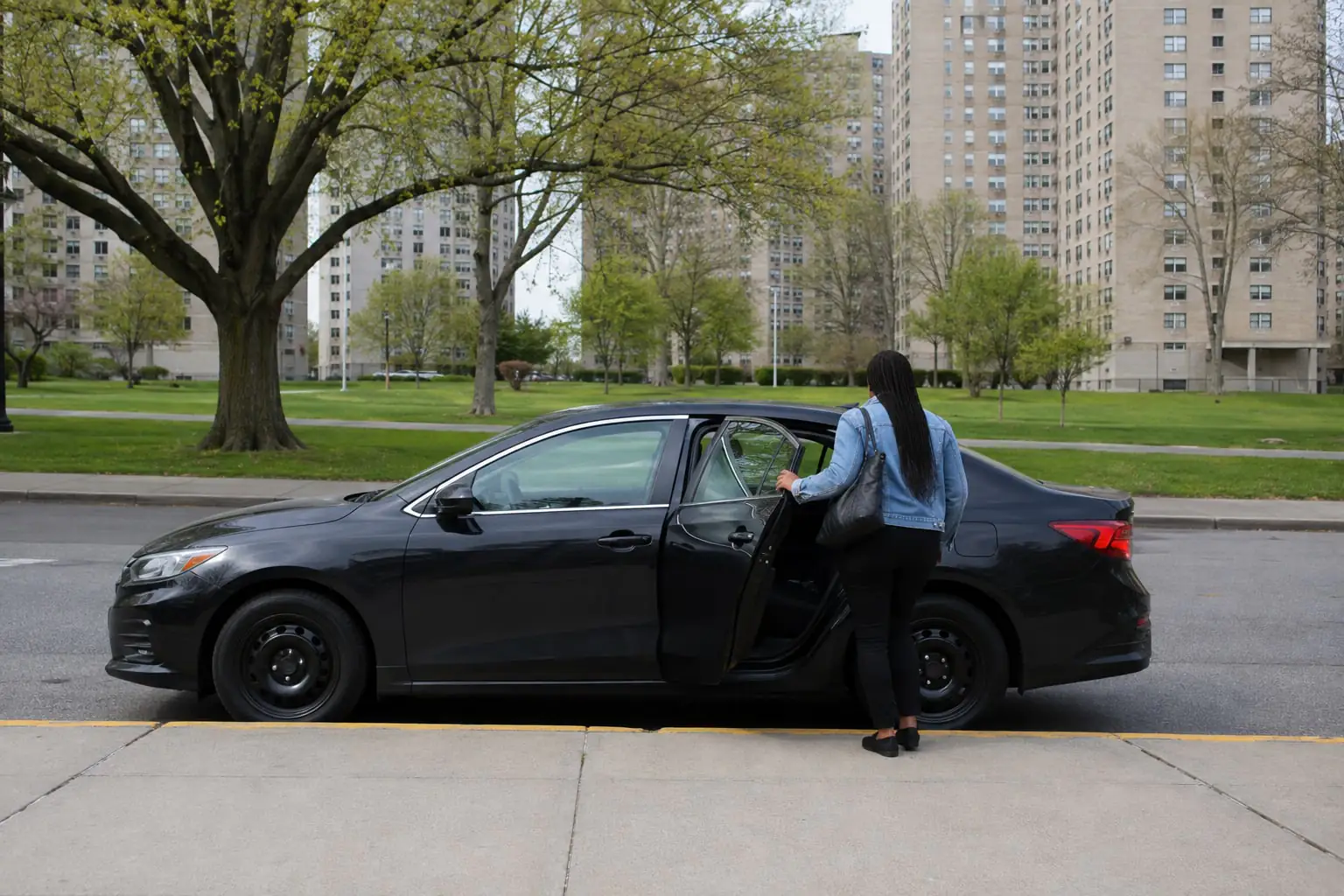
Co-op City NY Uber Accident Lawyer
An Uber crash in Co-op City can leave you dealing with injuries, missed work, medical bills, and several insurers that disagree about who should pay. The claim may involve a TLC-licensed vehicle, another driver, Uber’s records, commercial insurance, or the agency or property owner responsible for the accident location.
Billy Cooper Law represents injured people throughout the Bronx and New York City. The firm can determine which insurance policies apply, preserve trip and video evidence, and explain your options in plain English.
Uber Accident Lawyers Serving Bronx County
- Bronx County
- Co-op City
- Kingsbridge
- Soundview
- Riverdale
- Fordham
BILLY COOPER LAW

Why Injured People Turn to Billy Cooper Law
After a serious crash, you should be able to speak with a lawyer who listens before offering answers. Billy Cooper Law states that people who contact the firm speak directly with an attorney, not only with an intake representative. The firm brings more than 75 years of combined experience to personal injury cases and offers services in English and Spanish. (billycooperlaw.com)
Consultations are free, and accepted personal injury cases are handled on a contingency-fee basis. You do not pay an upfront attorney’s fee, and the firm does not receive an attorney’s fee unless compensation is recovered. Billy Cooper Law lists an office at 245 Main Street, Suite 510, White Plains NY 10601, and a New York City location at 4746 Broadway, New York NY 10040, available by appointment. It does not list an office in Co-op City. (billycooperlaw.com)
Why an Uber Claim Is Different in Co-op City
An Uber pickup in Co-op City usually falls within New York City’s Taxi and Limousine Commission system. A driver providing for-hire service in New York City generally needs a TLC driver license, a TLC-licensed vehicle, and an affiliation with a licensed for-hire base. For a typical vehicle carrying one to seven passengers, current TLC requirements include at least $100,000 per person and $300,000 per occurrence in bodily injury coverage, along with personal injury protection and property-damage coverage. (home4.nyc.gov)
That differs from the insurance system governing many Uber trips outside New York City, where coverage can change sharply depending on whether the driver was logged in, waiting for a request, traveling to a pickup, or carrying a passenger.
The distinction matters near Co-op City because I-95 and other major routes connect the neighborhood with Westchester County and surrounding communities. A lawyer may need to determine where the trip began, where the passenger was picked up, whether the vehicle was TLC licensed, and what the driver was doing in the app at the moment of impact.
The location also affects who may possess evidence. A crash on a public street, within a Co-op City parking area, near a shopping center, or on the New England Thruway can involve different property owners, agencies, cameras, maintenance records, and claim procedures.
A Local Accident Snapshot
Co-op City is a large, closely connected residential community. Riverbay Corporation reports that it contains 15,372 residential units, approximately 50,000 residents, and 320 acres of residential, commercial, educational, parking, and common areas. (coopcity.com)
Traffic and pedestrian movement are significant concerns around the community. NYC DOT’s Baychester Avenue school-safety project covers a corridor serving more than 5,800 students at six schools. (nyc.gov)
Across the Bronx, motor-vehicle-involving crashes caused 8,850 injuries and 49 deaths in 2024. Those totals included 6,080 injured vehicle occupants and 1,468 injured pedestrians. (nyc.gov)
The NYPD’s 45th Precinct, which encompasses Co-op City, recorded 98 collisions in December 2024, including 49 injury or fatal collisions. Driver inattention or distraction was the most frequently listed known contributing factor in that month’s injury and fatal crashes. (a860-gpp.nyc.gov)
Rideshare traffic is only one part of the picture, but it is substantial. At the end of 2024, TLC reported 83,196 vehicles affiliated with high-volume for-hire services citywide. (nyc.gov)
These figures do not tell you who caused a particular crash. They show why evidence from the exact vehicle, trip, intersection, driveway, or pickup area matters.
Where Uber Accidents Happen Around Co-op City
Bartow Avenue and Baychester Avenue
Uber drivers frequently navigate Bartow Avenue, Baychester Avenue, and Co-op City Boulevard while looking for building entrances, shopping areas, bus connections, and highway ramps.
The intersection of Bartow Avenue and Baychester Avenue has previously been the subject of pedestrian-safety improvements, and NYC DOT has proposed additional work along Baychester Avenue to calm traffic, shorten crossings, and organize school loading zones. (nyc.gov)
A crash here may involve turning vehicles, changing traffic patterns, pedestrians crossing several lanes, or a driver watching the app instead of the road.
Building loops, garages, and pickup areas
Co-op City’s buildings, shopping areas, and eight parking garages create many possible pickup and drop-off points. Riverbay’s Parking and Leasing Department operates those garages and the Bartow Mall parking lot. (coopcity.com)
Drivers may stop in travel lanes, pull abruptly toward the curb, reverse from parking spaces, or discharge passengers where other vehicles and pedestrians are moving nearby. Whether an accident occurred on a public street or property controlled by Riverbay or another private entity can change the investigation.
Riverbay reported in 2024 that its technical-services personnel maintain more than 1,000 cameras throughout the complex. That does not mean a camera captured every accident, but it makes prompt preservation requests especially important. (coopcity.com)
I-95 and highway approaches
The New England Thruway’s Co-op City exits include Exit 11 at Bartow Avenue–Co-op City Boulevard and Exit 12 at Baychester Avenue. (thruway.ny.gov)
Crashes near these interchanges may involve higher speeds, merging traffic, commercial vehicles, sudden lane changes, or an Uber driver slowing while trying to follow app directions. If roadway maintenance or design contributed to the accident, the New York State Thruway Authority may need to be investigated.
Pedestrian and bicycle routes
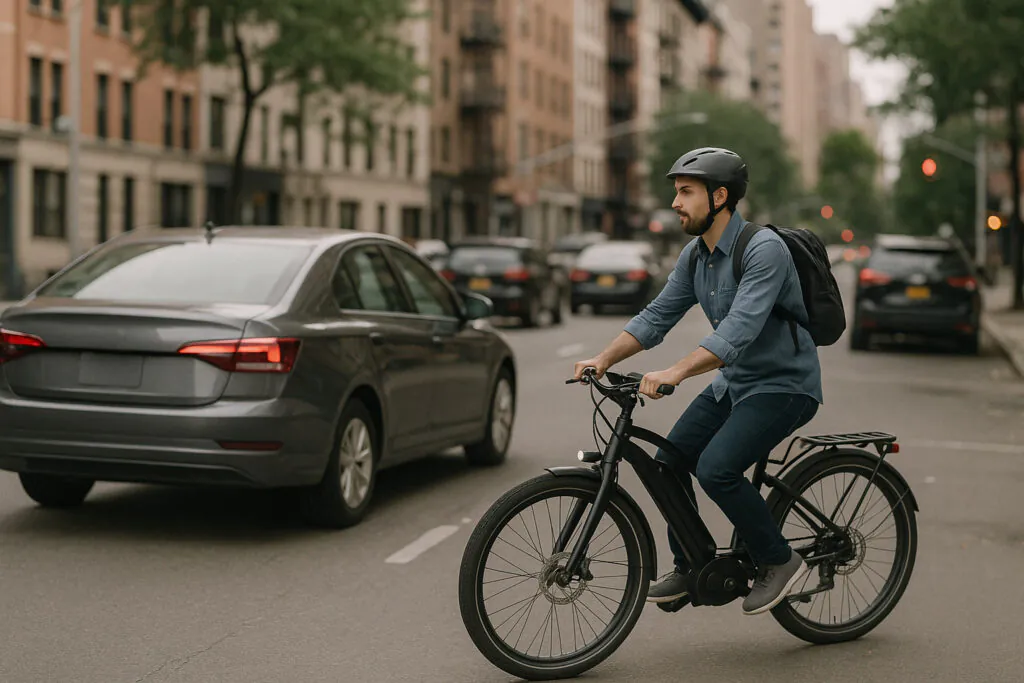
An Uber accident claim is not limited to passengers. A driver searching for a rider or moving toward the curb can strike someone walking, cycling, or riding an e-bike. These cases may depend on crosswalk markings, traffic signals, sight lines, turning speed, vehicle-camera footage, and the driver’s phone activity.
Uber Accident Cases Billy Cooper Law Handles
Billy Cooper Law represents people injured in several types of rideshare-related incidents, including:
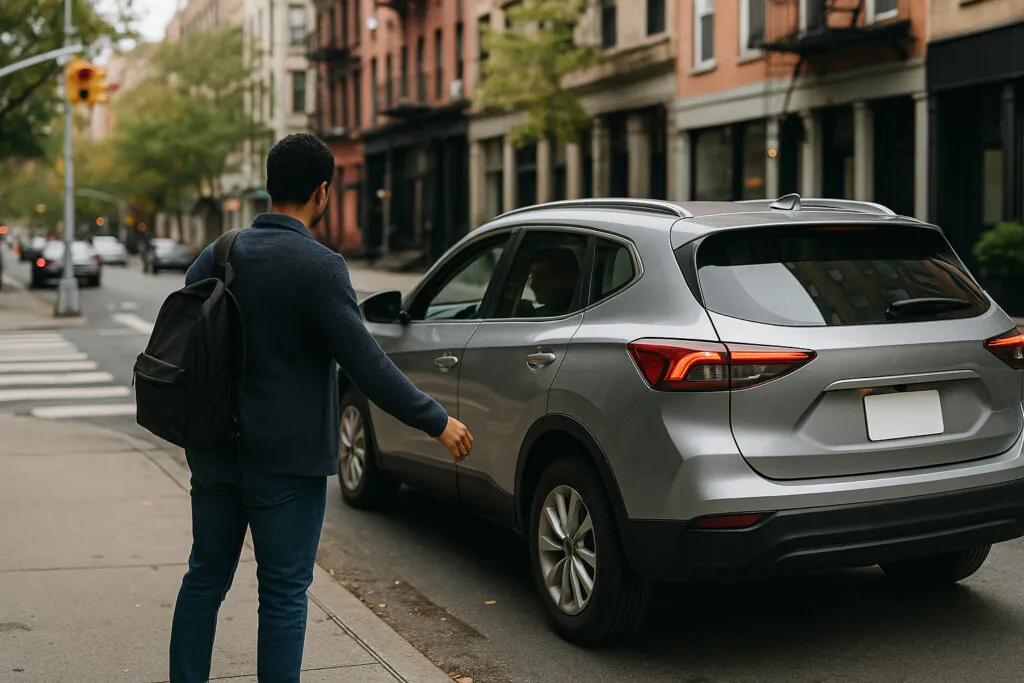
- Uber passenger accidents
- Multi-vehicle car crashes involving an Uber
- Pedestrians struck by rideshare vehicles
- Bicyclists injured by Uber drivers
- Uber drivers injured by another motorist
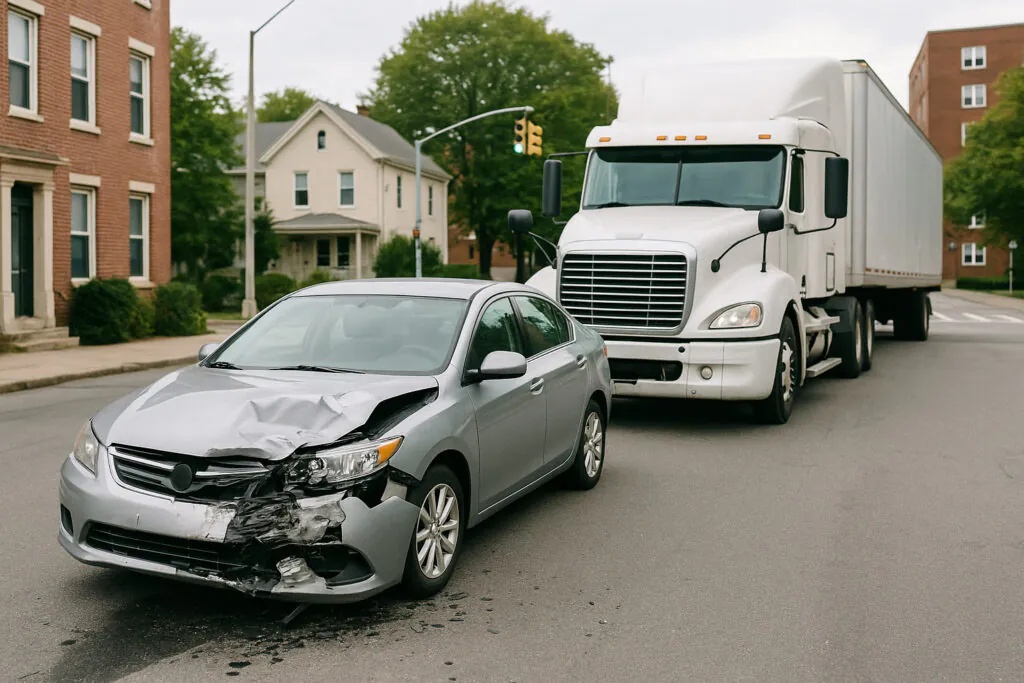
- Crashes involving delivery trucks, buses, or commercial vehicles
- Highway and merging accidents
- Unsafe pickups and drop-offs
- Hit-and-run and uninsured-driver accidents
- Catastrophic injury cases
- Fatal Uber accidents and wrongful death claims
Each situation raises different insurance questions. The policy covering an injured passenger may not be the same policy available to an Uber driver, pedestrian, cyclist, or occupant of another vehicle.
What to Do After an Uber Accident
Your first priority is medical care. Call 911 if you are injured or if anyone at the scene may need emergency assistance. Do not assume that pain, dizziness, numbness, or confusion will resolve on its own.
Once immediate medical needs are addressed:
- Report the crash.
Ask the NYPD to respond when someone is injured. Report the accident through the Uber app as well. If the collision occurred on Co-op City property, notify the Co-op City Public Safety Department. - Save the trip information.
Keep the Uber receipt, trip number, driver’s name, vehicle description, license plate, pickup location, destination, and any app messages. - Photograph the scene.
Take pictures of vehicle damage, road conditions, traffic signals, lane markings, building entrances, driveway locations, injuries, and nearby cameras. - Identify witnesses.
Get names and contact information yourself. Do not assume everyone will be identified in the police report. - Get timely follow-up care.
Tell your medical providers how the collision occurred and describe every injured body part. Keep appointments and follow reasonable treatment instructions. - Be cautious with insurance calls.
You may be contacted by the Uber driver’s insurer, a TLC vehicle insurer, another driver’s carrier, or a claims administrator. You do not have to guess about fault or the extent of your injuries in a recorded statement. - Act before digital evidence disappears.
App records, camera footage, dashcam files, vehicle data, and electronic communications may not be kept indefinitely.
If you were driving, New York may also require an MV-104 crash report when the accident caused an injury, death, or more than $1,000 in property damage to any one person. (nyc.gov)
Evidence That Can Make a Difference
A rideshare case often turns on electronic evidence that does not exist in an ordinary car crash.
Important records may include:
- Uber trip receipts and app screenshots
- Pickup, drop-off, and route data
- The driver’s login and trip-acceptance status
- GPS and dispatch records
- TLC driver, vehicle, and base information
- Commercial and personal insurance policies
- Police and ambulance reports
- Co-op City Public Safety reports
- Riverbay, shopping-center, garage, or building video
- Traffic and business surveillance footage
- Dashcam recordings
- Vehicle event-data recorder information
- Driver phone records when legally obtainable
- Photographs of damage and injuries
- Witness statements
- Medical records and diagnostic images
- Pay records and proof of missed work
Save the original files. Do not edit photographs or discard damaged clothing, child safety seats, bicycles, helmets, phones, or other physical evidence.
BILLY COOPER LAW
Who May Be Responsible?
The responsible party is not always the person whose name appears on the Uber receipt.
Depending on the evidence, a claim may involve:
- The Uber driver
- The owner of the rideshare vehicle
- Another driver
- Uber or an insurer providing rideshare coverage
- A commercial vehicle owner or driver’s employer
- A property owner controlling a driveway or pickup area
- Riverbay Corporation or a contractor, when property conditions contributed
- New York City, when a City-controlled roadway condition is involved
- The New York State Thruway Authority
- A vehicle or component manufacturer
Uber drivers are commonly treated as independent contractors, so direct responsibility on Uber’s part can be disputed. In many cases, the practical focus is identifying the applicable commercial or rideshare insurance policy. The answer depends on the driver’s licensing, trip status, location, and policy language.
How Insurance Works After a Co-op City Uber Crash
No-fault benefits
New York no-fault coverage may pay qualifying medical expenses and part of an injured person’s lost earnings without first deciding which driver caused the collision.
The applicable insurer depends on your role. An Uber passenger will generally look to the coverage associated with the vehicle they occupied. A pedestrian ordinarily files through the vehicle that struck them. Drivers and occupants of other vehicles may begin with coverage applicable to their own vehicle.
Written notice of a no-fault claim generally must be provided within 30 days. Medical bills are generally subject to a 45-day submission period, and proof of lost earnings generally must be submitted within 90 days. Exceptions may exist, but waiting can put important benefits at risk. (dfs.ny.gov)
Liability coverage
A liability claim addresses losses caused by another party’s negligence. That can include damages beyond no-fault benefits, such as pain and suffering, future losses, and income loss that no-fault does not cover.
For a Co-op City pickup, a lawyer should verify the TLC vehicle’s commercial coverage rather than relying only on the insurance card exchanged at the scene. TLC maintains licensing and insurance information for the vehicles it regulates. (nyc.gov)
Uninsured and underinsured coverage
If the responsible driver fled, had no insurance, or lacked enough coverage for a serious injury, uninsured or underinsured motorist coverage may apply. The policy, notice requirements, and any deadlines should be reviewed promptly.
New York Laws and Deadlines
The general personal injury deadline
Under CPLR § 214, many New York personal injury lawsuits must be started within three years. Shorter rules may apply when a government entity or public authority is involved. (nysenate.gov)
A wrongful death action generally must be commenced within two years of the death under EPTL § 5-4.1. (nysenate.gov)
The serious injury requirement
New York’s no-fault law generally requires a qualifying “serious injury” before an injured person may recover pain-and-suffering damages from another covered motorist.
The statutory categories include fractures, significant disfigurement, permanent loss of use, and certain significant or permanent limitations. The medical evidence—not simply the diagnosis written on an emergency-room discharge sheet—often determines whether the requirement is met. See Insurance Law § 5102 and Insurance Law § 5104. (nysenate.gov)
What if you were partly at fault?
New York changed its comparative-fault rule for certain motor-vehicle injury actions in 2026.
Under the current version of CPLR § 1411, an injured person’s compensation is ordinarily reduced according to their share of fault. In a personal injury action subject to New York’s no-fault law, however, recovery may be barred when the claimant’s share of fault is greater than the combined fault of the parties from whom recovery is sought. (nysenate.gov)
An insurer’s initial fault decision is not the final word. Video, signal timing, vehicle data, witness accounts, app activity, road design, and damage patterns may change how responsibility is allocated.
Compensation After a Serious Uber Accident
Depending on the evidence and available coverage, compensation may address:
- Emergency treatment and hospitalization
- Surgery, medication, rehabilitation, and therapy
- Future medical and personal-care needs
- Lost wages
- Reduced future earning ability
- Pain and suffering
- Permanent disability or disfigurement
- Loss of mobility or independence
- The effect of the injury on daily and family life
- Property damage
- Wrongful death losses recognized under New York law
The value of a case depends on more than the medical bills. The prognosis, length of treatment, effect on work, available insurance, degree of fault, and strength of the supporting evidence all matter.
Claims Involving Roads or Government Agencies
A poorly maintained road, malfunctioning traffic signal, unsafe work zone, bus, or highway condition can introduce much shorter deadlines.
A negligence claim against New York City generally requires a notice of claim within 90 days under General Municipal Law § 50-e. The lawsuit ordinarily must be commenced within one year and 90 days under General Municipal Law § 50-i. (nysenate.gov)
Different procedures may apply to the New York City Transit Authority, the New York State Thruway Authority, and other public entities. An accident near a bus, City street, or I-95 interchange should be reviewed quickly so the correct agency can be identified.
An accident on Co-op City property is not automatically a government claim. Riverbay Corporation is Co-op City’s corporate entity, and the procedure depends on who owned, maintained, or controlled the precise accident location. (coopcity.com)
Local Hospitals, Courts, and Agencies
- NYC Health + Hospitals/Jacobi is a designated adult Level I trauma center serving the Bronx. (nychealthandhospitals.org)
- The NYPD 45th Precinct encompasses Co-op City and is located at 2877 Barkley Avenue, Bronx NY 10465. (home4.nyc.gov)
- The Co-op City Public Safety Department operates an on-site, 24-hour dispatch center. Call 911 for police, fire, or medical emergencies. (coopcity.com)
- Bronx County Supreme Court, Civil Term is located at 851 Grand Concourse, Bronx NY 10451. It handles higher-value civil matters, including motor vehicle and other tort cases. (nycourts.gov)
- The NYC Taxi and Limousine Commission maintains licensing and insurance information for TLC-regulated vehicles. (nyc.gov)
Not every claim will be filed in Bronx County Supreme Court. Venue, jurisdiction, claim value, arbitration provisions, and the parties involved can affect where a dispute proceeds.
How Billy Cooper Law Investigates Uber Accidents
A thorough investigation may include:
- Confirming the exact pickup, drop-off, and crash locations
- Identifying the Uber driver, vehicle owner, TLC base, and insurers
- Determining the driver’s app and trip status
- Sending preservation notices for trip data, video, and electronic records
- Obtaining police, ambulance, Public Safety, and incident reports
- Securing building, garage, store, traffic, or dashcam footage
- Interviewing passengers and other witnesses
- Inspecting the vehicles and accident scene
- Reviewing medical records and the effect of the injury on your work and daily life
- Identifying every available no-fault, liability, commercial, and uninsured-motorist policy
- Filing required notices when a City, State, or public-authority claim may exist
The investigation should answer more than who received a traffic ticket. It should establish why the crash happened, what coverage was active, and how the injuries will affect your future.
Types of Injury Cases We Handle in Co-op City NY
Additional Legal Resources
- New York Uber Accident Lawyer
- New York Rideshare Accident Lawyer
- Bronx County NY Personal Injury Lawyer
- New York Motor Vehicle Accident Lawyer
- New York Car Accident Lawyer
Tell Us What Happened
If you were injured in an Uber accident in Co-op City, save the trip receipt, get the medical care you need, and do not wait to find out which insurance and filing deadlines apply.
Tell Billy Cooper Law what happened. The firm will listen, review the available evidence, and explain your options.
Call (718) 866-3311 or (914) 730-5789, or request a free consultation.
BILLY COOPER LAW
Co-op City NY Uber Accident FAQs
These answers provide general information about New York injury claims and related concerns. The rules depend on the facts; this is not individual legal or medical advice.
Which insurance applies to an Uber accident in Co-op City NY?
The answer depends on the vehicle’s licensing, the trip’s origin and the driver’s status. New York City’s TLC framework differs from the statewide transportation-network-company framework. A ride requested through the same app can therefore require a different insurance analysis depending on those facts; the app’s name alone does not establish the policy or coverage limit.
Save the receipt, pickup location, route and driver information. Have the actual policy and vehicle classification checked before assuming that a commonly advertised limit applies. TLC publishes minimum requirements by vehicle category and seating capacity, while the statewide TNC statute distinguishes waiting for requests from an accepted trip. A policy limit is not a guaranteed settlement amount, and fault and injury evidence still matter.
Sources: Vehicle and Traffic Law § 1693: TNC Insurance; Vehicle and Traffic Law § 1692: TNC Geographic Scope; NYC TLC: Vehicle Insurance Requirements, March 2026.
What if the driver accepted a ride but had not picked up the passenger?
Acceptance can matter under New York’s statewide TNC rules because a statutory prearranged trip begins when the driver accepts the request. It does not begin only when the passenger enters the vehicle. Whether that framework governs the particular vehicle and trip must still be confirmed, especially for New York City for-hire service.
Preserve the acceptance time, messages, pickup information and any available screenshots. Do not infer the driver’s status simply because the vehicle was empty after the collision or because the app showed a nearby car. Insurers may need platform records to distinguish an offline driver, an available driver and an accepted trip. Those distinctions help identify the applicable coverage; they do not by themselves establish negligence or the value of an injury claim.
Sources: Vehicle and Traffic Law § 1691: Trip Definitions; Vehicle and Traffic Law § 1693: TNC Insurance; Vehicle and Traffic Law § 1692: TNC Geographic Scope.
What if my Uber trip crossed between the Bronx and Westchester?
A county boundary alone does not identify the insurance framework. The vehicle’s licensing and the trip’s origin must be examined along with the accident location. New York’s statewide TNC article excludes New York City, while TLC rules govern relevant city-licensed for-hire vehicles. A trip crossing the boundary requires attention to those facts rather than a blanket assumption about coverage.
Save the complete ride receipt and route, including the pickup address and any changes to the destination. Identify the vehicle and driver as they appeared in the app, and keep correspondence from every insurer that contacts you. Counsel can compare the records with the applicable policy and licensing requirements. Do not assume that a border crossing automatically eliminates coverage or gives every passenger the same policy limit.
Sources: Vehicle and Traffic Law § 1692: TNC Geographic Scope; Vehicle and Traffic Law § 1691: Trip Definitions; NYC TLC: Vehicle Insurance Requirements, March 2026.
Can no-fault insurance cover treatment after a Co-op City NY Uber accident?
It may cover qualifying medical expenses and part of lost earnings regardless of who caused the collision. Coverage depends on your status, the vehicle and the applicable policy; it is separate from a liability claim against another driver. New York’s basic economic-loss provisions have a combined limit and restrictions on reimbursable losses.
Give the appropriate insurer written notice promptly. The usual no-fault notice period is 30 days, subject to a limited exception requiring written justification for delay. Keep copies of claim forms and delivery confirmations, and ask which insurer should receive your treatment bills. Payment of a bill does not establish that another person was negligent, and no-fault benefits do not themselves compensate you for pain and suffering.
Sources: New York DFS: No-Fault Insurance FAQs; Insurance Law § 5102: No-Fault and Serious Injury.
Does being partly at fault prevent me from recovering compensation?
It can in some New York motor-vehicle injury cases, but partial fault does not produce the same result in every claim. Current CPLR § 1411 distinguishes personal-injury actions subject to Insurance Law Article 51 from other cases. For covered actions, a claimant’s fault greater than the opposing parties’ combined fault can bar recovery; otherwise, the award is reduced proportionately.
Other injury claims generally retain proportional reduction without that statutory bar. The 2026 amendments and their applicability must be checked for the particular action. Preserve photographs, witness accounts and information about visibility, direction of travel and signals. An insurer’s initial fault assessment is not a court determination of your entitlement to damages.
Sources: CPLR § 1411: Comparative Fault; New York DFS: 2026 Motor Vehicle Insurance Reforms.
Can I seek pain-and-suffering damages for an Uber injury?
Potentially, but an injury action between covered persons under New York’s no-fault law generally requires a qualifying serious injury to recover noneconomic damages. A fracture is one statutory category; certain significant or permanent functional limitations are others. Pain, a diagnosis or time away from work alone does not establish every required element.
The current definition no longer includes the former 90/180-day category. The 2026 reform’s applicability should be evaluated for the action involved. Medical findings must connect the qualifying injury to the collision, and liability remains a separate issue. Keep examination records, imaging reports and documentation of functional restrictions so counsel can evaluate the relevant statutory category rather than relying on a settlement estimate.
Sources: New York Insurance Law § 5102(d): Serious Injury; New York Insurance Law § 5104: Personal Injury Actions; New York DFS: 2026 Motor Vehicle Insurance Reforms.
How long do I have to bring a claim after an Uber accident?
Many New York negligence lawsuits have a three-year limitation period, but that is not a safe deadline for every step after a crash. A claim involving a public corporation can require notice within 90 days. Claims against New York State follow separate Court of Claims procedures, which can also demand action within 90 days.
The defendant, type of claim and applicable exceptions determine the actual schedule. A police report or an ordinary insurance claim does not necessarily satisfy a government notice requirement. Identify the accident date, exact location and possible responsible parties at the outset, and have all deadlines checked before assuming you can wait to decide whether to pursue the matter.
Sources: CPLR § 214: Three-Year Limitation Periods; General Municipal Law § 50-e: Notice of Claim; Court of Claims Act § 10: Claims Against New York State.
What if headache or dizziness starts after I have gone home?
Seek medical advice promptly after new symptoms following a head impact. CDC guidance explains that concussion symptoms can appear hours or days later. Worsening headache, repeated vomiting, seizures, slurred speech, marked confusion or difficulty waking are emergency warning signs; call 911 or obtain emergency care immediately if these occur.
Tell the clinician when the crash happened, whether your head or body took a blow and when each symptom began. Ask for written guidance about returning to work, driving and other activities, and report symptoms that worsen or fail to improve. Medical assessment addresses your health; a symptom diary or this webpage cannot diagnose a concussion or establish the legal cause of an injury.
Sources: CDC: Symptoms of Mild TBI and Concussion; CDC: What to Do After a Mild TBI or Concussion.
What records should an Uber passenger preserve after a collision?
Keep the trip receipt, driver and vehicle details, route, messages and any in-app accident report, along with photographs and medical records. The receipt can help identify the trip and its timing, but it is not a substitute for independent evidence about how the crash occurred. Preserve the original information before changing accounts or replacing a phone.
New York’s statewide TNC provisions require specified receipt information for trips they govern, and ordinary disclosure rules may permit relevant records to be requested during a claim. The exact records available depend on the service and licensing framework. Tell counsel about any gaps or missing messages rather than reconstructing them from memory. A report through an app also does not necessarily satisfy an insurer’s separate notice or benefit-application requirements.
Sources: Vehicle and Traffic Law § 1692: TNC Geographic Scope; CPLR § 3101: Disclosure of Evidence; New York DFS: No-Fault Insurance FAQs.
Can I pursue another motorist if I was an Uber passenger?
Potentially. A passenger’s claim may involve the driver of the occupied vehicle, another motorist or more than one responsible party. New York’s vehicle-owner liability provision may also matter when a vehicle was being operated with the owner’s permission. Being a passenger does not remove the need to establish the cause of the crash and the applicable injury requirements.
Keep identifying information for all vehicles, not only the one ordered through the app. Describe where you were seated, the sequence of impacts and what you actually observed. No-fault benefits and a liability claim have different purposes, and payments under one do not decide the other. Have all available coverage reviewed before signing a release that could affect claims against another party or insurer.
Sources: Vehicle and Traffic Law § 388: Vehicle Owner Liability; Insurance Law § 5104: Personal Injury Actions; New York DFS: No-Fault Insurance FAQs.
Sources
Billy Cooper Law
- Billy Cooper Law official website
- Billy Cooper Law Uber accident practice
- Billy Cooper Law rideshare accident practice
- Billy Cooper Law team
- Billy Cooper, Esq.
- Anieska Garcia, Esq.
- Billy Cooper Law contact and office information
- Personal Injury
Co-op City and Local Transportation
- Riverbay Corporation and Co-op City
- Co-op City Public Safety Department
- Riverbay parking and leasing information
- Riverbay 2024 management report
- NYC DOT Baychester Avenue safety project
- NYC DOT Bartow Avenue and Baychester Avenue pedestrian-safety project
- New York State Thruway Authority interchange and exit listing
- NYPD 45th Precinct
- NYPD 45th Precinct December 2024 collision report
- NYC DOT 2024 traffic injury and fatality data
TLC and Insurance
- TLC requirements for a for-hire vehicle license
- TLC vehicle insurance information
- TLC transportation network company information
- TLC 2024 annual report
- New York Department of Financial Services no-fault FAQs
- New York no-fault Regulation 68
New York Law
- CPLR § 214
- CPLR § 1411
- Insurance Law § 5102
- Insurance Law § 5104
- General Municipal Law § 50-e
- General Municipal Law § 50-i
- EPTL § 5-4.1
- New York DMV MV-104 crash report
Local Medical and Court Resources
Get the Answers You Need
At Billy Cooper Law, every day we renew our pledge to help injured people get the justice and compensation they deserve. We have a reputation throughout New York and nationally for standing up for our clients, and we take that responsibility seriously by approaching every case with preparation, persistence, and an unwavering commitment to results.