
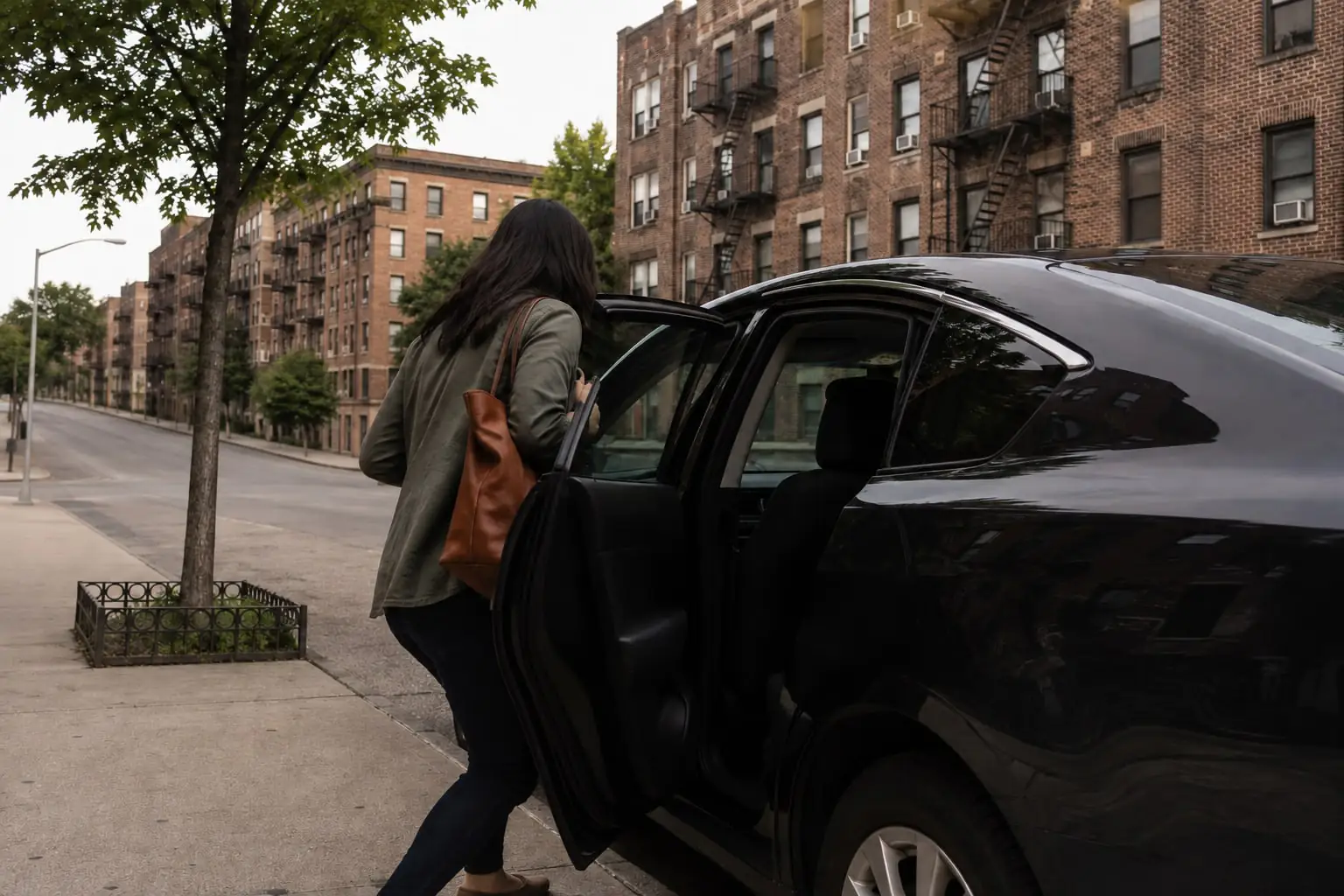
Kingsbridge NY Uber Accident Lawyer
An Uber crash can leave you caught between the driver, the rideshare company, and several insurance carriers—each waiting for someone else to accept responsibility. Meanwhile, you may be missing work, trying to arrange medical care, and wondering whether an early settlement offer will cover what comes next.
A Kingsbridge NY Uber accident lawyer can identify the policies that apply, preserve trip and vehicle data, and determine who caused the collision. Billy Cooper Law represents injured Uber passengers, drivers, pedestrians, cyclists, and occupants of other vehicles throughout the Bronx.
Uber Accident Lawyers Serving Bronx County
- Bronx County
- Co-op City
- Kingsbridge
- Soundview
- Riverdale
- Fordham
BILLY COOPER LAW

Why Injured People Turn to Billy Cooper Law
Uber cases sit at the intersection of New York motor vehicle law, no-fault insurance, commercial coverage, and app-based contracts. That is where Billy Cooper Law’s background is particularly useful.
The firm reports more than 75 years of combined experience. Its history traces back to Marvin A. Cooper, who helped draft New York’s No-Fault Insurance Law in 1973. William H. “Billy” Cooper has served as lead trial counsel for decades and has also written and presented on rideshare insurance and arbitration issues.
That experience matters when an insurer is disputing which policy applies, whether an injury meets New York’s legal threshold, or whether a claim against Uber belongs in court or arbitration.
The firm offers free consultations and handles personal injury cases on a contingency basis, so no upfront legal fee is required. People who contact the firm can speak directly with an attorney and receive an explanation of their options—even when the answer is not simple.
Billy Cooper Law lists its main office at 245 Main Street Suite 510 in White Plains NY and a by-appointment location at 4746 Broadway in New York NY. The firm does not maintain an office in Kingsbridge.
Why Uber Accident Claims Are Different in Kingsbridge
A Kingsbridge Uber pickup is governed by New York City’s Taxi and Limousine Commission system. That distinction can change the insurance analysis.
Outside New York City, Uber coverage usually depends heavily on whether the driver was offline, waiting for a request, traveling to a pickup, or carrying a passenger. In New York City, Uber drivers generally operate TLC-licensed vehicles with commercial insurance. For a standard for-hire vehicle carrying up to seven passengers, the current TLC minimums include:
- $100,000 in bodily injury liability coverage per person
- $300,000 in bodily injury liability coverage per occurrence
- $10,000 in property damage coverage
- $100,000 in personal injury protection, commonly called PIP or no-fault coverage
Those are minimum requirements, not a statement of how much will be available in every case. The vehicle may have additional coverage, another driver may share responsibility, or an employer, vehicle owner, contractor, or public entity may also be involved.
The investigation must begin with the actual trip—not a generic description of Uber insurance.
A Local Accident Snapshot
The NYPD 50th Precinct serves Kingsbridge along with Riverdale, Fieldston, Marble Hill, and Spuyten Duyvil. Its figures are broader than Kingsbridge alone, but they show the volume of traffic injuries in the surrounding northwest Bronx.
From January 1 through August 23, 2026, the precinct’s TrafficStat report recorded 612 collisions, including 259 injury collisions and 396 people injured. Forty-two pedestrians and 25 traditional bicyclists were injured. The precinct also recorded three traffic fatalities, all involving pedestrians.
Those numbers do not explain any individual crash. They do show why witness information, vehicle data, app records, and medical documentation should be collected before they disappear.
Where Uber Crashes Happen in Kingsbridge
The area around Broadway and West 231st Street brings together rideshare pickups, buses, pedestrians, delivery vehicles, storefronts, and traffic beneath the elevated 1 train. Uber drivers may stop suddenly after spotting a passenger, pull into an active bus stop, make a quick turn across a crosswalk, or wait in a travel lane because no curb space is available.
The elevated structure can also affect visibility. A driver looking at navigation instructions or searching for a passenger may fail to notice a pedestrian, cyclist, changing traffic signal, or vehicle slowing ahead.
Other Kingsbridge Uber cases arise from:
- Rear-end and sideswipe collisions on congested streets
- Crashes caused by unsafe turns at commercial intersections
- Passengers struck while entering or leaving an Uber
- Drivers opening doors into cyclists or moving traffic
- Pickups and drop-offs beside bus stops or crosswalks
- Collisions involving MTA buses, delivery trucks, or other commercial vehicles
- Crashes on wet, icy, or steep neighborhood streets
- Pedestrian injuries caused by vehicles pulling away from the curb
Local evidence is often scattered among different owners. Video may exist at a store, apartment building, bus, subway entrance, delivery vehicle, or another car. It may be overwritten quickly.
Do not assume a visible traffic camera recorded the accident. NYC DOT states that its traffic cameras provide live feeds but do not record footage. An investigation must look elsewhere for usable video.
Uber Accident Cases Billy Cooper Law Handles
Billy Cooper Law represents people injured in:
- Uber passenger accidents
- Car accidents involving an Uber vehicle
- Pedestrian accidents involving Uber drivers
- Uber crashes involving cyclists, e-bike riders, or scooter riders
- Accidents in which an Uber driver is injured by another motorist
- Door-opening and unsafe drop-off accidents
- Multi-vehicle rideshare collisions
- Crashes involving uninsured or underinsured drivers
- Accidents involving municipal vehicles or MTA buses
- Wrongful death claims arising from fatal Uber crashes
A passenger is often free from fault, but that does not mean the claim is automatic. The Uber driver’s insurer may blame another vehicle, while that vehicle’s carrier blames the Uber driver. Both may dispute which injuries came from the crash.
Your lawyer’s job is to develop the evidence rather than wait for the insurers to agree.
What to Do After an Uber Accident
Your health comes first. Call 911 and seek medical care if you are in pain, struck your head, feel dizzy, cannot move normally, or have any concern about your condition. Some concussions, ligament injuries, spinal injuries, and internal injuries become more apparent after the initial shock wears off.
When you can do so safely:
- Report the crash to the police. Save the complaint or accident report number.
- Photograph the scene. Include vehicle positions, damage, license plates, crosswalks, traffic controls, road conditions, and visible injuries.
- Save the Uber trip information. Take screenshots showing the driver, vehicle, pickup, destination, route, fare, and trip time.
- Get witness information. A name and phone number may be enough to preserve an important witness.
- Report the accident through Uber. Uber provides in-app and online crash-reporting options. Keep copies of anything you submit.
- Follow your medical instructions. Attend appointments and explain new or worsening symptoms to your providers.
- Be careful with insurance calls. Do not guess, minimize your injuries, or accept an early settlement before understanding the available coverage.
Reporting the crash to Uber does not replace a police report, no-fault filing, insurance notice, or government notice of claim.
Evidence Worth Preserving
Uber cases create digital records that do not exist in an ordinary car accident. Depending on the circumstances, an investigation may seek:
- Your trip receipt and app screenshots
- The driver’s app status and dispatch history
- Pickup, drop-off, GPS, route, and timestamp data
- Communications between Uber and the driver
- The Uber driver’s TLC license and vehicle information
- Commercial insurance policies and coverage declarations
- Police reports, 911 calls, and body-camera footage
- Vehicle event data and onboard camera recordings
- Photographs of the vehicles and scene
- Storefront, apartment, bus, and private surveillance video
- Cellphone records relevant to distraction
- Vehicle ownership, inspection, and maintenance records
- Witness statements
- Medical records, imaging, and operative reports
- Pay records and other proof of lost income
Uber and other high-volume for-hire services must provide trip records to the TLC. The TLC uses those records for safety, accountability, and transportation planning. Obtaining records for a particular injury claim may require formal preservation demands, discovery, subpoenas, or court intervention.
BILLY COOPER LAW
New York Laws and Deadlines
The general personal injury deadline is three years
Under CPLR § 214, many New York personal injury lawsuits must be commenced within three years.
That does not mean you should wait. Video may be overwritten, witnesses may become difficult to locate, and the correct insurance carrier must be notified much sooner.
No-fault notice is generally due within 30 days
No-fault insurance may cover qualifying medical expenses, lost earnings, and other necessary costs regardless of who caused the collision.
The New York Department of Financial Services generally requires:
- Written notice of the accident within 30 days
- Submission of medical bills within 45 days after treatment
- Submission of lost-income and other expense claims within 90 days
Limited exceptions may exist when there is clear and reasonable justification for a delay. You should not assume an exception will apply.
An Uber passenger will generally seek no-fault benefits through the policy covering the vehicle they occupied. A pedestrian generally files with the insurer for the vehicle that struck them.
Pain-and-suffering claims require a serious injury
No-fault benefits do not ordinarily pay for pain and suffering. To pursue non-economic damages after a covered motor vehicle accident, an injured person generally must satisfy the “serious injury” requirement in New York Insurance Law.
The rules changed for actions commenced on or after May 26, 2026. New York removed the former category based on being unable to perform substantially all usual activities for 90 of the first 180 days after the accident. The remaining categories include fractures, significant disfigurement, permanent loss of use, permanent consequential limitations, and significant limitations of a body function or system. The Department of Financial Services explains the 2026 motor vehicle reforms.
Objective medical evidence now carries even greater importance. Imaging, range-of-motion testing, surgical findings, specialist evaluations, and consistent records of functional limitations may determine whether a claim crosses the threshold.
What If You Were Partly at Fault?
Uber passengers are rarely responsible for causing a two-vehicle collision. Fault can become more disputed when the injured person was driving another vehicle, cycling, or crossing the street.
For motor vehicle injury actions commenced on or after May 26, 2026, CPLR § 1411(b) generally bars recovery when the injured claimant’s share of fault is greater than the fault of the person—or combined fault of the people—from whom compensation is sought.
In practical terms:
- A claimant found 50% or less at fault may still recover, with compensation reduced by that percentage.
- A claimant found more than 50% at fault may be barred from recovering in a covered motor vehicle injury case.
This makes early investigation especially important. A traffic ticket or insurance company’s opinion does not necessarily decide legal fault. Video, vehicle damage, signal timing, witness accounts, and electronic records may tell a different story.
Who May Be Responsible?
An Uber collision may involve claims against one or more of the following:
- The Uber driver
- The owner of the Uber vehicle
- Another driver or vehicle owner
- An employer whose worker caused the crash
- A commercial vehicle or delivery company
- A maintenance or repair business
- A manufacturer responsible for a defective vehicle or component
- The City of New York, if a municipal vehicle or qualifying roadway condition contributed
- The New York City Transit Authority, if an MTA bus or transit-controlled property was involved
- Uber, when the facts and applicable agreements support a claim against the company
Uber drivers are generally treated as independent contractors, and Uber may dispute direct responsibility for a driver’s negligence. Recovery may instead come through the vehicle’s commercial policy or another responsible driver’s insurance.
The proper defendants should be determined from the evidence, not from the logo displayed in the app.
Compensation After an Uber Crash
Compensation depends on the available insurance, proof of fault, medical evidence, and the effect of the injury on your life.
A claim may include:
- Medical expenses not paid through no-fault
- Future treatment, surgery, and rehabilitation
- Lost income
- Reduced future earning capacity
- Home health care or household assistance
- Transportation and other necessary expenses
- Pain and suffering when the serious-injury requirement is met
- Disability, scarring, or disfigurement
- Loss of enjoyment of life
- Damage to a vehicle, bicycle, phone, or other property
- Wrongful death losses when a crash is fatal
A serious injury should not be valued from the emergency room bill alone. The larger questions are whether you will recover fully, return to the same work, require surgery, or continue needing help months or years later.
When a Government Agency May Be Involved
Most Uber claims are against private drivers, owners, or insurers. Government deadlines may apply when the collision involves a City vehicle, MTA bus, public roadway defect, traffic-control problem, or transit-controlled location.
Under General Municipal Law § 50-e, a notice of claim against many public entities must be served within 90 days. Actions against the City are generally subject to a one-year-and-90-day deadline under General Municipal Law § 50-i.
Claims against the New York City Transit Authority also commonly require a 90-day notice and may have a one-year-and-90-day lawsuit deadline under Public Authorities Law § 1212.
Submitting a 311 report, speaking to an MTA employee, or filing an insurance claim is not necessarily the same as serving a valid notice of claim. The New York City Comptroller’s eClaim system accepts qualifying claims against the City, but the correct defendant and filing procedure must be identified first.
Local Courts, Hospitals, and Agencies
A substantial Uber injury lawsuit filed in the Bronx may proceed in Bronx County Supreme Court, Civil Term, located at 851 Grand Concourse in Bronx NY. The court handles civil cases over $50,000, including motor vehicle and other tort claims.
The 50th Precinct is located at 3450 Kingsbridge Avenue. Police reports and related records may help identify drivers and witnesses, but the police report is only one part of the investigation.
Depending on EMS routing and the injuries involved, treatment may begin at NYC Health + Hospitals/North Central Bronx or another medical facility. What matters legally is obtaining the full record from every emergency department, imaging center, specialist, therapist, and rehabilitation provider involved in your care.
How Billy Cooper Law Investigates an Uber Accident
The investigation begins by determining exactly what the Uber driver was doing and which entities controlled the vehicle, trip, and insurance.
Billy Cooper Law may:
- Obtain the police accident report and identify all vehicles
- Preserve the client’s Uber receipt and account records
- Demand that Uber, the driver, and insurers retain relevant digital evidence
- Verify the driver’s TLC and commercial insurance information
- Review app status, dispatch, GPS, and trip timestamps
- Locate witnesses and request private surveillance footage
- Inspect vehicle damage and available event data
- Investigate other drivers, vehicle owners, and employers
- Determine whether a municipal or transit defendant is involved
- Coordinate no-fault paperwork and medical documentation
- Consult medical, vocational, economic, or accident-reconstruction specialists when needed
- Evaluate whether any Uber-related claim may be subject to arbitration
The goal is to build the claim while you focus on treatment and recovery.
Types of Injury Cases We Handle in Kingsbridge NY
- Personal Injury
- Uber and Lyft Accidents
- Slip and Fall
- E-Bike Accidents
- Car Accidents
Additional Legal Resources
- New York Uber Accident Lawyer
- New York Rideshare Accident Lawyer
- New York Motor Vehicle Accident Lawyer
- New York Car Accident Lawyer
- New York Pedestrian Accident Lawyer
- Billy Cooper Law Case Results
Tell Us What Happened
You do not need to know which insurance policy applies or whether Uber, the driver, another motorist, or a public agency is responsible before calling. Those are questions the investigation should answer.
If you were injured in an Uber accident in Kingsbridge, contact Billy Cooper Law or call (718) 866-3311 for a free consultation. The firm will listen, review the immediate deadlines, and explain what you can do next.
BILLY COOPER LAW
Kingsbridge NY Uber Accident FAQs
These answers provide general information about New York injury claims and related concerns. The rules depend on the facts; this is not individual legal or medical advice.
Which insurance applies to an Uber accident in Kingsbridge NY?
The answer depends on the vehicle’s licensing, the trip’s origin and the driver’s status. New York City’s TLC framework differs from the statewide transportation-network-company framework. A ride requested through the same app can therefore require a different insurance analysis depending on those facts; the app’s name alone does not establish the policy or coverage limit.
Save the receipt, pickup location, route and driver information. Have the actual policy and vehicle classification checked before assuming that a commonly advertised limit applies. TLC publishes minimum requirements by vehicle category and seating capacity, while the statewide TNC statute distinguishes waiting for requests from an accepted trip. A policy limit is not a guaranteed settlement amount, and fault and injury evidence still matter.
Sources: Vehicle and Traffic Law § 1693: TNC Insurance; Vehicle and Traffic Law § 1692: TNC Geographic Scope; NYC TLC: Vehicle Insurance Requirements, March 2026.
What if the driver accepted a ride but had not picked up the passenger?
Acceptance can matter under New York’s statewide TNC rules because a statutory prearranged trip begins when the driver accepts the request. It does not begin only when the passenger enters the vehicle. Whether that framework governs the particular vehicle and trip must still be confirmed, especially for New York City for-hire service.
Preserve the acceptance time, messages, pickup information and any available screenshots. Do not infer the driver’s status simply because the vehicle was empty after the collision or because the app showed a nearby car. Insurers may need platform records to distinguish an offline driver, an available driver and an accepted trip. Those distinctions help identify the applicable coverage; they do not by themselves establish negligence or the value of an injury claim.
Sources: Vehicle and Traffic Law § 1691: Trip Definitions; Vehicle and Traffic Law § 1693: TNC Insurance; Vehicle and Traffic Law § 1692: TNC Geographic Scope.
What if my Uber trip crossed between the Bronx and Westchester?
A county boundary alone does not identify the insurance framework. The vehicle’s licensing and the trip’s origin must be examined along with the accident location. New York’s statewide TNC article excludes New York City, while TLC rules govern relevant city-licensed for-hire vehicles. A trip crossing the boundary requires attention to those facts rather than a blanket assumption about coverage.
Save the complete ride receipt and route, including the pickup address and any changes to the destination. Identify the vehicle and driver as they appeared in the app, and keep correspondence from every insurer that contacts you. Counsel can compare the records with the applicable policy and licensing requirements. Do not assume that a border crossing automatically eliminates coverage or gives every passenger the same policy limit.
Sources: Vehicle and Traffic Law § 1692: TNC Geographic Scope; Vehicle and Traffic Law § 1691: Trip Definitions; NYC TLC: Vehicle Insurance Requirements, March 2026.
Can no-fault insurance cover treatment after a Kingsbridge NY Uber accident?
It may cover qualifying medical expenses and part of lost earnings regardless of who caused the collision. Coverage depends on your status, the vehicle and the applicable policy; it is separate from a liability claim against another driver. New York’s basic economic-loss provisions have a combined limit and restrictions on reimbursable losses.
Give the appropriate insurer written notice promptly. The usual no-fault notice period is 30 days, subject to a limited exception requiring written justification for delay. Keep copies of claim forms and delivery confirmations, and ask which insurer should receive your treatment bills. Payment of a bill does not establish that another person was negligent, and no-fault benefits do not themselves compensate you for pain and suffering.
Sources: New York DFS: No-Fault Insurance FAQs; Insurance Law § 5102: No-Fault and Serious Injury.
Does being partly at fault prevent me from recovering compensation?
It can in some New York motor-vehicle injury cases, but partial fault does not produce the same result in every claim. Current CPLR § 1411 distinguishes personal-injury actions subject to Insurance Law Article 51 from other cases. For covered actions, a claimant’s fault greater than the opposing parties’ combined fault can bar recovery; otherwise, the award is reduced proportionately.
Other injury claims generally retain proportional reduction without that statutory bar. The 2026 amendments and their applicability must be checked for the particular action. Preserve photographs, witness accounts and information about visibility, direction of travel and signals. An insurer’s initial fault assessment is not a court determination of your entitlement to damages.
Sources: CPLR § 1411: Comparative Fault; New York DFS: 2026 Motor Vehicle Insurance Reforms.
Can I seek pain-and-suffering damages for an Uber injury?
Potentially, but an injury action between covered persons under New York’s no-fault law generally requires a qualifying serious injury to recover noneconomic damages. A fracture is one statutory category; certain significant or permanent functional limitations are others. Pain, a diagnosis or time away from work alone does not establish every required element.
The current definition no longer includes the former 90/180-day category. The 2026 reform’s applicability should be evaluated for the action involved. Medical findings must connect the qualifying injury to the collision, and liability remains a separate issue. Keep examination records, imaging reports and documentation of functional restrictions so counsel can evaluate the relevant statutory category rather than relying on a settlement estimate.
Sources: New York Insurance Law § 5102(d): Serious Injury; New York Insurance Law § 5104: Personal Injury Actions; New York DFS: 2026 Motor Vehicle Insurance Reforms.
How long do I have to bring a claim after an Uber accident?
Many New York negligence lawsuits have a three-year limitation period, but that is not a safe deadline for every step after a crash. A claim involving a public corporation can require notice within 90 days. Claims against New York State follow separate Court of Claims procedures, which can also demand action within 90 days.
The defendant, type of claim and applicable exceptions determine the actual schedule. A police report or an ordinary insurance claim does not necessarily satisfy a government notice requirement. Identify the accident date, exact location and possible responsible parties at the outset, and have all deadlines checked before assuming you can wait to decide whether to pursue the matter.
Sources: CPLR § 214: Three-Year Limitation Periods; General Municipal Law § 50-e: Notice of Claim; Court of Claims Act § 10: Claims Against New York State.
What if headache or dizziness starts after I have gone home?
Seek medical advice promptly after new symptoms following a head impact. CDC guidance explains that concussion symptoms can appear hours or days later. Worsening headache, repeated vomiting, seizures, slurred speech, marked confusion or difficulty waking are emergency warning signs; call 911 or obtain emergency care immediately if these occur.
Tell the clinician when the crash happened, whether your head or body took a blow and when each symptom began. Ask for written guidance about returning to work, driving and other activities, and report symptoms that worsen or fail to improve. Medical assessment addresses your health; a symptom diary or this webpage cannot diagnose a concussion or establish the legal cause of an injury.
Sources: CDC: Symptoms of Mild TBI and Concussion; CDC: What to Do After a Mild TBI or Concussion.
What records should an Uber passenger preserve after a collision?
Keep the trip receipt, driver and vehicle details, route, messages and any in-app accident report, along with photographs and medical records. The receipt can help identify the trip and its timing, but it is not a substitute for independent evidence about how the crash occurred. Preserve the original information before changing accounts or replacing a phone.
New York’s statewide TNC provisions require specified receipt information for trips they govern, and ordinary disclosure rules may permit relevant records to be requested during a claim. The exact records available depend on the service and licensing framework. Tell counsel about any gaps or missing messages rather than reconstructing them from memory. A report through an app also does not necessarily satisfy an insurer’s separate notice or benefit-application requirements.
Sources: Vehicle and Traffic Law § 1692: TNC Geographic Scope; CPLR § 3101: Disclosure of Evidence; New York DFS: No-Fault Insurance FAQs.
Can I pursue another motorist if I was an Uber passenger?
Potentially. A passenger’s claim may involve the driver of the occupied vehicle, another motorist or more than one responsible party. New York’s vehicle-owner liability provision may also matter when a vehicle was being operated with the owner’s permission. Being a passenger does not remove the need to establish the cause of the crash and the applicable injury requirements.
Keep identifying information for all vehicles, not only the one ordered through the app. Describe where you were seated, the sequence of impacts and what you actually observed. No-fault benefits and a liability claim have different purposes, and payments under one do not decide the other. Have all available coverage reviewed before signing a release that could affect claims against another party or insurer.
Sources: Vehicle and Traffic Law § 388: Vehicle Owner Liability; Insurance Law § 5104: Personal Injury Actions; New York DFS: No-Fault Insurance FAQs.
Sources
Billy Cooper Law
- Billy Cooper Law Practice Areas
- Billy Cooper, Esq.
- New York Uber Accident Lawyer
- New York Rideshare Accident Lawyer
- New York Motor Vehicle Accident Lawyer
- Personal Injury
- Billy Cooper Law Contact Information
Kingsbridge and New York City Resources
- NYPD 50th Precinct
- NYPD 50th Precinct TrafficStat Report
- NYC Taxi and Limousine Commission For-Hire Vehicle Insurance Requirements
- NYC Taxi and Limousine Commission High-Volume For-Hire Services
- NYC DOT Traffic Cameras
- Bronx County Supreme Court, Civil Term
- NYC Health + Hospitals/North Central Bronx
- New York City Comptroller eClaim Filing
New York Law and Insurance
- CPLR § 214 — Personal Injury Limitations Period
- CPLR § 1411 — Comparative Fault
- New York Department of Financial Services No-Fault FAQs
- New York Department of Financial Services 2026 Motor Vehicle Insurance Reforms
- General Municipal Law § 50-e — Notice of Claim
- General Municipal Law § 50-i — Municipal Tort Actions
- Public Authorities Law § 1212 — New York City Transit Authority Claims
- Wu v. Uber Technologies, Inc.
- Uber Crash Reporting Information
Get the Answers You Need
At Billy Cooper Law, every day we renew our pledge to help injured people get the justice and compensation they deserve. We have a reputation throughout New York and nationally for standing up for our clients, and we take that responsibility seriously by approaching every case with preparation, persistence, and an unwavering commitment to results.