

Co-op City NY Personal Injury Lawyer
Video Transcript
Every person who contacts our office speaks to an attorney directly.
Many firms, when you reach out, you get just a paralegal or just a receptionist, and while they may be very experienced, I think it gives a lot of assurance to the public that they know that when they call us, they will always get the attorney on the phone.
The most important thing I think people should know before they pick up the phone and call the office of Billy Cooper is that we take the time to listen and answer people’s questions.
One of the things that I get told most often, even if it’s a situation where we cannot take your case, is that we explain why.
We don’t just say, “No, you don’t have a case” and hang up.
We always give people an explanation.
We explain what the burden of proof is and the law that applies.
People are always most appreciative that we take the time to explain to them rather than just saying no.
A great outcome beyond the dollar amount is quite significant because after a case resolves, money only means so much.
In fact, I always have conversations with our clients indicating to them that money does a certain thing for you, but it can never make you feel completely whole.
What we try and do is we try and give our people the type of service where they know that even when the case is completed, we are here for them.
What makes our law firm different than other firms in New York is our attention to detail, and that we assist our clients with every aspect of their case.
We make phone calls to make sure that your medical bills are being paid.
We can assist you in finding medical care.
It’s beyond just a legal service. It is an all-around service that we provide.
If you have been injured in an accident or someone you know, whether it’s a family member or a friend, we ask that you reach out to us because we will speak with you and we will assist you.

Types of Injury Cases We Handle in Co-op City NY
Why Injured People Turn to Billy Cooper Law
When you are hurt, you need more than someone who can complete forms and exchange letters with an insurance company. You need a lawyer who understands how the injury has affected your work, health, family, and future. Billy Cooper Law’s history dates to 1960, and the firm brings more than 75 years of combined experience to personal injury cases. William H. Cooper has practiced since 1991 and has spent decades preparing and trying serious injury claims. Attorney Anieska J. Garcia provides representation in English and Spanish, allowing clients to discuss difficult medical and financial issues without relying on a relative to interpret. The firm’s published case results include a $9 million catastrophic injury settlement and a $6 million Bronx County settlement involving life-changing injuries. Those results do not predict what will happen in another case, but they show why preparation matters when an insurer is evaluating permanent disability, future care, or a major loss of earning capacity. Consultations are free. The firm handles personal injury cases on a contingency basis, so there is no upfront legal fee and no attorney’s fee unless compensation is recovered.Why Co-op City Cases Require a Local Investigation
Co-op City is not a typical collection of residential blocks. It is a large, interconnected housing community with residential towers, townhouse clusters, garages, shopping centers, community facilities, internal walkways, playgrounds, service areas, and its own public safety department. The community’s corporate entity is Riverbay Corporation. It is also a state-supervised Mitchell-Lama development. That does not mean every accident on or near the property follows the same claim process. The exact location matters. An accident could occur on:- A Riverbay-controlled walkway or building entrance
- A sidewalk adjoining a residential or commercial property
- A street maintained by New York City
- A bus or bus-stop platform controlled by a transit entity
- The New England Thruway, operated by the New York State Thruway Authority
- The Bronx section of the Hutchinson River Parkway, serviced by NYC DOT
- A construction area controlled by an outside contractor
- A store, parking area, or loading zone with a separate owner or tenant
A Local Accident Snapshot
A few numbers help explain the scale of the community and the risks that arise here:- Co-op City contains 15,372 residential units in 35 high-rise buildings and seven townhouse clusters across 320 acres. That size creates extensive building systems, walkways, garages, elevators, service roads, and common areas where maintenance records may become important.
- NYC DOT’s Baychester Avenue safety study recorded 83 injuries along the studied school-area corridor between 2020 and 2024.
- Thirteen of those injuries involved young people, a meaningful concern in an area where several schools share the corridor.
- Four people suffered severe injuries, including three pedestrians.
- Forty-six percent of the studied crashes occurred during school arrival and dismissal periods.
- Across the Bronx, traffic deaths fell from 54 in 2024 to 33 in 2025—a 39% decline. That progress matters, but it does not lessen the effect of a serious crash on an injured person or family.
- Co-op City
- Kingsbridge
- Soundview
- Riverdale
- Fordham
- Mott Haven
- Morris Park
- Parkchester
- Throggs Neck
- Williamsbridge
Where Serious Injuries Happen in Co-op City
Residential buildings and common areas
Co-op City’s 35 high-rise buildings contain elevators, lobbies, laundry rooms, stairs, utility areas, and other shared spaces. Outside, residents rely on walkways, plazas, garages, playgrounds, and paths connecting buildings with shopping and community facilities. Falls and other injuries may result from:- Snow or ice that was not addressed
- Broken or uneven pavement
- Wet lobby or laundry-room floors
- Poor lighting
- Defective stairs or handrails
- Elevator or door malfunctions
- Falling building materials
- Unsafe repair or construction work
Roads, intersections, and highway approaches
Bartow Avenue, Baychester Avenue, and Co-op City Boulevard carry local traffic while also feeding buses, shopping areas, schools, and major highway connections. The New England Thruway’s Co-op City exits include Bartow Avenue–Co-op City Boulevard and Baychester Avenue. The nearby Hutchinson River Parkway introduces another jurisdictional layer because the Bronx portion is serviced by NYC DOT. Crashes in these areas may involve merging traffic, commercial vehicles exiting I-95, vehicles turning across crosswalks, poor visibility, distracted driving, or unsafe speeds.Buses, bus stops, and pedestrian routes
Co-op City depends heavily on bus service. The MTA’s Bronx bus network includes several routes serving the community, including the Bx23, Bx25, Bx26, Bx28, Bx30, Bx38, and Q50. A bus injury may happen during a collision, sudden stop, boarding, discharge, wheelchair securement, or a fall near a stop. These cases require prompt identification of the operator because “the MTA” is not one legal entity, and different notice requirements may apply.Personal Injury Cases We Handle
Billy Cooper Law represents people injured in a wide range of circumstances, including:- Car, SUV, and motorcycle crashes
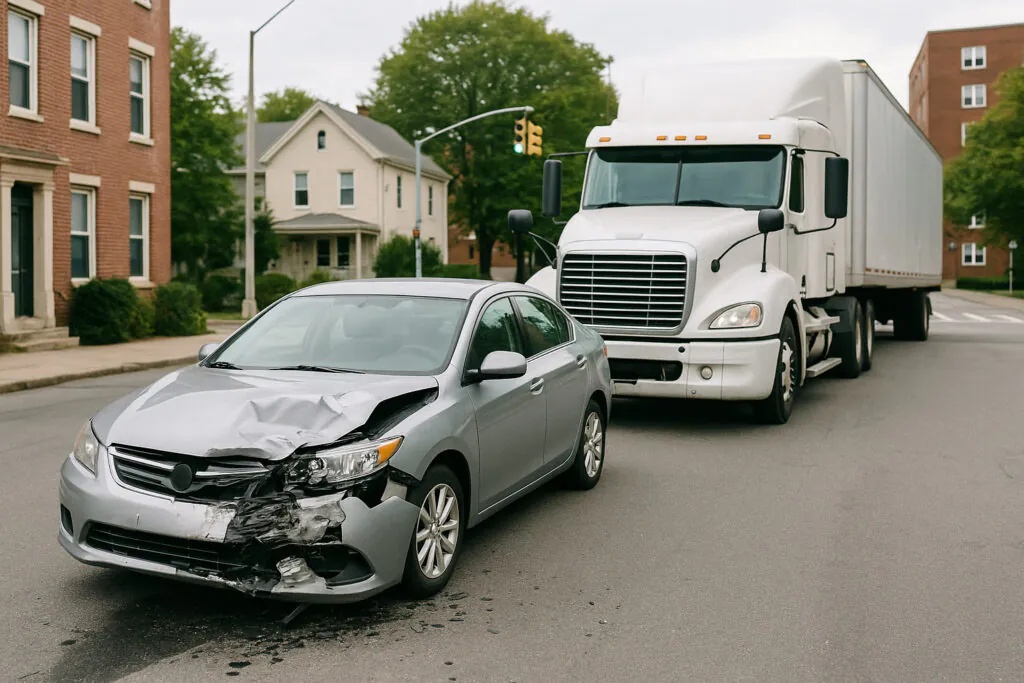
- Truck and commercial vehicle collisions
- Pedestrian, bicycle, and e-bike accidents
- Bus and public transportation injuries
- Uber, Lyft, and other rideshare accidents
- Slip, trip, and fall cases
- Residential building and elevator accidents
- Sidewalk, parking garage, and shopping-area injuries
- Construction and workplace accidents
- Dog bites
- Defective product injuries
- Medical malpractice
- Traumatic brain and spinal cord injuries
- Wrongful death
What to Do After an Accident
Your health comes first. Call 911 or seek medical attention if you are in pain, feel dizzy, struck your head, cannot move normally, or have any concern that the injury may be serious. Once immediate medical needs are addressed:- Report the accident. Call the police after a traffic collision. For an incident on Co-op City property, notify Riverbay or Co-op City Public Safety as well. If you were hurt in a store, garage, bus, or workplace, ask that an incident report be prepared.
- Photograph the exact location. Include the building number, street signs, floor condition, vehicle positions, traffic controls, weather conditions, and surrounding cameras. A close-up of a defect is useful, but wider photographs show where it was located.
- Identify witnesses. Ask for names, telephone numbers, and email addresses. Do not assume their information will appear in a police or incident report.
- Get timely medical care. Tell medical providers exactly how the injury happened and describe every affected body part. Gaps in treatment can make recovery harder and give insurers an argument that the injury was not serious.
- Do not give a recorded statement without advice. An insurer may sound helpful while asking questions designed to limit responsibility or minimize your injuries.
- Contact a lawyer before evidence disappears. Video may be overwritten, vehicles may be repaired, and dangerous conditions may be corrected without preserving what they looked like.
Evidence Worth Preserving
Good cases are built from details that can be checked later. Depending on what happened, important evidence may include:- Police, ambulance, and incident reports
- Photographs and video from the scene
- Lobby, elevator, garage, store, school, or traffic cameras
- Co-op City Public Safety records
- Riverbay work orders and maintenance logs
- 311 complaints and NYC inspection records
- Bus video, operator reports, and vehicle records
- Construction permits, contracts, and safety documents
- Dashcam and rideshare-app records
- Vehicle event-data recorder information
- Witness statements
- Damaged clothing, footwear, bicycles, helmets, or personal property
- Medical records and diagnostic images
- Pay records, tax documents, and proof of missed work
Insurance, Laws, and Deadlines
The ordinary personal injury deadline
Under CPLR § 214, many New York personal injury lawsuits must be started within three years. That is not a universal deadline. Medical malpractice, wrongful death, claims involving children, and cases against public entities follow different rules. Waiting also creates a practical problem long before the statute expires: evidence becomes harder to find.The 30-day no-fault deadline
After a New York motor vehicle accident, written notice of a no-fault claim generally must be submitted within 30 days. The New York Department of Financial Services advises injured people to file as soon as reasonably practicable. No-fault insurance may pay qualifying medical expenses and part of your lost earnings regardless of who caused the crash. It is separate from a liability claim for pain, suffering, and losses not covered by no-fault.New York’s 2026 motor vehicle changes
New York changed important motor vehicle injury rules effective May 26, 2026. According to the Department of Financial Services’ summary of the reforms, the changes apply to actions and proceedings commenced on or after that date. The reforms include a modified comparative-fault rule for personal injury actions subject to New York’s no-fault law. They also revised the definition and handling of a “serious injury.” Older online explanations of New York accident law may no longer be accurate.What If You Were Partly at Fault?
Fault now depends in part on the type of claim. For motor vehicle personal injury actions subject to Article 51 of the Insurance Law, CPLR § 1411(b) bars recovery when the injured person’s share of fault is greater than the combined fault of the parties from whom compensation is sought. That means:- If you are found 50% or less at fault, you may still recover, but the award is reduced by your percentage of fault.
- If you are found more than 50% at fault in a covered motor vehicle action, recovery may be barred.
BILLY COOPER LAW
Questions About a Co-op City Injury Claim?
Who May Be Responsible?
A personal injury claim may involve more than the person who was physically present. Potentially responsible parties include:- A careless driver
- The vehicle’s owner
- A driver’s employer
- A trucking, delivery, or commercial transportation company
- A rideshare company or its insurer
- Riverbay Corporation
- A property owner, commercial tenant, or managing agent
- A snow-removal, cleaning, elevator, or maintenance contractor
- A construction owner, general contractor, or subcontractor
- New York City or one of its agencies
- The New York City Transit Authority or another MTA entity
- The New York State Thruway Authority
- A manufacturer or distributor of a defective product
Compensation Available After a Serious Injury
A claim should account for what the injury has already cost you and what it is reasonably expected to cost in the future. Depending on the case, compensation may include:- Emergency care and hospitalization
- Surgery, therapy, medication, and rehabilitation
- Future medical and personal-care needs
- Lost wages and employment benefits
- Reduced future earning ability
- Pain and suffering
- Permanent disability or disfigurement
- Loss of mobility and independence
- The effect on daily activities and family life
- Property damage
- Wrongful death losses recognized under New York law
Government and Public-Authority Claims
Some of the shortest deadlines in Co-op City cases arise when a public entity may be responsible. A claim against New York City generally requires a notice of claim within 90 days under General Municipal Law § 50-e. The lawsuit ordinarily must be commenced within one year and 90 days under General Municipal Law § 50-i. The New York City Transit Authority also generally requires a notice of claim within 90 days, with a shortened period for filing suit. Claims involving the New England Thruway are different. The Court of Claims has exclusive jurisdiction over tort claims against the New York State Thruway Authority, and the Court of Claims Act may require a claim or notice of intention within 90 days. An accident on Riverbay property does not automatically become a municipal claim merely because Co-op City is state-supervised. The correct procedure depends on the entity that owned, controlled, maintained, or operated the accident location. If a public agency might be involved, do not wait to identify it.Local Medical Care, Courts, and Agencies
After an emergency, practical local information can help you locate reports and understand where a case may proceed.- NYC Health + Hospitals/Jacobi is located at 1400 Pelham Parkway South in the Bronx.
- The NYPD 45th Precinct covers Co-op City and is located at 2877 Barkley Avenue.
- The Co-op City Department of Public Safety operates from 2049 Bartow Avenue. Call 911 for police, fire, or medical emergencies.
- The Bronx County Supreme Court, Civil Term is located at 851 Grand Concourse and handles higher-value civil cases, including motor vehicle, medical malpractice, Labor Law, and other tort claims.
How We Investigate Co-op City Injury Cases
We begin by getting precise about the location and the people or organizations connected to it. That may mean:- Confirming the exact building, walkway, storefront, roadway, bus, or highway segment
- Researching ownership, management, maintenance, and operating agreements
- Sending preservation notices for video and electronic records
- Obtaining police, Public Safety, agency, and incident reports
- Looking for prior complaints, repairs, inspections, or similar accidents
- Interviewing witnesses before memories fade
- Inspecting the scene with an engineer or safety expert when appropriate
- Reviewing medical records and speaking with treating providers
- Identifying all available liability, no-fault, commercial, and supplemental insurance
- Filing notices of claim or Court of Claims documents when required
Frequently Asked Questions
How much does it cost to speak with Billy Cooper Law?
The consultation is free. If the firm accepts your personal injury case, it is handled on a contingency basis. You do not pay an upfront attorney’s fee, and no attorney’s fee is due unless compensation is recovered.Does Billy Cooper Law have an office in Co-op City?
The firm does not list an office in Co-op City. It represents Bronx clients from its White Plains office and its New York City location at 4746 Broadway, which is available by appointment. The firm’s contact page provides current office and telephone information.What if I fell outside my Co-op City building?
Take photographs immediately and report the condition to Riverbay or the appropriate property representative. Liability may depend on whether the accident occurred on a building entrance, internal path, adjoining sidewalk, commercial area, or City-controlled property.What if Riverbay repaired the condition after I fell?
A repair may remove important physical evidence. Photographs, witnesses, incident reports, work orders, surveillance footage, and prior complaints can help establish what existed before the repair.Can I bring a claim after an MTA bus accident?
Possibly. Bus cases may involve a collision, sudden movement, unsafe boarding, a defective platform, or negligent discharge. Identifying the exact route and operating entity is essential because a 90-day notice deadline may apply.Do I have a case if there was no police report?
A missing police report does not automatically defeat a claim. Other evidence may include witnesses, photographs, 911 records, medical documentation, surveillance video, vehicle damage, and electronic data. The absence of an immediate report can, however, make the case more difficult.What if the other driver says I caused the crash?
Drivers often give conflicting accounts. Video, damage patterns, event data, phone records, witness statements, traffic controls, and expert analysis may provide a more reliable answer.Do I need a serious injury to sue after a car accident?
New York generally requires proof of a qualifying serious injury to recover damages for pain and suffering in a motor vehicle case covered by the no-fault law. The definition changed for actions commenced on or after May 26, 2026, so the medical records and filing date must be reviewed carefully.Can I recover if I was partly responsible for a fall?
In most non-motor-vehicle negligence cases, partial fault reduces compensation rather than eliminating the claim. For example, a property owner may argue that a defect was visible while the injured person argues that lighting, crowding, or the nature of the condition made it difficult to avoid.Can I speak with the firm in Spanish?
Yes. Attorney Anieska J. Garcia is fluent in English and Spanish.Related Information
- New York Personal Injury Claims
- Motor Vehicle Accident Claims
- Premises Liability Claims
- Residential Building Accidents
- Meet the Billy Cooper Law Team
- Case Results
- Contact Billy Cooper Law
Tell Us What Happened
If you were injured in Co-op City, the first legal question may be who controlled the building, walkway, road, bus, or construction area where the accident occurred. The second may be how quickly action is required. Tell us what happened. We will listen, explain the issues we see, and help you understand your options. Call Billy Cooper Law at (718) 866-3311 or (914) 730-5789, or request a free consultation online. You pay no upfront attorney’s fee, and no attorney’s fee is due unless the firm recovers compensation for you.Sources
Billy Cooper Law
- Billy Cooper Law — Official Website
- Personal Injury Practice
- Meet the Team
- Billy Cooper, Esq.
- Anieska Garcia, Esq.
- Case Results
- Motor Vehicle Accidents
- Premises Liability
- Residential Building Accidents
- Contact and Office Information
Co-op City and Local Infrastructure
- Co-op City — Official Website
- Co-op City Public Safety Department
- New York State HCR 2025 Mitchell-Lama Annual Report
- NYC DOT Baychester Avenue Safety Improvement Plan
- NYC DOT 2025 Traffic Fatality Report
- New York State Thruway Interchange and Exit Listing
- NYC Highway Maintenance Jurisdiction
- NYC DOT Sidewalk Maintenance Information
- MTA Bronx Bus Map
- NYPD 45th Precinct
- NYC Health + Hospitals/Jacobi
- Bronx County Supreme Court, Civil Term
New York Law and Insurance
- CPLR § 214 — Personal Injury Limitations Period
- CPLR § 1411 — Comparative Fault
- New York DFS — 2026 Motor Vehicle Insurance Reforms
- New York DFS — No-Fault Insurance FAQs
- General Municipal Law § 50-e — Notice of Claim
- General Municipal Law § 50-i — Municipal Tort Actions
- Public Authorities Law § 1212 — Claims Against the New York City Transit Authority
- Public Authorities Law § 361-b — Claims Against the New York State Thruway Authority
- Court of Claims Act § 10 — Filing Deadlines
Communities We Serve
- Bronx County
- Co-op City
- Kingsbridge
- Soundview
- Riverdale
- Fordham
BILLY COOPER LAW
Ready to Discuss What Happened?
Related Personal Injury Lawyer | Co-op City NY Pages


Putting Over 75 Years of Combined Experience on Your Side
Putting Over 75 Years of Combined Experience on Your Side
Putting Over 75 Years of Combined Experience on Your Side
Putting Over 75 Years of Combined Experience on Your Side
Putting Over 75 Years of Combined Experience on Your Side
Putting Over 75 Years of Combined Experience on Your Side
Putting Over 75 Years of Combined Experience on Your Side
Putting Over 75 Years of Combined Experience on Your Side
Putting Over 75 Years of Combined Experience on Your Side
Putting Over 75 Years of Combined Experience on Your Side
Get the Answers You Need
At Billy Cooper Law, every day we renew our pledge to help injured people get the justice and compensation they deserve. We have a reputation throughout New York and nationally for standing up for our clients, and we take that responsibility seriously by approaching every case with preparation, persistence, and an unwavering commitment to results.