
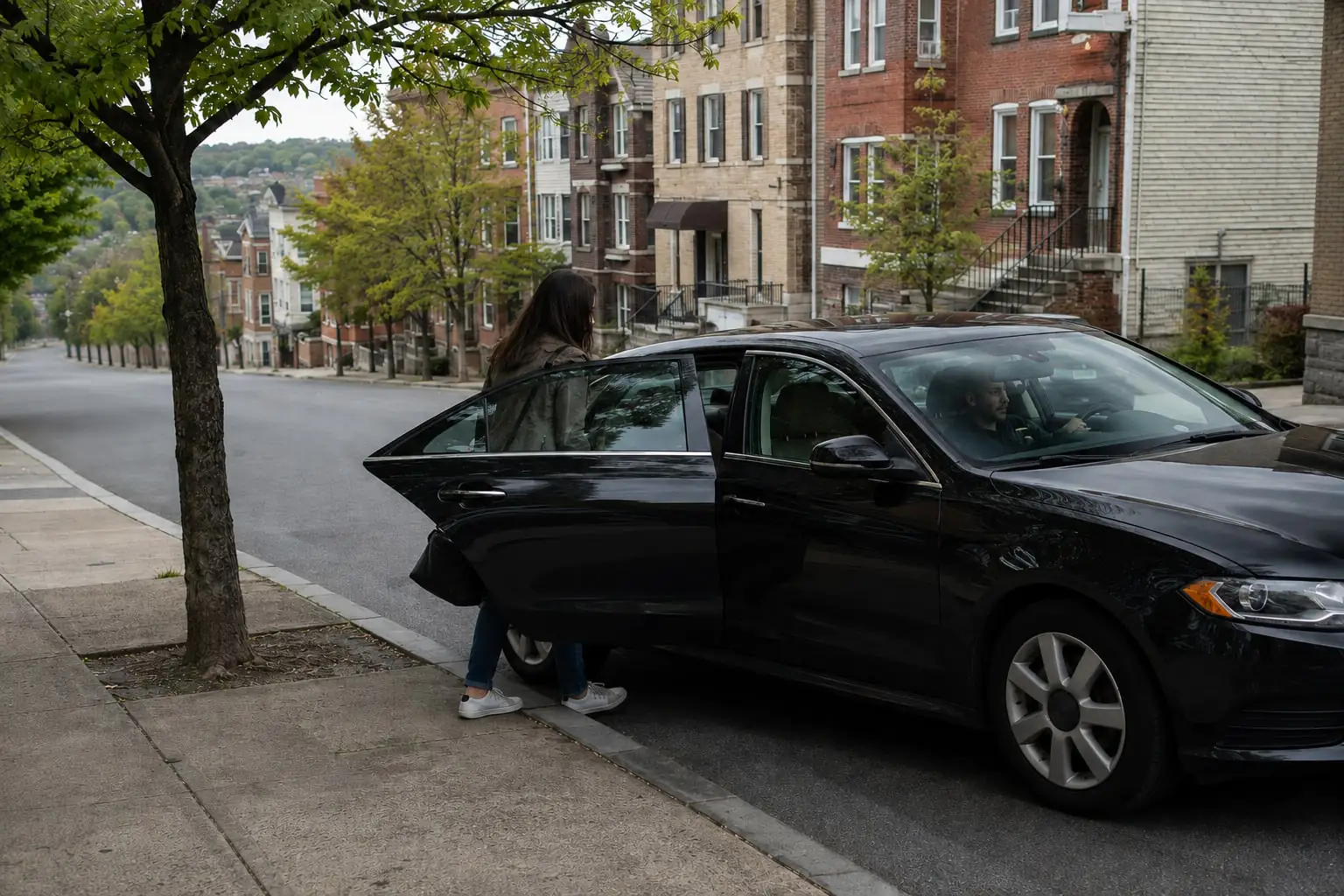
Yonkers NY Uber Accident Lawyer
An Uber crash can leave you dealing with injuries, medical bills, missed work, and several insurance companies that all seem to be pointing somewhere else. If you were a passenger, you may not know which driver caused the collision. If you were struck by an Uber vehicle, you may not know whether the driver was working at the time.
In Yonkers, one detail can be especially important: where the trip began. A ride that starts in Yonkers and ends in New York City remains subject to New York’s transportation network company rules. A trip that starts in New York City may fall under a different insurance framework—even if the crash happens after the vehicle enters Yonkers. Your receipt, pickup location, and app records can help answer that question.
Uber Accident Lawyers Serving Westchester County
BILLY COOPER LAW

A Law Firm That Understands Rideshare Claims
An Uber case requires more than sending medical records to an adjuster. Your lawyer may need to establish the driver’s app status, identify overlapping insurance policies, preserve trip data, and determine whether the claim belongs in court or raises an arbitration issue.
William H. Cooper has practiced in New York since 1991 and has served as the firm’s lead trial counsel for more than 25 years. He has received a Super Lawyers designation for 2024 through 2026 and has presented professional programming on rideshare arbitration and published commentary on rideshare insurance.
That background becomes useful when the dispute is not simply about who ran a light. Insurers may disagree over the moment the driver accepted the trip, whether a personal policy excludes commercial activity, or which coverage applies after a driver crosses the New York City line.
Serious injuries also require careful work on the damages side. Billy Cooper Law’s published case results include a $9 million Westchester County settlement for catastrophic injuries involving severe burns and an amputation. If you would rather discuss the case in Spanish, attorney Anieska J. Garcia is fluent in English and Spanish.
Consultations are free. The firm handles personal injury cases on a contingency basis, meaning no legal fee is owed unless compensation is recovered.
Why Uber Accidents Are Different in Yonkers NY
New York’s statewide transportation network company law does not apply uniformly to every Uber trip in the region.
Under the New York Department of Financial Services’ rideshare guidance, the statewide framework applies when a passenger is picked up in New York State outside New York City. That includes a pickup in Yonkers, even when the destination is Manhattan or another borough.
The same law does not apply to a prearranged trip originating in New York City. If the passenger was picked up in the Bronx and the collision later happened in Yonkers, the investigation may involve New York City for-hire vehicle rules instead.
That makes your Uber receipt more than proof that you paid for a ride. It can establish:
- The pickup and destination
- When the driver accepted the request
- Whether the driver was traveling to get you
- Whether you were already a passenger
- Which insurance period was active
- Which regulatory system may govern the trip
Yonkers also contains local streets, state routes, parkways, and Thruway facilities. The agency responsible for a road, ramp, signal, or construction project may affect where records are kept and whether a short government-claim deadline applies.
A Local Accident Snapshot
Public crash reports do not place Uber collisions in a separate category, but they show the conditions rideshare drivers encounter in Yonkers.
According to New York DMV data compiled for the Yonkers City Police Department, police reported 2,010 crashes in 2024, compared with a 2020–2024 annual average of 1,888. The 2024 total included 898 personal-injury crashes and one fatal crash.
The same report shows that Yonkers officers issued 717 speeding tickets and 1,723 aggressive-driving tickets in 2024. The aggressive-driving category includes failure to yield, following too closely, unsafe lane changes, and disobeying traffic controls—the same conduct that often becomes central in an Uber accident investigation.
Where Uber Injuries Happen in Yonkers
Downtown and the Yonkers Metro-North station
The City describes the Yonkers Metro-North station as a major downtown transportation hub, with Bee-Line routes 1, 2, 3, 4, 5, 6, and 9 serving the surrounding area.
A driver looking at the app may stop in a travel lane, double-park, make an abrupt turn, or pull away before a passenger is fully inside. Pedestrians may be watching for a license plate instead of approaching traffic.
Evidence may exist in station-area cameras, bus video, nearby business surveillance, app pickup coordinates, and witness accounts. Some of that material may be overwritten quickly.
Central Park Avenue and the I-87 ramps
Central Park Avenue is New York State Route 100, bringing state maintenance and record sources into the investigation. The Thruway Authority’s interchange listing identifies nearby access points for Yonkers Avenue, the Cross County Parkway, Central Park Avenue, and Tuckahoe Road.
These areas combine multilane traffic, short merging distances, shopping trips, highway entrances, and drivers approaching unfamiliar destinations. Useful proof may include toll information, construction records, traffic-camera footage, vehicle event data, and dashcam video.
Trips crossing the Bronx line
An Uber may cross between Yonkers and the Bronx within minutes. The crash location still matters, but it may not answer the insurance question by itself.
Save the receipt showing where the ride began. If the pickup occurred in Yonkers, New York’s statewide TNC requirements may apply even if the destination was in New York City. If the pickup occurred in New York City, a different framework may govern the vehicle and its insurance.
Shopping centers and private pickup areas
Parking lots and private access roads create different hazards. Uber drivers may stop in fire lanes, travel against marked traffic, focus on the app instead of pedestrians, or pull into a busy road with a limited view.
A claim may involve more than the drivers. Property owners and managers may have surveillance, incident reports, lighting records, maintenance files, or information about the design of the pickup area.
Uber Accident Cases Billy Cooper Law Handles
The firm represents people injured in:
- Uber passenger crashes
- Car accidents involving Uber vehicles
- Pedestrian accidents caused by Uber drivers
- Bicycle accidents involving Uber vehicles
- Hit-and-run and uninsured-driver claims
- Multi-vehicle Uber collisions
- Uber drivers injured by negligent motorists
- Catastrophic injury claims
- Wrongful death cases
The right claim depends on how the crash happened—not simply on whether an Uber decal was visible in the window.
What to Do After an Uber Accident
Your health comes first. Call 911 when emergency assistance is needed, and obtain medical care for pain, dizziness, numbness, confusion, weakness, or other symptoms. Some injuries become more noticeable after the immediate shock has passed.
When you can do so safely:
- Report the crash to police. An official report provides an early record of the drivers, vehicles, location, and reported injuries.
- Save the Uber trip. Take screenshots of the receipt, route, pickup, destination, driver, vehicle, license plate, messages, and trip status.
- Photograph the scene. Include vehicle damage, positions, traffic signals, signs, lane markings, debris, road conditions, and nearby cameras.
- Get contact information. Do not rely entirely on Uber to preserve the driver’s identity or on the police report to list every witness.
- Seek prompt medical attention. Tell each provider that your symptoms followed a motor vehicle crash.
- Report the event through the app carefully. Save copies of everything submitted and received. Do not guess about speed, distance, or fault.
- Avoid a rushed settlement. Early offers may arrive before your diagnosis, treatment needs, or available insurance are clear.
- Ask about insurance deadlines. New York no-fault requirements begin much sooner than the deadline for filing most lawsuits.
A driver involved in a reportable crash must generally submit an MV-104 motorist crash report within 10 days when someone was injured or killed or when damage to any one person’s property exceeded $1,000. A police report does not replace that filing.
Evidence Worth Preserving
Uber accident claims often turn on evidence that does not exist in an ordinary collision.
Save or identify:
- The Uber receipt and complete trip history
- Screenshots of the driver and vehicle
- The time the driver accepted the request
- The pickup and drop-off coordinates
- Messages and calls made through the app
- App notifications before and after the crash
- GPS and location history from your phone
- Photographs and video from the scene
- Dashcam or in-vehicle camera footage
- Witness names and contact information
- Police and DMV reports
- Clothing, child seats, bicycles, helmets, or damaged property
- Medical records and discharge instructions
- Wage statements and proof of missed work
A lawyer may also seek platform data, electronic vehicle information, surveillance, traffic-signal records, toll data, and public-agency records. A preservation demand should be sent before a business, station, parking facility, or vehicle owner deletes or overwrites relevant material.
Which Uber Insurance Policy Applies?
The answer depends largely on what the driver was doing.
The app was off
For a typical TNC driver, the personal automobile policy is usually the starting point. That policy still needs to be reviewed for exclusions, coverage limits, and any dispute about whether the driver was engaged in commercial activity.
The driver was logged in and waiting
Under Vehicle and Traffic Law § 1693, New York requires at least:
- $75,000 for injury or death to one person
- $150,000 for injury or death to two or more people
- $25,000 for property damage
No-fault and uninsured motorist protection must also be available during this period.
The driver accepted a trip
A prearranged trip begins when the driver accepts the passenger’s request. It includes the drive to the pickup and the time spent transporting the passenger, ending when the last requesting passenger leaves the vehicle.
During this period, New York requires at least $1.25 million in liability coverage and $1.25 million in supplementary uninsured/underinsured motorist coverage, together with no-fault protection.
The exact time of acceptance can therefore make a substantial difference. App timestamps, GPS records, and Uber’s trip data may become central evidence.
BILLY COOPER LAW
No-Fault Benefits and Filing Deadlines
New York no-fault insurance generally provides up to $50,000 in basic economic-loss benefits for qualifying medical expenses, lost earnings, and certain necessary expenses without first deciding who caused the crash. An Uber passenger ordinarily applies through the insurer covering the vehicle they occupied.
The Department of Financial Services’ no-fault guidance identifies several important deadlines:
- Written notice of the claim is generally due within 30 days
- Medical bills are generally due within 45 days of treatment
- Lost-earnings submissions are generally due within 90 days
Limited exceptions may apply when there is a clear and reasonable justification for delay, but it is safer to act promptly.
Most negligence-based personal injury lawsuits must be commenced within three years under CPLR § 214. That three-year period does not extend the no-fault deadlines, preserve video, or protect a government claim requiring action within 90 days.
New York’s Serious-Injury and Comparative-Fault Rules
No-fault benefits do not automatically compensate you for pain, disability, or loss of enjoyment of life.
A claim for non-economic loss against another covered person generally requires a “serious injury” under Insurance Law §§ 5102 and 5104. The current categories include death, dismemberment, significant disfigurement, fracture, loss of a fetus, permanent loss of use, permanent consequential limitation, and significant limitation of a body function or system.
New York changed this law in 2026. According to the Department of Financial Services’ summary of the reforms, the former 90-out-of-180-day serious-injury category was removed for actions commenced on or after May 26, 2026.
The same reforms changed comparative fault in personal injury actions subject to the no-fault law. Under CPLR § 1411, a claimant is barred from recovery when their share of fault is greater than the fault of the defendant—or the combined fault of the defendants—from whom recovery is sought. At 50% fault or less, damages are reduced by the claimant’s percentage.
An insurance adjuster’s fault assessment is not a final decision. It should be tested against the trip data, photographs, physical evidence, video, witnesses, and vehicle records.
Who May Be Responsible?
A Yonkers Uber crash may involve:
- The Uber driver
- Another motorist
- The owner of an involved vehicle
- An employer whose worker caused the collision
- A property owner responsible for an unsafe pickup area
- A road-construction or traffic-control contractor
- The City of Yonkers, Westchester County, New York State, or a public authority
- An uninsured or underinsured motorist carrier
Insurance coverage and legal responsibility are related but separate questions. Uber-related insurance may cover a collision without automatically establishing that Uber itself is legally responsible.
A careful investigation looks beyond the most obvious driver. Vehicle ownership, employment, road control, construction work, and available insurance may reveal additional parties or policies.
Compensation After a Serious Uber Accident
Depending on the injuries, available coverage, and applicable law, a claim may seek compensation for:
- Emergency treatment and hospitalization
- Surgery, medication, and rehabilitation
- Future medical care
- Lost income
- Reduced future earning capacity
- Household assistance
- Pain and suffering when the serious-injury requirement is met
- Disability, scarring, and disfigurement
- Loss of enjoyment of life
- Property damage
- Funeral expenses and other recoverable wrongful death losses
An early emergency-room bill does not show the full value of a serious injury. The evaluation should consider objective testing, treatment history, prognosis, work restrictions, future care, and the effect on daily life.
Health insurers, Medicare, Medicaid, no-fault carriers, or workers’ compensation providers may also assert reimbursement rights. Those issues should be addressed before a claim is resolved.
When a Government Agency May Be Involved
Most Uber crashes involve private drivers and insurance companies. Government involvement becomes possible when a public vehicle, defective signal, unsafe road condition, construction project, or government-controlled property contributed to the collision.
A claim against the City of Yonkers or Westchester County may require a notice of claim within 90 days under General Municipal Law § 50-e. A related lawsuit is generally subject to the requirements and one-year-and-90-day period in General Municipal Law § 50-i.
Claims involving New York State or the Thruway Authority follow different filing and service rules. The Court of Claims Act may require a claim or notice of intention within 90 days in certain circumstances.
A short deadline does not mean a public entity was negligent. It means the possibility must be investigated before the right to bring the claim is lost.
Local Courts, Hospitals, and Record Sources
A substantial personal injury lawsuit arising from a Yonkers collision may be filed in the Supreme Court of Westchester County, located at 111 Dr. Martin Luther King Jr. Boulevard in White Plains NY. Yonkers City Court handles civil matters within its more limited jurisdiction.
Local emergency-care options include St. John’s Riverside Hospital–Andrus Pavilion and Saint Joseph’s Medical Center. Follow EMS guidance and seek the care appropriate for your condition. For the legal claim, preserve the records from every hospital, physician, therapist, pharmacy, and imaging provider involved.
The Yonkers Police Department’s accident-report information directs people seeking reports from 2010 forward to CrashDocs and says reports are typically available within eight business days. Depending on the location, other records may come from New York State Police, New York State DOT, the Thruway Authority, Westchester County, Metro-North, or a private property owner.
How Billy Cooper Law Investigates an Uber Accident
The investigation begins by establishing the exact timeline:
- Where was the passenger picked up?
- Had the driver accepted the ride?
- Was the driver transporting a passenger or waiting for a request?
- When did the crash occur in relation to the trip?
- Which drivers, owners, insurers, and public agencies were involved?
From there, the legal team can send preservation demands, obtain reports, seek platform and vehicle data, inspect the scene, interview witnesses, and identify every potentially applicable policy.
The medical investigation develops at the same time. Records, imaging, work restrictions, prior health history, future treatment, and the effect on ordinary activities must be organized into a clear account of what the collision changed.
The purpose is not to collect documents for their own sake. It is to answer the questions an insurer, arbitrator, judge, or jury will ask: What happened? Who was responsible? Which coverage applies? How serious is the injury? What will its consequences cost over time?
Types of Injury Cases We Handle in Yonkers NY
Additional Legal Resources
- New York Uber Accident Lawyer
- New York Uber and Lyft Accident Lawyer
- New York Motor Vehicle Accident Lawyer
Tell Us What Happened
You do not need to know which insurance company is responsible before calling. Tell us where the ride began, where the crash happened, what the app showed, and where you received treatment. We will explain which records and deadlines need attention.
Billy Cooper Law serves Yonkers and the rest of Westchester County from its office at 245 Main Street, Suite 510, White Plains NY 10601. Call (914) 730-5789 or request a free consultation online.
Save your trip information. Ask your questions. If a government agency or public roadway may be involved, do not wait to learn which deadlines apply.
NOTABLE RESULTS
Selected relevant results reported by Billy Cooper Law:
$850,000 settlement · $2,400,000 settlement
Read more about these results
- $850,000 settlement — Automobile collision
A Bronx automobile collision caused lower-extremity reflex sympathetic dystrophy and a knee injury.
- $2,400,000 settlement — Fatal tractor-trailer collision
A mediated wrongful-death settlement followed a tractor-trailer crossing the median and striking a bus head-on in New York County.
These are reported gross results, before fees, expenses, and applicable liens. They are not estimates of another claim’s value. Read the firm’s published case results.
Prior results do not guarantee a similar outcome. Each case is different and must be evaluated on its own facts.
WHAT OUR CLIENTS SAY
General feedback about working with Billy Cooper Law:
“Wonderful experience. Very knowledgeable and responsive!”
— Lara C.
“He cares. He just cares.”
— Carmelo Curra
Professional Recognition

Recognition applies to the named attorneys and selection years. See the linked profiles for details.
Related Billy Cooper Law Videos and Social Posts
- New York No-Fault Insurance — Facebook.
- Billy Cooper Law official YouTube channel — Youtube — official account.
- Billy Cooper Law official Instagram profile — Instagram — official account.
- Billy Cooper Law official Linkedin profile — Linkedin — official account.
- Uber Accident Claims in New York — Facebook.
Published Articles by Billy Cooper
- When the Video Disappears: Liability, Missing Footage, and the Modern New York Injury Case — New York Law Journal · June 23, 2026.
Billy Cooper discusses video evidence that is missing, incomplete, or overwritten in New York injury litigation.
BILLY COOPER LAW
Yonkers NY Uber Accident FAQs
These answers provide general information about New York injury claims and related concerns. The rules depend on the facts; this is not individual legal or medical advice.
Which insurance applies to an Uber accident in Yonkers NY?
The answer depends on the vehicle’s licensing, the trip’s origin and the driver’s status. New York City’s TLC framework differs from the statewide transportation-network-company framework. A ride requested through the same app can therefore require a different insurance analysis depending on those facts; the app’s name alone does not establish the policy or coverage limit.
Save the receipt, pickup location, route and driver information. Have the actual policy and vehicle classification checked before assuming that a commonly advertised limit applies. TLC publishes minimum requirements by vehicle category and seating capacity, while the statewide TNC statute distinguishes waiting for requests from an accepted trip. A policy limit is not a guaranteed settlement amount, and fault and injury evidence still matter.
Sources: Vehicle and Traffic Law § 1693: TNC Insurance; Vehicle and Traffic Law § 1692: TNC Geographic Scope; NYC TLC: Vehicle Insurance Requirements, March 2026.
What if the driver accepted a ride but had not picked up the passenger?
Acceptance can matter under New York’s statewide TNC rules because a statutory prearranged trip begins when the driver accepts the request. It does not begin only when the passenger enters the vehicle. Whether that framework governs the particular vehicle and trip must still be confirmed, especially for New York City for-hire service.
Preserve the acceptance time, messages, pickup information and any available screenshots. Do not infer the driver’s status simply because the vehicle was empty after the collision or because the app showed a nearby car. Insurers may need platform records to distinguish an offline driver, an available driver and an accepted trip. Those distinctions help identify the applicable coverage; they do not by themselves establish negligence or the value of an injury claim.
Sources: Vehicle and Traffic Law § 1691: Trip Definitions; Vehicle and Traffic Law § 1693: TNC Insurance; Vehicle and Traffic Law § 1692: TNC Geographic Scope.
What if my Uber trip crossed between the Bronx and Westchester?
A county boundary alone does not identify the insurance framework. The vehicle’s licensing and the trip’s origin must be examined along with the accident location. New York’s statewide TNC article excludes New York City, while TLC rules govern relevant city-licensed for-hire vehicles. A trip crossing the boundary requires attention to those facts rather than a blanket assumption about coverage.
Save the complete ride receipt and route, including the pickup address and any changes to the destination. Identify the vehicle and driver as they appeared in the app, and keep correspondence from every insurer that contacts you. Counsel can compare the records with the applicable policy and licensing requirements. Do not assume that a border crossing automatically eliminates coverage or gives every passenger the same policy limit.
Sources: Vehicle and Traffic Law § 1692: TNC Geographic Scope; Vehicle and Traffic Law § 1691: Trip Definitions; NYC TLC: Vehicle Insurance Requirements, March 2026.
Can no-fault insurance cover treatment after a Yonkers NY Uber accident?
It may cover qualifying medical expenses and part of lost earnings regardless of who caused the collision. Coverage depends on your status, the vehicle and the applicable policy; it is separate from a liability claim against another driver. New York’s basic economic-loss provisions have a combined limit and restrictions on reimbursable losses.
Give the appropriate insurer written notice promptly. The usual no-fault notice period is 30 days, subject to a limited exception requiring written justification for delay. Keep copies of claim forms and delivery confirmations, and ask which insurer should receive your treatment bills. Payment of a bill does not establish that another person was negligent, and no-fault benefits do not themselves compensate you for pain and suffering.
Sources: New York DFS: No-Fault Insurance FAQs; Insurance Law § 5102: No-Fault and Serious Injury.
Does being partly at fault prevent me from recovering compensation?
It can in some New York motor-vehicle injury cases, but partial fault does not produce the same result in every claim. Current CPLR § 1411 distinguishes personal-injury actions subject to Insurance Law Article 51 from other cases. For covered actions, a claimant’s fault greater than the opposing parties’ combined fault can bar recovery; otherwise, the award is reduced proportionately.
Other injury claims generally retain proportional reduction without that statutory bar. The 2026 amendments and their applicability must be checked for the particular action. Preserve photographs, witness accounts and information about visibility, direction of travel and signals. An insurer’s initial fault assessment is not a court determination of your entitlement to damages.
Sources: CPLR § 1411: Comparative Fault; New York DFS: 2026 Motor Vehicle Insurance Reforms.
Can I seek pain-and-suffering damages for an Uber injury?
Potentially, but an injury action between covered persons under New York’s no-fault law generally requires a qualifying serious injury to recover noneconomic damages. A fracture is one statutory category; certain significant or permanent functional limitations are others. Pain, a diagnosis or time away from work alone does not establish every required element.
The current definition no longer includes the former 90/180-day category. The 2026 reform’s applicability should be evaluated for the action involved. Medical findings must connect the qualifying injury to the collision, and liability remains a separate issue. Keep examination records, imaging reports and documentation of functional restrictions so counsel can evaluate the relevant statutory category rather than relying on a settlement estimate.
Sources: New York Insurance Law § 5102(d): Serious Injury; New York Insurance Law § 5104: Personal Injury Actions; New York DFS: 2026 Motor Vehicle Insurance Reforms.
How long do I have to bring a claim after an Uber accident?
Many New York negligence lawsuits have a three-year limitation period, but that is not a safe deadline for every step after a crash. A claim involving a public corporation can require notice within 90 days. Claims against New York State follow separate Court of Claims procedures, which can also demand action within 90 days.
The defendant, type of claim and applicable exceptions determine the actual schedule. A police report or an ordinary insurance claim does not necessarily satisfy a government notice requirement. Identify the accident date, exact location and possible responsible parties at the outset, and have all deadlines checked before assuming you can wait to decide whether to pursue the matter.
Sources: CPLR § 214: Three-Year Limitation Periods; General Municipal Law § 50-e: Notice of Claim; Court of Claims Act § 10: Claims Against New York State.
What if headache or dizziness starts after I have gone home?
Seek medical advice promptly after new symptoms following a head impact. CDC guidance explains that concussion symptoms can appear hours or days later. Worsening headache, repeated vomiting, seizures, slurred speech, marked confusion or difficulty waking are emergency warning signs; call 911 or obtain emergency care immediately if these occur.
Tell the clinician when the crash happened, whether your head or body took a blow and when each symptom began. Ask for written guidance about returning to work, driving and other activities, and report symptoms that worsen or fail to improve. Medical assessment addresses your health; a symptom diary or this webpage cannot diagnose a concussion or establish the legal cause of an injury.
Sources: CDC: Symptoms of Mild TBI and Concussion; CDC: What to Do After a Mild TBI or Concussion.
What records should an Uber passenger preserve after a collision?
Keep the trip receipt, driver and vehicle details, route, messages and any in-app accident report, along with photographs and medical records. The receipt can help identify the trip and its timing, but it is not a substitute for independent evidence about how the crash occurred. Preserve the original information before changing accounts or replacing a phone.
New York’s statewide TNC provisions require specified receipt information for trips they govern, and ordinary disclosure rules may permit relevant records to be requested during a claim. The exact records available depend on the service and licensing framework. Tell counsel about any gaps or missing messages rather than reconstructing them from memory. A report through an app also does not necessarily satisfy an insurer’s separate notice or benefit-application requirements.
Sources: Vehicle and Traffic Law § 1692: TNC Geographic Scope; CPLR § 3101: Disclosure of Evidence; New York DFS: No-Fault Insurance FAQs.
Can I pursue another motorist if I was an Uber passenger?
Potentially. A passenger’s claim may involve the driver of the occupied vehicle, another motorist or more than one responsible party. New York’s vehicle-owner liability provision may also matter when a vehicle was being operated with the owner’s permission. Being a passenger does not remove the need to establish the cause of the crash and the applicable injury requirements.
Keep identifying information for all vehicles, not only the one ordered through the app. Describe where you were seated, the sequence of impacts and what you actually observed. No-fault benefits and a liability claim have different purposes, and payments under one do not decide the other. Have all available coverage reviewed before signing a release that could affect claims against another party or insurer.
Sources: Vehicle and Traffic Law § 388: Vehicle Owner Liability; Insurance Law § 5104: Personal Injury Actions; New York DFS: No-Fault Insurance FAQs.
Sources
Billy Cooper Law
- Billy Cooper Law Uber accident practice
- Billy Cooper Law Uber and Lyft accident practice
- Uber and Lyft Accidents
- Personal Injury
- William H. Cooper attorney profile
- Anieska J. Garcia attorney profile
- Billy Cooper Law case results
- Billy Cooper Law contact and office information
New York Law and Insurance
- New York Department of Financial Services rideshare insurance guidance
- New York Vehicle and Traffic Law § 1693
- New York Department of Financial Services no-fault insurance guidance
- New York Insurance Law § 5102
- New York Insurance Law § 5104
- New York CPLR § 1411
- New York CPLR § 214
- New York Department of Financial Services 2026 motor vehicle insurance reforms
- New York General Municipal Law § 50-e
- New York General Municipal Law § 50-i
- New York Court of Claims Act § 10
- New York DMV MV-104 motorist crash report
Yonkers and Westchester Sources
- Yonkers City Police crash and enforcement data
- City of Yonkers downtown transportation information
- New York State DOT Route 100 information
- New York State Thruway Authority interchange listing
- City of Yonkers police accident-report information
- Supreme Court of Westchester County
- Yonkers City Court
- St. John’s Riverside Hospital–Andrus Pavilion
- Saint Joseph’s Medical Center emergency services
Related Communities


Get the Answers You Need
At Billy Cooper Law, every day we renew our pledge to help injured people get the justice and compensation they deserve. We have a reputation throughout New York and nationally for standing up for our clients, and we take that responsibility seriously by approaching every case with preparation, persistence, and an unwavering commitment to results.