
Greenburgh NY Delivery Accident Lawyer
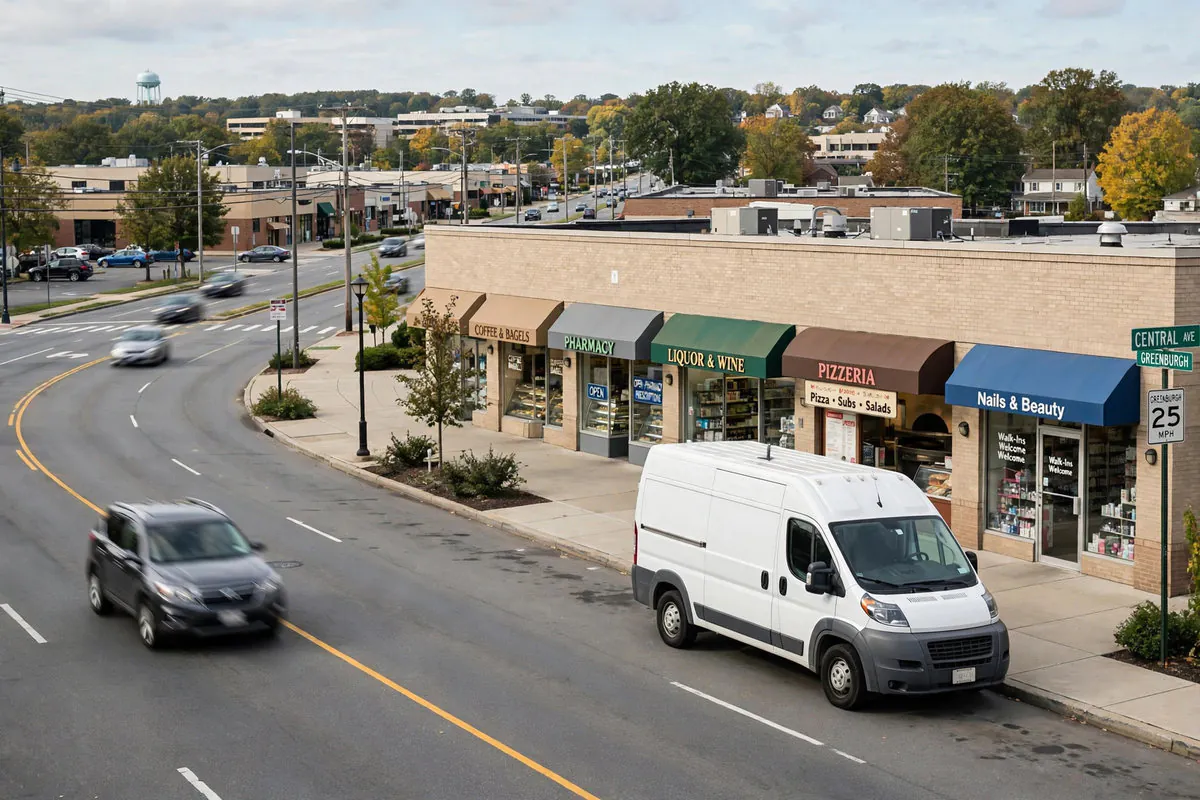
Greenburgh runs on deliveries. The town’s commercial spines — Central Avenue (Route 100), Tarrytown Road (Route 119) and Saw Mill River Road (Route 9A) — carry a constant stream of package vans, box trucks, grocery and restaurant delivery vehicles serving big-box retail, office parks and the residential villages from Elmsford and Hartsdale to Tarrytown and Dobbs Ferry. Where that volume meets suburban traffic and pedestrians, people get hurt — and the claims that follow are company cases.
Billy Cooper Law represents people injured by delivery vehicles in Greenburgh and across Westchester County. This page explains how delivery claims work here — who is responsible, what evidence decides them, and which deadlines apply. For Greenburgh’s broader injury practice, see the Greenburgh personal injury page; the county view is on the Westchester County hub.
Delivery Accident Lawyers Serving Westchester County
- Westchester County
- Yonkers
- Greenburgh
- New Rochelle
- Mount Vernon
Delivery Accident Cases We Handle in Greenburgh
Delivery Accident Lawyers Serving Westchester County
Delivery work does not respect town lines — the van that stops on Tarrytown Road in the morning is in Yonkers by afternoon — and neither does this practice. The firm’s Westchester delivery pages cover Yonkers, Mount Vernon, New Rochelle and White Plains, alongside Greenburgh, all under the Westchester County hub.
Wherever in the county the crash happened, the structure of the claim is the same: identify the driver, the company behind the route, and every policy that responds — then capture the electronic record before it rotates.
BILLY COOPER LAW

Why Injured People Turn to Billy Cooper Law
Delivery cases are evidence cases against organizations. The driver is the visible defendant; the records — route assignments, scanner and telematics data, maintenance files, the contract between the retailer and its delivery partner — are held by companies that respond to formal demands, not phone calls. Billy Cooper Law builds these files the way companies build theirs: documented, early and complete.
The firm is based in White Plains, minutes from Greenburgh, and handles the consultation, investigation and litigation of a delivery claim under one roof. There is no fee unless there is a recovery.
What Makes Greenburgh Delivery Accident Cases Different
Greenburgh’s delivery risk has a specific geography. The town is a retail and logistics hinge: big-box stores and supermarkets along Central Avenue and Route 119 generate van and truck traffic all day; the 9A corridor and Elmsford’s commercial blocks add box trucks and freight; and the residential villages receive a dense weave of package, grocery and food deliveries on streets designed for local traffic.
That mix produces recognizable crash patterns — vans double-parked or backing on Central Avenue, left turns across traffic into shopping centers, box trucks swinging wide on Saw Mill River Road, and door-zone and intersection strikes on the village streets of Hartsdale, Ardsley and Tarrytown. Each pattern has its own evidence and its own responsible parties.
A Local Delivery Accident Snapshot
A Greenburgh delivery case usually begins with three identifications. The vehicle: its markings, plate and DOT number point to the operator. The route: package and food deliveries run on assigned routes with time-stamped scans, and the route record shows where the van was supposed to be and when. The relationship: whether the driver is an employee, a contractor for a delivery service partner, or a gig driver on an app determines which insurance responds.
All three are knowable in the first days — and progressively harder to establish as data rotates and memories blur. It is why the firm’s first step in a Greenburgh delivery case is always a round of preservation demands.
Where Delivery Accident Injuries Happen in Greenburgh
Delivery injuries in Greenburgh concentrate where delivery volume meets turning and stopping traffic:
- Central Avenue (Route 100) — big-box and supermarket frontage: vans stopping in travel lanes, backing from loading areas, and turning across traffic into lots.
- Tarrytown Road (Route 119) — retail and restaurant delivery traffic mixing with commuters between White Plains and the river towns.
- Saw Mill River Road (Route 9A) and Elmsford’s commercial blocks — box trucks and freight movements around warehouses and light industry.
- The Saw Mill and Sprain Brook parkway interchanges — delivery vehicles merging at speed with local traffic entering and leaving the corridors.
- Village streets in Hartsdale, Ardsley, Irvington and Tarrytown — package and food deliveries on narrow residential roads, with pedestrian and cyclist exposure.
- Office-park and medical corridors — courier and pharmacy deliveries around the town’s office and healthcare clusters.
Real Cases Often Begin in Ordinary Moments
The firm handles Greenburgh delivery claims across the vehicle spectrum: package vans and step vans (national carriers and their contractor networks), Amazon-route delivery service partners, grocery and restaurant delivery, app-based food delivery drivers, furniture and appliance trucks, and courier and medical-delivery vehicles.
The injured person varies as widely: occupants of cars struck by vans, pedestrians and cyclists hit at curbs and crossings, residents struck in driveways and parking lots, and delivery drivers themselves — who may hold both a workers’ compensation claim and a third-party case against the driver or vehicle owner who hurt them.
What To Do After a Delivery Accident in Greenburgh
After a delivery-vehicle crash in Greenburgh, the steps that protect your claim:
- Get medical care. Call 911 for emergencies. Tell providers the injuries come from a vehicle crash so the records connect them.
- Report the crash. Greenburgh Police respond on town roads; State Police handle the parkways. Get the report number before you leave the scene if you can.
- Photograph the vehicle and its markings. Company names, logos, plate and DOT numbers identify the operator and insurer — this is the single most valuable evidence act in a delivery case.
- Collect driver and witness information. The driver’s name and employer, and contact details for anyone who saw the crash.
- Preserve the electronic trail. If a delivery to you was involved, keep the app’s tracking screens, delivery photos and notifications — they timestamp the route.
- Do not give a recorded statement to the company’s insurer or sign an early settlement before your injuries and the coverage structure are understood.
How Evidence Proves the Claim
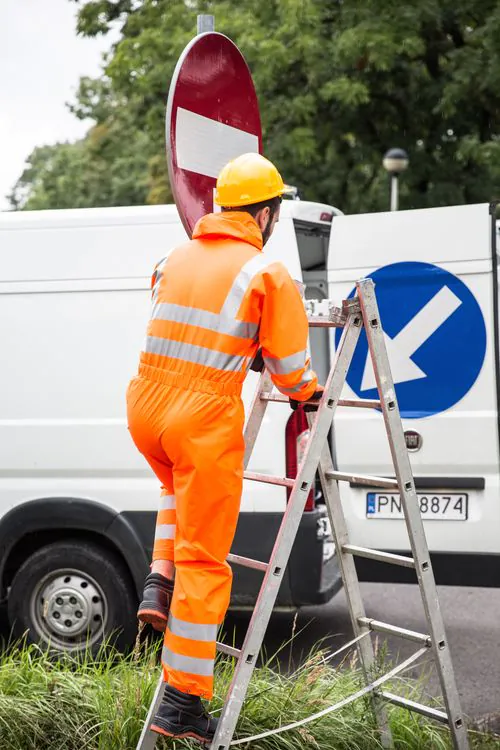
Delivery cases are decided by records companies keep about themselves: telematics and GPS breadcrumbs, route and scanner data showing every stop, driver qualification and training files, vehicle inspection and maintenance records, and the contracts that define whether the driver was an employee or a contractor and whose insurance is primary.
Those systems are not kept for the claimant’s benefit. Telematics overwrite, route data archives, and vehicles are repaired and returned to service. A written preservation demand, served on the right entities in the first days, is what converts a corporate data stream into case evidence. The firm pairs it with the ordinary record — police report, camera footage from corridor businesses, medical documentation — to build a file the insurer has to answer.
BILLY COOPER LAW
How Insurance Works in a Greenburgh Delivery Crash
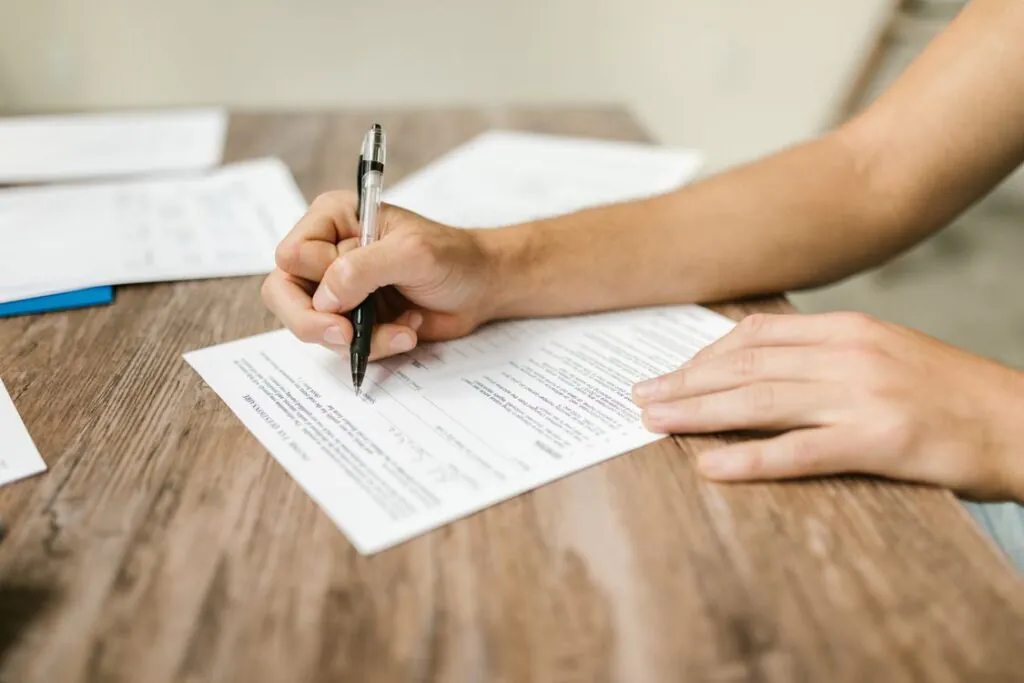
Several policies can respond to a single delivery crash. Your own no-fault coverage — or the delivery vehicle’s, if you were a pedestrian or cyclist — pays first-party benefits for medical care and part of lost earnings regardless of fault, with the written application generally due within thirty days. The liability side depends on the driver’s status: an employee driver brings the employer’s commercial policy into the case under respondeat superior; a contractor or DSP driver raises the delivery partner’s policy and sometimes the retailer’s excess coverage; a gig food-delivery driver may be covered by the platform’s contingent policy only while the app shows an active delivery.
Serious injuries change the analysis again: pain-and-suffering claims against a motorist require meeting Insurance Law § 5102(d)’s serious-injury threshold, and the available limits across all responding policies set the practical ceiling. Mapping every layer — and the order in which they respond — is early, technical work that should not be improvised.
Deadlines That Control the Claim
The general negligence deadline in New York is three years from the crash to start suit (CPLR 214), but a Greenburgh delivery case is run on shorter clocks: thirty days for the no-fault application; ninety days for a notice of claim if a public entity is somehow involved — a town vehicle, a roadway defect the town or county maintained. Corporate evidence deadlines are not statutory at all, which makes them easier to miss: they are set by data-retention schedules, and they are the ones that most often decide these cases.
Fault is apportioned under CPLR 1411’s pure comparative rule — your share reduces the recovery rather than barring it — except that § 1411(b) bars motor-vehicle actions commenced on or after May 26, 2026 where the claimant’s fault is greater than the defendants’ combined fault. That change makes the early fault record — footage, measurements, vehicle data — more important, not less.
Who May Be Responsible?
The driver is only the first name on the list. An employer is responsible for its driver’s negligence committed within the scope of employment; a delivery company can be independently responsible for negligent hiring, training, scheduling that cannot be safely run, or maintenance failures. The vehicle’s owner bears responsibility under Vehicle and Traffic Law § 388 for negligence in its use with permission. Platforms and retailers may stand behind contractor structures that have to be examined rather than assumed.
The investigation assigns each party its share from records: who employed the driver, who owned and maintained the van, who set the route, and what the data shows about speed, stops and hours on the road.
What Compensation Covers
A Greenburgh delivery claim seeks medical expenses past and future, lost earnings and diminished earning capacity, and pain, suffering and loss of enjoyment of life. Commercial defendants and commercial policies mean these cases are documented to a corporate standard — wage proof, treatment records and future-care evidence assembled completely, because the file will be evaluated by professionals.
No honest figure exists before the medical picture and the full coverage map are known. What the firm protects from the first week is the claim’s foundation: the electronic record preserved, the deadlines met, and no release signed for an early check.
When a Government Agency Is Involved
Most delivery claims are private cases, but Greenburgh geography can pull a public entity in: a crash contributed to by a roadway or signal condition the town, county or state maintained; a collision involving a municipal or school vehicle; a delivery to a public building where a premises condition played a part. Any of those can trigger the notice-of-claim requirement — generally ninety days — and the shortened one-year-and-ninety-day suit window.
If anything public appears in the account of your crash, raise it at the first conversation. Serving the correct entity in time is a threshold task that cannot be repaired later.
Which Courts Hear Greenburgh Cases?
Serious Greenburgh cases are filed in Supreme Court, Westchester County, in White Plains. Smaller civil matters may route to Greenburgh Town Court at 188 Tarrytown Road or to the county’s city courts, and federal court is occasionally the venue for out-of-state corporate defendants.
Medical care most often begins at White Plains Hospital or Westchester Medical Center in Valhalla. Police records come from the Greenburgh Police Department for town roads and the State Police for the parkways. Company records — the heart of a delivery case — are obtained by demand and, where necessary, by court order once suit is filed.
How Billy Cooper Law Investigates a Greenburgh Delivery Accident Case
A Greenburgh delivery investigation follows the data. First, preservation: telematics, route and scanner records, camera footage and the vehicle’s own event data, demanded from every holder while they exist. Then identification: the driver’s status, the employing or contracting entity, the vehicle owner, and every insurance layer. Then the human record: witnesses, the corridor’s businesses, the medical file.
Built that way, most delivery cases negotiate from documents a corporate insurer must take seriously. If the offers do not match the record, the case is filed in Westchester County Supreme Court and prepared for trial.
Campus and Office-Park Deliveries Along the 119 Corridor
Greenburgh’s Route 119 corridor and its office parks generate a delivery pattern distinct from the residential streets: dock-to-lobby freight, food and catering deliveries at lunch peaks, courier runs between campuses, and service vehicles circulating through structured lots where delivery traffic, employee pedestrians and visitor cars share tight geometry. Crashes in these settings frequently happen on private property — lots, docks and garages — which changes the police-report picture (property owners and facility managers generate their own incident records and camera footage) without changing the claim’s structure. Facility records are demanded alongside the carrier’s, in the first week.
Greenburgh NY Delivery Accident FAQs: Company Liability, Evidence, and Deadlines
Below are answers to common questions about delivery accident claims in Greenburgh, New York. This information is general and not legal advice — contact our office for guidance about your specific situation.
Who is responsible when a delivery van hits me in Greenburgh?
The driver is responsible for negligent driving, and the driver’s employer is generally responsible too — under respondeat superior, a company answers for its employee’s negligence within the scope of employment. The vehicle’s owner can also bear responsibility under Vehicle and Traffic Law § 388.
Where the driver works through a contractor or delivery service partner, the structure must be examined: the partner’s commercial policy, and sometimes the retailer’s excess coverage, may respond. Identifying every responsible party and policy is the first work in the case.
Sources: Vehicle and Traffic Law § 388 (N.Y. Senate) · CPLR 214 (N.Y. Senate)
What if the driver was delivering food through an app?
App-based delivery adds a coverage question: platform policies typically respond only while the driver is on an active delivery, and at different levels during different phases of the trip. The driver’s personal auto policy may exclude commercial use entirely.
The app’s own records — order, route and timestamp data — establish which phase the trip was in. Preserve your side of that trail: order confirmations, tracking screens and delivery notifications.
Sources: Insurance Law § 3420 (N.Y. Senate) · Insurance Law § 5103 (N.Y. Senate)
Who pays my medical bills after a delivery crash?
No-fault insurance pays first. If you were in a car, your own policy provides first-party benefits; if you were walking or cycling, the delivery vehicle’s no-fault coverage generally applies — medical care and a share of lost earnings, regardless of fault.
The written application is generally due within thirty days of the crash. Care beyond no-fault and losses beyond its limits are part of the liability claim against the driver and company.
Sources: Insurance Law § 5103 (N.Y. Senate) · Insurance Law § 5102 (N.Y. Senate)
How long do I have to sue after a Greenburgh delivery accident?
Generally three years from the date of the crash under CPLR 214, against the driver and company.
Shorter clocks can apply: thirty days for the no-fault application, and ninety days for a notice of claim if a public entity is involved. The evidence deadlines imposed by corporate data-retention are shorter still — telematics and route data should be demanded in the first days.
Sources: CPLR 214 (N.Y. Senate) · General Municipal Law § 50-e (N.Y. Senate)
What evidence matters most in a delivery case?
The company’s own records: telematics and GPS data, route and scanner logs, the driver’s schedule and hours, maintenance and inspection files, and the contracts defining the driver’s status. Photographs of the vehicle’s markings, plate and DOT number at the scene identify which company’s records to demand.
Corridor camera footage and the police report complete the early record. All of it is perishable — preservation letters are the mechanism that saves it.
Sources: CPLR 214 (N.Y. Senate) · Vehicle and Traffic Law § 388 (N.Y. Senate)
Can I recover if I was partly at fault for the crash?
Usually, yes. Under CPLR 1411’s pure comparative fault, your recovery is reduced by your percentage of fault rather than barred.
The exception: CPLR 1411(b) bars motor-vehicle actions commenced on or after May 26, 2026 where the claimant’s fault is greater than the defendants’ combined fault. Fault percentages are set by evidence — footage, data, measurements — which is why it is gathered immediately.
Sources: CPLR 1411 (N.Y. Senate) · CPLR 214 (N.Y. Senate)
What is the serious-injury threshold, and does it apply to me?
If your claim is against a motorist, New York’s no-fault law limits pain-and-suffering recovery to injuries meeting Insurance Law § 5102(d) — fractures, significant disfigurement, permanent or significant limitation or loss of use of a body member or function, and injuries preventing substantially all usual activities for 90 of the first 180 days, among others.
Qualification is proved in the medical record. Consistent treatment and complete documentation are what make the showing.
Sources: Insurance Law § 5102 (N.Y. Senate) · Insurance Law § 5104 (N.Y. Senate)
I am a delivery driver who was hurt by another driver. What are my options?
Two systems may apply at once: workers’ compensation through your employer (or the partner you drive for) for medical care and partial wage benefits, and a personal injury claim against the driver who hurt you for the full measure of damages, including pain and suffering.
The claims interact — compensation can assert a lien on part of the third-party recovery — so they should be set up together, with your status (employee or contractor) established carefully from the start.
Sources: Workers’ Compensation Law § 11 (N.Y. Senate) · NYS Workers’ Compensation Board — What Is Workers’ Compensation? · Insurance Law § 5103 (N.Y. Senate)
Where will my Greenburgh delivery case be heard?
Serious claims are filed in Supreme Court, Westchester County, in White Plains. Smaller civil claims may go to Greenburgh Town Court or another local court, and some corporate defendants are sued in federal court.
Most delivery cases resolve by settlement once the record is documented — but they are prepared for the courtroom from the beginning, which is what gives the negotiation its weight.
Sources: CPLR 503 (N.Y. Senate) · CPLR 214 (N.Y. Senate)
What should I bring to my first consultation?
The date, time and exact location; the police report number; photographs — especially of the vehicle’s company markings and plate; the driver’s and witnesses’ names; insurance information; and your medical paperwork and wage records.
If a delivery to your household was involved, bring the app’s tracking and notification history too. An incomplete file is no obstacle — the perishable company records are the reason to start now.
Sources: CPLR 214 (N.Y. Senate) · Insurance Law § 5102 (N.Y. Senate) · CPLR 1411 (N.Y. Senate)
Related Billy Cooper Law Resources
Talk With a Greenburgh NY Delivery Accident Lawyer
If a delivery vehicle hurt you in Greenburgh, the most useful first step is a conversation while the company’s records still exist. Tell us where it happened, whose vehicle it was, and what treatment you have had. We will identify the responsible parties and your deadlines, and explain the next steps in plain language. Request a free consultation online or call (914) 730-5789.
Sources
Firm Information
- Billy Cooper Law: Meet the Team
- Billy Cooper Law: Billy Cooper, Esq.
- Billy Cooper Law: Case Results
- Billy Cooper Law: Office Locations
- Billy Cooper Law: Personal Injury
- Billy Cooper Law: Contact
Greenburgh Sources
- Town of Greenburgh
- Ninth Judicial District — Westchester County Courts (NY Courts)
- U.S. Census Bureau QuickFacts: Greenburgh town, Westchester County, New York
NOTABLE RESULTS
Selected results in Billy Cooper Law’s broader personal injury practice:
$9,000,000 settlement · $2,005,000 settlement
Read more about these results
- $9,000,000 settlement — Tank explosion
A man suffered extensive burns and loss of his dominant hand in a tank explosion in Westchester County.
- $2,005,000 settlement — Construction-site roof fall
A worker fell from a roof after inadequate safety equipment was provided on a Rockland County job site.
These are reported gross results, before fees, expenses, and applicable liens. They are not estimates of another claim’s value. Read the firm’s published case results.
Prior results do not guarantee a similar outcome. Each case is different and must be evaluated on its own facts.
WHAT OUR CLIENTS SAY
General feedback about working with Billy Cooper Law:
“Billy Cooper has provided us clear professional information allowing us to make informed decisions. He never made us feel that we were asking too many questions or we were taking up too much of his time. He was able to achieve a positive outcome for us exceeding our expectations in a timely manner. He and his staff kept us updated and informed throughout the process. We highly recommend Billy Cooper Law.”
— R. S., Google review
“I had a car accident and turned to Billy Cooper’s Law Firm for help. From start to finish, the process was effortless. Billy Cooper is incredibly knowledgeable and guided me through every step with confidence and clarity. His expertise made a stressful situation much easier to handle. I truly appreciate the professionalism and dedication of the entire team. If you’re looking for a reliable and skilled attorney, I highly recommend Billy Cooper Law Firm!”
— J. W., Google review
Professional Recognition

Recognition applies to the named attorneys and selection years. See the linked profiles for details.
Related Billy Cooper Law Videos and Social Posts
- Billy Cooper Law official YouTube channel — Youtube — official account.
- Billy Cooper Law official Instagram profile — Instagram — official account.
- Billy Cooper Law official Linkedin profile — Linkedin — official account.
- Protecting an Injury Claim on Social Media — Facebook.
- Types of Personal Injury Cases the Firm Handles — Facebook.
Published Articles by Billy Cooper
- When the Video Disappears: Liability, Missing Footage, and the Modern New York Injury Case — New York Law Journal · June 23, 2026.
Billy Cooper discusses video evidence that is missing, incomplete, or overwritten in New York injury litigation.
BILLY COOPER LAW
Get the Answers You Need
At Billy Cooper Law, every day we renew our pledge to help injured people get the justice and compensation they deserve. We have a reputation throughout New York and nationally for standing up for our clients, and we take that responsibility seriously by approaching every case with preparation, persistence, and an unwavering commitment to results.