
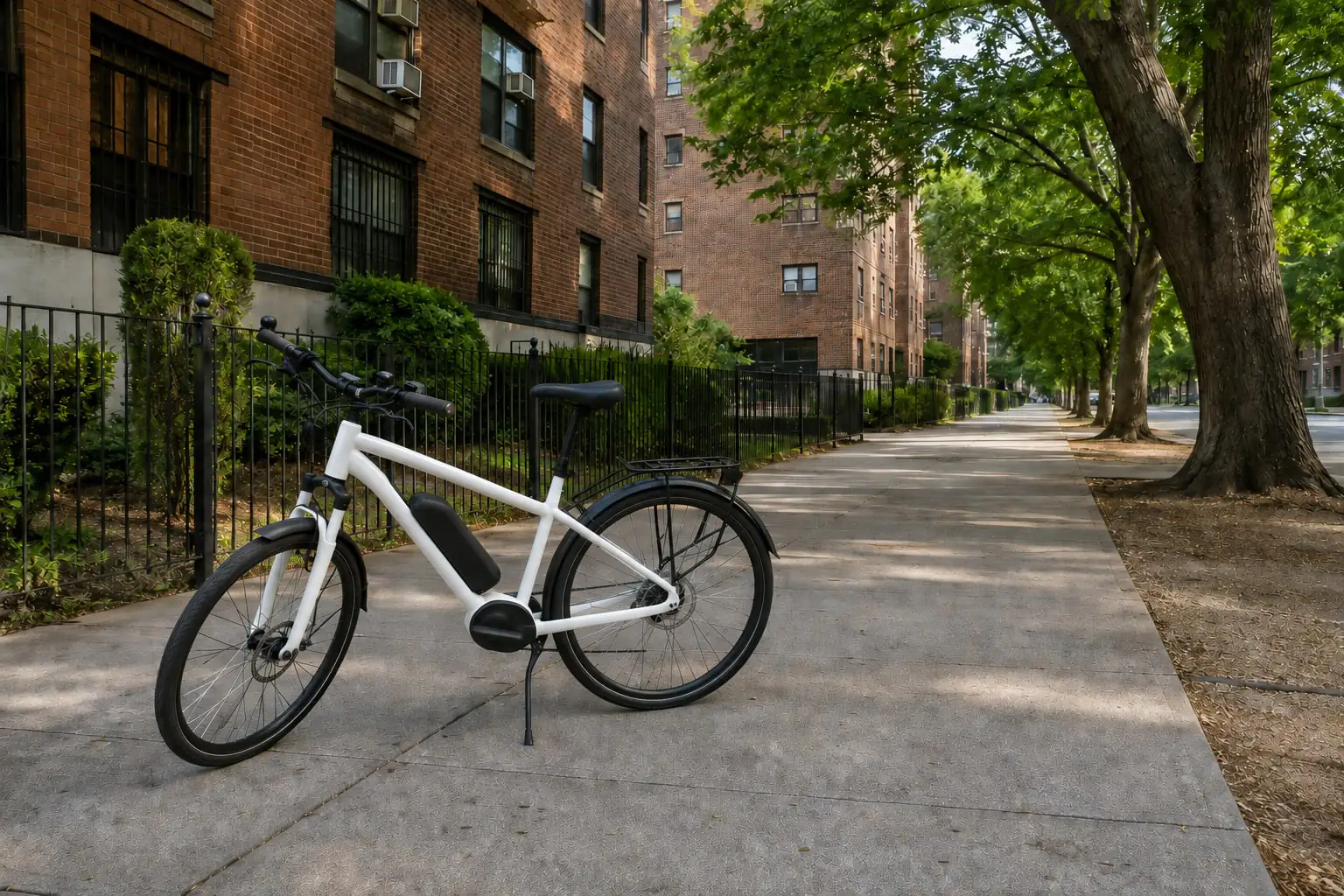
Soundview NY E-Bike Accident Lawyer
An e-bike crash can leave you dealing with serious injuries, missed work, medical bills, and questions that insurance companies may not answer clearly. Perhaps a driver turned across a bike lane, a parked car’s door opened into your path, or a roadway defect caused you to lose control. What looks like a straightforward collision can quickly become complicated.
The classification of the bike matters. So does the exact crash location, the insurance carried by the vehicle involved, and whether a city agency may be responsible. A Soundview NY e-bike accident lawyer at Billy Cooper Law can investigate those questions while you focus on your recovery.
Types of Injury Cases We Handle in Soundview NY
E-Bike Accident Lawyers Serving Bronx County
- Bronx County
- Co-op City
- Kingsbridge
- Soundview
- Riverdale
- Fordham
BILLY COOPER LAW

Why Injured Riders Turn to Billy Cooper Law
If your injuries are serious, you will probably want a lawyer who understands more than routine insurance paperwork. You need someone who can investigate how the crash happened, recognize when more than one party is responsible, and present the full effect of your injuries.
Billy Cooper Law brings more than 75 years of combined experience to personal injury cases. William H. Cooper has practiced in New York since 1991 and serves as the firm’s lead trial counsel. The firm’s published results include a $1.6 million settlement for a pedestrian struck by a vehicle in Bronx County and an $850,000 settlement in a Bronx County automobile collision.
Communication matters, too. Attorney Anieska Garcia is fluent in English and Spanish, allowing clients to discuss their injuries and concerns directly without relying on a relative to interpret. The firm offers free consultations and handles e-bike injury cases on a contingency-fee basis, meaning attorney fees are not collected unless compensation is recovered.
Tell the firm what happened. The first conversation is a chance to ask questions, identify immediate deadlines, and understand what may come next.
Why Soundview NY E-Bike Cases Require a Local Investigation
Soundview’s expanding bicycle network gives riders more protected space, but it also creates new conflict points where bike lanes cross intersections, driveways, bus stops, and turning lanes.
In 2023, the New York City Department of Transportation completed 1.5 miles of parking-protected bike lanes on Soundview Avenue. The redesign added pedestrian islands, daylighting, and turn controls. Yet protected lanes do not eliminate every risk. Riders remain exposed where drivers turn across the lane, pull through an intersection, stop in the bike lane, or open doors without looking.
Connections among Soundview Avenue, Lafayette Avenue, Soundview Park, the Bronx River Greenway, and the NYC Ferry also bring e-bikes into places used by pedestrians, buses, delivery vehicles, and traditional bicycles. The Bronx River Greenway route passes through the Bruckner Boulevard area and specifically calls for caution at the Westchester Avenue crossing.
The exact location can affect who should be investigated. A crash on a city street may involve NYC DOT records. A collision near a park path may require information from NYC Parks. Road construction could bring a private contractor into the case. A bus, sanitation truck, or government vehicle creates a different claims process altogether.
A Local E-Bike Accident Snapshot
The numbers show why these crashes deserve careful attention.
According to the NYC DOT 2024 Bicycle Crash Data Report, motorized two-wheelers were involved in 987 injuries and 15 fatalities in the Bronx during 2024. That category includes e-bikes along with mopeds, motorcycles, stand-up scooters, and other motorized two-wheelers, but it shows the scale of the danger faced by people riding smaller vehicles on Bronx streets.
Soundview Avenue itself was identified as one of the Bronx’s higher-crash corridors. From 2015 through 2022, NYC DOT recorded one fatality, 10 severe injuries, and more than 100 total injuries along the avenue. The agency’s 2023 redesign responded by installing the 1.5-mile protected route and other traffic-calming measures.
Those improvements matter. They also make it important to determine exactly where a collision occurred: inside the protected lane, at an intersection, beside a parked vehicle, at a driveway, or where the bike lane ended or changed configuration.
Where E-Bike Injuries Happen in Soundview NY
At intersections along protected bike routes
Parking-protected lanes separate riders from moving traffic for much of the block. At intersections, that protection opens up. Drivers may turn across the rider’s path, misjudge the e-bike’s speed, or fail to check the lane before entering.
Near Bruckner Boulevard and highway approaches
Wide roadways, ramps, turning traffic, and changing lane configurations can make riders less visible. It may also be necessary to determine whether the City of New York, New York State, or another entity controlled the precise location.
Around bus stops and commercial corridors
Buses, delivery vans, rideshare vehicles, and double-parked cars can force riders out of a bike lane. Evidence may include bus-camera footage, business surveillance, delivery records, or photographs showing how vehicles were positioned.
At park and greenway entrances
Soundview Park and nearby greenway connections bring riders, pedestrians, children, and recreational users into shared spaces. A case may turn on whether a rider was on a designated route, whether warning signs were visible, or whether vegetation, fencing, pavement damage, or construction obstructed the path.
Beside parked vehicles
A driver or passenger who opens a door without checking for an approaching rider can cause a violent collision. Even when the rider avoids direct contact, swerving into traffic may produce severe injuries.
E-Bike Accident Cases Billy Cooper Law Handles
Depending on how the crash occurred, the case may overlap with several areas of the firm’s personal injury practice:
- E-bike riders injured in collisions with motor vehicles
- Dooring and bicycle-lane accidents
- E-bike riders struck by cars, SUVs, and taxis
- Crashes involving commercial vans, delivery trucks, and buses
- Collisions involving Uber, Lyft, and other rideshare vehicles
- Pedestrians injured in collisions with e-bikes
- Crashes involving vehicles incorrectly described as e-bikes, mopeds, or motorcycles
- Accidents caused by defective brakes, batteries, controllers, tires, or frames
- Accidents involving unsafe road construction or pavement defects
- Fatal e-bike accidents
The label used in a police report does not always settle what kind of vehicle was involved. Photos, manufacturer information, motor wattage, pedals, speed capability, and the bike’s classification label may all become important.
What to Do After an E-Bike Accident
Get medical attention
Head injuries, fractures, internal injuries, and spinal trauma are not always obvious at the scene. Prompt treatment protects your health and creates a medical record connecting the injury to the collision.
Call 911
Ask for police and emergency medical assistance. Give the responding officer accurate information, but do not guess about speed, distance, or details you did not see clearly.
Photograph the entire area
If you can do so safely, photograph:
- The vehicles and e-bike
- Damage to the bike, helmet, clothing, and personal property
- Lane markings and traffic signals
- Parked vehicles and open doors
- Debris, potholes, metal plates, or broken pavement
- Construction signs and barriers
- Nearby cameras, businesses, buses, or buildings
- Your visible injuries
Photographs should show the wider scene as well as close-up details. Conditions may change quickly after the crash.
Get identifying information
Obtain the driver’s license, plate number, insurance information, and contact details. If the vehicle belongs to a business or government agency, photograph its name, unit number, and markings.
Avoid giving a recorded insurance statement immediately
An adjuster may call before you know the diagnosis or understand how long you will be unable to work. You can report the crash without agreeing to a recorded interview, signing a medical authorization, or accepting a quick settlement.
Ask about insurance deadlines
A person on a legal e-bike who is struck by a motor vehicle may qualify for New York no-fault benefits through the vehicle’s insurer. Written notice generally must be provided within 30 days, absent a clear and reasonable justification for delay. That deadline arrives long before the ordinary lawsuit deadline.
Preserve the E-Bike and Digital Evidence
Do not repair, sell, discard, or substantially alter the e-bike before it can be inspected. Keep its charger, battery, keys, receipts, manuals, and packaging if available.
Other evidence may include:
- Data from the bike’s display, controller, or companion app
- GPS and route history
- Delivery-platform records
- Work schedules and order logs
- Cellphone photographs and messages
- Health and fitness app data
- Citi Bike or rental records
- Helmet-camera footage
- Surveillance video
- 911 recordings and police reports
- Witness names and contact information
- Medical records and work-loss documentation
Video can disappear within days. A lawyer can send preservation requests to businesses, building owners, transportation companies, delivery platforms, and government agencies before footage is overwritten.
New York E-Bike Rules That May Affect the Case
Under New York Vehicle and Traffic Law § 102-c, a legal e-bike must have operable pedals, be no more than 36 inches wide, and use a motor of less than 750 watts. State law recognizes three classes based on how the motor operates and when assistance ends.
New York City now limits e-bike operation to 15 mph on city streets. The city also requires riders to remain off sidewalks, obey traffic signals, travel in the direction of traffic, and use available bike lanes as required. Riders must be at least 16. Helmets are required for Class 3 riders, riders under 18, and people operating e-bikes for work.
Breaking a traffic rule does not automatically decide an injury claim. The violation must be considered along with what the driver, property owner, contractor, or other party did. A driver does not gain permission to turn blindly into a rider merely because the rider may have made a separate mistake.
The classification question can be especially important when a device exceeds legal power or speed limits. An illegal high-speed device may be treated differently from a legal e-bike for insurance, no-fault, registration, and liability purposes.
BILLY COOPER LAW
How No-Fault Insurance Works After an E-Bike Crash
When a legal e-bike rider is struck by a car, the car’s no-fault insurer may provide benefits regardless of who caused the collision. New York’s basic no-fault coverage can provide up to $50,000 per person for qualifying economic losses, including medical care, part of the rider’s lost earnings, and certain necessary expenses.
The claim is generally filed with the insurer for the vehicle that struck the rider. If the driver left the scene or had no insurance, coverage may be available through a household automobile policy or the Motor Vehicle Accident Indemnification Corporation. Hit-and-run crashes should be reported to the police promptly; New York’s Department of Financial Services advises reporting them to the proper authority within 24 hours when MVAIC may be involved.
No-fault benefits are separate from a liability claim against the person who caused the accident. In a motor-vehicle case, however, compensation for pain and suffering generally requires a “serious injury” under New York Insurance Law.
A Major 2026 Change to New York Motor-Vehicle Injury Law
New York changed its motor-vehicle injury rules on May 26, 2026. The changes apply to actions and proceedings commenced on or after that date.
The current serious-injury definition includes injuries resulting in death, dismemberment, significant disfigurement, a fracture, loss of a fetus, permanent loss of use, permanent consequential limitation, or significant limitation of a body function or system. The former category based on being unable to perform substantially all usual activities for 90 of the first 180 days was removed.
The state also changed comparative fault for personal injury cases subject to the no-fault law. Under the current CPLR § 1411, an injured claimant whose fault is greater than the combined fault of the parties being sued may be barred from recovering damages. If the claimant’s fault is 50% or less, the recovery may still be reduced by that percentage.
Many e-bike cases against motorists fall within the no-fault system, although the answer can depend on the device’s legal classification and the circumstances of the crash. This makes early investigation even more important. Insurers now have a stronger reason to argue that the rider was speeding, outside the bike lane, riding against traffic, or otherwise primarily responsible.
Deadlines for a Soundview NY E-Bike Injury Claim
New York generally allows three years to file a negligence lawsuit for personal injuries under CPLR § 214. That does not mean you should wait three years to investigate.
Other deadlines may be much shorter:
- A no-fault claim generally requires notice within 30 days.
- Insurance policies may impose prompt notice requirements.
- Hit-and-run and uninsured-vehicle claims have separate conditions.
- A claim involving the City of New York may require a notice of claim within 90 days.
- A wrongful death case follows different deadlines.
- Claims involving a public authority or state agency may use different filing procedures.
The correct deadline depends on who controlled the location, who owned the vehicle, how the e-bike is classified, and when the lawsuit is commenced.
Who May Be Responsible?
A negligent driver
A driver may be liable for speeding, distracted driving, failing to yield, opening a door into a rider’s path, entering a bike lane, or turning without checking for cyclists.
A vehicle owner or employer
The driver may not be the only responsible party. The vehicle owner, an employer, a delivery company, or another business may be involved, particularly when the driver was working at the time.
A construction contractor
A contractor may bear responsibility for unsafe plates, debris, barriers, lane closures, or traffic-control measures. Construction permits, daily logs, photographs, and contracts can help establish who controlled the work.
A property owner
A private property owner may be relevant when a crash involves a driveway, loading area, garage exit, obstructed sightline, or condition on privately controlled property.
A government entity
The City of New York, New York State, NYC Parks, the MTA, or another public entity may be involved when the accident concerns roadway maintenance, traffic design, a government vehicle, a park path, or public transportation. These entities do not all follow the same claim procedures.
A manufacturer or seller
If defective brakes, a failed frame, a malfunctioning controller, or another product problem caused the crash, the manufacturer, distributor, or seller may need to be investigated. The bike should be preserved in its post-crash condition.
Compensation Available After an E-Bike Accident
Depending on the facts, an injured person may pursue compensation for:
- Emergency care and hospitalization
- Surgery, medication, and rehabilitation
- Future medical treatment
- Lost income
- Reduced earning ability
- Pain and suffering
- Emotional and psychological harm
- Scarring or disfigurement
- Loss of mobility or independence
- Damage to the e-bike, phone, helmet, and other property
- Necessary transportation and household assistance
- Funeral expenses and other losses after a fatal accident
For delivery riders and others hurt while working, workers’ compensation benefits may also be available. A separate claim may be possible against a negligent driver or another third party. These claims must be coordinated so that medical expenses, wage benefits, liens, and insurance recoveries are handled correctly.
When the City or Another Public Entity May Be Involved
A damaged street, poorly marked construction zone, malfunctioning traffic control, or unsafe government vehicle may support a public-entity claim. But it is not enough to assume that NYC DOT controlled the location.
The precise spot must be identified. Bruckner Boulevard, nearby ramps, park paths, bridges, transit property, and construction areas may involve different agencies or contractors. Ownership, maintenance duties, prior written complaints, permits, and contracts should be investigated before the notice period expires.
Under General Municipal Law § 50-e, a notice of claim against a public corporation is generally required within 90 days. A negligence lawsuit against the City must generally be commenced within one year and 90 days under General Municipal Law § 50-i.
The New York City Comptroller’s Office receives notices of claim against the City. Filing an ordinary insurance form or making a 311 complaint is not necessarily a substitute for properly serving a notice of claim.
If a government agency may be involved, do not wait to find out which deadline applies.
Local Courts, Medical Facilities, and Agencies
Serious Bronx County personal injury cases may be filed in the Bronx County Supreme Court Civil Term at 851 Grand Concourse Bronx NY 10451. The court hears motor-vehicle cases and other civil claims involving amounts over $50,000.
The NYPD 43rd Precinct, located at 900 Fteley Avenue Bronx NY 10473, serves the southeast Bronx. Depending on the exact scene and response, police records, collision reports, 911 calls, and body-camera footage may become part of the investigation.
Where you receive treatment depends on your injuries and emergency response. NYC Health + Hospitals/Jacobi is a designated adult Level I trauma center. Wherever you are treated, keep discharge papers, imaging reports, referrals, prescriptions, and documentation of missed work.
Billy Cooper Law does not list an office in Soundview. Its listed locations are:
- 245 Main Street, Suite 510, White Plains NY 10601
- 4746 Broadway New York NY 10040, by appointment only
How Billy Cooper Law Investigates an E-Bike Crash
A useful investigation begins with the details insurers may overlook.
Billy Cooper Law may:
- Visit and photograph the accident location
- Obtain police reports, 911 records, and available video
- Identify the driver, vehicle owner, employer, and insurers
- Send preservation demands before footage or digital records disappear
- Inspect the e-bike, battery, controller, brakes, and other components
- Determine whether the device meets New York’s legal definition of an e-bike
- Review traffic signals, lane markings, construction permits, and roadway records
- Locate witnesses
- Analyze no-fault, uninsured-motorist, workers’ compensation, and liability coverage
- Consult accident-reconstruction or engineering professionals when needed
- Document medical treatment, lost earnings, and future limitations
- File a notice of claim when a government entity may be responsible
- Prepare the case for trial if the insurer will not make a reasonable offer
The goal is not simply to show that a collision occurred. It is to explain why it happened, who had the ability to prevent it, and how the injuries changed your life.
Related Billy Cooper Law Resources
- New York E-Bike Accident Lawyer
- Bronx County Personal Injury Lawyer
- New York Bicycle Accident Lawyer
- New York Car Accident Lawyer
- New York Pedestrian Accident Lawyer
- New York Motorcycle Accident Lawyer
- New York Wrongful Death Lawyer
- Billy Cooper Law Case Results
Speak With a Soundview NY E-Bike Accident Lawyer
You do not need to know which insurance company should pay, whether the bike meets the legal definition of an e-bike, or who controlled the accident location before asking for help. Those are questions the investigation should answer.
Tell Billy Cooper Law what happened. The firm will listen, explain the next steps, and identify any immediate insurance or government deadlines. Call (718) 866-3311 or (914) 730-5789, or contact Billy Cooper Law online to request a free consultation.
BILLY COOPER LAW
Soundview NY E-Bike Accident FAQs
These answers provide general information about New York injury claims and related concerns. The rules depend on the facts; this is not individual legal or medical advice.
Can no-fault insurance pay my medical bills after a Soundview e-bike crash?
It may, when your injuries arise from a collision with a covered motor vehicle. A qualifying e-bike rider generally seeks no-fault benefits through the striking vehicle’s insurer. The device’s legal classification matters: a modified machine treated as a motorcycle can present different coverage issues. Basic economic-loss coverage is subject to a $50,000 combined limit and statutory restrictions.
Give the appropriate insurer written notice promptly; the usual deadline is 30 days, with a limited exception requiring written justification for delay. Keep claim forms, medical bills, wage records and proof of submission. No-fault benefits do not automatically compensate you for pain and suffering or damage to the bicycle.
Sources: New York DFS: No-Fault Insurance FAQs; New York Insurance Law § 5102: Covered Losses and Definitions.
What should I do if the driver leaves the scene?
Report the collision to police promptly and preserve anything that can identify the vehicle. Depending on available insurance and eligibility, an unknown or uninsured vehicle may lead to a claim through a household auto policy or the Motor Vehicle Accident Indemnification Corporation. MVAIC is not an automatic substitute for every missing insurance policy.
Its statutory conditions include special reporting and filing requirements; hit-and-run matters generally require a police report within 24 hours or as soon as reasonably possible, subject to the law’s exceptions. Save witness contacts, camera locations and the police incident number. Have the available coverage and deadlines reviewed promptly rather than waiting for the driver to be identified.
Sources: New York Insurance Law § 5208: MVAIC Notice Requirements; New York DFS: Claims Involving Unknown or Uninsured Vehicles.
Does being partly at fault prevent me from recovering compensation?
It can in some New York motor-vehicle injury cases, but partial fault does not produce the same result in every claim. Current CPLR § 1411 distinguishes personal-injury actions subject to Insurance Law Article 51 from other cases. For covered actions, a claimant’s fault greater than the opposing parties’ combined fault can bar recovery; otherwise, the award is reduced proportionately.
Other injury claims generally retain proportional reduction without that statutory bar. The 2026 amendments and their applicability must be checked for the particular action. Preserve photographs, witness accounts and information about visibility, direction of travel and signals. An insurer’s initial fault assessment is not a court determination of your entitlement to damages.
Sources: CPLR § 1411: Comparative Fault; New York DFS: 2026 Motor Vehicle Insurance Reforms.
Can I seek pain-and-suffering damages for an e-bike injury?
Potentially, but an injury action between covered persons under New York’s no-fault law generally requires a qualifying serious injury to recover noneconomic damages. A fracture is one statutory category; certain significant or permanent functional limitations are others. Pain, a diagnosis or time away from work alone does not establish every required element.
The current definition no longer includes the former 90/180-day category. The 2026 reform’s applicability should be evaluated for the action involved. Medical findings must connect the qualifying injury to the collision, and liability remains a separate issue. Keep examination records, imaging reports and documentation of functional restrictions so counsel can evaluate the relevant statutory category rather than relying on a settlement estimate.
Sources: New York Insurance Law § 5102(d): Serious Injury; New York Insurance Law § 5104: Personal Injury Actions; New York DFS: 2026 Motor Vehicle Insurance Reforms.
How long do I have to bring a claim after an e-bike accident?
Many New York negligence lawsuits have a three-year limitation period, but that is not a safe deadline for every step after a crash. A claim involving a public corporation can require notice within 90 days. Claims against New York State follow separate Court of Claims procedures, which can also demand action within 90 days.
The defendant, type of claim and applicable exceptions determine the actual schedule. A police report or an ordinary insurance claim does not necessarily satisfy a government notice requirement. Identify the accident date, exact location and possible responsible parties at the outset, and have all deadlines checked before assuming you can wait to decide whether to pursue the matter.
Sources: CPLR § 214: Three-Year Limitation Periods; General Municipal Law § 50-e: Notice of Claim; Court of Claims Act § 10: Claims Against New York State.
Which e-bike operating rules matter in Soundview NY?
The device’s class, the road and applicable local rules all matter. New York’s electric-assist bicycle definition requires operable pedals and limits motor power and width. State law generally restricts electric-assist bicycles to roads posted at 30 mph or less unless an applicable local provision changes the rule, and sidewalk use generally requires local authorization.
Class 3 bicycles are restricted to a city with at least one million residents; that geographic rule does not make every route in the Bronx lawful for every device. Record the exact roadway, posted signs and bicycle specifications if a collision occurs. Preserve the bicycle without changing its equipment while its classification is evaluated. A riding restriction and legal responsibility for a particular collision are separate questions.
Sources: Vehicle and Traffic Law § 1242: E-Bike Operating Rules; Vehicle and Traffic Law § 102-c: Electric-Assist Bicycle Classes.
Does not wearing a helmet automatically defeat an injury claim?
No. Helmet use and responsibility for causing a collision are separate issues. New York’s bicycle helmet statute expressly limits the civil consequences of violating that section. The relevant requirements depend on the rider’s age, device classification and applicable local rules; do not assume that every electric two-wheeler is governed by the same provision.
Do not assume either that an insurer can automatically deny the entire case or that helmet evidence is irrelevant under every possible legal theory. The rider’s age, device classification, applicable provision and injuries matter. Preserve any helmet and photographs from the scene, and obtain a medical evaluation for a suspected head injury. Counsel can assess the governing protections against the facts of the particular claim.
Sources: Vehicle and Traffic Law § 1238: Helmets and Civil-Claim Protections; Vehicle and Traffic Law § 1242: E-Bike Operating Restrictions.
What if headache or dizziness starts after I have gone home?
Seek medical advice promptly after new symptoms following a head impact. CDC guidance explains that concussion symptoms can appear hours or days later. Worsening headache, repeated vomiting, seizures, slurred speech, marked confusion or difficulty waking are emergency warning signs; call 911 or obtain emergency care immediately if these occur.
Tell the clinician when the crash happened, whether your head or body took a blow and when each symptom began. Ask for written guidance about returning to work, driving and other activities, and report symptoms that worsen or fail to improve. Medical assessment addresses your health; a symptom diary or this webpage cannot diagnose a concussion or establish the legal cause of an injury.
Sources: CDC: Symptoms of Mild TBI and Concussion; CDC: What to Do After a Mild TBI or Concussion.
What if I was injured while making an e-bike delivery?
A work-related crash may involve workers’ compensation as well as a claim against a responsible third party. New York generally provides compensation for covered employees injured in the course of employment without requiring proof that the employer was negligent. Whether a delivery rider is a covered employee must be evaluated; a platform’s label alone should not be treated as the complete answer.
A separate case against a negligent driver or another third party may also be possible. Workers’ Compensation Law § 29 addresses these overlapping claims, including reimbursement and settlement issues. Preserve dispatch messages, delivery records and pay information, and obtain advice before signing a release that could affect benefits or another claim.
Sources: Workers’ Compensation Law § 10: Work-Related Injuries; Workers’ Compensation Law § 29: Third-Party Claims.
What if my e-bike was modified or its motor was more powerful than allowed?
The device may fall outside New York’s electric-assist bicycle definition, which can change the rules relevant to the claim. The statutory definition requires operable pedals, a width no greater than 36 inches and an electric motor rated below 750 watts, together with the applicable class limits. A product’s advertising name does not establish its legal classification.
Preserve the frame, battery, motor, controller and purchase information so the original specifications and any changes can be examined. Do not discard or alter the equipment while its classification is in question. Operating restrictions and insurance eligibility require separate review; a modification does not by itself establish which person caused the collision.
Sources: Vehicle and Traffic Law § 102-c: Electric-Assist Bicycle Definition; Vehicle and Traffic Law § 1242: E-Bike Operating Restrictions.
Sources
Billy Cooper Law
- Billy Cooper Law Official Website
- Billy Cooper Law E-Bike Accident Practice
- Billy Cooper, Esq.
- Anieska Garcia, Esq.
- Billy Cooper Law Case Results
- Billy Cooper Law Bronx County Practice
- Billy Cooper Law Contact Information
- Billy Cooper Law Bicycle Accident Practice
- Billy Cooper Law Pedestrian Accident Practice
- Billy Cooper Law Car Accident Practice
- Billy Cooper Law Motorcycle Accident Practice
- Billy Cooper Law Wrongful Death Practice
Soundview and Bronx Transportation
- NYC DOT Soundview Avenue Redesign
- NYC DOT Soundview Avenue, Rosedale Avenue, and Lafayette Avenue Projects
- NYC DOT Bronx River Greenway Bike Route
- NYC DOT 2024 Bicycle Crash Data Report
- NYPD 43rd Precinct
- Bronx County Supreme Court Civil Term
- NYC Health + Hospitals/Jacobi
New York E-Bike, Insurance, and Claims Law
- NYC DOT Electric Bicycles and Micromobility Rules
- New York Vehicle and Traffic Law § 102-c
- New York Vehicle and Traffic Law § 1242
- New York Civil Practice Law and Rules § 214
- New York Civil Practice Law and Rules § 1411
- New York Insurance Law § 5102
- New York Insurance Law § 5103
- New York Insurance Law § 5104
- New York Department of Financial Services 2026 Motor Vehicle Insurance Reforms
- New York Department of Financial Services No-Fault Insurance FAQs
- New York Department of Financial Services Auto Insurance Resource Center
- New York General Municipal Law § 50-e
- New York General Municipal Law § 50-i
- New York City Comptroller Claims Overview
- New York City Comptroller Claim Filing Information

Get the Answers You Need
At Billy Cooper Law, every day we renew our pledge to help injured people get the justice and compensation they deserve. We have a reputation throughout New York and nationally for standing up for our clients, and we take that responsibility seriously by approaching every case with preparation, persistence, and an unwavering commitment to results.