
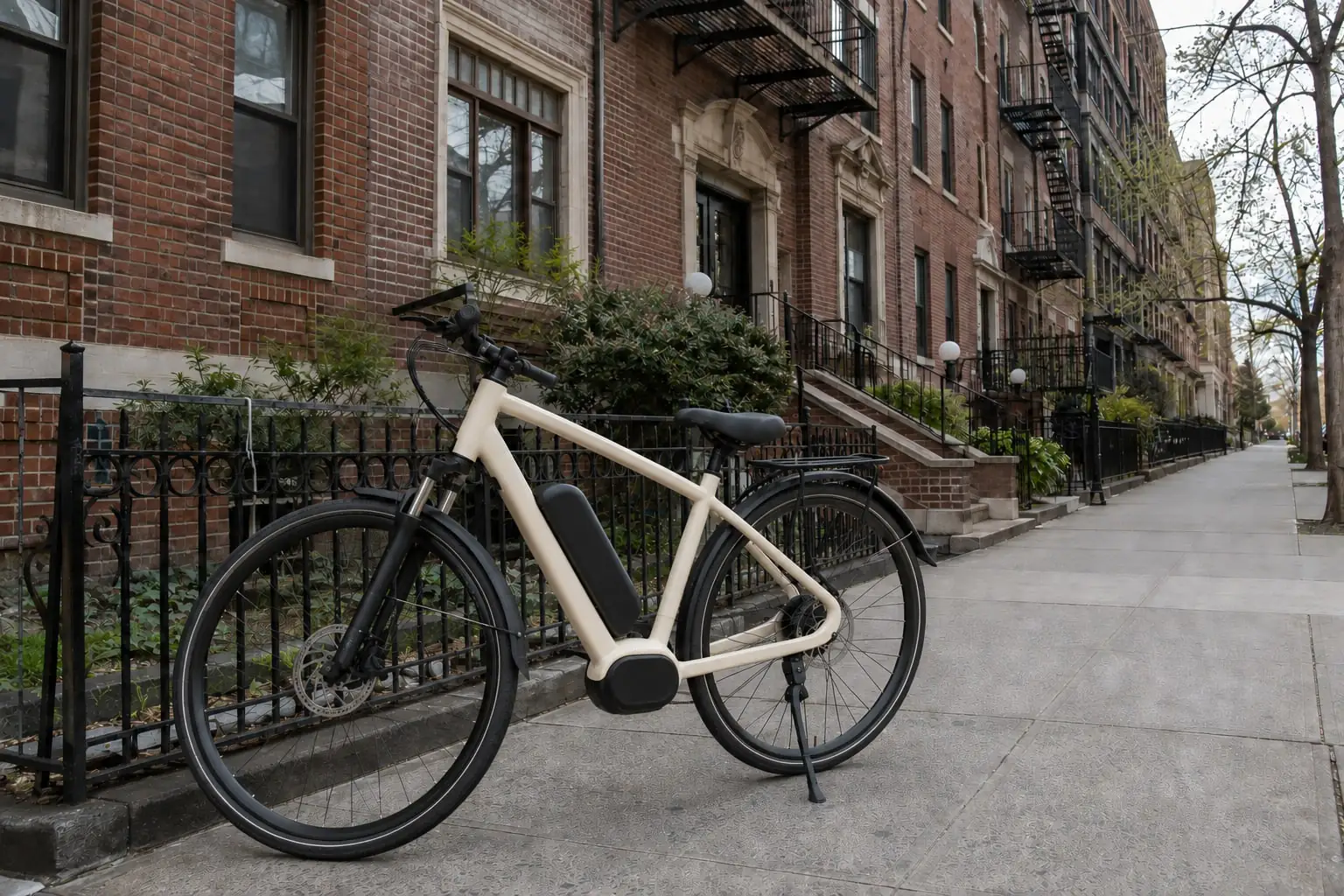
Fordham NY E-Bike Accident Lawyer
An e-bike collision can leave you facing serious injuries, missed work, medical bills, and questions no police report can fully answer. Was the driver turning? Was a delivery vehicle blocking the rider’s view? Did the street design change after the crash? Which insurance company should be paying the bills?
Those questions matter in Fordham, where e-bike riders share crowded corridors with buses, commercial vehicles, pedestrians, and heavy curbside activity. Billy Cooper Law represents injured riders and families throughout the Bronx. We can investigate what happened, identify the insurance and legal deadlines, and explain your options in plain English.
Types of Injury Cases We Handle in Fordham NY
- Personal Injury
- Slip and Fall
- E-Bike Accidents
- Uber and Lyft Accidents
- Car Accidents
E-Bike Accident Lawyers Serving Bronx County
- Bronx County
- Co-op City
- Kingsbridge
- Soundview
- Riverdale
- Fordham
BILLY COOPER LAW

A Law Firm Prepared for Serious E-Bike Injuries
An e-bike offers almost no protection from a turning car, bus, truck, or hard pavement. When a crash causes a brain injury, fracture, spinal injury, or permanent limitation, you want a lawyer who will look beyond the first emergency-room bill.
Billy Cooper Law reports more than 75 years of combined experience. William H. “Billy” Cooper has practiced since 1991 and has served as lead trial counsel for more than 25 years. The firm also states that people who contact the office speak directly with an attorney—not only an intake representative. (billycooperlaw.com)
If you prefer to discuss your case in Spanish, attorney Anieska Garcia is fluent in English and Spanish. Consultations are free, and the firm handles personal injury claims on a contingency-fee basis, so there is no attorney’s fee unless compensation is recovered. (billycooperlaw.com)
The firm’s listed locations are its White Plains office at 245 Main Street, Suite 510, White Plains NY 10601, and its New York City location at 4746 Broadway, New York NY 10040, which is available by appointment only. The Bronx telephone number is (718) 866-3311. (billycooperlaw.com)
Why E-Bike Crashes Are Different in Fordham
Fordham Road combines bus traffic, storefront deliveries, shoppers, pedestrians, turning vehicles, double parking, and riders moving between the corridor and surrounding bike routes. A collision here may involve several overlapping causes rather than one obvious mistake.
The street itself is also changing. On July 22, 2026, New York City began work on a Fordham Road redesign involving offset bus lanes, loading areas, turn restrictions, and safety improvements. A photograph taken weeks or months after an accident may not show the signs, markings, barriers, or curb regulations that existed on the crash date. NYC’s Fordham Road project announcement makes early scene documentation particularly important. (nyc.gov)
The investigation may need to determine:
- Whether a driver crossed a bus or bike lane while turning
- Whether a truck, van, or parked car obstructed the rider’s view
- Whether the e-bike rider was struck in a travel lane, intersection, crosswalk, or loading area
- Whether temporary construction markings affected traffic movements
- Which public agency, contractor, business, or property owner controlled the location
- Whether nearby stores, buses, buildings, or vehicles recorded the collision
A Local E-Bike Accident Snapshot
The numbers help explain why Fordham crashes require a close look at both traffic movement and curb use.
In 2024, the Bronx recorded 987 injuries in NYC DOT’s “motorized two-wheeler” category. That category includes e-bikes, but also mopeds, motorcycles, stand-up scooters, and other motorized devices, so it should not be read as an e-bike-only total. NYC DOT’s 2024 Bicycle Crash Data Report also reported that 865 of those injuries occurred in crashes involving motor vehicles. (a860-gpp.nyc.gov)
In its May 2026 Fordham Road plan, NYC DOT reported that:
- The corridor affects approximately 130,000 average daily bus riders.
- Fordham Road ranks within the top 10% of the Bronx’s most dangerous corridors.
- The corridor had 70 serious injuries during the preceding five years.
- It also had four fatalities during that period.
- 60% of surveyed businesses reported receiving deliveries in the existing curbside bus lane.
That last figure is especially relevant to e-bike cases. Loading vehicles, open doors, double parking, and vehicles pulling back into traffic can narrow a rider’s path and hide both riders and pedestrians from approaching drivers. (nyc.gov)
Where E-Bike Injuries Happen in Fordham
Fordham Road bus lanes and loading areas
A driver may fail to look for an e-bike before turning across a bus lane, entering a loading zone, or pulling away from the curb. Commercial vehicles can also block sightlines and force riders into an adjacent traffic lane.
The exact street configuration matters. The 2026 Fordham Road project includes offset and widened bus lanes, revised loading areas, painted pedestrian spaces, and new turn restrictions. An investigation should establish which design was in effect on the date of the collision—not simply what the street looks like today.
East 188th Street and bike-route connections
The Fordham Area Bike Network includes routes connecting East 188th Street, the Grand Concourse, Belmont Avenue, Park Avenue, and other nearby streets. Riders moving between those routes and Fordham Road may encounter lane transitions, turning traffic, bus stops, and door zones. (nyc.gov)
NYC DOT has also implemented safety changes around East Fordham Road and East 188th Street/Morris Avenue, including crosswalk realignment, curb extensions, and roadway reorganization. Those changes may help explain the traffic movements at issue, but the physical layout still must be documented as it existed when the crash occurred. NYC DOT’s project description identifies the intersection as a location requiring pedestrian visibility and turning-safety improvements. (nyc.gov)
Storefronts, curb cuts, and side streets
Some of the most serious collisions begin with a routine movement: a passenger opens a door, a driver exits a parking space, or a delivery van backs toward the curb. These cases often turn on video, witness accounts, vehicle positioning, and whether the driver looked before moving.
Roadwork and temporary traffic patterns
Fresh paint, temporary cones, construction barriers, or a closed lane may have directed the rider into a conflict point. Permits, contractor records, work-zone plans, and photographs from the accident date may be needed to reconstruct the roadway.
E-Bike Accident Cases Billy Cooper Law Handles
Depending on how the collision occurred, the firm may handle claims involving:
- E-bike riders hit by cars, including turning, backing, and dooring collisions
- Rideshare vehicle accidents
- Truck, van, and commercial delivery vehicle crashes
- Bus accidents, including claims involving public transportation
- Bicycle and e-bike collisions
- Pedestrian injuries involving e-bikes
- Defective brakes, batteries, controllers, chargers, or other e-bike components
- Catastrophic injuries, including traumatic brain injuries
- Wrongful death claims
The correct claim may not be obvious at first. A rider hit beside a delivery van, for example, may have claims involving the driver, vehicle owner, driver’s employer, another contractor, and potentially a public entity responsible for the street configuration.
What to Do After an E-Bike Accident
Your health comes first. Call 911 or seek prompt medical care if you have head pain, confusion, dizziness, bleeding, numbness, limited movement, or any other concerning symptom.
When you can do so safely:
- Report the collision. Ask the police to prepare a crash report.
- Photograph the entire area. Include vehicles, license plates, damage, signs, signals, lane markings, bus lanes, construction, and nearby cameras.
- Get witness information. A telephone number is more useful than a first name alone.
- Identify every vehicle and company. Photograph commercial markings, permit numbers, delivery logos, and rideshare information.
- Preserve the e-bike. Do not repair, discard, recharge, reset, or modify it before important evidence has been documented.
- Save app and trip data. Keep delivery records, route history, GPS information, receipts, and screenshots showing when and where you were riding.
- Follow medical instructions. Report all symptoms accurately and keep appointments.
- Be careful with insurance calls. Do not guess about speed, distance, or fault. Avoid signing broad authorizations or settlement papers you do not understand.
- Give required insurance notice promptly. If a motor vehicle struck you, New York’s no-fault deadline may arrive within 30 days.
Evidence Worth Preserving
E-bike cases involve evidence that ordinary car-accident investigations may overlook.
Important evidence may include:
- The e-bike, battery, charger, controller, and display
- Labels showing the bike’s class, motor wattage, and manufacturer
- The helmet and damaged clothing
- Purchase, repair, rental, and maintenance records
- Delivery-app orders, login history, route data, and communications
- Photographs of skid marks, debris, road defects, and vehicle positions
- Storefront, residential-building, bus, dashcam, and traffic video
- Police reports, 911 calls, and witness statements
- Vehicle ownership, employment, dispatch, and insurance records
- Medical records, bills, prescriptions, and injury photographs
- Pay records and documentation of missed work
NYC DOT reports that Fordham Road uses stationary and bus-mounted automated enforcement cameras. That does not mean footage will always exist or be available, but it makes it important to identify potential agency-held recordings quickly and send appropriate preservation requests. (nyc.gov)
New York E-Bike Rules That May Affect the Case
New York defines a legal bicycle with electric assist as a bicycle with operable pedals, an electric motor under 750 watts, and a width of no more than 36 inches. State law recognizes three classes, with motor-assistance capabilities of 20 mph for Classes 1 and 2 and 25 mph for Class 3 in New York City. Vehicle and Traffic Law § 102-c contains the formal definitions. (nysenate.gov)
Device capability is not the same as lawful riding speed. Under current NYC DOT e-bike guidance:
- Riders must be at least 16.
- E-bikes may use bicycle lanes.
- They may generally use vehicle lanes on streets with speed limits of 30 mph or less.
- They should not be ridden on sidewalks.
- E-bikes may not be operated above 15 mph on city streets.
- Helmets are required for Class 3 riders and for riders who are working or under 18.
E-bike riders generally have the same traffic duties as other cyclists. (nyc.gov)
A violation can become evidence in a fault dispute, but it does not automatically decide the case. The important question is whether the conduct contributed to the collision or the injury. A driver who turns without looking does not necessarily escape responsibility because the rider lacked a helmet. Likewise, a rider’s speed or direction of travel may matter if it prevented the driver from seeing or reacting in time.
BILLY COOPER LAW
How No-Fault Insurance Works for an Injured E-Bike Rider
A legal e-bike is excluded from New York’s definition of a motor vehicle. However, an e-bike rider struck by a car may still qualify as a cyclist or pedestrian covered by the car’s no-fault insurance.
New York no-fault coverage can provide up to $50,000 in basic economic-loss benefits, subject to the policy and applicable rules. Those benefits may help pay medical expenses, part of the rider’s lost income, and certain other accident-related costs before fault is decided.
The New York Department of Financial Services states that written no-fault notice generally must reach the appropriate insurer within 30 days unless there is a clear and reasonable justification for delay. A cyclist or pedestrian generally files with the insurer for the vehicle that struck them. (dfs.ny.gov)
No-fault does not automatically pay pain and suffering. In many claims involving an insured motor vehicle, the rider must establish a qualifying “serious injury” under Insurance Law § 5102 and Insurance Law § 5104. A fracture is specifically included, while claims based on limited movement or soft-tissue injuries often require detailed, timely medical proof.
If no motor vehicle was involved—such as a collision between two e-bikes—the available coverage may be very different. Health insurance, property insurance, commercial coverage, workers’ compensation, or a responsible party’s liability coverage may need to be examined.
What If You Were Partly at Fault?
New York changed its comparative-fault law for many motor-vehicle injury actions in 2026.
For actions generally not subject to the no-fault law, CPLR § 1411(a) continues to reduce compensation according to the injured person’s share of fault rather than automatically eliminating the claim.
For many personal injury actions subject to Article 51 of the Insurance Law, however, CPLR § 1411(b) now provides that a claimant’s fault can bar recovery when it is greater than the fault of the defendant—or greater than the combined fault of the defendants from whom recovery is sought. The change applies to actions commenced on or after its May 29, 2026 effective date. The enacted budget legislation contains the amendment and its effective-date language. (nysenate.gov)
An e-bike rider hit by a car may have a claim subject to Article 51, so early proof of fault is now especially important. Video, witness statements, vehicle damage, signal timing, app data, and the street design may determine whether an insurer can successfully shift most of the blame to the rider.
Who May Be Responsible for an E-Bike Accident?
A complete investigation may identify responsibility on the part of:
- A driver who failed to yield, looked at a phone, opened a door, or turned across the rider’s path
- The vehicle owner
- A driver’s employer or commercial fleet operator
- A trucking, delivery, or rideshare company
- A bus operator or public transportation authority
- Another cyclist, e-bike rider, or pedestrian
- An e-bike manufacturer, seller, rental company, or repair shop
- A contractor responsible for an unsafe work zone
- New York City or another public entity responsible for a roadway or vehicle
A delivery platform’s responsibility depends on the working relationship, the degree of control, the available insurance, and what the rider or driver was doing at the time. The name shown on an app does not answer those questions by itself.
Compensation After an E-Bike Injury
The compensation available depends on the injuries, insurance, fault, and whether the claim is subject to New York’s serious-injury requirement.
Recoverable losses may include:
- Emergency care, hospitalization, surgery, and rehabilitation
- Future treatment and medical equipment
- Lost wages and reduced earning capacity
- Pain and suffering, when legally recoverable
- Disability, scarring, or loss of mobility
- Assistance with daily activities
- Repair or replacement of the e-bike and other damaged property
- Funeral expenses and legally recognized wrongful death losses
A serious claim should account for what the injury is likely to cost over time—not only the bills that have already arrived.
Filing Deadlines
The general limitation period for many negligence-based injury lawsuits in New York is three years under CPLR § 214. A wrongful death action generally must be commenced within two years of the death under EPTL § 5-4.1.
Those are not the only deadlines. Depending on the case:
- No-fault notice may be due within 30 days.
- A government Notice of Claim may be due within 90 days.
- Insurance policies may impose prompt-notice requirements.
- Uninsured and hit-and-run claims have separate notice obligations.
- Evidence may disappear long before any lawsuit deadline.
Do not assume that every e-bike case comes with three years to act.
Claims Involving New York City or Public Transportation
An e-bike collision involving a City vehicle, defective roadway, traffic-control project, or public bus requires special attention.
Under General Municipal Law § 50-e, a Notice of Claim generally must be served within 90 days when required for a tort claim against a public corporation. Claims against New York City are commonly filed through the New York City Comptroller’s Office. A lawsuit against the City generally must be filed within one year and 90 days, subject to applicable requirements and exceptions. (nysenate.gov)
A claim against the New York City Transit Authority is not necessarily the same as a claim against the City. Public Authorities Law § 1212 applies separate rules to Transit Authority cases, including notice requirements tied to General Municipal Law § 50-e. (nysenate.gov)
Identifying the proper entity is essential. Sending notice to the wrong agency may not protect the claim against the correct one.
Fordham Courts, Hospitals, and Agencies
The following local resources may become relevant after an e-bike accident:
- The NYPD 46th Precinct, at 2120 Ryer Avenue, serves Fordham and other neighborhoods in the central western Bronx.
- The NYPD 52nd Precinct, at 3016 Webster Avenue, serves another portion of Fordham and the northern Bronx. The responding precinct depends on the exact crash location. (nyc.gov)
- St. Barnabas Hospital Emergency Care is located at 4422 Third Avenue, Bronx NY 10457, and provides emergency and trauma care around the clock. (sbhny.org)
- The BronxCare Concourse Campus has an emergency entrance at 1650 Grand Concourse.
- The Bronx County Supreme Court, Civil Term, at 851 Grand Concourse, hears civil matters that can include serious personal injury cases. (nycourts.gov)
- The New York City Comptroller’s Claims Office receives Notices of Claim alleging wrongdoing by the City.
How Billy Cooper Law Investigates a Fordham E-Bike Crash
A useful investigation begins with the exact location, time, and direction of travel—not simply “Fordham Road.”
Depending on the case, the firm may:
- Inspect and photograph the scene
- Establish the roadway design and curb rules in effect on the crash date
- Request police, 911, traffic, and agency records
- Identify storefront, residential, bus, and vehicle cameras
- Send preservation notices before video or electronic data is erased
- Examine the e-bike, helmet, battery, brakes, controller, and damaged components
- Obtain delivery-app, GPS, dispatch, and trip records
- Determine who owned the vehicles and whether a driver was working
- Identify all potentially applicable insurance policies
- Consult medical, engineering, or accident-reconstruction professionals when needed
- Document the effect of the injuries on work, mobility, and daily life
The legal team can also communicate with insurers and public agencies while you focus on treatment.
Related Resources
- Personal Injury
- Bronx County NY Personal Injury Lawyer
- New York E-Bike Accident Lawyer
- New York Bicycle Accident Lawyer
- New York Car Accident Lawyer
- New York Commercial Vehicle Accident Lawyer
- New York Products Liability Lawyer
- New York Catastrophic Injury Lawyer
Tell Us What Happened
You do not need to know which insurance company should pay, whether the street was under City control, or how New York’s new fault rule affects the case before calling.
Start with what you know: the exact location, the vehicles involved, what you remember, where you received treatment, and what has happened since.
Billy Cooper Law can review the circumstances, explain your options, and identify the evidence and deadlines that may matter. Call (718) 866-3311 or contact Billy Cooper Law online for a free consultation.
BILLY COOPER LAW
Fordham NY E-Bike Accident FAQs
These answers provide general information about New York injury claims and related concerns. The rules depend on the facts; this is not individual legal or medical advice.
Can no-fault insurance pay my medical bills after a Fordham e-bike crash?
It may, when your injuries arise from a collision with a covered motor vehicle. A qualifying e-bike rider generally seeks no-fault benefits through the striking vehicle’s insurer. The device’s legal classification matters: a modified machine treated as a motorcycle can present different coverage issues. Basic economic-loss coverage is subject to a $50,000 combined limit and statutory restrictions.
Give the appropriate insurer written notice promptly; the usual deadline is 30 days, with a limited exception requiring written justification for delay. Keep claim forms, medical bills, wage records and proof of submission. No-fault benefits do not automatically compensate you for pain and suffering or damage to the bicycle.
Sources: New York DFS: No-Fault Insurance FAQs; New York Insurance Law § 5102: Covered Losses and Definitions.
What should I do if the driver leaves the scene?
Report the collision to police promptly and preserve anything that can identify the vehicle. Depending on available insurance and eligibility, an unknown or uninsured vehicle may lead to a claim through a household auto policy or the Motor Vehicle Accident Indemnification Corporation. MVAIC is not an automatic substitute for every missing insurance policy.
Its statutory conditions include special reporting and filing requirements; hit-and-run matters generally require a police report within 24 hours or as soon as reasonably possible, subject to the law’s exceptions. Save witness contacts, camera locations and the police incident number. Have the available coverage and deadlines reviewed promptly rather than waiting for the driver to be identified.
Sources: New York Insurance Law § 5208: MVAIC Notice Requirements; New York DFS: Claims Involving Unknown or Uninsured Vehicles.
Does being partly at fault prevent me from recovering compensation?
It can in some New York motor-vehicle injury cases, but partial fault does not produce the same result in every claim. Current CPLR § 1411 distinguishes personal-injury actions subject to Insurance Law Article 51 from other cases. For covered actions, a claimant’s fault greater than the opposing parties’ combined fault can bar recovery; otherwise, the award is reduced proportionately.
Other injury claims generally retain proportional reduction without that statutory bar. The 2026 amendments and their applicability must be checked for the particular action. Preserve photographs, witness accounts and information about visibility, direction of travel and signals. An insurer’s initial fault assessment is not a court determination of your entitlement to damages.
Sources: CPLR § 1411: Comparative Fault; New York DFS: 2026 Motor Vehicle Insurance Reforms.
Can I seek pain-and-suffering damages for an e-bike injury?
Potentially, but an injury action between covered persons under New York’s no-fault law generally requires a qualifying serious injury to recover noneconomic damages. A fracture is one statutory category; certain significant or permanent functional limitations are others. Pain, a diagnosis or time away from work alone does not establish every required element.
The current definition no longer includes the former 90/180-day category. The 2026 reform’s applicability should be evaluated for the action involved. Medical findings must connect the qualifying injury to the collision, and liability remains a separate issue. Keep examination records, imaging reports and documentation of functional restrictions so counsel can evaluate the relevant statutory category rather than relying on a settlement estimate.
Sources: New York Insurance Law § 5102(d): Serious Injury; New York Insurance Law § 5104: Personal Injury Actions; New York DFS: 2026 Motor Vehicle Insurance Reforms.
How long do I have to bring a claim after an e-bike accident?
Many New York negligence lawsuits have a three-year limitation period, but that is not a safe deadline for every step after a crash. A claim involving a public corporation can require notice within 90 days. Claims against New York State follow separate Court of Claims procedures, which can also demand action within 90 days.
The defendant, type of claim and applicable exceptions determine the actual schedule. A police report or an ordinary insurance claim does not necessarily satisfy a government notice requirement. Identify the accident date, exact location and possible responsible parties at the outset, and have all deadlines checked before assuming you can wait to decide whether to pursue the matter.
Sources: CPLR § 214: Three-Year Limitation Periods; General Municipal Law § 50-e: Notice of Claim; Court of Claims Act § 10: Claims Against New York State.
Which e-bike operating rules matter in Fordham NY?
The device’s class, the road and applicable local rules all matter. New York’s electric-assist bicycle definition requires operable pedals and limits motor power and width. State law generally restricts electric-assist bicycles to roads posted at 30 mph or less unless an applicable local provision changes the rule, and sidewalk use generally requires local authorization.
Class 3 bicycles are restricted to a city with at least one million residents; that geographic rule does not make every route in the Bronx lawful for every device. Record the exact roadway, posted signs and bicycle specifications if a collision occurs. Preserve the bicycle without changing its equipment while its classification is evaluated. A riding restriction and legal responsibility for a particular collision are separate questions.
Sources: Vehicle and Traffic Law § 1242: E-Bike Operating Rules; Vehicle and Traffic Law § 102-c: Electric-Assist Bicycle Classes.
Does not wearing a helmet automatically defeat an injury claim?
No. Helmet use and responsibility for causing a collision are separate issues. New York’s bicycle helmet statute expressly limits the civil consequences of violating that section. The relevant requirements depend on the rider’s age, device classification and applicable local rules; do not assume that every electric two-wheeler is governed by the same provision.
Do not assume either that an insurer can automatically deny the entire case or that helmet evidence is irrelevant under every possible legal theory. The rider’s age, device classification, applicable provision and injuries matter. Preserve any helmet and photographs from the scene, and obtain a medical evaluation for a suspected head injury. Counsel can assess the governing protections against the facts of the particular claim.
Sources: Vehicle and Traffic Law § 1238: Helmets and Civil-Claim Protections; Vehicle and Traffic Law § 1242: E-Bike Operating Restrictions.
What if headache or dizziness starts after I have gone home?
Seek medical advice promptly after new symptoms following a head impact. CDC guidance explains that concussion symptoms can appear hours or days later. Worsening headache, repeated vomiting, seizures, slurred speech, marked confusion or difficulty waking are emergency warning signs; call 911 or obtain emergency care immediately if these occur.
Tell the clinician when the crash happened, whether your head or body took a blow and when each symptom began. Ask for written guidance about returning to work, driving and other activities, and report symptoms that worsen or fail to improve. Medical assessment addresses your health; a symptom diary or this webpage cannot diagnose a concussion or establish the legal cause of an injury.
Sources: CDC: Symptoms of Mild TBI and Concussion; CDC: What to Do After a Mild TBI or Concussion.
What if I was injured while making an e-bike delivery?
A work-related crash may involve workers’ compensation as well as a claim against a responsible third party. New York generally provides compensation for covered employees injured in the course of employment without requiring proof that the employer was negligent. Whether a delivery rider is a covered employee must be evaluated; a platform’s label alone should not be treated as the complete answer.
A separate case against a negligent driver or another third party may also be possible. Workers’ Compensation Law § 29 addresses these overlapping claims, including reimbursement and settlement issues. Preserve dispatch messages, delivery records and pay information, and obtain advice before signing a release that could affect benefits or another claim.
Sources: Workers’ Compensation Law § 10: Work-Related Injuries; Workers’ Compensation Law § 29: Third-Party Claims.
What if my e-bike was modified or its motor was more powerful than allowed?
The device may fall outside New York’s electric-assist bicycle definition, which can change the rules relevant to the claim. The statutory definition requires operable pedals, a width no greater than 36 inches and an electric motor rated below 750 watts, together with the applicable class limits. A product’s advertising name does not establish its legal classification.
Preserve the frame, battery, motor, controller and purchase information so the original specifications and any changes can be examined. Do not discard or alter the equipment while its classification is in question. Operating restrictions and insurance eligibility require separate review; a modification does not by itself establish which person caused the collision.
Sources: Vehicle and Traffic Law § 102-c: Electric-Assist Bicycle Definition; Vehicle and Traffic Law § 1242: E-Bike Operating Restrictions.
Sources
Billy Cooper Law
- Billy Cooper Law Official Website
- Personal Injury
- Bronx County NY Personal Injury Lawyer
- New York E-Bike Accident Lawyer
- William H. Cooper Attorney Profile
- Anieska Garcia Attorney Profile
- Billy Cooper Law Contact and Office Information
- New York Car Accident Lawyer
- New York Bicycle Accident Lawyer
- New York Pedestrian Accident Lawyer
- New York Commercial Vehicle Accident Lawyer
- New York Bus Accident Lawyer
- New York Uber and Lyft Accident Lawyer
- New York Products Liability Lawyer
- New York Catastrophic Injury Lawyer
- New York Traumatic Brain Injury Lawyer
- New York Wrongful Death Lawyer
Fordham and Bronx Resources
- NYC DOT Fordham Road Bus Priority Plan — May 2026
- New York City Fordham Road Offset Bus Lane Project — July 22, 2026
- NYC DOT Bicycle Crash Data Report — 2024
- NYC DOT Fordham Area Bike Network
- NYC DOT East Fordham Road and East 188th Street/Morris Avenue Project
- NYPD 46th Precinct
- NYPD 52nd Precinct
- St. Barnabas Hospital Emergency Care
- BronxCare Campus Map
- Bronx County Supreme Court, Civil Term
New York E-Bike, Insurance, and Injury Law
- NYC DOT Electric Bicycle Rules and Guidance
- NYC DOT Summary of Bicycle Laws and Regulations
- Vehicle and Traffic Law § 102-c — E-Bike Classes
- Vehicle and Traffic Law § 1242 — E-Bike Operating Rules
- Vehicle and Traffic Law § 125 — Motor Vehicle Definition
- New York Department of Financial Services No-Fault FAQs
- Insurance Law § 5102 — No-Fault and Serious Injury Definitions
- Insurance Law § 5104 — Motor Vehicle Personal Injury Actions
- CPLR § 1411 — Comparative Fault
- 2026 New York State Budget Legislation — Comparative-Fault Amendment
- CPLR § 214 — General Personal Injury Limitation Period
- EPTL § 5-4.1 — Wrongful Death Limitation Period
- General Municipal Law § 50-e — Notice of Claim
- Public Authorities Law § 1212 — Claims Against the New York City Transit Authority
- New York City Comptroller Personal Injury Claim FAQs
Get the Answers You Need
At Billy Cooper Law, every day we renew our pledge to help injured people get the justice and compensation they deserve. We have a reputation throughout New York and nationally for standing up for our clients, and we take that responsibility seriously by approaching every case with preparation, persistence, and an unwavering commitment to results.