
Midwood NY Personal Injury Lawyer
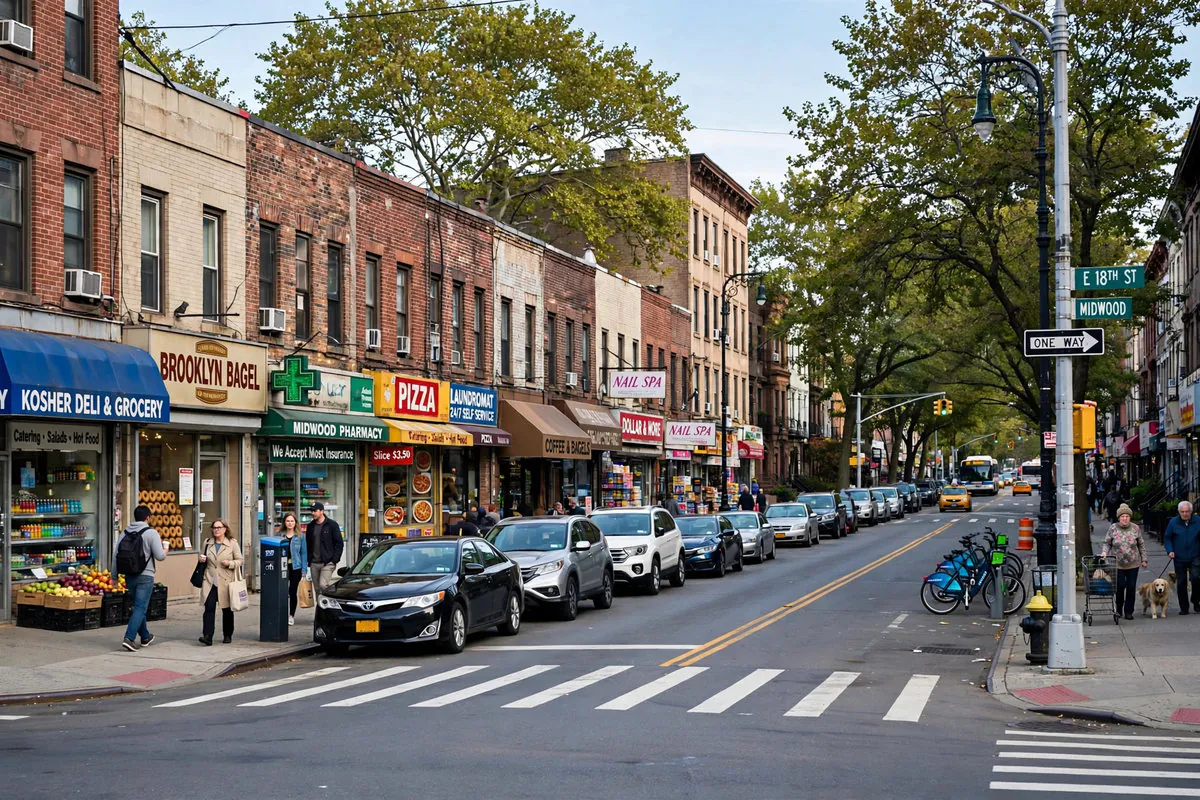
Midwood is a residential heart of Brooklyn — tree-lined blocks of homes around the commercial spines of Kings Highway, Coney Island Avenue and Avenue M, with schools, houses of worship and small businesses woven through. Its injury claims look residential too: crashes at busy avenue intersections, falls in local stores and on neighborhood sidewalks, delivery traffic threading quiet blocks, and injuries to the home-health aides, tradespeople and shop workers who keep the neighborhood running.
Billy Cooper Law represents people injured in Midwood and across Kings County. This page explains how a Midwood claim works — the deadlines, the insurance, and the evidence — and how the firm handles it. For the borough-wide picture, see our Brooklyn personal injury page.
A Kings County Firm for a Serious Midwood Injury
Midwood cases are decided in the same place as every serious Brooklyn claim: Kings County Supreme Court at 360 Adams Street. Billy Cooper Law builds its Brooklyn files for that courtroom — complete treatment records, identified defendants and insurers, and evidence gathered while it still exists.
Neighborhood cases have a particular evidence profile. The corner store’s camera, the bodega’s delivery log, the school crossing at dismissal time — Midwood proof is small-scale and perishable, held by local businesses rather than big institutions. Reaching those holders in the first days, with a written preservation demand, is often what separates a documented claim from an argument.
The firm offers Midwood clients the structure of a full personal injury practice — investigation, negotiation and litigation under one roof — with a free consultation and no fee unless there is a recovery.
Why Midwood Cases Get Complicated
A Midwood injury can look simple and not be. A crash on Kings Highway may involve a private driver, a delivery van working a route, and a no-fault claim running on a thirty-day clock alongside the liability case. A fall on a commercial sidewalk raises the abutting owner’s duties under the City’s sidewalk law, the tenant’s lease obligations, and possibly the City’s own responsibility for the curb or a tree well.
The neighborhood’s workforce adds another layer: many Midwood residents work in home care, construction, retail and food service, so a single injury often opens both a workers’ compensation claim and a third-party negligence case, which interact with each other and must be coordinated.
Getting the structure right at the start — every defendant, every policy, every clock — is what allows the case to be about the injury rather than about missed steps.

Types of Injury Cases We Handle in Midwood NY
One Midwood practice page already exists; the firm’s main practice pages cover the rest:
- E-Bike Accidents in Midwood
- Car Accidents
- Personal Injury
- Uber and Lyft Accidents
- E-Bike Accidents — New York
A Useful Local Snapshot
Midwood sits in south-central Brooklyn, bounded roughly by Foster Avenue, Ocean Parkway, Kings Highway and the Brighton Line corridor. Brooklyn College anchors its eastern edge; the B and Q trains run through stations at Kings Highway, Avenue M and Avenue J. The population is dense, multigenerational and heavily pedestrian — children walking to school, seniors walking to shops, congregations walking on weekends.
That walking culture, meeting fast avenue traffic and constant delivery volume, defines the neighborhood’s injury pattern. Emergency care most often begins at Maimonides Medical Center in neighboring Borough Park, NYU Langone Hospital—Brooklyn in Sunset Park, or Kingsbrook in East Flatbush, depending on where in Midwood the injury occurs.
Where Serious Injuries Happen in Midwood
Midwood’s claims cluster where its pedestrian life crosses its traffic:
- Kings Highway — the neighborhood’s commercial spine: turning traffic, delivery stops, and pedestrians crossing between stores and the B/Q station.
- Coney Island Avenue and Ocean Avenue — fast north-south corridors with long blocks, turning conflicts and bus traffic.
- Avenue M and the station areas — school and shopper foot traffic meeting cars around the Q line entrances.
- Local stores, supermarkets and sidewalks — wet-floor and stock falls, sidewalk defects, and snow and ice claims in winter.
- Residential blocks — home-improvement and delivery injuries, dog bites, and falls on stoops and walkways.
- School zones and crossings — child pedestrian and bicycle injuries around dismissal times, including near Edward R. Murrow High School and the neighborhood’s many schools.
Real Injury Cases Often Begin in Ordinary Places
The firm handles Midwood claims across the range: car and pedestrian collisions on the avenues; e-bike and bicycle crashes (a dedicated Midwood e-bike page is linked above); slip, trip and fall injuries in stores, buildings and on sidewalks; delivery-vehicle collisions; construction and renovation injuries, including Labor Law claims; dog bites; and wrongful death cases.
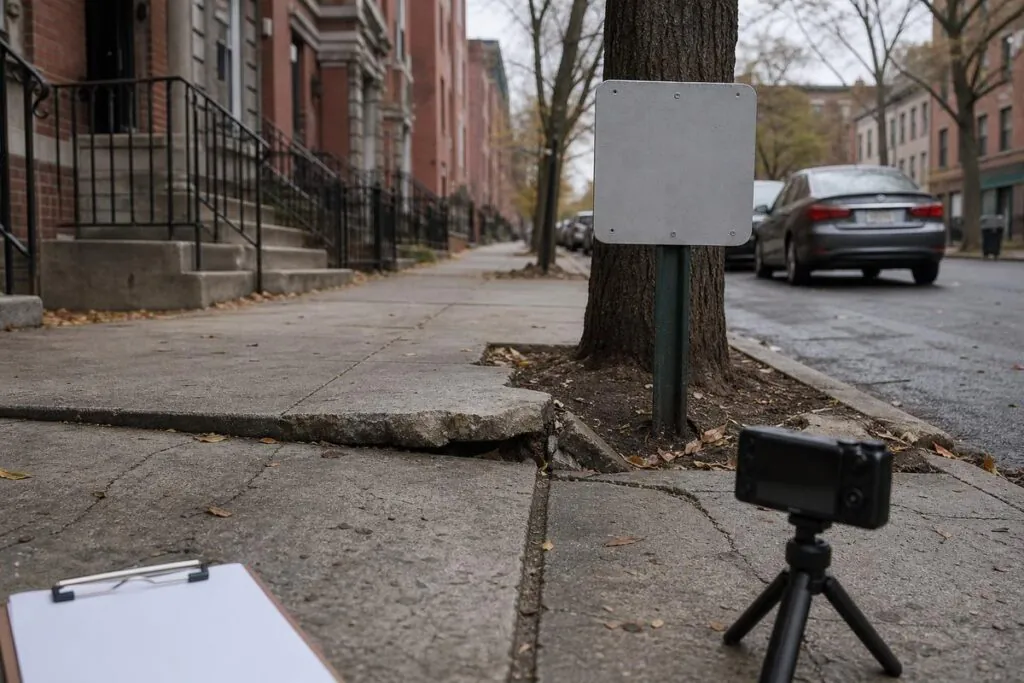
Midwood’s premises cases deserve a note. New York City’s sidewalk law places maintenance duties on abutting commercial owners and many property owners, and the allocation among owner, tenant and the City is a factual inquiry — leases, repair history and the exact location of the defect all matter. It is a solvable puzzle, but only with the records.
What To Do After an Injury in Midwood
After an injury in Midwood, protect the claim as you protect yourself:
- Get medical care. Call 911 for emergencies; tell the providers the visit follows an accident so the records say so.
- Report it. NYPD for a crash (the 70th Precinct covers Midwood); the store or property manager for a fall — ask for the incident report and its number.
- Photograph everything. The vehicles, the defect or spill, the intersection, and your injuries, before conditions change.
- Collect names. Drivers, witnesses, responding officers, and the business representative who took your report.
- Keep your file together. Bills, discharge papers, prescriptions, and proof of missed work — including informal caregiving or shift work records.
- Do not give a recorded statement to the other insurer, or sign a quick settlement, before you understand your injuries and deadlines.
How Evidence Proves a Midwood Injury Claim
Midwood evidence is local and short-lived. Small stores overwrite camera footage quickly; a spill is mopped and a defect repaired without ceremony; the delivery van that stopped in the travel lane is three neighborhoods away by evening. A preservation demand to the right holders in the first days is the difference between a case with proof and a case with recollections.
The formal record is built alongside: NYPD collision reports, 311 and City records where a sidewalk or roadway condition is involved, property and lease records for premises cases, and the complete medical file. For working clients, wage and schedule documentation — including home-care timesheets — is gathered early, while employers’ records are complete.
BILLY COOPER LAW
Deadlines That Control a Midwood Personal Injury Claim
The general New York negligence deadline is three years from the injury (CPLR 214), but a Midwood case is usually governed by shorter clocks. No-fault applications in vehicle cases are generally due within thirty days. Claims involving the City of New York — a sidewalk or roadway defect, a city vehicle, a public school — generally require a notice of claim within ninety days and suit within one year and ninety days.
Fault is allocated under CPLR 1411’s pure comparative rule: your share reduces the recovery instead of barring it, except that for motor-vehicle actions commenced on or after May 26, 2026, § 1411(b) bars a claimant whose fault exceeds the defendants’ combined fault. Pain-and-suffering claims against motorists must also meet the serious-injury threshold of Insurance Law § 5102(d).
These dates run from the accident, not from the end of treatment or the end of settlement talks. Mapping them is the first work done on any Midwood file.
How Fault Is Divided Under New York Law
Responsibility in a Midwood case can belong to a driver, a delivery company, a store or property owner, a contractor, or the City — and serious cases often involve more than one. The question is always evidentiary: who controlled the risk, what did the standards require, and what does the surviving proof show?
Do not assume your own partial fault ends the matter. Comparative fault usually reduces rather than bars recovery, and early insurer estimates of your share are advocacy, not findings. Documented facts — footage, measurements, witness accounts taken early — are what set the percentage in the end.
What Compensation Covers After a Serious Injury
A Midwood claim seeks medical expenses past and future, lost earnings and reduced earning capacity, and damages for pain, suffering and the loss of life’s ordinary enjoyments. For the neighborhood’s many caregivers, tradespeople and service workers, an injury’s effect on the ability to work — lifting, standing, driving, climbing — is frequently the heart of the case, and it is proved with employment and medical records, not generalities.
No responsible figure can be given before the treatment picture and the coverage are known. What can be done immediately is to protect the claim’s value: complete records, timely filings, and no premature release signed for a quick check.
When a Government Agency Is Involved
City involvement in Midwood usually arrives through the physical plant: a defective sidewalk or curb, a roadway condition, a city vehicle, or a public school. Each triggers the notice-of-claim requirement — ninety days, on the correct entity, in the prescribed form — and the shortened one-year-and-ninety-day suit window.
Sidewalk cases add a wrinkle: for most commercial and multi-family properties, the abutting owner bears the maintenance duty under the City’s sidewalk law, while the City retains responsibility in defined situations. Sorting owner, tenant and City roles is records work — deeds, leases and repair history — and it starts at intake, inside the ninety-day window.
Which Courts Hear Midwood Personal Injury Cases?
Serious Midwood claims are filed in Kings County Supreme Court at 360 Adams Street in Downtown Brooklyn; smaller civil matters may go to Kings County Civil Court. If a case arises from a crash litigated where the defendant resides, venue questions are handled at filing.
Treatment most often begins at Maimonides Medical Center (Borough Park), NYU Langone Hospital—Brooklyn (Sunset Park) or Kingsbrook Jewish Medical Center (East Flatbush). Police reports come from the NYPD’s 70th Precinct. Assembling those records — medical, police, property — into one coherent file is the backbone of the case.
How Billy Cooper Law Builds a Midwood Injury Case
A Midwood case at Billy Cooper Law begins with the deadline map and the local evidence run: preservation demands to stores and camera holders, the police and City records requested, the medical file assembled, and every insurance layer identified — no-fault, the defendant’s liability coverage, and any commercial policy behind a delivery defendant.
From that file, the case is negotiated on documents rather than assertions. If the offers do not reflect the record, suit follows in Kings County. Clients hear from the firm in plain language at each step — what has been gathered, what it means, and what comes next.
Insurance Companies and the First Offer in a Midwood Case
The first settlement offer in a Midwood injury case usually arrives before the treatment picture does — sometimes within weeks of the crash or fall. It is priced on what the carrier knows at that moment: an emergency-room bill, a police or incident report, and the claimant’s own early statements. What it cannot price yet is the part of the case that matters most — whether the injury will resolve with therapy or end in surgery, whether the claimant returns to full work or to a lighter job at lower pay, and what the imaging actually shows.
That is why the firm’s work in the first phase of a Midwood case is documentary rather than negotiative: the treating records are assembled as they are created, restrictions are recorded in writing rather than described later, wage loss is documented from payroll rather than estimated, and the liability investigation (footage, conditions, witnesses) is completed while it still can be. An offer evaluated against a complete file is a different conversation from an offer evaluated against a demand letter.
Two local realities shape that file. Many Midwood clients are treated first in the neighborhood and referred onward — to Maimonides or to Manhattan specialists — which means records live in three systems and must be gathered deliberately. And many clients work in family businesses or are paid in ways that need documentation beyond a standard pay stub. Both are handled at intake, while the documents still exist in their original form.
The Defense Medical Examination: What Midwood Clients Should Know
In a litigated Midwood case, the defense will typically schedule examinations of the claimant by doctors retained by the carrier — often called IMEs. These examinations are part of the process, not a trap, but they are adversarial in design: the examining doctor reports to the defense, and the report will frequently minimize findings the treating doctors documented. Clients are prepared for what to expect — arrive on time, answer history questions accurately and completely, do not exaggerate and do not minimize — and the firm obtains and answers the reports as part of the record. Treating physicians’ documented findings, made over months of care, are the counterweight.
Midwood NY Personal Injury FAQs: Sidewalk Falls, No-Fault, and Deadlines
Below are answers to common questions about personal injury claims in Midwood, Brooklyn. This information is general and not legal advice — contact our office for guidance about your specific situation.
How long do I have to file a personal injury claim in Midwood?
Against a private party, generally three years from the date of the injury under CPLR 214.
Claims involving the City of New York — a sidewalk defect, a city vehicle, a public school — generally require a notice of claim within ninety days and a lawsuit within one year and ninety days. Vehicle cases also carry a thirty-day no-fault application deadline. The shortest clock in your case sets the real schedule.
Sources: CPLR 214 (N.Y. Senate) · General Municipal Law § 50-e (N.Y. Senate)
What does it cost to speak with Billy Cooper Law about my case?
The consultation is free. The firm handles personal injury cases on a contingency fee, so you pay no legal fee unless there is a recovery.
How the fee and case expenses work will be explained in writing before you sign, so you can decide with the full picture.
Sources: CPLR 214 (N.Y. Senate) · Insurance Law § 5102 (N.Y. Senate)
I tripped on a Midwood sidewalk. Who is responsible — the owner or the City?
It depends on the property and the defect. Under New York City’s sidewalk law, abutting owners of most commercial and multi-family properties must maintain the sidewalk and can be liable for injuries from defects; the City retains responsibility in defined situations, such as certain one-to-three-family owner-occupied properties.
The allocation is proved with deeds, leases, and repair and complaint history. Because a City claim may be in the mix, the ninety-day notice-of-claim clock should be assumed to apply until the records sort it out.
Sources: General Municipal Law § 50-e (N.Y. Senate) · General Municipal Law § 50-i (N.Y. Senate)
Who pays my medical bills after a car accident in Midwood?
No-fault insurance pays first. Whether you were driving, riding, walking or cycling, the policy on the involved vehicle provides first-party benefits for necessary treatment and part of lost earnings, regardless of who caused the crash.
The application is generally due within thirty days of the accident. Bills beyond no-fault go to health insurance and, ultimately, to the at-fault driver’s liability coverage as part of the claim.
Sources: Insurance Law § 5103 (N.Y. Senate) · Insurance Law § 5102 (N.Y. Senate)
Can I still recover if I was partly at fault?
Generally yes. Under CPLR 1411’s pure comparative fault, your recovery is reduced by your percentage of fault rather than eliminated.
One exception matters in vehicle cases: for actions commenced on or after May 26, 2026, CPLR 1411(b) bars recovery where the claimant’s fault is greater than the defendants’ combined fault. Percentages are decided on evidence — another reason to document the scene and your account early.
Sources: CPLR 1411 (N.Y. Senate) · CPLR 214 (N.Y. Senate)
What is the serious-injury threshold I keep hearing about?
It is the gate New York’s no-fault law puts on pain-and-suffering claims against motorists. Insurance Law § 5102(d) lists the qualifying categories — fractures, significant disfigurement, permanent or significant limitation or loss of use, and injuries preventing substantially all usual activities for 90 of the first 180 days, among others.
Whether an injury qualifies is a medical-record question: imaging, measured findings and documented restrictions. Consistent treatment is what builds that record.
Sources: Insurance Law § 5102 (N.Y. Senate) · Insurance Law § 5104 (N.Y. Senate)
I was injured working in Midwood. Is it only a workers’ compensation case?
Not necessarily. Workers’ compensation covers medical care and partial wage benefits through your employer, but if a third party’s negligence contributed — a driver, a property owner, a contractor, defective equipment — a separate personal injury claim may exist alongside the compensation case.
The two claims interact, including a compensation lien on part of any third-party recovery, so they should be evaluated together from the start rather than discovered late.
Sources: Workers’ Compensation Law § 29 (N.Y. Senate) · NYS Workers’ Compensation Board — What Is Workers’ Compensation?
Where will my Midwood injury case be filed?
Serious claims go to Kings County Supreme Court at 360 Adams Street in Downtown Brooklyn. Smaller civil claims may be filed in Kings County Civil Court.
Most cases settle without a trial, but the case is prepared from the beginning as if it will be filed — that preparation is what gives a settlement demand its weight.
Sources: CPLR 503 (N.Y. Senate) · CPLR 214 (N.Y. Senate)
A delivery van hit me. Is the company responsible too?
Often, yes. A driver working a route is usually acting within the scope of employment, which makes the employer responsible for the driver’s negligence — and delivery work adds further questions about vehicle ownership, leasing arrangements and the platform or contractor structure behind the route.
Company involvement usually means commercial insurance and company records — route data, telematics, scanner logs — that should be demanded before they rotate out of existence.
Sources: Vehicle and Traffic Law § 388 (N.Y. Senate) · CPLR 214 (N.Y. Senate)
What should I bring to my first consultation?
Bring the date and exact location, any police or incident report number, insurance information, photographs, witness names, medical paperwork and proof of missed work or wages.
Do not wait until the file feels complete. The evidence that matters most in a Midwood case — a store’s video, a delivery log — is also the evidence that disappears fastest.
Sources: CPLR 214 (N.Y. Senate) · CPLR 1411 (N.Y. Senate) · General Municipal Law § 50-e (N.Y. Senate)
Tell Us What Happened
If you were injured in Midwood, tell us where it happened, what care you have received, and what any insurer has said so far. We will identify your deadlines and explain the next steps in plain language. Request a free consultation online or call (914) 730-5789.
Communities We Serve
- Kings County — Brooklyn
- Downtown Brooklyn
- Bay Ridge
- Bedford-Stuyvesant
- Bensonhurst
- Borough Park
- Bushwick
- Crown Heights
- East New York
- Flatbush
- Midwood
- Sunset Park
- Williamsburg
Sources
Firm Information
- Billy Cooper Law: Meet the Team
- Billy Cooper Law: Billy Cooper, Esq.
- Billy Cooper Law: Case Results
- Billy Cooper Law: Office Locations
- Billy Cooper Law: Personal Injury
- Billy Cooper Law: Contact
Midwood Sources
- U.S. Census Bureau QuickFacts: Brooklyn (Kings County), New York
- NY Courts — Second Judicial District (Kings County)
- City of New York
NOTABLE RESULTS
Selected results in Billy Cooper Law’s broader personal injury practice:
$9,000,000 settlement · $2,005,000 settlement
Read more about these results
- $9,000,000 settlement — Tank explosion
A man suffered extensive burns and loss of his dominant hand in a tank explosion in Westchester County.
- $2,005,000 settlement — Construction-site roof fall
A worker fell from a roof after inadequate safety equipment was provided on a Rockland County job site.
These are reported gross results, before fees, expenses, and applicable liens. They are not estimates of another claim’s value. Read the firm’s published case results.
Prior results do not guarantee a similar outcome. Each case is different and must be evaluated on its own facts.
WHAT OUR CLIENTS SAY
General feedback about working with Billy Cooper Law:
“I’m not one to write reviews but did so in this case because my experience was above and beyond my expectations. Mr. Cooper”s empathy re: my healing process was of utmost concern. He explained the options of my case with much patience. He listened to all my concerns and thoughts without judgement. I was never rushed or pushed into a decision, I couldn’t have hoped for a better settlement or a more caring practice!”
— N. K., Google review
“I had a car accident and turned to Billy Cooper’s Law Firm for help. From start to finish, the process was effortless. Billy Cooper is incredibly knowledgeable and guided me through every step with confidence and clarity. His expertise made a stressful situation much easier to handle. I truly appreciate the professionalism and dedication of the entire team. If you’re looking for a reliable and skilled attorney, I highly recommend Billy Cooper Law Firm!”
— J. W., Google review
Professional Recognition

Recognition applies to the named attorneys and selection years. See the linked profiles for details.
Related Billy Cooper Law Videos and Social Posts
- Billy Cooper Law official YouTube channel — Youtube — official account.
- Billy Cooper Law official Instagram profile — Instagram — official account.
- Billy Cooper Law official Linkedin profile — Linkedin — official account.
- Protecting an Injury Claim on Social Media — Facebook.
- Types of Personal Injury Cases the Firm Handles — Facebook.
Published Articles by Billy Cooper
- When the Video Disappears: Liability, Missing Footage, and the Modern New York Injury Case — New York Law Journal · June 23, 2026.
Billy Cooper discusses video evidence that is missing, incomplete, or overwritten in New York injury litigation.
Related Locations and Practice Resources
BILLY COOPER LAW
Related Resources


Get the Answers You Need
At Billy Cooper Law, every day we renew our pledge to help injured people get the justice and compensation they deserve. We have a reputation throughout New York and nationally for standing up for our clients, and we take that responsibility seriously by approaching every case with preparation, persistence, and an unwavering commitment to results.