
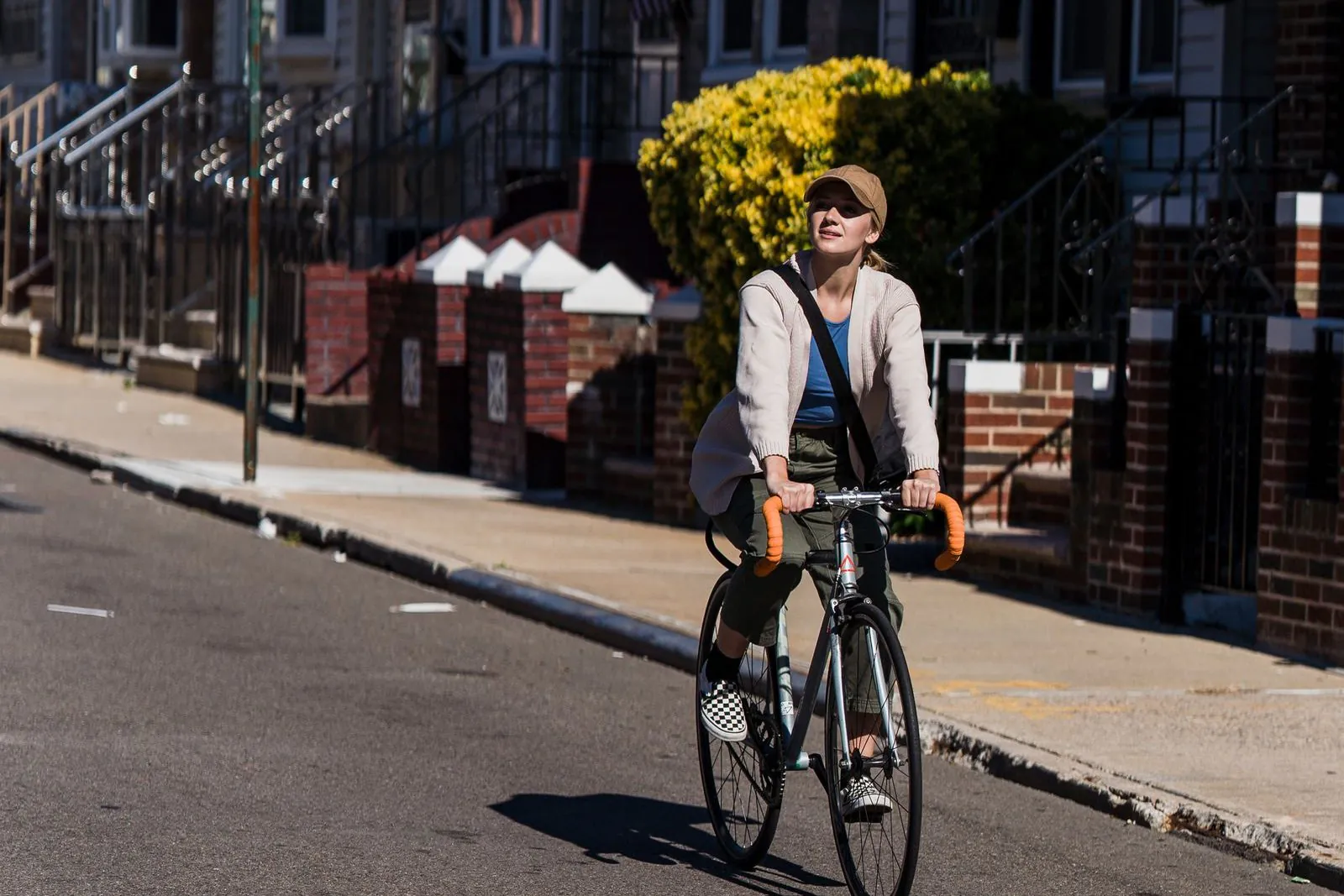
Midwood NY E-Bike Accident Lawyer
Midwood rides on wide streets. Ocean Avenue and Ocean Parkway give e-bikes room to run, Kings Highway and Avenue M supply the shops and the delivery demand, and the B and Q trains set the commuting rhythm. The roominess is deceptive: the same avenues that feel calm at midday turn fast and crowded at rush hour, and drivers on familiar local streets stop expecting anything smaller than a car.
A crash in Midwood leaves the usual wreckage plus a set of questions — whose insurance pays Kings County Hospital, whether the bike’s class changes the answer, and how long any of the deadlines really are. Billy Cooper Law helps Brooklyn riders work through those questions and build the claim behind them. Consultations are free; call (914) 730-5789. Hold onto the bike, the helmet, and every piece of paper.
Why Midwood E-Bike Crashes Deserve Their Own Analysis
Speed differentials do the damage here. A Midwood e-bike travels at twenty miles an hour beside parked cars on avenues where drivers pull out judging gaps by car standards. The physics of a rider meeting a door, a fender, or the pavement at that pace produce the fractures, joint injuries, and head trauma that fill these files — harms a slow pedal-bike fall rarely matches.
Then the claim takes its electric detour. Before fault is argued, the file must establish what the machine was: its class, its label, whether it had been altered. That classification colors the traffic rules in play and the coverage analysis that follows. A Midwood case is therefore part crash reconstruction, part document review, and part insurance mapping from the first week.
Midwood’s Numbers From the Official Collision Record
NYPD collision data reported through NYC Open Data for 2023-2025 recorded 105 collisions involving e-bikes in Midwood’s ZIP codes, 11212 and 11230. In that same territory and period, 37 cyclists were injured, and total reported collisions numbered 4,660. Electric bikes account for a small share of Midwood traffic and a persistent share of its injured riders.
Keep the figures in their proper role. They cannot say who ran the light at your corner, and no claim should ask them to. They establish that e-bike riders are an ordinary, documented presence on these avenues — which quietly defeats the suggestion that a driver had no reason to look for you.

The Legal Ground Rules for Riding in Midwood
Three Classes of E-Bike
New York’s classes turn on assistance. Class 1: the motor helps only as you pedal, to 20 mph. Class 2: a throttle can help, still to 20 mph. Class 3: assistance to 25 mph, a category written for New York City. Riders take the rights and duties of bicyclists under Vehicle and Traffic Law § 1231, and the manufacturer’s label is the authoritative word on which class a given bike belongs to.
Streets Yes, Sidewalks No
E-bikes belong in roadways and bike lanes. Sidewalk operation is prohibited in the city, pedestrians hold the right of way, and signals apply to riders as to drivers; the city DOT’s bicycling pages gather the operative rules. A rider who violated one of them has not forfeited a claim — fault is divided — but should expect the violation to be documented and argued.
Helmets and What a Violation Does Not Do
Helmets are mandatory for Class 3 riders and for commercial delivery cyclists. The helmet provisions of Vehicle and Traffic Law § 1238 state their own limit: noncompliance does not bar an injury or wrongful death action, nor does it reduce the damages recoverable. Insurers test riders’ resolve on this point; the statute resolves it.
Insurance Architecture After a Midwood Crash
A rider struck by a motor vehicle generally claims first against that vehicle’s no-fault coverage: medical expenses and a slice of lost earnings, up to $50,000 in combined basic economic loss. Insurance Law § 5104 is the provision tying those benefits to the liability claim that may follow against the driver. Health insurance is not the intended first responder when a car does the hitting.
Activation is a paperwork sprint. Notice to the carrier is generally due within 30 days; bills and wage proof follow on their own timetables. If the vehicle was a delivery driver’s, an employer’s policy may sit behind it. If the driver was uninsured or unknown, household coverage or the state indemnification corporation becomes the path — each with reporting duties measured in weeks.
Where Midwood Riders Are Injured
Ocean Avenue and the Ocean Parkway Service Roads
Ocean Avenue’s breadth invites speed, and its intersections give turning drivers a long, confident look at everything except the bike lane. Along Ocean Parkway, the service roads add parked-car doors, driveway cuts, and crossings where riders on the main road meet vehicles entering from the side. Sightline photographs from the rider’s approach are powerful evidence here.
Kings Highway’s Commercial Miles
Kings Highway stacks storefronts, bus stops, angled parking, and delivery stops into the neighborhood’s busiest corridor. Dooring, sudden U-turns, and cars lunging from parking spaces into traffic account for a steady share of Midwood claims. The corridor’s cameras — banks, pharmacies, groceries — often hold the decisive ten seconds.
Coney Island Avenue and Avenue M
Coney Island Avenue carries fast through-traffic past local shops, while Avenue M concentrates schools, houses of worship, and retail in a few dense blocks. The mix produces turning conflicts at nearly every signal and a pedestrian-rider-vehicle tangle near the shopping core at school dismissal and on weekend mornings.
Station Approaches and School Zones
The B and Q stations pull riders onto the same blocks where parents double-park for school pickup and buses swing wide at stops. Crashes near stations involve hurried drivers and riders late for trains — a combination that rewards early witness work, because everyone involved scatters on a schedule.
Steps to Take in the Days After a Midwood Crash
Get checked at once — Kings County Hospital Center handles many Midwood crash patients — and keep getting checked as directed. Injuries that declare themselves late, especially head and spine injuries, are common in these files and hard to connect to the crash if the early record is blank. With health underway, protect the claim.
- Confirm the police report names the driver, the vehicle, and the insurer, and records that you were injured.
- Photograph the avenue, the intersection, the vehicles, your injuries, and the bike — including its class label.
- Write down witnesses’ names and numbers before the corner empties.
- Preserve app records if the ride involved delivery work or a rental.
- Refuse recorded statements to the other insurer until you have advice.
- Keep a single file of medical bills, prescriptions, receipts, and missed-work proof.
Above all, freeze the hardware. The bicycle, its battery, and your helmet should be stored as they came home. Repairs and clean-outs, however well meant, delete the physical evidence that classification and impact arguments are made of.
Evidence That Carries a Midwood Case
Video first, because video leaves first. Kings Highway storefronts, building lobbies, school and house-of-worship systems, bus cameras, and residential doorbells blanket much of Midwood. A preservation request sent within days can capture the collision; the same request sent in month two usually captures an apology and an overwritten drive.
Build the rest of the record in parallel: the police report, scene photographs and measurements, the preserved machine and gear, imaging and treatment notes, wage documentation, and — for working riders — platform logs showing the order and route. A claim is a story told by documents; these are the chapters.
Midwood Cases the Firm Handles
The practice’s e-bike docket from this neighborhood features avenue collisions with turning and merging drivers, doorings along the shopping corridors, riders struck in station and school traffic, and pedestrians hurt in e-bike encounters. It also includes machine cases — failed brakes, steering defects, battery fires — and road-condition cases where the street, not a driver, was the hazard.
- Commuters injured riding to the B and Q trains
- Delivery riders hurt on shift along Kings Highway and Avenue M
- Pedestrians struck by e-bikes near shopping blocks
- Riders thrown by pavement defects or unmarked work
- Share-bike riders injured in traffic
- Families pursuing claims after a fatal crash
Where the rider was working, the file often has a second spine: a workers’ compensation claim beside the liability case. Workers’ Compensation Law § 29 governs their interaction, and the Workers’ Compensation Board publishes the worker-side guidance. Managing both tracks on one calendar prevents the common accident of winning one claim and timing out the other.
Scooter Crashes Around Midwood
E-scooters run the same avenues at similar speeds and fail in the same ways: a turn across the rider, a door, a seam in the pavement. New York regulates the devices under their own provisions, and a scooter claim reuses most of the e-bike machinery — no-fault, the serious-injury standard, comparative fault — with device-specific rules layered in. If the wheels were a scooter’s, the urgency and the analysis both apply.
Public Defendants and the 90-Day Notice
Some Midwood crashes belong partly to the public: a city vehicle in the impact, a bus, or a roadway condition under municipal control. Those cases begin with a notice of claim generally due within 90 days under General Municipal Law § 50-e, and the suit itself generally follows within one year and 90 days under § 50-i. The calendar, not the merits, is what kills unprepared municipal claims.
Attribution takes work: a given stretch of Ocean Parkway, a given grate or plate, a given work zone may belong to the city, the state, a utility, or a contractor. Because the notice clock runs during the attribution, crashes with any public ingredient should be screened immediately rather than after treatment settles down.
Filing Deadlines and the Serious-Injury Standard
The standard allowance for suing a negligent driver is three years, set by CPLR § 214. A family’s wrongful death claim generally runs two years under EPTL § 5-4.1. Both figures sit at the far end of a schedule whose near end — benefit notices, municipal notices, footage retention — is measured in days and weeks.
For pain-and-suffering recovery against a motorist, the rider must meet the serious-injury definition in Insurance Law § 5102(d). The categories include fracture, significant disfigurement, and significant or permanent limitations on bodily functions. Whether a given concussion, disc injury, or torn ligament qualifies is a medical-proof question, which returns the discussion, as always, to complete and consistent treatment.
Dividing Fault in a Midwood Crash
New York’s comparative fault statute, CPLR § 1411, in its current form for motor-vehicle injury cases, draws a hard line: a claimant whose fault exceeds the defendants’ combined fault recovers nothing; a claimant below the line recovers reduced by their percentage. Expect the driver to nominate your speed, your lane position, or a sidewalk segment as your share.
Shares follow evidence, not emphasis. The avenue’s camera coverage, the damage geometry, signal records, and a disinterested witness can each move points. The practical answer to an inflated allocation is a well-preserved record produced early, while the other side is still working from its driver’s statement.
Potentially Responsible Parties
The list starts with the driver and lengthens quickly: the vehicle’s owner; an employer whose business the driver was serving; a contractor or utility responsible for the roadway condition; a manufacturer or seller behind a failed component; and, under municipal procedure, the city for its vehicles and streets. Doorings can involve a passenger who opened the door and the owner alike.
Each name carries its own insurance and its own proof demands. The investigation’s job is to keep every supportable name in play until the evidence, rather than the calendar, decides which ones stay.
Valuing a Midwood E-Bike Claim
The valuation follows the losses. Past and future medical care, rehabilitation, and household help; wages lost and earning capacity diminished; the bike and gear destroyed — these can be documented to the dollar. Pain, scarring, lost mobility, and the activities surrendered during a long recovery are valued by judgment on the strength of the same record.
Insurers discount whatever is undocumented, which is why the file should be built as if it will be read by a skeptic: imaging attached to complaints, therapy notes tracking function, employer letters quantifying missed time. Sentiment settles nothing; records settle most things.
From Kings County Hospital to Kings County Supreme Court
Midwood riders are often treated at Kings County Hospital Center, and its records, completed by neighborhood follow-up care, form the medical spine of the case. Records may also be drawn from the responding precinct, EMS, the DOT, and nearby property owners. A Brooklyn lawsuit is generally heard in Supreme Court, Kings County, at 360 Adams Street; official court information is published by the New York State Unified Court System, and venue is confirmed from the parties and facts.
BILLY COOPER LAW
The Firm’s Investigation, Step by Step
Phase one is preservation: letters out to camera owners and agencies, the corner documented, the machine secured and photographed, deadlines calendared — including the 90-day municipal notice if the facts suggest one. Phase two is construction: the no-fault file perfected, treatment and wage proof assembled, additional defendants developed from ownership and employment records.
Phase three is resolution on the record’s terms: a demand that prices the whole injury, negotiation against the documented fault picture, and suit in Kings County if the offer does not match the file. Riders weighing whether to start can put their questions to the firm at (914) 730-5789 — the consultation is free, and injury cases are taken on a contingency-fee basis.
Related Brooklyn Resources
Nearby coverage includes e-bike accident help in Crown Heights and the Williamsburg e-bike page. Coverage also extends to riders in East New York. The Kings County section organizes the borough’s injury pages, the motor vehicle accidents overview explains the parent claim category, and the e-bike accidents hub collects the practice in one place.
BILLY COOPER LAW
NOTABLE RESULTS
Selected results in Billy Cooper Law’s broader personal injury practice:
$850,000 settlement · $1,600,000 settlement
Read more about these results
- $850,000 settlement — Automobile collision
A Bronx automobile collision caused lower-extremity reflex sympathetic dystrophy and a knee injury.
- $1,600,000 settlement — Pedestrian struck by a vehicle
A vehicle jumped a curb and struck a pedestrian in the Bronx, causing serious injuries and multiple surgeries.
These are reported gross results, before fees, expenses, and applicable liens. They are not estimates of another claim’s value. Read the firm’s published case results.
Prior results do not guarantee a similar outcome. Each case is different and must be evaluated on its own facts.
WHAT OUR CLIENTS SAY
General feedback about working with Billy Cooper Law:
“You wont find an attorney who is smart, and empathetic at the same time as William Cooper. I have spoken to many personal injury attorneys who would go no further than a phone call. Mr. Cooper took the extra step and made inquiries for me just to try and help me with an issue that’s been unresolved. He is patient, clear and concise in conversation and does not rush, he waits until you have a full understanding of all aspects of the situation. Don’t waste your time searching for the right personal injury attorney, look no further than William Cooper. He is a rare find!”
— T. P., Google review
“I’m not one to write reviews but did so in this case because my experience was above and beyond my expectations. Mr. Cooper”s empathy re: my healing process was of utmost concern. He explained the options of my case with much patience. He listened to all my concerns and thoughts without judgement. I was never rushed or pushed into a decision, I couldn’t have hoped for a better settlement or a more caring practice!”
— N. K., Google review
Professional Recognition

Recognition applies to the named attorneys and selection years. See the linked profiles for details.
Related Billy Cooper Law Videos and Social Posts
- Bicycle and E-Bike Safety — Facebook.
- What to Do After an E-Bike or E-Scooter Accident — Facebook.
- Sharing the Road With E-Bikes and E-Scooters — Facebook.
Midwood NY E-Bike Accident FAQs: Medical Care, Insurance, and Claims
These ten answers cover the questions Midwood riders ask most. They describe general New York law; your claim will follow your facts, your coverage, and your corner.
What is my deadline to sue after an e-bike crash in Midwood?
For an ordinary negligence claim against a driver, New York generally allows three years from the date of the crash to file the lawsuit. That is the period most Midwood e-bike cases against private motorists live under. It is a deadline for the court filing; the claims activity that makes a filing worthwhile operates much sooner.
Watch for the shorter tracks hiding inside the same crash. Claims involving the city or a public agency generally require a notice within 90 days and suit within one year and 90 days. Wrongful death claims generally carry two years. A rider who calendars only the three-year date can lose the municipal piece of the case in the first spring.
Sources: CPLR § 214 (nysenate.gov); General Municipal Law § 50-e (nysenate.gov)
A city truck was involved in my Kings Highway crash — what is the 90-day notice I keep hearing about?
It is the notice of claim: a sworn written statement that must generally be served on a public corporation within 90 days of the incident before a lawsuit can proceed. It identifies you, describes the crash and the injuries, and gives the agency a chance to investigate while the evidence is current. Crashes involving city vehicles or conditions on city property are the usual triggers.
The notice is not a courtesy copy — missing it can end the case, subject to narrow court permission to file late. The suit deadline behind it, generally one year and 90 days, is also far shorter than the ordinary period. Any Midwood crash with a public vehicle or a public roadway condition should be screened against this clock immediately.
Sources: General Municipal Law § 50-e (nysenate.gov); General Municipal Law § 50-i (nysenate.gov)
Can I still have a case if I was partly at fault for the crash on Ocean Avenue?
Yes, in many configurations. New York compares the parties’ fault: under the current comparative fault statute for motor-vehicle injury actions, a rider whose responsibility is greater than the defendants’ combined responsibility is barred, and a rider at or under that threshold recovers damages reduced by their own share. Being partly wrong is therefore a discount, not necessarily a dismissal.
The percentage is where the money is, so contest it with proof. Signal records, the point of impact, camera footage from the avenue, and witness accounts can each reduce the share assigned to you. An adjuster’s first allocation reflects the driver’s statement; the record you build is what replaces it.
Sources: CPLR § 1411 (nysenate.gov); Insurance Law § 5104 (nysenate.gov)
The car that hit me near Avenue M sped away — what can I do?
Report it to the police immediately, with every fragment you retained — color, body style, a partial plate, the direction it ran. A hit-and-run claim typically proceeds through uninsured-motorist coverage in your household or, if none exists, through the Motor Vehicle Accident Indemnification Corporation, the state fund for eligible victims of unidentified drivers. Both channels impose quick reporting and filing duties.
Investigation substitutes for the missing driver. Avenue M’s storefront and institutional cameras, debris at the scene, and witnesses from the shopping blocks can establish the contact and sometimes the car itself. Preserve the damaged bike unrepaired; its paint transfer and impact pattern are physical testimony about the vehicle that left.
Sources: Insurance Law § 5102 (nysenate.gov); CPLR § 214 (nysenate.gov)
Someone opened a car door into me on Coney Island Avenue — is that a real claim?
It is a recognized and frequently serious claim. A person opening a vehicle door into traffic must do so only when it can be done safely, and a rider struck by a door — or knocked into traffic avoiding one — can pursue the opener and the vehicle owner, with the vehicle’s coverage responding as in other motor-vehicle cases, including no-fault benefits for the rider’s treatment.
Dooring defenses follow a script: the rider was too close to the parked cars, or traveling too fast to stop. Scene photographs showing the door’s arc, the lane, and the impact point answer the geometry, and witnesses or storefront video from the avenue answer the rest. Get both before the block returns to normal.
Sources: Vehicle and Traffic Law § 1231 (nysenate.gov); Insurance Law § 5102 (nysenate.gov)
Does it matter legally that my e-bike is a Class 3?
Yes, in identifiable ways. Class 3 is the fastest legal category — assistance to 25 mph — and it exists for New York City, carrying conditions the slower classes do not, most visibly the helmet requirement. After a crash, classification determines which operating rules you were judged by and gives the insurer its first line of inquiry: label, top assisted speed, and any modification.
Your protection is documentation. The manufacturer’s label on the frame states the class; photograph it and keep the purchase paperwork. A bike altered beyond its class invites the argument that it was not legally an e-bike at all, with consequences reaching registration law and coverage. Leave the machine untouched until its status is recorded.
Sources: Vehicle and Traffic Law § 1231 (nysenate.gov); NYC DOT bicycling guidance (nyc.gov)
I rode on the sidewalk for half a block before the crash — will that be used against me?
It will be raised, because New York City prohibits riding an e-bike on the sidewalk. In a civil claim the violation becomes part of your share of fault; it does not erase the driver’s. The allocation will weigh how the sidewalk riding actually contributed — where you re-entered the roadway, your speed, your visibility — against what the driver did or failed to do.
Do not concede the insurer’s framing that a rule violation ends the discussion. Drivers owe riders care even when riders err, and the comparative statute apportions rather than annihilates below its threshold. Honest facts plus a documented record of the driver’s own conduct are the answer to an inflated fault assignment.
Sources: Vehicle and Traffic Law § 1231 (nysenate.gov); CPLR § 1411 (nysenate.gov)
If I did not call the police in Midwood, is my claim in trouble?
It is disadvantaged, not doomed. The police report normally supplies the driver’s identity and insurance, the contemporaneous statements, and the officer’s observations — the raw material of both the no-fault application and the liability claim. Without it, expect the insurer to test every fact the report would have settled, and expect some of them to be genuinely harder to prove.
Rebuild quickly with what remains: photographs, witnesses, medical records from the day, camera requests to the buildings along the avenue, and any exchange of information you did capture. Report what can still be reported and document the delay honestly. The lesson for the next rider is simple — call 911 at the scene whenever a vehicle is involved.
Sources: Vehicle and Traffic Law § 1231 (nysenate.gov); Insurance Law § 5102 (nysenate.gov)
The driver who hit me had no insurance — where does that leave me?
Not without options. Look first to uninsured-motorist coverage: a policy of your own, or one covering a household member, may respond for both benefits and liability. If no policy exists, the Motor Vehicle Accident Indemnification Corporation can provide no-fault benefits and a compensation route for eligible New York residents. Each path has notice deadlines that run in months.
Act as if the deadlines were weeks. Notify your own insurer promptly, keep the police report central, and pursue identification anyway — ‘uninsured’ sometimes means ‘insured under a policy nobody has located yet.’ Camera footage and a full plate, found late, can reopen a claim everyone assumed was fund-bound.
Sources: Insurance Law § 5102 (nysenate.gov); CPLR § 214 (nysenate.gov)
My teenager was hurt on an e-scooter in Midwood — are the rules the same as for e-bikes?
Closely related, not identical. New York regulates e-scooters under their own provisions, including a minimum operator age of 16 and their own operating and speed rules. When a motor vehicle strikes a scooter rider, the insurance architecture looks familiar: no-fault benefits from the striking vehicle, the serious-injury standard for pain-and-suffering damages, and comparative fault allocating responsibility.
Practical steps mirror the e-bike advice with extra emphasis on the device. Preserve the scooter unrepaired, photograph its labels, and save any rental app records. A parent or guardian generally acts for an injured minor in a claim, and settlements for minors require court approval — one more reason to involve counsel early rather than signing anything at the kitchen table.
Sources: Vehicle and Traffic Law § 1231 (nysenate.gov); NYC DOT bicycling guidance (nyc.gov)
Sources
- Vehicle and Traffic Law § 1231 — rights and duties of bicycle and e-bike riders
- Vehicle and Traffic Law § 1238 — helmets and equipment
- Insurance Law § 5102 — no-fault definitions and serious injury
- Insurance Law § 5104 — personal injury claims under no-fault
- CPLR § 214 — three-year personal injury limitations period
- CPLR § 1411 — comparative fault
- General Municipal Law § 50-e — notice of claim
- General Municipal Law § 50-i — municipal lawsuit deadline
- NYC DOT — bicycling rules and information
- Workers’ Compensation Board — information for injured workers

Get the Answers You Need
At Billy Cooper Law, every day we renew our pledge to help injured people get the justice and compensation they deserve. We have a reputation throughout New York and nationally for standing up for our clients, and we take that responsibility seriously by approaching every case with preparation, persistence, and an unwavering commitment to results.