
Morrisania NY E-Bike Accident Lawyer
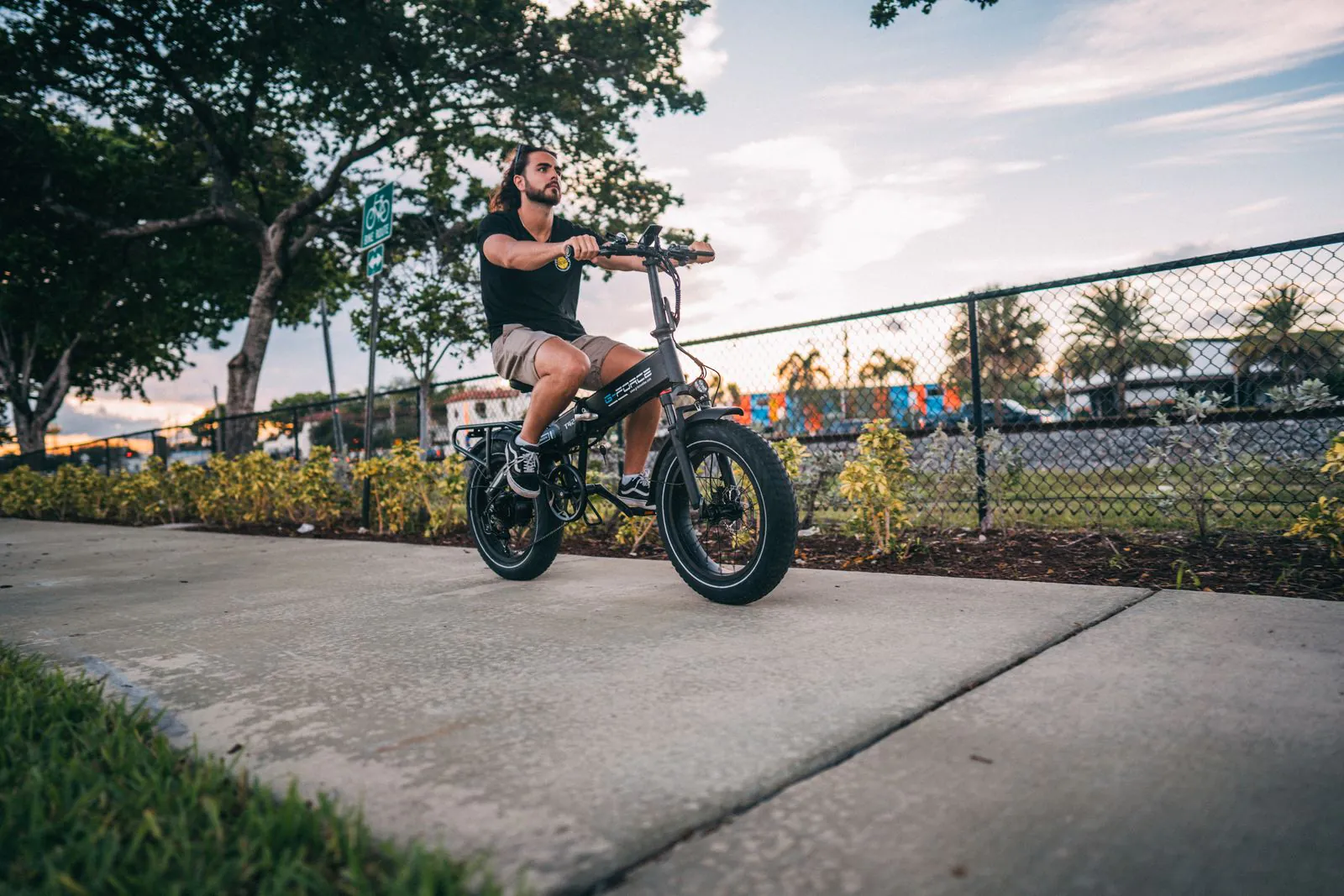
Morrisania, Crotona, and East Tremont form some of the Bronx’s hardest-working riding territory. Third Avenue funnels buses and trucks past the shops, Boston Road runs long and fast, and the Cross Bronx Expressway looms over the northern blocks. For plenty of residents the e-bike is not recreation — it is the shift, the commute, and the grocery run combined.
When a ride ends in a crash on one of those corridors, the medical problem and the legal problem arrive together. Which policy pays St. Barnabas? What if the driver insists the light was theirs? Billy Cooper Law helps Bronx riders answer those questions and build claims that hold up. Call (914) 730-5789 — the consultation costs nothing. Whatever you do next, do not fix the bike first.
What Makes a Morrisania E-Bike Crash Its Own Kind of Case
Corridor speed is the first factor. Boston Road and Third Avenue invite drivers to treat the ride like a highway segment, while the e-bike rider beside them is protected by a jacket and a helmet at best. Impacts at those speeds break pelvises and wrists and cause the kind of head trauma that changes a person’s working life, not just their week.
The second factor is classification combat. Because an e-bike’s legal category controls which rules governed the ride, the other side’s insurer will study the machine — the label, the motor rating, any throttle or tuning changes — looking for a reason to recast you as the operator of something unregistered. That argument starts early, which is why the machine’s post-crash condition is worth guarding.
Morrisania’s Crash Numbers in Context
NYPD collision data reported through NYC Open Data for 2023-2025 logged 123 collisions involving e-bikes in the Morrisania-area ZIP codes 10456, 10457 and 10460, which reach into Crotona and East Tremont. Officers recorded 56 injured cyclists in that territory during the same years, against 5,047 total collisions of all types. Riders here are being hit regularly, on the same avenues, in the same ways.
Statistics cannot assign fault in your crash, and this page will not pretend otherwise. They do undercut the defense that a driver had no reason to expect a rider beside them. On Third Avenue or Boston Road in 2026, an e-bike in the next lane is the most ordinary sight in the Bronx.
BILLY COOPER LAW

The Corners and Corridors That Produce Morrisania Claims
Third Avenue’s Commercial Strip
Third Avenue mixes buses, delivery stops, shoppers crossing mid-block, and drivers angling for parking under the el’s shadow farther south. Riders get squeezed at bus stops and surprised by vehicles pulling out from angled parking. The strip’s stores and banks hold cameras that often capture the whole sequence — when someone asks before the loop overwrites.
Boston Road’s Long, Fast Blocks
Boston Road rewards speed and punishes inattention. Its long blocks let drivers build momentum, and its wide intersections give turning vehicles room to misjudge an approaching rider’s pace. Left-turn collisions and red-light disputes recur here, and both turn on signal and sightline evidence assembled early.
Cross Bronx Expressway Crossings
Where Morrisania streets dive under or climb toward the expressway, ramps and service roads scramble the usual rules of the road. Merging drivers watch for gaps in car traffic, not for riders on their flank. Roadway lighting and lane markings around the crossings often become evidence in their own right.
Crotona Park and the Residential Grid
Crotona Park draws riders through the neighborhood’s middle, and the streets around it carry school, church, and playground traffic. Crashes here involve drivers rolling stop signs, opening doors along the park edge, and turning into driveways across a rider’s line. Quieter blocks do not mean gentler injuries.
Know the Machine’s Legal Category Before the Insurer Teaches You
Class 1, Class 2, Class 3
New York sorts e-bikes by how the motor helps. Class 1 helps only while you pedal, to 20 mph. Class 2 can push you by throttle, also to 20 mph. Class 3 reaches 25 mph and is a New York City category with added conditions. Riders hold a cyclist’s rights and duties under Vehicle and Traffic Law § 1231, and the class printed on the frame label is the first fact an adjuster verifies.
Sidewalks, Signals, and Riding Position
E-bikes do not belong on city sidewalks, riders owe pedestrians the right of way, and traffic signals bind riders as they bind drivers; the DOT’s bicycling pages lay out the city’s expectations. A violation found in the police narrative will be quoted back at you for the life of the claim — but it apportions fault rather than erasing the driver’s share.
Helmets: Required for Some, Decisive for None
State rules require helmets for Class 3 operation and for commercial delivery riding. Section 1238 contains the equipment and helmet provisions, and it also states that a helmet violation does not defeat an injury lawsuit or reduce recoverable damages. If you rode bareheaded, expect the argument; know the statute’s answer to it.
At the Scene and in the First 48 Hours
Prioritize treatment. St. Barnabas Hospital serves this part of the Bronx, and its emergency department sees corridor crashes regularly. A rider who declines the ambulance and worsens overnight creates both a medical risk and a documentation gap. Once you are safe, the practical work begins.
- Insist the responding officers capture the driver’s details and insurance, and hear your version before clearing the scene.
- Use your phone for the corner, the signals, both vehicles’ damage, your injuries, and the bike’s label.
- Get witnesses’ numbers; in Morrisania, the bodega counter and the bus stop are full of people who saw it happen.
- Save any delivery-app order and route screens connected to the ride before logging out.
- Photograph your helmet and gear, then store them unwashed and unrepaired with the bike.
- Put every discharge sheet, prescription, and pay stub in a single envelope or folder.
Skip the recorded statement. The driver’s carrier may call within a day, friendly and efficient, asking you to confirm speeds and distances you estimated while injured. Those estimates can anchor the file. A polite refusal until you have advice is a complete answer.
Evidence With a Short Shelf Life
Assume every recording of your crash is scheduled for deletion. Building systems along Third Avenue, storefront cameras on Boston Road, bus video, and traffic cameras all recycle. Identifying which system covered your corner, and getting a preservation demand to its owner, is time-sensitive legal work rather than clerical follow-up.
Round out the record with the paper and the hardware: the police report and any aided report, scene photographs and measurements, the bicycle preserved unrepaired, medical imaging and therapy notes, employer wage records, and the striking vehicle’s insurance trail. Delivery riders add platform data. Each item closes a door an insurer would otherwise walk through.
Claims the Firm Accepts From Morrisania, Crotona and East Tremont
The recurring stories involve motorists: the turn across the rider, the sideswipe during a merge, the door opened into traffic — the same mechanics behind many bicycle accident cases. The firm’s e-bike docket also includes riders hurt by road hazards, by component failures, and by drivers who fled toward the expressway and were never named.
- Commuters struck riding to the 2, 5, B, or D lines
- Delivery riders hit while running orders
- Pedestrians injured by an e-bike on a commercial sidewalk edge
- Riders thrown by broken pavement or unmarked utility work
- Citi Bike riders injured in traffic
- Families after a fatal Bronx collision
A working rider’s case often runs on two rails at once: a compensation claim for the job injury and a liability claim against the motorist. The Workers’ Compensation Board explains the first rail for injured workers. Running both, without letting either deadline lapse, is a coordination problem best solved at the beginning.
Scooter Riders in Morrisania
Plenty of local trips happen on standing or rental scooters instead of bikes, especially station-to-door hops. Their crashes mirror e-bike crashes in mechanics and consequence, while their legal framing runs through the scooter provisions of state law. Video, classification, and deadlines dominate either way. If your crash involved a scooter, the analysis on this page is the right starting point.
When the Defendant Wears a City Uniform: Government Claims
Some Morrisania crashes trace to public responsibility — a city vehicle in the collision, a Sanitation or agency truck, or a roadway defect the city owned. The procedure for those cases is front-loaded: General Municipal Law § 50-e generally requires serving a notice of claim within 90 days, and § 50-i generally gives one year and 90 days to sue. A rider who treats a city case like an ordinary insurance claim can forfeit it in the first season.
Establishing which entity controlled the vehicle or the pavement takes records requests and sometimes litigation over the notice itself. Because the clock is already running at the first phone call, mention any public angle — a bus, a work crew, a cratered lane — immediately.
First-Dollar Coverage: The No-Fault Layer
For a rider hit by a motor vehicle, the first dollars for treatment and part of the lost wages typically come from that vehicle’s no-fault policy. New York’s scheme, reflected in Insurance Law § 5104, sets aside up to $50,000 in basic economic loss per person across medical bills, wage replacement, and similar expenses. Your own health coverage is not the designed first payer for a vehicle strike.
Accessing the layer requires the right form to the right carrier, generally noticed within 30 days of the crash. Misidentify the insurer — the driver may hand you an expired card — and the correction process eats weeks while providers bill you directly. Verifying coverage from the police report and the vehicle’s registration is early, unglamorous, essential work.
The Three-Year Window and the Serious-Injury Door
A Morrisania rider generally has three years from the crash to sue a negligent driver, under CPLR § 214. Wrongful-death and municipal claims run shorter, and the benefit deadlines run shorter still. The three-year figure should be read as the last exit, not the itinerary.
To recover for pain and suffering from a motorist, the rider must also pass through the serious-injury door defined by Insurance Law § 5102(d). Fractures qualify by category. Brain, spine, and soft-tissue claims qualify when the medical proof shows a significant or permanent limitation — a showing built from imaging, examinations, and uninterrupted treatment, assembled long before any filing.
BILLY COOPER LAW
Answering the ‘You Were Partly Wrong’ Letter
Insurers assign riders a share of fault almost reflexively: speed, position, a signal dispute. CPLR § 1411 gives that argument real teeth in motor-vehicle cases — under the statute’s current form, a claimant more at fault than all defendants combined recovers nothing, and a claimant under that line takes a percentage reduction. Where your percentage lands can be worth the entire case.
Percentages move when evidence arrives. A traffic-camera frame, a witness from the bus stop, the damage height on the car’s door — each can reassign the blame the adjuster’s letter assumed. Build the record first and negotiate the number second.
Defendants Beyond the Driver
The driver is one name on a longer list. Owners answer for drivers they permitted. Employers answer for workers driving within their jobs. Contractors and utilities answer for the lanes they tore up and left hazardous. Manufacturers answer for brakes, forks, and batteries that failed as designed-for use. The city answers, on its accelerated schedule, for its vehicles and its streets.
Each theory asks for different proof gathered at different speeds. Employment and ownership surface from records; product cases need the machine preserved; road cases need the condition photographed before the next repair crew erases it. A broad early investigation keeps every honest option alive.
What Recovery Can Cover in a Bronx E-Bike Case
Damages follow the harm. Hospital and surgical bills, rehabilitation, and future care sit alongside wages already lost and the reduced earning power that follows a damaged back or knee. Property losses — the bike itself, a phone, work gear — are recoverable too, and for a delivery rider the bike is income equipment, not a toy.
The human losses complete the claim: pain, scarring, sleep and mobility problems, and the ordinary life — coaching a kid’s game, climbing to a fifth-floor walk-up — that the injury interrupts. Documenting those losses with the same care as the invoices is what separates a full valuation from a quick one.
Care at St. Barnabas and Court in the Bronx
Riders from Morrisania and Crotona are commonly treated at St. Barnabas Hospital, and the chart created there usually opens the medical record. Follow-up imaging, orthopedics, and therapy notes build it out. A lawsuit properly brought in the Bronx proceeds in Supreme Court, Bronx County, at the courthouse on 851 Grand Concourse; the New York State Unified Court System publishes court information, and venue is confirmed from the parties rather than assumed from the crash site.
Inside a Morrisania Investigation
The firm opens by freezing the scene’s story: preservation letters for every plausible camera, the signal and roadway records for the corner, the bike photographed and stored. It then sequences the claims — no-fault filed correctly, municipal notice served if the facts call for it, employer and owner liability developed from records — while treatment documents the injury’s real dimensions.
Clients get direct answers about exposure: the threshold fight, the fault fight, the likely timeline. If the carrier prices the case below its documented value, the file is ready to become a lawsuit without rebuilding anything.
More Bronx and Citywide Reading
North of here, the Fordham e-bike page covers the university corridor, and the Soundview e-bike page covers the eastern Bronx. The Bronx County hub collects the county’s injury pages, the motor vehicle accidents section explains the parent category, and the hub gathers e-bike accident representation across the city.
Start With a Conversation
If a crash in Morrisania, Crotona, or East Tremont put you in a splint and in doubt, talk to a lawyer while the footage and the deadlines are still alive. Billy Cooper Law’s consultations are free, and its injury work runs on a contingency-fee basis with no upfront attorney fee. Dial (914) 730-5789 or write to the firm online.
BILLY COOPER LAW
NOTABLE RESULTS
Selected results in Billy Cooper Law’s broader personal injury practice:
$850,000 settlement · $1,600,000 settlement
Read more about these results
- $850,000 settlement — Automobile collision
A Bronx automobile collision caused lower-extremity reflex sympathetic dystrophy and a knee injury.
- $1,600,000 settlement — Pedestrian struck by a vehicle
A vehicle jumped a curb and struck a pedestrian in the Bronx, causing serious injuries and multiple surgeries.
These are reported gross results, before fees, expenses, and applicable liens. They are not estimates of another claim’s value. Read the firm’s published case results.
Prior results do not guarantee a similar outcome. Each case is different and must be evaluated on its own facts.
WHAT OUR CLIENTS SAY
General feedback about working with Billy Cooper Law:
“Billy Cooper thank you for helping me to find the right person to help with my issue. Although it’s not your specialty to took the time to listen, instruct and callback. Thank you for your effort to communicate and reach out with your professional advise. Your referral attorney is as professional and caring as you. Thank you.M. BRADSHAW.”
— a. w., Google review
“I am an attorney practicing in the personal injury field for 31 years which is about how long I have known Billy Cooper. I have recommended several clients to Billy over the years and every client has given me very positive feedback about Billy and his staff. Billy is trustworthy, hardworking, smart, fights hard and moves his clients’ personal injury cases to resolution as quickly as possible. Billy also is a very skilled trial attorney which maximizes the recovery he obtains for clients. Billy stands out in a large field of personal injury attorneys and I would recommend him without hesitation to anyone seeking a top notch personal injury attorney.”
— K. F., Google review
Professional Recognition

Recognition applies to the named attorneys and selection years. See the linked profiles for details.
Related Billy Cooper Law Videos and Social Posts
- Bicycle and E-Bike Safety — Facebook.
- What to Do After an E-Bike or E-Scooter Accident — Facebook.
- Sharing the Road With E-Bikes and E-Scooters — Facebook.
Morrisania NY E-Bike Accident FAQs: Medical Care, Insurance, and Claims
Below are the questions Morrisania-area riders bring to a first consultation, answered in general terms. Your deadlines and coverage depend on your own crash, so treat these as orientation, not instructions.
How long do I have to sue the driver who hit my e-bike in Morrisania?
The general New York rule gives an injured person three years from the date of the crash to file a personal injury lawsuit against a negligent driver. That period covers most e-bike claims against private motorists in Morrisania. It is a filing deadline for the lawsuit itself — the insurance claims and benefit applications that support the case operate on much shorter schedules.
Several common variations shorten the runway. A claim involving a city vehicle or a dangerous city street condition generally requires a notice of claim within 90 days and suit within one year and 90 days. Wrongful-death claims carry a two-year period. Because the same crash can implicate more than one clock, the safe approach is to have the deadlines mapped in the first weeks.
Sources: CPLR § 214 (nysenate.gov); General Municipal Law § 50-e (nysenate.gov)
I was delivering in the South Bronx when I got hit — can I get workers’ compensation and still sue the driver?
Yes, the two tracks can run together. Workers’ compensation addresses the job injury — medical treatment and partial wage benefits — without regard to who caused the crash. A separate liability claim against the negligent driver pursues the losses compensation does not cover, including pain and suffering where the serious-injury standard is met. Riders do not have to choose one track and abandon the other.
Coordination matters. The compensation carrier may claim a lien on part of the liability recovery, and each system has its own notices and forms. Keep the delivery app’s order history and route data, report the injury to the employer promptly, and make sure whoever handles the case knows both files exist from day one.
Sources: Workers’ Compensation Board — injured workers (wcb.ny.gov); Insurance Law § 5104 (nysenate.gov)
I was riding on the sidewalk when the crash happened — does that kill my Morrisania claim?
It complicates the claim; it does not automatically kill it. E-bikes are not permitted on New York City sidewalks, so an insurer will present the violation as the rider’s fault. But civil liability is apportioned: the question becomes how the sidewalk riding contributed compared with the driver’s conduct — for instance, a driver who backed out of a driveway or turned without looking at all.
Where you entered the roadway, how fast you were traveling, and what the driver could see all shape the allocation. Under the current comparative fault statute, the percentage assigned to you matters enormously, so evidence about sightlines and the driver’s own choices is worth gathering before conceding anything about how the crash should be scored.
Sources: Vehicle and Traffic Law § 1231 (nysenate.gov); CPLR § 1411 (nysenate.gov)
How much does the police report actually matter for an e-bike claim?
A great deal, without being the final word. The report identifies the driver, the vehicle, and the insurer — the keys that open the no-fault claim — and it records the officer’s observations, the parties’ statements, and any citations while memories were fresh. Insurers start their files from it, and an early, accurate report prevents the driver’s version from becoming the default record.
Reports can also be incomplete or wrong, and they can be addressed. If the narrative misstates the direction of travel or omits your injuries, tell your lawyer promptly; supplemental records, witness statements, and video can correct the picture. What cannot be fixed easily is a crash that was never reported at all, which is why calling 911 from the scene is worth doing whenever a vehicle is involved.
Sources: Vehicle and Traffic Law § 1231 (nysenate.gov); Insurance Law § 5102 (nysenate.gov)
I crashed on a Citi Bike near Crotona Park — what is different about my claim?
The defendant analysis is familiar: a negligent driver can be liable to a share-bike rider exactly as to any other rider, and the striking vehicle’s no-fault coverage remains the usual first payer. The differences are evidentiary. Your trip is logged by the share system, the bicycle belongs to the operator, and the machine will be redocked and ridden by strangers within hours unless it is identified.
Screenshot the trip in your app the same day, note the bike number if you can, and photograph the bicycle and the dock area. If the crash involved a mechanical problem — a brake that did not bite, a loose stem — the operator’s maintenance history becomes a live issue, and a fast records request gives it a chance to be answered honestly.
Sources: Vehicle and Traffic Law § 1231 (nysenate.gov); Insurance Law § 5102 (nysenate.gov)
Can I hold a battery company responsible if my e-bike battery burned me?
Potentially, yes. Burns from a battery that ignites while charging, sitting, or being ridden can support a product liability claim against the companies that designed, manufactured, imported, or sold the battery or the complete bike. The theories include defective design or manufacture and failure to warn about known fire risks. No traffic collision is required for the claim to exist.
The burned hardware is the heart of the proof, so do not throw it out or let anyone cart it away undocumented. Photograph the battery, charger, labels, and the damage pattern; keep purchase records and any recall correspondence; and have the items stored safely, since a damaged lithium battery remains a fire risk even as evidence. Engineers, not adjusters, usually decide these cases.
Sources: CPLR § 214 (nysenate.gov); NYC DOT bicycling guidance (nyc.gov)
What counts as a serious injury for a Bronx e-bike rider suing a driver?
New York law lists the qualifying categories: a fracture; significant disfigurement; death; dismemberment; loss of a fetus; permanent loss of use of a body member or system; and significant or permanent consequential limitation of a body function. A rider whose injuries fall outside those categories generally cannot recover pain-and-suffering damages from a motorist, however real the pain is.
Fractures — common in e-bike falls — qualify directly. Concussions, herniated discs, and torn ligaments are litigated category by category, and the proof is medical: imaging, examination findings, and treatment records tying the limitation to the crash. Gaps in treatment give the defense its favorite argument, which is why follow-through with providers matters legally as well as medically.
Sources: Insurance Law § 5102(d) (nysenate.gov); Insurance Law § 5104 (nysenate.gov)
Whose insurance pays my hospital bills first after a Morrisania e-bike crash?
When a motor vehicle strikes the rider, the answer is usually that vehicle’s no-fault policy. It pays first for reasonable medical expenses and a portion of lost earnings, up to the statutory basic economic loss amount, regardless of who caused the crash. Hospital billing departments handle these claims routinely once they have the policy information from the police report.
Two exceptions redirect the flow. If you were working, workers’ compensation may be primary for the job injury, with the systems coordinated afterward. And if the vehicle was uninsured or fled, household auto coverage or the state indemnification fund may step in. Identifying the correct first payer early keeps bills from landing in collections while insurers sort themselves out.
Sources: Insurance Law § 5102 (nysenate.gov); Workers’ Compensation Board — injured workers (wcb.ny.gov)
I was doubled up on a friend’s e-bike and got hurt — can I make a claim?
Yes. A passenger injured in a collision can pursue the driver whose negligence caused it, and can in some situations pursue the person operating the bike as well. Passengers rarely bear responsibility for navigation or speed, so the comparative-fault arguments insurers aim at operators usually have little to aim at in a passenger’s case.
Your medical bills follow the same first-payer logic as the operator’s when a motor vehicle is involved. Because passenger and operator claims can diverge — especially if the operator’s own choices contributed — get advice addressed to your seat on the bike rather than assuming one lawyer’s plan automatically protects both riders equally.
Sources: Insurance Law § 5102 (nysenate.gov); Vehicle and Traffic Law § 1231 (nysenate.gov)
I ride an e-scooter, not an e-bike — do I have the same kind of claim in Morrisania?
Substantially, yes. A scooter rider struck by a motor vehicle generally accesses the same no-fault first layer, faces the same serious-injury requirement for pain-and-suffering damages against a motorist, and works under the same broad deadlines. The investigation — video, scene, vehicle, device — is built the same way.
The differences live in the device rules: New York regulates e-scooters under their own provisions, including where they may be ridden and their speed characteristics, and an insurer will test the machine against those provisions. Keep the scooter unrepaired, photograph its labeling, and save any rental app records so the classification questions can be answered with documents.
Sources: Vehicle and Traffic Law § 1231 (nysenate.gov); NYC DOT bicycling guidance (nyc.gov)
Sources
- Vehicle and Traffic Law § 1231 — cyclist rights and responsibilities
- Vehicle and Traffic Law § 1238 — helmet and equipment provisions
- Insurance Law § 5102 — economic loss and the serious-injury list
- Insurance Law § 5104 — injury actions within no-fault
- CPLR § 214 — three years for injury actions
- CPLR § 1411 — comparing fault
- General Municipal Law § 50-e — notice of claim procedure
- General Municipal Law § 50-i — timing for municipal suits
- NYC DOT — bicycling rules and resources
- Workers’ Compensation Board — guidance for injured workers
- New York State Unified Court System

Get the Answers You Need
At Billy Cooper Law, every day we renew our pledge to help injured people get the justice and compensation they deserve. We have a reputation throughout New York and nationally for standing up for our clients, and we take that responsibility seriously by approaching every case with preparation, persistence, and an unwavering commitment to results.