Jamaica NY Car Accident Lawyer
A car accident in Jamaica can leave you dealing with pain, medical appointments, missed work, vehicle repairs, and insurance calls at the same time. Before you have had a chance to understand what happened, an adjuster may already be asking for a statement.
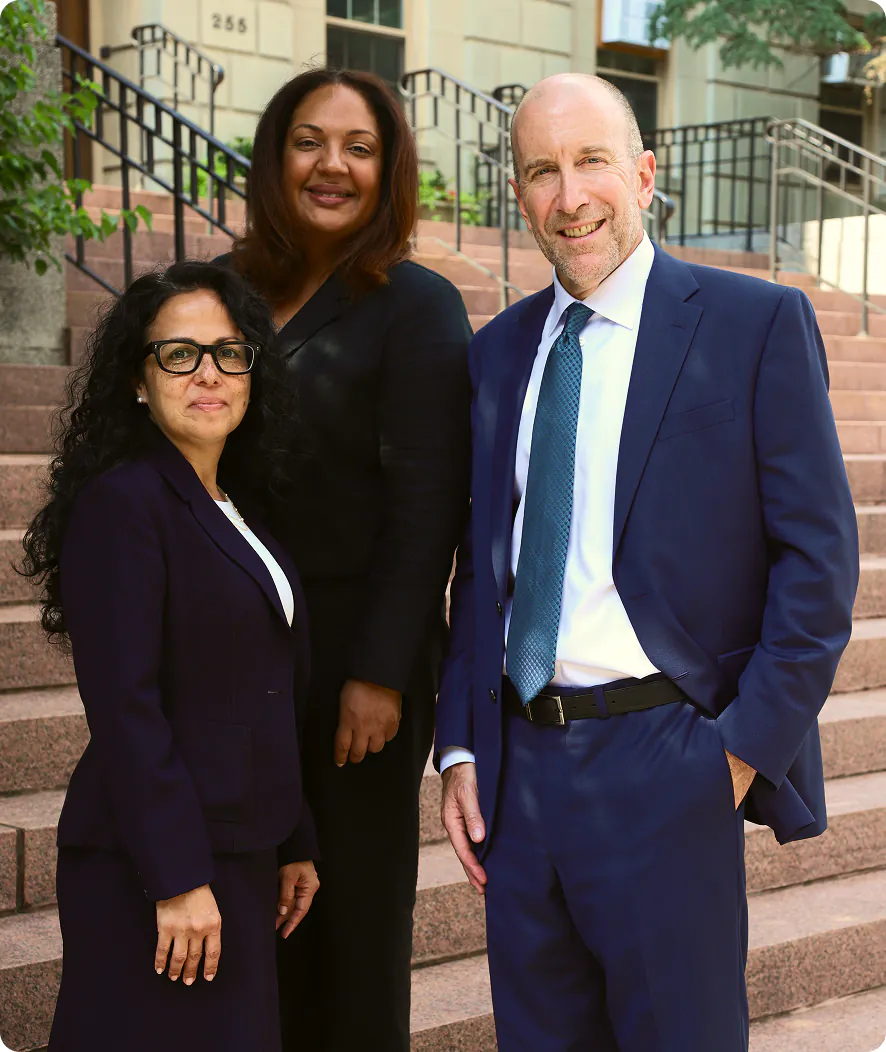
Billy Cooper Law represents drivers and passengers injured in Jamaica NY. The firm can help identify the available insurance coverage, preserve evidence, and determine who may be responsible. The first step is simply to tell us what happened and ask your questions.
BILLY COOPER LAW

Types of Injury Cases We Handle in Jamaica NY
- Personal Injury
- E-Bike Accidents
- Car Accidents
Car Accident Lawyers Serving Queens County
- Queens County
- Murray Hill–Broadway Flushing
- Jamaica
- Ridgewood
- Flushing–Willets Point
- Corona
- South Ozone Park
- Forest Hills
- Jackson Heights
- Elmhurst
- Queens Village
Guidance Grounded in New York Car Accident Law
Car accident claims in New York are shaped by no-fault insurance, strict claim deadlines, and rules limiting when an injured person may recover compensation for pain and suffering. You will want a lawyer who understands those issues before an insurer begins challenging your treatment, injuries, or account of the collision.
Billy Cooper Law brings more than 75 years of combined experience to injury cases. William H. Cooper has practiced since 1991 and has been selected to Super Lawyers from 2024 through 2026. The firm’s connection to New York car accident law goes back to Marvin A. Cooper’s work helping draft the state’s original no-fault law.
If you would rather discuss your case in Spanish, attorney Anieska J. Garcia is fluent in English and Spanish. The firm offers free consultations and handles car accident cases on a contingency basis, so there is no upfront attorney’s fee.
Billy Cooper Law does not maintain an office in Jamaica. It serves Queens clients from its White Plains office and a New York NY location available by appointment.
Why Car Accident Claims Are Different in Jamaica NY
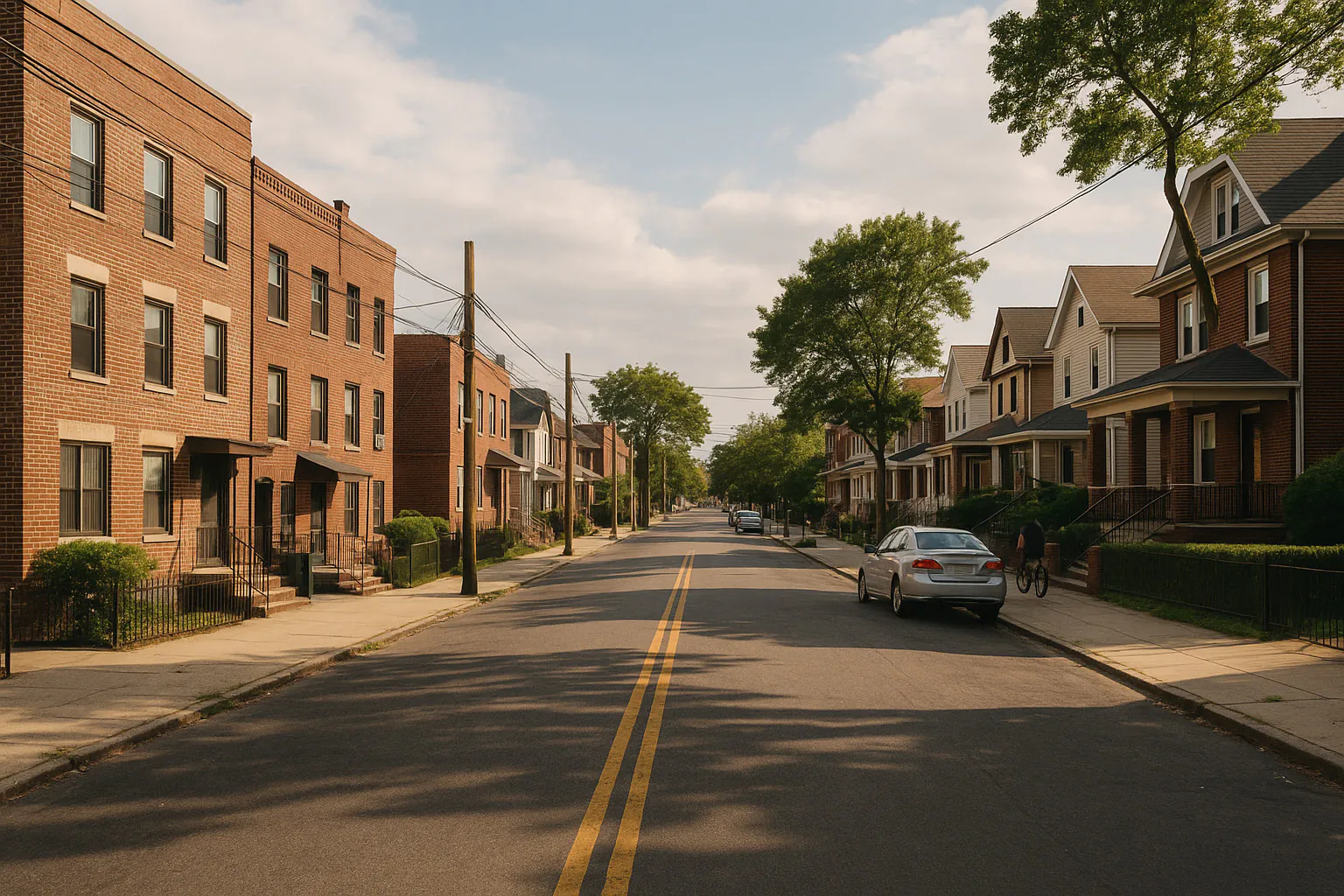
Jamaica combines dense residential streets with major commercial corridors, bus routes, subway entrances, the Long Island Rail Road, AirTrain connections, delivery traffic, taxis, and rideshare pickups. Around Sutphin Boulevard, Archer Avenue, Jamaica Avenue, and Parsons Boulevard, drivers may be watching for buses, changing lanes around loading activity, or turning through crowded crosswalks.
The Jamaica Avenue and Archer Avenue busways have also changed how vehicles move, turn, load, and enter portions of downtown Jamaica. When a collision happens there, proving fault may require more than the police report. Storefront cameras, bus video, station-area footage, rideshare records, witness accounts, and signal information may all help explain what the drivers could see and who had the right of way.
Conditions are different on Hillside Avenue, Liberty Avenue, and Merrick Boulevard, where wider roadways can lead to higher speeds and complicated turning movements. On the Van Wyck Expressway and its approaches, merging traffic and sudden lane changes can produce multi-vehicle crashes in which each driver gives a different account.
A Current Jamaica-Area Crash Snapshot
The NYPD’s 103rd Precinct covers Jamaica, the downtown business district, and several nearby communities. Its TrafficStat report through August 30, 2026 recorded:
- 906 reported collisions
- 433 injury collisions
- 577 total injuries
- 150 pedestrian injuries
- 41 traditional bicyclist injuries
- 2 traffic fatalities
These are precinct-wide figures, not a count for Jamaica alone. They nevertheless show how often local collisions involve more than two vehicles or place pedestrians and cyclists directly in the path of a car.
Where Car Accidents Happen in Jamaica
Around Sutphin Boulevard and Archer Avenue
Drivers converge here to reach passenger pickup areas, parking facilities, businesses, courthouses, subway stations, the LIRR, and the AirTrain. A collision may involve a driver turning across a crosswalk, stopping unexpectedly for a passenger, pulling away from the curb, or changing lanes near a bus.
Because cameras in the area may be controlled by different businesses or agencies, it is important to identify and request the right recordings quickly.
Along Jamaica Avenue, Archer Avenue, and Parsons Boulevard
These streets combine bus traffic, commercial loading, pedestrians, taxis, rideshares, and vehicles entering or leaving side streets. The important questions may include whether a driver had permission to make a turn, whether a bus obstructed the view, where the impact occurred, and whether a traffic signal or pavement marking affected the movement of the vehicles.
On Hillside Avenue, Liberty Avenue, and Merrick Boulevard
Crashes on broad arterial streets often involve speed, left turns, lane changes, and drivers entering from smaller cross streets. NYC DOT has continued to plan pedestrian and traffic-safety changes along Jamaica-area corridors, making photographs of the road as it existed on the accident date especially important.
On the Van Wyck Expressway and Its Approaches
A crash here may involve several impacts, commercial vehicles, airport-bound traffic, or a dispute over who entered whose lane. Vehicle event data, dashcam footage, debris locations, and photographs of the final resting positions can be more reliable than memories formed during a frightening event.
Car Accident Cases Billy Cooper Law Handles
The firm represents people injured in:
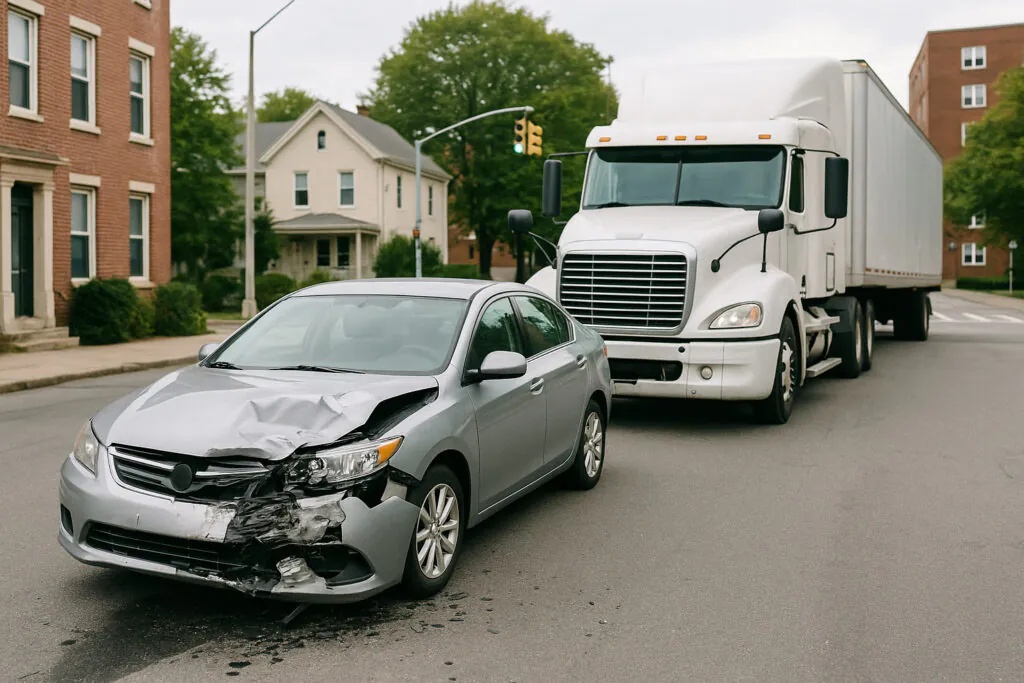
- Rear-end, intersection, lane-change, head-on, and multi-vehicle collisions
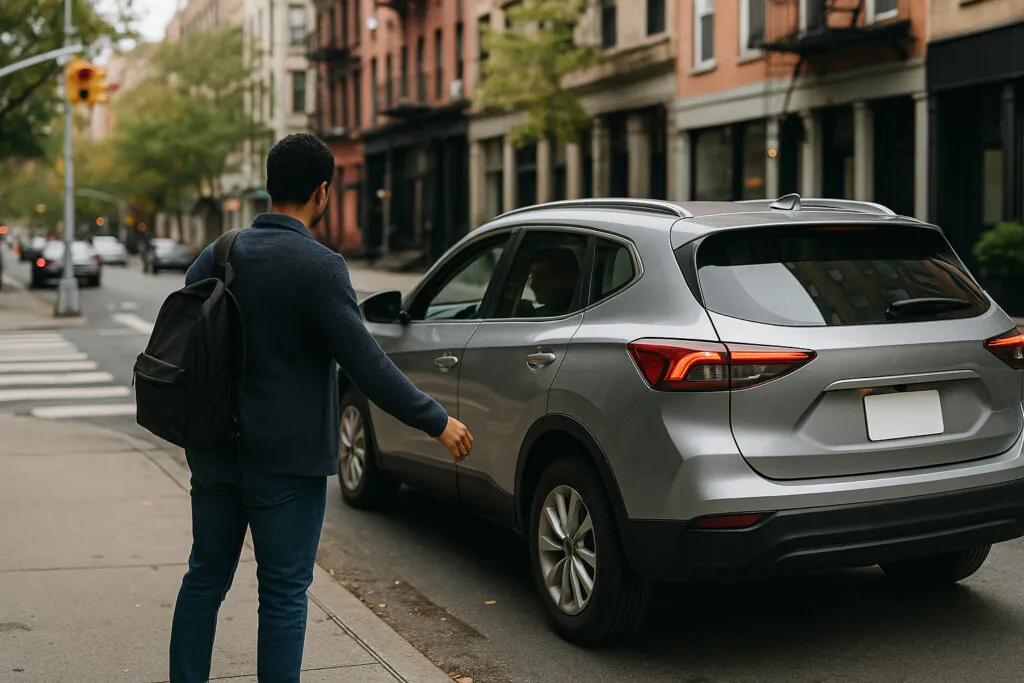
- Uber accidents
- Lyft accidents
- Delivery-truck and commercial-vehicle collisions
- Drunk-driving accidents
- Crashes causing catastrophic injuries
- Fatal car accidents and wrongful death claims
What to Do After a Car Accident
Get medical attention first. Pain from a head, neck, back, or joint injury may become more noticeable after the initial shock wears off. Tell the medical provider about every symptom and explain that it began after the collision.
When you can do so safely:
- Call 911 if anyone may be injured. Make sure the collision is reported and ask how to obtain the report number.
- Photograph the scene. Include vehicle damage, license plates, lane markings, traffic signals, debris, skid marks, visible injuries, and nearby businesses.
- Exchange information. Obtain the other driver’s license, registration, insurance information, and contact details.
- Speak with witnesses. Get names and phone numbers before they leave.
- Notify the proper insurer. New York no-fault claims have short reporting deadlines.
- Keep damaged property. Do not dispose of a child seat, phone mount, damaged personal item, or vehicle component that may help explain the crash.
- Be cautious with recorded statements. You may need to cooperate with your own insurer, but you do not have to give the other driver’s carrier a recorded account before understanding why it is being requested.
A police report is useful, but it is not the final word on fault. Officers may not have seen the collision, located every witness, or reviewed video that becomes available later.
Drivers must also submit an MV-104 report to the New York DMV within 10 days when a New York crash causes an injury, a death, or more than $1,000 in damage to any one person’s property. Reporting the accident to an insurance company does not replace that obligation.
Evidence That May Disappear
Evidence can begin disappearing within days. A business may record over surveillance footage. A damaged vehicle may be repaired or sold. Rideshare data may become harder to obtain, and witnesses may forget details.
Depending on the collision, important evidence may include:
- Storefront, parking garage, residential, or station-area video
- Dashcam footage
- Bus or transit-facility recordings
- Vehicle event data recorder information
- Rideshare trip and driver records
- Delivery schedules and commercial-driver logs
- 911 calls and dispatch records
- Traffic-signal timing and roadway work records
- Witness statements
- Photographs of vehicle damage and impact points
- Medical imaging and treatment records
- Wage statements, tax records, and employer documentation
An early preservation request can put a business, vehicle owner, insurer, or public agency on notice that relevant evidence must not be destroyed.
How No-Fault Insurance Works
New York no-fault insurance generally pays the first layer of medical expenses, lost earnings, and certain necessary expenses regardless of who caused the crash. Basic no-fault coverage provides up to $50,000 per person.
You generally file through the insurer for the vehicle you occupied. If you were struck while walking, the claim is usually filed with the insurer for the vehicle that hit you.
The New York Department of Financial Services states that:
- Written notice of the claim generally must be provided within 30 days of the accident.
- Medical bills generally must be submitted within 45 days of treatment.
- Lost-earnings claims and certain other expenses generally must be submitted within 90 days.
Exceptions may exist when there is a clear and reasonable justification for delay, but it is safer to begin the claim promptly. These insurance deadlines are separate from the deadline for filing a lawsuit.
New York’s Serious-Injury Requirement
No-fault benefits do not automatically compensate you for pain, physical limitations, or the broader effect of the crash on your life. To pursue noneconomic damages against an at-fault driver, an injury generally must qualify as a “serious injury” under Insurance Law § 5102(d).
The current categories include:
- Death
- Dismemberment
- Significant disfigurement
- A fracture
- Loss of a fetus
- Permanent loss of use of a body organ, member, function, or system
- Permanent consequential limitation of a body organ or member
- Significant limitation of a body function or system
New York changed this law on May 29, 2026 by removing the former category based on being unable to perform substantially all usual activities for 90 of the 180 days following a crash. The Department of Financial Services’ 2026 guidance confirms that change.
Medical documentation now matters more than ever. MRI findings, range-of-motion measurements, orthopedic or neurologic evaluations, surgical records, and consistent treatment may determine whether an insurer or court recognizes the injury as serious.
What If You Were Partly at Fault?
New York also changed its comparative-fault rule for motor-vehicle injury actions in 2026. Under CPLR § 1411(b), an injured person may now be barred from recovering damages in a no-fault motor-vehicle action if that person’s fault is greater than the fault of the defendant or the combined fault of all defendants.
If your share of fault does not exceed the defendants’ combined share, compensation may still be reduced by your percentage of responsibility. The legislation applies to actions and proceedings commenced on or after May 29, 2026, so filing dates and case circumstances require careful review.
Do not accept an accusation of fault simply because another driver or insurance adjuster makes it. Video, vehicle damage, signal phases, witness accounts, road markings, and electronic data may tell a different story.
Who May Be Responsible for the Crash?
The at-fault driver is not always the only responsible party.
Potential defendants may include:
- A driver who followed too closely, failed to yield, ran a light, or made an unsafe turn
- The owner of the vehicle
- An employer whose worker was driving on the job
- A delivery or commercial-vehicle company
- Another driver who triggered a chain-reaction crash
- A contractor responsible for unsafe roadway work
- A public entity responsible for a vehicle, signal, or roadway condition
Under Vehicle and Traffic Law § 388, a vehicle owner may be responsible for injuries caused by someone operating the vehicle with express or implied permission. Identifying the registered owner can therefore reveal insurance coverage and responsible parties that are not obvious at the scene.
Compensation After a Serious Car Accident
The losses caused by a collision may continue long after the vehicle is repaired. Depending on the injuries, available insurance, and proof of fault, compensation may include:
- Medical expenses not fully covered by no-fault
- Future treatment, rehabilitation, and medication
- Lost income beyond available no-fault benefits
- Reduced future earning capacity
- The cost of help with necessary daily tasks
- Pain and suffering
- Physical limitations and loss of enjoyment of life
- Vehicle and personal-property damage
A quick settlement offer may arrive before doctors know whether you will need surgery, injections, extended therapy, or time away from work. Once a claim is fully released, you generally cannot reopen it because the injury became more serious than expected.
When a Government Entity May Be Involved
Different deadlines may apply if the collision involved a city vehicle, transit bus, public employee, traffic signal, road defect, or government construction project.
General Municipal Law § 50-e generally requires a notice of claim within 90 days when a tort claim is brought against a covered public corporation. The correct defendant must be identified. The City of New York, New York City Transit Authority, MTA-related entities, and state agencies are not interchangeable simply because each performs a public function.
If a government agency may be involved, do not wait to learn which notice and filing requirements apply.
Useful Local Medical, Police, and Court Resources
For severe trauma, Jamaica Hospital Medical Center at 8900 Van Wyck Expressway in Jamaica NY is a New York State-designated Level I adult trauma center. Queens Hospital Center also maintains a 24-hour emergency department at 82-68 164th Street in Jamaica NY.
The treatment facility does not determine the value of a case. What matters is that you receive appropriate care, report all symptoms, and follow reasonable medical recommendations.
The 103rd Precinct is located at 168-02 91st Avenue in Jamaica NY. The NYPD allows collision reports to be requested from the precinct during the first 30 days after filing. Reports are then forwarded to the DMV, and many can also be obtained through the NYPD Collision Report Retrieval Portal.
If a lawsuit is filed in Queens County, it may proceed in the Queens County Supreme Court, Civil Term, whose Jamaica courthouse is at 88-11 Sutphin Boulevard.
How Billy Cooper Law Investigates a Car Accident
A useful investigation does more than collect medical bills. It connects the collision, the injuries, and the effect on your life.
Billy Cooper Law can:
- Obtain and review police and DMV reports
- Identify vehicle owners, employers, and applicable insurers
- Request surveillance and electronic vehicle evidence
- Interview witnesses while their memories are fresh
- Examine impact locations and vehicle damage
- Review no-fault, liability, and uninsured or underinsured coverage
- Organize medical evidence around New York’s serious-injury categories
- Document lost income and future financial consequences
- Respond when an insurer exaggerates your share of fault
- Prepare the case for litigation when a fair resolution is not offered
The goal is to answer the questions an insurer will eventually raise before those questions become excuses to deny or reduce the claim.
BILLY COOPER LAW
More Help After an Injury in Jamaica NY
If your situation involves something other than a vehicle collision, the firm’s Jamaica NY personal injury lawyer page explains how Billy Cooper Law handles other injury claims in the community.
Tell Us What Happened
You do not need to know who was legally responsible or which insurance policy applies before calling. Bring the information you have, including photographs, the police report number, medical paperwork, and insurance correspondence. Billy Cooper Law can help you understand what should happen next.
Call (718) 866-3311 or contact Billy Cooper Law for a free consultation. There is no upfront attorney’s fee, and the firm is paid only if compensation is recovered.
Jamaica NY Car Accident FAQs: Safety, Insurance, and New York Claims
These answers provide general information about New York car crashes, not advice about a particular claim. The result can change with the collision facts, available evidence, insurance policies, and the date an action is started.
What should I do immediately after a car accident in Jamaica NY?
First, get to a safe place if you can, call 911 when anyone may be injured, and follow emergency responders’ instructions. New York requires involved drivers to stop and exchange identifying, license, vehicle, and insurance information after property damage; an injury crash must also be reported to police. Do not move an injured person unless an immediate danger makes movement necessary.
If it is safe, record vehicle positions, damage, road and weather conditions, traffic controls, and witness contact information before the scene changes. Save the other driver’s insurance details and your medical discharge papers. These steps do not decide fault, but they preserve information that police, insurers, doctors, and counsel may later need to evaluate what happened and which deadlines apply.
Sources: New York Vehicle and Traffic Law § 600; New York State Driver’s Manual—crash duties.
Do I have to file a New York DMV crash report after a Jamaica NY collision?
You must file an MV-104 with the New York DMV within 10 days when a New York crash causes a death, any personal injury, or more than $1,000 in damage to any one person’s property. This motorist report is separate from a police officer’s report and from notifying an insurance company. The filing duty can therefore remain even when officers came to the scene.
Complete the form accurately with the information reasonably available; do not guess about injuries, speeds, or fault. If the driver is physically unable to report, Vehicle and Traffic Law § 605 identifies when another participant or the vehicle owner must report. Missing the deadline can be a misdemeanor and can lead to suspension of a license or registration until the report is filed.
Sources: New York Vehicle and Traffic Law § 605; New York DMV Form MV-104 and instructions.
How do New York no-fault benefits work after a car crash?
New York no-fault coverage generally pays eligible basic economic loss arising from the use or operation of a covered motor vehicle without first deciding who caused the crash. Basic economic loss includes qualifying medical expenses, part of lost earnings, and certain necessary expenses, up to the statutory limit and subject to policy terms, offsets, exclusions, and proof requirements. It is different from a liability claim for pain and suffering.
Notice is time-sensitive. New York’s prescribed no-fault rules generally require written notice within 30 days, health-service bills within 45 days of treatment, and lost-earnings proof within 90 days; late submissions require a reasonable justification under the regulation. Identify the correct no-fault insurer promptly and keep copies of the NF-2, bills, wage records, authorizations, and delivery confirmations.
Sources: New York Insurance Law § 5102; New York DFS no-fault consumer FAQs; 11 NYCRR Part 65—Insurance Regulation 68.
What counts as a serious injury in a New York car accident case?
For a covered person to recover pain-and-suffering damages from another covered person, New York generally requires a “serious injury” under Insurance Law § 5102(d). The current categories include death, dismemberment, significant disfigurement, fracture, loss of a fetus, permanent loss of use, permanent consequential limitation, or significant limitation of a body function or system. A diagnosis alone does not automatically establish the legal threshold.
The Legislature removed the former 90-out-of-180-days category for actions and proceedings commenced on or after May 26, 2026. Medical records should therefore document the condition, objective findings when appropriate, treatment course, functional limitations, causation, and relevant prior conditions. Whether the threshold is met depends on admissible evidence and the category asserted, not simply the severity label used in a chart.
Sources: New York Insurance Law § 5102(d); New York Insurance Law § 5104; New York DFS Circular Letter No. 3 (2026).
How long do I have to bring a car accident claim in New York?
New York generally gives three years to commence an action for personal injury, but that is not a universal deadline for every crash-related claim. A wrongful-death claim, a no-fault submission, a claim under an insurance policy, a claim involving a public entity, or a claim for a minor can follow different rules. The applicable date should be checked from the specific facts and defendant.
If a city, county, town, village, school district, or another covered public corporation may be responsible, General Municipal Law § 50-e commonly requires a notice of claim within 90 days. Section 50-i can require suit within one year and 90 days for covered municipal tort claims. Because identifying a public vehicle or road-maintenance defendant takes time, preserving the crash report and investigating ownership early can matter.
Sources: New York CPLR § 214; New York General Municipal Law § 50-e; New York General Municipal Law § 50-i.
Can I recover if I was partly at fault for a New York car accident?
Possibly, but New York changed the rule for motor-vehicle personal-injury actions subject to Insurance Law Article 51. For actions and proceedings commenced on or after May 26, 2026, CPLR § 1411(b) bars recovery when the claimant’s fault is greater than the fault of the person sued or the combined fault of all persons sued. When recovery is not barred, the claimant’s percentage of fault reduces the damages.
The statute uses a greater-than test, so a finding of exactly 50 percent claimant fault is not itself the bar described in subsection (b), although it can reduce recoverable damages by 50 percent. Fault percentages depend on evidence such as right-of-way rules, signals, speed, visibility, witness accounts, photographs, and electronic records. Earlier-commenced actions may require a different analysis.
Sources: New York CPLR § 1411; New York DFS explanation of the 2026 motor-vehicle reforms.
Can the vehicle owner be liable when someone else caused the crash?
Yes, a vehicle owner can be responsible under New York Vehicle and Traffic Law § 388 when a person using or operating the vehicle with the owner’s express or implied permission negligently causes injury or property damage. That rule can make ownership and permission important even when the titled owner was not in the car. It does not eliminate the need to prove negligent operation and causation.
Registration records, the police report, insurance disclosures, lease documents, and testimony about permission may help identify the owner and available coverage. The statute contains definitions and exceptions, and leased, rented, employer-owned, government, and out-of-state vehicles can raise additional issues. A careful review should separate the driver, titled owner, policyholder, employer, and any other entity instead of assuming they are the same party.
Sources: New York Vehicle and Traffic Law § 388; New York Insurance Law § 3420(e).
What if the at-fault driver was uninsured or left the scene?
An uninsured-motorist claim may be available when an uninsured or unidentified hit-and-run vehicle causes bodily injury, but coverage depends on who qualifies as an insured and compliance with the policy and statutory procedures. New York liability policies include required uninsured-motorist protection, while supplementary uninsured/underinsured motorist coverage may provide additional protection if it was selected and the applicable conditions are satisfied.
Report a hit-and-run promptly to police and all potentially applicable insurers, and preserve proof of physical contact, witness information, video, vehicle damage, and efforts to identify the other driver. Do not assume that the absence of the driver ends the inquiry: household policies, the occupied vehicle’s policy, supplementary coverage, and the Motor Vehicle Accident Indemnification Corporation may require separate review and different notices.
Sources: New York Insurance Law § 3420(f); New York DFS Automobile Insurance Consumer Guide; New York Vehicle and Traffic Law § 600.
Should I get medical care if car-crash symptoms appear later?
Yes—new or worsening symptoms after a crash should be assessed by a qualified health professional, and emergency warning signs require immediate care. CDC explains that some mild traumatic brain injury symptoms can appear hours or days after an injury. A worsening headache, repeated vomiting, seizure, weakness, slurred speech, increasing confusion, unequal pupils, or inability to wake warrants emergency evaluation rather than waiting on an insurance decision.
Tell the clinician when and how the collision occurred, describe symptoms accurately, and follow individualized medical instructions. Keep records of visits, restrictions, referrals, and symptom changes because contemporaneous records can help clinicians and can clarify the timeline later. Medical literature reports associations between early pain or disability measures and persistent whiplash problems, but those population findings do not diagnose an individual or predict a particular recovery.
Sources: CDC mild TBI and concussion symptoms; PubMed systematic meta-review of whiplash prognostic factors.
How is the value of a New York car accident claim determined?
There is no official settlement calculator or guaranteed value. A claim is evaluated from supported losses and legal limits: fault, the serious-injury threshold, medical expenses, lost earnings, future care, other economic loss, pain and suffering when legally available, insurance limits, liens, and the strength of causation evidence. New York defines “basic economic loss” and “non-economic loss,” but those definitions do not assign one price to an injury.
Useful proof can include medical records and bills, wage verification, tax or employment records, photographs, repair documents, and evidence of functional limitations. Insurers and factfinders may dispute whether treatment was necessary, whether a condition was caused or aggravated by the crash, and whether claimed losses are documented. Any estimate should therefore be tied to the actual records and available coverage, not an average advertised online.
Sources: New York Insurance Law § 5102 definitions; New York Insurance Law § 5104 limits on personal-injury actions.
Sources
Billy Cooper Law
- Billy Cooper Law
- Billy Cooper Law attorney and staff profiles
- William H. Cooper attorney profile
- Anieska J. Garcia attorney profile
- New York car accident practice page
- Billy Cooper Law case results
- Billy Cooper Law contact and office information
- Jamaica NY personal injury lawyer parent page
- Uber accident practice page
- Lyft accident practice page
- Commercial-vehicle accident practice page
- Drunk-driving accident practice page
- Catastrophic injury practice page
- Wrongful death practice page
New York Law and Insurance
- New York Department of Financial Services: No-Fault Insurance FAQs
- New York Department of Financial Services: Auto Insurance Information for Consumers
- New York Department of Financial Services: 2026 Motor Vehicle Insurance Reforms
- New York Insurance Law § 5102
- New York CPLR § 1411
- New York CPLR § 214
- New York Vehicle and Traffic Law § 388
- New York General Municipal Law § 50-e
- New York DMV Form MV-104
Jamaica and Queens Resources
- NYPD 103rd Precinct
- NYPD 103rd Precinct TrafficStat Report
- NYPD Motor Vehicle Collision Reports
- NYC DOT Jamaica and Archer Avenue Busways
- NYC DOT Current Jamaica-Area Projects
- Queens County Supreme Court, Civil Term
- Jamaica Hospital Medical Center Trauma Center
- Queens Hospital Center Emergency Department
BILLY COOPER LAW

Get the Answers You Need
At Billy Cooper Law, every day we renew our pledge to help injured people get the justice and compensation they deserve. We have a reputation throughout New York and nationally for standing up for our clients, and we take that responsibility seriously by approaching every case with preparation, persistence, and an unwavering commitment to results.