
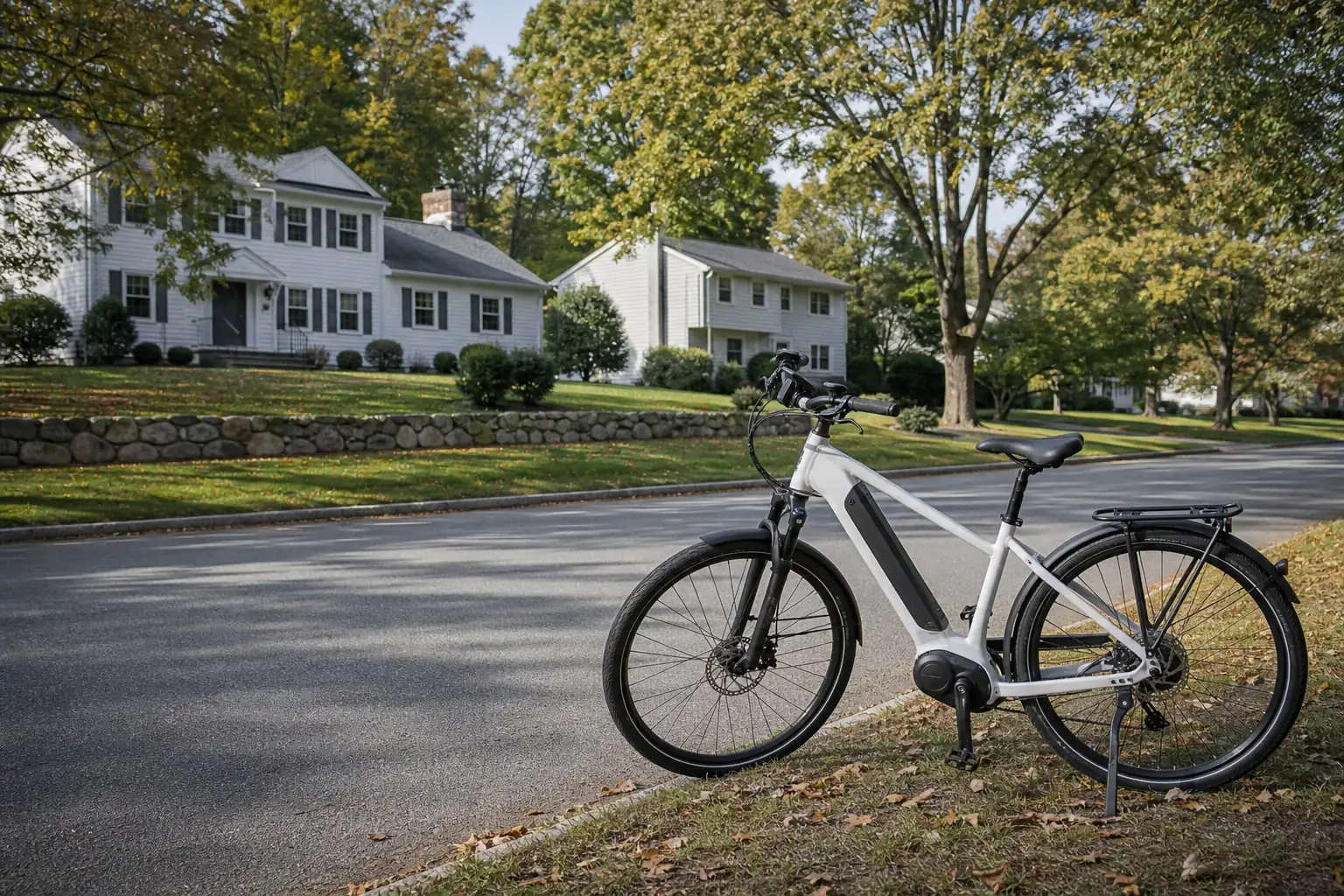
Clarkstown NY E-Bike Accident Lawyer
An e-bike crash can leave you with serious injuries, a damaged bike, missed work, and questions that insurance companies are in no hurry to answer. You may not know whether the driver, a property owner, a government agency, a contractor, or the e-bike manufacturer is responsible.
Billy Cooper Law represents injured riders throughout Rockland County. The first step is understanding exactly what happened—where you were riding, what type of e-bike you had, whether a motor vehicle was involved, and who controlled the location where the crash occurred.
Types of Injury Cases We Handle in Clarkstown NY
E-Bike Accident Lawyers Serving Rockland County
- Rockland County
- Ramapo
- Clarkstown
- Haverstraw
- New City
- Spring Valley
BILLY COOPER LAW

Why Injured Riders Choose Billy Cooper Law
E-bike cases often sit at the intersection of bicycle law, motor vehicle insurance, product liability, and municipal liability. A rider struck by a car may qualify for no-fault benefits. A rider hurt by a defective battery may have a product claim. A crash caused by a dangerous roadway may require identifying a state, county, town, or private contractor before a short deadline expires.
Billy Cooper Law brings more than 75 years of combined legal experience to these questions. The firm’s history is closely connected to New York motor vehicle law, and its reported results include a $1.6 million pedestrian settlement, an $850,000 automobile accident settlement, and a $2.005 million construction accident settlement in Rockland County. Those matters did not involve e-bikes, but they reflect experience handling serious injuries, disputed fault, and cases with multiple responsible parties. The firm’s case results are available for review.
Consultations are free, and personal injury matters are handled on a contingency-fee basis. You do not pay an upfront legal fee, and there is no attorney’s fee unless compensation is recovered.
Why E-Bike Cases Are Different in Clarkstown
New York does not treat every motor-powered two-wheeler as an e-bike. A legal “bicycle with electric assist” must have operable pedals, be no more than 36 inches wide, and use an electric motor of less than 750 watts. Class 1 and Class 2 e-bikes stop providing assistance at 20 miles per hour. Class 3 e-bikes are defined for use only in New York City and cannot lawfully be operated in Clarkstown.
The road matters too. Unless a local rule provides otherwise, New York permits e-bikes only on highways with posted speed limits of 30 miles per hour or less. State law also generally prohibits riding an e-bike on a sidewalk, requires riders to travel single file, and prohibits anyone younger than 16 from operating one.
Those rules have unusual importance in Clarkstown. Routes 9W, 59, 303, and 304 are state roads rather than Town-controlled roads, according to the Town’s explanation of roadway maintenance responsibility. Some portions have speed limits above 30 miles per hour. If a crash happens there, the investigation must address both the rider’s legal status and the conduct of the driver who caused the collision.
A traffic violation does not automatically decide an injury case. A driver may still have been speeding, distracted, following too closely, or making an unsafe turn. But insurers will examine the e-bike’s class, motor power, modifications, speed, and location. Preserving the bike and its manufacturer’s label can therefore be just as important as preserving photographs of the crash scene.
A Clarkstown and Rockland County Bicycle Accident Snapshot
Local agencies do not always separate e-bike crashes from other bicycle collisions. The available bicycle and corridor data still shows why riders need prompt, location-specific investigations:
- Rockland County reported 84 bicycle crashes in 2024, including 83 injury crashes and one fatal crash, according to the Rockland County Department of Health.
- From 2014 through 2023, the Route 303 corridor had 1,991 reported crashes, including four bicyclist crashes.
- Route 303 recorded 23 serious-injury crashes and six fatal crashes during that period.
- Route 304 had 2,595 reported crashes, including four bicyclist crashes.
- Route 304 recorded 42 serious-injury crashes and 12 fatal crashes from 2014 through 2023.
The corridor figures come from the Clarkstown Routes 303 and 304 Safety and Sustainability Study. They are not an estimate of e-bike-only crashes. They show the traffic volume, severity, and roadway conditions an injured rider may face along two of the Town’s major routes.
Where E-Bike Injuries Happen in Clarkstown
Routes 303 and 304
The Clarkstown corridor study found that large portions of Routes 303 and 304 lack sidewalks. Route 304 includes speed limits ranging from 35 to 55 miles per hour, while both corridors carry turning vehicles, commercial traffic, and traffic entering from side roads and driveways.
Those conditions leave little room for error. A driver may misjudge an e-bike’s speed, turn across the rider’s path, pass without enough clearance, or open a vehicle door into the rider’s lane.
These are also state roads. A claim involving dangerous pavement, drainage, lane markings, construction, or roadway design may raise issues involving the New York State Department of Transportation rather than the Town of Clarkstown.
Route 59 and Shopping Areas
Route 59 and the commercial areas around Nanuet and West Nyack bring together cars, delivery vehicles, buses, parking-lot traffic, and people entering or leaving businesses. Riders can be hit at access drives, loading areas, intersections, and parking-lot crossings.
The driver may not be the only responsible party. Depending on the facts, liability could extend to a vehicle owner, employer, shopping-center owner, maintenance company, construction contractor, or another party that created an obstructed sightline or unsafe traffic pattern.
Commercial properties may also have surveillance video. That footage can be erased within days or weeks unless someone requests it promptly.
Road and Bridge Construction
In March 2026, Clarkstown announced resurfacing work on Routes 303 and 304, along with continued reconstruction of the Route 304 bridge over the New York State Thruway. The projects involve lane closures, pavement work, drainage repairs, road markings, and temporary traffic changes.
When a rider is injured near roadwork, an investigation should look beyond the final road owner. Contractors and subcontractors may control temporary signs, barriers, steel plates, lane shifts, lighting, and work-zone maintenance. Daily reports and traffic-control plans may show what conditions existed when the crash occurred.
Residential Streets and Driveways
Many e-bike crashes occur away from major corridors. Drivers backing from driveways, turning at neighborhood intersections, or passing riders on narrow roads may fail to see an approaching e-bike until it is too late.
These cases often depend on sightlines, vegetation, parked vehicles, lighting, speed, and the exact point where each person first had a clear view.
E-Bike Accident Cases Billy Cooper Law Handles
Billy Cooper Law represents riders and families in cases involving:
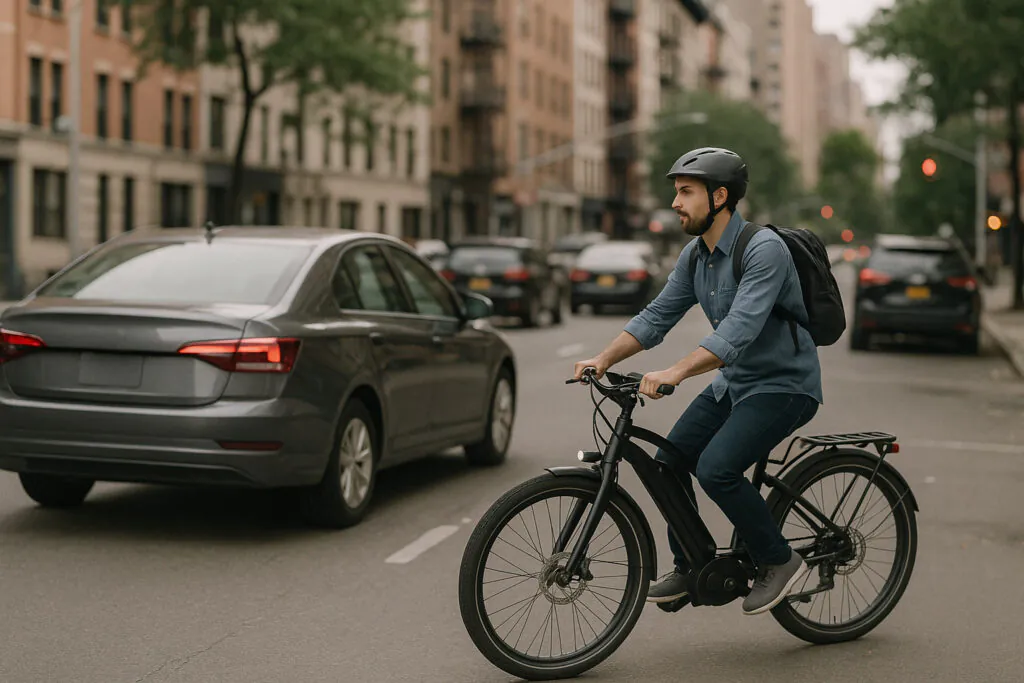
- E-bike collisions with cars and SUVs
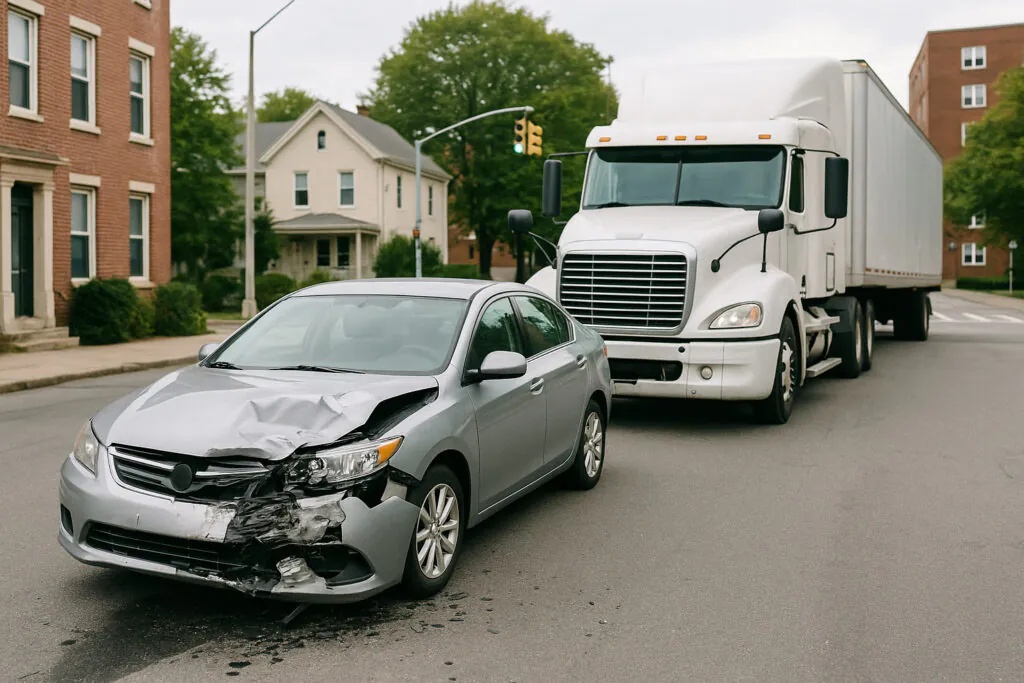
- Crashes involving trucks and commercial vehicles
- Collisions with buses
- Accidents involving Uber and Lyft vehicles
- Dooring, unsafe passing, failure-to-yield, and intersection crashes
- Hit-and-run and uninsured-driver accidents
- Unsafe road, parking-lot, and construction-zone conditions
- Defective brakes, frames, throttles, controllers, chargers, and lithium-ion batteries, including product liability claims
- E-bike accidents occurring during delivery or other employment, including possible work injury claims
- Fatal crashes and wrongful death claims
One accident can support several claims. A delivery rider struck in a poorly marked work zone, for example, may have a workers’ compensation claim, a negligence case against the driver, and a separate claim against a contractor responsible for unsafe traffic control.
What to Do After an E-Bike Accident
Get medical attention
Call 911 if you may have suffered a head, neck, back, internal, or orthopedic injury. Adrenaline can hide symptoms, particularly after a rider is thrown from the bike.
Tell each medical provider how the crash happened and identify every area that hurts. Gaps in treatment and incomplete symptom reports can make it easier for an insurer to dispute whether the accident caused your condition.
Report the crash
Ask the police to prepare an accident report when a motor vehicle is involved. The Clarkstown Police Department provides accident-report information online, and its Records Division can be reached at 845-639-5850.
If the crash occurred in a parking lot, business, apartment complex, or work zone, ask the owner or site manager to prepare an incident report as well.
Photograph more than the damaged bike
If you can do so safely, photograph:
- The e-bike and every damaged component
- The other vehicle and its license plate
- Debris, skid marks, and vehicle positions
- Signals, signs, lane markings, and posted speed limits
- Potholes, pavement edges, drainage grates, or construction plates
- Nearby stores, homes, buses, or buildings with cameras
- Your helmet, clothing, and visible injuries
The surrounding area often explains a crash more clearly than close-up damage photographs alone.
Avoid altering the e-bike
Do not repair, discard, sell, or modify the bike before it has been inspected. Preserve the battery, charger, controller, display, manufacturer’s label, purchase receipt, manuals, and replacement-part records.
If the battery smoked, caught fire, or suffered impact damage, do not recharge it. Store it only as directed by fire or safety professionals.
Be careful with insurance calls
You can provide basic reporting information, but you do not have to guess about speed, distance, or fault. Recorded statements are often used to argue that a rider was traveling too fast, outside a legal riding area, distracted, or operating a modified device.
Evidence That Can Make a Difference
An e-bike case may require evidence that is not present in an ordinary bicycle claim:
- The bike’s class, wattage, manufacturer’s label, and original specifications
- Controller, throttle, motor, and battery information
- Records of any speed or power modifications
- GPS, fitness-app, navigation, or delivery-platform data
- Phone photographs and videos
- Helmet and clothing damage
- Police body-camera and dashboard-camera footage
- Vehicle event-data recorder information
- Surveillance and doorbell video
- Driver phone records when distraction is suspected
- Road ownership and maintenance records
- Work-zone traffic-control plans
- Prior complaints about the same roadway condition
- Fire department and investigation records in battery-fire cases
Digital records can be overwritten, and physical conditions can change quickly. A preservation request sent soon after the crash may prevent important evidence from disappearing.
New York Insurance Rules and Filing Deadlines
No-fault benefits after a vehicle collision
When an e-bike rider is struck by a car, truck, or other covered motor vehicle in New York, the rider will generally qualify as a cyclist or pedestrian for no-fault benefits. The claim is ordinarily filed with the insurer for the vehicle that struck the rider.
Basic no-fault coverage can provide up to $50,000 for covered medical expenses, part of the rider’s lost earnings, and certain necessary expenses. The New York Department of Financial Services requires written no-fault notice within 30 days, unless there is a clear and reasonable justification for delay.
No-fault does not pay for the damaged e-bike. It also does not automatically provide pain-and-suffering compensation.
If no motor vehicle was involved, no-fault coverage may not apply. Payment may instead involve health insurance, workers’ compensation, a property owner’s coverage, or a product liability policy.
The serious-injury requirement changed in 2026
An e-bike rider seeking pain-and-suffering damages after a covered motor vehicle collision will generally need to establish a “serious injury” under Insurance Law § 5102. Qualifying injuries can include a fracture, significant disfigurement, permanent loss of use, significant limitation, or permanent consequential limitation.
A significant change took effect on May 26, 2026. New York removed the former 90/180-day serious-injury category. The amendments apply to actions and proceedings commenced on or after that date, according to the New York Department of Financial Services’ 2026 motor vehicle insurance guidance.
This makes objective medical evidence—imaging, surgical findings, range-of-motion testing, and documented long-term limitations—particularly important.
The general personal injury deadline
Most New York negligence lawsuits must be filed within three years under CPLR § 214.
That does not mean you should wait three years. No-fault, government claims, insurance policies, and evidence-preservation issues can create much earlier deadlines.
BILLY COOPER LAW
Who May Be Responsible?
Potential defendants in a Clarkstown e-bike case include:
- A negligent driver
- The vehicle’s owner
- A driver’s employer
- A trucking, bus, or delivery company
- A rideshare company or applicable insurer
- A property or shopping-center owner
- A maintenance or snow-removal company
- A road contractor or utility company
- The Town, County, or State
- An e-bike, battery, charger, or component manufacturer
- A retailer, distributor, or repair shop
Responsibility depends on control. A business may own a parking lot but hire another company to maintain it. The State may own a roadway while a private contractor controls an active work zone. A driver may be using a company vehicle while performing job duties.
A careful investigation identifies the parties first and evaluates their insurance second.
What If You Were Partly at Fault?
New York changed its comparative-fault rules for many motor vehicle cases in 2026.
Under the current CPLR § 1411, an injured person in a case subject to New York’s no-fault law may be barred from recovery if their share of fault is greater than the fault of the person—or combined parties—from whom compensation is sought. If the rider is 50% or less at fault, compensation may still be available, reduced by that percentage.
A case that does not fall under the no-fault law, such as some defective-product or dangerous-property claims, generally remains subject to pure comparative negligence. Partial fault reduces compensation but does not necessarily eliminate it.
This distinction makes early fault investigation especially important. Insurers may examine whether the rider:
- Had the right of way
- Obeyed signals and signs
- Used required lights
- Was visible to traffic
- Operated on a road where e-bikes were permitted
- Rode against traffic or on a sidewalk
- Used a phone or headphones
- Modified the bike’s speed or power
- Wore a helmet
Rockland County requires bicycle operators and passengers to wear a properly fitted helmet under Chapter 217 of the Rockland County Code. Not wearing one does not automatically establish who caused the collision, but it may become an issue when a rider claims a head or facial injury.
Compensation After an E-Bike Accident
Depending on the claim, compensation may include:
- Emergency care and hospitalization
- Surgery, rehabilitation, and therapy
- Future medical treatment
- Lost wages
- Reduced future earning ability
- E-bike repair or replacement
- Damaged clothing, phones, and equipment
- Pain and suffering
- Scarring and disfigurement
- Emotional trauma
- Loss of independence and enjoyment of life
- Funeral expenses and qualifying wrongful death losses
The value of a claim depends on more than the initial diagnosis. A wrist fracture can affect a person who works with tools. A knee injury may make stairs or delivery work impossible. A traumatic brain injury may interfere with memory, concentration, relationships, and future employment.
The case should document what the injury has actually changed.
When a Government Agency May Be Involved
Road ownership must be investigated immediately after a crash involving a pothole, shoulder drop, unsafe drainage grate, missing sign, malfunctioning signal, or construction zone.
Routes 9W, 59, 303, and 304 are state roads. Other roads may be controlled by Clarkstown or Rockland County. Private owners may control shopping-center access roads and parking areas.
Claims against towns, counties, and other public corporations often require a Notice of Claim within 90 days under General Municipal Law § 50-e. Municipal lawsuits are also subject to special timing and procedural requirements under General Municipal Law § 50-i.
Claims against New York State generally proceed in the Court of Claims, where a claim or notice of intention may be required within 90 days under Court of Claims Act § 10.
These rules have exceptions and depend on the defendant and legal theory. If a public road or government vehicle may be involved, do not wait to determine which deadline applies.
Local Courts, Medical Care, and Accident Records
Personal injury lawsuits venued in Rockland County may proceed in the Rockland County Supreme Court:
Rockland County Courthouse
1 South Main Street
New City NY 10956
The FJ Borelli Family Emergency Center at Montefiore Nyack Hospital provides 24-hour emergency care at:
Montefiore Nyack Hospital
160 North Midland Avenue
Nyack NY 10960
Emergency Department: 845-348-2345
The hospital or courthouse involved does not determine whether you have a valid claim. Your immediate priority should be obtaining appropriate care and preserving the facts.
How Billy Cooper Law Investigates an E-Bike Case
The investigation begins with the questions that can change the entire claim:
- Was the device legally an e-bike?
The firm examines its class, power, pedals, label, modifications, and operating speed. - Who controlled the accident location?
Road maps, deeds, maintenance agreements, construction contracts, and government records may identify the responsible parties. - What evidence is in danger of disappearing?
Preservation notices may be sent for video, app data, vehicle records, e-bike components, work-zone files, and electronic communications. - Which insurance policies apply?
A case may involve no-fault, vehicle liability, uninsured motorist coverage, commercial insurance, workers’ compensation, property coverage, or product liability insurance. - How has the injury affected your life?
Medical records are only part of the picture. Wage information, future care, family testimony, and evidence of daily limitations help show the full loss.
You do not need to identify every defendant or insurance policy before calling. That is part of the legal investigation.
Related Billy Cooper Law Resources
- New York E-Bike Accident Lawyer
- Clarkstown
- Rockland County
- New York Bicycle Accident Lawyer
- New York Pedestrian Accident Lawyer
Slip and Fall Help in Rockland County
Tell Us What Happened
You do not need to know whether your device was legally a Class 1 or Class 2 e-bike. You do not need to identify the road owner, find every camera, or decide which insurance company should pay before asking for help.
Tell Billy Cooper Law what happened. The firm will listen, explain your options, and identify the next practical steps.
If a state road, government agency, hit-and-run driver, commercial vehicle, work zone, or defective battery may be involved, early action can protect evidence and prevent a short deadline from passing.
Call Billy Cooper Law at (914) 730-5789 or request a free consultation online.
BILLY COOPER LAW
Clarkstown NY E-Bike Accident FAQs
These answers provide general information about New York e-bike injury claims, insurance and medical concerns. The rules that apply depend on the facts; this information is not individual legal or medical advice.
Can no-fault insurance pay my medical bills after a Clarkstown e-bike crash?
It may, when your injuries arise from a collision with a covered motor vehicle. A qualifying e-bike rider generally seeks no-fault benefits through the striking vehicle’s insurer. The device’s legal classification matters: a modified machine treated as a motorcycle can present different coverage issues. Basic economic-loss coverage is subject to a $50,000 combined limit and statutory restrictions.
Give the appropriate insurer written notice promptly; the usual deadline is 30 days, with a limited exception requiring written justification for delay. Keep claim forms, medical bills, wage records and proof of submission. No-fault benefits do not automatically compensate you for pain and suffering or damage to the bicycle.
Sources: New York DFS: No-Fault Insurance FAQs; New York Insurance Law § 5102: Covered Losses and Definitions.
What should I do if the driver leaves the scene?
Report the collision to police promptly and preserve anything that can identify the vehicle. Depending on available insurance and eligibility, an unknown or uninsured vehicle may lead to a claim through a household auto policy or the Motor Vehicle Accident Indemnification Corporation. MVAIC is not an automatic substitute for every missing insurance policy.
Its statutory conditions include special reporting and filing requirements; hit-and-run matters generally require a police report within 24 hours or as soon as reasonably possible, subject to the law’s exceptions. Save witness contacts, camera locations and the police incident number. Have the available coverage and deadlines reviewed promptly rather than waiting for the driver to be identified.
Sources: New York Insurance Law § 5208: MVAIC Notice Requirements; New York DFS: Claims Involving Unknown or Uninsured Vehicles.
Does being partly at fault prevent me from recovering compensation?
It can in some New York motor-vehicle injury cases, but partial fault does not produce the same result in every claim. Current CPLR § 1411 distinguishes personal-injury actions subject to Insurance Law Article 51 from other cases. For covered actions, a claimant’s fault greater than the opposing parties’ combined fault can bar recovery; otherwise, the award is reduced proportionately.
Other injury claims generally retain proportional reduction without that statutory bar. The 2026 amendments and their applicability must be checked for the particular action. Preserve photographs, witness accounts and information about visibility, direction of travel and signals. An insurer’s initial fault assessment is not a court determination of your entitlement to damages.
Sources: CPLR § 1411: Comparative Fault; New York DFS: 2026 Motor Vehicle Insurance Reforms.
Can I seek pain-and-suffering damages for an e-bike injury?
Potentially, but an injury action between covered persons under New York’s no-fault law generally requires a qualifying serious injury to recover noneconomic damages. A fracture is one statutory category; certain significant or permanent functional limitations are others. Pain, a diagnosis or time away from work alone does not establish every required element.
The current definition no longer includes the former 90/180-day category. The 2026 reform’s applicability should be evaluated for the action involved. Medical findings must connect the qualifying injury to the collision, and liability remains a separate issue. Keep examination records, imaging reports and documentation of functional restrictions so counsel can evaluate the relevant statutory category rather than relying on a settlement estimate.
Sources: New York Insurance Law § 5102(d): Serious Injury; New York Insurance Law § 5104: Personal Injury Actions; New York DFS: 2026 Motor Vehicle Insurance Reforms.
How long do I have to bring a claim after an e-bike accident?
Many New York negligence lawsuits have a three-year limitation period, but that is not a safe deadline for every step after a crash. A claim involving a public corporation can require notice within 90 days. Claims against New York State follow separate Court of Claims procedures, which can also demand action within 90 days.
The defendant, type of claim and applicable exceptions determine the actual schedule. A police report or an ordinary insurance claim does not necessarily satisfy a government notice requirement. Identify the accident date, exact location and possible responsible parties at the outset, and have all deadlines checked before assuming you can wait to decide whether to pursue the matter.
Sources: CPLR § 214: Three-Year Limitation Periods; General Municipal Law § 50-e: Notice of Claim; Court of Claims Act § 10: Claims Against New York State.
Can I ride my e-bike on Route 303, Route 304 or a Clarkstown sidewalk?
You cannot assume that every part of those routes is open to e-bikes. New York generally limits electric-assist bicycles to roads posted at 30 mph or less, unless an applicable local provision changes the rule. Sidewalk riding is generally prohibited unless locally authorized. The exact segment, posted limit and local rules therefore need to be checked.
New York also restricts Class 3 e-bikes to a city with at least one million residents, which excludes Clarkstown. If a collision occurred where riding was restricted, preserve evidence of the posted signs and everyone’s conduct. A riding restriction and the legal consequences for a particular injury claim are separate questions that require a fact-specific assessment.
Sources: Vehicle and Traffic Law § 1242: E-Bike Operating Rules; Vehicle and Traffic Law § 102-c: Electric-Assist Bicycle Classes.
Does not wearing a helmet automatically defeat an injury claim?
No. Helmet use and responsibility for causing a collision are separate issues, and New York’s bicycle helmet statute expressly limits the civil consequences of violating that section. Rockland County also requires protective helmets for bicycle operators and passengers, so the applicable state and local provisions should be reviewed together.
Do not assume either that an insurer can automatically deny the entire case or that helmet evidence is irrelevant under every possible legal theory. The rider’s age, device classification, applicable provision and injuries matter. Preserve any helmet and photographs from the scene, and obtain a medical evaluation for a suspected head injury. Counsel can assess the governing protections against the facts of the particular claim.
Sources: Vehicle and Traffic Law § 1238: Helmets and Civil-Claim Protections; Rockland County Code Chapter 217: Bicycle Helmet Requirements.
What if headache or dizziness starts after I have gone home?
Seek medical advice promptly after new symptoms following a head impact. CDC guidance explains that concussion symptoms can appear hours or days later. Worsening headache, repeated vomiting, seizures, slurred speech, marked confusion or difficulty waking are emergency warning signs; call 911 or obtain emergency care immediately if these occur.
Tell the clinician when the crash happened, whether your head or body took a blow and when each symptom began. Ask for written guidance about returning to work, driving and other activities, and report symptoms that worsen or fail to improve. Medical assessment addresses your health; a symptom diary or this webpage cannot diagnose a concussion or establish the legal cause of an injury.
Sources: CDC: Symptoms of Mild TBI and Concussion; CDC: What to Do After a Mild TBI or Concussion.
What if I was injured while making an e-bike delivery?
A work-related crash may involve workers’ compensation as well as a claim against a responsible third party. New York generally provides compensation for covered employees injured in the course of employment without requiring proof that the employer was negligent. Whether a delivery rider is a covered employee must be evaluated; a platform’s label alone should not be treated as the complete answer.
A separate case against a negligent driver or another third party may also be possible. Workers’ Compensation Law § 29 addresses these overlapping claims, including reimbursement and settlement issues. Preserve dispatch messages, delivery records and pay information, and obtain advice before signing a release that could affect benefits or another claim.
Sources: Workers’ Compensation Law § 10: Work-Related Injuries; Workers’ Compensation Law § 29: Third-Party Claims.
What if my e-bike was modified or its motor was more powerful than allowed?
The device may fall outside New York’s electric-assist bicycle definition, which can change the rules relevant to the claim. The statutory definition requires operable pedals, a width no greater than 36 inches and an electric motor rated below 750 watts, together with the applicable class limits. A product’s advertising name does not establish its legal classification.
Preserve the frame, battery, motor, controller and purchase information so the original specifications and any changes can be examined. Do not discard or alter the equipment while its classification is in question. Operating restrictions and insurance eligibility require separate review; a modification does not by itself establish which person caused the collision.
Sources: Vehicle and Traffic Law § 102-c: Electric-Assist Bicycle Definition; Vehicle and Traffic Law § 1242: E-Bike Operating Restrictions.
Sources
Billy Cooper Law
- Billy Cooper Law Homepage
- Billy Cooper Law Legal Team
- Billy Cooper Law Case Results
- Billy Cooper Law Offices and Contact Information
- Billy Cooper Law New York E-Bike Accident Practice
- Personal Injury
Clarkstown and Rockland County
- Rockland County 2024 Bicycle Crash and Helmet Information
- Rockland County Code Chapter 217: Bicycles
- Clarkstown Routes 303 and 304 Safety and Sustainability Study
- Routes 303 and 304 Study Project Information
- Town of Clarkstown Road Ownership and Maintenance Information
- Town of Clarkstown 2026 Routes 303 and 304 Construction Information
- Clarkstown Police Accident Reports
- Rockland County Supreme and County Courts
- Montefiore Nyack Hospital Emergency Center
New York Law and Insurance
- Vehicle and Traffic Law § 102-c: E-Bike Definitions
- Vehicle and Traffic Law § 1242: E-Bike Operating Rules
- CPLR § 214: Personal Injury Limitation Period
- CPLR § 1411: Comparative Fault
- General Municipal Law § 50-e: Notice of Claim
- General Municipal Law § 50-i: Municipal Tort Actions
- Court of Claims Act § 10: Claims Against New York State
- Insurance Law § 5102: No-Fault Definitions and Serious Injury
- Insurance Law § 5104: Motor Vehicle Personal Injury Actions
- New York Department of Financial Services No-Fault FAQs
- New York Department of Financial Services Auto Insurance Guide
- New York Department of Financial Services 2026 Motor Vehicle Insurance Reforms

Get the Answers You Need
At Billy Cooper Law, every day we renew our pledge to help injured people get the justice and compensation they deserve. We have a reputation throughout New York and nationally for standing up for our clients, and we take that responsibility seriously by approaching every case with preparation, persistence, and an unwavering commitment to results.