
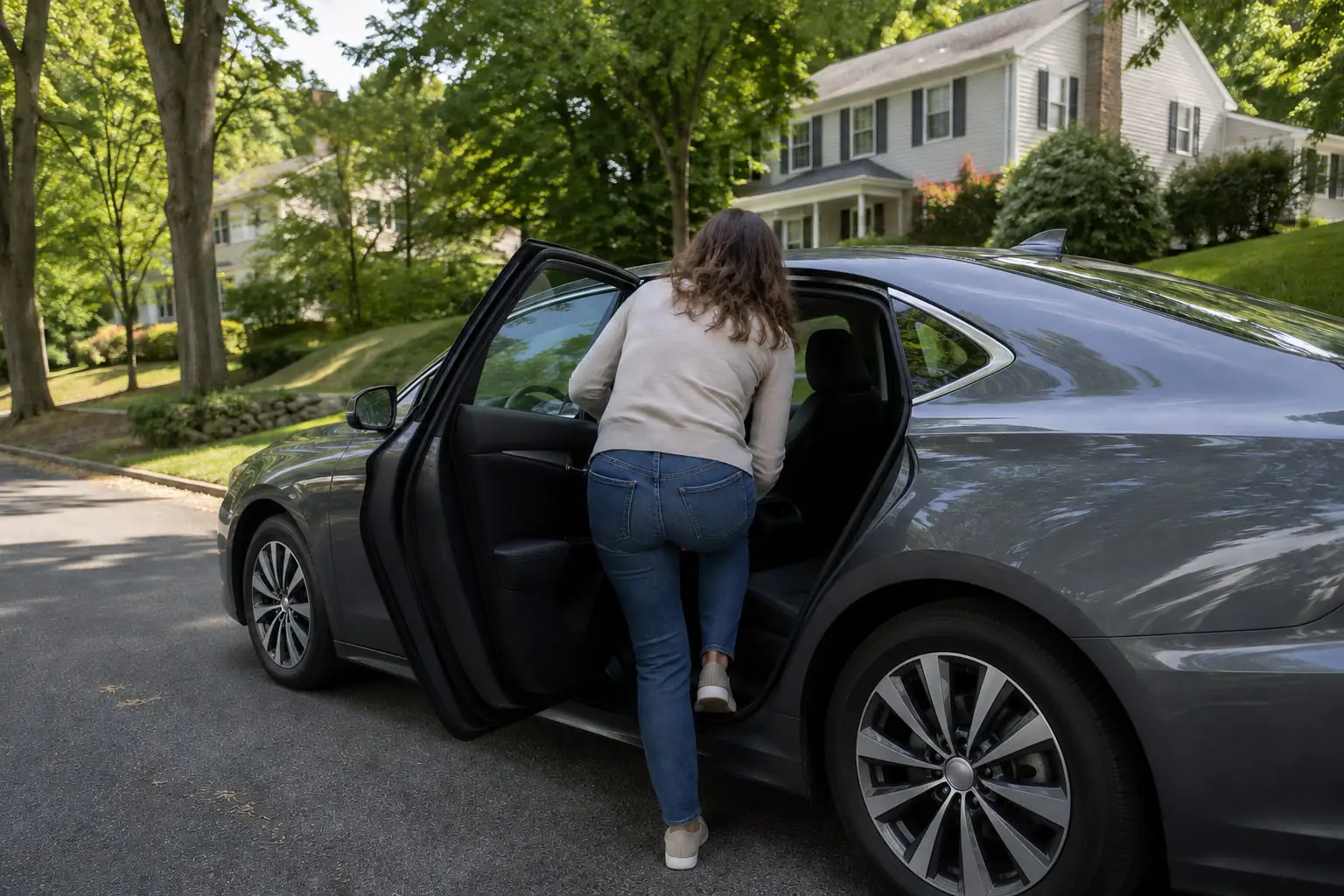
Rockland County NY Uber Accident Lawyer
An Uber crash can leave you with several insurance companies, conflicting accounts of what happened, and no clear answer about who should pay your medical bills. The answer may depend on whether the Uber driver had accepted a trip, was waiting for a request, or was offline when the collision occurred.
Billy Cooper Law represents passengers, drivers, pedestrians, cyclists, and families affected by Uber accidents in Rockland County NY. The firm can identify the available insurance, preserve trip data and other evidence, and explain what you should do next.
Uber Accident Lawyers Serving Rockland County
- Rockland County
- Ramapo
- Clarkstown
- Haverstraw
- New City
- Spring Valley
BILLY COOPER LAW

What Billy Cooper Law Brings to an Uber Accident Case
After a serious crash, you need more than someone who will forward forms to an insurance company. You need a lawyer who can determine which policy applies, challenge an unfair fault decision, and document what the injury has taken from you.
Billy Cooper joined the practice in 1991 and has served as lead trial counsel for decades. He was selected to Super Lawyers from 2024 through 2026. The firm’s published case results include an $850,000 automobile-collision settlement involving a serious leg condition and knee injury. (billycooperlaw.com)
The firm’s website states that people who contact the office speak directly with an attorney. That matters when you are trying to understand medical bills, missed work, no-fault paperwork, and calls from several insurers at once. Billy Cooper Law also offers free consultations and handles injury cases on a contingency fee. Anieska Garcia is fluent in English and Spanish. (billycooperlaw.com)
Why Rockland County Uber Claims Require a Closer Look
Rockland County falls outside New York City’s separate Taxi and Limousine Commission system. For a trip picked up in Rockland County, New York’s transportation network company law ordinarily applies even if the passenger is being taken into New York City.
The driver’s app status determines the starting point for the insurance investigation:
- The app is off: The driver’s personal automobile policy generally applies.
- The app is on, but no trip has been accepted: New York requires at least $75,000 in bodily-injury coverage per person, $150,000 per accident, and $25,000 in property-damage coverage.
- The trip has been accepted or the passenger is aboard: The required coverage rises to at least $1.25 million in liability insurance, along with $1.25 million in supplementary uninsured or underinsured motorist coverage and no-fault protection.
These requirements appear in New York Vehicle and Traffic Law § 1693 and the New York Department of Financial Services rideshare guidance. (nysenate.gov)
The coverage figure is not the same as the value of a claim. It is an available policy limit. The evidence still has to establish fault, the nature of the injuries, and the losses caused by the crash.
A trip that began in New York City, a TLC-licensed vehicle, or a driver using more than one app can create a different coverage analysis. That is why the ride receipt, pickup location, driver profile, and exact time of the collision should be preserved.
A Local Accident Snapshot
Public crash data does not identify how many Rockland County collisions involved Uber vehicles. It does show the traffic environment in which rideshare drivers, passengers, cyclists, and pedestrians travel.
Rockland County’s 2025–2030 Community Health Assessment reported:
- 9,711 motor vehicle crashes in 2023, the highest total in the report’s 2014–2024 period.
- 9,144 crashes in 2024, based on preliminary data.
- 21.1% of 2024 crashes involved personal injury.
- 193 pedestrian-motor vehicle crashes occurred in 2024, also based on preliminary data.
The county separately reported 84 bicycle crashes in 2024. These figures matter because an Uber claim may involve someone outside the rideshare vehicle, not only the driver and passenger. Review the Rockland County Community Health Assessment and the county’s 2024 bicycle crash summary. (rocklandcountyny.gov)
The Governor Mario M. Cuomo Bridge adds another layer of high-volume travel. The New York State Thruway Authority reports that the bridge carries more than 50 million vehicles each year on I-87/I-287 between Rockland and Westchester counties. A crash there can involve Thruway records, commercial vehicles, multiple jurisdictions, towing records, and several insurance policies. See the Thruway Authority’s bridge information. (thruway.ny.gov)
Where Uber Injuries Happen in Rockland County
The location affects both how a crash happens and where evidence may be found.
Along the Route 59 corridor, Uber drivers may be navigating dense traffic while watching the app for a pickup point. A crash near a store, restaurant, medical office, or shopping center may have been recorded by privately owned surveillance cameras. Video can be erased quickly, so the businesses controlling those cameras should be identified early.
Crashes on I-87/I-287 or near the bridge often happen at higher speeds and may involve several vehicles. Investigators may need dispatch records, incident reports, tolling information, commercial-vehicle records, and data from more than one vehicle.
Pickups at park-and-ride lots, transit centers, apartment complexes, and private shopping areas raise additional questions. Was the driver stopped in a safe place? Was the passenger directed into a travel lane? Did signs, lighting, construction, or the property’s traffic pattern contribute to what happened?
Road ownership also matters. The Rockland County Highway Department maintains the county road system, but other roads may be controlled by a town, village, New York State, the Thruway Authority, or a private property owner. The name of the road does not always reveal which entity was responsible for its maintenance. (rocklandcountyny.gov)
Uber Accident Cases Billy Cooper Law Handles
Rideshare collisions take many forms. Billy Cooper Law represents people injured in:
- Uber passenger accidents
- Car accidents involving an Uber vehicle
- Pedestrian accidents
- Bicycle accidents
- Motorcycle accidents
- Drunk driving accidents
- Catastrophic injury cases
- Traumatic brain injury cases
- Spinal cord injury cases
- Wrongful death claims
The claim may be brought against the Uber driver, another motorist, or several parties. It may also involve Uber’s insurer, the injured person’s own insurer, a vehicle owner, a commercial company, a property owner, or a government entity.
What to Do After an Uber Accident
Your health comes first. Once you are safe, a few practical steps can help protect the insurance claim.
- Get medical care. Do not assume pain, dizziness, stiffness, or numbness will resolve on its own. Tell the provider that the injury resulted from a motor vehicle crash.
- Call the police. Ask that the collision be documented even if the Uber driver or another motorist wants to handle the matter privately.
- Save the trip information. Take screenshots of the driver’s name, photograph, vehicle, license plate, pickup and destination, route, receipt, and any in-app messages.
- Photograph what you can. Include the vehicles, damage, road, intersection, traffic controls, weather, construction, and any visible injuries.
- Get witness information. A name and telephone number may be enough to locate someone before memories fade.
- Report the crash through the Uber app. Keep your description short and factual. Save copies of every message.
- Be careful with recorded statements and releases. An insurance representative may contact you before the diagnosis and coverage picture are clear.
- Address the reporting deadlines. New York generally requires a driver to file an MV-104 report within 10 days when someone was injured, killed, or one person’s property damage exceeded $1,000. Review the New York DMV MV-104 requirements. (dmv.ny.gov)
If your injuries make these tasks difficult, ask a family member to preserve what they can. A lawyer can take over the formal requests.
Evidence That Can Make the Difference
An Uber case often turns on evidence that does not exist in an ordinary two-car collision.
Important records may include:
- The ride receipt and trip map
- The time the driver logged into the app
- The time a trip was offered and accepted
- Pickup and drop-off information
- GPS and route data
- Communications between the passenger, driver, and Uber
- Police reports, 911 recordings, and dispatch records
- Photographs and video from nearby properties
- Dashcam footage
- Vehicle event data recorder information
- Cellphone and telematics records obtained through proper legal process
- Inspection, repair, and maintenance records
- Roadway complaints and work records
- Medical records, wage records, and proof of out-of-pocket expenses
A preservation request can instruct Uber, an insurer, a business, or another party not to destroy relevant material. The request should be directed to the right entity and describe the evidence clearly. Simply reporting the crash through the app may not preserve everything needed for a legal claim.
How No-Fault Insurance Works
New York no-fault insurance pays certain basic economic losses without requiring you to prove who caused the crash. An injured Uber passenger will generally submit the no-fault claim through the policy covering the vehicle in which the passenger was riding.
Basic no-fault coverage can provide up to $50,000 per person for covered medical expenses, lost earnings, and certain other necessary expenses. Lost earnings are generally paid at 80%, subject to a maximum of $2,000 per month for up to three years.
The deadlines are much shorter than the general deadline for filing a lawsuit:
- Written notice of the no-fault claim is generally required within 30 days of the crash.
- Medical bills generally must be submitted within 45 days of treatment.
- Lost-earnings claims generally must be submitted within 90 days.
Late submissions may sometimes be excused with clear and reasonable justification, but you should not plan on receiving an exception. The New York Department of Financial Services no-fault guidance explains these requirements. (dfs.ny.gov)
No-fault benefits and a liability claim are different. No-fault addresses the first layer of economic loss. A claim against the responsible party may seek additional economic damages and, when New York’s serious-injury requirement is met, compensation for pain and suffering.
BILLY COOPER LAW
New York Deadlines and Recent Changes to the Law
New York’s general statute of limitations for a negligence action seeking damages for personal injury is ordinarily three years. A wrongful death action generally must be commenced within two years of the death. Shorter deadlines can apply when a government entity is involved. See CPLR § 214 and EPTL § 5-4.1. (nysenate.gov)
The serious-injury requirement changed in 2026
New York generally requires a “serious injury” before an injured person can recover pain-and-suffering damages arising from a motor vehicle crash. The current definition includes death, dismemberment, significant disfigurement, a fracture, loss of a fetus, permanent loss of use, permanent consequential limitation, or significant limitation of a body function or system.
For actions and proceedings commenced on or after May 26, 2026, New York removed the former category based on a nonpermanent injury that prevented a person from performing substantially all customary activities for 90 of the first 180 days after the crash. The remaining categories still require careful medical proof. See Insurance Law § 5102 and the Department of Financial Services summary of the 2026 reforms. (dfs.ny.gov)
The filing date can therefore affect which version of the law governs, even when the collision occurred earlier.
Uber’s app terms may affect where a claim is heard
A claim against Uber itself may be subject to an arbitration agreement contained in the app’s terms of use. In Wu v. Uber Technologies, Inc., decided on November 25, 2024, the New York Court of Appeals held that the clickwrap process used in that case created an agreement to arbitrate and delegated certain disputes about enforceability to an arbitrator.
That decision does not mean every claim involving an Uber vehicle must be arbitrated. Claims against individual drivers and insurers may raise different issues, and the applicable terms and sign-up process must be reviewed. Read the New York Court of Appeals decision in Wu v. Uber Technologies, Inc.. (nycourts.gov)
What If You Were Partly at Fault?
New York changed its comparative-fault rule for motor vehicle personal injury actions in 2026.
For actions subject to the no-fault law and commenced on or after May 26, 2026, an injured claimant who is more than 50% at fault is barred from recovering against the person or combined group of people from whom damages are sought. If the claimant is 50% or less at fault, compensation may still be available but is reduced by the claimant’s share of responsibility.
For example, if you are found 20% responsible and another driver is 80% responsible, the recoverable damages would generally be reduced by 20%. If you are found 51% responsible and the defendants together are 49% responsible, the new rule can bar the personal injury recovery.
The current rule appears in CPLR § 1411. Do not accept an insurance adjuster’s fault percentage as final. Video, witness statements, vehicle data, road markings, and the driver’s app activity may change the analysis. (nysenate.gov)
Who May Be Responsible for an Uber Crash?
Liability depends on how the collision happened.
Potentially responsible parties may include:
- The Uber driver
- Another driver
- More than one motorist
- A vehicle owner
- A trucking, delivery, or commercial transportation company
- A property owner that created an unsafe pickup area
- A maintenance or construction contractor
- A county, town, village, state agency, or public authority
- A vehicle or component manufacturer
Uber may dispute direct responsibility by pointing to the driver’s independent-contractor status. That does not end the investigation. The required rideshare insurance may still cover the crash, and direct claims against Uber can depend on the company’s own conduct, the applicable agreements, and the specific facts.
The important questions are who caused the collision, which policies were active, and whether anyone else had a legal duty to prevent the danger.
Compensation After a Serious Uber Accident
A claim may seek compensation for:
- Emergency care and hospitalization
- Surgery, medication, and diagnostic testing
- Physical, occupational, and cognitive rehabilitation
- Lost wages and reduced earning capacity
- Future medical treatment and personal care
- Household assistance and transportation expenses
- Pain, suffering, and loss of normal life when the serious-injury requirement is met
- Scarring, disfigurement, and permanent disability
- Damage to a vehicle or other personal property
- Wrongful death losses when a family member is killed
The amount depends on the medical evidence, fault, insurance coverage, prognosis, and the effect of the injury on the person’s work and daily life. A policy limit alone does not determine what an insurer must pay.
When a Government Entity May Be Involved
Most Uber collisions result from driver error. Some also involve an unsafe roadway, malfunctioning signal, poor drainage, obscured sign, defective guardrail, or dangerous construction zone.
Before bringing a roadway claim, a lawyer must determine who controlled the location. Rockland County maintains county roads, while other locations may be controlled by a municipality, New York State, the Thruway Authority, or a private owner. Maintenance records, prior complaints, permits, contracts, inspection reports, and roadwork records may help show what the responsible entity knew.
Claims against a county, town, village, or other public corporation often require a notice of claim within 90 days. An action covered by General Municipal Law § 50-i generally must be commenced within one year and 90 days of the event. Different procedures can apply to New York State and public authorities. See General Municipal Law § 50-e and General Municipal Law § 50-i. (nysenate.gov)
Do not assume that the ordinary three-year deadline gives you three years to investigate a government-related crash. The first important deadline may arrive within weeks.
Local Courts, Hospitals, and Agencies
A Rockland County personal injury lawsuit may be filed in the Rockland County Supreme Court, located at 1 South Main Street in New City NY. The court is part of New York’s Ninth Judicial District and hears civil matters beyond the limited authority of the lower courts. (nycourts.gov)
Depending on where the crash occurred, relevant records may be held by a town or village police department, the Rockland County Sheriff’s Office, the New York State Police, the county highway department, or the Thruway Authority. A report number is helpful, but a full investigation may require records from more than one agency.
People injured in local crashes may receive emergency care at facilities such as:
- Montefiore Nyack Hospital Emergency Center, 160 North Midland Avenue in Nyack NY
- Good Samaritan Hospital, 255 Lafayette Avenue in Suffern NY
These are not the only places where treatment may occur. Wherever you are treated, keep discharge papers, referrals, test results, prescription information, and follow-up appointments. Medical records often become central evidence in showing how the crash affected you. (montefiorenyack.org)
How Billy Cooper Law Investigates an Uber Claim
A careful investigation begins with your account of what happened. The legal team can then work to:
- Confirm the ride and app status. This establishes whether the driver was offline, waiting for a request, on the way to a pickup, or carrying a passenger.
- Identify every insurance policy. The claim may involve Uber’s policy, the driver’s personal coverage, another driver’s liability insurance, no-fault benefits, and uninsured or underinsured motorist coverage.
- Preserve digital and physical evidence. This may include trip data, surveillance video, vehicle data, photographs, and app communications.
- Investigate fault. Police conclusions and insurance decisions are reviewed against the physical evidence, witness accounts, road layout, and applicable driving rules.
- Address no-fault benefits. The firm can help identify the correct no-fault carrier and deal with issues involving medical bills and wage documentation.
- Document the full injury. Serious cases may require opinions from treating doctors, medical specialists, vocational professionals, economists, or life-care planners.
- Handle communications. The firm can respond to insurers and defense representatives while you concentrate on treatment.
- Prepare for litigation or arbitration. The proper forum depends on the defendants, policies, app agreements, and circumstances of the crash.
Types of Injury Cases We Handle in Rockland County NY
- Car accidents
- Motorcycle accidents
- Pedestrian accidents
- Bicycle accidents
- Uber and Lyft accidents
- Truck and commercial vehicle accidents
- Bus accidents
- Subway accidents
- Construction accidents
- Work accidents
- Premises liability
- Dog bites and animal attacks
- Defective products
- Medical malpractice
- Catastrophic injuries
- Wrongful death
Related Rockland County Practice Pages
Additional Legal Resources
- New York Uber Accident Lawyer
- New York Rideshare Accident Lawyer
- New York Motor Vehicle Accident Lawyer
- New York Car Accident Lawyer
- New York Catastrophic Injury Lawyer
- New York Wrongful Death Lawyer
- Billy Cooper Law Case Results
Tell Us What Happened
You do not need to know which insurance policy applies or whether Uber can be named in a lawsuit before asking for help. Tell Billy Cooper Law what happened. The firm will review the available information, answer your questions, and explain your options.
Billy Cooper Law represents Rockland County clients from its office at 245 Main Street, Suite 510 in White Plains NY. The firm also lists a New York NY location by appointment only. It does not list an office in Rockland County.
Call (914) 730-5789 or contact Billy Cooper Law for a free consultation. If a government agency, serious injury, or disputed rideshare insurance policy may be involved, begin the investigation promptly.
BILLY COOPER LAW
Rockland County NY Uber Accident FAQs: Rideshare Insurance, Injuries, and New York Claims
These answers provide general information about New York Uber and rideshare crashes, not advice about an individual claim. Coverage and responsibility can change with the trip location, app status, policies, evidence, and date an action is started.
What should I do immediately after an Uber accident in Rockland County NY?
First, get to a safe place if possible, call 911 when anyone may be injured, and follow emergency responders’ instructions. Exchange identifying and insurance information with every involved driver. New York law also requires a TNC driver covered by Article 44-B to disclose whether the driver was logged into the app or engaged in a prearranged trip and to produce the required TNC insurance proof.
Before information disappears, save screenshots of the trip receipt, driver and vehicle profile, route, pickup and drop-off details, messages, and any in-app incident report. If safe, photograph vehicle positions, damage, traffic controls, and road conditions, and obtain witness contacts. Report the event through the app, but do not rely on an app report as a substitute for police, DMV, medical, or insurance notices.
Sources: New York Vehicle and Traffic Law § 600; New York State Driver’s Manual—crash duties.
Which insurance policy applies to an Uber crash in New York?
The answer usually depends on the driver’s app status and where the ride operated. Outside New York City, Article 44-B distinguishes a driver who is logged out, logged in but waiting for a request, and engaged in a prearranged trip. A prearranged trip begins when the driver accepts a request, continues while transporting the passenger, and ends when the last requesting passenger exits.
A personal auto policy may exclude losses while the driver is logged into the TNC network or completing a trip, while TNC-required coverage applies during the statutory periods. That makes precise login, acceptance, pickup, and drop-off times important. Policy language and other involved vehicles can add coverage layers, so an app logo on the car does not by itself identify the insurer that must respond.
Sources: New York Vehicle and Traffic Law § 1691; New York Vehicle and Traffic Law § 1695; New York DFS ridesharing insurance FAQs.
Are Uber insurance requirements the same in New York City and elsewhere in New York?
No. For rides governed by New York’s Article 44-B outside New York City, the statute requires at least $75,000 per injured person, $150,000 per occurrence, and $25,000 for property damage while a driver is logged in but not on a trip. During a prearranged trip, it requires at least $1.25 million in coverage plus $1.25 million in supplementary uninsured/underinsured motorist coverage and no-fault protection.
Article 44-B expressly does not impose those financial-responsibility requirements on for-hire entities operating in a city of one million or more. Trips originating in New York City generally involve TLC-licensed for-hire vehicles and TLC insurance rules instead. Minimum limits are not a promised recovery; the trip origin, vehicle class, seating capacity, app status, actual policies, fault, injuries, and available proof still matter.
Sources: New York Vehicle and Traffic Law § 1693; New York City TLC vehicle insurance requirements; New York DFS ridesharing coverage explanation.
Can an injured Uber passenger receive New York no-fault benefits?
Often, yes. New York’s no-fault system provides eligible first-party benefits for basic economic loss arising from the use or operation of a covered motor vehicle without first resolving fault. For Article 44-B rides, the required TNC insurance must include Article 51 no-fault protection. Basic economic loss can include qualifying medical costs, part of lost earnings, and certain necessary expenses, subject to statutory and policy limits.
The claim still requires prompt proof. New York’s no-fault rules generally require written notice within 30 days, health-service bills within 45 days of treatment, and lost-earnings proof within 90 days, with provisions for reasonable justification when a submission is late. A passenger should identify the proper insurer, request the claim number and NF-2, and keep bills, wage records, authorizations, and proof of delivery.
Sources: New York Insurance Law § 5102; New York Vehicle and Traffic Law § 1693; New York DFS no-fault consumer FAQs.
Who may be responsible for injuries in an Uber accident?
Responsibility may rest with the rideshare driver, another motorist, a vehicle owner, or more than one party, depending on who was negligent and what caused the injury. New York Vehicle and Traffic Law § 388 can make a vehicle owner responsible for negligent operation by someone using the vehicle with express or implied permission. Insurance coverage does not itself prove that any person or company was negligent.
Other theories require their own evidence. Article 44-B sets driver-screening, permit, vehicle, and safety obligations for TNC operations within its scope, but it does not make the platform automatically liable for every crash. Police reports, witness accounts, vehicle ownership, app records, contracts, maintenance evidence, and each driver’s conduct should be evaluated before identifying defendants or allocating fault.
Sources: New York Vehicle and Traffic Law § 388; New York Vehicle and Traffic Law § 1696.
What rideshare-app evidence should I preserve after the crash?
For Article 44-B operations, a TNC must retain individual trip records for at least six years. After a claim is filed, the TNC and its insurer must facilitate exchange of relevant information with directly involved parties and insurers within 15 days, including login and logout times around the crash and a description of coverage, exclusions, and limits. Those duties make a timely, specific preservation and information request useful.
Sources: New York Vehicle and Traffic Law § 1697; New York Vehicle and Traffic Law § 1695(6).
What if an uninsured or hit-and-run driver caused the Uber accident?
Uninsured or supplementary uninsured/underinsured motorist coverage may respond, depending on the trip, location, policy, and claimant’s status. For an Article 44-B prearranged trip outside New York City, § 1693 requires $1.25 million in supplementary uninsured/underinsured motorist coverage. New York Insurance Law § 3420 also addresses protection for injuries caused by uninsured and unidentified hit-and-run vehicles.
Report a hit-and-run promptly to police, the rideshare platform, and every potentially applicable insurer. Preserve witness information, video, vehicle damage, app records, and efforts to identify the vehicle. Do not assume the statutory minimum settles coverage: a New York City TLC trip, a driver waiting for a request, another occupied vehicle, or a household policy can change which contract and procedural conditions apply.
Sources: New York Vehicle and Traffic Law § 1693; New York Insurance Law § 3420(f); New York DFS Automobile Insurance Consumer Guide.
How long do I have to bring an Uber accident claim in New York?
New York generally gives three years to commence a personal-injury action, but that is not the only deadline. No-fault proof, uninsured-motorist notices, contractual claims, wrongful death, claims involving a minor, and claims against public entities can follow different time limits. The correct deadline depends on the accident, claimant, policy, defendant, and type of relief sought.
When a city, county, town, village, school district, or another covered public corporation may be responsible, General Municipal Law § 50-e commonly requires a notice of claim within 90 days. That can matter if a government vehicle or roadway condition contributed. Because app and video data can also be overwritten despite statutory record duties, legal deadlines should be checked and preservation requests made well before the general three-year period expires.
Sources: New York CPLR § 214; New York General Municipal Law § 50-e; New York Vehicle and Traffic Law § 1697.
Can I recover if I was partly at fault for an Uber accident?
Possibly, but New York now applies a modified rule to motor-vehicle personal-injury actions subject to Insurance Law Article 51. For actions and proceedings commenced on or after May 26, 2026, CPLR § 1411(b) bars recovery when the claimant’s fault is greater than the fault of the person sued or the combined fault of everyone sued. Otherwise, the claimant’s percentage of fault reduces damages.
Because the statute bars recovery only when claimant fault is greater, a finding of exactly 50 percent is not itself the subsection (b) bar, although it can cut recoverable damages in half. Passenger fault is often different from driver fault, but it should never be assumed. Seat-belt issues, pickup location, another driver’s conduct, and causation require evidence, and actions commenced before the amendment’s effective date may be analyzed differently.
Sources: New York CPLR § 1411; New York DFS Circular Letter No. 3 (2026).
What if Uber-crash symptoms appear hours or days later?
Seek evaluation from a qualified health professional for new or worsening symptoms, and get emergency care for warning signs. CDC notes that some mild traumatic brain injury symptoms appear immediately while others emerge hours or days later. A worsening headache, repeated vomiting, seizure, weakness, slurred speech, increasing confusion, unequal pupils, or inability to wake requires urgent evaluation rather than waiting for an insurer or rideshare company.
Describe the collision and symptom timeline accurately, follow individualized medical advice, and keep visit notes, restrictions, referrals, and test results. Those records can support continuity of care and help distinguish a new injury, an aggravation, or an unrelated condition. For pain-and-suffering claims between covered persons, New York also requires a statutory serious injury; symptoms alone do not automatically establish that legal threshold.
Sources: CDC mild TBI and concussion symptoms; New York Insurance Law § 5102(d); PubMed systematic meta-review of whiplash prognostic factors.
Sources
- Billy Cooper Law official website
- Billy Cooper Law Uber accident practice page
- Billy Cooper Law rideshare accident practice page
- Personal Injury
- Billy Cooper attorney profile
- Anieska Garcia attorney profile
- Billy Cooper Law case results
- Billy Cooper Law contact and office information
- New York Vehicle and Traffic Law § 1693
- New York Department of Financial Services rideshare FAQ
- New York Department of Financial Services no-fault FAQ
- New York Department of Financial Services automobile insurance guidance
- New York Department of Financial Services 2026 motor vehicle insurance reforms
- New York Insurance Law § 5102
- New York Insurance Law § 5104
- New York CPLR § 214
- New York CPLR § 1411
- New York General Municipal Law § 50-e
- New York General Municipal Law § 50-i
- New York EPTL § 5-4.1
- New York Court of Appeals decision in Wu v. Uber Technologies, Inc.
- New York DMV MV-104 crash report
- Rockland County 2025–2030 Community Health Assessment
- Rockland County 2024 bicycle crash information
- Rockland County Highway Department
- New York State Thruway Authority bridge information
- Rockland County Supreme and County Court
- Montefiore Nyack Hospital Emergency Center
- WMCHealth hospital locations
Get the Answers You Need
At Billy Cooper Law, every day we renew our pledge to help injured people get the justice and compensation they deserve. We have a reputation throughout New York and nationally for standing up for our clients, and we take that responsibility seriously by approaching every case with preparation, persistence, and an unwavering commitment to results.