
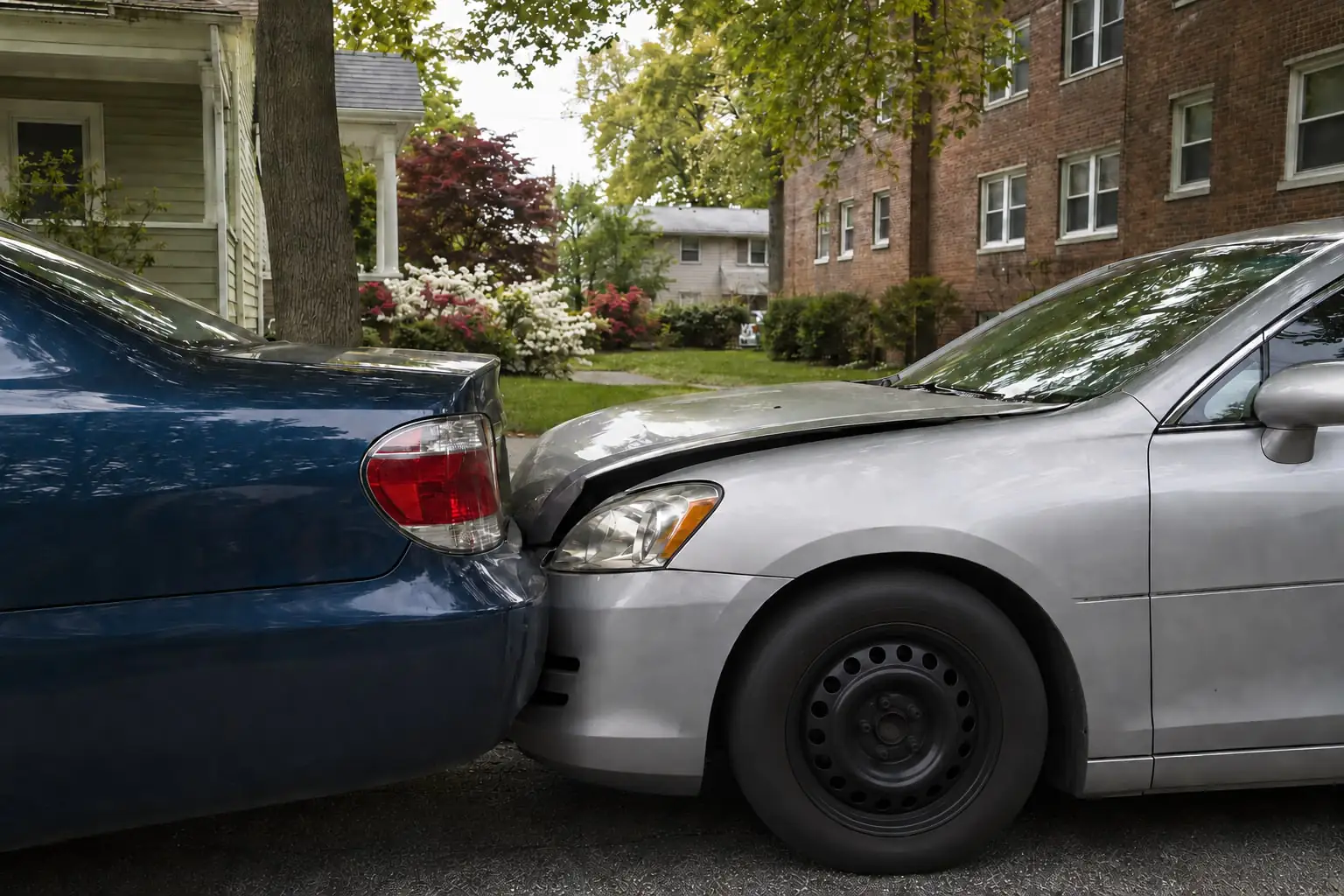
Spring Valley NY Car Accident Lawyer
A car crash can leave you trying to manage pain, medical appointments, missed work, vehicle repairs, and insurance calls at the same time. You may not yet know how serious your injuries are—or whether the other driver will accept responsibility.
Billy Cooper Law represents people injured in Spring Valley and throughout Rockland County. The firm serves Rockland County clients from its White Plains office and does not maintain an office in Spring Valley. If you have questions after a collision, call (914) 730-5789 for a free consultation. (billycooperlaw.com)
Types of Injury Cases We Handle in Spring Valley NY
- Personal Injury
- Car Accidents
- Slip and Fall
- E-Bike Accidents
Car Accident Lawyers Serving Rockland County
- Rockland County
- Ramapo
- Clarkstown
- Haverstraw
- New City
- Spring Valley
BILLY COOPER LAW

A Law Firm That Takes the Time to Understand What Happened
You should not have to explain your injuries repeatedly to different people who barely know your case. Billy Cooper Law’s approach begins with listening, answering questions, and helping clients understand what comes next.
The firm brings more than 75 years of combined experience to personal injury cases. William H. Cooper joined the practice in 1991, has served as lead trial counsel for decades, and was selected to Super Lawyers for 2024 through 2026. Attorney Anieska Garcia represents clients in both English and Spanish. (billycooperlaw.com)
If your injuries are serious, it is reasonable to ask whether the lawyer has handled difficult medical and liability issues before. The firm’s published case results include an $850,000 automobile-collision settlement involving reflex sympathetic dystrophy and a meniscus tear. (billycooperlaw.com)
Billy Cooper Law offers free consultations and handles personal injury cases on a contingency basis. There is no upfront attorney’s fee, and the firm is not paid a legal fee unless compensation is recovered. (billycooperlaw.com)
Why Spring Valley Car Accident Cases Require a Local Investigation
A Spring Valley collision may involve a state highway, a village street, a county route, a commercial driveway, or an intersection controlled by more than one public or private entity.
That distinction affects more than road maintenance. It may determine:
- Which agency has traffic-signal, paving, inspection, or complaint records
- Where surveillance footage may be located
- Whether a government claim deadline applies
- Who controlled a driveway, parking lot entrance, construction zone, or bus stop
- Which police department prepared the crash report
- Where a lawsuit may be filed
Route 59 illustrates the issue. The New York Metropolitan Transportation Council studied a 4.5-mile portion of the corridor extending from Airmont Road to South Pascack Road because of its changing lane configurations, mixed land uses, congestion, pedestrian activity, and transit needs. Those same conditions can make a crash investigation more complicated: a collision may involve turning traffic, delivery vehicles, buses, pedestrians, multiple driveways, or sudden congestion rather than one simple driving error. Read the Route 59 transportation study overview. (nymtc.org)
A Local Accident Snapshot
The most recent county assessment using data from the Institute for Traffic Safety Management and Research provides useful context:
- Rockland County recorded 9,711 crashes in 2023.
- Preliminary data showed 9,144 crashes in 2024.
- In 2024, 21.1% of Rockland County crashes involved personal injury.
- Fatal crashes represented approximately 0.19% of reported crashes in 2024.
- Rockland County had 193 reported pedestrian-motor vehicle crashes in 2024, based on preliminary data.
- The county’s age-adjusted motor vehicle injury mortality rate reached 6.2 deaths per 100,000 residents in 2022.
These numbers do not identify who was responsible for any individual collision. They do show that injury crashes and pedestrian conflicts remain recurring problems across the county. Review the Rockland County Community Health Assessment. (rocklandcountyny.gov)
Where Serious Crashes Happen in Spring Valley
Route 59 and Route 45
Route 59 carries local traffic through commercial areas, signalized intersections, side streets, parking-lot entrances, and transit stops. Route 45 brings north-south traffic through the village. Their intersection combines turning vehicles with people walking between stores, bus stops, downtown destinations, and the nearby transit center.
Evidence in these cases may include signal records, nearby business video, delivery-vehicle cameras, pedestrian-signal data, and photographs showing the traffic pattern at the time of the crash.
The Spring Valley Transit Center area
The Spring Valley Transit Center is served by several Transport of Rockland routes, and the Spring Valley rail station is on the Pascack Valley Line. The concentration of buses, passenger drop-offs, parked vehicles, and people crossing on foot creates a different investigative setting from a suburban two-lane road. Transport of Rockland route information and Spring Valley station information can help identify transit operations that may be relevant. (njtransit.com)
Commercial driveways and parking areas
A crash near a shopping center may involve more than the drivers. A property owner or tenant may control the driveway, sight lines, signs, lighting, snow removal, or internal traffic pattern. Exterior cameras may capture the collision even when the business had no connection to the people involved.
Residential streets
Crashes on local streets often involve parked cars, school buses, pedestrians, cyclists, children, or drivers using neighborhood roads to avoid congestion. Doorbell cameras and residential surveillance systems can be especially important, but that footage may be erased within days.
Car Accident Cases Billy Cooper Law Handles
Billy Cooper Law represents people injured in:
- Car, SUV, and multi-vehicle collisions
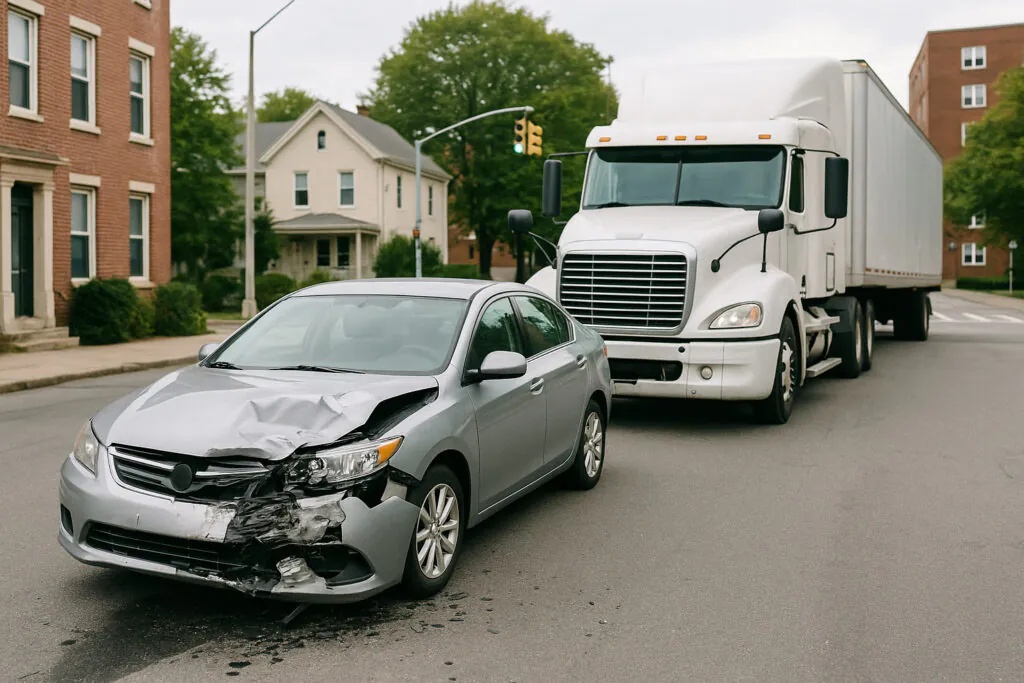
- Commercial truck and delivery-vehicle crashes
- Uber and Lyft accidents
- Pedestrian accidents
- Bicycle accidents
- Bus accidents
- Crashes caused by drunk drivers
- Fatal collisions and wrongful-death claims
A case may also involve a vehicle owner, employer, delivery company, contractor, property owner, rideshare insurer, or government agency. A careful investigation looks beyond the person who received the traffic ticket.
What to Do After a Car Accident
Get medical attention
Your health comes first. Call 911 if anyone may be seriously injured. Even if you leave the scene without an ambulance, seek appropriate medical care when you experience pain, headaches, numbness, dizziness, confusion, weakness, or restricted movement.
Describe every symptom accurately. Do not ignore a headache because your knee hurts more, or dismiss numbness because it comes and goes. Medical records created shortly after a crash can also help establish when your symptoms began.
Report the crash
Call the police and make sure the collision is documented. The Spring Valley Police Department handles incidents within the village and maintains a separate records department. (villagespringvalley.org)
New York also requires a motorist to file an MV-104 report within 10 days when a crash causes an injury, a death, or more than $1,000 in damage to any one person’s property. Reporting the crash to an insurance company does not replace this requirement. File or learn about an MV-104 crash report. (dmv.ny.gov)
Photograph the scene
If it is safe, photograph:
- Vehicle positions and damage
- License plates
- Debris, skid marks, and fluid on the road
- Traffic signs and signals
- Lane markings and crosswalks
- Construction barriers or temporary signs
- Weather and lighting conditions
- Nearby businesses and cameras
- Visible injuries
Take wide photographs showing the entire intersection as well as close images of damage. A close-up alone may not show where the vehicles were or how the collision occurred.
Get witness information
Do not assume every witness will appear in the police report. Ask for names and contact information. If a witness is willing, a short cellphone recording can preserve what the person saw before memories fade.
Be careful with insurance calls
You generally need to notify the appropriate insurer, but you do not have to speculate about speed, distance, fault, or the extent of an injury you are still evaluating.
The other driver’s adjuster may request a recorded statement or broad medical authorization. Before agreeing, consider speaking with an attorney who can explain how the information may be used.
Evidence That May Decide the Case
A police report is important, but it rarely tells the entire story. Depending on the collision, useful evidence may include:
- Business, apartment, and residential surveillance footage
- Traffic or transit video
- Dash-camera recordings
- 911 calls and dispatch records
- Police photographs and body-camera footage
- Vehicle event-data recorder information
- Cellphone records in a distracted-driving case
- Electronic logs and dispatch records for commercial drivers
- Delivery routes and employment records
- Traffic-signal timing and maintenance records
- Roadwork contracts and construction logs
- Prior complaints about a roadway condition
- Vehicle inspection and maintenance records
- Medical records and diagnostic images
Video should be requested quickly. Businesses and residential systems often overwrite recordings automatically, and a damaged vehicle may be repaired, sold, or destroyed before its electronic data is preserved.
How New York No-Fault Insurance Works
New York’s no-fault system generally provides an initial source of payment for medical expenses and limited lost earnings, regardless of who caused the crash. Basic economic loss coverage is ordinarily limited to $50,000 per person, subject to the policy and statutory rules. New York Insurance Law § 5102 defines basic economic loss and first-party benefits. (nysenate.gov)
No-fault does not mean that no one was legally at fault. It also does not automatically prevent a claim against a negligent driver.
To recover pain and suffering in a covered car accident case, your injuries generally must satisfy New York’s statutory “serious injury” standard. Current categories include:
- Death
- Dismemberment
- Significant disfigurement
- A fracture
- Loss of a fetus
- Permanent loss of use of a body organ, member, function, or system
- Permanent consequential limitation of use of a body organ or member
- Significant limitation of use of a body function or system
Medical evidence matters. Imaging, specialist evaluations, surgery records, range-of-motion testing, treatment history, and a documented prognosis may determine whether an insurer or court treats an injury as serious.
BILLY COOPER LAW
Insurance and Lawsuit Deadlines
No-fault deadlines
Written notice of a no-fault claim generally must be submitted within 30 days of the accident. Medical bills generally must be submitted within 45 days of treatment, and lost-earnings claims generally must be submitted within 90 days. Limited exceptions may exist when a claimant provides a clear and reasonable justification for delay, but it is safer not to depend on one. Review the Department of Financial Services no-fault deadlines. (dfs.ny.gov)
The general personal injury deadline
Under New York CPLR § 214, many negligence lawsuits must be filed within three years. That general rule can be shortened or changed by the identity of the defendant, the injured person’s age, the type of claim, or other circumstances. (nysenate.gov)
Important 2026 changes
New York changed several motor vehicle claim rules effective May 26, 2026, for actions and proceedings commenced on or after that date.
The amendments:
- Removed the former 90-out-of-180-day category from the statutory serious-injury definition
- Require fault to be determined before the serious-injury issue is decided
- Changed comparative fault for personal injury actions subject to the no-fault law
These changes make prompt medical documentation and a thorough fault investigation even more important. Read the New York Department of Financial Services explanation of the 2026 reforms. (dfs.ny.gov)
What If You Were Partly at Fault?
For motor vehicle personal injury actions subject to New York’s no-fault law and commenced on or after May 26, 2026, CPLR § 1411(b) bars recovery when the injured person’s share of fault is greater than the fault—or combined fault—of the parties from whom compensation is sought.
If you are 50% or less at fault, you may still recover, but your compensation is reduced by your percentage of responsibility. (nysenate.gov)
Do not assume the insurance adjuster’s percentage is correct. Fault may depend on:
- Which vehicle had the right of way
- Whether a driver was speeding or distracted
- Signal timing
- Vehicle positions and damage
- Visibility and lighting
- Video or witness testimony
- Whether a commercial driver was working
- Whether another vehicle or dangerous road condition contributed
A ticket or police-report notation can be useful evidence, but it does not necessarily decide civil liability.
Who May Be Responsible?
The negligent driver is often the first person considered, but not always the only one.
Other potentially responsible parties may include:
- The vehicle’s owner
- A driver’s employer
- A trucking, delivery, or bus company
- A maintenance contractor
- A rideshare insurer
- A business controlling a driveway
- A property owner that created an unsafe traffic pattern
- A manufacturer of a defective vehicle or component
- A village, county, state agency, or public authority
Insurance coverage can come from several places. A lawyer may need to examine ownership, employment, household policies, commercial coverage, umbrella policies, and uninsured or underinsured motorist protection.
Compensation After a Serious Car Accident
The losses available in a particular case depend on the injuries, insurance coverage, fault evidence, and applicable law.
A claim may include compensation for:
Medical care
This may include emergency treatment, hospitalization, surgery, diagnostic testing, medication, physical therapy, rehabilitation, medical equipment, home assistance, and reasonably anticipated future care.
Lost income
No-fault may cover part of an initial wage loss. A liability claim may address losses beyond available no-fault benefits, including reduced earning capacity when an injury affects your ability to return to the same work.
Pain and changes in daily life
When the serious-injury standard is met, compensation may address physical pain, emotional suffering, disability, scarring, loss of mobility, and reduced ability to participate in ordinary activities.
Property and out-of-pocket expenses
Vehicle damage is usually handled separately from the injury claim. Other losses may include towing, transportation costs, household help, and necessary expenses caused by the collision.
The value of a case cannot be determined from a short description or a photograph of the vehicle. Diagnosis, prognosis, fault, insurance limits, work history, and the long-term effect on your life all matter.
When a Government Agency May Be Involved
A public entity may be part of the case when the collision involves:
- A police car, public bus, sanitation truck, or other government vehicle
- A missing or malfunctioning traffic signal
- Defective road construction
- A recurring drainage or ice condition
- A dangerous intersection design
- Improper lane markings or signs
- Negligent road maintenance
The first task is identifying who controlled the location. Route 59 and Route 45 are state highways, while other roads may be controlled by the Village of Spring Valley, Rockland County, or another municipality. Adjacent private property may also contribute to visibility or access problems.
For many claims against villages, towns, counties, school districts, and other public corporations, General Municipal Law § 50-e requires a Notice of Claim within 90 days. Claims involving New York State or a state public authority follow different procedures. (nysenate.gov)
If a government vehicle, traffic signal, road defect, or construction project may have contributed, do not wait three years to begin investigating. A much earlier deadline may control the claim.
Local Courts, Hospitals, and Agencies
Resources that may become relevant after a Spring Valley collision include:
- Spring Valley Police Department, 200 North Main Street, Spring Valley NY 10977
- Rockland County Supreme and County Courts, 1 South Main Street, New City NY 10956
- Montefiore Nyack Hospital Emergency Center, which operates a 24-hour emergency department and Level III Trauma Center
- Rockland County Highway Department, which maintains records and accepts service requests concerning county roads
- New York DMV crash-report services
- New York Department of Financial Services no-fault information
You do not need to determine the correct court, insurer, or government agency before contacting a lawyer. Identifying those parties is part of the investigation. (villagespringvalley.org)
How Billy Cooper Law Investigates a Car Accident
A careful investigation begins with your account of what happened: where each vehicle came from, what you saw, what you heard, who stopped, and what happened afterward.
From there, Billy Cooper Law may:
- Identify responsible parties and insurance coverage.
This may include investigating vehicle ownership, employment, commercial policies, rideshare coverage, and government control. - Preserve temporary evidence.
The firm can request video, vehicle data, electronic records, and physical evidence before they disappear. - Collect official and medical records.
These may include crash reports, 911 records, photographs, signal records, medical charts, imaging, and wage documentation. - Interview witnesses.
Early contact can preserve details that become harder to remember months later. - Consult appropriate experts.
Serious cases may require accident reconstruction, engineering, medical, vocational, economic, or life-care evidence. - Document the effect of the injury.
Medical bills are only part of the case. Work limitations, future care, disability, and changes in daily life must also be understood. - Handle insurance communications.
Once represented, you should not have to manage repeated adjuster calls or defend your treatment alone. - Prepare for litigation when necessary.
Thorough preparation can support negotiations and allow the case to proceed if the insurer refuses to make a reasonable offer.
Related Billy Cooper Law Resources
- Personal Injury
- Rockland County NY Personal Injury Lawyer
- New York Car Accident Lawyer
- New York Truck Accident Lawyer
- New York Uber and Lyft Accident Lawyer
- New York Wrongful Death Lawyer
- Billy Cooper Law Case Results
Tell Us What Happened
You do not need to know whether your injury meets the serious-injury standard, which insurer should pay, or who controlled the road before asking for help.
Tell Billy Cooper Law what happened. The firm will listen, review the available information, and explain your options.
Call (914) 730-5789 or contact Billy Cooper Law for a free consultation. If a public vehicle, road condition, traffic signal, or construction project may be involved, prompt investigation is especially important.
BILLY COOPER LAW
Spring Valley NY Car Accident FAQs
These answers provide general information about New York injury claims and related concerns. The rules depend on the facts; this is not individual legal or medical advice.
Can no-fault insurance cover treatment after a Spring Valley NY car accident?
It may cover qualifying medical expenses and part of lost earnings regardless of who caused the collision. Coverage depends on your status, the vehicle and the applicable policy; it is separate from a liability claim against another driver. New York’s basic economic-loss provisions have a combined limit and restrictions on reimbursable losses.
Give the appropriate insurer written notice promptly. The usual no-fault notice period is 30 days, subject to a limited exception requiring written justification for delay. Keep copies of claim forms and delivery confirmations, and ask which insurer should receive your treatment bills. Payment of a bill does not establish that another person was negligent, and no-fault benefits do not themselves compensate you for pain and suffering.
Sources: New York DFS: No-Fault Insurance FAQs; Insurance Law § 5102: No-Fault and Serious Injury.
What should I do if the driver leaves the scene?
Report the collision to police promptly and preserve anything that can identify the vehicle. Depending on available insurance and eligibility, an unknown or uninsured vehicle may lead to a claim through a household auto policy or the Motor Vehicle Accident Indemnification Corporation. MVAIC is not an automatic substitute for every missing insurance policy.
Its statutory conditions include special reporting and filing requirements; hit-and-run matters generally require a police report within 24 hours or as soon as reasonably possible, subject to the law’s exceptions. Save witness contacts, camera locations and the police incident number. Have the available coverage and deadlines reviewed promptly rather than waiting for the driver to be identified.
Sources: New York Insurance Law § 5208: MVAIC Notice Requirements; New York DFS: Claims Involving Unknown or Uninsured Vehicles.
Does being partly at fault prevent me from recovering compensation?
It can in some New York motor-vehicle injury cases, but partial fault does not produce the same result in every claim. Current CPLR § 1411 distinguishes personal-injury actions subject to Insurance Law Article 51 from other cases. For covered actions, a claimant’s fault greater than the opposing parties’ combined fault can bar recovery; otherwise, the award is reduced proportionately.
Other injury claims generally retain proportional reduction without that statutory bar. The 2026 amendments and their applicability must be checked for the particular action. Preserve photographs, witness accounts and information about visibility, direction of travel and signals. An insurer’s initial fault assessment is not a court determination of your entitlement to damages.
Sources: CPLR § 1411: Comparative Fault; New York DFS: 2026 Motor Vehicle Insurance Reforms.
Can I seek pain-and-suffering damages for an car injury?
Potentially, but an injury action between covered persons under New York’s no-fault law generally requires a qualifying serious injury to recover noneconomic damages. A fracture is one statutory category; certain significant or permanent functional limitations are others. Pain, a diagnosis or time away from work alone does not establish every required element.
The current definition no longer includes the former 90/180-day category. The 2026 reform’s applicability should be evaluated for the action involved. Medical findings must connect the qualifying injury to the collision, and liability remains a separate issue. Keep examination records, imaging reports and documentation of functional restrictions so counsel can evaluate the relevant statutory category rather than relying on a settlement estimate.
Sources: New York Insurance Law § 5102(d): Serious Injury; New York Insurance Law § 5104: Personal Injury Actions; New York DFS: 2026 Motor Vehicle Insurance Reforms.
How long do I have to bring a claim after an car accident?
Many New York negligence lawsuits have a three-year limitation period, but that is not a safe deadline for every step after a crash. A claim involving a public corporation can require notice within 90 days. Claims against New York State follow separate Court of Claims procedures, which can also demand action within 90 days.
The defendant, type of claim and applicable exceptions determine the actual schedule. A police report or an ordinary insurance claim does not necessarily satisfy a government notice requirement. Identify the accident date, exact location and possible responsible parties at the outset, and have all deadlines checked before assuming you can wait to decide whether to pursue the matter.
Sources: CPLR § 214: Three-Year Limitation Periods; General Municipal Law § 50-e: Notice of Claim; Court of Claims Act § 10: Claims Against New York State.
What if headache or dizziness starts after I have gone home?
Seek medical advice promptly after new symptoms following a head impact. CDC guidance explains that concussion symptoms can appear hours or days later. Worsening headache, repeated vomiting, seizures, slurred speech, marked confusion or difficulty waking are emergency warning signs; call 911 or obtain emergency care immediately if these occur.
Tell the clinician when the crash happened, whether your head or body took a blow and when each symptom began. Ask for written guidance about returning to work, driving and other activities, and report symptoms that worsen or fail to improve. Medical assessment addresses your health; a symptom diary or this webpage cannot diagnose a concussion or establish the legal cause of an injury.
Sources: CDC: Symptoms of Mild TBI and Concussion; CDC: What to Do After a Mild TBI or Concussion.
What evidence should I save after a crash in Spring Valley NY?
Save the records that show what happened before the vehicles or digital files change. Useful materials include scene photographs, witness contacts, police information, vehicle damage, medical records and correspondence from insurers. Keep original files with their dates and context; a cropped screenshot may omit information needed to interpret the event accurately.
New York disclosure rules provide a process for obtaining relevant evidence, but they do not guarantee that every camera recording still exists when a lawsuit begins. Identify nearby businesses, vehicles or buildings with cameras and tell counsel promptly. Avoid editing original recordings or discarding damaged equipment. A written preservation request should identify the specific accident, time range and material sought rather than assuming every business automatically saves footage indefinitely.
Sources: CPLR § 3101: Disclosure of Evidence; CPLR § 3126: Disclosure Sanctions.
Can a rear-end collision still involve a dispute over responsibility?
Yes. New York requires drivers to maintain a reasonable following distance, but the circumstances of a particular collision still need to be established. Vehicle positions, traffic conditions and the sequence of impacts can matter. Avoid assuming that the location of the damage identifies every responsible person in a multi-vehicle crash.
Preserve photographs of all involved vehicles, witness information and any available video. Record what you actually remember without guessing another vehicle’s speed or distance. A driver may raise an explanation that must be tested against the evidence, and a fact finder can consider more than one party’s conduct. An insurer’s initial position is a claim assessment, not a final judicial determination of liability or damages.
Sources: Vehicle and Traffic Law § 1129: Following Too Closely; CPLR § 1411: Comparative Fault.
Can someone besides the other driver be responsible for my injuries?
Potentially. New York law can impose responsibility on a vehicle owner for negligent operation by a person using the vehicle with permission. Depending on the facts, a work-related trip, a vehicle defect or a dangerous roadway may raise additional issues. The identity of every owner and operator should be confirmed rather than inferred from a name on an insurance card.
Keep photographs of the vehicles and identifying information from the collision report. Tell counsel if the vehicle appeared to be used for deliveries, commercial work or passenger service, and preserve any relevant communications. Additional parties do not automatically mean additional compensation: permission, conduct, causation and available coverage still need proof. Government-related claims can also involve separate notice procedures that require prompt attention.
Sources: Vehicle and Traffic Law § 388: Vehicle Owner Liability; CPLR § 3101: Disclosure of Evidence.
Do I need to file a report even if the police came to the crash?
You may have a separate driver-reporting duty. New York Vehicle and Traffic Law § 605 generally requires a driver to report an accident involving injury, death or property damage exceeding the statutory threshold within ten days. Police attendance does not automatically establish that you have satisfied every reporting obligation that applies to your role.
Check the current DMV instructions and retain the report number, submission confirmation and a copy of what you provided. Describe known facts accurately and avoid estimates presented as certainty. A DMV report, police report, insurance notice and government notice of claim serve different purposes; completing one does not necessarily complete the others. If injuries or the identity of a responsible party remain unclear, seek timely help assessing the applicable requirements.
Sources: Vehicle and Traffic Law § 605: Accident Reports; New York DFS: No-Fault Insurance FAQs.
Sources
Billy Cooper Law
- Billy Cooper Law
- Billy Cooper Law Car Accident Practice
- Billy Cooper Law Rockland County Practice
- Personal Injury
- William H. Cooper Attorney Profile
- Anieska Garcia Attorney Profile
- Billy Cooper Law Case Results
- Billy Cooper Law Contact Information
- Billy Cooper Law Commercial Vehicle Accident Practice
- Billy Cooper Law Uber and Lyft Accident Practice
- Billy Cooper Law Pedestrian Accident Practice
- Billy Cooper Law Bicycle Accident Practice
- Billy Cooper Law Bus Accident Practice
- Billy Cooper Law Drunk Driving Accident Practice
- Billy Cooper Law Wrongful Death Practice
New York Law and Insurance
- New York Insurance Law § 5102
- New York CPLR § 1411
- New York CPLR § 214
- New York General Municipal Law § 50-e
- New York Department of Financial Services 2026 Motor Vehicle Insurance Reforms
- New York Department of Financial Services No-Fault FAQs
- New York DMV MV-104 Crash Report
- New York DMV Motorist Crash-Report Services
Spring Valley and Rockland County Resources
- Village of Spring Valley Police Department
- Rockland County Community Health Assessment
- New York Metropolitan Transportation Council Route 59 Study
- Transport of Rockland
- Spring Valley Rail Station
- Rockland County Supreme and County Courts
- Montefiore Nyack Hospital Emergency Center
- Rockland County Highway Department

Get the Answers You Need
At Billy Cooper Law, every day we renew our pledge to help injured people get the justice and compensation they deserve. We have a reputation throughout New York and nationally for standing up for our clients, and we take that responsibility seriously by approaching every case with preparation, persistence, and an unwavering commitment to results.