
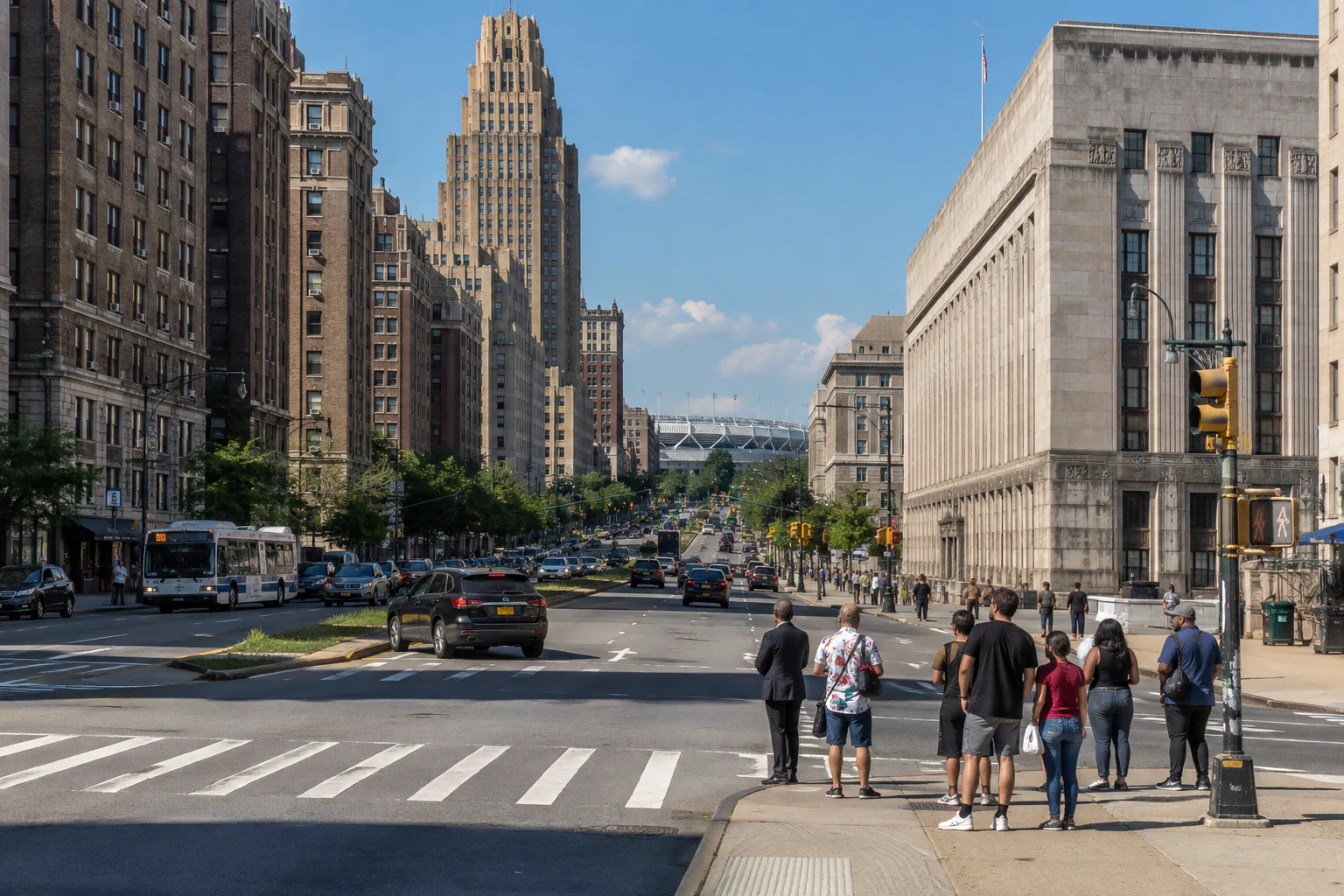
Bronx NY Personal Injury Lawyer
Video Transcript
Every person who contacts our office speaks to an attorney directly.
Many firms, when you reach out, you get just a paralegal or just a receptionist, and while they may be very experienced, I think it gives a lot of assurance to the public that they know that when they call us, they will always get the attorney on the phone.
The most important thing I think people should know before they pick up the phone and call the office of Billy Cooper is that we take the time to listen and answer people’s questions.
One of the things that I get told most often, even if it’s a situation where we cannot take your case, is that we explain why.
We don’t just say, “No, you don’t have a case” and hang up.
We always give people an explanation.
We explain what the burden of proof is and the law that applies.
People are always most appreciative that we take the time to explain to them rather than just saying no.
A great outcome beyond the dollar amount is quite significant because after a case resolves, money only means so much.
In fact, I always have conversations with our clients indicating to them that money does a certain thing for you, but it can never make you feel completely whole.
What we try and do is we try and give our people the type of service where they know that even when the case is completed, we are here for them.
What makes our law firm different than other firms in New York is our attention to detail, and that we assist our clients with every aspect of their case.
We make phone calls to make sure that your medical bills are being paid.
We can assist you in finding medical care.
It’s beyond just a legal service. It is an all-around service that we provide.
If you have been injured in an accident or someone you know, whether it’s a family member or a friend, we ask that you reach out to us because we will speak with you and we will assist you.

Types of Injury Cases We Handle in Bronx County NY
- Car accidents
- Motorcycle accidents
- Pedestrian accidents
- Bicycle accidents
- Uber and Lyft accidents
- Truck and commercial vehicle accidents
- Bus accidents
- Subway accidents
- Construction accidents
- Work accidents
- Premises liability
- Dog bites and animal attacks
- Defective products
- Medical malpractice
- Catastrophic injuries
- Wrongful death
Related Bronx County Practice Pages
Why Bronx Clients Turn to Billy Cooper Law
If your injuries are serious, you will probably want a lawyer who understands what the case may require if an insurance company refuses to be reasonable. William H. “Billy” Cooper has practiced in New York since 1991 and has served as the firm’s lead trial counsel for more than 25 years. His attorney profile lists Super Lawyers recognition from 2024 through 2026. The firm reports more than 75 years of combined experience. The firm has also handled significant Bronx County matters, including a $6 million police misconduct settlement, a $1.6 million pedestrian accident settlement, and an $850,000 automobile accident settlement. Those results do not predict what will happen in another case. They do show experience with serious injuries, disputed liability, and claims that require careful preparation. If you would rather discuss the case in Spanish, attorney Anieska Garcia is fluent in English and Spanish. You should not have to rely on a family member to interpret conversations about your health, finances, or legal options. Billy Cooper Law offers free consultations and handles personal injury cases on a contingency-fee basis. There is no upfront legal fee, and the firm does not receive a legal fee unless compensation is recovered.Why Personal Injury Cases Are Different in the Bronx
The Bronx brings together interstate highways, local commercial corridors, densely occupied residential buildings, major construction projects, public transit, delivery traffic, and growing e-bike and scooter use. That combination affects both how injuries occur and where evidence may be found. A collision on the Cross Bronx Expressway is not investigated like a pedestrian crash on a local shopping corridor. A fall outside an apartment building raises different ownership questions than a fall on a subway platform. Even two accidents a block apart may involve different government agencies and different filing requirements. The precise location matters. Investigators may need to determine:- Whether the accident occurred on a local street, service road, expressway, bridge, or ramp
- Whether New York City, New York State, the MTA, or a private party controlled the location
- Whether nearby businesses, apartment buildings, buses, or residences had cameras
- Whether roadway or construction work was underway
- Who received earlier complaints about the same condition
- Whether inspection, maintenance, dispatch, or operator records exist
- Whether a public entity must receive a formal notice of claim
A Local Injury Snapshot
The numbers show why early investigation matters. According to the New York City Department of Transportation’s 2024 crash report, Bronx traffic crashes caused 9,135 reported injuries in 2024. That total included:- 1,584 pedestrian injuries
- 484 traditional bicycle injuries
- 987 injuries to people using motorized two-wheelers
- 6,080 injuries to motor vehicle occupants
- Co-op City
- Kingsbridge
- Soundview
- Riverdale
- Fordham
- Mott Haven
- Morris Park
- Parkchester
- Throggs Neck
- Williamsbridge
Where Serious Injuries Happen
Expressways, ramps, and bridges
The Cross Bronx Expressway, Major Deegan Expressway, Bruckner Expressway, and their connecting ramps carry local traffic alongside trucks and regional travelers. Crashes in these areas can involve abrupt merges, stopped traffic, multiple impacts, commercial vehicles, and disputed lane movements. Roadway ownership is not always obvious. New York State has jurisdiction over portions of the Bronx arterial system, while the City maintains other streets and structures. The Bronx-Whitestone, Throgs Neck, Henry Hudson, and Robert F. Kennedy bridges are operated by the MTA. Determining who controlled the exact location may change where a claim must be filed and which deadlines apply.Pedestrian and micromobility corridors
On streets such as the Grand Concourse, Fordham Road, Third Avenue, Gun Hill Road, and Westchester Avenue, pedestrians may be moving among buses, turning vehicles, delivery trucks, bicycles, e-bikes, and scooters. These cases often turn on details that disappear quickly: signal timing, sight lines, curbside activity, the direction of travel, vehicle speed, lighting, parked vehicles, and whether the driver was turning or backing up. Storefront, bus, and building video may be more useful than the police report, but it may not be kept for long.Apartment buildings, stores, and sidewalks
Falls in Bronx apartment buildings can involve broken stairs, poor lighting, leaking pipes, damaged flooring, defective doors, or inadequate snow and ice removal. A management company, owner, tenant, maintenance contractor, or another entity may have controlled the unsafe area. Sidewalk cases require particular care. NYC DOT explains that adjoining property owners are generally responsible for maintaining sidewalks, but liability depends on the type of property, the cause of the defect, ownership of nearby hardware or tree wells, and whether a government entity remains responsible.Construction and work sites
A worker injured in a fall, scaffold collapse, trench accident, or falling-object incident may have rights beyond workers’ compensation. Depending on the work and the parties involved, New York Labor Law may permit a separate claim against an owner, general contractor, or another responsible party. The job title alone does not decide the case. The investigation must examine who directed the work, who supplied the equipment, what safety devices were available, and whether the accident involved an elevation or a specific safety-rule violation.Personal Injury Cases the Firm Handles
Billy Cooper Law represents clients in matters involving:- Car and motor vehicle accidents
- Pedestrian accidents
- Bicycle, motorcycle, e-bike, and motorized micromobility accidents
- Rideshare and commercial vehicle collisions
- Bus accidents
- Subway accidents
- Construction accidents
- Work-related injuries
- Premises and building accidents
- Sidewalk accidents
- Dog bites and defective products
- Medical malpractice
- Catastrophic injuries
- Wrongful death
What to Do After an Accident
Get medical care
Call 911 when the injury may be serious. If you do not go to the emergency room, arrange an appropriate medical evaluation as soon as possible. Tell the provider what happened and describe every area that hurts. Injuries involving the brain, spine, joints, or internal organs are not always obvious at the scene.Report what happened
Report a vehicle crash to the police. Notify a property owner, superintendent, store manager, employer, or transit employee when appropriate. Ask how to obtain a copy of any incident report, but do not assume that filling out an internal report satisfies a legal notice requirement.Photograph the scene
Take wide and close photographs. Include the hazard, surrounding area, address, intersection, signs, traffic controls, vehicle damage, debris, weather conditions, and visible injuries. For a fall, place an object near the defect for scale if you can do so safely. Photograph the exact stair, sidewalk flag, platform area, doorway, or aisle—not simply the building.Identify witnesses and cameras
Get names and contact information. Look for cameras on storefronts, buses, residences, apartment entrances, parking areas, and nearby intersections. Do not assume someone else will preserve the video. Many systems overwrite footage automatically.Protect physical evidence
Keep damaged clothing, shoes, helmets, bicycles, scooters, vehicle parts, and safety equipment. Do not repair, discard, or give away important items before they can be examined.Be careful with insurance calls
You should notify the appropriate insurer promptly, but you do not have to guess about fault or minimize your symptoms. Do not sign a broad medical authorization, accept a settlement, or give a recorded statement to another party’s insurer without understanding the consequences.Evidence That May Decide the Case
Strong cases are usually built from several sources rather than one document. Depending on what happened, useful evidence may include:- NYPD, 911, EMS, and fire department records
- Body-worn camera footage
- Storefront, lobby, residential, bus, or subway video
- Vehicle event-data recorder information
- Driver phone, navigation, delivery, or rideshare records
- Bus operator, dispatch, maintenance, and route records
- Property inspection and repair records
- Cleaning and snow-removal logs
- Earlier complaints or violations
- Construction permits, daily reports, photographs, and safety meeting records
- Equipment inspection and maintenance records
- Employment and wage documentation
- Medical images, operative reports, and treating-provider records
- Testimony from people who saw the accident or knew about the hazard
New York Laws and Deadlines
Deadlines depend on the defendant and type of case. The following are general rules, not a substitute for advice about a particular accident.Most negligence claims
Many New York personal injury actions must be commenced within three years under CPLR § 214. Waiting three years is rarely wise. Video disappears, conditions are repaired, vehicles are sold, and witnesses become harder to locate.Medical malpractice
Medical, dental, and podiatric malpractice actions generally must be commenced within two years and six months. Continuous treatment and certain discovery rules can affect the calculation. The details appear in CPLR § 214-a.Wrongful death
A New York wrongful death action generally must be commenced within two years after death by the estate’s appointed personal representative. EPTL § 5-4.1 contains the governing rule and limited exceptions.No-fault insurance
A lawsuit deadline is not the same as an insurance deadline. New York’s Department of Financial Services states that an injured person generally must provide the appropriate no-fault insurer with written notice within 30 days of the accident, unless there is a clear and reasonable justification for delay. Medical bills and wage-loss claims have additional submission requirements. See the New York Department of Financial Services no-fault FAQ.What If You Were Partly at Fault?
Do not assume that partial fault ends the case. For most personal injury claims outside the motor vehicle no-fault system, New York follows comparative negligence. Your compensation may be reduced by your percentage of responsibility, but partial fault does not automatically prevent recovery. Motor vehicle cases now require additional attention. Under the current version of CPLR § 1411, a claimant in an action subject to Article 51 of the Insurance Law may be barred from recovery if the claimant’s fault is greater than the fault of the defendant or defendants combined. If the claimant is 50% or less at fault, damages may still be recovered, reduced by that percentage. This rule was amended in 2026. The date of the accident and the amendment’s application to an existing claim may matter, so older motor vehicle cases should be reviewed under the law that governs them.How No-Fault Insurance Affects a Bronx Car Accident Case
New York no-fault insurance generally pays the first layer of covered medical expenses and lost-income benefits without first deciding which driver caused the crash. The current definition of “basic economic loss” provides up to $50,000 per person for covered losses, subject to statutory and policy limitations. See New York Insurance Law § 5102. No-fault does not prevent every lawsuit. In many cases, an injured person may pursue pain and suffering and other non-economic damages if the injury meets New York’s “serious injury” requirement. The current definition includes injuries such as fractures, significant disfigurement, permanent loss of use, permanent consequential limitations, and significant limitations of a body function or system. Insurance Law § 5104 governs when a covered person may pursue damages beyond the no-fault system. Medical documentation matters. An MRI report alone may not explain how the injury affects your movement, work, sleep, or independence. Consistent treatment and clear medical opinions often become central when an insurer disputes whether an injury is serious.BILLY COOPER LAW
Questions About a Bronx County Injury Claim?
Who May Be Responsible?
The answer depends on the accident.Vehicle cases
Potentially responsible parties may include:- A negligent driver
- The vehicle owner
- A driver’s employer
- A trucking or delivery company
- A maintenance or repair company
- A rideshare company or applicable insurer
- A roadway contractor
- The public entity responsible for a dangerous roadway condition
Property and sidewalk cases
Responsibility may rest with an owner, commercial tenant, property manager, maintenance company, snow-removal contractor, utility, or government entity. Leases and management agreements can help show who was supposed to inspect, clean, repair, or warn.Construction cases
A construction worker’s claim may involve the property owner, general contractor, subcontractor, equipment provider, or another company that created or controlled the hazard. Workers’ compensation and a third-party personal injury claim may proceed under different rules.Medical cases
A hospital, physician, nurse, laboratory, medical practice, or other provider may be responsible when a departure from accepted medical care causes additional injury. A poor outcome by itself does not establish malpractice; qualified medical review is usually necessary.Compensation Available After a Serious Injury
Compensation is meant to address what the injury has taken from you. Depending on the case, recoverable damages may include:- Past and future medical expenses
- Lost wages
- Reduced earning capacity
- Rehabilitation and therapy
- Home health care
- Assistive equipment and home modifications
- Other accident-related expenses
- Pain and suffering
- Loss of enjoyment of life
- Scarring, disfigurement, or permanent limitations
Claims Against New York City, Transit Authorities, and Other Public Entities
Government claims deserve immediate attention. For many tort claims against New York City, a notice of claim must be served within 90 days. A lawsuit generally must be commenced within one year and 90 days, after satisfying the required notice procedure. See General Municipal Law § 50-e and General Municipal Law § 50-i. The New York City Comptroller’s eClaim system accepts electronic personal injury claims against the City. An ordinary complaint to 311 or an accident report may not replace a properly served notice of claim. Claims against the New York City Transit Authority also generally require a notice complying with the 90-day rule and may be subject to a one-year-and-90-day lawsuit deadline under Public Authorities Law § 1212. Street and sidewalk defect cases may raise another issue: New York City often cannot be held liable unless it received legally sufficient prior written notice of the particular defect or created the condition through an affirmative act of negligence. The NYC Comptroller’s claim guidance explains the City’s prior-written-notice requirement. A crash on a state-controlled expressway, an MTA bridge, or another public authority’s property may follow a different procedure. Do not wait until the ownership question is resolved before seeking help. Determining the correct agency is part of the investigation.Bronx Courts, Hospitals, and Agencies
Courts
Larger Bronx personal injury lawsuits are commonly heard in the Bronx County Supreme Court, Civil Term, located at: 851 Grand Concourse Bronx, NY 10451 The court reports that its civil docket includes motor vehicle, medical malpractice, Labor Law, and other tort cases involving claims above the lower court’s monetary jurisdiction.Trauma care
Emergency responders determine the appropriate destination based on the patient’s condition and available resources. Two significant Bronx trauma facilities include:- NYC Health + Hospitals/Lincoln, a Level I Trauma Center serving the South Bronx
- NYC Health + Hospitals/Jacobi, an Adult Level I Trauma Center and the only burn center in the Bronx or southern Westchester
Agencies that may hold evidence
Depending on the case, records may be held by:- NYPD
- NYC Department of Transportation
- New York State Department of Transportation
- Metropolitan Transportation Authority or New York City Transit Authority
- NYC Department of Buildings
- NYC Department of Parks and Recreation
- NYC Health + Hospitals
- New York City Comptroller
- A private building owner, contractor, employer, or insurer
How Billy Cooper Law Investigates a Bronx Injury Claim
The investigation begins with what happened to you, not with a form letter to an insurance company. Depending on the case, the firm may:- Identify the exact accident location and every entity that controlled it.
- Send preservation demands for video, vehicles, equipment, electronic data, and business records.
- Obtain police, EMS, incident, property, transit, and construction records.
- Interview witnesses while their memories are fresh.
- Inspect and photograph the location.
- Review available insurance and no-fault coverage.
- Work with appropriate medical, engineering, safety, vocational, or financial experts.
- Document lost income and the effect of the injury on daily life.
- File required notices and lawsuits within the applicable deadlines.
- Prepare the case for trial rather than assuming the insurer will offer a fair resolution voluntarily.
Frequently Asked Questions
Do I have a case if the police did not issue a ticket?
Possibly. A traffic summons can be useful, but it does not decide civil liability. Video, witnesses, vehicle damage, electronic data, road design, and the drivers’ testimony may establish fault even when no ticket was issued.Can I recover if I was partly responsible?
It depends on the type and date of the claim. In most non-motor-vehicle cases, partial fault generally reduces compensation rather than eliminating it. For motor vehicle actions governed by the 2026 version of CPLR § 1411, recovery may be barred if your fault exceeds the defendants’ combined fault.Who pays my medical bills after a car accident?
New York no-fault insurance generally pays qualifying medical expenses and part of the injured person’s lost income up to applicable limits. The correct insurer depends on whether you were a driver, passenger, pedestrian, or cyclist and on the vehicles and policies involved.What if the driver fled or had no insurance?
You may have a claim through uninsured-motorist coverage or, in some cases, the Motor Vehicle Accident Indemnification Corporation. Notice and cooperation requirements can be strict, so the available policies and deadlines should be investigated promptly.How long will my case take?
A claim may resolve in months when liability, damages, and coverage are clear. Serious cases can take longer, particularly when treatment is ongoing, several parties dispute responsibility, or a trial becomes necessary. Resolving too early may mean accepting compensation before the long-term medical picture is known.What if I fell outside an apartment building or business?
Photograph the precise defect and obtain the building address. The case may involve the adjoining owner, commercial tenant, management company, contractor, City, or another entity. Property records, leases, inspection reports, and repair history can help determine responsibility.Is a transit incident report enough to protect my claim?
Not necessarily. Reporting an accident to a bus operator, station employee, police officer, or MTA representative may not satisfy the formal notice-of-claim rules. Speak with a lawyer promptly if a bus, subway, station, or transit employee was involved.How much does it cost to contact Billy Cooper Law?
The firm offers a free consultation and handles personal injury matters on a contingency-fee basis. There is no upfront legal fee, and no legal fee is owed unless the firm obtains compensation.Can I discuss my case in Spanish?
Yes. Attorney Anieska Garcia is fluent in English and Spanish.Related Information
- New York Personal Injury Claims
- Car Accident Claims
- Pedestrian Accidents
- E-Bike Accidents
- Bus Accidents
- Subway Accidents
- Construction Accidents
- Premises Liability
- Sidewalk Accidents
- Medical Malpractice
- Wrongful Death
- Case Results
Tell Us What Happened
You do not need to know who owned the road, which insurance policy applies, or whether a government agency was involved before calling. Start with what happened. Billy Cooper Law can review the circumstances, explain which deadlines may apply, and discuss practical next steps. Call (718) 866-3311 or contact Billy Cooper Law online for a free consultation. If a City agency, transit authority, or other public entity may be involved, ask about the claim promptly.Sources
Billy Cooper Law
- Billy Cooper Law — Official Website
- Personal Injury Practice
- William H. Cooper Attorney Profile
- Anieska Garcia Attorney Profile
- Case Results
- Contact and Office Information
- Motor Vehicle Accidents
- Car Accidents
- Pedestrian Accidents
- E-Bike Accidents
- Bus Accidents
- Subway Accidents
- Construction Accidents
- Work Accidents
- Premises Liability
- Sidewalk Accidents
- Medical Malpractice
- Wrongful Death
New York Law and Insurance
- New York CPLR § 1411 — Comparative Fault
- New York CPLR § 214 — Three-Year Personal Injury Limitation
- New York CPLR § 214-a — Medical Malpractice Limitation
- General Municipal Law § 50-e — Notice of Claim
- General Municipal Law § 50-i — Actions Against Municipalities
- Public Authorities Law § 1212 — New York City Transit Authority Claims
- Insurance Law § 5102 — No-Fault Definitions and Serious Injury
- Insurance Law § 5104 — Motor Vehicle Personal Injury Actions
- EPTL § 5-4.1 — Wrongful Death Actions
- EPTL § 5-4.3 — Wrongful Death Damages
- New York Department of Financial Services — No-Fault Insurance FAQ
Bronx and New York City Resources
- NYC DOT — 2024 Bicycle and Traffic Crash Data Report
- NYC DOT — 2025 Traffic Fatality Report
- NYC Department of Buildings — 2025 Construction Safety Report
- NYC DOT — Bridges and Responsible Agencies
- NYC DOT — Sidewalk Maintenance and Responsibility
- NYC Comptroller — File a Claim
- NYC Comptroller — Electronic Claim Filing
- Bronx County Supreme Court, Civil Term
- NYC Health + Hospitals/Lincoln
- NYC Health + Hospitals/Jacobi
Communities We Serve
- Bronx County
- Co-op City
- Kingsbridge
- Soundview
- Riverdale
- Fordham
BILLY COOPER LAW
Ready to Discuss What Happened?
Related Bronx County Practice

Putting Over 75 Years of Combined Experience on Your Side
Putting Over 75 Years of Combined Experience on Your Side
Putting Over 75 Years of Combined Experience on Your Side
Putting Over 75 Years of Combined Experience on Your Side
Putting Over 75 Years of Combined Experience on Your Side
Putting Over 75 Years of Combined Experience on Your Side
Putting Over 75 Years of Combined Experience on Your Side
Putting Over 75 Years of Combined Experience on Your Side
Putting Over 75 Years of Combined Experience on Your Side
Putting Over 75 Years of Combined Experience on Your Side
Get the Answers You Need
At Billy Cooper Law, every day we renew our pledge to help injured people get the justice and compensation they deserve. We have a reputation throughout New York and nationally for standing up for our clients, and we take that responsibility seriously by approaching every case with preparation, persistence, and an unwavering commitment to results.