
White Plains NY Uber Accident Lawyer
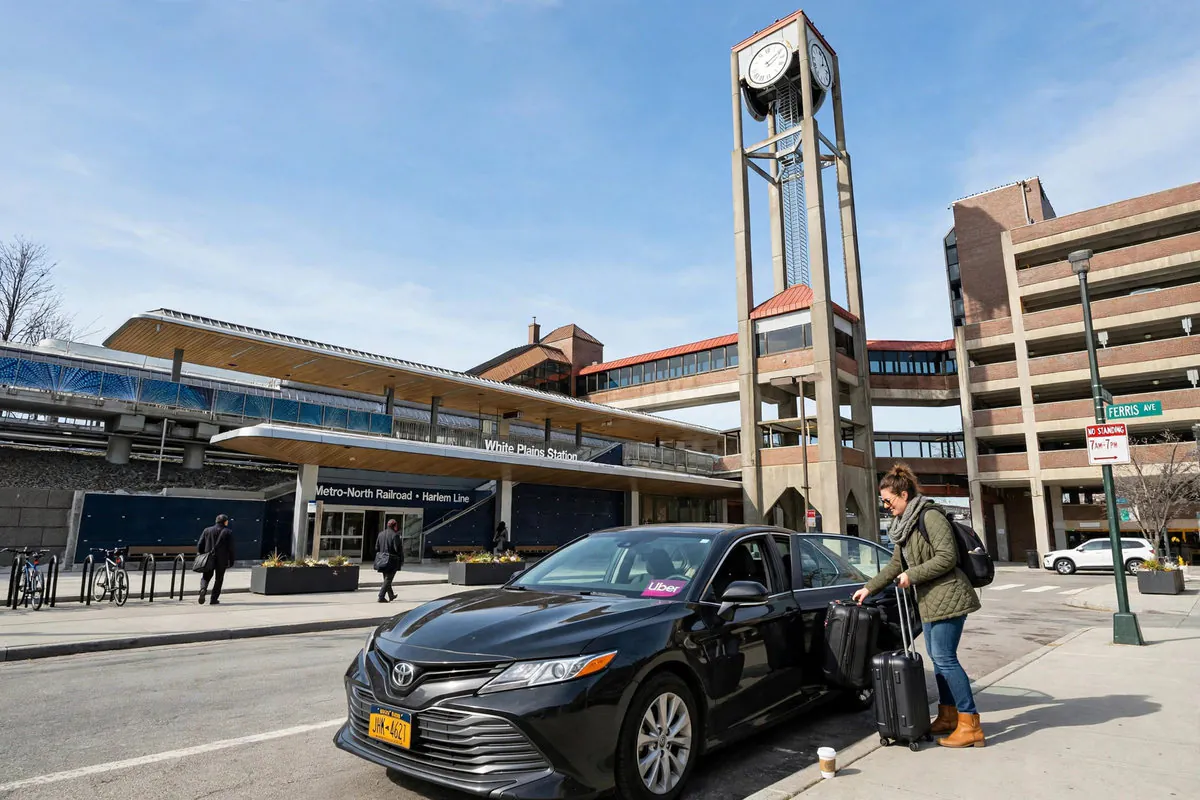
White Plains is rideshare territory: the Metro-North station and TransCenter generate trips around the clock, the malls and hospital generate more, Westchester County Airport (HPN) feeds the city a stream of arriving passengers, and the downtown restaurant and bar scene fills the late hours. Uber and Lyft crashes here — as passenger, as the rideshare driver, or as the person in the other vehicle — raise a question ordinary car cases do not: which insurance applies depends on what the app was doing at the moment of impact. Billy Cooper Law is based in White Plains and handles rideshare claims across Westchester County. The firm’s general practice page is Uber and Lyft accidents; this page covers White Plains. The broader White Plains injury practice has its own page. The town’s broader injury practice is on the White Plains personal injury page.Uber Accident Lawyers Serving Westchester County
Uber Accident Cases We Handle in White Plains
Uber and Lyft Accident Lawyers Serving Westchester County
The firm’s Westchester rideshare pages cover Greenburgh, Mount Vernon, New Rochelle and Yonkers, alongside White Plains, with a county-level page at Westchester County Uber accidents. The insurance framework is the same countywide — app periods, platform policies, no-fault — but the evidence is local: which agency responded, which hospital holds the chart, which cameras cover the pickup point.BILLY COOPER LAW

Why Injured People Turn to Billy Cooper Law
Rideshare cases are won on reconstruction: the trip’s timeline — request, acceptance, pickup, drop-off — pinned to the platforms’ own data before accounts are closed and records rotate. Billy Cooper Law builds that timeline from its White Plains office, maps every policy in the stack, and handles the case through negotiation or trial. The consultation is free, and there is no fee unless we recover for you.What Makes White Plains Uber Accident Cases Different
White Plains gives rideshare crashes a specific geography. The station district compresses pickups, buses, taxis and commuters into a few blocks where double-parking and sudden stops are the norm. The Mamaroneck Avenue nightlife corridor generates late-night trips with impaired and distracted drivers in the mix. The airport run puts rideshare vehicles on I-287 and the Hutchinson River Parkway at highway speeds. And the hospital and mall districts produce a constant flow of curb stops in heavy pedestrian areas. Each setting produces its own crash pattern and its own evidence — station cameras, app trip data, parkway speeds — and the claim is built accordingly.A Local Uber Accident Snapshot
A White Plains rideshare case opens with three determinations. The posture: were you the passenger, the rideshare driver, or in another vehicle (or walking or riding)? The phase: was the app off, on and waiting, or on an accepted or active trip at impact? The stack: which policies — personal, platform, no-fault, SUM — respond, and in what order? The platforms’ data answers the phase question precisely, if it is demanded while the trip record is intact. The police report (White Plains Public Safety in the city, State or County Police on the parkways) and the White Plains Hospital record anchor the human side.Where Uber Accident Injuries Happen in White Plains
Rideshare injuries in White Plains concentrate where trips begin and end:- The station and TransCenter district — pickups and drop-offs amid buses, taxis and commuter crowds: sudden stops, door and curb strikes, pedestrian conflicts.
- Mamaroneck Avenue’s restaurant and nightlife corridor — late-night trips, impaired drivers, and rideshare vehicles stopping in travel lanes.
- The Westchester and the Galleria — mall pickups: garage and entrance conflicts, pedestrian strikes in structured parking.
- The hospital district (East Post Road) — patient and visitor trips, medical transport mixing with emergency traffic.
- I-287 and the Hutchinson River Parkway (the airport runs) — higher-speed rideshare collisions on the HPN airport route.
- Westchester Avenue (Route 119) office corridor — business-travel trips and commuter-hour curb conflicts.
Real Cases Often Begin in Ordinary Moments
The firm handles White Plains rideshare claims for every posture: passengers injured in an Uber or Lyft; rideshare drivers hurt by other motorists (or by their own passengers’ circumstances); occupants of other vehicles struck by rideshare cars; and pedestrians and cyclists hit by vehicles working trips. Severity ranges from threshold-clearing fractures and surgeries to soft-tissue cases that still have to be documented to the serious-injury standard. The constant across all of them is the coverage reconstruction — the work that decides which insurer pays what.What To Do After a Uber Accident in White Plains
After a rideshare crash in White Plains, the steps that protect your claim:- Get medical care. Call 911 for emergencies; White Plains Hospital is the local first stop. Tell providers a vehicle crash caused the injuries.
- Report the crash. White Plains Public Safety in the city; get the report number and note the responding agency.
- Save the trip record. Screenshot the trip screen, receipt, driver and vehicle details, and the route — before the app history becomes hard to retrieve. Passengers, drivers: both sides’ records matter.
- Photograph the scene. Vehicles and damage, the pickup or crash location, signals and sightlines, and your injuries.
- Collect names. The rideshare driver, the other driver, witnesses, responding officers — and insurance details for every vehicle, not just the rideshare car.
- Do not give recorded statements to any insurer — there may be three — before the coverage stack and your deadlines are mapped.
How Evidence Proves the Claim
The decisive evidence in a rideshare case is the platforms’ own data: trip timestamps (request, acceptance, pickup, crash, drop-off), GPS traces, driver status at impact, and the communications in the app. That data establishes the insurance phase conclusively — and it is obtained by demand, while accounts and records are intact. Around it, the ordinary record is built: the police file, downtown and station camera footage (which overwrites quickly), vehicle data, and the medical record from White Plains Hospital forward. For drivers, the app’s earnings records document lost income in a way pay stubs do for employees.BILLY COOPER LAW
Rideshare Insurance in New York: Why the App’s Status Decides Coverage
New York regulates rideshare (TNC) insurance by phase. When the app is off, the driver’s personal policy is the only coverage — and personal policies typically exclude commercial use. When the app is on and the driver is waiting for a request, state-mandated contingent coverage applies at statutory minimums. Once a trip is accepted and while a passenger is carried, the platform’s policy provides liability coverage up to $1.25 million, together with no-fault (PIP) benefits for occupants. Layered over that: no-fault pays first-party benefits — for a passenger, through the rideshare vehicle’s coverage; for the other vehicle’s occupants, through their own — with the written application generally due within thirty days. Pain-and-suffering claims against a motorist require the serious-injury threshold of Insurance Law § 5102(d). And your own SUM endorsement may respond if the responsible driver’s coverage is inadequate. Which layer pays first, and how much is actually available, is a reconstruction — the platform data plus every policy in the stack — done at intake.Deadlines That Control the Claim
The clocks in a White Plains rideshare case: thirty days for the no-fault application; generally three years from the crash for a negligence suit against a private party (CPLR 214); and, where a public entity is involved — a Bee-Line bus in the same crash, a roadway condition — a notice of claim generally within ninety days and suit within one year and ninety days. Fault follows CPLR 1411’s pure comparative rule — your share reduces the recovery rather than barring it — except that § 1411(b) bars motor-vehicle actions commenced on or after May 26, 2026 where the claimant’s fault exceeds the defendants’ combined fault. Platform data and footage set the percentages; both are gathered early.Who May Be Responsible?
Responsibility can rest with the rideshare driver, another driver, both, a vehicle owner under Vehicle and Traffic Law § 388, an employer behind another working driver, or a public body where a roadway condition contributed. The platform itself is generally shielded by the driver’s contractor status for the driver’s driving — which is precisely why the platform’s insurance, rather than the platform as a defendant, is usually the operative recovery source. The investigation assigns shares from the physical record and the trip data, not from the accounts given at the curb.What Compensation Covers
A White Plains rideshare claim seeks medical expenses past and future, lost earnings and diminished earning capacity — for drivers, proved with app earnings records — and pain, suffering and loss of enjoyment of life for injuries meeting the serious-injury threshold. The practical ceiling is set by the coverage stack the reconstruction establishes, which is why the phase determination is worth so much. No honest figure exists before the medical picture and the full stack are known. The firm’s early work protects the value: trip data demanded, no-fault filed, deadlines met, no early release signed to the first insurer who calls.When a Government Agency Is Involved
Most rideshare claims are private cases, but White Plains can add a public defendant: a Bee-Line bus sharing the crash, a city or county vehicle, a roadway or signal condition a public body maintained, or an incident in a public facility such as the station complex. Any of these can trigger the notice-of-claim requirement — generally ninety days — and the shortened suit window. If anything public appears in your account of the crash, raise it in the first conversation; the notice cannot be repaired after its deadline.Which Courts Hear White Plains Cases?
Serious White Plains rideshare cases are filed in Supreme Court, Westchester County, at 111 Dr. Martin Luther King Jr. Boulevard. Smaller civil claims may go to White Plains City Court on South Lexington Avenue. Treatment usually begins at White Plains Hospital on East Post Road. Police records come from White Plains Public Safety (or the State/County Police for parkway crashes). Platform records — the spine of the coverage case — are obtained by demand and, after suit, by court order.How Billy Cooper Law Investigates a White Plains Uber Accident Case
A White Plains rideshare investigation is a reconstruction: the trip timeline established from platform data; the crash record assembled (police file, footage, vehicle data); the medical record built; and the coverage stack mapped — personal, platform by phase, no-fault, SUM — with every deadline calendared: thirty-day no-fault, any ninety-day notice, the three-year suit date. Most cases then negotiate from that documented position. If the carriers’ offers do not reflect the record, the case is filed in Westchester County Supreme Court and prepared for trial.Airport Runs and the HPN Factor in White Plains Rideshare Cases
A meaningful share of White Plains rideshare traffic is airport traffic: Westchester County Airport (HPN), just north of the city, generates steady Uber and Lyft movement along I-287 and the Hutchinson River Parkway, and LaGuardia and JFK runs add longer highway trips. Airport rideshare crashes have their own profile — highway speeds, fatigued early-morning and late-night driving, passengers who are visitors with no local support network, and luggage-and-schedule pressure that tempts speed. For an injured passenger, the airport context changes logistics more than law. Treatment usually begins at White Plains Hospital; the claim proceeds in Westchester County regardless of where the passenger lives; and the platforms’ trip data — a booked, paid, fully logged trip — is usually cleaner than in a street hail. Out-of-area passengers are handled with that reality in mind: records and communication move electronically, and the case is built in White Plains while the client recovers at home. For rideshare drivers, airport work adds a wrinkle to the coverage analysis: queue time at the airport. A driver waiting in the airport’s staging area with the app on is in the waiting phase — contingent coverage at statutory minimums — until a trip is accepted, whatever the driver was ‘doing’ in ordinary language. The phase boundary is, once again, whatever the data says it was, which is why the trip record is demanded before accounts close.White Plains NY Uber & Lyft Accident FAQs: Insurance Periods, Passengers, and Deadlines
Below are answers to common questions about Uber and Lyft accident claims in White Plains, New York. This information is general and not legal advice — contact our office for guidance about your specific situation.I was a passenger in an Uber that crashed in White Plains. Who pays?
As an occupant of the rideshare vehicle during an active trip, you are covered by the platform’s policy for that phase — liability coverage up to $1.25 million under New York’s TNC framework, plus no-fault (PIP) benefits through the vehicle’s coverage for medical care and a share of lost earnings regardless of fault.
The claim can reach the rideshare driver, the other driver, or both, depending on fault — and the platforms’ trip data establishes the phase and the timeline. Save your trip receipt and screenshots at once.Sources: Vehicle and Traffic Law § 1693 (N.Y. Senate) · Insurance Law § 5103 (N.Y. Senate) · Insurance Law § 5102 (N.Y. Senate)
Who pays my medical bills first after a rideshare crash?
The written application is generally due within thirty days. Losses beyond no-fault — and pain and suffering for threshold-level injuries — are pursued in the liability claim.Sources: Insurance Law § 5103 (N.Y. Senate) · Insurance Law § 5102 (N.Y. Senate)
The Uber driver was waiting for a request when he hit me. Is the platform’s policy involved?
Yes, at the waiting-phase level. Under New York’s framework, when the app is on but no trip has been accepted, state-mandated contingent coverage applies at statutory minimums — far below the $1.25 million that applies once a trip is accepted and a passenger is carried. The driver’s personal policy may exclude the commercial use entirely.
The phase is proved by the platform’s data — request and acceptance timestamps against the crash time — which is why that data is demanded early.Sources: Vehicle and Traffic Law § 1693 (N.Y. Senate) · Vehicle and Traffic Law § 1692 (N.Y. Senate)
I drive for Uber/Lyft and another driver hit me. What are my claims?
You may hold several at once: no-fault benefits through the applicable policy; a liability claim against the driver who hit you (with the platform’s phase-based coverage and your own SUM endorsement in the stack); and, depending on the circumstances and current program terms, occupational-accident style protections the platforms maintain for drivers.
Your earnings proof comes from the app’s records — preserve them. Status and phase at impact decide the stack, so the reconstruction happens at intake.Sources: Insurance Law § 5103 (N.Y. Senate) · Insurance Law § 3420 (N.Y. Senate)
How long do I have to file a rideshare accident claim in White Plains?
If a public entity shares the picture — a Bee-Line bus, a government vehicle, a roadway condition — a notice of claim is generally due within ninety days and suit within one year and ninety days. Do not let the three-year date lull you past the shorter ones.Sources: CPLR 214 (N.Y. Senate) · General Municipal Law § 50-e (N.Y. Senate)
Can I recover if I was partly at fault?
Usually, yes. Pure comparative fault under CPLR 1411 reduces your recovery by your percentage of fault rather than barring it.
The exception: CPLR 1411(b) bars motor-vehicle actions commenced on or after May 26, 2026 where the claimant’s fault exceeds the defendants’ combined fault. Fault is set by the record — footage, vehicle and trip data — gathered at the start.Sources: CPLR 1411 (N.Y. Senate) · CPLR 214 (N.Y. Senate)
What is the serious-injury threshold in a rideshare case?
The showing is medical: imaging, measured limitations, documented restrictions, built through consistent treatment.Sources: Insurance Law § 5102 (N.Y. Senate) · Insurance Law § 5104 (N.Y. Senate)
Should I report the crash through the app, and does that protect my claim?
Reporting through the app creates a record with the platform and can trigger its insurance process — do it, and keep screenshots of everything you submit and receive. But an in-app report is not a legal claim: it does not file your no-fault application, serve any notice of claim, or start a lawsuit.
Treat the app report as one record among several. The legal deadlines run independently of it.Sources: Insurance Law § 5103 (N.Y. Senate) · Vehicle and Traffic Law § 1693 (N.Y. Senate)
Where will my White Plains rideshare case be heard?
Most rideshare cases settle once the coverage reconstruction and the medical file are complete — they are prepared for that courtroom from the start.Sources: CPLR 503 (N.Y. Senate) · CPLR 214 (N.Y. Senate)
What should I bring to my first consultation?
Your trip record: screenshots of the trip screen and receipt, the driver and vehicle details, and the route. Plus the police report number, photographs, every vehicle’s insurance information, witness names, medical paperwork and — for drivers — your app earnings records.
Do not wait for a complete file. The platform data and the thirty-day no-fault clock are both perishable from the crash date.Sources: CPLR 214 (N.Y. Senate) · Insurance Law § 5102 (N.Y. Senate) · CPLR 1411 (N.Y. Senate)
Related Billy Cooper Law Resources
- White Plains Personal Injury
- Uber and Lyft Accident Lawyer — New York
- Westchester County Uber Accident Lawyer
Talk With a White Plains NY Uber Accident Lawyer
If you were hurt in a rideshare crash in White Plains — as a passenger, a driver, or in the other car — the most useful first step is a conversation while the trip data is intact. Tell us which seat you were in, what the app showed, and what treatment you have had. Request a free consultation online or call (914) 730-5789.Sources
Firm Information
- Billy Cooper Law: Meet the Team
- Billy Cooper Law: Billy Cooper, Esq.
- Billy Cooper Law: Case Results
- Billy Cooper Law: Office Locations
- Billy Cooper Law: Personal Injury
- Billy Cooper Law: Contact
White Plains Sources
- City of White Plains
- Ninth Judicial District — Westchester County Courts (NY Courts)
- U.S. Census Bureau QuickFacts: White Plains, New York
NOTABLE RESULTS
Selected results in Billy Cooper Law’s broader personal injury practice: $9,000,000 settlement · $2,005,000 settlementRead more about these results
- $9,000,000 settlement — Tank explosionA man suffered extensive burns and loss of his dominant hand in a tank explosion in Westchester County.
- $2,005,000 settlement — Construction-site roof fallA worker fell from a roof after inadequate safety equipment was provided on a Rockland County job site.
WHAT OUR CLIENTS SAY
General feedback about working with Billy Cooper Law:“A highly recommended experienced and knowledgeable law firm.Very patient in listening, answering all questions and provides excellent counsel.Billy Copper communication style and skills sets you at ease .He’s a great attorney and my first recommendation to everyone who needs legal services. J.L.”— J. L., Google review
“I’m not one to write reviews but did so in this case because my experience was above and beyond my expectations. Mr. Cooper”s empathy re: my healing process was of utmost concern. He explained the options of my case with much patience. He listened to all my concerns and thoughts without judgement. I was never rushed or pushed into a decision, I couldn’t have hoped for a better settlement or a more caring practice!”— N. K., Google review Read the firm’s client reviews
Professional Recognition

Recognition applies to the named attorneys and selection years. See the linked profiles for details.
Related Billy Cooper Law Videos and Social Posts
- Billy Cooper Law official YouTube channel — Youtube — official account.
- Billy Cooper Law official Instagram profile — Instagram — official account.
- Billy Cooper Law official Linkedin profile — Linkedin — official account.
- Protecting an Injury Claim on Social Media — Facebook.
- Types of Personal Injury Cases the Firm Handles — Facebook.
Published Articles by Billy Cooper
- When the Video Disappears: Liability, Missing Footage, and the Modern New York Injury Case — New York Law Journal · June 23, 2026.Billy Cooper discusses video evidence that is missing, incomplete, or overwritten in New York injury litigation.
BILLY COOPER LAW
Get the Answers You Need
At Billy Cooper Law, every day we renew our pledge to help injured people get the justice and compensation they deserve. We have a reputation throughout New York and nationally for standing up for our clients, and we take that responsibility seriously by approaching every case with preparation, persistence, and an unwavering commitment to results.