
Planned publication date: October 27, 2026 (2026-10-27T13:00:00.000Z)
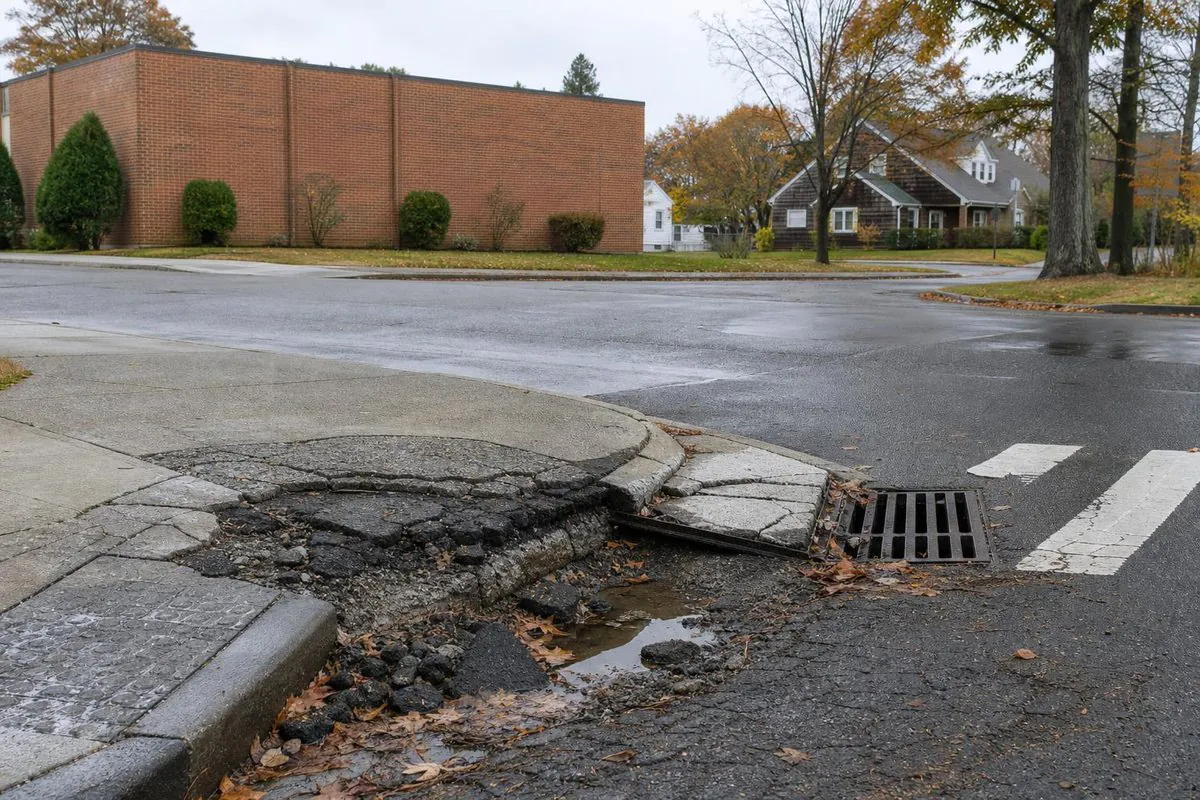
If you’re injured in Westchester County and you learn (or suspect) the defendant is a public agency—a city, town, village, school district, Westchester County, New York State, or a public authority—your case can shift onto a different procedural track than an injury claim against a private person or business.
That difference is not academic. New York gives many public entities special protections that function like gatekeeping rules: strict notice requirements, technical service methods, early sworn examinations, and shorter time limits. If you miss the first gate, you may never get to the part of the case where fault is evaluated.
This article is general information about New York personal-injury procedure as it commonly affects Westchester residents. The right steps and deadlines depend on the entity involved and the facts.
BILLY COOPER LAW

Why Westchester public-agency injury cases can be tricky
Westchester is a true “boundary county” in the downstate legal sense. It includes dense downtown corridors (White Plains, Yonkers, New Rochelle, Mount Vernon), suburban town/village networks, and a transportation grid where responsibility can change rapidly: a sidewalk maintained by a village, a roadway segment maintained by the County, and a nearby ramp or bridge maintained by the State.
NYSDOT’s Regional Offices information places Westchester County in NYSDOT’s Hudson Valley (Region 8). That doesn’t mean every road or structure is state-controlled, but it’s a practical clue that some roads, bridges, and work records may be handled through the Region 8 footprint. If the wrong entity is identified early, a Notice of Claim (or Court of Claims deadline) can expire while you are still “figuring it out.”
Westchester also has county-level operations and facilities that can be relevant in a case: the Westchester County Department of Public Safety describes responsibilities including patrolling county parkways and protecting county properties and facilities—helpful when you’re trying to identify which agency might have reports, logs, or other records connected to an incident.
Start with the core question: which “government” is it?
In many injury situations, people say “the government,” but public-agency cases depend on the exact defendant category. In a Westchester injury, the potentially responsible entity might be:
- A city/town/village (local municipality)
- Westchester County
- A school district or related school entity
- New York State (state agency, state employee acting within the scope of work, state-maintained property)
- A public authority/public benefit corporation (often has its own notice-and-limitations statute)
- The United States (federal facility/employee), which follows federal administrative-claim rules rather than New York’s notice-of-claim framework
The defendant category controls three practical decisions:
- Whether a Notice of Claim is required
- Where the case must be brought (e.g., Westchester Supreme Court versus the New York Court of Claims)
- What the earliest deadline is and how notice must be served
The “first deadline” problem: why the 90 days matters even when the lawsuit limit seems longer
For many New York negligence cases against private defendants, you’ll hear “three years.” CPLR § 214 includes a three-year limitations period for personal injury actions (with exceptions).
But public-entity procedure often adds an earlier clock. General Municipal Law § 50-e states that in a tort case where a notice of claim is required as a condition precedent to suit against a public corporation, the notice must be served within ninety days after the claim arises. In the real world, that ninety days can pass while you’re still getting medical care, missing work, and learning whether the location was controlled by a municipality, the County, the State, or an authority.
If the defendant is New York State, a separate track may apply: Court of Claims Act § 10 sets strict time limits for claims against the State (often a 90-day framework for negligence/unintentional tort claims, with the possibility of extending time by serving a Notice of Intention within that period). Court of Claims Act § 11 also contains technical service rules that can defeat a claim when done incorrectly.
A Westchester-specific reality: the responding agency may not be the maintaining agency
One of the most common early mistakes is assuming the entity that shows up is the entity that “owns” the case.
- The police agency that responds is not always the entity responsible for roadway maintenance.
- A public-school incident may involve overlapping school-district presentment/notice requirements.
- A bus, facility, or vehicle may appear “county” or “city,” but may actually be under a public authority with its own statute.
This is why location precision matters. As early as you safely can, capture the best possible “map-grade” facts:
- nearest address or cross-street
- direction of travel
- mile marker or exit number (if applicable)
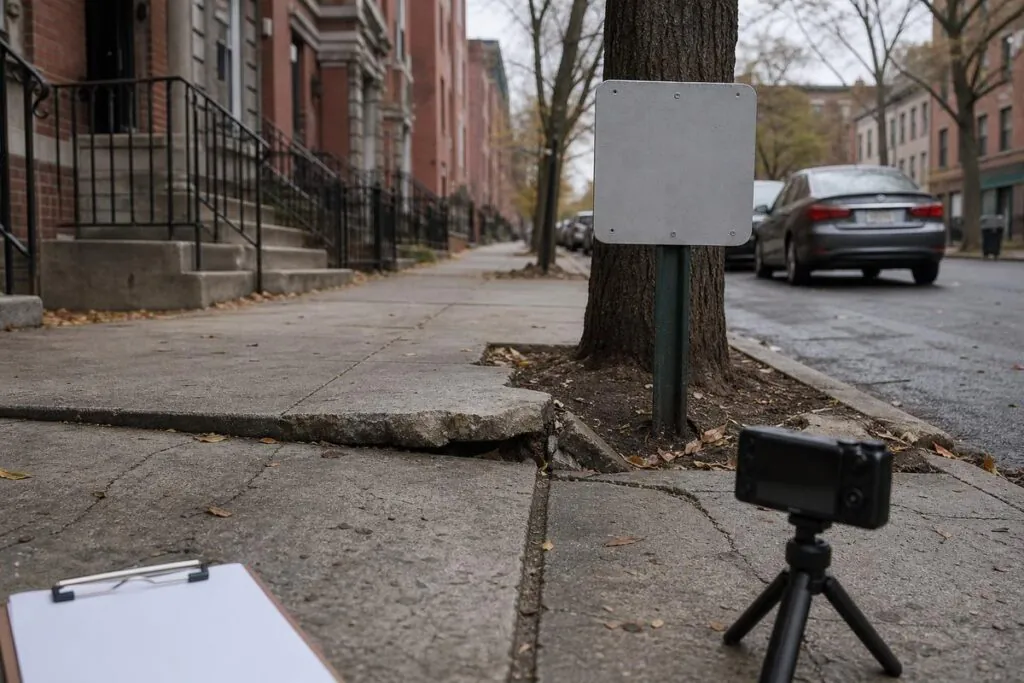
- photos that include street signs, route shields, building entrances, or platform identifiers
Those details support the key next step: confirming the correct defendant(s) before the earliest notice deadline expires.
What you can do early (without assuming wrongdoing)
You do not need to decide whether someone was negligent on day one. You can still take steps that protect your health and your options.
1) Treat the event like it will be reconstructed later. Write down what happened while it’s fresh. Don’t guess about details you don’t know—flag them as unknown.
2) Preserve your own evidence. Save shoes/clothing (slip-and-fall), helmets (bike/scooter), and damaged items. Take scene photos that show scale and context.
3) Identify the record custodian. Many public-entity cases hinge on records: incident reports, dispatch logs, maintenance work orders, inspection schedules, or video. FOIL can sometimes help you identify what records exist and who has them, subject to exemptions.
New York’s FOIL framework is in Public Officers Law §§ 87 and 89, and the Committee on Open Government provides statewide FOIL guidance and links to FOIL text and regulations.
4) Be prepared for early municipal procedures. Where General Municipal Law applies, a municipality may demand a sworn examination (a “50-h hearing”) under General Municipal Law § 50-h. It’s a formal process that can shape the case. Preparation matters.
If service goes through the Secretary of State, technical steps can matter
In some cases, a Notice of Claim may be served on the New York Secretary of State as statutory agent for a public corporation. The Department of State provides public instructions that emphasize practical details such as duplicate copies, in-person delivery at the Albany office, and a statutory fee (and that service by mail is not permitted for that method). Even when you have the correct deadline, a service mistake can create a separate problem.
Where Westchester cases are typically filed
Many Westchester civil injury cases proceed in Supreme Court, Westchester County, in White Plains. New York Courts lists the courthouse location as 111 Dr. Martin Luther King Jr Blvd, White Plains, NY 10601, and provides general courthouse information.
If the defendant is New York State, the case is generally governed by the New York Court of Claims framework and the Court of Claims Act’s timing and service requirements.
How Billy Cooper Law can help with a public-agency injury claim
If a public agency may be responsible for your injury, it can be difficult to know which entity to contact and how quickly you need to act. The agency that owns a property may be different from the organization that operates or maintains it. At Billy Cooper Law, we investigate those relationships and the notice requirements that may affect your claim.
We review the location, incident records, witnesses, photographs, and medical information, and identify the potential defendants and relevant deadlines. We work to preserve available evidence while assessing the rules that apply to the specific agency and claim. We can explain your options and help you understand the next steps before a deadline is missed or important evidence disappears.
From our White Plains office at 245 Main Street, Suite 510, we serve injured clients in Westchester and other New York communities. Our team brings more than 75 years of combined experience, and William H. Cooper received Super Lawyers recognition in 2024 and 2025. Marvin A. Cooper’s work on New York’s no-fault insurance law is part of the firm’s background. These qualifications and past multimillion-dollar results do not guarantee a result in a public-agency case.
Related Billy Cooper Law resources
- Westchester County, NY Personal Injury Lawyer
- Personal Injury
- Motor Vehicle Accidents
- Premises Liability
- Transportation Accidents
BILLY COOPER LAW
NOTABLE RESULTS
Billy Cooper Law publishes the following results. This broader public-agency injury outcome involved Bronx police misconduct, rather than a Westchester agency claim.
$6,000,000 settlement
Read more about these results
- $6,000,000 settlement: Innocent bystander seriously injured when police pursuing a suspect shot him in Bronx County. Read the source account.
Read the firm’s published results
Prior results do not guarantee a similar outcome. Each case is different and must be evaluated on its own facts.
Published Writings by William Cooper
Related reading on preserving video evidence in injury cases:
- When the Video Disappears: Liability, Missing Footage, and the Modern New York Injury Case — Billy Cooper, New York Law Journal, June 23, 2026.
WHAT OUR CLIENTS SAY
General feedback about working with Billy Cooper Law:
“Working with Mr. Cooper was a great experience. He is knowledgeable, understanding and great at what he does. I highly recommend Mr.Cooper.”
— M. M., Google review
“Billy handled a personal legal matter for me and his professionalism and legal knowledge was undoubtedly top notch and outstanding. However that which truly sets William apart is his experience, understanding of the situation and attentiveness which allowed this matter to be brought to a successful resolution quickly. I give Billy my highest recommendation. Thank you Billy.”
— J. R., Google review
Professional Recognition

Recognition applies to the named attorneys and selection years. See the linked profiles for details.
Public-agency injury claims in Westchester: FAQs
The FAQs below provide general information about New York rules that commonly affect Westchester residents when a public agency (or public authority) may be the defendant.
What is a Notice of Claim and why does it matter so much in Westchester public-agency cases?
A Notice of Claim is a formal notice New York law often requires before you can sue certain public entities. General Municipal Law § 50-e provides that when notice is required as a condition precedent in a tort case against a public corporation, the notice generally must be served within 90 days after the claim arises. In Westchester, that short clock can expire while you’re still learning whether the correct defendant is a city, town, village, Westchester County, or a school district.
A Notice of Claim must also include specific information (time/place/manner and the nature of the claim) and must be served using a legally compliant method. General Municipal Law § 50-i then adds conditions and a shorter time limit for bringing many tort actions against municipal defendants—commonly one year and ninety days—so Notice of Claim compliance is often the first make-or-break issue.
Sources: NYS Open Legislation | NYSenate.gov (General Municipal Law § 50-e); NYS Open Legislation | NYSenate.gov (General Municipal Law § 50-i).
When does the 90-day Notice of Claim deadline start running in New York?
General Municipal Law § 50-e states the notice must be served within ninety days after the claim “arises,” and it includes special language for wrongful death actions (where the ninety days runs from appointment of a representative of the decedent’s estate). For many non-wrongful-death injury cases, that means the 90 days is measured from the incident date—so it may run while you’re still in treatment and still identifying the correct government entity.
If the injury involves a public school or school district, Education Law § 3813 can overlay additional presentment requirements and also ties tort cases back to General Municipal Law notice rules. Because these are procedural “conditions precedent,” it’s safest to treat the earliest possible notice deadline as the controlling date until a lawyer confirms otherwise.
Sources: NYS Open Legislation | NYSenate.gov (General Municipal Law § 50-e); NYS Open Legislation | NYSenate.gov (Education Law § 3813).
What does a Notice of Claim need to say, and why is location detail especially important in Westchester?
General Municipal Law § 50-e requires a Notice of Claim to be written and sworn and to state core items including the time, place, and manner in which the claim arose and the nature of the claim. In Westchester, “place” is often the hardest part, because a familiar road name or nearby landmark doesn’t automatically tell you which entity maintained the exact spot that mattered.
A practical way to improve accuracy is to capture “map-grade” location proof: nearest address or cross-street, travel direction, ramp/exit numbers, and photos showing signs and landmarks. NYSDOT’s Regional Offices information places Westchester in Region 8 (Hudson Valley), which can help guide inquiry when a state-maintained asset may be involved. Precision helps ensure the right entity is placed on notice within the statutory time.
Sources: NYS Open Legislation | NYSenate.gov (General Municipal Law § 50-e); Regional Offices.
What is a “50-h hearing,” and why should claimants take it seriously?
A “50-h hearing” is a sworn examination a municipality may demand after a Notice of Claim is filed. General Municipal Law § 50-h describes the municipality’s right to examine the claimant about the occurrence and the extent of injuries or damages, and it sets procedural requirements for the demand and its timing. In practice, it can happen early in the life of a case—well before a typical deposition schedule in a private-defendant lawsuit.
Because the testimony is under oath, the safest approach is to treat it like a formal legal event: bring a clear timeline, avoid guessing about details you don’t know, and be consistent about location facts and medical follow-up. General Municipal Law § 50-i also ties municipal cases to specific pre-suit conditions, so the 50-h framework is part of the broader “public-entity procedure” that claimants should plan for.
Sources: NYS Open Legislation | NYSenate.gov (General Municipal Law § 50-h); NYS Open Legislation | NYSenate.gov (General Municipal Law § 50-i).
Can I file a late Notice of Claim if I missed the 90 days?
Sometimes, but it is not automatic. General Municipal Law § 50-e(5) authorizes courts, in their discretion, to extend the time to serve a notice of claim and directs courts to consider factors including whether the public corporation acquired actual knowledge of essential facts and whether the delay substantially prejudiced the defense.
New York’s Court of Appeals has emphasized that “substantial prejudice” must be supported by record evidence, not speculation. In Matter of Newcomb v Middle Country Cent. Sch. Dist. (2016), the Court explained an approach in which a petitioner makes an initial showing of no substantial prejudice and the public corporation must respond with a particularized evidentiary showing. The key practical point is that waiting generally reduces options, especially when video, logs, and witness memories are time-sensitive.
Sources: NYS Open Legislation | NYSenate.gov (General Municipal Law § 50-e); Matter of Newcomb v Middle Country Cent. Sch. Dist. (2016 NY Slip Op 08581).
If the defendant is New York State, what deadlines and service rules should I know about?
Claims against New York State are typically governed by the Court of Claims Act rather than the municipal Notice of Claim framework. Court of Claims Act § 10 sets time limits that often require a negligence/unintentional tort claim to be filed and served within 90 days after accrual, unless a Notice of Intention is timely served (which can extend the time to file and serve the claim). The New York Courts Court of Claims FAQ summarizes these concepts and stresses that proper service is central.
Court of Claims Act § 11 adds technical requirements: service on the Attorney General must be made by an authorized method, and certified mail service is not complete until received by the Attorney General. Because these rules are technical and unforgiving, a “close enough” approach can be dangerous.
Sources: NYS Open Legislation | NYSenate.gov (Court of Claims Act § 10); NYS Open Legislation | NYSenate.gov (Court of Claims Act § 11); Frequently Asked Questions | New York Courts.
Do public authorities have different notice rules than Westchester municipalities?
In a Westchester setting, this matters because a vehicle, facility, or transit-related entity may not be a city or county department even if it “feels” governmental. The safest approach is to identify the exact legal entity early and calendar the earliest deadline while that identification is being confirmed. Waiting for clarity can be exactly how a valid claim becomes time-barred.
Sources: NYS Open Legislation | NYSenate.gov (Public Authorities Law § 1276); NYS Open Legislation | NYSenate.gov (General Municipal Law § 50-e).
Can FOIL help me request records after a public-agency injury in Westchester?
FOIL can help you learn what records exist and which agency is the custodian, subject to statutory exemptions and redactions. Public Officers Law § 87 addresses access to agency records, and Public Officers Law § 89 addresses general provisions and procedures. The Committee on Open Government’s FOIL resource page also provides statewide guidance and links to FOIL text and FOIL-related regulations.
FOIL is not the same as litigation discovery, and it doesn’t automatically preserve time-sensitive evidence like video. Still, a focused FOIL request—using a specific date/time window, exact location, and record categories (incident report, work orders, inspection logs, video)—can reduce “wrong agency, wrong request” delays. When a Notice of Claim clock may already be running, reducing uncertainty about records and custodians can matter.
Sources: NYS Open Legislation | NYSenate.gov (Public Officers Law § 87); NYS Open Legislation | NYSenate.gov (Public Officers Law § 89); Freedom of Information Law | Open Government.
How do I request records if the New York State Police investigated the incident?
If the New York State Police investigated, the State Police FOIL guidance describes how to request records and what information helps locate them (for example, incident number, date/time, and location). This can matter in Westchester cases where a state response occurred on a state-linked corridor or at a state-involved facility, but you still need to identify which entity is responsible for the condition or conduct at issue.
Keep in mind that FOIL requests can take time, and some records may be withheld or redacted under FOIL exemptions. FOIL’s statutory framework appears in Public Officers Law §§ 87 and 89. While records requests are pending, preserve your own evidence and calendar legal deadlines—because waiting for an agency response is not the same thing as complying with notice-of-claim or Court of Claims requirements.
Sources: FOIL Requests | New York State Police; NYS Open Legislation | NYSenate.gov (Public Officers Law § 87); NYS Open Legislation | NYSenate.gov (Public Officers Law § 89).
What medical documentation steps matter most in the first weeks after an accident?
Start with health and safety: follow discharge instructions and seek medical advice promptly if symptoms change. The CDC notes that some mild TBI/concussion symptoms may appear right away while others may not appear for hours or days after injury—so delayed symptoms after a fall or crash should be taken seriously. For neck pain and whiplash-type complaints, clinical guidelines exist to inform evaluation and management.
From a documentation standpoint, build a clean timeline: ER notes, imaging orders/results, referrals, prescriptions, therapy records, and work restrictions. HHS explains that, with few exceptions, HIPAA gives individuals the right to inspect, review, and receive copies of their medical and billing records from covered providers and health plans. Accurate records can help you avoid gaps and confusion if sworn testimony or early deadlines become an issue.
Sources: Symptoms of Mild TBI and Concussion | Traumatic Brain Injury & Concussion | CDC; Your Medical Records | HHS.gov; The Treatment of Neck Pain-Associated Disorders and Whiplash-Associated Disorders: A Clinical Practice Guideline – PubMed.
BILLY COOPER LAW


Get the Answers You Need
At Billy Cooper Law, every day we renew our pledge to help injured people get the justice and compensation they deserve. We have a reputation throughout New York and nationally for standing up for our clients, and we take that responsibility seriously by approaching every case with preparation, persistence, and an unwavering commitment to results.

Related Billy Cooper Law Videos and Social Posts