
by Billy Cooper, Esq.,
When people hear that a steering-wheel-free taxi has been approved to carry passengers, the conversation usually goes in one of two directions. Some people can’t wait to try it. Others say they’ll never get inside one.
I’m interested in something different.
I want to know what happens after the first serious crash.
Not because I expect autonomous vehicles to fail every day. I don’t. Every major advance in automotive safety has been met with skepticism at first, and many of those advances have ultimately saved lives. Seat belts, airbags, stability control, and automatic emergency braking all changed the way we travel for the better.
I hope autonomous vehicles eventually join that list.
But I’ve also spent enough years handling injury cases to know that every new technology creates a learning curve. It doesn’t matter whether we’re talking about pharmaceuticals, construction equipment, or automobiles. The first real-world incidents almost always reveal situations that engineers never fully anticipated in testing.
That’s why the legal questions surrounding robotaxis deserve just as much attention as the technology itself.
For generations, investigating a crash meant trying to understand what a human being did. Was someone speeding? Looking at a phone? Too tired to react? Did a driver simply make a poor decision in a split second?
A vehicle that drives itself changes the conversation.
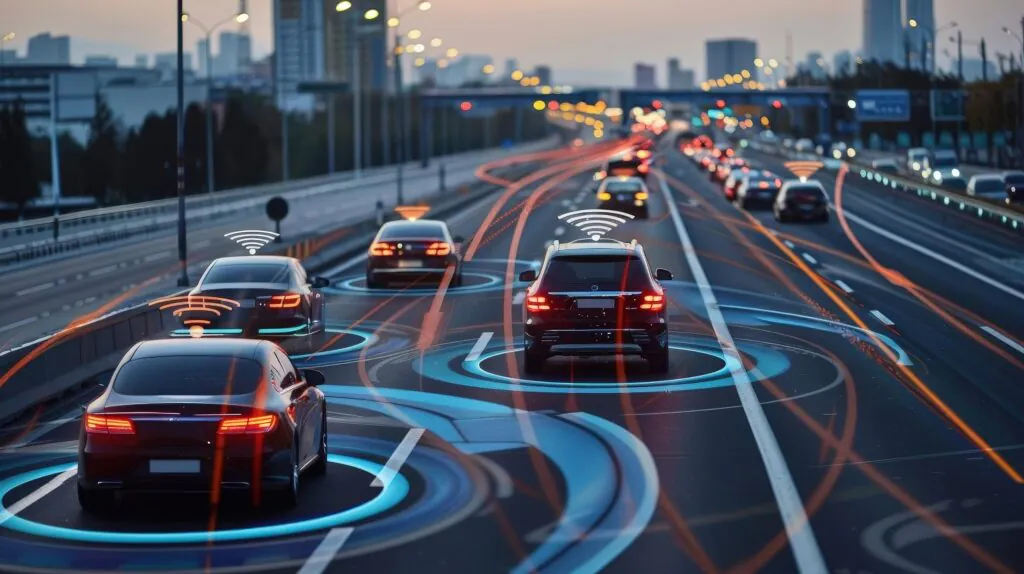
Instead of focusing only on human conduct, investigators may eventually find themselves examining what the vehicle “saw,” how it interpreted that information, and whether it responded the way it was designed to. Those aren’t questions most passengers will ever think about while they’re riding across town. They’re questions that only become important when something goes wrong.
That’s one reason I worry people may assume the vehicle itself contains all the answers.
It doesn’t.
Evidence still has to be gathered. It still has to be preserved. In fact, there may be more evidence than ever before. Beyond photographs, witness statements, and police reports, autonomous vehicles may generate electronic records showing what their cameras detected, how sensors interpreted the environment, and what decisions the software made in the seconds before an impact.
That information could tell an important story.
It could also become much harder to reconstruct if nobody moves quickly to preserve it.
Another point worth remembering is that government approval isn’t the same thing as a lifetime guarantee. Federal regulators determined that Zoox met the requirements necessary to begin limited commercial deployment. That’s a significant milestone, but it isn’t a promise that every future trip will be uneventful.
History doesn’t really work that way.
Every meaningful transportation innovation has continued to evolve after people began using it in everyday life. Unexpected situations appear. Manufacturers issue updates. Regulators collect more data. Engineers make improvements. That’s not evidence that the technology has failed. It’s evidence that innovation continues after the product reaches the public.
The legal system evolves in much the same way.
Courts aren’t asked whether autonomous vehicles are exciting or whether they represent the future. Those are questions for consumers and technology companies. Courts deal with something much narrower. They ask whether reasonable care was exercised. They ask whether a danger could have been anticipated. They ask whether an injury could have been prevented.
Those principles haven’t changed in a very long time.
Nor should they.
I suspect that ten years from now, seeing a vehicle with no steering wheel may seem as ordinary as seeing a car with a backup camera today. Technology has a way of becoming routine faster than most of us expect.
But the arrival of autonomous transportation shouldn’t change something even more fundamental.
Companies that place new technology on public roads still owe the public a duty to make it as safe as reasonably possible. When that technology fails and someone is seriously hurt, the questions that follow are the same ones injury lawyers have always asked.
What happened?
Could it have been prevented?
And who should be held responsible?
The steering wheel may have disappeared.
Accountability hasn’t.

Get the Answers You Need
At Billy Cooper Law, every day we renew our pledge to help injured people get the justice and compensation they deserve. We have a reputation throughout New York and nationally for standing up for our clients, and we take that responsibility seriously by approaching every case with preparation, persistence, and an unwavering commitment to results.