



New York Transportation Accidents Lawyer
Video Transcript
Public transportation injury cases are very different from other accidents.
When you are dealing with public transportation, the public transportation is owned by a municipality, meaning it’s owned by a city, a town, or a village, or a state.
The rules, the laws, and the time that you have as an injured person to bring a lawsuit is incredibly different.
You only have 90 days instead of three years.
90 days to file something called a notice of claim.
If you miss that 90-day window, even if you were unaware of it, then you are precluded, more often than not, from bringing a lawsuit or getting money damages in the state of New York.
If you are injured in public transit, one of the benefits of it being on public transit is that there are usually many people around who work for the municipality who can document what happened.
So if you’re injured on a train, for example, there are conductors and other workers.
What you need to do is, again, document everything.
Make sure there’s an incident or accident report made out.
Find out if there are any witnesses to the occurrence.
Make sure that there are photographs taken.
Find out if there’s any video available.
And the reason for this is that even though they’re a municipality, they are not going to want to help you.
They’re going to want to prove either why you did whatever you did, it was your own fault, or why you’re not entitled to money.
If you are injured in an accident on mass transit, time is incredibly important.
Contact our office.
Speak with me about the situation.
We will make sure that your rights are properly protected.
If you don’t do that and don’t contact someone immediately when it comes to a mass transit situation, you may be locked out forever.
When a serious transportation accident occurs, the consequences are often catastrophic. Crashes involving buses, commercial trucks, trains, subways, and airplanes frequently result in life-altering injuries or wrongful death. These cases are legally complex, highly regulated, and aggressively defended by large corporations and government entities.
At Billy Cooper Law, we represent individuals and families whose lives have been permanently changed by transportation negligence. Our firm is committed to protecting injury victims, pursuing full financial recovery, and holding powerful transportation companies accountable. If you or someone you love has suffered harm in a transportation accident, immediate legal action is critical.
BILLY COOPER LAW

After Suffering Catastrophic Injuries in a Transportation Accident
Transportation accidents involving large carriers typically produce severe, high-impact injuries due to the size, speed, and force involved. Victims are often left facing overwhelming medical challenges and financial uncertainty.
Common Catastrophic Injuries
- Traumatic brain injuries (TBI)
- Spinal cord injuries and paralysis
- Severe orthopedic fractures
- Internal organ damage
- Burns and disfigurement
- Traumatic amputations
- Permanent cognitive impairment
Beyond the physical injuries, victims frequently experience emotional trauma, loss of independence, inability to return to work, and long-term rehabilitation needs.
Unlike ordinary car accidents, transportation cases often involve commercial insurance carriers, regulatory compliance issues, and multiple layers of liability. Evidence such as electronic logging device (ELD) data, flight data recorders, surveillance footage, dispatch communications, and maintenance records can disappear quickly if not preserved.
Billy Cooper Law acts immediately to secure and protect critical evidence, coordinate with medical experts, and begin building a comprehensive damages model that reflects the true lifetime impact of the injuries.
Bus Accident Litigation
Bus accidents can involve public transit systems, charter buses, tour buses, school buses, and private shuttle services. Because buses carry multiple passengers and often operate in dense urban environments, the potential for serious injury is significant.
Common causes of bus accidents include:
- Driver fatigue or distraction
- Inadequate driver training
- Speeding or reckless operation
- Failure to maintain braking systems
- Tire blowouts
- Poor vehicle maintenance
- Unsafe loading or overcrowding
When a public transit system is involved, the claim may be filed against a government entity. These cases often require compliance with strict notice requirements and shorter filing deadlines. Failing to act promptly can permanently bar recovery.
Billy Cooper Law thoroughly investigates driver conduct, maintenance records, safety compliance, and supervisory practices to determine whether negligence occurred at the individual or corporate level.
Truck Accident Litigation
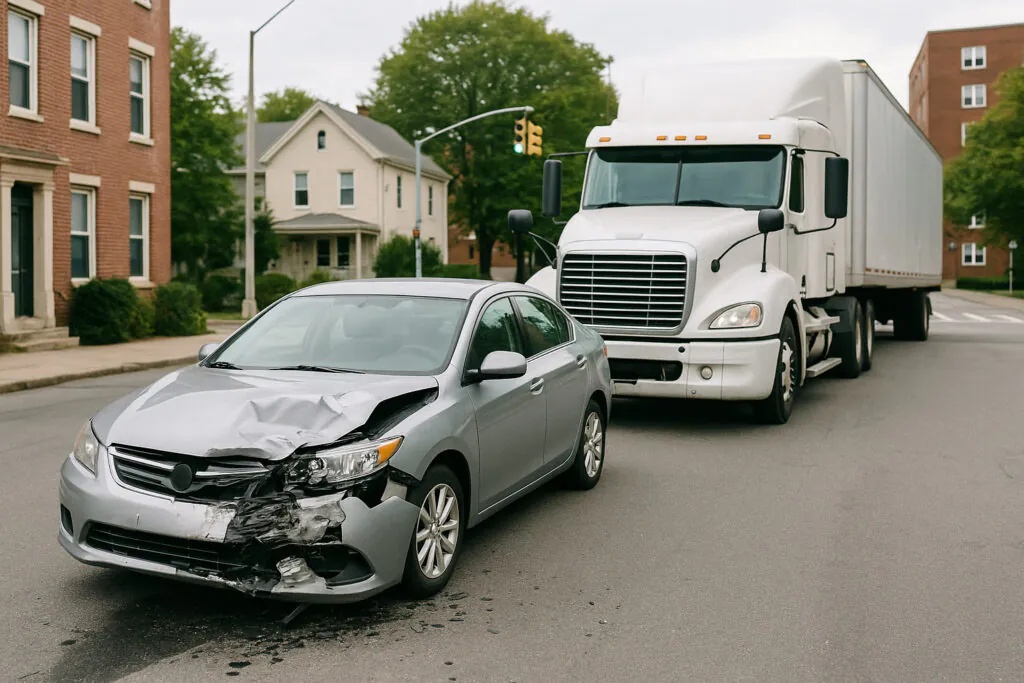
Commercial truck accidents are among the most complex personal injury cases. Collisions involving 18-wheelers, tractor-trailers, delivery trucks, and other heavy commercial vehicles frequently result in catastrophic or fatal injuries.
Trucking accident cases often involve:
- Jackknife accidents
- Rear-end collisions
- Underride or override crashes
- Multi-vehicle pileups
- Distracted or fatigued drivers
- Overloaded cargo
- Improperly secured freight
- Brake system failures
The trucking industry is regulated by the Federal Motor Carrier Safety Administration, which sets safety standards for driver hours, maintenance requirements, and cargo securement. Violations of these regulations can be powerful evidence of negligence.
Liability may extend beyond the driver to the trucking company, fleet owner, maintenance contractor, cargo loader, or equipment manufacturer. In many cases, the trucking company’s insurer moves quickly to limit exposure. Early legal intervention is critical to preserve logbooks, onboard data, and inspection records.
Billy Cooper Law prepares every truck accident case as though it will proceed to trial, ensuring leverage during settlement negotiations.
Train and Subway Accident Claims
Train and subway systems transport thousands of passengers daily. When safety protocols fail, the results can be devastating.
Rail-related transportation accidents may include:
- Train derailments
- Subway collisions
- Passenger platform injuries
- Signal failures
- Railroad crossing crashes
- Mechanical malfunctions
Large rail incidents are frequently investigated by the National Transportation Safety Board. However, while federal investigations determine causes, they do not secure compensation for victims.
Claims involving commuter rail or subway systems may involve government agencies or regional transit authorities. These entities often benefit from statutory protections and procedural requirements that make early legal representation essential.
Billy Cooper Law evaluates operational records, maintenance histories, signaling systems, employee training, and compliance procedures to determine whether negligence contributed to the accident.
Airplane and Aviation Accident Representation
Aviation accident cases are highly technical and governed by complex federal regulations. Whether involving a commercial airline, private aircraft, charter service, or small plane, aviation crashes often result in severe injury or loss of life.
Aviation claims may arise from:
- Pilot error
- Mechanical failure
- Inadequate maintenance
- Defective aircraft components
- Air traffic control negligence
- Weather-related operational decisions
These cases often require expert analysis of cockpit voice recorders, flight data recorders, maintenance documentation, and compliance with aviation safety standards.
Aviation injury litigation may involve airlines, maintenance contractors, aircraft manufacturers, or other aviation service providers. Billy Cooper Law works with industry experts to uncover systemic failures and pursue accountability.
Determining Liability in Transportation Accidents
One of the most critical questions in any transportation accident case is: Who is legally responsible?
Liability May Involve Multiple Parties
- The vehicle operator
- The transportation company
- Fleet management companies
- Maintenance providers
- Equipment manufacturers
- Government transit authorities
In certain crashes involving rideshare vehicles, corporate insurance policies from Uber or Lyft may apply depending on whether the driver was actively transporting a passenger.
Transportation accident cases often require extensive investigation, accident reconstruction, and expert testimony to establish fault and prove negligence.
BILLY COOPER LAW
What Is a Transportation Accident Injury Claim Worth?
The value of a transportation injury claim depends on multiple factors, including the severity and permanence of the injuries.
Compensation may include:
- Emergency and long-term medical expenses
- Future medical care and rehabilitation
- Lost wages and loss of earning capacity
- Permanent disability accommodations
- Pain and suffering
- Emotional distress
- Loss of enjoyment of life
- Punitive damages in cases of extreme negligence
- Wrongful death damages for surviving family members
Catastrophic injury cases require detailed economic analysis to calculate future losses over a lifetime. Insurance companies often attempt to minimize these damages. Billy Cooper Law builds comprehensive damages models supported by medical experts, vocational specialists, and economic analysts.
Wrongful Death Transportation Accident Claims
When a transportation accident results in fatal injuries, surviving family members may pursue a wrongful death claim. These cases seek both financial accountability and a measure of justice.
Recoverable damages may include:
- Funeral and burial expenses
- Loss of financial support
- Loss of future earnings
- Loss of companionship and guidance
- Emotional suffering
Commercial carriers and transportation corporations frequently contest wrongful death claims aggressively. Billy Cooper Law stands with families during this difficult time and pursues full compensation with diligence and compassion.
Filing Deadlines and Legal Time Limits
Every transportation accident case is subject to statutes of limitation. These deadlines vary depending on:
- The state where the accident occurred
- The type of transportation involved
- Whether a government entity is a defendant
Claims against public transit systems may require formal notice within a short time period. Missing these deadlines can permanently eliminate your right to recover compensation.
Prompt legal consultation allows evidence to be preserved and procedural requirements to be met.
Why Choose Billy Cooper Law?
Transportation accident cases demand urgency, technical knowledge, and aggressive advocacy. At Billy Cooper Law, we represent individuals and families facing catastrophic injuries and wrongful death with strategic, trial-ready representation.
Focused on High-Stakes Cases
We handle serious transportation accidents involving buses, commercial trucks, trains, subways, and airplanes. These complex, high-value cases require deep investigation and the ability to stand up to powerful transportation companies and insurers.
Immediate Evidence Protection
After a crash, companies move quickly to protect themselves. We act just as fast — preserving electronic data, maintenance records, surveillance footage, and coordinating independent accident reconstruction to protect your claim from the start.
Regulatory and Technical Experience
Transportation cases often involve safety regulations enforced by the Federal Motor Carrier Safety Administration and investigations by the National Transportation Safety Board. We understand how to use regulatory violations and technical findings to prove negligence.
Full Lifetime Damages Evaluation
Catastrophic injuries require more than adding up current medical bills. We work with medical and financial experts to calculate long-term care costs, lost earning capacity, and the full future impact of the injury.
Trial-Ready Strategy
We prepare every case as if it will go to trial. That preparation strengthens negotiations and ensures we do not accept undervalued settlements.
Client-Focused Advocacy
Behind every case is a family in crisis. We provide clear communication, honest guidance, and relentless representation — combining compassion with a strong pursuit of justice.
Frequently Asked Questions
These answers address common transportation accidents questions under New York law. The facts and applicable rules can change the answer. This is general information, not personal legal or medical advice.
Are bus, train, rideshare, and airplane injury claims governed by the same rules?
No. The type of transportation, the operator, the place of the incident, and whether a public entity is involved can change the legal and insurance framework. Rules for a car passenger should not simply be copied into a rail or aviation claim.
Preserve the ticket or ride receipt, route, time, vehicle or carriage information, and operator details. An early review should identify the correct parties and deadlines before comparing potential compensation. Do not assume a three-year deadline or one insurance policy applies to every mode of travel.
Sources: NY DFS: Consumer questions about no-fault insurance; NY Public Authorities Law §1276: claims against the MTA and subsidiary distinctions; NY Vehicle and Traffic Law §1693: TNC insurance.
Can I bring a claim against a public transportation authority?
Who pays medical bills if I am injured as a passenger?
The answer depends on the vehicle and coverage. Eligible car occupants generally look first to the vehicle’s no-fault insurer for covered economic losses. That rule should not be treated as an automatic answer for every bus, rail, or aviation injury.
Identify the carrier and insurance contact promptly, keep the claim information, and submit required notices on time. New York’s general no-fault notice period is 30 days, with a specified justification exception. If coverage is disputed or unavailable, have alternative benefits and liability claims evaluated.
Sources: NY DFS: Consumer questions about no-fault insurance; NY Insurance Law §5102: no-fault and serious-injury definitions.
Can anxiety, nightmares, or fear of travel after a crash be a real injury?
Yes, psychological symptoms after a serious incident deserve attention. A meta-analysis in Medicine studied PTSD among road-traffic accident survivors, showing that mental-health effects are an important part of the injury picture. It cannot establish that any particular person has PTSD.
Discuss persistent or distressing symptoms with a qualified healthcare professional. Keep records of evaluation, treatment, and functional effects. Whether psychological harm is legally recoverable depends on the claim and evidence; a research statistic is not a diagnosis or damages calculation.
Sources: Medicine (2018): PTSD after road-traffic accidents, meta-analysis; U.S. HHS: Your medical records; NY CPLR §4111: past and future injury damages.
What evidence should I preserve after a bus or train accident?
Record the date, time, route, station or stop, vehicle details, and operator information. Keep tickets, payment records, photographs taken safely, witness contacts, and copies of any incident reports or messages. Tell counsel about possible onboard or station cameras promptly.
The claim may involve different evidence if you were injured during boarding, inside the vehicle, in a collision, or at a station. Do not enter restricted areas or interfere with an investigation. Medical records and a clear account of how the injury happened remain important.
Sources: U.S. HHS: Your medical records; NY Public Authorities Law §1276: claims against the MTA and subsidiary distinctions.
Who besides the driver or operator might be responsible?
Depending on the evidence, a claim may involve an operating company, a maintenance contractor, a vehicle or component manufacturer, or a party responsible for a dangerous property condition. Each requires a supported legal basis; being connected with the journey is not enough.
Preserve information identifying the vehicle and companies involved. Different parties can have different defenses, insurance, and deadlines. The investigation should determine how each alleged failure contributed to the incident rather than simply naming every business associated with it.
Sources: Adams v. Genie Industries, NY Court of Appeals (2010); Dorsa v. National Amusements: creation or notice of a hazard; NY Public Authorities Law §1276: claims against the MTA and subsidiary distinctions.
How long do I have to file a transportation-accident claim?
There is no single deadline covering every transportation case. Many ordinary New York negligence claims have a three-year period, but claims involving public entities may require much earlier notice and a shorter lawsuit period. Other transportation regimes can impose different requirements.
Do not wait for a carrier’s investigation or settlement discussions to finish before checking your deadline. The incident date, operator’s legal identity, mode of travel, and any relevant ticket or policy should be reviewed promptly.
Sources: NY CPLR §214: personal-injury filing periods; NY General Municipal Law §50-e; NY Public Authorities Law §1276: claims against the MTA and subsidiary distinctions.
What if the transportation company says I contributed to the accident?
That contention needs to be evaluated against the actual evidence and governing law. New York’s general comparative-fault rule ordinarily reduces damages for a claimant’s share of responsibility. The current exception for personal-injury actions subject to Insurance Law Article 51 can instead bar recovery when the claimant’s fault exceeds the opposing parties’ combined fault.
The exception should not be applied automatically to every train, plane, bus, or other transportation claim. The 2026 law’s applicability and the nature of the action matter. An initial insurance assessment is not a final determination.
Sources: NY CPLR §1411: comparative fault; Enacted 2026 budget, Part EE: applicability of motor-vehicle changes.
How is a serious transportation-injury claim valued?
The analysis should account for the proven injury and legally recoverable consequences, including past and future care, lost earnings, reduced earning ability, and pain and suffering where available. It also requires evidence that a responsible party caused those losses.
A high medical bill or a transportation company’s size does not establish a particular payout. Supported prognosis, future needs, disputed liability, insurance, and applicable legal limits can all matter. The effect on the individual must be documented rather than inferred from another crash.
Sources: NY CPLR §4111: past and future injury damages; NY Insurance Law §5104: limits on covered motor-vehicle claims.
What should I check before accepting an offer from a transportation insurer?
Understand whether the proposed release ends all injury claims and whether the medical outlook and future needs have been adequately evaluated. The first offer may not explain how liens, attorney fees, or expenses affect the amount you receive.
Ask which parties and claims would be released and whether separate insurance or benefit obligations need consent or coordination. Keep all correspondence, and do not assume negotiations pause a notice or lawsuit deadline. A case-specific review is more useful than an online settlement average.
Sources: NY CPLR §4111: past and future injury damages; New York Rules of Professional Conduct, Rule 1.5: fees and expenses; NY General Municipal Law §50-e.
Contact Billy Cooper Law Today
If you or a loved one has been injured in a bus, truck, train, subway, or airplane accident, do not wait to seek legal guidance.
Transportation companies and insurers begin protecting themselves immediately. You deserve someone protecting you.
Contact Billy Cooper Law today for a confidential case evaluation. We will:
- Review the facts of your case
- Explain your legal options
- Identify potential liable parties
- Outline the next steps clearly and honestly
There is no obligation to move forward — just informed guidance when you need it most.
When transportation negligence causes catastrophic harm, Billy Cooper Law stands ready to fight for accountability and maximum compensation.
BILLY COOPER LAW
Frequently Asked Question Videos

Can You Sue the New York MTA After a Subway, Bus, or Train Injury? | Billy Cooper Law
Can You Sue the New York MTA After a Subway, Bus, or Train Injury? | Billy Cooper Law
Video Transcript
If you were injured as a result of something that happened on an MTA owned entity, such as a subway, a bus, a train, you can bring a lawsuit against the MTA. But remember, the MTA, the Metropolitan Transit Authority, is owned and maintained by the city of New York, which means as a municipality, you only have 90 days to file a notice of claim and then a year and 90 days to start a lawsuit.
If you are injured in an accident on Mass Transit, contact our office. We will make sure that your rights are properly protected.

What is a Notice of Claim in New York? | Billy Cooper Law
What is a Notice of Claim in New York? | Billy Cooper Law
Video Transcript
A notice of claim is a very simple document, but an incredibly important document that locks you in within the 90-day time frame to bring a lawsuit against a municipality. If you do not file a notice of claim or have an attorney file a notice of claim on your behalf and then you try and do something after that 90-day period, you will be blocked.
You will not be able to get any money. And even if you were horribly injured, you can never do anything against the municipal defendant. If you are injured in an accident on mass transit, contact our office. We will make sure that your rights are properly protected.

What Types of Injuries Can Happen on Public Transportation? | Billy Cooper Law
What Types of Injuries Can Happen on Public Transportation? | Billy Cooper Law
Video Transcript
Public transportation injuries can result from anything ranging from a slip and fall on a subway or train platform to being injured on a bus that improperly stops short to a bus which fails to lower or rise properly when dropping off or picking up passengers. There’s a multitude of ways in which a municipal defendant, which runs some sort of transport company, can result in injuries to an individual.
If you are injured in an accident on mass transit, contact our office. We will make sure that your rights are properly protected.

Can You Sue If You Slip and Fall on a Bus or Train Platform? | Billy Cooper Law
Can You Sue If You Slip and Fall on a Bus or Train Platform? | Billy Cooper Law
Video Transcript
If you slip on a platform or slip on a bus, you may have legal action available to you. It is very fact-dependent, but by contacting our office, we will be able to assist you in figuring out if those facts allow you to bring a lawsuit. And if they do, we will make sure that your notice of claim is filed in a timely manner and that a lawsuit is filed in a timely manner.

Can You Recover Lost Wages After a Mass Transit Accident? | Billy Cooper Law
Can You Recover Lost Wages After a Mass Transit Accident? | Billy Cooper Law
Video Transcript
Can you recover lost wages if you’re injured in mass transit? The answer is yes, if it can be proved that as a result of that exact injury, you have lost time and lost wages from your job. By reaching out to our firm, we will be able to determine if all of the factors exist to get you a recovery for your lost wages, and we will make sure to maximize that for you.

Are There Damage Caps in New York Personal Injury Cases? | Billy Cooper Law
Are There Damage Caps in New York Personal Injury Cases? | Billy Cooper Law
Video Transcript
In the state of New York, there are no caps or limits on any damages. The only limits usually are based upon the insurance policy that is in place. When it comes to mass transit, the municipal defendants for all of the challenges they may pose typically have much larger insurance policies or self-insured retentions in place, meaning that the dollar amounts available are much greater, but there are no official caps or limits.
If you were injured in an accident on mass transit, contact our office. We will make sure that your rights are properly protected.

Why Do Municipal Injury Cases Take Longer Than Other Personal Injury Cases? | Billy Cooper Law
Why Do Municipal Injury Cases Take Longer Than Other Personal Injury Cases? | Billy Cooper Law
Video Transcript
Cases against the municipalities oftentimes last much longer and go to trial more frequently than cases against privately owned entities that have private insurance. In other words, the municipalities are usually self-insured, which means even if you want to resolve the case with them, they need to get approval from the board that works for the municipality.
That can be more difficult than dealing directly with a private insurance company. So even though most of the cases don’t go to trial, more cases against municipalities do than otherwise. If you are injured in an accident on mass transit, contact our office. We will make sure that your rights are properly protected.

What Evidence Do You Need After a Mass Transit Accident? | Billy Cooper Law
What Evidence Do You Need After a Mass Transit Accident? | Billy Cooper Law
Video Transcript
The evidence in cases against municipalities, as with all other cases, is the ability to document everything. That means photographs and video and incident reports and eyewitnesses. And the credibility of the person who is injured is also incredibly significant and important.
If you are injured in an accident on mass transit, contact our office. We will make sure that your rights are properly protected.


Get the Answers You Need
At Billy Cooper Law, every day we renew our pledge to help injured people get the justice and compensation they deserve. We have a reputation throughout New York and nationally for standing up for our clients, and we take that responsibility seriously by approaching every case with preparation, persistence, and an unwavering commitment to results.