
New York Construction Fall Accident Lawyer
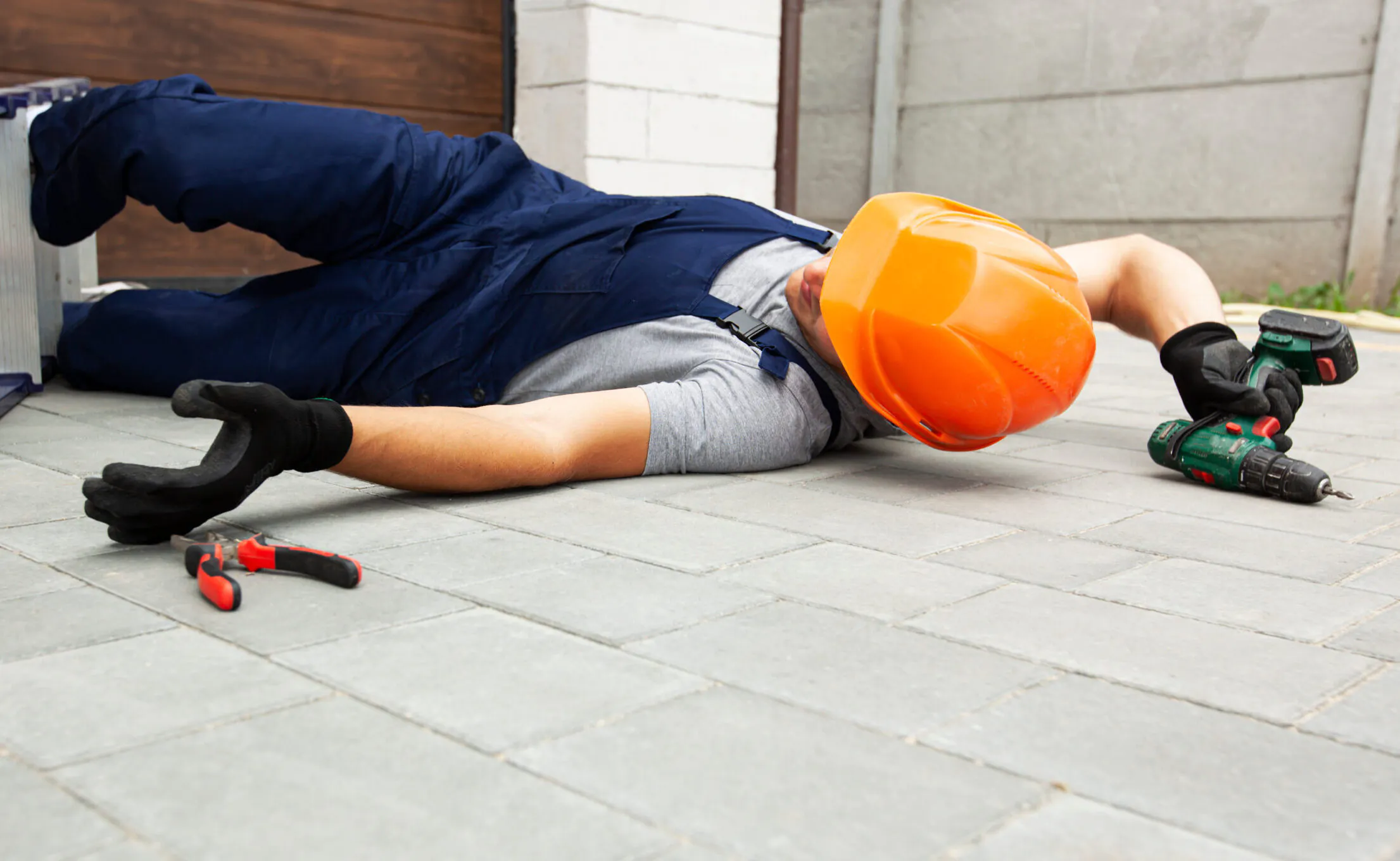
Falls are the leading cause of death and serious injury in the construction industry. If you’ve fallen from a ladder, scaffold, rooftop, or through an open floor on a job site, your injury may not be “just an accident”—it may be the result of negligence, safety violations, or defective equipment.
At Billy Cooper Law, we fight for injured construction workers and their families. We understand the devastating impact of fall-related injuries and are committed to holding the responsible parties accountable while pursuing the full compensation you deserve.
BILLY COOPER LAW

Why Construction Falls Are So Dangerous
High-Risk Work Environments
Construction sites are inherently hazardous environments. Workers perform their duties at significant heights, often on unstable structures or in areas lacking proper fall protection. These conditions make falls one of the most catastrophic types of construction accidents.
Preventable Safety Failures
Most construction falls are preventable. Common causes include:
- Missing or faulty guardrails
- Inadequate safety harnesses or anchor points
- Defective scaffolds or ladders
- Poorly maintained or slippery surfaces
- Openings without covers or barriers
- Lack of proper training and supervision
Unfortunately, safety corners are sometimes cut in the interest of speed or cost savings. When this happens, employers and contractors can—and should—be held accountable.
Determining Liability in Construction Fall Accidents
Multiple Parties May Be Responsible
Identifying the party (or parties) responsible for a fall on a construction site is rarely straightforward. Construction projects typically involve several entities, each with a legal duty to ensure safety.
Potentially Liable Parties
- General Contractors and Subcontractors: Required to maintain safe working conditions and enforce safety protocols on site.
- Property Owners: May be liable for failing to address known hazards on their property.
- Safety Managers or Site Supervisors: Responsible for enforcing OSHA standards and conducting regular inspections.
- Equipment Manufacturers or Rental Companies: Can be held accountable for providing defective or unsafe fall protection systems.
- Third-Party Vendors: Other companies operating on-site may contribute to unsafe conditions.
At Billy Cooper Law, we investigate your accident thoroughly to uncover every layer of liability and ensure no responsible party goes unchecked.
Your Legal Options After a Construction Fall
Filing a Workers’ Compensation Claim
Workers’ compensation is often the first step after a workplace injury. This type of claim typically covers:
- Medical expenses
- Temporary and permanent disability benefits
- Partial wage replacement
- Vocational rehabilitation
However, workers’ compensation does not provide compensation for pain and suffering or loss of future earnings beyond certain limits.
Filing a Third-Party Personal Injury Lawsuit
If a third party (not your employer) played a role in your accident, you may be eligible to file a personal injury lawsuit. This claim allows you to seek:
- Full lost income
- Medical treatment costs
- Pain and suffering
- Emotional distress
- Loss of future earning potential
- Punitive damages in cases of extreme negligence
Unlike workers’ comp, third-party claims are based on fault, which means we must prove that another party’s negligence caused your fall.
Pursuing a Product Liability Claim
If your injury was caused by a defective or malfunctioning piece of equipment—such as a faulty ladder, improperly designed scaffold, or failed safety harness—you may have grounds for a product liability claim. These claims focus on holding manufacturers, distributors, and suppliers responsible for placing unsafe products into the workplace.
BILLY COOPER LAW
Compensation You May Be Entitled To
Types of Recoverable Damages
Depending on the nature and circumstances of your case, you may be eligible to recover the following:
- Medical Expenses: Emergency treatment, surgeries, rehab, medication, and long-term care.
- Lost Wages: Income lost while recovering or due to an inability to work.
- Loss of Future Earnings: Compensation for a reduced ability to earn income over the long term.
- Pain and Suffering: Physical pain, psychological trauma, and emotional distress.
- Disfigurement or Permanent Disability: Compensation for life-altering injuries.
- Punitive Damages: In cases of gross negligence or willful misconduct, courts may award extra damages to punish wrongdoers.
Customized Compensation Strategy
Every case is unique. Our legal team carefully evaluates your injuries, long-term needs, and available legal avenues to pursue the maximum compensation possible—whether through settlement negotiations or trial.
Common Injuries from Construction Falls
Life-Altering Physical Trauma
Construction site falls can result in serious, sometimes permanent injuries that affect every aspect of a worker’s life. Some of the most common include:
- Spinal Cord Injuries: These may lead to paralysis or chronic pain and often require lifelong care.
- Traumatic Brain Injuries (TBI): Ranging from concussions to cognitive disabilities, TBIs can impact memory, communication, and personality.
- Broken Bones and Fractures: Legs, hips, arms, and ribs are often fractured in high-impact falls.
- Internal Organ Damage: Falls can puncture lungs, rupture organs, or cause internal bleeding.
- Back and Neck Injuries: Herniated discs and muscle injuries are common and can prevent workers from returning to manual labor.
- Disfigurement and Scarring: Visible injuries can have long-term psychological and emotional impacts.
Long-Term Consequences
Many injuries from construction falls require ongoing medical treatment, rehabilitation, and adjustments to lifestyle and employment. Our role is to ensure you receive full compensation to cover both current and future challenges.
Why Injured Workers Choose Billy Cooper Law
Our Experience with Construction Injury Cases
We know how construction sites operate—and we know where safety lapses tend to occur. This deep understanding allows us to uncover causes that might otherwise be overlooked and to build strong, evidence-backed cases on behalf of injured workers.
How We Work for You
- We investigate thoroughly, reviewing OSHA violations, job site safety records, and accident reports.
- We collaborate with top medical professionals and safety experts to support your case.
- We handle both workers’ comp and third-party claims, ensuring no compensation is left on the table.
- We negotiate assertively with insurance companies and defendants and are fully prepared to take your case to trial.
- We work on a contingency fee basis, meaning you pay no attorney’s fees unless we win your case.
At Billy Cooper Law, our mission is simple: to help injured workers and their families rebuild their lives after serious construction accidents.
Frequently Asked Questions
These answers address common construction fall accidents questions under New York law. The facts and applicable rules can change the answer. This is general information, not personal legal or medical advice.
Does every construction fall qualify for a Labor Law §240 claim?
No. Section 240 applies to specified work and elevation-related risks, and a claimant must prove that a statutory violation was a cause of the injury.
A fall by itself does not establish liability. The work, safety device, defendants, and accident mechanism require a fact-specific analysis.
Sources: NY Labor Law §240: elevation-related safety protections; Cioffi v. Target Corp.: Labor Law §240 causation and sole-proximate-cause analysis.
Can I receive workers’ compensation and also bring a construction-injury lawsuit?
Potentially. Workers’ compensation generally addresses the employment injury, while Workers’ Compensation Law §29 preserves certain claims against responsible parties outside the same employment.
A third-party recovery can create a compensation lien or credit issue. Review both matters together before signing a settlement.
Sources: NY Workers’ Compensation Board: Understanding the claims process; NY Workers’ Compensation Law §29: third-party claims and recoveries.
What if there was no guardrail, harness, or other fall protection?
Missing or inadequate protection can be important under Labor Law §240 and applicable safety rules, but the correct device depends on the task and elevation hazard.
Photograph the work area if it can be done safely and identify the equipment that was available, requested, supplied, or used. OSHA addresses fall prevention, but an OSHA issue does not by itself decide a civil claim.
Sources: NY Labor Law §240: elevation-related safety protections; OSHA: Fall-protection standards and resources for construction.
Can an owner or general contractor be responsible if another company employed me?
Yes, depending on the statute and project relationships. Labor Law §§240 and 241 identify owners, contractors, and their agents, while the direct employer may be addressed through workers’ compensation.
Contracts, site authority, supervision, and the nature of the work help identify the correct parties. A company’s presence at the site alone is not enough.
Sources: NY Labor Law §240: elevation-related safety protections; NY Labor Law §241: construction-site safety; NY Workers’ Compensation Law §11.
What if the contractor says I caused my own fall?
Under Labor Law §240, ordinary comparative negligence is not the same as a sole-proximate-cause defense. Liability still requires a violation that caused the injury.
Other claims can apply comparative-fault rules. Preserve instructions, available safety devices, witness accounts, and photographs rather than relying on a supervisor’s conclusion.
Sources: Cioffi v. Target Corp.: Labor Law §240 causation and sole-proximate-cause analysis; NY CPLR §1411: comparative fault.
What medical information matters after a construction fall?
Prompt clinical evaluation can document the reported mechanism, symptoms, testing, diagnosis, treatment, and work restrictions. Head-injury symptoms can sometimes appear or become clearer later.
Seek urgent care for emergency warning signs and follow medical advice. Keep complete records and avoid changing the description of how the fall occurred.
Sources: CDC: Concussion symptoms and emergency warning signs; U.S. HHS: Your medical records; CDC: Older-adult falls and injuries.
Can a defective ladder, scaffold, or safety device create a separate product claim?
Possibly. A manufacturer, distributor, rental company, or maintenance provider may require investigation when equipment failed, but a defect and causal connection must be proved.
Preserve the exact device, serial information, photographs, manuals, inspection records, and post-incident custody. Do not alter or test the equipment without an appropriate protocol.
Sources: Adams v. Genie Industries, NY Court of Appeals (2010); Cornell LII Bulletin: Speller v. Sears and circumstantial proof of a defect; OSHA: Fall-protection standards and resources for construction.
What evidence should be preserved after a construction fall?
Keep photographs, witness contacts, incident and OSHA information, medical records, payroll records, site assignments, contracts, and the names of owners, contractors, and subcontractors.
Also identify cameras, daily logs, safety meetings, inspections, equipment, and electronic communications. Some evidence can be overwritten long before a lawsuit deadline.
Sources: U.S. HHS: Your medical records; OSHA: Fall-protection standards and resources for construction; NY Workers’ Compensation Board: Injured Worker’s Toolkit.
How long do I have to bring a construction-fall claim?
Different deadlines can apply to workers’ compensation, negligence, Labor Law, wrongful-death, public-entity, and insurance matters. Many negligence actions use a three-year period, but that is not a universal safe deadline.
Public-entity notice requirements and evidence preservation may arise much earlier. Obtain a claim-specific review promptly.
Sources: NY CPLR §214: personal-injury filing periods; NY General Municipal Law §50-e; NY Workers’ Compensation Board: Injured Worker’s Toolkit.
How is a construction-fall settlement evaluated?
The analysis includes statutory and common-law responsibility, medical causation, prognosis, lost earnings, future care, disability, pain and suffering where recoverable, and available coverage.
Workers’ compensation liens, fees, expenses, and the release can affect the net result. Online averages cannot predict an individual outcome.
Sources: NY CPLR §4111: past and future injury damages; NY Workers’ Compensation Law §29: third-party claims and recoveries; New York Rules of Professional Conduct, Rule 1.5: fees and expenses.
Contact Billy Cooper Law Today
If you or a loved one has suffered a fall on a construction site, time is not on your side. Critical evidence can be lost, deadlines can pass, and your financial situation may worsen as medical bills and lost income pile up.
Billy Cooper Law is here to help. We offer free, no-obligation consultations and work on a contingency fee basis—meaning you pay nothing unless we win your case.
Let us help you get the justice and the compensation you deserve.
BILLY COOPER LAW


Get the Answers You Need
At Billy Cooper Law, every day we renew our pledge to help injured people get the justice and compensation they deserve. We have a reputation throughout New York and nationally for standing up for our clients, and we take that responsibility seriously by approaching every case with preparation, persistence, and an unwavering commitment to results.