

Richmond Hill NY E-Bike Accident Lawyer
Ask anyone along Jamaica Avenue what changed in recent years and the answer comes quickly: the bikes got faster, and there are far more of them. Delivery couriers thread under the elevated J train, teenagers ride to school on throttle bikes, and commuters pedal-assist their way to the Van Wyck and the A train at Lefferts Boulevard. When one of those rides ends in a collision in Richmond Hill or Ozone Park, the legal questions arrive just as fast — whose insurance pays the hospital, whether the bike counts as an e-bike at all, and how long the rider has to act. Billy Cooper Law answers those questions for injured Queens riders. Call (914) 730-5789 for a free consultation.
Two habits protect a claim: keep the bicycle exactly as it sits after the crash — no repairs, no new battery — and collect the digital trail of app screenshots, trip records, and the shops whose cameras face the street. That footage overwrites quickly, so the first week matters most.
Why a Richmond Hill E-Bike Crash Is Not an Ordinary Bike Case
Geography shapes these collisions. Richmond Hill is split by three very different roadways: Jamaica Avenue, a narrow commercial strip beneath an elevated rail structure; Liberty Avenue, a broad corridor running beside the A train; and Rockaway Boulevard, feeding traffic toward the Van Wyck Expressway. Riders move between all three, crossing paths with buses, box trucks, and drivers circling for parking.
Speed explains the severity. A conventional bicycle rolls at perhaps ten or twelve miles per hour; a lawful e-bike travels at twenty, and a Class 3 machine at twenty-five. Drivers scanning for ordinary bicycle pace pull out in front of e-bikes closing twice as fast as expected. The impacts break bones, tear shoulders, and cause head injuries where a slower crash might have meant a bruise.
The legal side is equally layered. One collision can involve bicycle traffic rules, the no-fault system, a statutory definition the bike must fit, and — for residents who ride for a living — a workers’ compensation claim layered over the top. Each piece runs on its own clock.
Richmond Hill by the Numbers: E-Bike and Bicycle Traffic
NYPD collision data reported through NYC Open Data for 2023-2025 records 103 e-bike-involved collisions in Richmond Hill, 37 cyclists injured, and 4,923 total collisions of all kinds across the neighborhood’s ZIP codes (11416, 11417, 11418, 11419, and 11420).
Read those figures as a map of exposure rather than a verdict on any single crash. The count combines Richmond Hill with Ozone Park, and it reflects how much riding happens here: restaurant rows on two avenues, last-mile trips to the subway, and delivery work that runs from lunch through late night. In a neighborhood with thousands of collisions in three years, a rider’s case is built — or lost — on how completely the scene gets documented.
BILLY COOPER LAW

The Corners and Corridors Where Richmond Hill Riders Get Hurt
Certain stretches of the neighborhood produce the same crash patterns again and again. Knowing them helps a rider describe a collision precisely, and helps an investigation know where to look for cameras and witnesses.
Beneath the El on Jamaica Avenue
The elevated structure darkens the avenue and narrows sight lines at every cross street. Delivery trucks double-park for the shops, buses pull to the curb, and riders emerge from behind support columns into the paths of turning cars. Crashes here turn on visibility: what a driver could actually see, and when.
Liberty Avenue’s Commercial Rush
Liberty Avenue carries the neighborhood’s Guyanese and South Asian restaurant district, and its curb lanes are a churn of parking, loading, and U-turns. Doorings and sudden pull-outs are the signature collisions, usually at dinner and weekend peaks.
Rockaway Boulevard and the Van Wyck Service Roads
South of Atlantic Avenue, Rockaway Boulevard widens and speeds climb. Merging traffic bound for the expressway crosses riders traveling straight. These are among the neighborhood’s highest-energy crashes.
The Side-Street Grid and Atlantic Avenue
On the residential grid, stop-sign intersections and parked SUVs hide riders until the last moment, while Atlantic Avenue’s wide spans encourage speed along the northern edge.
Claims This Office Takes From Richmond Hill Riders
Most Richmond Hill cases begin with a motor vehicle: a sedan turning across a rider on Jamaica Avenue, an SUV pulling from a Liberty Avenue parking space, a livery car stopping short on Rockaway Boulevard. We also handle riders struck as pedestrians after dismounting, passengers carried on a rear rack who were thrown in a fall, and families pursuing claims when a crash proves fatal.
Working riders are a large share of the practice here. Couriers injured mid-shift often hold two claims at once — compensation through the job and liability against the driver — and the order they are opened in affects both. Riders hurt because a battery, brake, or fork failed present different defendants again: a manufacturer and seller.
Scooter Riders Belong in This Conversation Too
Plenty of residents get around on standing e-scooters and seated scooter-style devices, and their crashes raise the same insurance questions with an added twist: devices outside the e-bike classes may be classified differently, changing which rules apply. We represent scooter riders struck by drivers, riders thrown by broken pavement, and riders injured when a rental scooter’s stem, wheel, or brake gave way. The analysis starts the same way — preserve the device, document the scene, identify every policy in play.
First Moves After a Crash in Richmond Hill
Begin with your body, not your claim. Accept the ambulance or get to an emergency room the same day, and describe the mechanism of the crash — thrown over handlebars, struck from the left, landed on a shoulder — because those details in the first chart often anchor the injury case months later. Riders from this neighborhood are most often taken to Jamaica Hospital, and follow-up care should start within days, not weeks.
- Get the police to the scene. A report that names the driver, the vehicle, and the insurer saves weeks of detective work later.
- Use your phone before you leave. Photograph the cars, the bicycle, the intersection in all four directions, signal heads, and any plate steel or debris in the roadway.
- Trade information carefully. Record the plate number, license details, insurance card, and any company name or fleet markings on the vehicle.
- Ask bystanders for names. A phone number collected on the sidewalk is evidence; a wave goodbye is not.
- Leave the bike alone. Its class sticker, battery, tires, and brake condition may each become an exhibit.
- Capture the app screen. If you were delivering, screenshot the order, the map, and the pay summary before the account changes.
- Start one folder. Every bill, discharge paper, letter, and receipt goes into it from the first day.
- Decline the quick recorded interview. Adjusters ask about speed and signals before you know your own injuries; guessing helps only them.
If injuries kept you from doing any of this, say so early. Gaps can often be filled by video, vehicle data, and witness outreach — but only while those sources still exist.
Proof That Disappears Fastest
Video tops the list. The bodegas, restaurants, and rowhouses along Jamaica and Liberty Avenues run cameras that commonly keep only a few days of footage, and city buses record on separate schedules. A preservation letter sent in the first week reaches custodians a later letter cannot.
Beyond video, the strongest Richmond Hill case files usually contain:
- The bicycle itself, unaltered, with its battery, controller, lighting, and manufacturer class label
- The helmet and the clothing worn, kept rather than washed or discarded
- The police report, aided-card information, and EMS documentation
- App-based trip, route, and earnings records for working riders
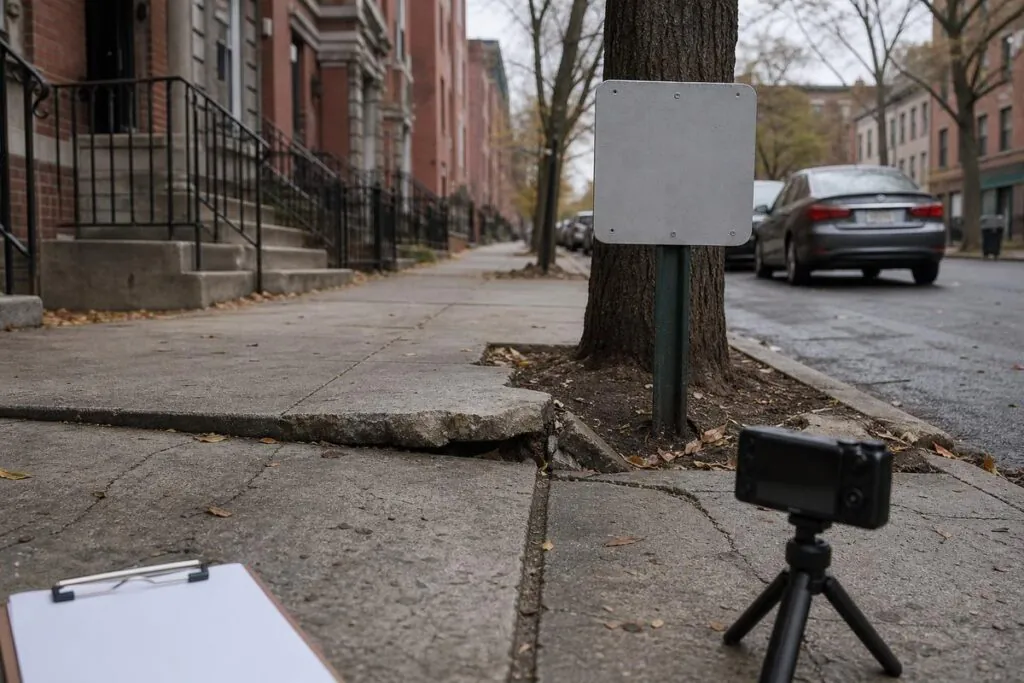
- Street-condition records: 311 complaints, DOT work permits, and prior repair history for the block
- Complete treatment records, imaging studies, and therapy notes
- Pay stubs, employer letters, and other proof of time lost from work
The State Rules That Decide Whether Your Bike Was Legal
New York sorts electric bicycles into three classes by how the motor helps and how fast it goes. Class 1 machines assist only while the rider pedals, topping out at 20 mph. Class 2 machines can push the bike by throttle alone, also capped at 20 mph. Class 3 machines assist to 25 mph and are lawful only inside a city of a million people or more — a category that covers every Queens street. Anything faster, more powerful, or lacking working pedals risks being treated as a moped, with registration and licensing consequences an insurer will happily raise.
Vehicle and Traffic Law § 1231 places bicycle and e-bike riders inside the traffic system: largely the same rights to the road, and the same duties, as someone driving a car. Traveling with traffic, stopping at signals, and yielding where required are the baseline. Equipment and helmet obligations live in Vehicle and Traffic Law § 1238 — a helmet is mandatory for Class 3 riding — and that statute also says a rider’s helmet lapse does not, standing alone, defeat an injury claim or shrink the recovery.
A word on batteries, because Richmond Hill’s housing stock makes it relevant: when a lithium-ion battery or charger ignites or fails and someone is hurt, the claim may run against the manufacturer or seller as a product case, separate from any traffic claim. Keep the battery, the charger, and the purchase records, and do not throw the remains away.
Deadlines Richmond Hill Riders Cannot Afford to Miss
The headline number is three years. Under CPLR § 214, a negligence lawsuit over personal injuries generally must be filed within three years of the crash date. When a crash is fatal, the clock shortens: EPTL § 5-4.1 gives two years from the death for a wrongful-death action.
Government involvement compresses everything. If a city bus, a sanitation truck, or a defective street condition contributed, General Municipal Law § 50-e generally requires a formal notice of claim within 90 days, and General Municipal Law § 50-i then allows one year and 90 days to sue. Miss the 90-day notice and the government claim may be over before it starts. Insurance deadlines are tighter still — the no-fault application window is measured in days — so a Richmond Hill rider should treat the calendar as part of the emergency.
How No-Fault Pays a Struck Rider’s First Bills
Here is the feature of New York law that surprises most riders: when a motor vehicle hits an e-bike rider, the car’s own insurance — not the rider’s — pays basic economic loss first. Under Insurance Law § 5102, that first-party coverage pays necessary medical bills and a portion of lost wages up to the statutory ceiling of $50,000 in combined basic economic loss, and it pays without any fight over who caused the crash. The catch is paperwork speed: written notice should reach the right carrier within 30 days, which means identifying the striking vehicle quickly.
What no-fault never pays is pain and suffering. Those damages live in a separate liability claim governed by Insurance Law § 5104, and they require the rider to clear the serious-injury definition discussed below. And when the striking driver vanishes or carries no policy, other routes — household uninsured-motorist coverage, or the state indemnification corporation for eligible riders — may step in, each with its own short reporting rules.
Shared Blame Does Not End a Richmond Hill Claim
Expect the driver’s insurer to audit the rider: direction of travel, lights after dark, a phone in hand, a signal entered late. New York’s answer is comparative fault in its pure form. CPLR § 1411 reduces an injured person’s recovery by that person’s percentage of responsibility — and stops there. A rider assigned a share of blame still recovers the rest.
Percentages are argued, not announced. The adjuster’s opening allocation rests on a partial file; signal timing records, the column shadows under the el, vehicle damage patterns, and camera footage routinely move it.
Who Can Be Made to Answer for the Crash
The driver is the starting point, not the whole list. Depending on the facts, responsibility in a Richmond Hill collision may extend to:
- A motorist who turned across the rider, followed too closely, backed out blindly, or swung a door into the riding line
- The vehicle’s owner, who answers for a permissive driver’s careless operation
- An employer — a car service, a restaurant, a fleet operator — whose driver was working when the crash happened
- The City or its contractors, where a cratered street, a raised utility plate, or an unmarked work zone caused the fall
- The maker or seller of a bicycle, battery, brake, or charger that failed
- A business whose loading, signage, or construction blocked the lane and pushed the rider into traffic
Each additional responsible party usually means an additional insurance policy — and matching the policy picture to the injury picture is where adequate compensation becomes possible.
What a Richmond Hill E-Bike Claim Can Recover
Beyond the basic losses no-fault absorbs, a liability claim can pursue:
- Medical costs that exceed no-fault limits, plus future treatment and rehabilitation
- Earnings already lost and earning capacity the injuries permanently reduce
- Pain, suffering, and the loss of ordinary activities, once the serious-injury threshold is met
- Scarring and any lasting loss of strength, motion, or function
- Household services and out-of-pocket costs the crash created
- The bicycle, phone, and other property damaged in the collision
Numbers follow documentation. A courier whose wrist injury ends his riding career has losses a single emergency-department invoice cannot express; wage records and treating doctors’ opinions translate them into a demand an insurer must take seriously.
BILLY COOPER LAW
When the Defendant Wears a City Uniform
Some Richmond Hill crashes are, in part, the government’s. A Q56 bus pulling from a stop, a Department of Sanitation truck on its route, an NYPD vehicle, or simply a stretch of Jamaica Avenue pavement the City knew was broken — each possibility swaps the defendant and accelerates the deadlines described above, starting with the 90-day notice under General Municipal Law § 50-e.
Street-defect claims carry their own proof rules, including prior written notice of the condition for many roadway hazards. Complaint histories, paving records, and photographs with measurements — taken while the hole or plate is still there — become the core of the case.
Treatment, Records, and the Queens Courthouse
The neighborhood’s trauma care runs through Jamaica Hospital Medical Center on the Van Wyck Expressway, the hospital that receives most serious Richmond Hill and Ozone Park crash victims. Wherever treatment begins, consistency builds the case: attend the follow-ups, fill the prescriptions, and report new symptoms — numbness, dizziness, back pain that arrives on day three — instead of toughing them out silently.
Records live in several hands: the precinct holds the collision report, EMS its run records, DOT and 311 files the street’s history. Identifying which camera systems faced the crash site is an early investigative task, not an afterthought.
Most lawsuits from a Richmond Hill crash are heard in Supreme Court, Queens County, at 88-11 Sutphin Boulevard in Jamaica. Venue is confirmed case by case from the parties’ residences and the collision location.
How Billy Cooper Law Builds a Richmond Hill Case
The investigation opens with a short list of factual questions, answered before memories soften:
- At what exact point did the driver and the rider first come into each other’s view?
- Which signal controlled the movement, and what does its timing record show?
- Was the driver turning, parking, loading, or opening a door at the moment of impact?
- Did construction or a blocked lane push either party out of position?
- What class is the bicycle, and does its label and equipment prove it?
- Was either party working, and for which company?
- Which cameras covered the block, and who controls each recording?
- Which carrier owes the no-fault application, and has the 30-day notice gone out?
- Does any government deadline — 90 days, not three years — govern part of the claim?
From there the firm sends preservation demands, pulls the records, inspects the bicycle and the location, and deals with insurers directly while the client treats. Consultations cost nothing, injury cases are handled on contingency, and bilingual staff work with Spanish-speaking clients.
Related E-Bike and Injury Resources
- New York e-bike accident cases
- Queens County injury
- Corona
- E-bike claims in Jamaica
- Motor vehicle accidents
BILLY COOPER LAW
NOTABLE RESULTS
Selected results in Billy Cooper Law’s broader personal injury practice:
$850,000 settlement · $1,600,000 settlement
Read more about these results
- $850,000 settlement — Automobile collision
A Bronx automobile collision caused lower-extremity reflex sympathetic dystrophy and a knee injury.
- $1,600,000 settlement — Pedestrian struck by a vehicle
A vehicle jumped a curb and struck a pedestrian in the Bronx, causing serious injuries and multiple surgeries.
These are reported gross results, before fees, expenses, and applicable liens. They are not estimates of another claim’s value. Read the firm’s published case results.
Prior results do not guarantee a similar outcome. Each case is different and must be evaluated on its own facts.
WHAT OUR CLIENTS SAY
General feedback about working with Billy Cooper Law:
“I am an attorney practicing in the personal injury field for 31 years which is about how long I have known Billy Cooper. I have recommended several clients to Billy over the years and every client has given me very positive feedback about Billy and his staff. Billy is trustworthy, hardworking, smart, fights hard and moves his clients’ personal injury cases to resolution as quickly as possible. Billy also is a very skilled trial attorney which maximizes the recovery he obtains for clients. Billy stands out in a large field of personal injury attorneys and I would recommend him without hesitation to anyone seeking a top notch personal injury attorney.”
— K. F., Google review
“Mr. Cooper came to my home to discuss my personal injury case. Without any commitment to his services on my part, he took the time to explain a great deal about my particular situation, did so with great clarity, and was presented a measured and understandable answers to all my questions. I really appreciate his time and would very much recommend his services.”
— B. H., Google review
Professional Recognition

Recognition applies to the named attorneys and selection years. See the linked profiles for details.
Related Billy Cooper Law Videos and Social Posts
- Bicycle and E-Bike Safety — Facebook.
- What to Do After an E-Bike or E-Scooter Accident — Facebook.
- Sharing the Road With E-Bikes and E-Scooters — Facebook.
Richmond Hill NY E-Bike Accident FAQs: Deadlines, Insurance, and Street Rules
The answers below state general New York law for riders in Richmond Hill and Ozone Park. They are information, not advice about a specific crash — insurance coverage and evidence differ from case to case.
Can no-fault benefits cover someone hurt while riding an e-bike in Richmond Hill?
Generally yes, when a motor vehicle struck the rider. First-party no-fault benefits flow from the striking vehicle’s policy and pay necessary medical expenses and part of lost earnings as basic economic loss, without regard to who caused the collision. The rider does not need to own a car or carry auto insurance to receive them.
Speed matters in the paperwork: written notice should reach the correct insurer within about 30 days of the crash, and bills and wage proof follow their own submission windows. No-fault stops at economic loss — compensation for pain and suffering requires a separate claim against the responsible party and proof of a qualifying injury.
Sources: Insurance Law § 5102; Insurance Law § 5104
How fast does a claim against the City of New York have to move?
Much faster than an ordinary claim. Where a City vehicle, a City agency, or a defective City street is involved, a formal notice of claim is generally due within 90 days of the crash, and the lawsuit itself must follow within one year and 90 days. Riders who assume they have three years can lose the government part of the case in the first three months.
Street-defect cases add another layer: for many roadway conditions the City must have received prior written notice of the specific defect. Complaint records, paving history, and photographs of the condition — taken before any repair — often decide whether the claim can proceed at all, so a fall caused by the road deserves immediate documentation.
Sources: General Municipal Law § 50-e; General Municipal Law § 50-i
What is a dooring claim, and who pays when a door opens into a rider?
Dooring is the collision that happens when an occupant of a parked vehicle opens a door into the path of someone riding past — a familiar pattern along the Liberty Avenue shopping blocks, where curb turnover is constant. New York traffic rules require a person opening a vehicle door to check for approaching traffic, including bicycles, and the occupant who opened the door — and often the vehicle’s owner — can be liable for the resulting injuries.
The claim is usually paid by the parked vehicle’s insurance, which also supplies the rider’s no-fault benefits. Photograph the door’s position and the vehicle’s plate, and get the names of anyone who saw the door open; occupants sometimes leave before police arrive.
Sources: Vehicle and Traffic Law § 1231; NYC DOT bicycling information
I was delivering food when I crashed. Can I have both workers’ compensation and a claim against the driver?
Often, yes. If the crash happened in the course of covered employment, workers’ compensation can pay medical care and a portion of lost earnings without any proof of fault. Separately, the claim against the driver who caused the collision proceeds like any other rider’s case. The two run side by side, although the compensation carrier acquires a lien on part of any recovery from the driver, and settlements must account for it.
Whether an app-based courier counts as an employee or an independent contractor is decided case by case, looking at the control the company exercises over the work. Notify the employer promptly in writing, file with the Workers’ Compensation Board within its deadlines, and keep the app records — orders, routes, timestamps, pay — because they prove both claims at once.
Sources: Workers’ Compensation Board — injured worker information; Workers’ Compensation Law § 29
Does riding without a helmet destroy an e-bike injury claim in New York?
No. Helmet duties depend on the bicycle’s class — a helmet is required for Class 3 riding, for example — but the governing statute expressly provides that breaking its helmet provisions does not by itself bar a personal-injury action or reduce what the rider can recover. The claim survives the helmet lapse.
Expect the defense to argue the point anyway, usually against particular head-injury damages rather than the case as a whole; the medical record answers it. Wear a helmet regardless: it protects the brain even where the law protects the claim.
Sources: Vehicle and Traffic Law § 1238; Vehicle and Traffic Law § 1231
Why does the police report matter so much in these cases?
The report is the document every insurer opens first. It fixes the date, time, location, vehicles, and drivers; it identifies the insurance carrier the no-fault application must reach within 30 days; and it records statements and observations made before anyone hired a lawyer. A crash that was never reported starts its insurance life at a disadvantage.
A report is not the last word, though. Officers arrive after the fact, and reports contain errors — a wrong direction of travel, a mislabeled vehicle, a witness left off. Review the report early, request the supporting records where they exist, and correct the file with photographs, video, and witness accounts while those can still be gathered.
Sources: Supreme Court, Queens County (11th Judicial District); Vehicle and Traffic Law § 1231
Can a battery fire or battery failure become a claim against the manufacturer?
Yes. When a lithium-ion battery, charger, or battery-management system is defective and causes a fire or a sudden power failure that injures someone, the claim can run against the manufacturer, importer, or seller as a product-liability case. Those defendants are entirely separate from any driver involved, and the case does not depend on proving careless driving.
Preservation decides these claims. Keep the battery, charger, and bicycle — burned or not — along with receipts, listing screenshots, and any recall notices, and do not let a landlord, insurer, or disposal crew throw the remains away. Fire-scene documentation and the device itself are the evidence a product case is built from.
Sources: NYC DOT bicycling information; Supreme Court, Queens County (11th Judicial District)
What counts as a “serious injury” for an e-bike rider suing a driver?
State law lists the qualifying categories: among them a fracture; significant disfigurement; loss of a fetus; permanent loss of use of a body organ, member, function, or system; a permanent consequential limitation of an organ or member; a significant limitation of a body function or system; and certain injuries that keep the person from their usual daily activities for at least 90 of the first 180 days after the crash. A rider whose injuries fit none of the categories generally cannot recover pain-and-suffering damages from a motorist.
Because the threshold is medical, documentation does the work: imaging, range-of-motion measurements, physicians’ findings about permanence or limitation, and a treatment record without long gaps. Riders who stop treatment early often discover the gap mattered more than the injury.
Sources: Insurance Law § 5102; Insurance Law § 5104
Can someone riding as a passenger on an e-bike bring a claim?
Yes. A person carried on the bicycle — on a rear seat, for instance — who is hurt when a driver strikes the bike holds the same kind of claim as the rider: no-fault benefits through the striking vehicle’s policy for basic economic loss, and a liability claim against the driver for broader damages if the injuries meet the serious-injury threshold.
A passenger may additionally have a claim against the person operating the bicycle if that operation contributed — an overloaded bike, a sudden swerve. Passengers should give their own account early; their view of the collision is often the clearest one in the file.
Sources: Insurance Law § 5102; CPLR § 1411
Do scooter riders have the same rights after a crash as e-bike riders?
Largely, yes, with a classification caveat. A rider on a lawful electric scooter who is struck by a motor vehicle is treated much like an e-bike rider for no-fault purposes — benefits come from the striking vehicle’s policy — and can pursue the driver for further damages on the same serious-injury terms. The duties of care on the road are comparable as well.
The caveat is the device. Scooter-style machines that exceed the e-bike classes, or that lack operable pedals, may be categorized as mopeds or other vehicles, which can change licensing, roadway, and insurance analysis. Keep the device, its label, and its purchase records so its classification can be established rather than argued from memory.
Sources: Vehicle and Traffic Law § 1231; Insurance Law § 5102
Sources
- Vehicle and Traffic Law § 1231 — traffic rules applying to bicycle and e-bike riders
- Vehicle and Traffic Law § 1238 — helmet and equipment provisions
- Insurance Law § 5102 — no-fault definitions, basic economic loss, serious injury
- Insurance Law § 5104 — when personal-injury claims may proceed
- CPLR § 214 — the three-year limitations period for personal injury
- CPLR § 1411 — pure comparative fault
- General Municipal Law § 50-e — notice of claim against public entities
- General Municipal Law § 50-i — deadline to sue a municipality
- NYC DOT — bicycling rules, lanes, and safety information
- Workers’ Compensation Board — guidance for injured workers


Get the Answers You Need
At Billy Cooper Law, every day we renew our pledge to help injured people get the justice and compensation they deserve. We have a reputation throughout New York and nationally for standing up for our clients, and we take that responsibility seriously by approaching every case with preparation, persistence, and an unwavering commitment to results.