
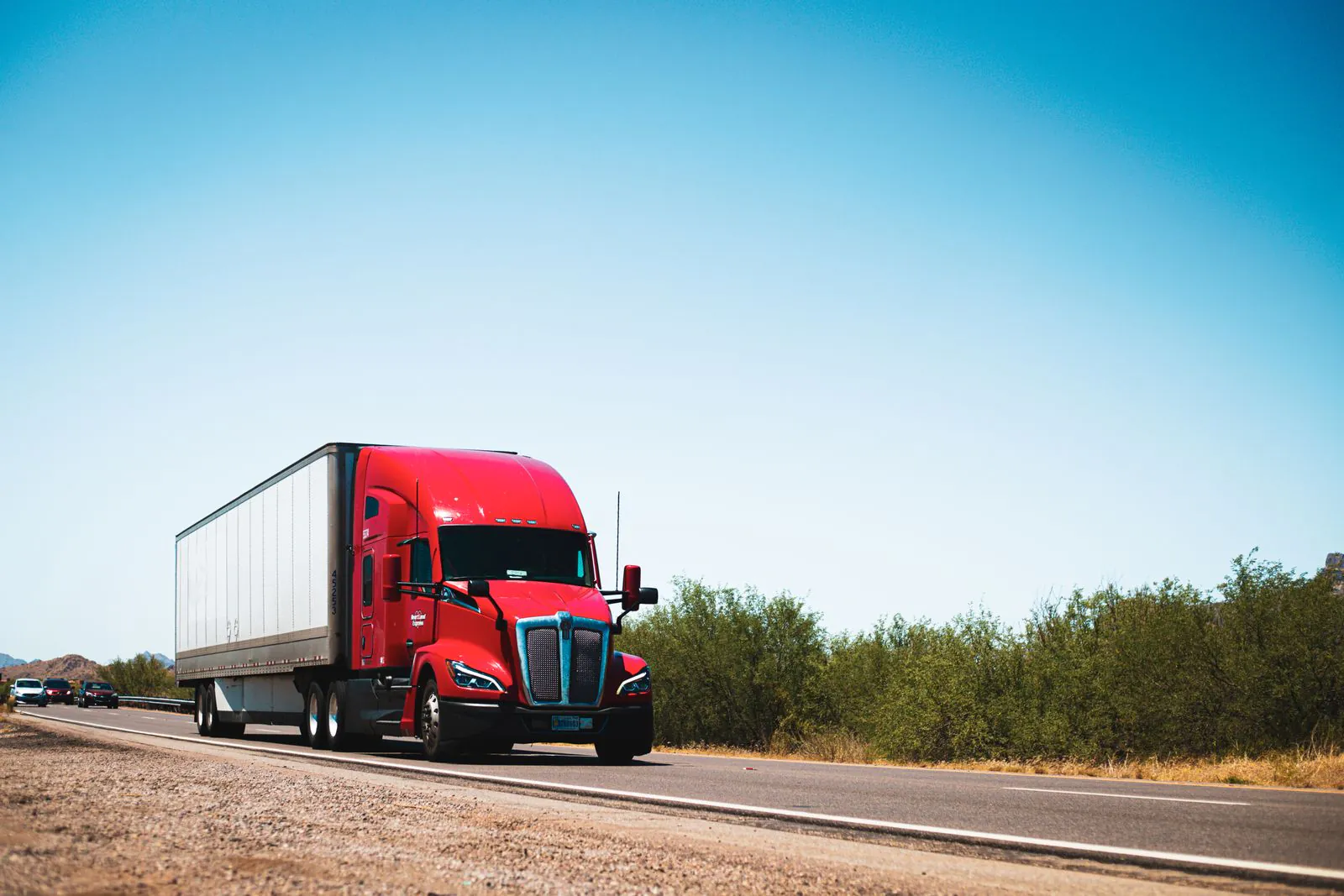
New York Truck Accident Lawyer
Truck Accidents in New York Are Not Just Bigger Car Accidents
If you were hurt in a crash with a tractor-trailer, box truck, or other commercial truck in New York, your case is different from an ordinary car accident case from the first day. The injuries are usually worse, the insurance is larger and more complicated, and the evidence that proves what happened is mostly in the hands of a company that started protecting itself within hours of the collision.
Billy Cooper Law represents people injured in truck accidents in White Plains, Westchester County, the Bronx, and across the New York metro area. This page explains how these claims work: the federal safety rules for drivers and carriers, the records to preserve before they disappear, who can be held responsible, and how no-fault and the serious injury threshold fit in. For the broader picture, see our motor vehicle accident page.
Size, Weight, and Stopping Distance
A fully loaded tractor-trailer can weigh up to 80,000 pounds. A typical passenger car weighs about 4,000. That weight gap drives almost everything else about these cases. A loaded truck needs far more distance to stop than a car traveling at the same speed, it cannot swerve or brake the way a car can, and when it strikes a smaller vehicle, the people in the smaller vehicle absorb most of the force.
That physics shows up in the crash patterns lawyers see again and again: rear-end collisions where a truck could not stop in time, underride crashes where a car slides beneath a trailer, jackknife crashes where a trailer swings across lanes, rollovers on ramps and curves, and wide-turn collisions where a trailer sweeps into an adjacent lane or onto a sidewalk.
The Injuries Are Usually Catastrophic
Because the forces are so much greater, truck crashes regularly produce the kinds of injuries that change a person’s life permanently: traumatic brain injuries, spinal cord injuries, amputations, severe fractures, internal injuries, and fatal trauma. Our catastrophic injury page explains how those long-term cases are built, and when a truck crash is fatal, the family’s claim follows a different legal path, described on our wrongful death page. Insurers know how expensive those injuries are, which is one reason commercial carriers defend these claims aggressively from the start.
Where Truck Crashes Happen in New York
New York moves an enormous amount of freight by truck, and the crash risk follows the freight. I-87 and the New York State Thruway carry heavy long-haul truck traffic through Westchester. I-287, the Cross Westchester Expressway, is one of the region’s most important east-west truck routes, connecting I-87 and I-95 through White Plains, and its interchanges combine merging traffic, lane changes, and speed differences that are dangerous around large trucks. I-95 brings interstate truck traffic through the Bronx and Westchester, including the chronically congested Cross Bronx Expressway, where stop-and-go traffic and constant merging leave truck drivers little room for error.
Further east, the Long Island Expressway mixes commuter traffic with delivery and freight trucks serving Long Island, and port traffic feeds trucks moving containers and cargo onto the same highways as commuters. In the city and inner suburbs, the risk looks different — delivery trucks double-parked on narrow streets, box trucks making wide turns at intersections, and backing accidents in loading areas.
BILLY COOPER LAW

The Federal Rules That Govern Truck Drivers and Trucking Companies
Interstate trucking is regulated by the Federal Motor Carrier Safety Administration (FMCSA), and the Federal Motor Carrier Safety Regulations — mainly 49 CFR Parts 382 through 399 — set the safety rules for drivers and carriers. When a driver or company broke a federal safety rule, that violation is powerful evidence of negligence.
Hours of Service: The Fatigue Rules (49 CFR Part 395)
Fatigue is one of the most persistent dangers in trucking, so federal law limits how much a property-carrying driver can work. Under 49 CFR § 395.3, a driver generally may not drive more than 11 hours after coming on duty, may not drive after 14 consecutive hours on duty following 10 consecutive hours off, and must take a break of at least 30 minutes after 8 cumulative hours of driving time. Weekly limits cap on-duty time at 60 hours in 7 days, or 70 hours in 8 days for carriers that operate every day of the week, and a 34-hour off-duty period can restart the weekly count.
When a crash happens late in a driver’s shift, or at the end of a long week, these limits are one of the first things to check: a driver past the legal limit — or a company whose schedules made the limit impossible to meet — has a serious problem in litigation.
Electronic Logging Devices
Most interstate carriers are required to record duty status with an electronic logging device, or ELD, under 49 CFR § 395.8. An ELD connects to the truck’s engine and automatically records driving time, making hours-of-service records much harder to falsify than the old paper logs; the FMCSA’s electronic logging device guidance explains how the rule works. Carriers must keep duty records and supporting documents for at least six months — a retention period that becomes very important if a claim is not pursued quickly.
Drug and Alcohol Testing (49 CFR Part 382)
Part 382 requires controlled-substance and alcohol testing programs for drivers of commercial motor vehicles, including pre-employment, random, and reasonable-suspicion testing. After certain crashes, testing is mandatory: under 49 CFR § 382.303, an employer must test a surviving driver for alcohol and controlled substances after a fatal crash, and after a crash involving bodily injury with immediate treatment away from the scene or disabling vehicle damage when the driver receives a citation for a moving violation. A positive test, a refusal, or a carrier that failed to test when the rules required it can each become significant evidence.
Driver Qualification Files (49 CFR Part 391)
Carriers may only use drivers who meet federal qualification standards, and they must prove it with paperwork. Under 49 CFR § 391.51, every carrier must maintain a driver qualification file for each driver it employs, containing the employment application, driving records, road-test documentation, annual record reviews, and medical certification. That file often tells the real story of a hiring decision: a carrier that put a driver with a dangerous record behind the wheel, or never checked the record at all, has exposure of its own.
Inspection and Maintenance Duties (49 CFR Part 396)
Under 49 CFR § 396.3, every motor carrier must systematically inspect, repair, and maintain the vehicles under its control, keep parts and accessories in safe operating condition, and keep records of inspections, repairs, and maintenance. Drivers also perform pre-trip inspections and report defects. Brake failures, tire blowouts, steering defects, and lighting problems are rarely surprises — in many cases the maintenance file shows the warning signs were documented, or that inspections were skipped entirely.
Truck Crash Evidence Disappears Fast
In a truck case, the most important evidence is a set of business records and electronic data held by the trucking company — and much of it is on a short retention clock.
Key evidence in a New York truck accident case can include:
- ELD and hours-of-service data showing how long the driver had been driving and on duty, subject to the six-month retention rule in 49 CFR § 395.8.
- Event data recorder (“black box”) information from the truck, which may capture speed, braking, and throttle data around the crash.
- Dashcam and inward-facing camera video, plus nearby surveillance footage that may be overwritten within days.
- Driver logs and supporting documents such as fuel receipts and toll records that can confirm or contradict the official duty record.
- Dispatch records and communications showing the schedule the driver was given and any pressure to keep moving.
- Maintenance and inspection files, which carriers must retain under Part 396, showing the truck’s repair history and known defects.
- The driver qualification file and post-crash drug and alcohol test results.
- Bills of lading, cargo manifests, and loading records showing what the truck was carrying, how much it weighed, and who loaded it.
This is why a preservation letter — sometimes called a spoliation letter — should go to the carrier as soon as possible after a serious truck crash. The letter puts the company on formal notice to keep the truck, its electronic data, and the related records intact rather than repairing the vehicle or letting routine retention schedules delete the data. Once a carrier has been told to preserve evidence and destroys it anyway, courts can respond with sanctions and adverse inferences — but the far better outcome is that the evidence simply survives.
The practical point is timing. The trucking company and its insurer typically send investigators to serious crash scenes immediately. The injured person’s side of the record should start being built just as quickly — waiting months can mean investigating a crash whose electronic evidence no longer exists.
BILLY COOPER LAW
Who Can Be Liable for a New York Truck Accident?
One of the defining features of truck litigation is that the driver is often only the first name on the list.
The Truck Driver
The driver can be personally liable for negligent operation: speeding, following too closely, driving fatigued or impaired, distraction, or unsafe lane changes. A driver’s own violations of the hours-of-service rules are frequently at the center of the liability case.
The Motor Carrier
The trucking company is usually the most important defendant. Under respondeat superior, a carrier is responsible for its driver’s negligence committed within the scope of employment. The carrier can also be liable for its own failures: negligent hiring of an unqualified or dangerous driver, negligent training and supervision, negligent entrustment of a truck to someone unfit to drive it, unrealistic schedules that encourage hours-of-service violations, and poor maintenance programs. New York adds another layer: under Vehicle and Traffic Law § 388, the owner of a vehicle is liable for negligence in its use or operation by anyone using it with the owner’s permission, which matters when the tractor, the trailer, and the driver all belong to different parties.
Freight Brokers, Shippers, and Loaders
A freight broker that arranged the load may face claims if it selected a carrier it knew — or should have known — had a poor safety record. Shippers and loaders can be liable when cargo was loaded improperly: an overweight load, an unbalanced load, or freight that was not secured correctly can make a truck unstable, extend its stopping distance, or shift in a turn and cause a rollover. Loading records and bills of lading are how those claims get proved.
Maintenance Contractors and Manufacturers
When a carrier outsources repairs, the maintenance contractor that performed defective work — a brake job done wrong, a worn tire returned to service — can share liability. And when a component itself was defective, such as brakes, tires, steering parts, or coupling devices, the manufacturer can be liable under product liability principles. Preserving the truck and its parts in their post-crash condition is what makes these claims possible.
Identifying every liable party is not just about fairness — it also determines which insurance policies are available to pay the claim, the subject of the next section. Our commercial vehicle accident page covers these multi-party issues across the wider range of commercial vehicles as well.
Truck Insurance: Federal Minimums, Layered Policies, and the MCS-90
Commercial trucks carry far more insurance than passenger cars, because federal law requires it. Under 49 CFR § 387.9, the minimum levels of financial responsibility for interstate for-hire carriers operating vehicles with a gross vehicle weight rating of 10,001 pounds or more are:
- $750,000 for property (nonhazardous freight).
- $1,000,000 for oil and certain hazardous materials, wastes, and substances.
- $5,000,000 for the most dangerous categories, including certain hazardous substances transported in bulk and highway route controlled quantities of radioactive material.
The FMCSA’s insurance filing requirements page explains how carriers prove this coverage to the agency. These are minimums, not typical limits. Many carriers carry primary policies at or above the minimum plus excess or umbrella layers on top, so total coverage for a catastrophic claim can be substantially higher than the primary policy alone. Early work in a serious case identifies every layer — the carrier’s primary and excess policies, any policy covering the trailer, and coverage belonging to other liable parties.
One term worth understanding is the MCS-90 endorsement, a federally prescribed endorsement described in 49 CFR § 387.15. In plain terms, it protects the public: it obligates the insurer to pay a judgment for public liability up to the federal minimum even if the policy itself might otherwise have a defense, with the insurer then able to seek reimbursement from the carrier.
None of this means collecting is simple: commercial insurers litigate fault, causation, and damages hard. But the structure — mandatory minimums, filed proof of insurance, layered policies, and the MCS-90 backstop — is very different from a crash with an underinsured private driver.
How New York No-Fault and the Serious Injury Threshold Affect a Truck Claim
New York’s no-fault system applies to truck crashes the same way it applies to other motor vehicle crashes, and it is the first layer of the claim. Regardless of who caused the crash, an injured occupant generally looks first to Personal Injury Protection (PIP) for basic economic loss — up to $50,000 per person in combined covered medical expenses, a portion of lost earnings, and certain other necessary expenses, as defined in Insurance Law § 5102. Our guide to New York no-fault insurance walks through how those benefits work in detail.
No-fault has fast deadlines. The New York Department of Financial Services explains in its no-fault consumer FAQ that written notice of a no-fault claim generally must be given within 30 days of the accident, with separate deadlines for medical bills and lost-wage claims. Missing those deadlines can cost benefits even in a strong liability case, so the no-fault claim should be opened immediately, in parallel with everything else.
PIP is only the first layer, however. To recover pain and suffering and other non-economic damages from the parties at fault, an injured person must meet New York’s serious injury threshold under Insurance Law § 5102(d), as the gateway provided by Insurance Law § 5104. As currently written, the statute’s categories are: death; dismemberment; significant disfigurement; a fracture; loss of a fetus; permanent loss of use of a body organ, member, function or system; permanent consequential limitation of use of a body organ or member; and significant limitation of use of a body function or system.
Because truck crashes so often cause fractures, surgical injuries, disfigurement, and permanent limitations, many truck cases meet the threshold — but it still has to be proved with medical evidence, and insurers contest it routinely. When the threshold is met, a truck claim can pursue damages well beyond PIP, including:
- Medical expenses beyond no-fault limits, and the cost of future treatment, surgery, and rehabilitation.
- Lost wages beyond no-fault benefits, and reduced future earning capacity.
- Long-term care, medical equipment, and home or vehicle modifications.
- Pain and suffering, emotional distress, and loss of enjoyment of life.
- Permanent disability and disfigurement.
- Wrongful death damages when the crash is fatal, under the separate rules explained on our wrongful death page.
Our car accident lawyer page explains the same no-fault and threshold framework for passenger vehicles, including the firm’s published case results.
What to Do After a Truck Crash in New York
The steps after a truck crash are similar to those after any serious crash, but the evidence and insurance issues make speed matter even more. If you are able:
- Get to safety and call 911. Make sure a police report is created and note the report information.
- Get medical care immediately. Some serious injuries declare themselves over hours or days, and early records connect the injuries to the crash.
- Document what you safely can. Photograph the vehicles, the truck’s company name and identifying numbers, plates, cargo, skid marks, and the roadway. Get witness names and contact information.
- Do not give a recorded statement to the trucking company’s insurer. Commercial adjusters build the defense file early; you can provide basic identifying information and decline to discuss the crash until you have counsel.
- Preserve your own evidence. Keep your damaged vehicle unrepaired if possible, and save photographs, medical paperwork, pay records, and any dashcam footage of your own.
- Open the no-fault claim right away. The 30-day written notice period runs from the crash date.
- Talk to a lawyer quickly. A preservation letter to the carrier and early expert involvement are time-sensitive in truck cases in a way they are not in ordinary car cases.
- Mind the filing deadlines. Most New York personal injury lawsuits must be filed within three years, but shorter periods apply to some claims — wrongful death and claims involving public entities among them. Our guide to the statute of limitations for personal injury in New York explains the main deadlines and exceptions.
You do not need to have followed every step perfectly to have a case — but every day of delay makes the electronic-evidence problem harder.
How Billy Cooper Law Handles New York Truck Cases
Billy Cooper Law approaches truck cases investigation-first. The early work is about locking down the record before it changes: preservation letters to the carrier, requests for the ELD data and driver qualification file, identification of every company involved in the load, and retention of the experts the case needs — accident reconstruction specialists who can work from vehicle damage, electronic data, and scene evidence, and trucking safety experts who can evaluate the carrier’s compliance with the federal rules.
The firm is led by William H. Cooper, a Super Lawyers honoree for 2024 and 2025. Its foundation is directly connected to the New York system that governs these claims: the firm was founded by Marvin A. Cooper, who helped draft New York’s no-fault insurance law. Attorney Anieska J. Garcia provides bilingual representation for English- and Spanish-speaking clients.
Truck cases are handled on a contingency fee basis: no upfront fee, and no attorney’s fee unless compensation is recovered. Consultations are free. If you or a family member was hurt in a crash with a commercial truck, call (914) 730-5789 to discuss what should be preserved right now.
Related Practice Areas
Billy Cooper Law also handles these related claims:
- Motor Vehicle Accidents
- Car Accidents
- Truck and Commercial Vehicle Accidents
- Wrongful Death
- Catastrophic Injury
BILLY COOPER LAW
Professional Recognition

Recognition applies to the named attorneys and selection years. See the linked profiles for details.
Related Billy Cooper Law Videos and Social Posts
- Serious Injuries in Truck Accidents — Facebook.
- What to Do After a Truck Accident — Facebook.
- New York No-Fault Insurance — Facebook.
Frequently Asked Questions About New York Truck Accidents
These answers address common questions about truck accident claims under New York and federal law. They are general information, not legal advice about your specific situation, and the facts of a particular crash can change the answer. For advice about your own case, contact Billy Cooper Law at (914) 730-5789 for a free consultation.
How is a truck accident case different from a car accident case in New York?
A truck case usually involves more than two drivers and two insurance policies. The driver, the motor carrier, and sometimes brokers, loaders, maintenance companies, or manufacturers may all share responsibility, and the crash is judged against federal safety rules that do not apply to passenger cars.
Truck cases also turn on evidence a car case rarely has: electronic logging data, dispatch records, maintenance files, and driver qualification files held by the company. Those records are why a truck claim should be investigated and preserved early.
Sources: FMCSA: Hours of Service, 49 CFR § 395.3: Maximum driving time for property-carrying vehicles
What are the federal hours-of-service limits for truck drivers?
For property-carrying drivers, the core limits are 11 hours of driving after coming on duty, no driving after 14 consecutive hours on duty following 10 consecutive hours off, and a break of at least 30 minutes after 8 cumulative hours of driving time.
Weekly limits cap drivers at 60 on-duty hours in 7 days, or 70 hours in 8 days for carriers that operate every day of the week, and a 34-hour off-duty period can restart the weekly count.
Sources: 49 CFR § 395.3: Maximum driving time for property-carrying vehicles, FMCSA: Hours of Service
What is an electronic logging device, and why does it matter after a truck crash?
An electronic logging device, or ELD, connects to the truck’s engine and automatically records driving time and duty status. Most interstate carriers must use one, which makes a driver’s hours much harder to falsify than they were in the paper-log era.
After a crash, ELD data can show whether the driver was within the legal hours or driving fatigued, and it can be checked against fuel, toll, and dispatch records. Because carriers only have to keep this data for a limited time, it should be preserved promptly.
Sources: FMCSA: Electronic Logging Devices, 49 CFR § 395.8: Driver’s record of duty status
How long do trucking companies have to keep driver logs and maintenance records?
Under the federal rules, a motor carrier must keep a driver’s records of duty status and supporting documents for at least six months from the date it receives them. That is a short window, and routine deletion after it closes is one of the main reasons truck evidence disappears.
Maintenance records follow a different schedule: they must be kept where the vehicle is housed or maintained for one year, and for six months after the vehicle leaves the carrier’s control. A preservation letter sent early makes sure both sets of records survive.
Sources: 49 CFR § 395.8: Driver’s record of duty status, 49 CFR § 396.3: Inspection, repair, and maintenance
Who can be held liable for a New York truck accident besides the driver?
The motor carrier is often the most important defendant. It can be responsible for its driver’s negligence within the scope of employment, and separately liable for negligent hiring, training, supervision, or entrustment, or for maintenance failures. Under New York’s Vehicle and Traffic Law § 388, a vehicle owner is also liable for negligence in the vehicle’s use by someone operating it with permission.
Depending on the facts, liability can extend to a freight broker that selected an unsafe carrier, a shipper or loader that loaded cargo improperly, a maintenance contractor that repaired the truck badly, or a manufacturer whose defective part contributed to the crash.
Sources: NY Vehicle and Traffic Law § 388: Owner liability, 49 CFR § 391.51: Driver qualification files
How much insurance must an interstate trucking company carry?
Federal law sets minimum levels of financial responsibility based on what the truck carries. For interstate for-hire carriers with vehicles rated at 10,001 pounds or more, the minimum is $750,000 for nonhazardous property, $1,000,000 for oil and certain hazardous materials, and $5,000,000 for the most dangerous bulk hazardous categories.
These are floors, not ceilings. Many carriers buy primary coverage at or above the minimum plus excess or umbrella layers, and carriers must have proof of insurance on file with the FMCSA to hold operating authority.
Sources: 49 CFR § 387.9: Financial responsibility, minimum levels, FMCSA: Insurance Filing Requirements
Does New York no-fault insurance pay my medical bills after a truck crash?
Generally, yes, as a first layer. New York’s no-fault system provides first-party benefits for basic economic loss — up to $50,000 per person in combined covered medical expenses, a portion of lost earnings, and certain other necessary expenses — regardless of who caused the crash.
The deadlines are fast. Written notice of the no-fault claim generally must be given within 30 days of the accident, with separate deadlines for medical bills and lost-wage claims. A claim for pain and suffering beyond no-fault depends on meeting the serious injury threshold.
Sources: NY Department of Financial Services: No-Fault Insurance FAQs, NY Insurance Law § 5102: Definitions
What is New York’s serious injury threshold, and why does it matter in a truck case?
Before an injured person can recover pain and suffering and other non-economic damages in a New York motor vehicle case, the injury must qualify as a serious injury under Insurance Law § 5102(d). The current categories include death, dismemberment, significant disfigurement, a fracture, loss of a fetus, permanent loss of use of a body organ, member, function or system, permanent consequential limitation of use of a body organ or member, and significant limitation of use of a body function or system.
Truck crashes frequently produce injuries in these categories, but the threshold still has to be proved with medical evidence — imaging, operative findings, and documented limitations — and insurers contest it even in severe cases.
Sources: NY Insurance Law § 5102: Definitions, NY Department of Financial Services: No-Fault Insurance FAQs
Was the truck driver required to take a drug or alcohol test after the crash?
In many serious crashes, yes. Federal rules require the employer to test a surviving driver for alcohol and controlled substances after a crash involving a loss of human life. Testing is also required after a crash involving bodily injury with immediate medical treatment away from the scene, or disabling damage requiring a tow, when the driver is cited for a moving violation.
The testing windows are short — alcohol testing efforts end after eight hours and controlled-substance testing after thirty-two hours if the tests were not administered — and the employer must document why a required test was not given.
Sources: 49 CFR § 382.303: Post-accident testing, 49 CFR § 395.8: Driver’s record of duty status
How long do I have to file a truck accident lawsuit in New York?
Most New York personal injury lawsuits, including truck accident cases, must be commenced within three years under CPLR § 214. That is the general rule, not the only deadline: wrongful death claims run on a shorter clock, and claims involving public entities can require a notice of claim within 90 days.
Other deadlines arrive much sooner. No-fault notice is generally due within 30 days, and federal record-retention periods for truck evidence can close within months.
Sources: NY CPLR § 214: Actions to be commenced within three years, NY Department of Financial Services: No-Fault Insurance FAQs



Get the Answers You Need
At Billy Cooper Law, every day we renew our pledge to help injured people get the justice and compensation they deserve. We have a reputation throughout New York and nationally for standing up for our clients, and we take that responsibility seriously by approaching every case with preparation, persistence, and an unwavering commitment to results.