If you’ve been injured in an Uber or Lyft accident in White Plains, your claim depends in large part on the rideshare driver’s status at the time of the crash. During an active ride, Uber and Lyft generally carry $1.25 million in liability coverage under New York’s for-hire vehicle framework, including Transportation Law § 305-d and related FHV requirements. When the app is on but no ride has been accepted, coverage drops sharply. Understanding which insurance tier applies is critical to maximizing your recovery. Billy Cooper Law, led by William H. Cooper, a Super Lawyers honoree in 2024 and 2025, has recovered $850,000 in a motor vehicle case and more than $41 million overall. Call (914) 809-9945 for a free consultation.
How Does Rideshare Insurance Work After an Uber or Lyft Accident in White Plains?
The reason rideshare cases confuse so many people is simple: the insurance changes depending on what the driver was doing at the exact moment of the crash.
That sounds like a detail. In reality, it often determines whether there is a meaningful recovery at all.
In a standard car accident, there is usually one main liability policy to investigate. In an Uber or Lyft case, there are multiple possible layers, and the applicable one depends on the driver’s app status.
Period 1: App off
If the rideshare driver was not logged into the app, the case usually begins with the driver’s personal auto policy. At that point, the crash looks more like an ordinary personal auto case.
Period 2: App on, but no ride accepted
This is where coverage gets tricky. When the app is on and the driver is waiting for a match, the transportation network company’s contingent coverage may apply. In New York, this is often framed as $50,000 / $100,000 / $25,000 in liability coverage. That is a major drop from the coverage available during an active trip.
Period 3: Ride accepted or passenger in vehicle
Once the driver has accepted a ride and is on the way to pick someone up, or once the passenger is already in the car, the higher rideshare policy applies. In New York, that is commonly described as $1.25 million in combined single limit coverage under the state’s for-hire vehicle regulatory framework.
This is why rideshare claims so often become fights over timestamps, app activity, GPS history, dispatch records, and digital trip evidence. The legal issue is not just who caused the crash. It is also: what coverage was live when it happened?
New York’s no-fault rules still matter too. Injured people often begin with PIP benefits under the no-fault structure, and the serious injury threshold under Insurance Law § 5102(d) and the right to sue beyond no-fault under Insurance Law § 5104 remain central to the case.
In other words, a rideshare case is not outside the normal New York motor vehicle system. It sits on top of it, with another layer of insurance complexity added.
Who Can File a Claim After a Rideshare Accident in Westchester County?
Rideshare claims are not just for passengers.
Several different groups of people may have valid claims after an Uber or Lyft crash, and each group may follow a slightly different recovery path.
Passengers inside the Uber or Lyft are often in the strongest factual position because they typically did not contribute to causing the crash. Their main legal issue is usually identifying the applicable coverage tier and documenting the injuries thoroughly enough to move the case beyond no-fault when appropriate.
Occupants of other vehicles may also have claims if the rideshare driver caused the crash. In that situation, the rideshare company’s insurance may come into play depending on whether the driver was in Period 2 or Period 3.
Pedestrians and cyclists hit by Uber or Lyft drivers can also bring claims. These cases are often serious because the physical vulnerability of the injured person is so much greater than that of someone inside a vehicle.
Rideshare drivers themselves may have claims too, although those cases can be more complicated because they sit at the intersection of personal auto coverage, rideshare platform coverage, and sometimes uninsured or underinsured motorist issues.
Some cases also raise UM/UIM questions. If the available rideshare coverage is insufficient, or if another at-fault vehicle has little or no insurance, your own uninsured or underinsured motorist coverage may matter. In catastrophic cases, this can become a major issue.
The main point is that rideshare claims are not reserved for one type of victim. The legal path depends on where you were, what the app was doing, and how the insurance tiers interact.
What Makes Rideshare Accident Claims Different From Regular Car Accidents?
A lot of law firm pages say rideshare cases are “complex,” but they stop there. The real difference is more concrete than that.
First, there is the three-tier insurance structure. In a normal car crash, you are rarely litigating over whether the defendant had moved from one insurance universe into another by tapping an app. In rideshare cases, that happens all the time.
Second, there is the platform structure. Uber and Lyft classify drivers in ways designed to limit corporate liability. That means the claim often proceeds through insurance rather than through a traditional direct negligence case against a clearly responsible employer. The structure is intentional.
Third, there is the digital evidence problem. In a regular car accident, the most important evidence is usually physical: photos, witnesses, damage, reports, maybe video. In a rideshare case, the most important evidence may also include:
- App status
- Ride receipt
- GPS location history
- Timestamped acceptance of the trip
- Drop-off or pickup records
- Driver account activity
- Internal platform data
That evidence is highly useful and highly perishable.
Fourth, there are contract and arbitration issues. Rideshare companies rely heavily on terms of service and user agreements. Those documents are written to protect the company, not the injured person. In some situations, arbitration language can become part of the fight over how the case proceeds.
This is one area where Billy Cooper Law already has a real differentiator. William H. Cooper presented on rideshare arbitration clauses and their impact on personal injury claims for Strafford CLE in June 2025, teaching other lawyers how those provisions can affect victims’ rights. That is not marketing fluff. It is exactly the kind of subject-matter familiarity that matters in a modern rideshare case.
The firm’s thought leadership has also appeared in Insurance.com, including analysis of rideshare insurance and related liability structures. That kind of work matters because rideshare cases often reward lawyers who understand the system before the case arrives.
How Does New York No-Fault Law Apply to Uber and Lyft Accidents?
This is one of the most misunderstood parts of the page, and it deserves to be plain.
Yes, New York no-fault law still applies to rideshare accidents.
That means an injured person may first look to PIP-style benefits for basic medical expenses and certain wage losses. But no-fault is only the beginning, not the end.
If the injuries meet New York’s serious injury threshold under Insurance Law § 5102(d), the injured person may step outside no-fault and pursue pain and suffering and broader damages under Insurance Law § 5104.
That threshold still matters in rideshare cases. So does New York’s pure comparative negligence rule under CPLR § 1411. Even if the defense claims you were partly responsible, your recovery is not automatically barred. It is reduced by your percentage of fault.
The firm has a particularly strong angle here because Marvin A. Cooper helped draft Article 51 of New York’s No-Fault Insurance Law in 1973. That legislative history is not just a nice biographical note. It is directly relevant in a practice area where no-fault questions collide with rideshare-specific coverage disputes.
Where Do Rideshare Accidents Happen Most Often in White Plains and Westchester?
This is where local knowledge starts to matter.
Rideshare accidents do not happen randomly. They tend to cluster where pickups, drop-offs, congestion, distraction, nightlife, and commuter flow overlap.
In White Plains and the broader Westchester area, that often means:
Metro-North White Plains station
This is one of the most important rideshare pickup and drop-off points in the city. Commuters moving quickly, curbside confusion, impatient lane changes, and rideshare drivers trying to locate passengers all create risk.
Scarsdale Metro-North station
Another high-volume commuter pickup location where rideshare traffic, pedestrian movement, and quick-stop behavior can lead to collisions.
Mamaroneck Avenue restaurant and bar corridor
This area combines nightlife, rideshare pickups, pedestrians, and late-evening judgment errors. It is a natural hotspot for Uber and Lyft-related incidents.
Westchester Avenue / Galleria Mall area
Retail flow, frequent pickups, parking patterns, and heavy local traffic create a recurring rideshare collision zone.
I-287 / Cross Westchester Expressway ramps and exits
Rideshare drivers heading to or from pickup locations often interact badly with ramp pressure, quick merges, and unfamiliar navigation choices.
Post Road / Route 22
A dense commercial corridor where rideshare drivers may stop abruptly, turn unexpectedly, or navigate pickups badly.
Downtown White Plains entertainment district
High evening rideshare usage, curbside congestion, and pedestrian presence increase crash risk.
Mount Vernon downtown and the New Rochelle waterfront / retail areas
These are also relevant rideshare zones, particularly where nightlife, commuting, and commercial density overlap.
Serious injuries from these crashes may be treated at White Plains Hospital for moderate injuries or Westchester Medical Center in Valhalla, the only Level I trauma center from Manhattan to Syracuse, which recorded 6,974 trauma activations in 2024. Northern Westchester Hospital is also relevant in the northern part of the county.
These details are not just local flavor. They help explain why rideshare accidents happen where they do.
What Evidence Is Most Important in a White Plains Rideshare Accident Case?
In a rideshare case, evidence preservation is often the difference between a strong claim and a frustrating one.
Critical evidence may include:
- Ride receipt or trip history from the app
- Screenshots showing the trip was active
- Driver name, license plate, and vehicle information
- Police report
- Witness information
- Photos of the scene and vehicle damage
- Dashcam footage if available
- App-based GPS or route data
- Medical records
- Communications with Uber or Lyft through the app
The app-based evidence is especially important because it may help establish:
- Whether the driver had the app on
- Whether a ride had been accepted
- Whether the passenger was in the vehicle
- Where the crash occurred relative to the trip
- What coverage tier should apply
This is why waiting is dangerous. If a rideshare case is mishandled early, the digital trail can weaken before the legal theory is even fully developed.
What Compensation Can You Recover After a Rideshare Accident?
The answer depends on the seriousness of the injuries and whether the case clears New York’s threshold system.
Potential damages may include:
- Medical expenses
- Rehabilitation
- Future treatment
- Lost wages
- Reduced earning capacity
- Pain and suffering
- Emotional distress
- Loss of enjoyment of life
- Permanent disability
- Reconstructive care in serious cases
No-fault benefits may cover the first layer, but once injuries meet the serious injury standard under Insurance Law § 5104, broader damages become available.
In catastrophic cases, coverage limits matter. A case with major orthopedic injuries, brain trauma, spinal damage, or permanent disability can move far beyond basic medical reimbursement. That is why the rideshare coverage tier, and the availability of any supplementary UM/UIM recovery, can become crucial.
Why Choose Billy Cooper Law for Your Rideshare Accident Case?
This page was already one of the strongest on the site for a reason. The foundation is there.
Billy Cooper Law brings three things that are unusually relevant in rideshare litigation.
First, there is substantive thought leadership. William H. Cooper has spoken publicly and professionally on rideshare arbitration and insurance structures, including CLE programming for other lawyers and published analysis on rideshare insurance issues.
Second, there is real no-fault depth. Marvin A. Cooper’s role in helping draft New York’s No-Fault law gives the firm an unusual degree of perspective in a practice area where coverage layering is often the main fight.
Third, there is trial and damages credibility. The firm’s broader results include:
- $850,000 motor vehicle settlement
- $9 million catastrophic injury result in Westchester County
- $2.4 million wrongful death recovery in a motor-vehicle-related matter
- $41 million+ in verdicts and settlements overall
That matters because rideshare defendants and insurers do not just evaluate liability. They evaluate whether the plaintiff’s lawyer can build a large case and hold it.
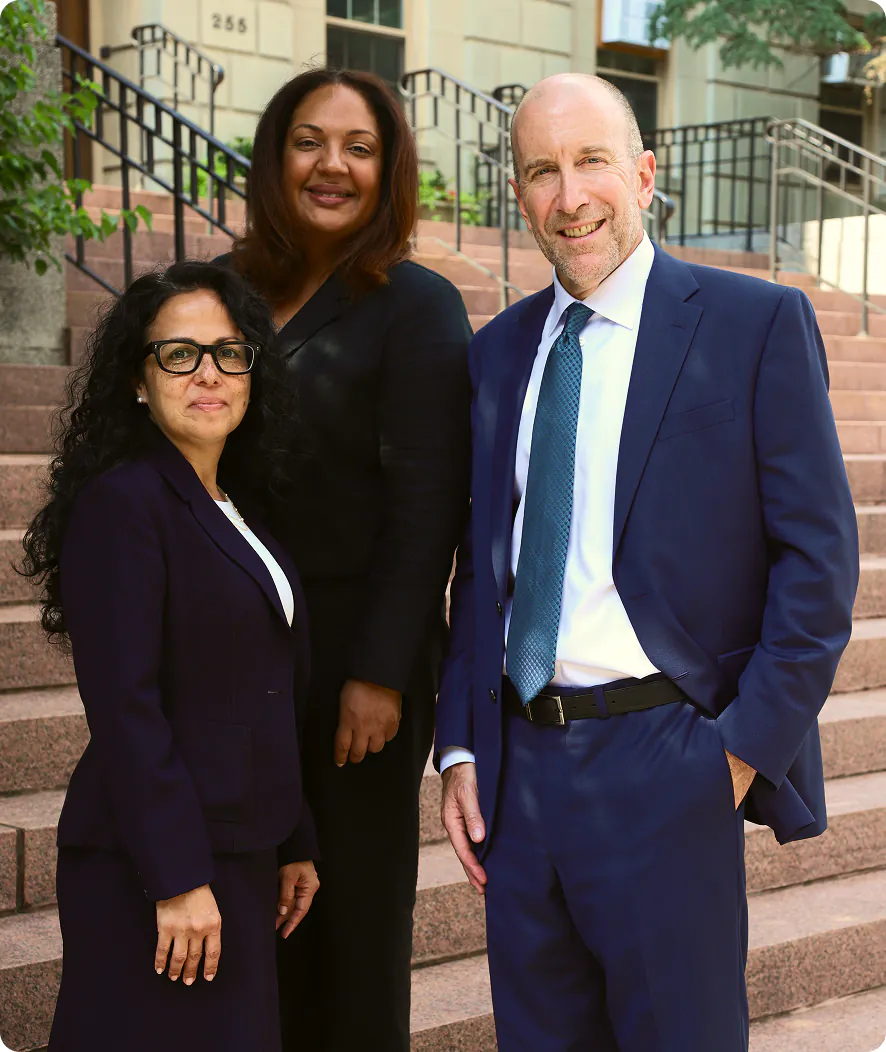
The firm is led by William H. Cooper, a Super Lawyers honoree in 2024 and 2025, and supported by Anieska J. Garcia, a bilingual partner. The office is located at 245 Main Street, Suite 510, White Plains, NY 10601. Cases are handled on a contingency basis. No fee unless the firm recovers.
How Does Comparative Negligence Affect a Rideshare Claim in New York?
New York follows pure comparative negligence under CPLR § 1411.
That means if you were partly at fault, your case is not automatically barred. Your recovery is reduced by your percentage of fault.
This matters in rideshare cases because blame often gets shifted aggressively. Defendants may argue:
- The passenger distracted the driver
- The pedestrian crossed unsafely
- Another driver caused the real problem
- The injured person failed to use reasonable care
Under New York law, even a high level of fault does not automatically destroy the claim. That is one reason defense narratives about “shared fault” need to be taken seriously, but not fatalistically.
How Can UM/UIM Coverage Interact with Rideshare Insurance?
Not every serious rideshare case is fully solved by the rideshare company’s policy.
In some cases, especially when injuries are catastrophic, the available TNC coverage may still be insufficient, or another at-fault driver may be uninsured or underinsured.
That is where UM/UIM coverage may matter.
Depending on the facts and the policies involved, the injured person’s own uninsured or underinsured motorist coverage may supplement the available recovery. These questions can be technical, but they are not secondary. In the biggest cases, the difference between an adequate recovery and an inadequate one may turn on how the layers of insurance interact.
This is one of the reasons rideshare cases require more than a generic personal injury approach.
Related Practice Areas
Billy Cooper Law represents injury victims across Westchester County in a wide range of practice areas. Learn more about how we can help:
- White Plains personal injury attorney
- motor vehicle accident lawyer in Westchester
- car accident claims in White Plains
- premises liability claims for rideshare pickup locations
Frequently Asked Questions
How long do I have to file a rideshare accident claim in New York?
For most personal injury claims, the deadline is 3 years under CPLR § 214. That said, no-fault and insurance reporting deadlines may arise much sooner, so it is smart to act quickly.
What is the serious injury threshold in New York, and does it apply to rideshare accidents?
Yes. Rideshare cases are still subject to New York’s threshold system under Insurance Law § 5102(d) and the right-to-sue rules in Insurance Law § 5104. If the injury qualifies as serious, you may pursue pain and suffering damages beyond no-fault.
Does Uber or Lyft’s insurance cover me if I was a passenger?
Usually yes, if the ride was active. During an active trip, Uber and Lyft generally provide $1.25 million in liability coverage under the New York for-hire vehicle structure, including Transportation Law § 305-d and related regulations.
What if the Uber driver’s app was on but no ride was accepted?
Then the lower contingent rideshare coverage may apply, often described as $50,000 / $100,000 / $25,000. In serious cases, additional insurance analysis may be necessary.
Can I sue Uber or Lyft directly, or only their insurance?
That depends on the facts and the legal posture of the case. Uber and Lyft structure their driver relationships to limit direct corporate liability, but the insurance structure and contractual posture still create recovery paths.
What if I was a pedestrian or cyclist hit by an Uber in White Plains?
You may have a claim against the rideshare insurance layer that was active at the time, and no-fault issues may still apply. These cases are often strong because the injured person is especially vulnerable and the injuries are often severe.
What evidence is most important in a rideshare accident case?
Trip history, app screenshots, driver status, police report, GPS or location data, witness information, and medical records are all critical. The app-based evidence is especially important because it can determine what insurance tier applies.
Is my recovery reduced if I was partially at fault?
Possibly, but it is not automatically barred. Under CPLR § 1411, New York applies pure comparative negligence, so recovery is reduced by fault percentage rather than eliminated.
What should I do immediately after a rideshare accident in White Plains?
Get medical attention, call 911, document the scene, save trip details from the app, gather witness information, and avoid early settlements or recorded statements. Then speak with a lawyer quickly.
Will I have to pay Billy Cooper Law’s fee if we settle the case?
No. The firm works on a contingency basis, which means you pay nothing unless compensation is recovered.
Speak With a White Plains Uber & Lyft Accident Lawyer Today
If you were injured in an Uber or Lyft crash in White Plains or elsewhere in Westchester County, do not assume the case will work like a normal car accident claim. The insurance layers, digital evidence, no-fault rules, and platform structure can change everything.
Billy Cooper Law brings a rare combination of rideshare-specific thought leadership, no-fault history, and serious injury litigation experience to these cases. The firm can help determine which coverage tier applies, what evidence must be preserved, and how to pursue the full value of your claim.
Call (914) 809-9945 for a free consultation.
You pay nothing unless the firm recovers for you.
¿Habla español? Llame al (914) 809-9945 para una consulta gratuita.



Putting Over 75 Years of Combined Experience on Your Side
Putting Over 75 Years of Combined Experience on Your Side
Putting Over 75 Years of Combined Experience on Your Side
Putting Over 75 Years of Combined Experience on Your Side
Putting Over 75 Years of Combined Experience on Your Side
Get the Answers You Need
At Billy Cooper Law, every day we renew our pledge to help injured people get the justice and compensation they deserve. We have a reputation throughout New York and nationally for standing up for our clients, and we take that responsibility seriously by approaching every case with preparation, persistence, and an unwavering commitment to results.