
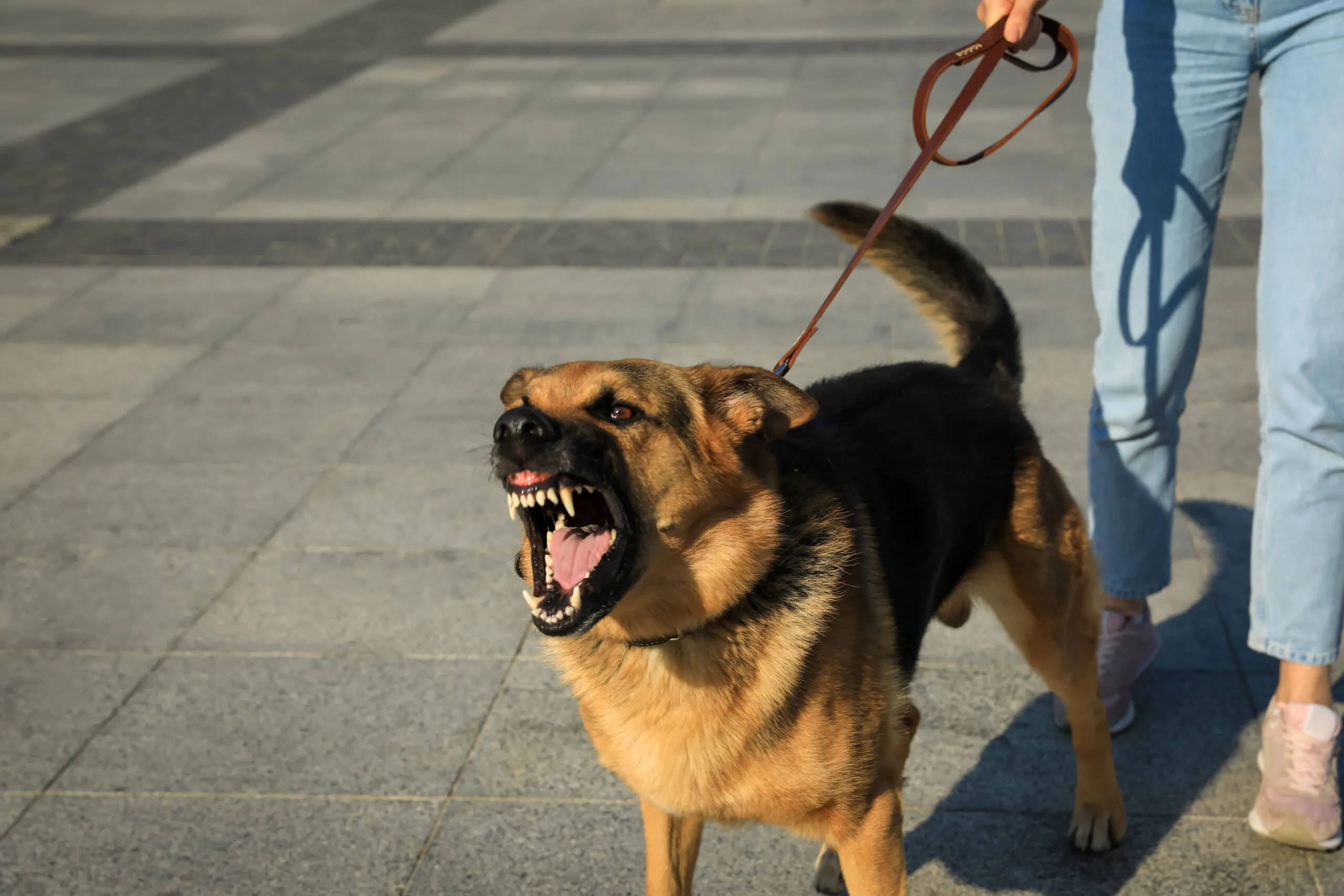


New York Dog Bite Lawyer
Video Transcript
People who have been bitten by a dog in the state of New York oftentimes have incredibly significant injuries.
If you have been bitten by a dog, make sure that you not only find out who owns the dog, but the name of the dog, where the dog lives, and anything else that you can possibly find out. That information is remarkably helpful.
The law has recently changed in New York. For many years, in order to represent someone who was bitten by a dog, you had to prove either that the dog had what are called vicious propensities, meaning it was the type of dog people thought was vicious, or that the dog had bitten someone previously. It used to be referred to as the “one bite rule.”
In 2025, the law in New York changed to the benefit of dog bite victims. There is now a negligence standard for dog bite victims, meaning that the owner of a dog must have provided reasonably safe care for that dog and ensured that it did not bite someone.
For example, if someone is walking with their dog off a leash and it comes over and bites someone, that, in the past, would not have been sufficient. Under the negligence standard, however, that can be considered unreasonable because the dog was unleashed.
That negligence standard has changed the law and allowed victims of dog bites to receive the representation and compensation they deserve.
Dog bite victims can recover whatever compensation they are entitled to for the injuries they suffered. In other words, if they were out of work for a certain period of time, they can recover their lost wages. If they were bitten and the injury resulted in scarring or surgery, they can receive compensation for those injuries.
That’s why it’s important to speak with an attorney who has experience handling dog bite cases. We encourage you to contact our office because we’ve been doing that for years.
Animal Attack Lawyers Serving Westchester County, the Bronx, Rockland County & NYC
If you or your child has been bitten by a dog in Westchester County, you may be entitled to compensation from the dog’s owner. New York law operates on two levels: strict liability for medical costs when a dog has been deemed “dangerous” under Agriculture and Markets Law § 123, and the common-law “one-bite rule,” which requires proof that the owner knew of the dog’s vicious propensities to recover pain and suffering damages. Billy Cooper Law, led by William H. Cooper (Super Lawyers 2024/2025), investigates the dog’s history and builds cases designed to maximize recovery. Call (914) 730-5789 for a free consultation.
When a dog attack happens, it’s rarely “minor.” What starts as a bite can quickly turn into stitches, surgery, infection risk, scarring, and long-term trauma—especially for children. These cases sit at the intersection of personal injury law, property liability, and public safety, and they require a firm that understands all three.
At Billy Cooper Law, we represent victims of dog bites and animal attacks across Westchester County and beyond. Our job is to take what feels chaotic and confusing and turn it into a clear path forward.

How Does New York’s Dog Bite Law Work?
New York doesn’t follow a simple rule when it comes to dog bites. Instead, it uses a two-track system that depends on the dog’s history and the owner’s knowledge.
First, under Agriculture and Markets Law § 123, if a dog has already been legally declared “dangerous,” the owner is strictly liable for medical costs. That means you don’t have to prove the owner did anything wrong—only that the bite happened and caused injury.
Second, for broader damages like pain and suffering, New York follows the common law “one-bite rule.” This requires proof that the owner knew or should have known the dog had vicious propensities.
That knowledge can come from more than just a prior bite. Courts look at things like:
- Prior complaints to animal control
- Aggressive behavior such as lunging or snapping
- The dog being kept restrained or isolated because of temperament
- Previous incidents involving other people or animals
Most cases involve both theories at once—strict liability for medical costs, and negligence for full compensation.
What Should You Do After a Dog Bite in Westchester County?
What you do in the first hours and days after a bite matters more than most people realize.
Start with medical care. Dog bites carry a high risk of infection, and in some cases, rabies exposure must be addressed immediately. Under Public Health Law § 2100 et seq., local authorities may require quarantine and monitoring of the animal.
Then:
- Report the incident to the Westchester County Department of Health
- Call local police or animal control to create an official record
- Take photos of your injuries, the location, and the dog if possible
- Get the owner’s information and any witness names
- Avoid discussing details with insurance before speaking to an attorney
There is also a legal deadline. In most cases, you have three years to file a claim under CPLR § 214, but waiting can make evidence harder to obtain.
Who Is Liable for a Dog Bite in Westchester County?
The dog owner is usually the primary party—but not always the only one.
Depending on the situation, liability may extend to:
- A landlord who knew the dog was dangerous and failed to act
- A dog walker or pet sitter responsible at the time of the attack
- A property owner who allowed a known dangerous dog on the premises
- In rare cases, even someone who transferred a dangerous dog to another person
Claims involving government-owned dogs (such as police K-9 units) may require a Notice of Claim within 90 days under General Municipal Law § 50-e, which makes early legal guidance critical.
What Injuries Result from Dog Bites and Animal Attacks?
Dog bite injuries are often more severe than people expect.
Physically, we see:
- Deep puncture wounds and lacerations
- Nerve and tendon damage
- Crushing injuries to hands and arms
- Facial trauma and permanent scarring
- Infection requiring hospitalization or IV antibiotics
But the long-term impact is often just as significant:
- Permanent disfigurement
- Loss of mobility or function
- Chronic pain
- Psychological trauma, anxiety, and PTSD
These cases are rarely just about “getting stitched up.” They are about how the injury changes a person’s life.
Dog Bites to Children in Westchester County
Children are the most common victims of dog attacks—especially those under age 10.
And the injuries tend to be more severe.
Because of their height and proximity, children are more likely to suffer bites to the face, neck, and head, which can lead to lifelong scarring and repeated reconstructive procedures.
Many of these cases involve treatment at Maria Fareri Children’s Hospital in Valhalla, a Level I Pediatric Trauma Center that treated over 2,500 injured children in 2024. More severe cases may also be handled at Westchester Medical Center, the only Level I trauma center in the region.
Courts recognize the lifelong impact of these injuries. Compensation often reflects:
- Multiple future surgeries
- Emotional and psychological trauma
- Long-term cosmetic impact
Parents can bring claims on behalf of their children, and these cases are often among the most significant in terms of recovery.
Where Do Dog Bite Incidents Happen in Westchester County?
Dog bites don’t just happen in backyards.
We regularly see incidents in:
- Saxon Woods County Park and Croton Point Park
- Tibbetts Brook Park in Yonkers
- Residential neighborhoods in White Plains, New Rochelle, and Mount Vernon
- Apartment complexes and shared living spaces
- Community dog parks and walking trails
Victims are often neighbors, guests, delivery workers, or children playing outside. In many cases, the risk was known—and ignored.
What Compensation Is Available After a Dog Bite?
A dog bite claim is about more than just covering a hospital bill.
Compensation may include:
- Emergency treatment and hospitalization
- Surgery, including reconstructive or cosmetic procedures
- Long-term care and therapy
- Lost income and reduced earning ability
- Pain and suffering (if the one-bite rule is satisfied)
- Emotional distress and PTSD
Rabies exposure is also a major factor. Post-exposure prophylaxis (PEP) can cost thousands of dollars and involves multiple treatments. These costs—and the fear associated with exposure—are fully compensable.
Why Choose Billy Cooper Law for Your Dog Bite Case?
Dog bite cases require both legal precision and trial readiness.
Billy Cooper Law brings both.
- $9,000,000 recovery in a catastrophic injury case
- $6,000,000 recovery involving permanent disability
- $850,000 personal injury settlement
William H. Cooper, lead trial counsel, is recognized by Super Lawyers (2024/2025) and has secured over $41 million in verdicts and settlements. Attorney Anieska J. Garcia provides bilingual representation for Spanish-speaking clients.
The firm was founded in 1960 by Marvin A. Cooper, who helped draft New York’s No-Fault insurance law—giving the team a deep understanding of how injury claims actually work in practice.
Every case is handled on a contingency basis. You pay nothing unless we recover for you.
Frequently Asked Questions
These answers address common dog bites questions under New York law. The facts and applicable rules can change the answer. This is general information, not personal legal or medical advice.
Does New York still require proof that a dog bit someone before?
No. A prior bite is not a universal requirement. In Flanders v. Goodfellow (2025), New York’s Court of Appeals recognized ordinary negligence as an alternative route to liability for injuries caused by domestic animals. Strict liability based on known or reasonably knowable vicious propensities remains a separate theory.
The facts must support the theory being asserted. Evidence can include how the dog was controlled, what the owner knew, and what happened during the incident. Neither the absence of a prior bite nor the existence of an injury automatically decides the case.
Sources: Flanders v. Goodfellow, NY Court of Appeals (2025); NYSBA CasePrepPlus, May 2, 2025: Flanders v. Goodfellow.
What should I do medically after a dog bite breaks the skin?
Clean the wound with soap and water and seek medical advice, especially for a deep wound, persistent bleeding, increasing redness or swelling, severe pain, or a bite to a sensitive area. A clinician should assess infection risk and whether tetanus or rabies-related care is needed.
A clinical review in American Family Physician explains that bites can damage deeper structures and that care depends on the wound and patient. Do not rely on the wound’s surface appearance alone, or take another person’s leftover antibiotics. Keep treatment instructions and follow-up records.
Sources: CDC: Dog bites, infection, and rabies assessment; Ortiz and Lezcano, American Family Physician (2023): Dog and Cat Bites.
Should I report the bite even if the owner says the dog is vaccinated?
Yes—contact the appropriate local health or animal-control authority and provide the facts. Ask for the owner’s contact information and vaccination documentation if it is safe to do so. A verbal assurance is not a substitute for a health professional’s exposure assessment.
Public-health authorities can advise about observation of the animal and whether rabies-related treatment is necessary. Do not try to capture an unfamiliar or aggressive dog yourself, and do not postpone needed care while waiting for records.
What evidence matters if the dog had never bitten anyone before?
A negligence claim can examine the owner’s failure to use reasonable care in the circumstances, even without a proven earlier bite. A strict-liability theory can involve evidence of dangerous behavior the owner knew or should have known about; the evidence is not limited to previous bites.
Preserve witness details, prior complaints you actually know about, messages, video, and information about gates, leashes, and supervision. Distinguish firsthand facts from rumors. The 2025 Flanders decision makes a blanket “no prior bite means no case” answer inaccurate.
Sources: Flanders v. Goodfellow, NY Court of Appeals (2025).
What is different when a child is bitten by a dog?
Children can suffer injuries to the face, head, or neck, and assessment may need to consider wound care, scarring, function, and emotional effects. American Family Physician’s evidence review describes different injury patterns in children and adults; it does not establish what any particular child will need.
Keep photographs over time, treatment records, and documented changes in sleep, school, or activities. Infancy can affect lawsuit deadlines, but parents should not assume that every related claim or public-entity notice is postponed. Seek prompt medical and legal guidance.
Sources: Ortiz and Lezcano, American Family Physician (2023): Dog and Cat Bites; NY CPLR §208: infancy and disability tolls; NY General Municipal Law §50-e.
Can a landlord be responsible for a tenant’s dog attack?
Potentially, but owning the building does not automatically make the landlord liable. The relevant duty, knowledge of the dog or danger, ability to control the condition, and connection to the injury must be examined. The owner’s or handler’s responsibility may be a separate question.
A recent New York trial-court decision considered landlord knowledge and control in applying these principles after Flanders. That fact-specific decision is not a guarantee for another case. Preserve prior written complaints, lease information you have, and evidence about where and how the attack occurred.
Sources: Delcid v. 301 Buel Ave., 2026 NY Slip Op 51085(U): landlord liability analysis; Flanders v. Goodfellow, NY Court of Appeals (2025).
How long do I have to bring a dog-bite injury claim?
A New York negligence personal-injury claim generally has a three-year filing period, but the exact claim and parties matter. Infancy rules may affect a child’s claim, and a claim involving a public entity can have earlier notice requirements.
Reporting the bite for public-health purposes does not itself start a civil lawsuit or satisfy every legal notice requirement. Preserve records now and have the deadline checked rather than waiting until the injury or scar has fully stabilized.
Sources: NY CPLR §214: personal-injury filing periods; NY CPLR §208: infancy and disability tolls; NY General Municipal Law §50-e.
Is there an average dog-bite settlement I can rely on?
No average can reliably value your particular claim. Relevant evidence may include medical treatment, infection or nerve damage, scarring, future procedures, lost income, pain, and other supported consequences. Legal responsibility and the available coverage must also be assessed.
A photograph alone cannot predict a payout, and another person’s recovery may involve very different facts. Keep the medical explanation of any lasting limitation or future need, not just the initial bill. No settlement amount or result can be guaranteed.
Sources: NY CPLR §4111: past and future injury damages; Ortiz and Lezcano, American Family Physician (2023): Dog and Cat Bites.
What if I was bitten while making a delivery or doing my job?
A work-related bite may require both a workers’ compensation analysis and a claim against a responsible dog owner or other third party. One route does not automatically replace the other. Report the incident to the employer and obtain medical care promptly.
Workers’ compensation reporting and filing periods differ from civil lawsuit deadlines. If a third-party recovery is pursued, reimbursement and benefit issues may need coordination. Flanders itself involved a postal carrier, but another worker’s employment and coverage rules may differ.
Sources: NY Workers’ Compensation Board: Understanding the claims process; NY Workers’ Compensation Law §29: third-party claims and recoveries; Flanders v. Goodfellow, NY Court of Appeals (2025).
Should I accept the dog owner’s offer to pay my first medical bill?
Payment of an immediate bill and a final settlement are not necessarily the same thing. Before signing anything, determine whether the document releases all claims, including later infection, scarring, additional care, or earnings loss. The full effects may not be known at the first visit.
If you consult counsel, ask how contingency fees and expenses would be handled in writing. Preserve the offer and correspondence. Do not promise a complete release merely because the owner or insurer offers to reimburse an initial expense.
Sources: NY CPLR §4111: past and future injury damages; New York Rules of Professional Conduct, Rule 1.5: fees and expenses; Ortiz and Lezcano, American Family Physician (2023): Dog and Cat Bites.
Contact Billy Cooper Law for a Free Dog Bite Consultation
If you or your child has been bitten by a dog, you don’t have to navigate this alone.
We’ll help you understand your rights, investigate what happened, and pursue the full compensation you’re entitled to.
Call (914) 730-5789 today for a free consultation.
You focus on healing. We’ll handle everything else.
Related Practice Areas
Billy Cooper Law represents injury victims across Westchester County in a wide range of practice areas. Learn more about how we can help:
- White Plains personal injury lawyer
- premises liability claims for property owner negligence
- wrongful death claims from fatal dog attacks
- medical malpractice claims for treatment of bite injuries
BILLY COOPER LAW
Frequently Asked Question Videos

Can You Sue for a Dog Bite if the Dog Never Bit Anyone Before? | Billy Cooper Law
Can You Sue for a Dog Bite if the Dog Never Bit Anyone Before? | Billy Cooper Law
Video Transcript
So if a dog has never bitten anyone previously before 2025, unless the dog had what was considered to be vicious propensities, which was always challenging to define, if a dog had not bitten before, we would tell you we’re really sorry, we cannot get you a recovery even if you were suffering from absolutely horrendous injuries.
That changed as of 2025 in that there is now a negligence standard for dog bite victims. Even if a dog has never bitten before, we can potentially get you a recovery. So, if you’ve suffered a dog bite, please reach out so we can speak to you about your case.

What Should You Do After a Dog Bite? | Billy Cooper Law
What Should You Do After a Dog Bite? | Billy Cooper Law
Video Transcript
As far as reporting a dog bite, we always suggest and recommend that it is reported. I would report it to the police. Sometimes you can report it to the ASPCA or some other entity that is around. Oftentimes the town or the county will have a service where they take in reports of dog bites.
So definitely you should document it. You should notify the police, notify any other entity so that there is a record of having been bit.



Get the Answers You Need
At Billy Cooper Law, every day we renew our pledge to help injured people get the justice and compensation they deserve. We have a reputation throughout New York and nationally for standing up for our clients, and we take that responsibility seriously by approaching every case with preparation, persistence, and an unwavering commitment to results.